Costing legislation

In the United States, the Congressional Budget Office has a mandate to provide non-partisan advice on the economic and budgetary decisions on the wide array of programs covered by the federal budget. They have a staff of 235, and a budget of $44 million per year.

By contrast, Canada’s Parliamentary Budget Officer (PBO) has a staff of 11, and can only undertake analyses on a selected subset of bills. This is problematic for a few reasons. For one, it gives the impression of some level of partisanship, when the PBO can choose which bills to study and when to release results. For another, it leaves Members of Parliament ill informed about what the costs associated with legislation will be. They really ought to have an accurate non-partisan analysis before the second reading vote.

Perhaps it would make sense if Canada enlarged the role of the PBO, to include a mandatory analysis on any piece of legislation likely to cost over a certain amount, such as $500 million. By making the selection of projects for analysis largely automatic, the PBO would be made to seem non-partisan. The quality of the data that drives Parliamentary decisions would also likely be improved.

Carbon pricing and competitiveness

Writing in The Globe and Mail, Roger Martin and Alexander Wood argue that carbon pricing could make Canada more economically competitive:

The logic underlying such an argument is fairly straightforward. Carbon pricing can help drive innovation in technologies and business models that promote resource efficiency, particularly in relation to energy. For a country such as Canada, which annually ranks among the most energy-inefficient economies in the world, this presents a huge opportunity. That is because there is an increasingly strong case for how improving resource efficiency translates into improvements in productivity, which is the Holy Grail of competitiveness for economies such as Canada’s.

Every new argument in favour of carbon pricing is potentially useful, given the key role such policies seem likely to play in encouraging the transition to zero carbon forms of energy. Quite possibly, it is especially useful to develop strong economic arguments, so as to be able to respond to the frequent assertion from those who don’t want to take action on climate change that carbon pricing would cause serious economic harm.

Health care and Canadian provincial budgets

Earlier, I wrote about Peter Singer’s highly defensible view that how rationing medical care is both inevitable and desirable, when done properly. The demand for medical services will always exceed the share of society’s wealth we are willing to devote to keeping people healthy and alive. As such, the important thing is to make sure we get good value for our spending, and that the way in which health services are assigned to individuals is fair and ethical.

Because of economic and demographic trends, Canadian provinces are going to have to make some tough choices when it comes to health spending. A recent article in The Economist described the scope of the challenge:

Health spending, which is administered by the provinces, has increased from nearly 35% of their budgets in 1999 to 46% today. In Ontario, the most populous province, it is set to reach 80% by 2030, leaving pennies for everything else the government does, not counting tax increases or new federal transfers. The biggest culprit is prescription drugs, which have seen their share of public-health spending triple since 1980.

Clearly, provinces need to spend money on things aside from prescription drugs. Admitting that, however, leaves the problem of determining how health spending should be allocated.

Certainly, part of that needs to involve cost-benefit analyses that compare different courses of treatment. In situations where a superior treatment exists, but which is far more costly, it may be necessary to make only the cheaper treatment generally available, so as to more effectively serve overall health outcomes. Of course, such choices are unlikely to be popular. Other likely measures will include restricting which treatments are covered, increasing the co-payments that patients make, and continuing to employ measures like bulk purchasing to reduce costs. More controversial measures could include things like taxes on unhealthy foods and further efforts to discourage smoking and drinking, while encouraging exercise.

Medical technology will almost certainly continue to advance in the decades ahead (though issues like emerging antibiotic resistant pathogens could actually set us back in some areas). At the same time, an aging population will almost certainly increase the quantity of medical services demanded, while decreasing provincial tax revenues. Hopefully, the combination of technical improvements and necessary budget constraints will produce outcomes that at least remain consistent with those that exist today, and which hopefully improve over time.

The least ethical choice is probably to fund the medical expenses associated with the demographic transition by heaping yet-more debt on future generations. Between climate change, nuclear proliferation, and all the other frightening legacies we are passing on to them, I think they have been given quite enough to deal with already.

What else can be done to constrain the total cost of medical services, while ensuring that those that are purchased are deployed both fairly and effectively?

The stink about the census

One of the biggest challenges in statistics is collecting a representative sample: finding a subset of the population that will do a good job of approximating the whole group. When a dataset contains a lot of sampling bias and is not reflective of the general population, it is essentially worthless as a guide. That cannot be fixed by using a larger sample side, nor can it be dealt with via fancy mathematics.

The classic example of sampling bias is the ‘Dewey Defeats Truman’ headline, from The Chicago Tribune in 1948. The newspaper got their prediction wrong because they sampled people with telephones, at a time when telephones were comparatively rare. Most of the people who had them were rich, and rich people were more supportive of Dewey. As a consequence, telephone polling provided bad information about the likely voting behaviour of the whole population.

This clearly relates to the decision of Canada’s federal government to make the 2011 long-form census optional. With a mandatory census, you more closely approximate an unbiased sample (it isn’t perfect, because some people will refuse to fill in even a mandatory form). With a voluntary census, you are always vulnerable to the possibility that the sort of people who will make the effort to complete it will differ from those who will not. In such a situation, the data in the census could be a poor reflection of the situation in the population as a whole.

That is why it is foolish for the Fraser Institute to advocate the use of voluntary polling or market research, in place of a census. The quality of data from such sources can never be as good, because sampling bias will always make it suspect.

Zoom also has a post on scrapping the mandatory long census.

Parc Poisson Blanc photos

Here are some more photos from the Parc Poisson Blanc camping trip:

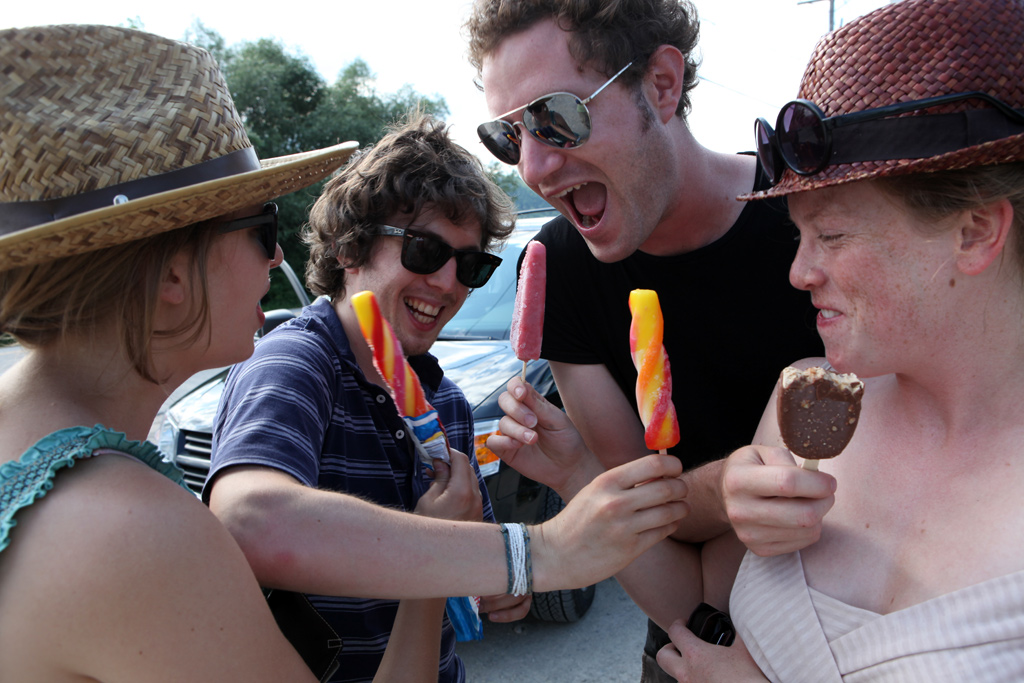
Ice cream was a feature of both the drive up and the drive back.

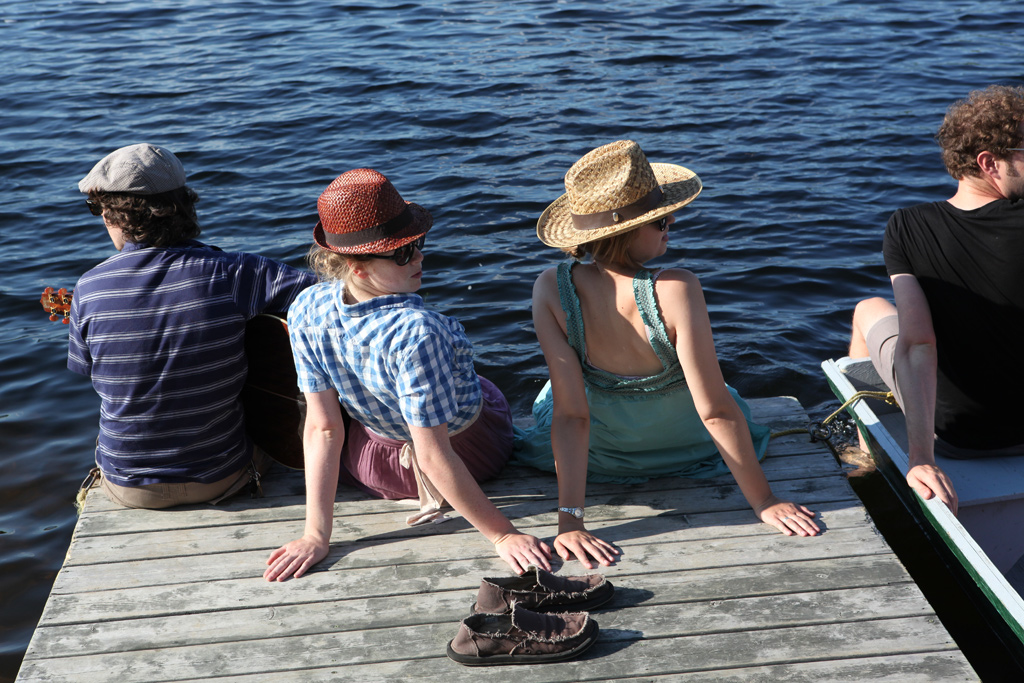
Glancing right

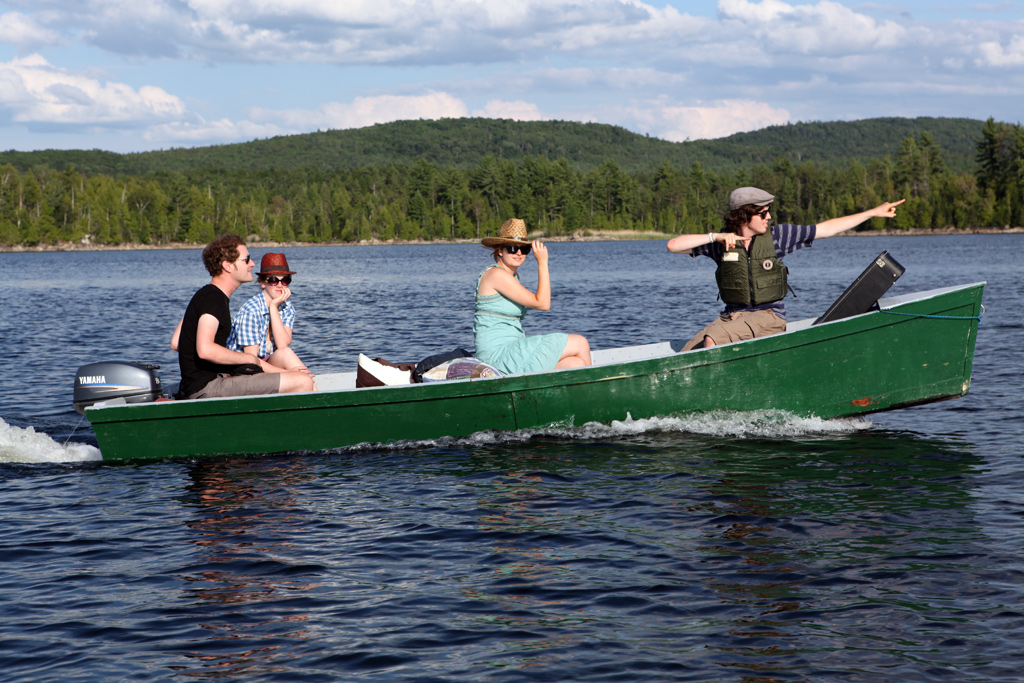
Given that it took about an hour to get from the boat launch to our campsite, opting to go with one journey with two boats, rather than the converse, was a wise choice.

Reclining with guitar

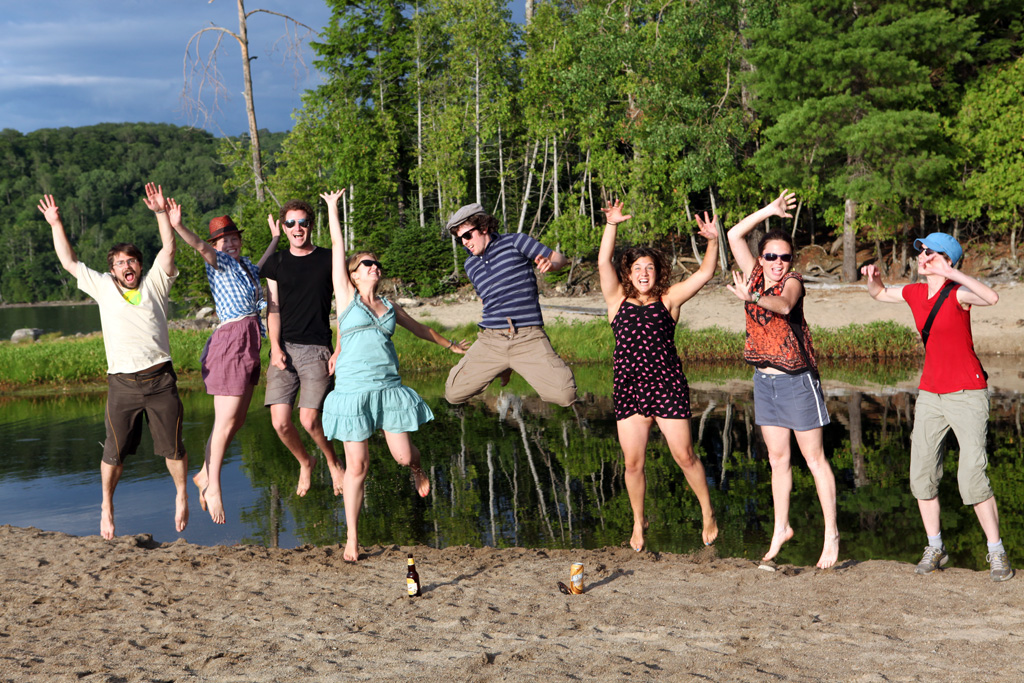
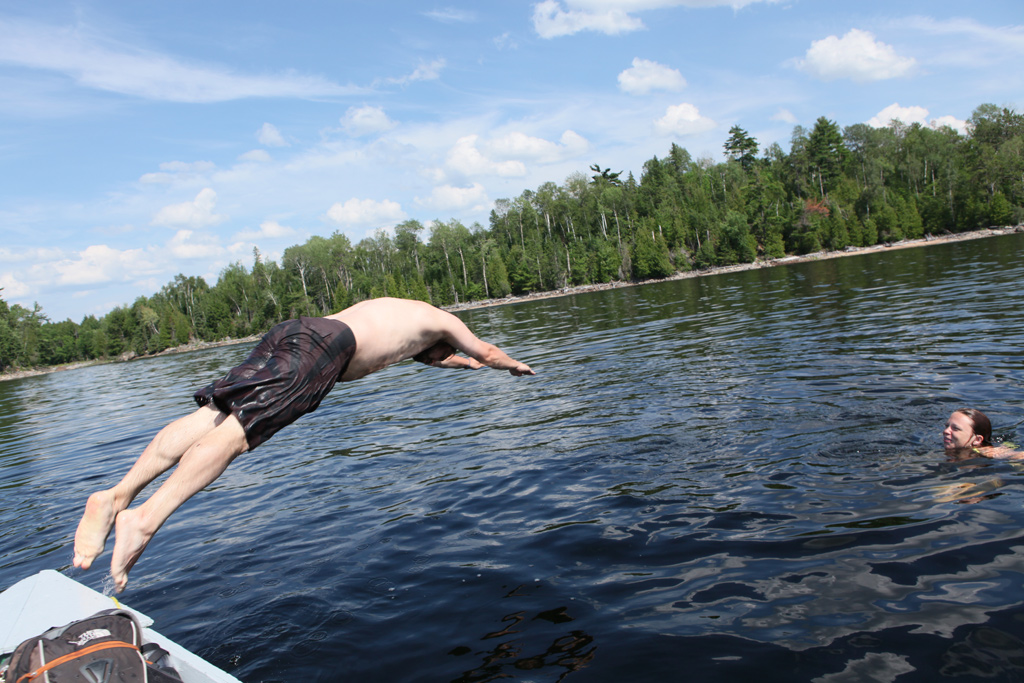
My jumping co-campers

Much to everybody’s amusement, I took out my collapsible reflector to try and balance out the shadows on faces from the sunset. I think it worked rather well as a form of wilderness light modification.

My friend Rosa composed and shot this portrait.

While daylight brought a string of motorboats, the night was very calm and private.

Because of how far we were from civilization, and the absence of the moon, the Milky Way was clearly visible all night.

Dawn

Our boat was piloted by a man whose composure while operating motorized vehicles was on par with his trip masterminding skills.

He can also be used as a very temporary bridge across narrow stretches of water.

Parc Poisson Blanc

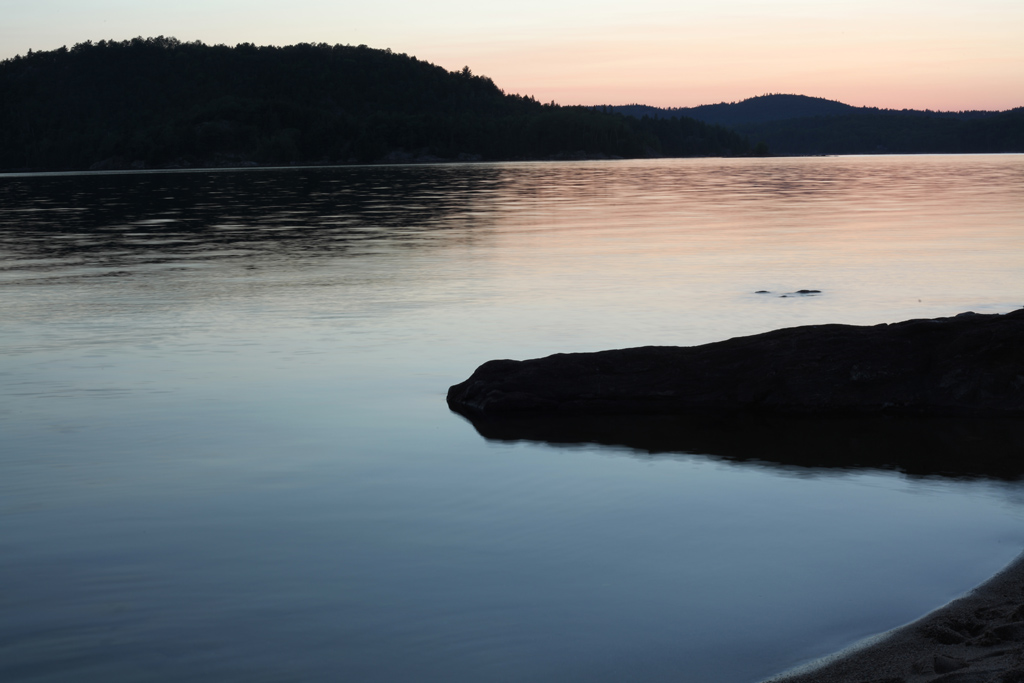
This weekend, I had the very good fortune to be invited to join a camping expedition to Parc Poisson Blanc, located in Quebec about ninety minutes from Ottawa. We bought food, drove up, rented boats, and took them to our superb campsite – a private locale with a beach, a forested area with ground ideal for walking and setting up tents, excellent views, and even a little lagoon featuring a black whirling swarm of baby catfish. The lake water was at an ideal temperature, and the company and food were both excellent.

I had the further good fortune that Saturday was a moonless night. Out in the wilderness, a dazzling array of stars could be seen, so many as to make it hard to identify familiar constellations. The Milky Way was clearly visible. Floating on my back in the water, looking up at the sky in the middle of the night was one of the most magical things I’ve done in recent memory. It felt like such an ancient undertaking, a connection to the whole history of humanity, the Earth, and the universe.

Though short, the trip produced such a change in my mode of thinking that returning to Ottawa felt like coming back to a familiar but semi-forgotten place. It will be odd to be back at work tomorrow, but I will certainly be showing up mentally refreshed.

Social inclusiveness and political power

It seems intuitively obvious that the political elite in previous historical eras consisted of people who had a level of intelligence and cunning that would impress us today. There is, however, at least one major reason for doubting that: social inclusiveness.

Think about the inner cadre of advisers to Henry VIII. In order to get into those positions, it was essentially necessary to be born into a circumstance that allowed such advancement. No matter how clever you were, and what an acute political mind you had, if you were born into a life of servitude in the fields, you were pretty unlikely to end up doing anything else. So, you take the population of Tudor England, exclude basically all the women and everyone otherwise trapped by the social system, and then those advisers are drawn from who remains. The same would have been true in relation to the advisers of Alexander the Great, Ramesses II, or any other historical leader you care to consider.

If you imagine society as a cone, with influence graphed on the vertical axis and the number of people graphed as the narrowing radius of the cone, those in ancient societies who ended up at the top were clearly drawn from a smaller pool.

By contrast, in states like Canada today, it is plausible that anybody who is extremely capable, savvy, and intelligent could rise and play a role within the top tiers of the political elite. By extension, it seems plausible to say that the caliber of people in such positions – both in Canada and elsewhere – is likely higher than has generally been the case in the past.

Of course, there can be a deep and wide chasm that separates advisers who are intelligent and savvy from those who urge courses of action likely to improve the general welfare of the population. That is especially true if being a psychopath helps with becoming politically influential.

Black blocheads

These window smashers who show up at every big international gathering certainly are annoying! They dominate the news coverage, obscuring any legitimate messages from activist groups. Furthermore, they act to justify the expense and intrusion of the heavy-handed security that now accompanies these events.

Incoherent rage against miscellaneous organizations (G8, G20, WTO, etc) doesn’t advance any sort of political agenda. It just distracts from serious discussions. Arguably, it also helps prevent the various legitimate organizations that attend these protests from engaging meaningfully with one another. After all, their priorities and agendas certainly do not align perfectly, and they clash on many issues. When protests are mostly angry pageants, it isn’t necessary to consider such substantive matters. The closer you get to actual policy-making, however, the more important it becomes to address contradictions so that something can actually be done.

Is there any way to eliminate the bandana-wearers as a constant feature of these gatherings? Obviously, massive security spending doesn’t achieve that aim. Perhaps a more energetic rejection of such individuals and tactics within the activist community could. Given how effectively the violent minority drowns out important messages, finding some way to keep a lid on them would probably benefit a lot of people.

Fringe 2010: Cactus – The seduction…

This energetic and engaging one man show is definitely a lot of fun. Jonno Katz combines the script with improvised interaction with the audience, accompanying his amusing portrayal of varied characters with the physical comedy that is the highlight of the show.

The show might seem minimalist, with one actor, one costume, simple lighting, little music, and no props – but Katz brings more than enough character and energy to make it feel well furnished.

Definitely recommended, though perhaps not for those who are offended easily by references to romance or sex.

ArtBank

This evening, I visited ArtBank – an institution of the Canada Council for the Arts that has been buying Canadian artworks since the 1970s and then renting them to government offices and private organizations.

The art is rented at 10% of its appraised price, for each year. The minimum term is two years, and the minimum annual expenditure per renting organization is $2,000. The price per work is capped at $3,600, meaning that some of the most valuable pieces are quite a deal to rent. For government offices, the necessary insurance is already in place. Private organizations need to provide written documentation of adequate insurance.

The collection includes 18,000 paintings, prints, photographs and sculptures by over 2500 artists. Sizes range from modest to gigantic. All told, it seems like a rather good resource. It’s certainly a place worth visiting, if the opportunity arises.