After the Ice

Having already read a great deal about climate change and the Arctic, I expected Alun Anderson’s After the Ice: Life, Death, and Geopolitics in the New Arctic to provide only a moderate quantity of new information. I was quite surprised by just how much novel, relevant, and important content he was able to fit into the 263 pages. The book discusses the historical and current relations between governments and Arctic indigenous peoples; ice flow dynamics and exploration; the changing nature of Arctic ecosystems and species, along with information on what climate change may do to them; international law and the geopolitical implications of a melting Arctic; oil, gas, and other natural resources, and how their availability is likely and unlikely to change in coming decades; the rising tide of Arctic shipping, and the special safety and environmental considerations that accompany it; and the feedback effects that exist between a changing Arctic and a changing climate.

Ecosystems

Some of the best information on the book is about biology and Arctic ecosystems. It describes them from the level of microscopic photosynthetic organisms up to the level of the megafauna that gets so much attention. Anderson argues that most of the large marine mammals (seals, walruses, whales, etc) are threatened to some extent or another by the loss of sea ice. This is for several reasons. First, it could disrupt the lowest levels of the food web they rely upon. Second, it could permit the influx of invasive species that could out-compete, starve, or attack existing Arctic species. Third, the lifecycles of Arctic animals are slow and deliberate, and thus liable to disruption from faster-breeding competitors. Disappearing sea ice off Svalbard has already completely wiped out what was once “one of the best areas for ringed seal reproduction.” Arctic species, argues Anderson, will need to “move, adapt, or die.” Generalists like beluga whales have promise, while the narwhal and polar bear may be the most vulnerable large creature in the ecosystem.

One consequence of the loss of multi-year sea ice that I had not anticipated is the potential for a massive migration of species between the Pacific and Atlantic oceans, with invasive species potentially seriously altering the composition of ecosystems on both sides. Melting ice could therefore produce major changes in much of the world’s ocean. Even before that, expanded range for orcas could have a significant effect on life in northern waters. Where ice used to provide safety, by obstructing their pectoral fins, these powerful predators increasingly have free reign.

Resources, shipping, and tourism

Anderson makes an effective argument that most of the oil, gas, and resources in the Arctic will be effectively locked away for some time yet. There will always be ice in the winters, glacial ice calving off Greenland and other Arctic islands poses a significant risk due to its extreme hardness, and very high commodity prices are necessary to justify the risk and capital investment required to operate in the region. (See this post on the the Shtokman gas field.) He expects that, even if there is a boom, it will be short-lived and of limited benefit to those living in the region. In particular, he cautions people living in the north not to abandon traditional ways of life sustained by things other than oil and gas. Living for a couple of rich decades and then being left with nothing would be a tragic outcome.

The book also downplays fears about a scramble for resources and sovereign control. Anderson argues that the United Nations Convention on the Law of the Sea (UNCLOS) already provides a clear legal framework and that negotiated outcomes are probable. That should provide some comfort to those concerned about diplomatic or even armed conflicts in the changing north. One danger Anderson does highlight is how the risk of collision with ice, increasing shipping and tourist traffic, and the absence of emergency response capabilities could combine. He describes plausible scenarios where major oil spills or massive loss of life could result, due to a problem with a tanker or a cruise ship (disproportionately full of elderly people susceptible to cold, as they are).

While Anderson does an excellent job of explaining some of the risks to species and human beings from a changing Arctic, he doesn’t take seriously the possibility of truly radical or catastrophic change, of the kind highlighted as possible by James Hansen. Anderson also completely fails to describe how the incremental emissions from burning oil and gas in the Arctic would inevitably increase the degree of climate change experienced by humans and natural systems. It is cumulative emissions that matter most, and extracting hydrocarbons from the far north can only increase those.

For anyone with an interest in what is happening to the Arctic and what the medium- and long-term implications of that might be, this book is enthusiastically recommended.


Ontario could phase out coal in 2010

That is the message from the Ontario Clean Air Alliance, expressed in a post on BuryCoal.com. They argue that Ontario has enough non-coal electricity generating capacity to put its four remaining coal plants on “standby reserve” between now and their legislated closure in 2014.

It is an initiative worth applauding. In contrast to targets so far off in the future as to be politically irrelevant, this is something that could be done right away. That is important, given the degree to which every year that passes before emissions peak means more drastic cuts will be required around the world afterward.

Another option worth considering is converting Nanticoke, North America’s largest coal-fired power plant, to burn biomass instead. From a health and environmental perspective, that’s not as appealing as shutting it down, but it would definitely be an improvement upon the status quo.

Black carbon and the Arctic

I have written previously about the climatic importance of black carbon – tiny particles of soot, mostly from burning diesel and biomass, that have a warming effect on the climate. This effect can be most acute when the black carbon falls on snow. It absorbs sunlight and accelerates melting. Andreas Stohl, from the Norwegian Institute for Air Research, has tracked pollution from satellite data and identified agricultural burning in Russia, Ukraine, Belarus, and Baltic states as major sources of black carbon that ends up in the Arctic. Stohl and others have also applied trajectory models to determine how pollution from different regions ends up in the Arctic.

As shipping routes become more open, with the vanishing of multi-year sea ice, diesel-burning ships risk becoming a larger source of black carbon in the region. As one paltry step towards slowing the demise of the Arctic as we know it, the coastal states of the Arctic ocean should insist on better particle traps for vessels, both by imposing standards for new construction and requiring retrofits. Germany, Austria, and Switzerland all already have legislation in place requiring such filters. In addition to the climatic benefits, such filters could also benefit human health. Investigations between 1993 and 1998 showed that such filters “can intercept at least 99% of the sub-micron particulates in the range of heightened pulmonary intrusion.”

Governments could also insist on the use of cleaner forms of diesel that generate less black carbon. It is bad enough that oil and gas exploration in the Arctic might accelerate warming – to say nothing of the risks from methane. We don’t need little low-albedo specks of soot making things even worse.

Chaudiere Bridge and Domtar Mill

For two years, the Chaudiere Bridge and Domtar Mill were between home and work for me. Indeed, throughout Ottawa’s long winter bus strike (and much of the time in nicer months), I would walk through both most days of the week. The mill is mostly shut down now, though part of it has been converted into a run-of-river hydroelectric station.

While there are still security personnel and vehicles around, most of the mill seems to be shut down and locked up. The area is full of fences, locks, and barbed wire.

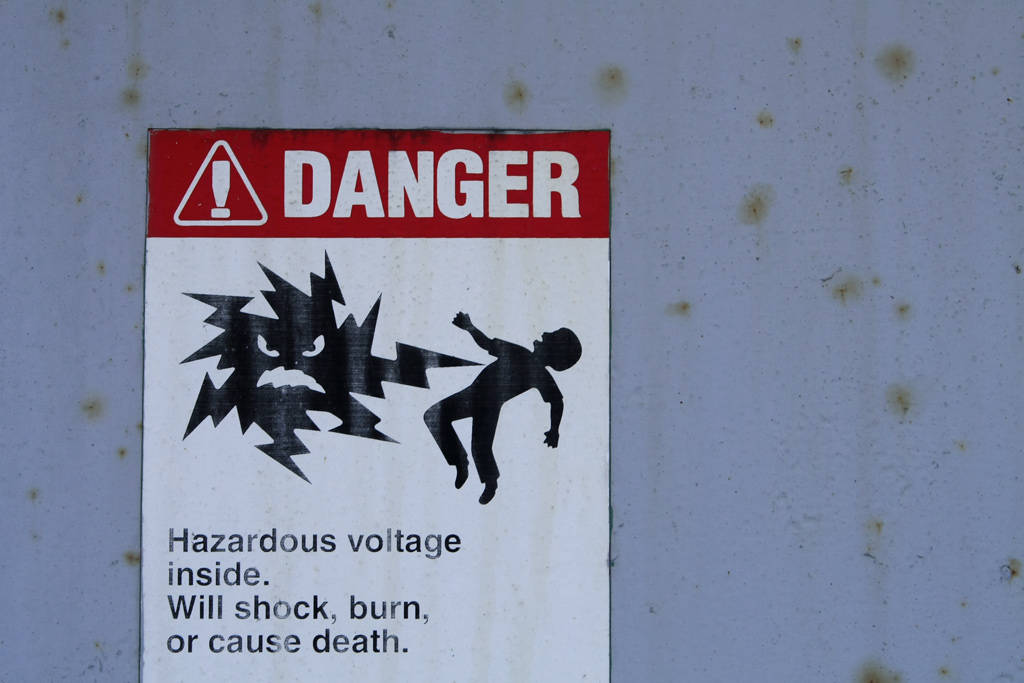
I love how malicious this lightning creature looks, striking down the small boy. It is certainly an effective warning sign.

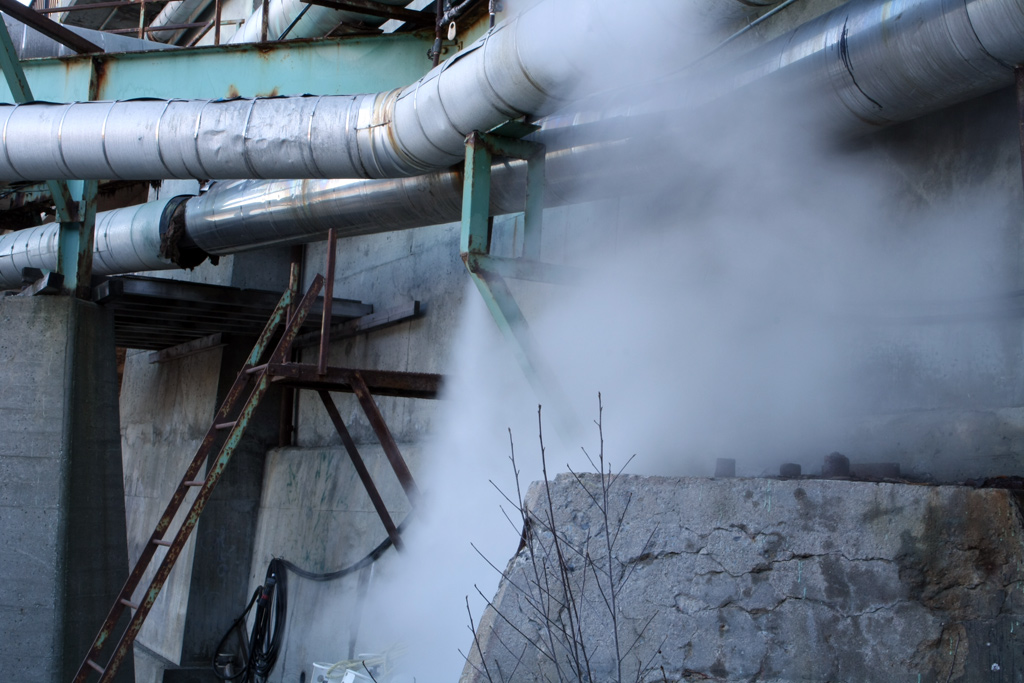
High-pressure steam pipes run all around the complex. At regular intervals there are pressure release systems that vent steam every few seconds.

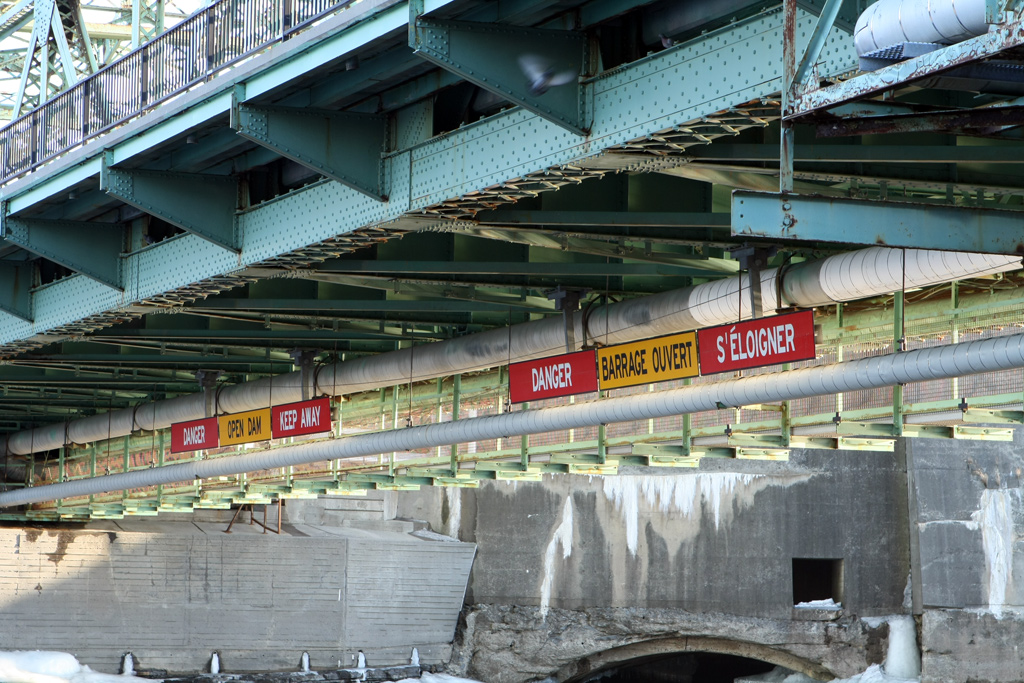
Both upstream and downstream, there are signs and barriers to warn boaters about the dam.

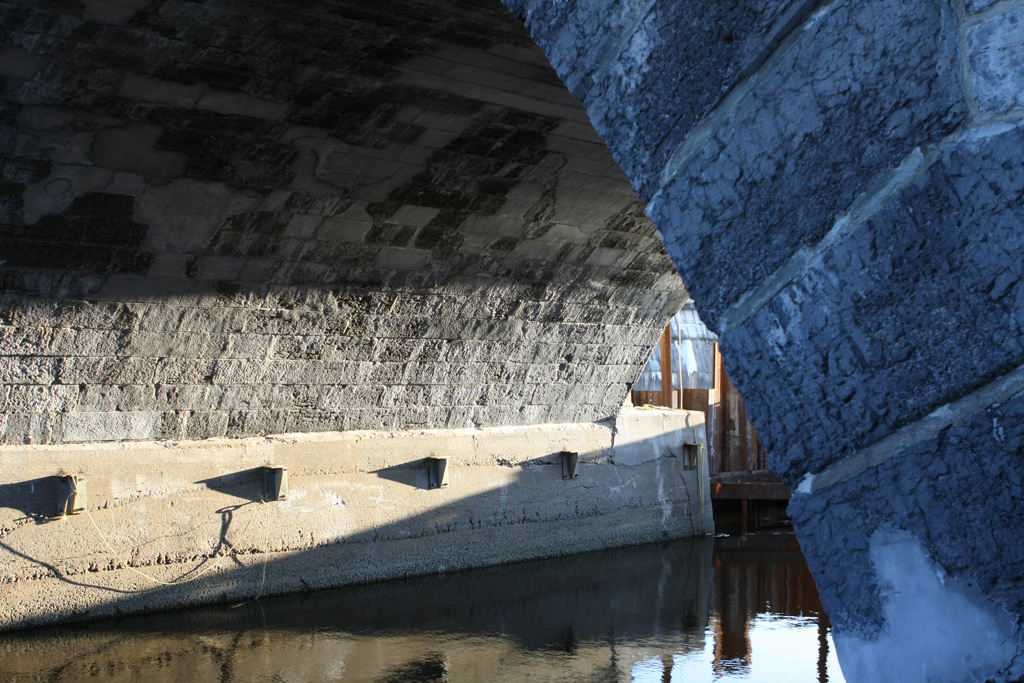
For several months last year, the Chaudiere Bridge was either closed or taking restricted traffic, because of concerns about its structural stability. Ottawa’s freeze-thaw cycles are brutal on infrastructure, especially roads and bridges.

I have always found bridges to be especially elegant and compelling structures. It has something to do with the mathematics of them, as well as the way in which they serve as an interface between human desires and the natural environments in which people live.

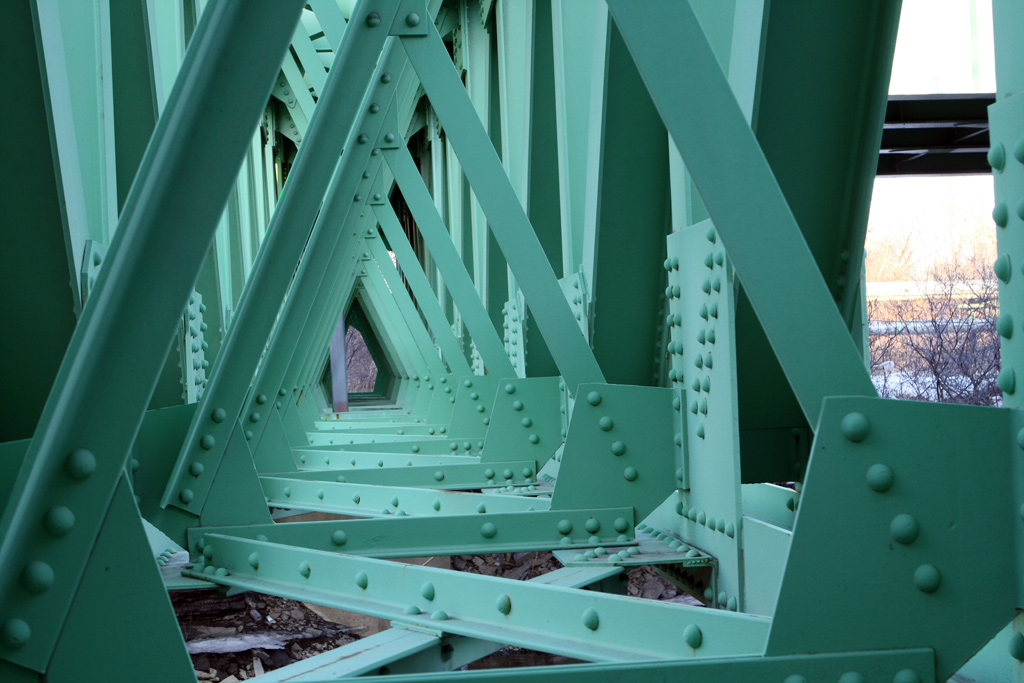
These green struts extend around the bridge, mostly supporting thick steam pipes that run between different parts of the mill.

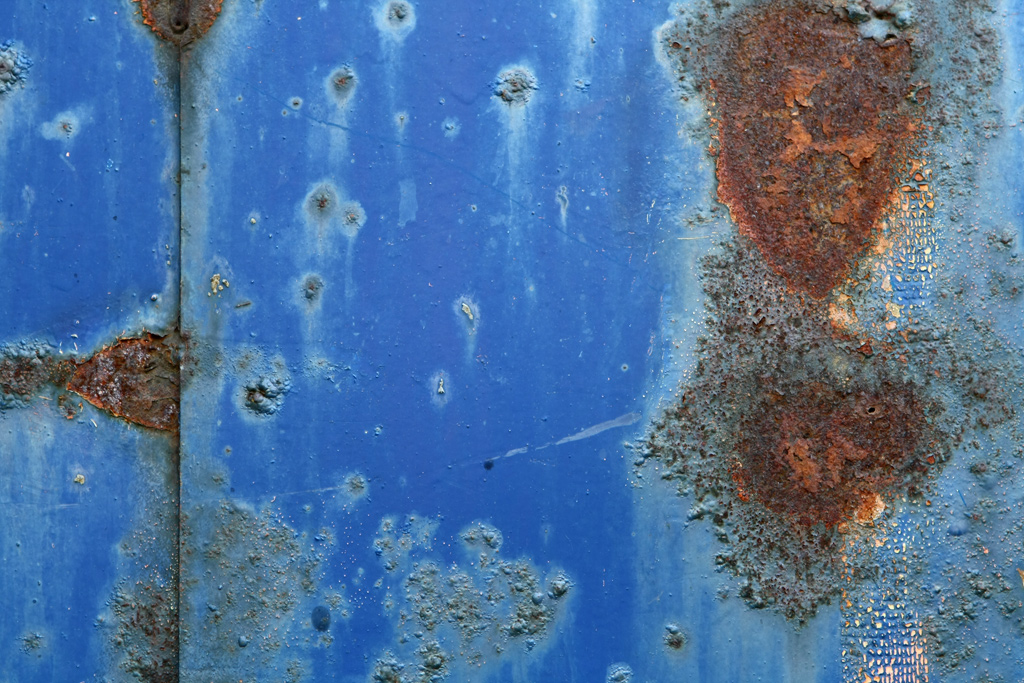
Most of the metal in the area is corroded to one extent or another. Part of that must be the result of constant exposure to the salt used by the city to keep the roads and sidewalks relatively clear of ice in the winters.

Even on a Sunday evening, the bridge always has traffic. Walking to and from work may have contributed to my increasingly genuine hatred of automobiles. Single individuals, needlessly spilling greenhouse gases to propel themselves around in giant hulks of metal and glass, splashing and killing pedestrians and cyclists alike.

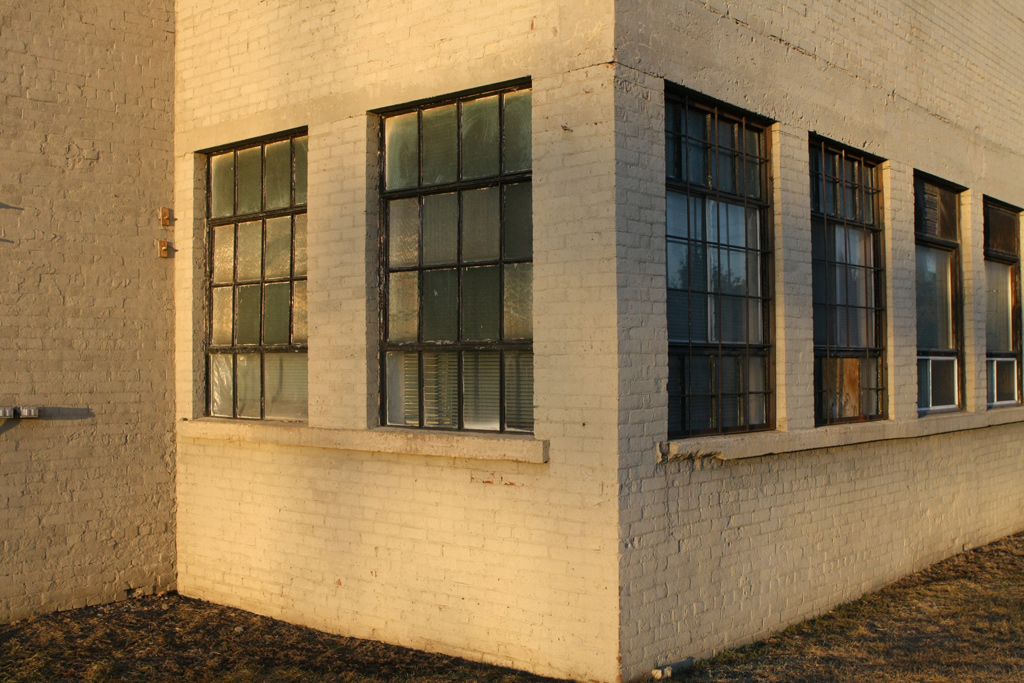
Even in the more remote accessible corners of the Domtar complex, you can see papers and personal effects behind windows. It is hard to tell whether these are active offices, or abandoned workspaces.

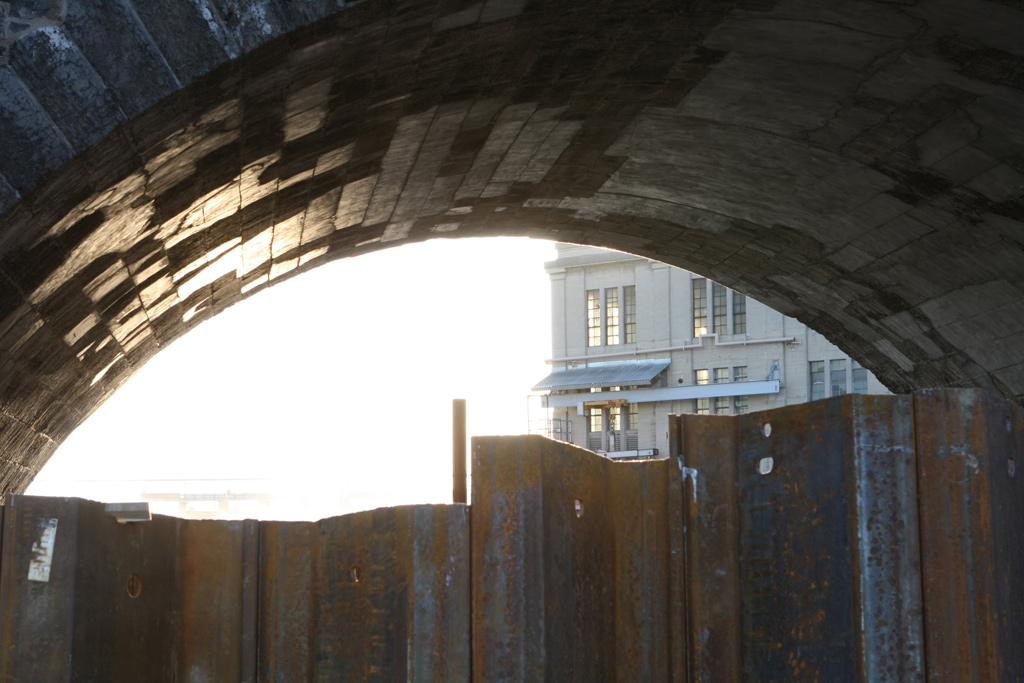
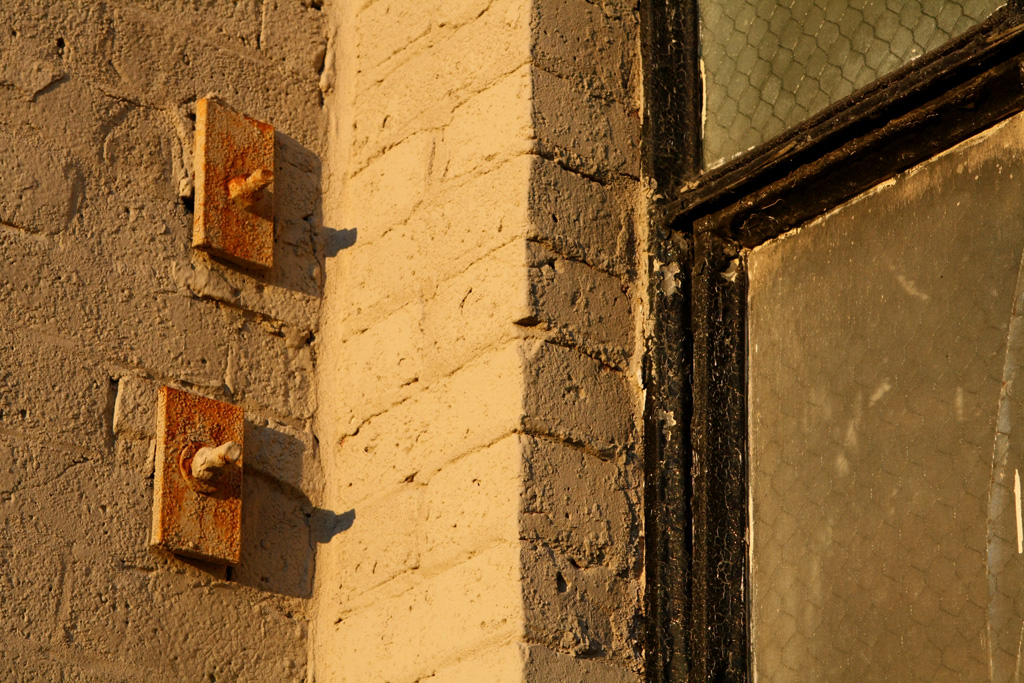
The complex is full of interesting structural details – power cables, girders, metal and concrete works built to constrain the flow of the river.

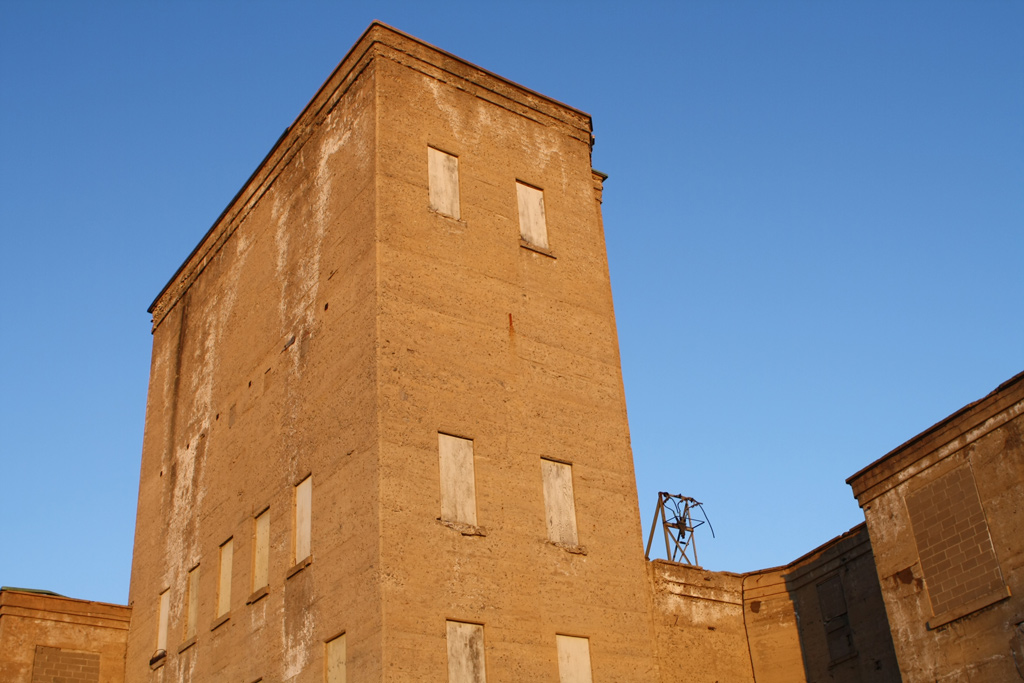
One of the taller Domtar buildings has been converted into an indoor climbing gym. As far as I can tell, this one has just been boarded up and abandoned.

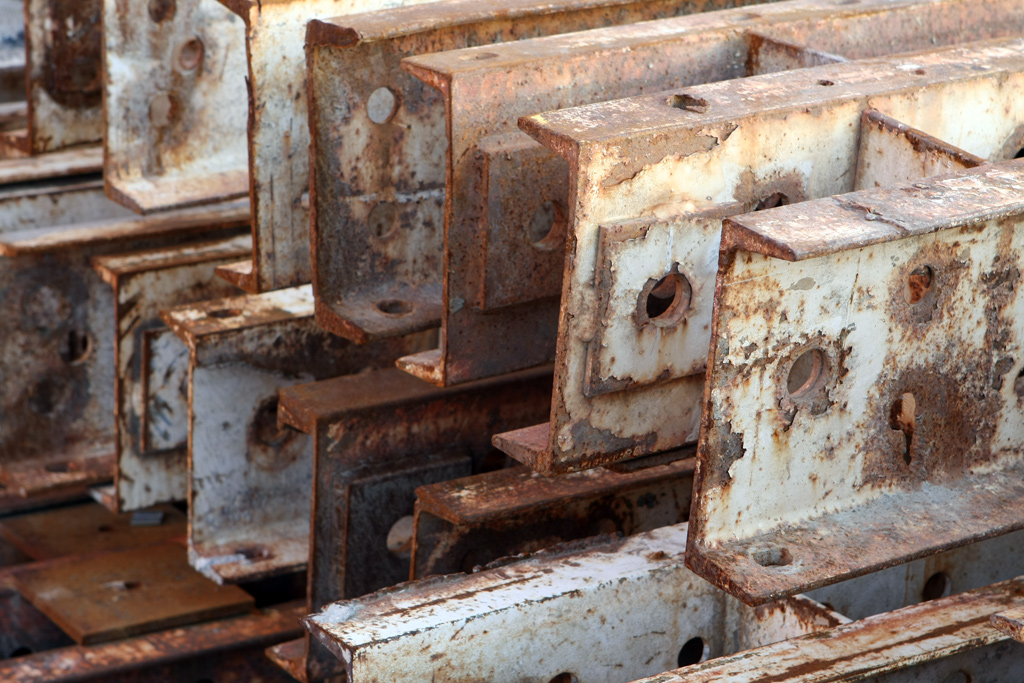
On the eastern side of part of the complex, some sort of big recycling effort is underway. These girders may eventually find their way into something new.

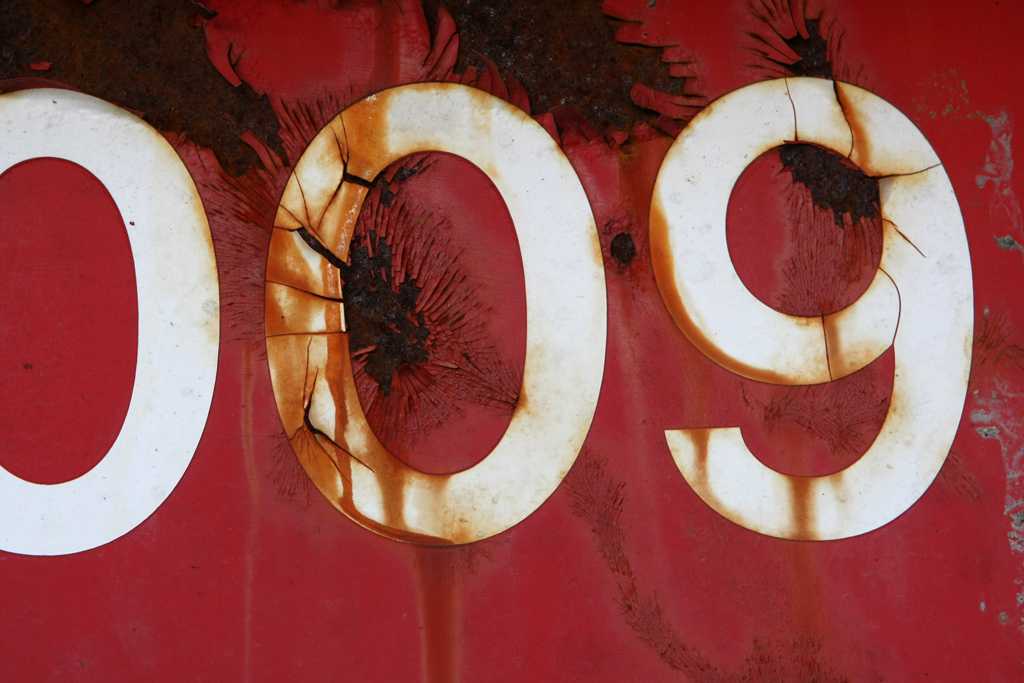
The giant recycling bins themselves are corroded, with peeling paint and sharp edges.

Apparently, there were three previous Chaudiere bridges: 1827, 1845, and 1892.

Renewable energy and the budget

Tim Weis, from the Pembina Institute, does a good job of showing why Canada’s most recent budget is not well aligned with the government’s target on renewable energy, namely to move from generating 77% of our energy from non-emitting sources now (mostly hydro and nuclear) to generating over 90% that way by 2020. It’s a laudable goal, but one hardly advanced by the investment of a mere $25 million in renewable energy in the forestry sector, or continued inaction on the regulation of greenhouse gases.

If Canada is serious about becoming a “clean energy superpower,” we need to do better than this.

2010 SFT – climate and energy

Here are the sections from today’s Speech from the Throne (SFT) that relate to climate and energy:

  • “Our energy resource endowment provides Canada with an unparalleled economic advantage that we must leverage to secure our place as a clean energy superpower and a leader in green job creation. We are the world’s seventh largest crude oil producer with the second largest proven reserves. We are the third largest natural gas producer, the third largest hydroelectric generator, the largest producer of uranium, and by far the largest supplier of energy resources to the world’s largest marketplace. To support responsible development of Canada’s energy and mineral resources, our Government will untangle the daunting maze of regulations that needlessly complicates project approvals, replacing it with simpler, clearer processes that offer improved environmental protection and greater certainty to industry.”
  • “Our Government will continue to invest in clean energy technologies. It will review energy efficiency and emissions-reduction programs to ensure they are effective. And it will position Canada’s nuclear industry to capitalize on the opportunities of the global nuclear renaissance – beginning with the restructuring of Atomic Energy of Canada Limited.”
  • “The Joint Review Panel on the Mackenzie Gas Project has completed its report. Our Government will reform the northern regulatory regime to ensure that the region’s resource potential can be developed where commercially viable while ensuring a better process for protecting our environment.”
  • “Nowhere is a commitment to principled policy, backed by action, needed more than in addressing climate change. Our Government has advocated for an agreement that includes all the world’s major greenhouse gas emitters, for that is the only way to actually reduce global emissions. And it has pursued a balanced approach to emissions reduction that recognizes the importance of greening the economy for tomorrow and protecting jobs today.”
  • “The Copenhagen Accord reflects these principles and is fully supported by the Government of Canada. Together with other industrialized countries, Canada will provide funding to help developing economies reduce their emissions and adapt to climate change. Here at home, our Government will continue to take steps to fight climate change by leading the world in clean electricity generation. And recognizing our integrated continental economic links, our Government will work to reduce emissions through the Canada-U.S. Clean Energy Dialogue launched last year with President Obama’s administration.”

None of this is very encouraging. Rather than celebrating our huge fossil fuel reserves, we should be recognizing the risks associated with burning them. Similarly, brushing aside regulations that reduce the pace of fossil fuel exploitation will hardly help us avert catastrophic climate change.

The pledge to “review energy efficiency and emissions-reduction programs to ensure they are effective” is also discouraging. Canada still hasn’t deployed any sort of carbon price: a vital component of an overall climate change response.

Vancouver’s last Olympics?

Richard Brenne has written an interesting post on why climate change means 2010 was probably Vancouver’s last opportunity to host the winter Olympics:

Global warming is the reason Vancouver will never host another Winter Olympics. They barely dodged (biathlon) bullets at dozens of events, and the Olympic Committee would rather use Donald Trump’s hair as the Olympic flame than go through this again. Climate change is all about likelihoods of things like the record warmth Vancouver has had increasing, and the Olympic Committee rolled Jim Hansen’s dice and came up snake eyes.

He goes on to describe the extreme efforts taken to improve snow conditions, as well as the unusual circumstances in which events were conducted: from snowboard events on slushy runs to Nordic skiers racing in unprecedented temperatures.

The whole thing is worth reading.

Past lives of climate deniers

My friend Antonia sent me a nice article by Jeffrey Sachs, describing what today’s most prominent climate change deniers were doing, before they took up this cause:

Today’s campaigners against action on climate change are in many cases backed by the same lobbies, individuals, and organisations that sided with the tobacco industry to discredit the science linking smoking and lung cancer. Later, they fought the scientific evidence that sulphur oxides from coal-fired power plants were causing “acid rain.” Then, when it was discovered that certain chemicals called chlorofluorocarbons (CFCs) were causing the depletion of ozone in the atmosphere, the same groups launched a nasty campaign to discredit that science, too.

Later still, the group defended the tobacco giants against charges that second-hand smoke causes cancer and other diseases. And then, starting mainly in the 1980s, this same group took on the battle against climate change.

What this reinforces is how artificial the climate change denial movement is. Status quo actors, from Duke Energy to Saudi Arabia to Canada’s oil-sands-funded politicians, want to avoid climate change legislation. They have found some shills happy to spread confusion, in order to advance that aim. What is sad is how many ordinary people have lined up to be duped.

Medicare and populist opposition to reform

I had no idea that opposition to Medicare was so vociferous in Saskatchewan, when Tommy Douglas and the Co-operative Commonwealth Federation (CCF) party introduced it in 1962:

“The city’s residents had been whipped into a near-hysteria by the doctors’ anti-medicare campaign,” Margoshes writes, adding, “There were graffiti threats on city walls and calls in the middle of the night to Tommy’s house. His campaign manager, Ed Whelan, got frequent calls from a man threatening to ‘shoot you, you Red bastard!’ A few homeowners placed symbolic coffins on their front lawns.”

It goes to show what determined politicians with a clear objective can accomplish, even in the face of misinformation campaigns and a large amount of visible public opposition. Perhaps that is something that should give hope to climate change campaigners. If we ever get a government that is really serious about the issue, they might be able to push through the opposition of those seeking to maintain the status quo and develop policies that people will look back in with pride fifty years in the future.

That said, it also seems quite possible that a party that created a serious climate change policy would be punished for it in the short term, as the CCF was for Medicare. After its passage, they got smashed in the next election and remained out of power for seven years. That reminds me a bit of Stephane Dion, though he never got to implement his Green Shift plan, which was certainly bold in comparison to what we are doing at present on climate change.

Does Canada see the north as a colony?

Writing in The Globe and Mail, Doug Sanders makes the interesting and probably not inaccurate observation that Canada treats the far north like a colony:

We own the Arctic but, unlike most of our northern neighbours, we are not Arctic. Rovaniemi is a serious city of 60,000 people, with a major university, a large airport and important ties to the mainstream of Finnish life. Like the Arctic cities of Tromso, Norway (60,000) and Murmansk, Russia (325,000), it’s a major centre of business, learning and tourism.

So when Canada tried to impress the world’s finance ministers and media with its Arctic identity by holding a summit in Iqaluit, a remote and somewhat inaccessible town of 7,000 just below the Arctic Circle in Nunavut, it didn’t completely work. “It looked like the Canadians had just arrived there – they didn’t seem to know the place any better than we did,” one European official told me.

What those leaders realized, and what Canadians instinctively know, is that we relate to the Arctic not as a part of our identity or culture or traditional economy, but as a foreign, faraway land we happen to control. The Far North is, in short, our colony.

To me, it does seem plausible that both Canadian decision-makers and the Canadian public at large see the north through the twin lenses of romance about the place and excited anticipation about what good things we are going to be able to do with it, once that ice is less of a problem and we can get at the shipping routes and fossil fuel resources.

The profound transformation of the Arctic is now all-but-inevitable, probably to an extent that few people realize. It will be interesting to see whether the inhabitants start taking a stronger and more visible stance once it becomes inescapably obvious that the whole region is being transformed, or whether they will just take that as a given and start scrambling for a share of oil and gas revenues.