Interior, not interpersonal

Thought is an interior experience, not an interpersonal event. Thoughts innocently arise from our instincts for survival, security, and pleasure and are involuntary. They are the personal raw materials of the mind and, as such, are neither good nor bad. However, emotionally immature people judge your thinking to make sure you stay aligned with their beliefs.

It’s hard to be clear on your own position if you know your opinion could lead to your being reviled. Because EI parents need to feel like they are right about everything, they make you feel rejected if your thinking doesn’t match theirs. As an adult it’s self-defeating to accept others’ opinions instead of consulting your own mind. But EI parents teach you to do just that: they act like you’re being rebellious or selfish if you don’t consider them first in every step of your thought process. EI parents see free thought as disloyal. For EI parents everything is about how important, respected, and in control they feel. So, what happens if you have your own thoughts and opinions? They see you as disloyal. To the ‘all or nothing’ EIP’s mind, your differing opinion means you couldn’t possibly love or respect them, therefore you may have learned to hide your most honest thoughts from your thin-skinned EI parents.

Gibson, Lindsay C. Recovering from Emotionally Immature Parents: Practical Tools to Establish Boundaries & Reclaim Your Emotional Autonomy. New Harbinger Publications, 2019. Chapter 8: “Making Room for Your Own Mind”

Cherry blossom season-starter

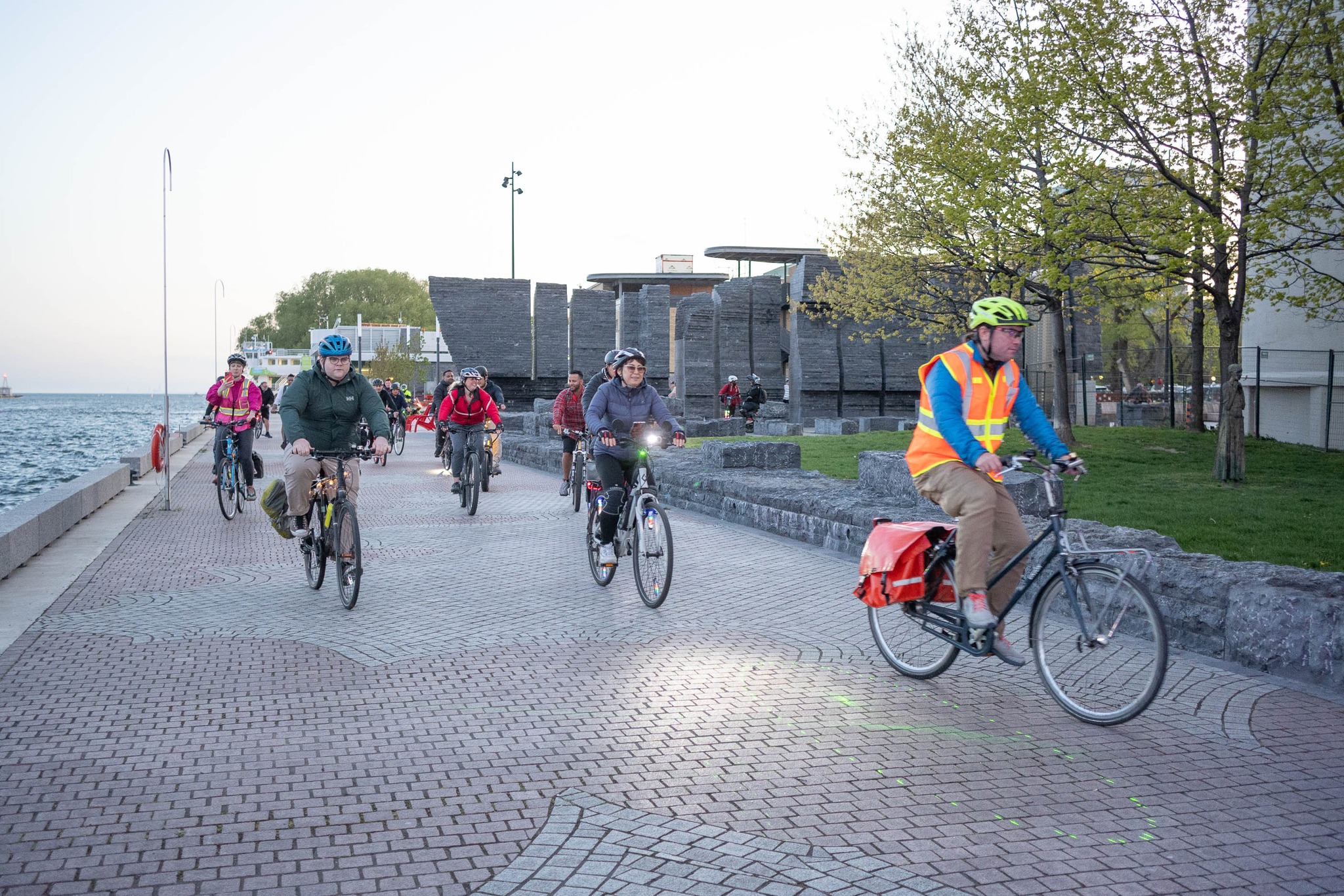
Last night, the Neon Riders began their 2025 season with a tour of Toronto’s varied blooming cherry blossoms:

These rides are one of the definite high points of my week. Riding in a large group is a totally different experience from riding in the city alone — as long as you are not at the edges you barely need to worry about cars, which is an inversion of the normal city cycling experience, and the rides are fundamentally social since you are always surrounded by people who you can speak to easily and naturally.

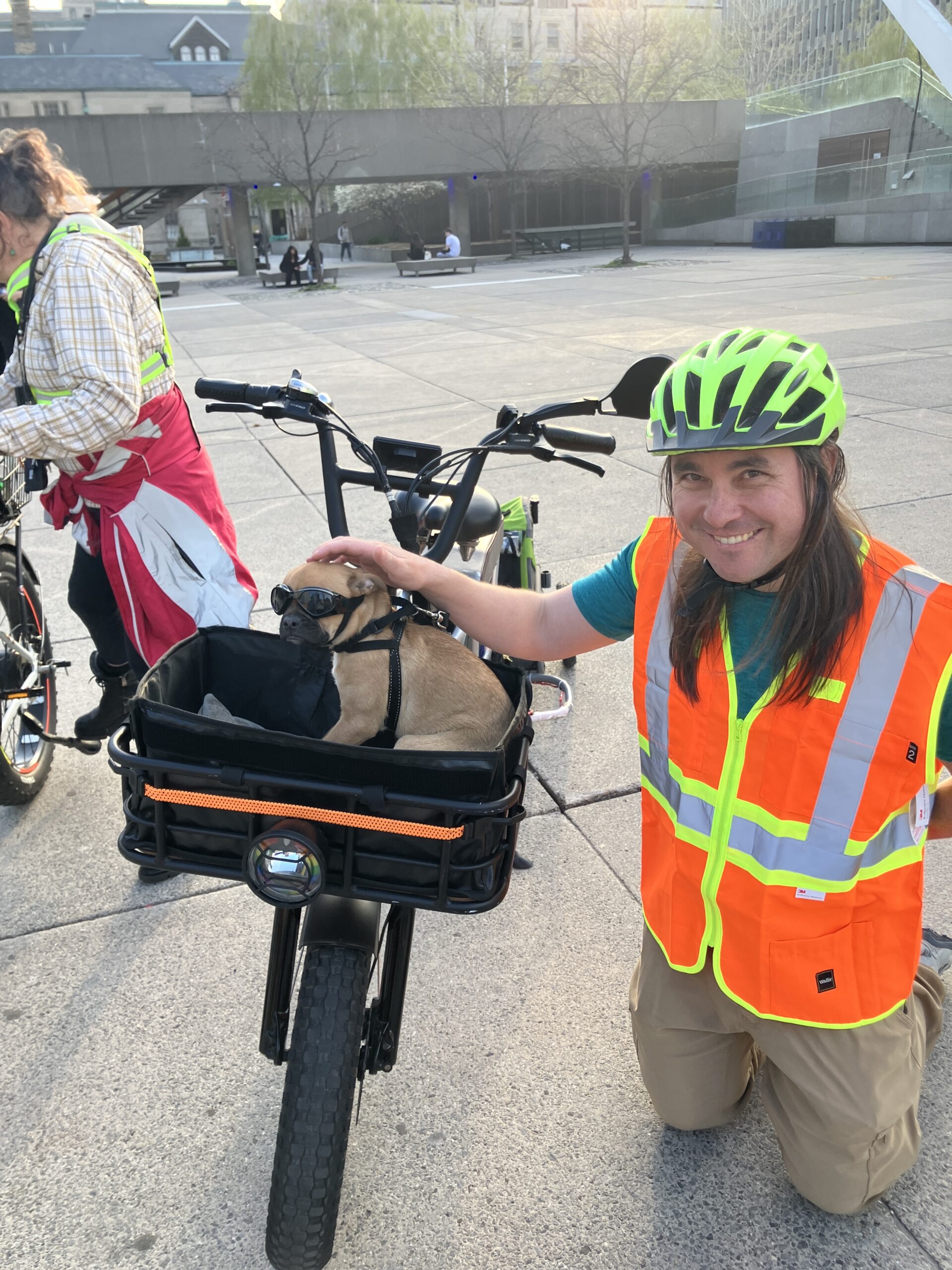
Plus, there are bike dogs:

Boundary-rejecting parents

They don’t respect your boundaries or individuality. Emotionally immature parents don’t really understand the point of boundaries. They think boundaries imply rejection, meaning you don’t care enough about them to give them free access to your life. This is why they act incredulous, offended, or hurt if you ask them to respect your privacy. They feel loved only when you let them interrupt you any time. EI parents seek dominant and privileged roles in which they don’t have to respect others’ boundaries. EI parents also don’t respect your individuality because they don’t see the need for it. Family and roles are sacrosanct to them and they don’t understand why you should want space or an individual identity apart from them. They don’t understand why you can’t just be like them, think like them, and have the same beliefs and values. You are their child and therefore belong to them. Even when you’re grown they expect you to remain their compliant child or, if you insist on your own life, at least always follow their advice.

Gibson, Lindsay C. Recovering from Emotionally Immature Parents: Practical Tools to Establish Boundaries & Reclaim Your Emotional Autonomy. New Harbinger Publications, 2019. Chapter 2.

Catastrophes and mental collapse

Psychologically and emotionally, I have really been doing badly lately.

I have spent all of my adult life studying environmental politics and trying to fight climate change, and now we are at a juncture where the world’s leaders have effectively given up. They won’t acknowledge fossil fuels as the root of the crisis, and they are far too controlled by the fossil fuel industry to accept phasing them out as a solution. They see every new potential oil, gas, and coal project as a vehicle for wealth and self-advancement. Meanwhile, environmentalists are distracted by social issues as the long-term crisis keeps deepening, and people generally are too frightened to even perceive the truth of their situation. Perhaps scariest of all, young people don’t have a coherent and politically-activated sense of what is happening. They can’t see that their leaders are destroying their futures, and they are being drawn into the same sorts of non-solutions which are driving the rise of charlatans and authoritarians to power.

The path forward is totally unclear, and I don’t know how — psychologically or morally — to cope with a world where we have identified that the processes of collapse are accelerating but where we don’t have the honesty or the courage to work through what that means or work toward any remedy.

These are dark, dark days.

Victoria

Though crazily tired from the daylight savings shift, plus a workweek, plus two straight days awake due to travel, it was heartening to get to Victoria, see my brother Sasha, and explore a few parks and scenic sights with him, my brother Mica, his wife Leigh, and their daughter Mila:

I’m too tired to process any photos from today before sleeping.

Tomorrow is Sasha’s benefit concert.

Photos from the Yellowknife drive

In the summer of 2003, I broke with my long avoidance of air travel so that I could first help my brother Sasha move from Behchokǫ̀, in the Northwest Territories near Yellowknife, back to Victoria, BC.

We did the drive through a vast terrain of wildfires in three intensive days, with Sasha driving.

I had been meaning for ages to get our photos processed, but because of the financial pain of the long PhD all my computers and software are quite obselete and were unable to handle the RAW files from his specific Fuji camera.

I have finally figured a workaround using Adobe’s digital negative (DNG) format, so now the photos are up.

Living across the country and avoiding flying, I have seen far too little of my brothers in recent years. I justified it because I thought I was living my values by making lifestyle choices to reduce my climate impact, and because I still hoped humanity might be reaching a level of understanding where we take the crisis seriously and respond in a useful and adaptive way.

Now I think I need to do a complete re-evaluation of what sort of political project makes sense. Ever since I first became involved in environmentalism in the 1990s, I had thought that eventually the universal experience of how the world is changing in frightening ways would make people willing to make changes themselves. Now, I really don’t know.

Still, I am immensely grateful that I got to spend this intensive time with Sasha and that our relationship is still deep and meaningful after years of almost exclusively telecommunicating. His integrity and determination are inspirations to me, and I try to draw from his example while trying to live my own life well.

Related:

The affect heuristic

The dominance of conclusions over arguments is most pronounced where emotions are involved. The psychologist Paul Slovic has proposed an affect heuristic in which people let their likes and dislikes determine their beliefs about the world. Your political preference determines the arguments that you find compelling. If you like the current health policy, you believe its benefits are substantial and its costs more manageable than the costs of alternatives. If you are a hawk in your attitude toward other nations, you probably think they are relatively weak and likely to submit to your country’s will. If you are a dove, you probably think they are strong and will not be easily coerced. Your emotional attitude to such things as irradiated food, red meat, nuclear power, tattoos, or motorcycles drives your beliefs about their benefits and their risks. If you dislike any of these things, you probably believe its risks are high and its benefits negligible.

Kahneman, Daniel. Thinking Fast and Slow. Random House Canada, 2011. p. 103