

Author: Milan
30 papers left
If the plan to finish the PhD by the end of August holds — along with the pattern of never getting a summer TA position — this batch of second year political science papers will be the last undergraduate essay grading I ever do.
That would be most welcome. While there is a nurturing sort of grader who focuses on finding something to approve of in each submission, my approach is to hold firm sets of criteria in mind for each range of grades and then work to fairly assign each paper to the right one based on the ways in which it is insufficient according to the criteria for a higher one.
Actually teaching people how to improve their writing would require a lot more one-on-one interaction than U of T provides. When students want to meet about their papers I set aside an hour for each one, which rapidly becomes unpaid since I am not assigned anywhere near that many hours for student contact. Still, it is worthwhile because it shows how students at every level of skill can benefit from detailed engagement with exactly what is expected in a university paper: whether that is finding a few scattered pieces of an argument that could have been presented in a convincing and well-supported way, or adding more nuance and consideration of counterarguments to a paper than is already very strong.
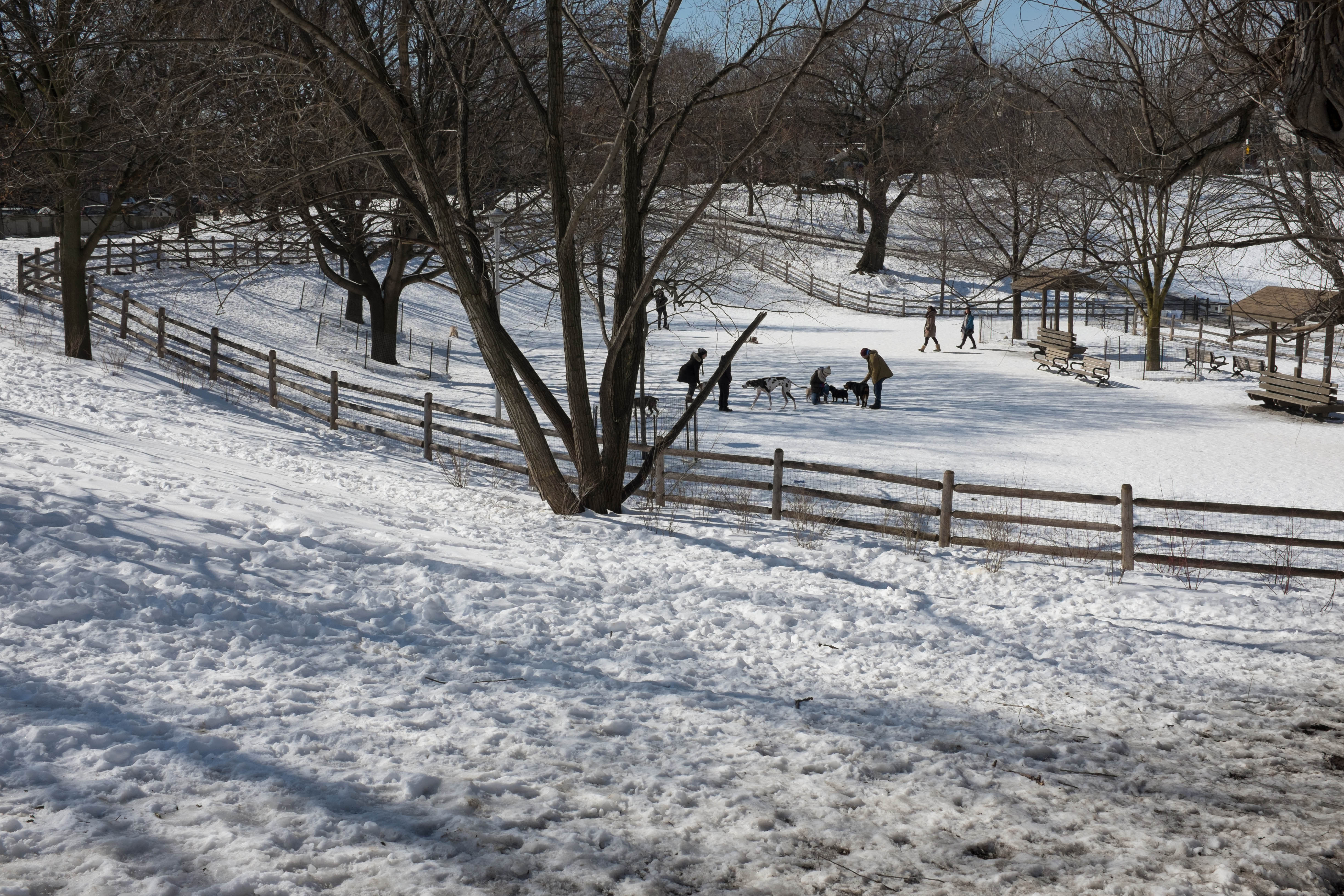
Dalmation-coloured great dane
Israel’s trilemma
The Economist created a graphic illustrating how Israel must choose between three objectives, without being able to achieve all three at once and with objectionable features arising from choosing one pair over the other options:
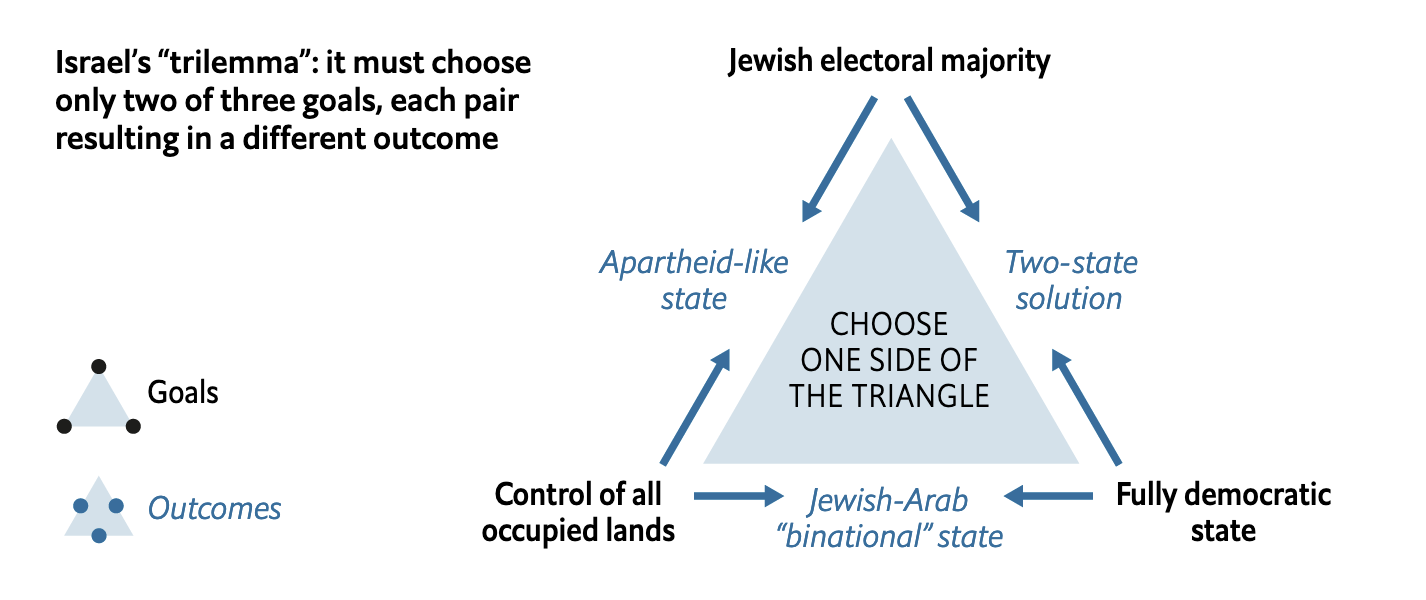
They need to make some choice between giving up occupied land, ceasing to have a Jewish electoral majority, and being a fully democratic state.
Prime Minister Benjamin Netanyahu’s recent comment that Israel is the homeland “only of the Jewish people” suggests that this government at least is willing to prioritize continued occupation and a Jewish majority over equal treatment of all citizens.
Canoe in the snow
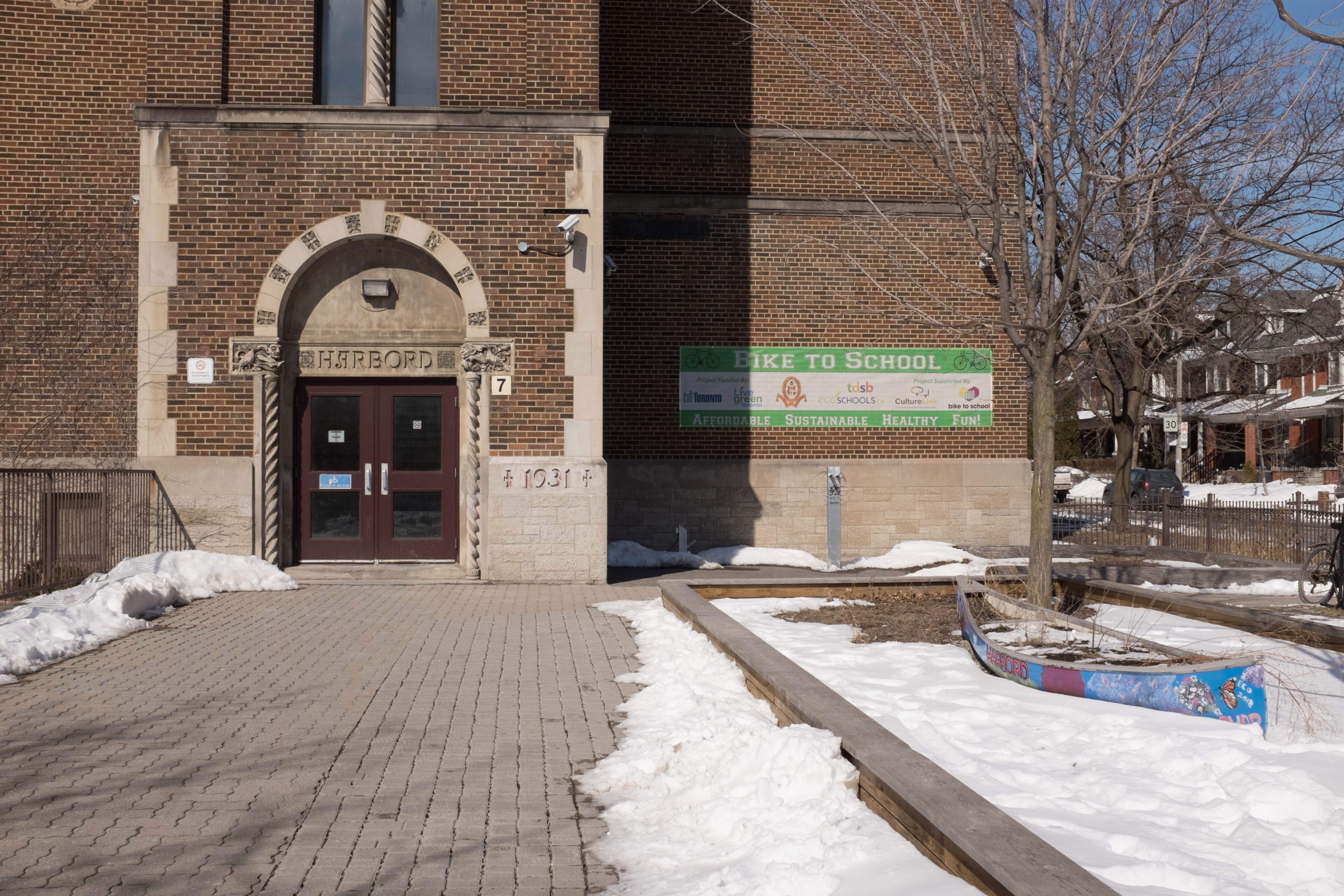
Hoop

Red bike

Campus back alley

Understanding al Qaeda
I’m now halfway through Ali Soufan’s Anatomy of Terror: From the Death of Bin Laden to the Rise of the Islamic State. Like his earlier Black Banners it’s both informative and accessible, going into considerable detail on the motivations and internal deliberations and conflicts of jihadi terror groups. While Black Banners was much more about Soufan’s personal story, Anatomy of Terror is structured around the lives of a succession of important figures in the emergence of al Qaeda and the Islamic State, including Saif al-Adel and Abu Museb al-Zarqawi.
It’s important history to understand, especially from the perspective of analyzing western foreign and security policy over the last 15 years or more. I’ll post some especially interesting quotes one I get through with the book.
This sort of reading, which doesn’t relate directly to my teaching, coursework, or research, is a vital form of relaxation for me. It’s intellectually engaging and complex, but for me doesn’t produce much of an emotional response. I also find that I get through it very efficiently, in frustrating contrast to things which I really need to read but sometimes struggle to get through every paragraph and page of.
Toronto’s greatest sanctuary
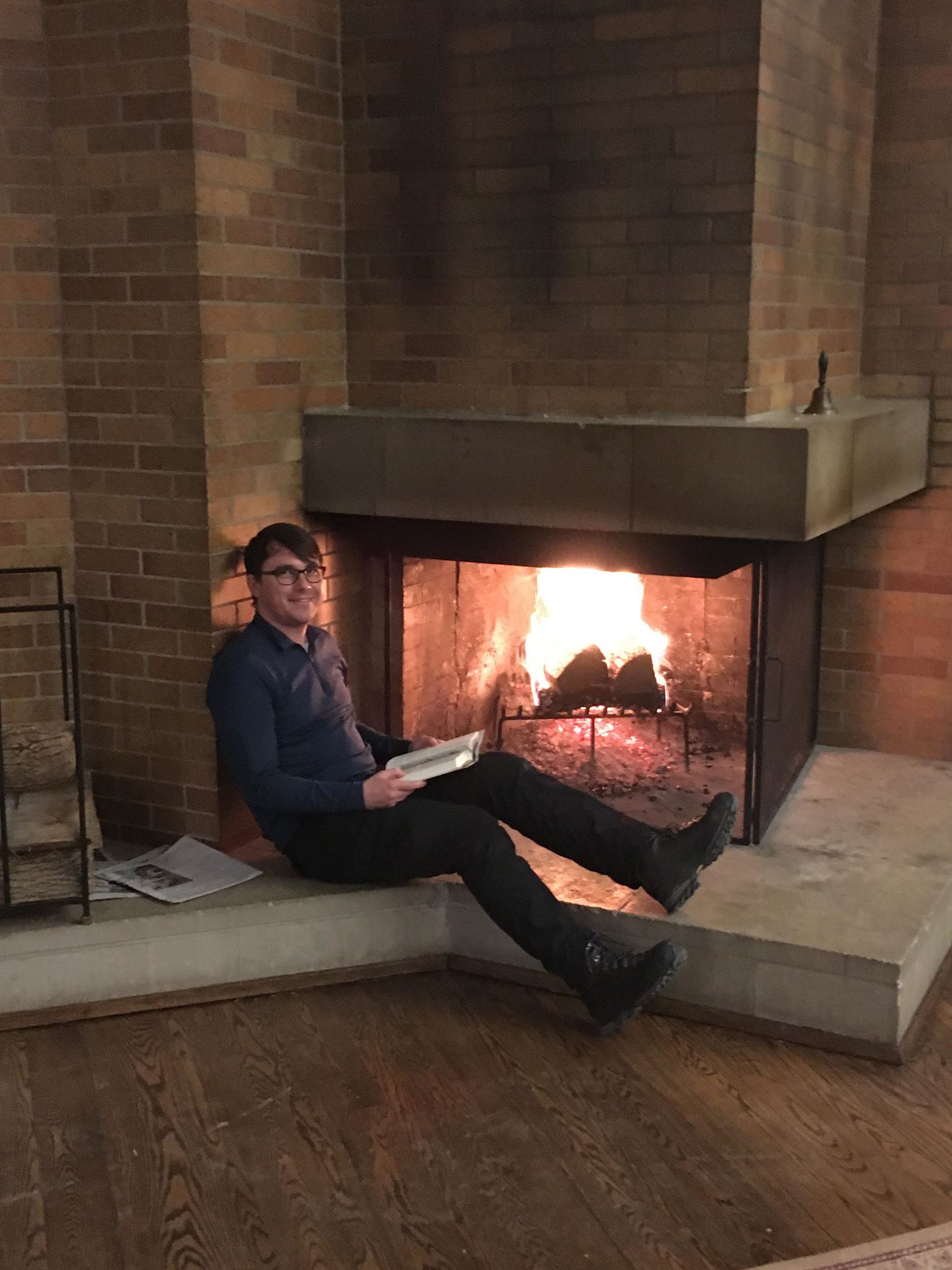
Photo by Joe Santu