

Author: Milan
Sweep

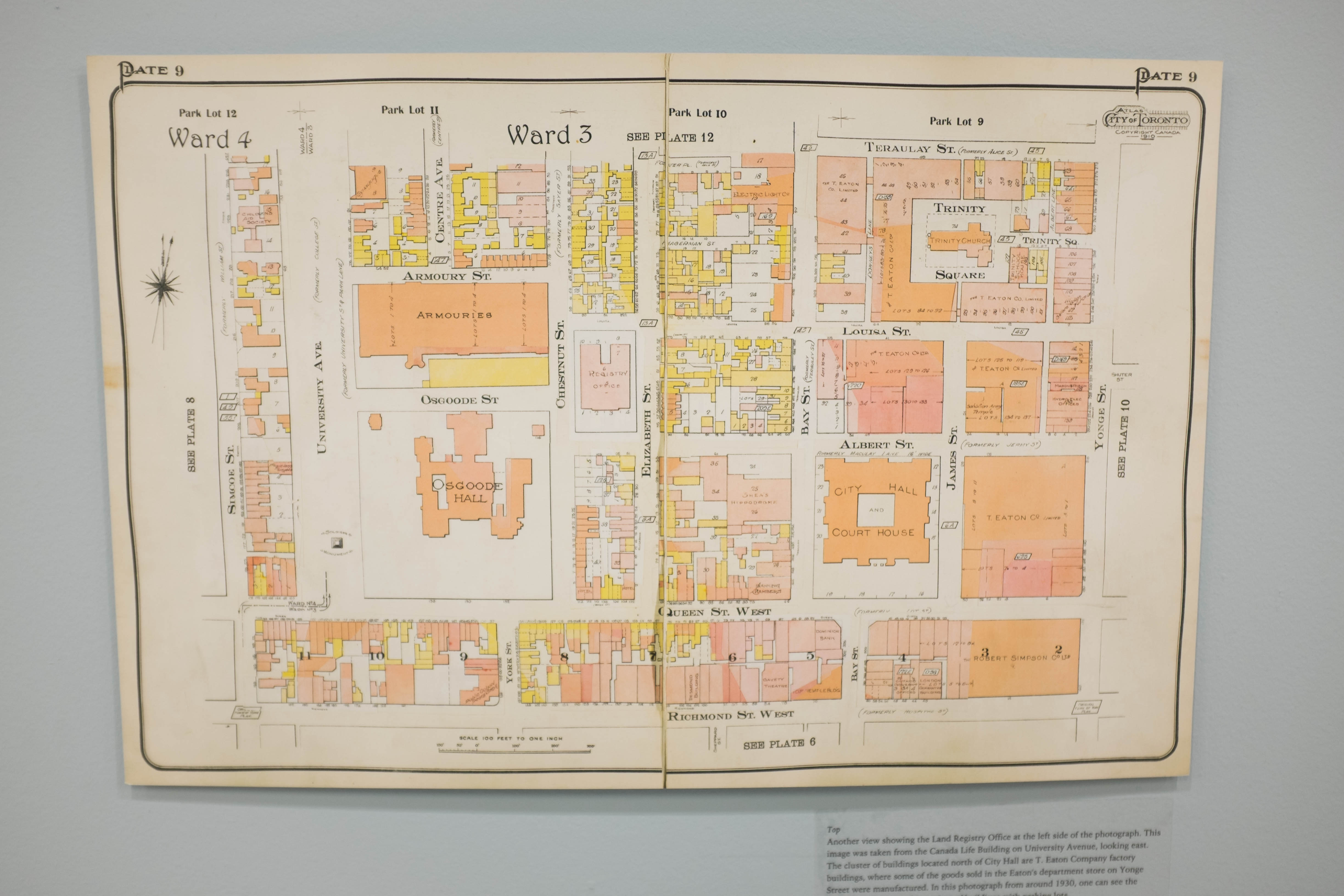
Vintage map of city hall neighbourhood
Prospects for a Green New Deal
A frequent criticism of climate change policies like the Leap Manifesto and the Green New Deal which seek to accomplish a number of labour and social justice objectives alongside controlling climate change is that the policies don’t have a logical relationship with one another, framing the effort this way reduces the emphasis on climate change specifically, and taking this approach will create barriers to political success. The Economist‘s online Democracy in America column recently argued:
Such objections are thought unsportsmanlike by the proposal’s backers. The Green New Deal has people excited in ways think-tank white papers on cap-and-trade schemes never did. Boosters argue that it moves the “Overton window” of political dialogue: towards taking serious action on climate change. The little details, like how to pay for universal health care and a federal jobs guarantee can be dealt with later. Perhaps the Green New Deal will galvanise the youth vote, or help elect environmentally minded Democrats. Perhaps it is good politics to yoke environmentalism to other economic policies that could be popular.
Yet it seems rather more likely that the politics of the Green New Deal will backfire for Democrats. Republican strategists have stymied progress on climate change by caricaturing Democratic ideas as pie-in-the-sky efforts that would result in massive tax increases. Their parody now seems reality. The next Democratic nominee may well be someone who has endorsed the idea of the Green New Deal.
There is little wonder that Nancy Pelosi, who cares about climate change but also retains shrewd political instincts, has been so public in her doubting of the proposal. “The ‘green dream’ or whatever they call it, nobody knows what it is but they’re for it, right?” she told Politico. The bold plan could make the party unelectable in conservative-leaning states, ensuring that Republicans retain control over one chamber of Congress or even the White House and then stymie all climate legislation—whether sensible or not—for years to come.
There’s certainly a counter-argument. People may care somewhat about climate change, but it’s never their top priority in comparison to personal welfare issues like health, education, or taxes. Also, people have many financial concerns about climate change action. Conceivably, a broad-based policy could tie climate change protection to other tasks of more immediate political interest to people, and mitigate concerns that decarbonization will be economically damaging.
There’s cause to the skeptical about that enthusiasm, however. If a package consists of a bunch of objectives with relatively appealing short-term benefits, along with decarbonization policies which are largely about enduring near-term costs to avoid long-term catastrophe, it’s quite possible that the climate parts will be dropped, diluted, or counteracted. One virtue of an approach that focuses narrowly on decarbonization and climate protection is that it could be made compatible with a range of ideologies and party platforms. That is to say, there may be a lower chance that it will just be scrapped by the next non-progressive government to be elected.
Painting in city hall library branch

Exploring the Toronto waterfront
Today Johanna and I took a psychogeographic walk, in which you are meant to constantly make spontaneous choices to seek out whatever seems most interesting. We did well despite icy conditions and found the weird and unexpected grounds of Ontario Place, not open for business but not yet sealed off or demolished.
Overhead view of city hall

Ottawa bound
I’m pretty much focused now on spinning up preparations to go to Power Shift next week. That means preparing for my Wednesday morning tutorials on Quebec and Language Politics, and my Wednesday contentious politics seminar on framing and identity. I also have office hours with students who want to discuss essay drafts on Monday.
This time I will be taking the train, unlike all my previous Ottawa–Toronto journeys. I can’t remember how many years it has been since I took an intercity train (maybe to a climate conference in Montreal, from Ottawa, sometime around 2009?), but friends tell me it’s a whole lot nicer than the Greyhound, and in this case it was basically the same cost.
I went to a drop-in clinic about my enduring cold today and was told it’s not strep and that I should discontinue any medication other than ibuprofen and acetaminophen and try to get as much rest as possible. I’ll be staying in a large shared dorm with no privacy, so it would be quite a pain to be acutely ill while in Ottawa.
This will also be a good trial of my replacement for my nearly shredded Barbour Beaufort jacket. I’ve been testing it in various conditions in Toronto, including what passes for extreme cold here, but anticipating a fair bit of time outside and night-time walks in Ottawa I’m planning to bring a second pair of merino wool long underwear for layering.
Medicine Wheel with Toronto sign

Louis Sobol on divestment at Mount Allison
Louis Sobol recently wrote a piece in the National Observer about university divestment organizing in New Brunswick: Lessons from campaigning for divestment at Mount Allison University.
It covers some themes of the movement: the sense of ecological threat motivating people to take action, the dominant perspectives within the movement about intersectionality and progressive allyship, an explanation of the objective of stripping fossil fuel companies of social license, a description of a range of tactics used by campaign organizers, and frustration with the university’s response.