Academic and non-academic reading

The Wednesday Market in Gloucester Green

Ten January nectarines, a pound of red peppers, garlic, cherry tomatoes, and ginger: at Emily’s suggestion, I went to the Wednesday Market in Gloucester Green today. As I’ve said before, ‘green’ is a definite misnomer. That said, to get a sack of fruit and veggies for £5 makes for a nice contrast with Sainsbury’s.

Aside from reading, not a great deal happened today. In a productive piece of procrastination, I read Around the World in 80 Days. I hadn’t not read it before, but only heard parts of it read aloud during one of my family’s traditional trips down the Oregon Coast (on which both Jonathan Morissette and Kate Dillon accompanied me more than once). While rapidly digestible, it’s certainly not the most complex of novels: fuelled more, perhaps, on national stereotypes and an early anticipation of the consequences of globalization than on solid characterization or description. Verne’s frequent misunderstanding about knots – thinking them a unit of distance, rather than velocity – is particularly irksome, despite being only a very minor point. A steamer that goes “eight and nine knots the hour” would be going very fast indeed after a few days. Reading it after the demise of the British Empire, one cannot help being struck by a tinge of collective nostalgia. Collective because the British Empire is something I’ve only experienced by distillation, and by virtue of being Canadian.

Tomorrow, we have our first qualitative methods class. The three focuses are foreign policy analysis, interviewing, and archival research. All strike me as things likely to be useful.


  • No sign yet of the form I need for formally request exemption from future college meals. I will make a third request for one tomorrow morning.
  • Hardly anyone from Oxford is on my MSN contact list. If you want to be, send me an email, find my MSN username from my Facebook profile, or contact me by some other means. I am also on AIM and Skype.
  • Everyone back home is fixated on the new series of 24. I rather liked the first series, watching the whole thing twice, but found the second ridiculously implausible, in terms of politics. That said, their energetic accounts make me envious of those with television access: a very unusual feeling for me.
  • At times, we must all curse how there are no university run wireless networks in Oxford. The DPIR IT people tell us it’s because the colleges can’t agree how to do it: an explanation I believe, even as I find it frustrating. The iBook would certainly wander farther from my desk if it could talk to other machines from elsewhere. This is part of why Oxford’s continued devotion to old ideas and old rivalries will sink it in comparison to American schools in the next few decades, unless things change a great deal.
  • Seth’s blog directed me to a community of LiveJournal users all trying to get into Oxford. Take a look, if it interests you.

1000 Extra/Ordinary Objects

This afternoon, in little jots between reading Keohane and Waltz, I finished the coffee table style book that Margaret gave me for my birthday: 1000 Extra / Ordinary Objects. Edited by Peter Gabriel and part of the Taschen series, it’s much less innocuous than the title and skillfully photographed pages would suggest. Indeed, it deals constantly with themes of warfare, violence, oppression, and abuse. Throughout, objects intimately connected with some of the worst of human activities are presented, often ironically situated alongside a more innocent item with a thematic connection.

Jello is presented alongside a description of the mechanical slaughter of 6-month-old calves, from which it is made, and on the page beside a sauce designed to be used for flavouring dead animals found alongside the road. Packets of branded heroin adorn the same pages as chocolate bars. All told, the book presents a fairly disturbing picture of humanity: a glimpse into an image-obsessed, casually violent, and quite possibly seriously deranged collective.

As you would expect from a Taschen book, it is certainly elegantly presented. Each object is photographed under studio conditions, devoid of context except insofar as it is not provided by the sans-serif gray descriptive paragraphs – written in English and French. The tendency to associate even innocent objects with disturbing descriptions highlights the extent to which the book sets out to shock; the Pikachu doll comes accompanied with a description of how children were accidentally given epileptic seizures by a flashing light display in one episode of the Japanese television show. All this makes the strange Japanese products that are staples of the curious object genre seem particularly innocuous, by comparison. This book could easily be reformatted into a gallery show at the Tate Modern.

Working, once again, to increase the number of facts known per cubic centimetre of brain

Upper Camera

Today was based around several rotations of the great term-time wheel of reading positions that I have established. Cornmarket Street Starbucks to Nuffield Library, to High Street Starbucks, to Upper Camera, to Codrington, to Wadham Library, to Wadham JCR (when quiet), to Wadham MCR (when quiet), to Blackwell’s on Broad Street and around and around again: reading a chapter or two in each position. The strategy keeps my brain from just skipping over long sections of text, while also helping me resist the desire to do something more complex than reading.

I was assisted today by the subject matter. I finished the second half of Richard Overy’s excellent Why the Allies Won: possibly the most engaging book I’ve read since arriving in the U.K. It is well written, convincing, and authoritative. Even though it covers the very familiar terrain of the second world war, it still conveys a great deal of new information and a deepened sense of understanding. Recommended to anyone with an interest in military history.

Dramatically less engaging was my continued slog through Keohane’s Neorealism and its Critics. While it has demonstrated that my conception of neorealism is, in some ways, a bit of a parody, it still isn’t the kind of book you wake up early or stay up late for the enjoyment of reading. Tomorrow morning, I will try to do one of my circuits with it as the sole book in my possession. Despite my best efforts to train myself otherwise, I will almost always read books in order from most to least interesting. This means that I neglect books that are important but very boring, but it does maximize the overall amount of reading I do. Related personal tendencies: eating food I buy in order from least to most preparation time, until I only have food that requires extensive preparation, and wearing clothes in order from most to least comfortable, until I have no clean ones left.

Tomorrow afternoon, good things are planned. For now, I am going to bo back to at least another four hours’ reading, even though most of the nodes on my circuit have already closed.


  • I was pleased to receive a barrage of comments from Meghan today. A surprising number of people seem to find it difficult to post comments. For their benefit, here are some brief instructions.Instructions for commenting:
    First, you need to get to the page specific to the post you want to comment about, rather than one of the archive pages that lists a whole month worth. To do that, just go to the bottom of any post and click on either the blue underlined time at which is was posted, or on the blue underlined bit where it lists the number of comments. For instance: “9 comment(s).”

    Once you are on a single post page, like this one you will be able to see existing comments. Click the “Post a Comment” link to leave one. Clicking the “Home” link will take you back to the front page of the blog.

    Once you have clicked “Post Comment” a new page will open. Then, in the page that comes up, just type your comment. You can enter Blogger login information, if you have it. If you do, it will put your default picture beside your comment, as well as allowing you to delete it later. You can also use ‘Other’ to leave a comment under your own name or alias or ‘Anonymous’ to leave a comment marked as such. Such comments, only I can remove. You will need to copy the squiggly letters that appear below the comment box into the text box below them. This is to keep spam robots from leaving hundreds of comments about their various sordid wares.

    Clicking the blue underlined “Milan” at the bottom of every post opens a window for sending a message to me, if you have configured your email client to do so. Using the “Contact Me” link in the sidebar does the same thing. Finally, the little white envelope lets you email a post to someone else. Please don’t send them to me, I already have them.

  • At some point, I will produce an FAQ (Frequently Asked Questions list) for the blog, but I have resolved to do no more structural modification until I’ve dealt with the stats exam and next term’s pre-reading.
  • On a related note, please stop going to the old address (sindark.blogspot.com). The continued existence of that page is causing problems for search engines. The new address, sindark.com, is what everyone should use.
  • The iBook is increasingly grinding and heaving its way through collections of tasks it formerly had no trouble with. I’ve taken to using my iPod to listen to music while on it, just to free up some RAM and CPU time from iTunes. Given my extremely hesitant attitude towards installing new software or keeping programs I do not use, I don’t know what’s going wrong.
  • The comment about a relative dearth of environmental politics related stuff here is spot on. It’s partly a question of what the course and life in general brings to my doorstep. That said, I will make more of an effort to read and talk about my alleged intended speciality.
  • This is my 1050th post made through Blogger. That obviously doesn’t include the hundreds of OpenDiary posts in the pre-Blogger era.

Review: The Penelopiad by Margaret Atwood

A clever take on an old tale, namely Homer’s Odyssey, Atwood’s short book manages to be critical without being abrasive. It definitely makes for an interesting complement to a text that has become central to so many literary and narrative traditions. In addition, there are a great many clever little nods to Greek myth and subsequent literature. I especially appreciated the sometimes-overt, sometimes-sly references to Tennyson.

The best thing about the book is certainly the character of Penelope as the narrator: speaking from Hades and interrupted on occassion by contributions from a chorus consisting of her murdered maids, around whom the story also revolves. The anachronism is handled skillfully, as aspects of modern and classical fiction sit side by side in the same way as Penelope’s observations about the ancient and modern world. This is the work of a confident author.

The book is concise to the point that there isn’t an enormous amount that can be said about it save that it’s clever and well worth the time it takes to read.

Final post for 2005

Culinary attempt

I made an attempt at an omelette today, using a new non-stick frypan I bought at Boswells at half price. While it never quite entered the world as an omelette – the word ‘scramble’ comes to mind – it was nonetheless quite tasty. It had peppers, sharp cheddar, garlic, ginger, tofu, and potato. That is to say, every kind of vegetable matter I had at the time of production. Tofu is enormously better when cooked in a frying pan – it loses the squishy mud texture. As a culinary experiment, I rate this a low pass. It didn’t quite end up an omelette, but was still enjoyable to eat. I really need to get a cutting board: it’s absurd to be using my Swisstool and pieces of paper towel to chop up all my cheese and veggies.

The book which I’ve previously mentioned being in the process of reading and enjoying is Margaret Atwood’s The Penelopiad: the Myth of Penelope and Odysseus: a retelling of The Odyssey from Penelope’s perspective. The best thing about it is definitely the skilled narrative style: delivered from Hades with an impressive emotive range. If I were to teach The Odyssey, I would assign this as a companion work. It’s also good to see some of the dodgy aspects of a piece of literature addressed in a way that is creative, as well as cutting. I will post a full review here once I finish it.

Now, I need to don my suit and head out in search of both dessert – I am thinking pie and ice cream – and beer for tonight’s New Year’s party. Judging by the high quality of Claire’s last party, which I remember partly for the lengthy argument I got into about superstring theory, it should be a good one. There look to be rather fewer people this time round, which will doubtless alter the character of the gathering considerably. In any case, I am glad to be going. I shall write something about it tomorrow.

Happy New Year, everyone. I hope people have fun tonight. There’s really no point in me specifically listing resolutions. It has all be said here before.


Merry Christmas, to family and friends around the world

Fountain near the Isis

I am really excited about this vegetarian cookbook from Hilary. Emboldened, this afternoon, I bought materials for an exceptionally healthy Christmas dinner. I have red peppers and potatoes and garlic and ginger, pita and hummous and tofu and potatoes, sugarsnap peas in pods, tomato basil soup, and hot sauce. While I’m not entirely sure how they will combine, I am entertained by the sheer novelty of making things more elaborate than sandwiches. All this matter was acquired along the course of a long sweep from Wadham out to the end of the shops on Cowley Road, and then back by means of the large Sainsbury’s, near Nuffield.

Among my other books, the Hume guide leaves something to be desired, though the introduction to cryptography is informative – most notably for the use of good examples and analogies. Tonight, aside from a few culinary experiments, I should dedicate myself to finishing the issues of The Economist that piled up in my absence, as well as the books that demand completion before the next term begins. Also wise would be to write a few of the letters that I had been postponing until the anticipated leisure of the inter-term break was at hand.

My immediate family is traveling now, I think, towards North Carolina, where they will be spending the next little while visiting members of my extended family. Other members of that group are in Toronto, Bennington, Prague, and elsewhere. My friends are in England, across Canada and the United States, in New Zealand, Australia, Japan, Ecuador, China, Ghana, and elsewhere. My best wishes extend to all of them.

Perhaps it is a bit hypocritical for me to attribute an importance to Christmas, when I do not subscribe to the faith to which it is attached. At the same time, Christmas has never really been a matter of faith in my family but rather, and at its best, a time to celebrate and reinforce our ties to one another. Only insofar as it is social – a collective enterprise – is life in this world pleasant and purposeful. My sincerest thanks extend to all those who have let me participate in their enterprises and understand their purposes, and with whom I have been able to share my own. May you all feel connected to one another, tonight.

A joyful first day in Oxford

Cactus in the botanical gardens

Today was a brilliant day. I managed to be out and about by 8:00am Tallinn time (10:00am here, but still) in order to go for coffee and a walk with Margaret. For the first time, we walked through the botanical gardens around Magdalen College. In particular, the contents of the greenhouses were fascinating and beautiful. I especially liked seeing all the edible species: coffee, peanuts, plantain, etc. I looked for Camellia Sinensis, but had no luck.

Afterwards, we went on a tour through several Oxford bookshops – all of which made me burn with the desire to read more. In the end, I bought three: all of them from the Blackwells series of Very Short Introductions. I got ‘Emotion,’ about which I know very little, ‘Hume,’ who I consider my favourite philosopher, and ‘Cryptography,’ about which I always want to know more. Blackwells bookshop is definitely among my favourite places in Oxford. It makes me aspire to days of retirement when I can concentrate on reading, cooking, and gardening – as I envision that I shall.

Margaret is now departing for the next while, leaving me almost completely alone in Oxford. If I remember properly, Nora was supposed to come back on the 19th, but I haven’t seen any sign of her. Perhaps she is in London. Claire and Emily are definitely out of town, though perhaps Bryony is around. Alex is still in New Zealand – as you would expect after travelling so far – and I don’t know where Roham is located. Bilyana, I expect, is with her family up north.

Today also brought a vast amount of excellent mail. First, and largest, was a package from my mother for Christmas. They will be leaving tomorrow for North Carolina, so it seems unlikely that they will get mine until their return. My mother sent me a blast of Canadiana. She sent Margaret Atwood’s The Penelopiad: the Myth of Penelope and Odysseus in hardcover, along with an elegant bookmark. Unfortunately, the book is not inscribed, as I would strongly encourage anyone who sends me a book to do. She also sent me a very nice looking red, white, gray, and black scarf and another with a very intricate East Indian red and black pattern on it. The first, I think, is better suited to wear – the second to decorate my room with. The pattern reminds me of the piece of cloth that Kate used to cover her computer monitor, at her house in Victoria. Also decorative is the Red Cross calendar with pictures of Canada on it. Finally, she enclosed a large Canadian flag, for which I shall have to find a good spot. I am not sure whether it is the flag that Kate gave me ages ago and which I left in North Vancouver, or an entirely new one. I will need to borrow the hammer and nails from the housekeeper again. Many thanks to my family for such a considerate collection of gifts.

Along with the package from my mother, I got a Christmas card from her sister Mirka and my uncle Robert. Along with my cousins Megan and Dylan, they live in Bennington, Vermont, where my aunt teaches at the university. I very much hope they will have the chance to come visit Oxford while I am here. The Magdalen botanical gardens have definitely been added to my tour route. I must remember to write them a letter in response, as well as send one to my aunt, uncle, and grandmother in North Carolina.

Another envelope came from Meaghan Beattie in Vancouver. Along with a very sweet card, she sent me a genuine passport for Hell, such as we found and were enormously amused by when wandering in Chinatown. It includes a plane ticket to Hell (from Ming Fu Airlines) and a Bank of Hades (oddly, with a ‘Heaven Main Office’) chequebook and Mastercard. I am just as bemused by the collection as when we first encountered it, wandering Vancouver’s rainy streets. Meaghan is definitely among the Vancouverites whose direct company I miss the most. Unfortunately, I can see from the return address on the envelope that the postcard I sent her from Tallinn was sent to the wrong place. It will reach nothing more than a dead letter office, since it had no return address. I shall have to send her another, from Oxford.

The last package contributed still further to my collection of reading materials. An unknown person, who I strongly suspect to be Hilary McNaughton, sent me the Student’s Vegetarian Cookbook. Whoever did send it (and the package does not identify) gets me hearty thanks. While I may need to wait for retirement in order to start learning how to garden, learning how to cook sooner is almost certainly wise.

I suppose it may have been appropriate to refrain from opening what was clearly Christmas mail until the day itself, but the thought didn’t really occur to me until now and I have no regrets about not doing so. It has successfully pre-empted any possibility of feeling lonesome in a somewhat deserted Oxford over the next little while. It’s a wonderful feeling to have such a collection of concrete evidence of not having been forgotten by people elsewhere. The sheer satisfaction of it has convinced me to send more mail. It should also help me feel less overwhelmed about all the things that crop up demanding to be done after a trip. I tend to pick a long but pleasant one as an opening task, using breaks from it to complete short and unpleasant ones. You also need to stay on guard for moments suited to tasks that can only be completed in a particular state of mind, such as writing good letters.

During the afternoon, I worked out the shared tally for the Baltic trip, as well as entered the whole collection of figures into my finance tracking spreadsheets. [Section removed, 23 December 2005] Even with cheap flights and cheap cities, these things add up. That’s a quarter of what the whole Prague / Italy trip with Meghan Mathieson cost, and it was four times as long and started from Vancouver. I would tell you how it compares with other trips, but mining the old blog is tedious since it is no longer online and Google searchable. I also caught up with the many Oxford blogs that I read. I feel like I know these people rather better now than back when I first met a group of them. Perhaps the next few months will bring another such encounter.


  • People to whom I must write: Vermont Family, North Carolina Family, Meghan Mathieson, Meaghan Beattie.
  • Some good commentary on the security value of checks and balances from Bruce Schneier: my go-to guy for information about security.
  • The new version of MSN for Mac: takes more RAM, looks a bit slicker, still crashes just as often.
  • My brother Mica has a new video out: “Little Green Bag.” It may be a mark of the changing focus of his life that it is shot on campus at UBC, instead of in North Vancouver. I think the young woman in it may be Mica’s bombshell love interest from the musical Damn Yankees, reviewed on the old blog.
  • More than ever, I want to meet Philip Pullman, the masterful author of the His Dark Materials trilogy and an Oxford resident. Anyone who knows of an event where he will be present is politely begged to contact me about it.

An Instance of the Fingerpost

This morning, I finished Iain Pears’ An Instance of the Fingerpost, which Nora gave me as a birthday gift. An intricate and well-constructed book, it is heavy with complexity and the need to re-evaluate that which has been said before. It consists of four accounts of actions centred around the same period, and around the same singular individual. The author is at his most skillful when constructing the characters of the four narrators and, from a combination of their thinking processes and experiences, constructs a viable narrative for each, none of which are entirely adequate for understanding what transpires.

The central theme of the book is probably the nature of truth. All the science and experimentation of the first part strikes at it, as does the fruitless quest of the second, the subterfuge of the third, and the historical analysis of the fourth. None are entirely satisfying – despite the revelatory tone of the final account. It obviously could not be so illuminating without the contributions of the others. Indeed, the overall thrust of the book is to make one doubtful of whether truth can ever be known. For me, that was highlighted by how my willingness to believe the conclusions of any character had much to do with how personally appealing I found them.

When it comes to the science and medicine, one can maintain the hope that truth is being progressively more closely approximated in our theories and models. Certainly, doctors today are dramatically more likely to help you than they were at the time during which this book is set. We also have a far better understanding of many of the physical and chemical phenomena described in the book. Insofar as the natural world is concerned, truth is not such a problematic thing. We can say, with a very solid authority, that penguins mate for life. Much of that conviction evaporates, however, once people get involved in our consideration. Motives, thoughts, and personalities are all ephemeral things, difficult to comprehend both from within and without. We don’t get the matter of the thing itself, but rather a story constructed about that matter that will need to suffice. The same is probably true for science, but we are able to make better stories. That is probably primarily because the natural world is in important senses unchanging: in terms of the phenomena that underlie and direct it.

The book’s remarkable conclusion takes everything back to the question of judgment and truth. While I wouldn’t be so heartless as to lay out the surprises, the book definitely ends on a very strong note. My thanks to Nora for the gift. I recommend the book, particularly, to anyone with an interest in British history around the time of the Civil War and Restoration.

Reflections on The Tipping Point

The Tipping Point is the kind of book you can absolutely tear through: non-fiction, no flowery or complex language, interesting and straightforward. Not necessarily beyond criticism or response, but structured in such a way that you can accept conclusions provisionally as you scamper forwards. It’s really quite a fascinating book, much more because of the examples than because of the analysis. Looking at things as diverse as differences between Sesame Street and Blues Clues or the changes in policing styles in New York City in the 1980s and 1990s, Gladwell makes some interesting and unexpected points.

Also fascinating is Gladwell’s discussion of relationships as external memory systems. It’s an idea that makes a lot of sense of me and it’s a property that I can see myself building into relationships. An example of that would be through the creation of shared jokes. They are both badges of identity and examples of the way that information can be more effectively held and understood collectively. When Gladwell explains that losing relationships of an intense romantic sort can feel like losing a piece of one’s mind, I understand it completely. Wandering around in the High Commissioner’s house, where hundreds of people were mingling, I was acutely aware of how much better I could have dealt with it had Kate or Meghan been with me.

I feel something similar about intellectual expertise. When I find myself confronted by a question that I know a friend of mine outside Oxford could help answer or understand, it’s frustrating. Indeed, I try to internally simulate them, as an alternative to actually having them around. Pseudo-Tristan is the resident expert on many kinds of philosophy, and likewise for many others in many other fields. Moreover, anything I think or understand in those fields is emotionally connected with those people: radio is connected with Alison, anything military with Neal, anything diplomatic with Fernando, anything photographic with Tristan, etc, etc, etc. As a way of relating to information, it’s one that feels good – because it puts you in the middle of a social web that mimics the diversity of the world, while also creating a sense of joint purpose and a common understanding in excess of the individual one. It’s the sort of thing that makes you feel connected and purposeful.

That’s the big project right now, after all: defining and cementing an identity. That’s why everyone is posting little quizzes about themselves on their blogs. Which Lord of the Rings Character are You? Which Muppet? Which Colour of Anime Hair? Understanding the world, by understanding our place in it, especially relative to things that we care about: defining favourite musical artists, coffee shops, and films. It may seem trite or consumerist. On some levels, I suppose it is. But it is also the projection of a fundamental and powerful drive.

The Tipping Point is a book that you read like a life manual. That’s not to say you accept everything in it; no manual is perfect or always perfectly appropriate. It means that you evaluate it and internalize bits of it as practice, rather than as knowledge. They are very satisfying sorts of books to read. They are exciting, because they make you hope you will soon understand the world better. At the same time, you are aware of the danger of such direct lessons: there is always the lingering concern that it might be cheap, shoddy, ill-thought-out in a way that lessons learned gradually and indirectly feel less likely to be. There is also a fear – grounded, I suspect, in too much contact with academia – that it is too externally comprehensible. Anything that could be grasped by someone with no particular background other than interest is automatically a bit suspicious, quite possibly dangerous. That said, it strikes me as an impulse that it makes sense to fight. For those willing to do so, I recommend having a look at this book.

Back to reading

Kelly and Huston in the King's ArmsSince all of the Waltz and Mearsheimer books seem to have been plucked from the Wadham Library – and no surprise, since neorealists are selfish and wicked – I started Keohane’s Neorealism and its Critics today. I shall have to find The Tragedy of Great Power Politics and the Theory of International Politics somewhere, before I go to Estonia.

The progression of much appreciated pieces of mail continued today. My mother sent me a package for St. Nicholas Day, including candy, a toque, and a book. The book is Malcolm Gladwell’s The Tipping Point: How Little Things Can Make a Big Difference. The toque is synthetic, reversible, and warm-seeming. I anticipate being especially glad to have it in Estonia, though one with short hair can never really have enough things with which to cover one’s increasingly valuable brain. Pickled, mine would now be worth Pounds and Pounds. Many thanks to my mother for the gift.

I finished listening to the third book in the Hitchhiker’s Guide to the Galaxy series, as played on the radio, today. I much prefer the books. To me, the voice acting is overdone to the point of being annoying. Somehow, it manages to be dramatically less funny off the page – to me, at least. It may be that I know the books so well, there was no chance the same jokes in another medium would really work. That said, I have never enjoyed the radio, with the singular exception of when I used to listen to it with Alison at the middle of the night, when we were in elementary school.

Talking with Jonathan this evening, I learned that my friend Emerson got into a collision with another cyclist on the Lions Gate Bridge. Thankfully, and as you would expect, he was wearing a helmet. Though shaken up badly, he doesn’t seem to be in serious danger. Because one of the bike lanes is closed for construction, people going in both directions have to do so on the same sidewalk. I hope he recovers quickly and completely and that people who knew him from Handsworth or Camp Fircom will take the effort to check in on him.

Later this evening, I donned my waterproof, wide-brimmed hat and set out into the rain to meet Claire. We visited the Eagle and Child, where I once went in search of IR M.Phil students but was turned away empty handed. Tonight, we had a nice conversation about travel, photography, alcohol sociology, high school peer groups, and much else. Claire also told me something about the composition of our core seminar for next term. Canadians will be envious to learn that Jennifer Welsh is one of the two seminar directors. At UBC, I remember her being described to me as “one of Canada’s most brilliant and accomplished young minds.” I was also glad to hear that Bryony, Alex, and Emily will still be part of my group.

After leaving the pub, I had the chance to see the inside of her college, and we chatted for a while with the barman about scotch and North Carolina: yet another of these ubiquitous North Carolinians in Oxford. St. Cross is a very modern looking college on the inside, as I noted to Claire. There is something about the way discourse flows at all graduate colleges that I can’t actually explain yet, but that I can spot readily.


General comments:

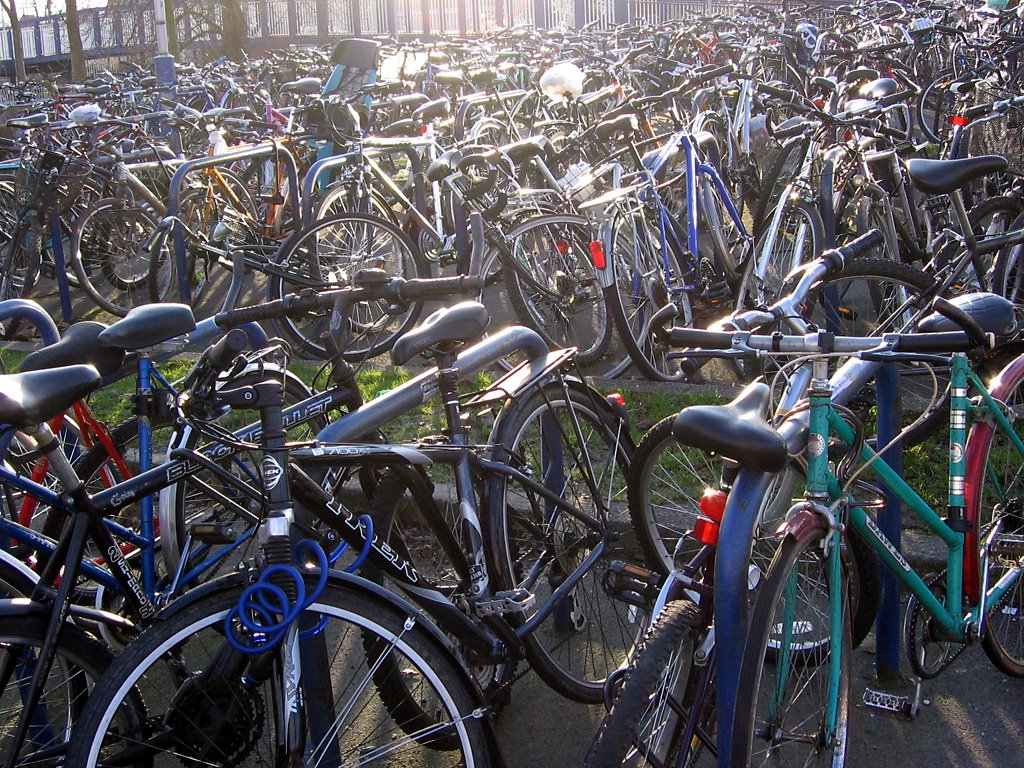
  • Does anybody know when the police bike auction next term will be? I’d also like to know where they happen and what I would expect to pay for a used bike in good condition. Also, I need to figure out where I can get a helmet, lights, and a lock for a tolerable price. It’s annoying that I have all of those things back in Vancouver, but it would almost certainly cost more to ship than to buy here: especially if I can sell it in summer 2007.
  • I am worried about Frank. His posts are stranger than usual lately, and rather more self-destructive.
  • I need to devise a way to get from Oxford to Stansted Airport by about 4:45am on the 16th. Probably, a rather better idea is to find my way to Sarah’s house the evening prior. It’s in Radlett, which means nothing to me, but I will figure it out.
  • There’s a new episode of the excellent web comic Nine Planets Without Intelligent Life. You should take a peek.

Nerdy computer stuff:

  • Trying to get the blog to render properly in all browsers is a pageant of frustration. In IE, the sidebar sometimes appears at the bottom, sometimes on the side. This seems to vary between different computers and different versions of IE. In Safari, the font is entirely wrong: Serif instead of Sans-Serif, much too large, and bold when it shouldn’t be. Anyone with godly knowledge of CSS and HTML who feels inclined to help me will be praised most highly and received with profound appreciation. I really shouldn’t be spending so much time mucking around with this.
  • On a closely related note, not even PDF files, whose entire raison d’etre is to render identically in all environments, are no longer properly standardized. What is a mildly obsessive self-publisher to do?
  • One bug in Firefox 1.5: for some reason, pages I visit keep getting added to the Bookmarks Toolbar, without my ever requesting it.
  • Another: RSS feeds that are bookmarked will not display if opening them doesn’t leave enough space to the right to show the box.
  • Another: sometimes, the reload button vanishes
  • Blogger has been so slow and unreliable in the last few days that I am considering switching blogging services entirely, not just hosting servers. Which do people recommend and why?