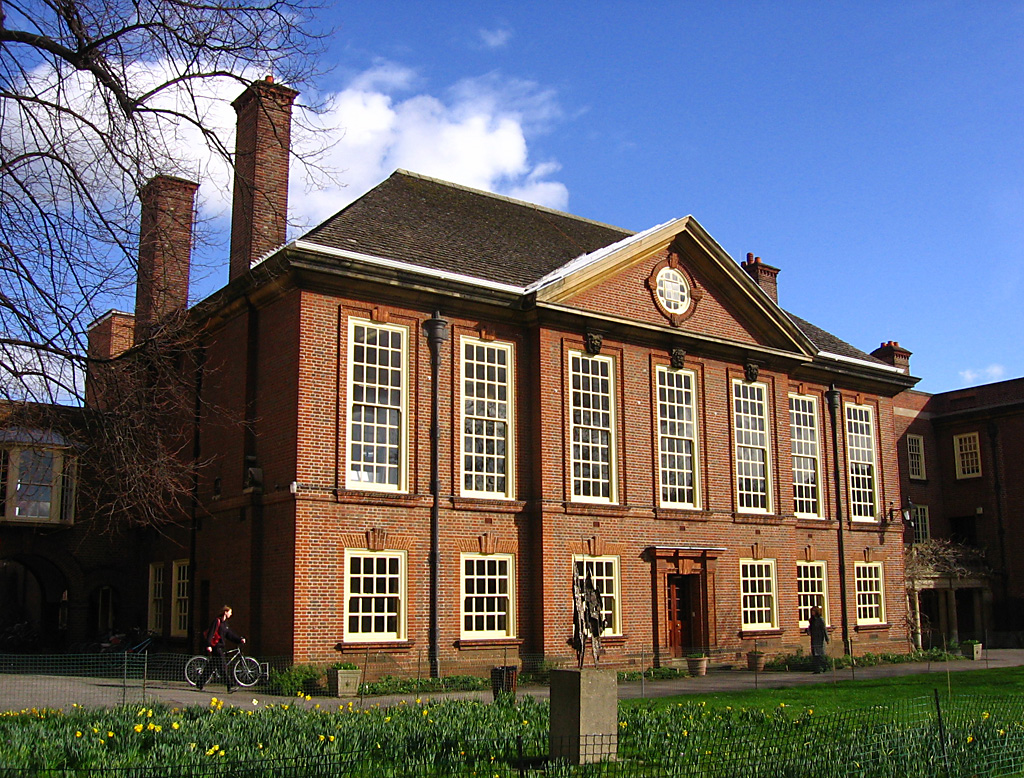
Rare pub visit

Iason Gabriel and Milan Ilnyckyj

My first month here probably involved more days that included time in a pub than days that did not. Of late, the social component of Oxford has evaporated. As such, it was all the better to spend a bit of time at the Rose and Crown on North Parade walk with Claire and Iason tonight. Just the place to complain about theses, hypothesize about space elevators and nuclear fusion, express our doubts about the discipline of international relations, and generally revel in non-laptop company.

Now, I need to work double-time to get a pre-Snowdonia draft of chapter three (of five) written.

One thing not happening this summer

I heard back about the Richard Casement Internship at The Economist today:

Dear Milan Ilnyckyj

Many thanks for your application for the Richard Casement internship, but I’m sorry to have to tell you that you haven’t got it. There were 220 candidates this year, a record number, so I wouldn’t feel too bad about this.

Good luck in the future.

Geoffrey Carr
Science and Technology Editor
The Economist

I was hoping to at least be within the fraction of those who they interviewed, but I expect that would be less than 5% of the total. Even with the pay advertised as ‘a modest stipend,’ I can easily see why 220 people under 25 would apply to write about science for such an interesting publication, headquartered in such interesting cities. Simply in terms of the people you would meet, it would almost certainly be worth doing for free. I hope whoever gets it will make the most of it.

The article I wrote has been posted online, in case anyone wants to read it.

Wales in under one hundred hours

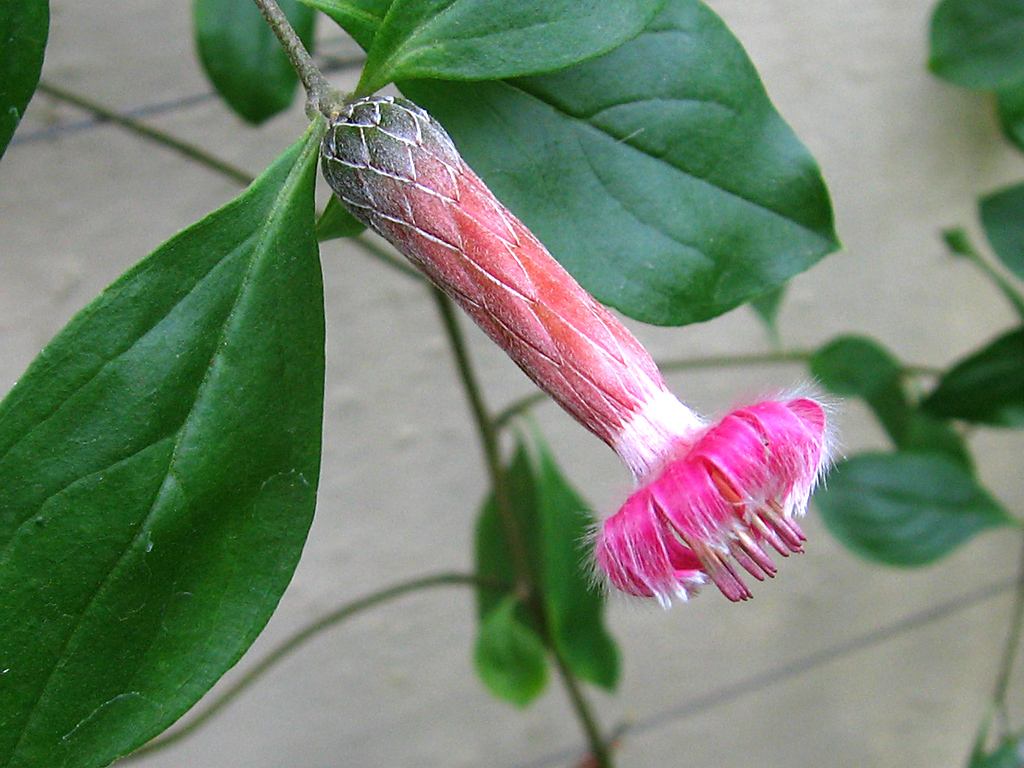
Asteraceae (Compositae) Barnadesca Rosea

With my departure for Wales only five days away, I have been trying to do a bit of reading about the place. The derivation of the name, from the Germanic word ‘Walha’ meaning ‘foreigner’ or ‘stranger,’ is an interesting one. It makes you think about how perceptions of difference still remain local, despite all of the economic and political integration that has taken place in the last century.

The Walking Club plan includes the strong possibility of climbing Snowdon: the highest Welsh mountain. At 1,085m it is about 150m shorter than the mountain on which my parents live, and about ten times higher than anything close to Oxford. It is also slightly higher than the tallest of the Five Sisters of Kintail, which I hiked with the walking club in August. The fact that Snowdon has one of the highest annual rates of precipitation in England should help to avoid any excessive contrast with Oxford. That said, I am really excited about the prospect of visiting a new place, meeting new people, and climbing some mountains, all over the course of four days. I am not even overly concerned that the draft of my third thesis chapter is due three days after I return.

Thirteen people are going on this expedition, none of whom I know. Judging my my prior experiences with the Walking Club, most of them are likely to be pure or applied scientists. The same was true of the group with whom my mother and I walked in Malta. I wonder why hiking has such a special attraction for scientists.

I will be bringing both my digital camera and one of my film cameras on this expedition, though the black and white T-Max film I have left over from Turkey is not what I would have chosen for a wilderness foray.

PS. I am interrupting my series of daily images from various Oxford colleges. I haven’t had time to explore new ones recently, and the remaining ones are somewhat scattered. That said, I will complete the collection before I leave.

40% written, roughly

The draft of the second chapter has been submitted. I expect that it will change a moderate amount before the final version. After all, it only makes sense in conversation with the next two chapters. More importantly, there is no clean demarcation between problem investigation and consensus formation, the subjects of the second and third chapters respectively.

I am to have at least an internal draft of the third chapter by the time I leave for Snowdonia on Friday. Sometime between now and then, I should meet with Dr. Hurrell to discuss this draft.

While sometimes frustrating, and always terrifying, this is certainly a learning experience.

A sign portentous?

If you are in Oxford, go outside right now and have a look at the total lunar eclipse.

On account of the fairly cloudless night, it should be a good show. It should be visible from most of England, Wales, Scotland and Northern Ireland, as well as further afield, and peak between 10.24pm to 11.58pm.

It seems virtually impossible to get a decent photograph of a lunar eclipse on a P&S camera. Even once you have the exposure worked out (about 1/320th of a second at f/5.6 and ISO 50), the lack of major telephoto capabilities means it will always fill too little of the frame to yield a good image. A lens equivalent to 1000mm for 35mm film is what you need to get the moon to approach a full frame.

[Update: 10:49pm] From this vantage, the eclipse has reached totality. Our world is between Apollo and Artemis.

Another boring thesis post

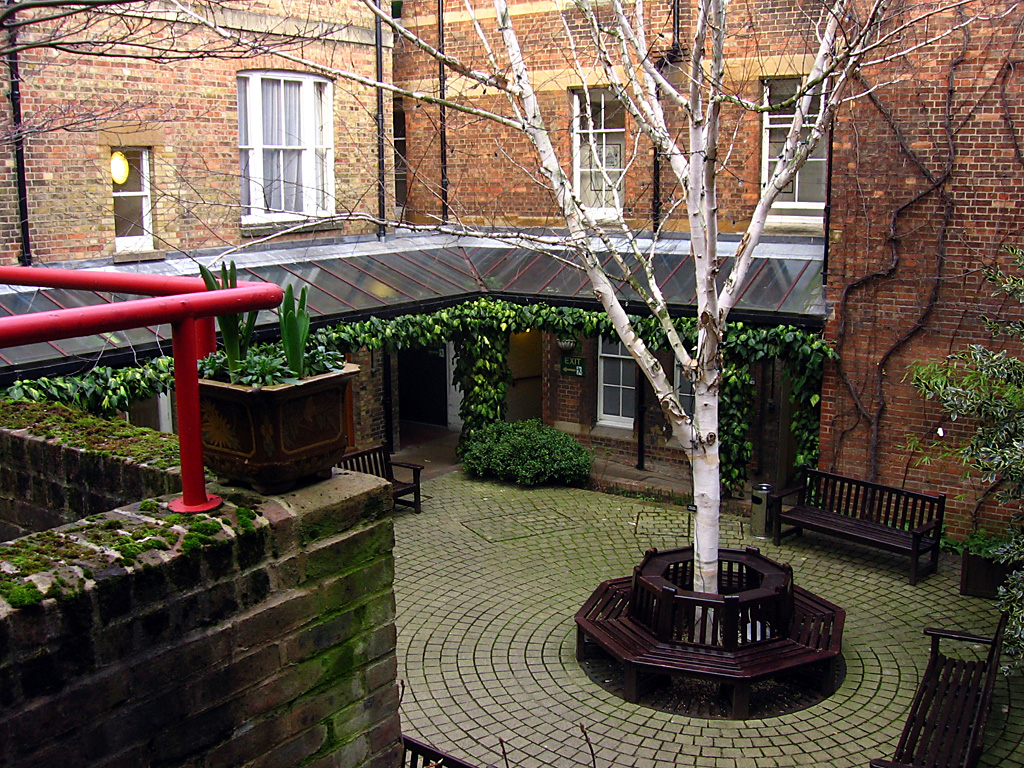
Kellogg College, Oxford

I now have a 5000 words of convoluted first draft, 2500 words of much neater second draft, and half of two critical books left to read. Once that is done, I will finish writing the second draft, make nicer versions of two diagrams, migrate any vital ideas and all the footnotes from the first draft, and finally print the thing off and deposit it at Nuffield by a sensible time tomorrow night. This will result in a draft dramatically better than anything I could have submitted on Wednesday.

The whole process needs to be done again by the 15th: hopefully, with a solid draft done before I leave for Wales on the 9th.

PS. Does anyone remember the first major graph in An Inconvenient Truth? The one of rising CO2 levels, as observed in Hawaii? In 1957, a couple of years after that data collection began, the funding ran out and the monitoring ceased. It resumed in 1958 because of a big boost in American spending on scientific research after the Soviet Union launched Sputnik.

Scientific tourism

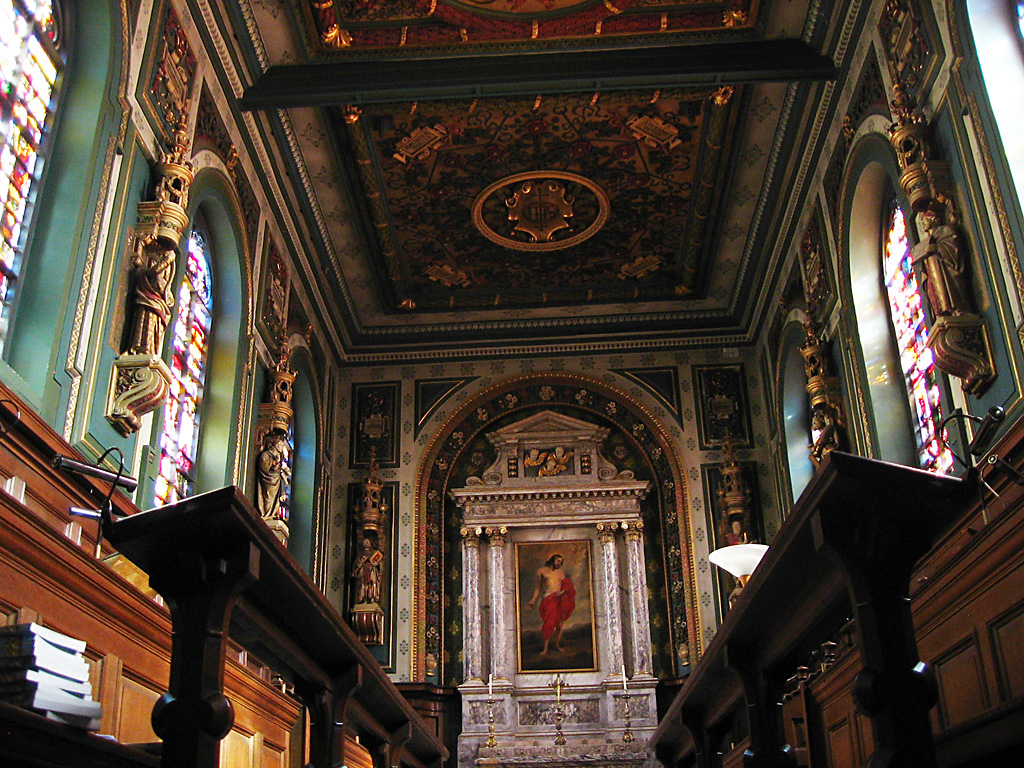
Pembroke College, Oxford

During the last little while, I have become aware of a group called the Earthwatch Institute which has an interesting approach to participating in environmental research and the promotion of sustainability. Since 1971, they have linked more than 80,000 volunteers to more than 2,500 different research projects. The volunteers contribute both financially and through their labour, in exchange for which they get to see some amazing places, meet and work with scientists, and generally gain a better understanding of the world. While you have to wonder how helpful non-specialists could actually be during such a project, it does sound like it would be fascinating.

If you have always envied the people zipping around on helicopters or piloting ships through Antarctic waters, this might be your only opportunity, short of becoming a research scientist. Right now, they are organizing expeditions to Alaskan glaciers, the Amazon river basin, coral reefs in the Bahamas, and a number of other places besides. They seem to cost about $2000-3000, not including travel to the location in question.

For those without scientific training to go on such expeditions may be a bit touristic, but I can see how it could contribute valuable resources to projects – particularly those involving scenic places and photogenic animals.

A new library, precious sources

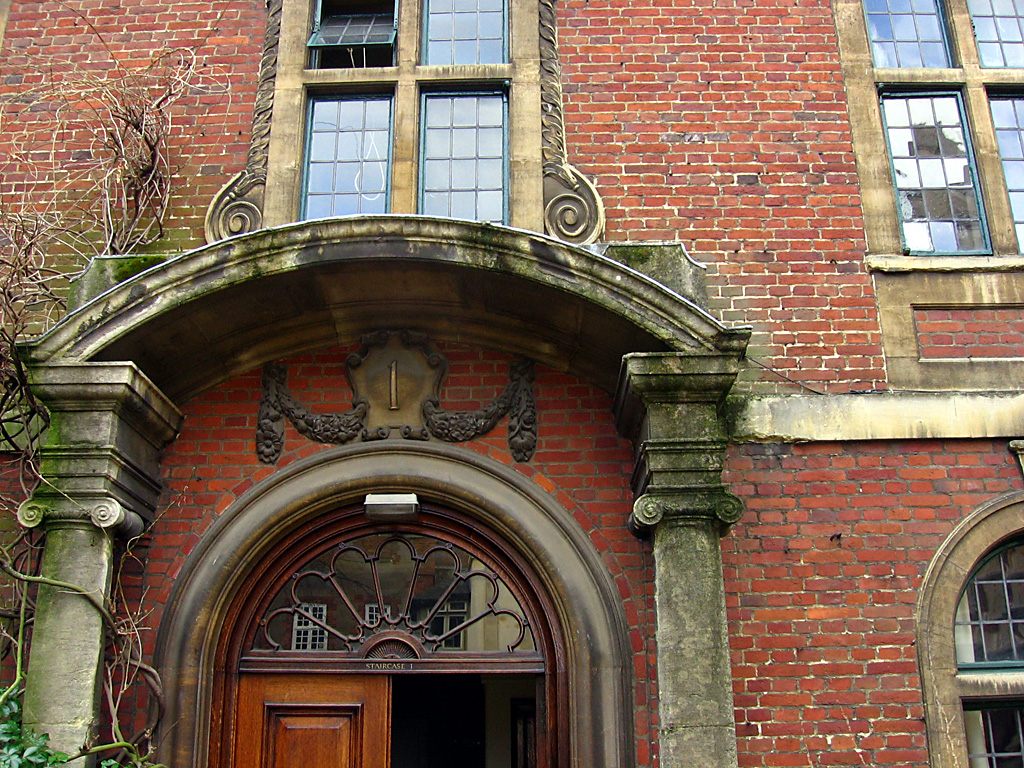
St Peter’s College, Oxford

While I am a certifiable idiot for not realizing it earlier, it transpires that the Geography and the Environment Library on Mansfield Road has a treasure trove of thesis related books. In five minutes flat, I registered to use the library and take out their books. I now have an elegant stack of books on the history of climate change: just the sort I have been looking for, while despairing about the gap in my bibliography. Once I have finished Spencer Weart’s The Discovery of Global Warming, read John Hardy’s Climate Change: Causes, Effects, and Solutions, tracked down a few of their sources, re-read Northern Lights Against POPs, and done the same for that, I will be ready to re-draft my second chapter in a far superior form.

The library itself is also quite a welcoming place. I will link a photo of it here, once I have the chance to put one online. The main room, has a very attractive asymmetrically gabled roof. It is quiet, smells faintly of wood, and has high resolution monitors and blazing fast internet access. The maps on the wall, skylights, and windows overlooking the Balliol Sports Grounds are also reasons for which I am considering making this another thesis base of operations, in addition to Church Walk and the High Street Starbucks.

Chapter two, second version

I have been thinking about how to incorporate the general ideas from this post into the revised and clarified version of my second chapter, upon which I am now working. It seems that there are three axes across which environmental problems can be assessed: predictability, intentionality, and desirability. Of these, the third is most likely to have different values for different actors.

The mine tailings example is certainly intentional, for it is an inescapable and obvious product of mining activity. The predictability score depends on the status of knowledge about the health and ecological consequences of particular tailings at the time when they were released into the environment. Here, there is also a discussion to be had about the extent to which an actor engaged in something that could well have ecological or health consequences is morally obligated to investigate what those may be. There are also questions about whether private actors are merely obliged to follow the law, or whether they need to act upon moral considerations with which the law has not explicitly saddled them.

On the matter of desirability, the range includes possibilities of utility gain, indifference, and loss. The mining company probably has an indifferent or unfavourable view of tailings: if they could be avoided for moderate cost, they would be. This is certainly true now that the consequences of certain tailings are known and legal and moral obligations on the part of such companies are fairly well entrenched. A more interesting possibility is environmental change that increases the utility of some, while diminishing that of others. This could happen both with intentional acts (say, building a dam) or unintentional ones (the unintended introduction of a species into a new area).

In any event, the new plan is to boil the introductory portion of the chapter down until it is only about 1000 words long. Then, I will write 2500 words each on the case studies, and 1000 words in concluding comments. Most of the existing commentary will be migrated into the case study sections. The best way to do all of this is probably to re-write from scratch, then import and vital elements and citations from the old version. A similar chapter model can be adopted for the third and fourth chapters and, since most of the research being done covers all three, they should prove reasonably easy to write once it is done.

[Update: 3 March 2007] I now feel confident that the version of the chapter to be submitted tomorrow, four days late, will be enormously superior to what could have been submitted on time. This owes much to the new books I got at the Geography and Environment Library. Those with restricted wiki access can have a look at the emerging draft.

Noisy skies

Somerville College, Oxford

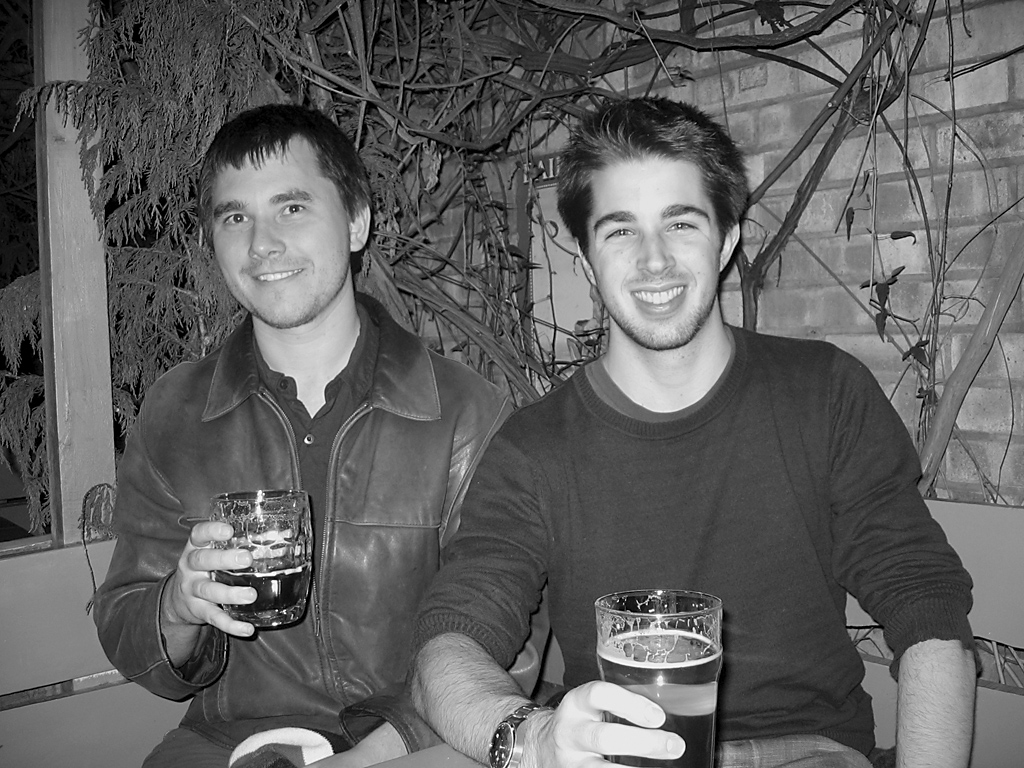
During the last day or so, there has been an unusually large amount of military air traffic over Oxford. Less than a minute ago, I saw a 101 Squadron Vickers VC-10 fly overhead, northwards (official site). The VC-10 is fairly unmistakable, due to the engine configuration: two on either side of the fuselage, back near the tail. Last night, we saw at least three large, slow moving transports heading in the same direction. I would have suspected that it was a Boeing C-17 Globemaster, from the 99 Squadron but apparently they only have one of those (official site).

They are probably flying to Brize Norton: the largest airbase operated by the Royal Air Force. It is located just eighteen miles west of here, between Carterton and Whitney. It might be an interesting place to visit at some point.

Quite possibly, the volume of traffic is connected with the recent British announcement that they are pulling forces out of Iraq. With 1,600 troops returning to the UK during the next few months, there must be a lot of gear and people to move around.