More of you should get Skype

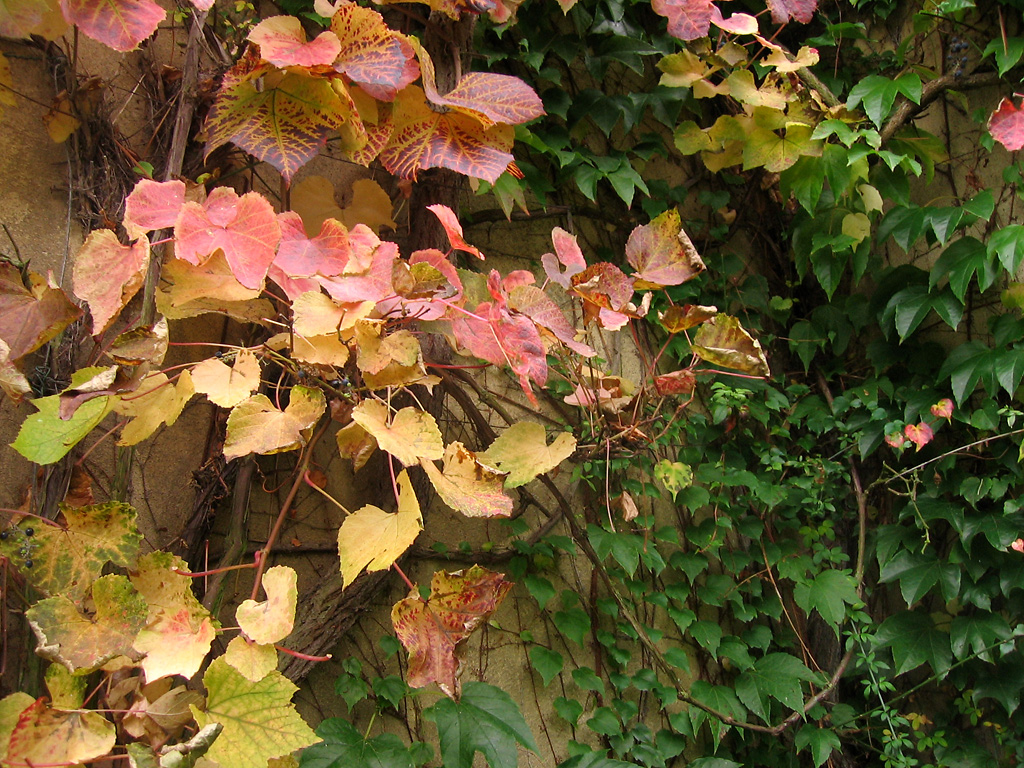
Fall Leaves, Wadham College, Oxford

I got lots of thesis reading done today, as well as spending a good couple of hours conversing with friends and family members back home. More friends around the world should install Skype. Since arriving in Oxford, I have spent hundreds of hours exchanging text messages with 126 different people. That said, while an hour or two spent exchanging MSN messages can certainly keep you abreast of what another person is up to, the psychological significance of even a twenty minute phone call seems much greater.

For a conversation between two computers running Skype, there are no fees at all. All you need, in order to use Skype, is a Mac or PC with a high speed internet connection (pretty much any university network is more than fast enough), headphones, and a microphone. There are even Skype compatible phones. The headphones aren’t really required, but if you don’t use them you can get odd echo effects from the 80ms delay that tends to exist for messages between Oxford and the west coast of North America.

While I can use Skype to call normal phones (Canada to the UK costs €0.017 a minute), it always seems like something of an imposition on my part – especially since most of my friends can only really be reached on cell phones. Seeing that someone is online and interested in talking is a useful affirmation of the wisdom of giving them a ring. I haven’t personally been in the habit of leaving Skype running, even when I am at home, primarily because so few of my friends use it. That said, I will make a point of remaining online more often, so as to reward those who take the advice above.

PS. On account of today’s atrocious weather, I was unable to produce a photo worth putting online. Next time I get a good batch, I will backdate one to this entry.

PPS. This ongoing discussion of the moral importance of inequality is highly interesting.

Another pang of thesis doubt

Speaking with Tom Rafferty after the film tonight, I had a bit of a realization. Previously, all my enthusiasm about the thesis project has been tied to the real conviction that these questions are fascinating and important. The problem, of course, is that there are no prizes for picking out interesting questions – especially the obvious ones that everyone sees as interesting. You need to say something new, and I don’t see how I am going to do that.

PS. This has happened enough times now for me to know that Lee will leave a terrifying comment*, and I will start mentally enumerating ‘places other than academia’ where one can spend one’s life.

* This is not to imply that the comments are not helpful and appreciated; indeed, a bit of raw terror is just the thing to motivate thesis progress.

The History Boys

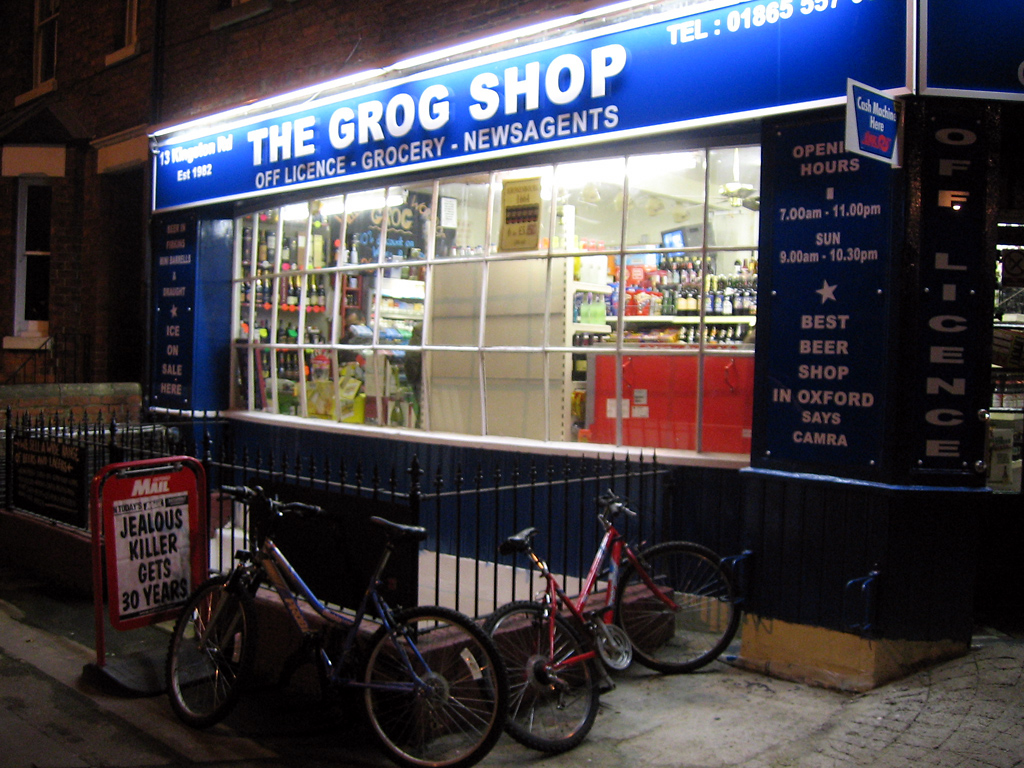
The Grog Shop, in Jericho

North Americans trying to understand Oxford, as a British cultural and social institution, should go see The History Boys, while it is still playing at the Phoenix. If that sounds like an assignment, take heart: it is really very funny, even if you cannot appreciate all the regional humour. It will certainly leave you looking at your own position a bit differently, though I can see at least three general kinds of lessons you might take from it. I am not going to list them.

Comparisons I have heard made to Dead Poets Society are both apt and entirely wrong. That film is a reflection of two cultures: American east coast boarding schools and Hollywood filmmaking. Substitute both English elite schools and British comedy, and you might be talking about similar vehicles for the delivery of very different references.

Watching this film here was much like watching The Rocky Horror Picture Show in full costume, singing along and throwing rice. The film may not reflect reality directly, but it throws a kind of fun slant on it that allows you to position yourself within the public statements being made. The very last scene is also quite clever.

One quick comment, in closing: in North America, you would never see a film with a good six or seven minutes of all-French dialogue. And if you did, the proportion of the audience laughing at the jokes would probably drop off sharply. While my French has never been rustier (a long decline, dating back to elementary school with an upward blip during my time in Quebec), I could grasp more than enough to be laughing along.

Mica in two new Google Idol contests

My brother Mica has two new entries in the Google Idol video competitions. Partly thanks to strong support from readers of this blog, his video for “Walk Idiot Walk” won a previous competition. This is also documented on Wikipedia.

His two videos that will be in the running are:

  1. “The Jock Rock” in the semi-final of the Pop competition
  2. “I Bet You Look Good on the Dance Floor” seemingly yet to be listed

I will post updates as the status of the videos change. See also Mica’s website.

New voting process

The voting works quite differently from last time. Instead of allowing one vote per IP address per day, it allows one vote per user account per round. They are tracking IP addresses used for account creation, so trying to set up fifty accounts from the same computer will land you in trouble. (Of course, if you set up fifty and used them to vote for the video that you want to lose the round, it might be a highly effective strategy.)

One word of concern: it doesn’t say anywhere on the site that they will not be selling the email addresses used in the signup to every spammer from Nigeria to Philadelphia. As such, I recommend using your most spam-ridden and least important email account to sign up. Last time, they could at least count on people seeing the banner ads each day as they came back to vote. In order to replace that income stream, you have to at least suspect that they are harvesting emails for profit. You cannot just give a fake email address, like when leaving comments on this site, because they will send you an activation code that you need in order to vote.

Everyone’s least favourite piece of mail

Sheldonian Theatre

After having an enjoyable dinner in hall last night, I found the statement of account for my battels waiting in my shared pigeon hole. £10,360 in university fees (up 4% from last year) and £1,847 in college fees (up 2.5%). Taken together, that is 74.5% of Canada’s GDP per capita, or 266% of Estonia’s.

The university fees are certainly more defensible. They cover my supervisions, the Social Sciences Library, and myriad other things closely related to education. Given that the Wadham library is of little or no use to me, I do not live in college, and I would not be eating there if it wasn’t part of a scholarship, it is a bit hard to see how a year as a member of the college is worth as much as two MacBooks (or a MacBook and a nice dSLR). The college fees don’t even include printing.

Adieu to Oxford PhotoSoc

Old fashioned scale

Today, we had to choose whether to join the Photo Society and pay the money or stop attending the classes. I have decided to do the latter. With about forty people present, they are too big to get through any decent sample of the work in just an hour. Also, while some of the things being discussed are at a level that would be useful for me, a lot of really basic stuff gets talked about as well. I don’t need to spend an hour and pay £3 to learn something about Photoshop that Neal taught me in two minutes. If I was going to use the dark rooms, the £30 a year fee would be very reasonable, but the last thing I need is some other pursuit to draw me farther away from thesis and seminar reading. Indeed, I have a date with the latter for the rest of tonight that I expect to take a good chunk of it.

After my final PhotoSoc session, I had dinner at Lady Margaret Hall tonight with Richard Albert: a Canadian, formerly at Yale, doing the Bachelor of Civil Laws degree. Confusingly, it is a master’s level program, and it is entirely about common law. In any case, conversing with him was most interesting – an experience that will hopefully be repeated before our respective tenures in Oxford come to an end. Talking about Canadian constitutional law definitely tested my memory of classes with Gateman and Tennant. It is the sort of thing entirely too interesting to be devoted as little attention as can be spared for it.

No more attention can be spared for anything, at this moment, When your seminar is the next day, and the possibility of having to present fills you with dread, you know you are in for a long night of reading.

[Update: 1:00am] I think the page on the wiki for the Developing World option is starting to shape up nicely. It should be a good reference, in the end, for paper writing and exam preparation. Fellow members of the program, feel free to use it. Even better, sign up and add something to it.

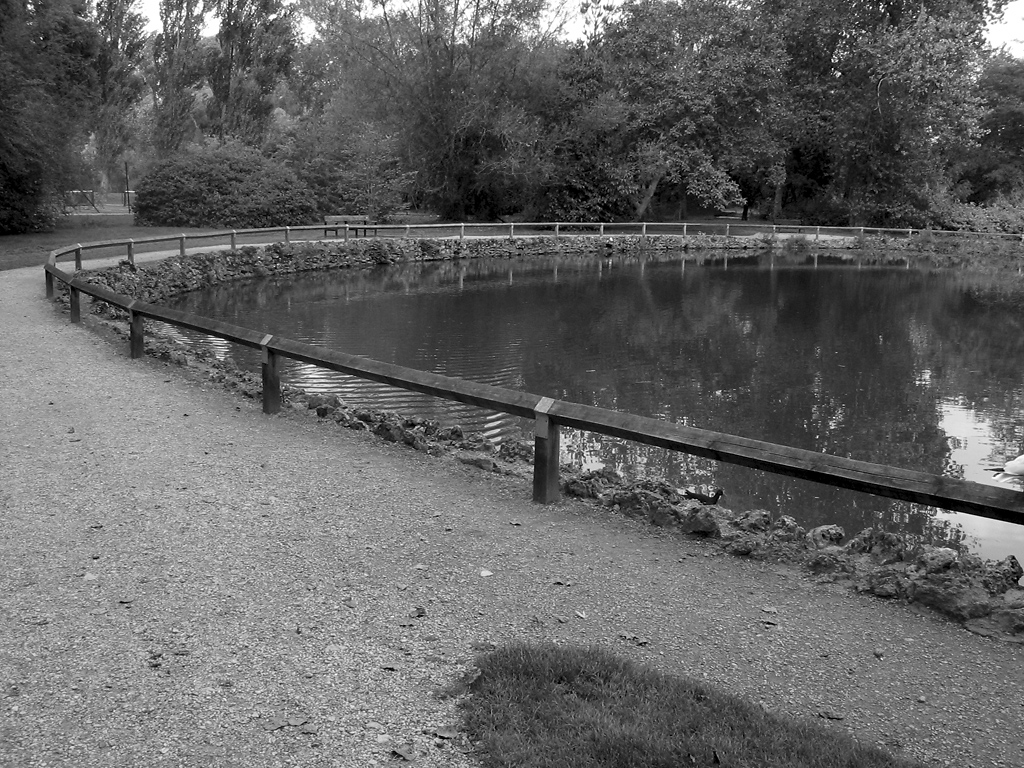
[Update: 2:00am] Yes, I do realize that today’s photo is a perfect demonstration of why, instead of using the B&W mode built into my digicam, I should shoot in colour and then render into B&W using Photoshop’s channel mixer. I wish there was a mechanism by which I could compose with the LCD of my Canon A510 in B&W mode, but have it retain colour information for such purposes.

Lecture-heavy day

Flowers in the University Parks, Oxford

As is the norm on my lecture-packed Tuesdays, some really interesting ideas have come up today: on everything from international law to the Israeli security barrier and the mathematical models that dictate funding structures within the World Bank. Of course, this contributes to my terror about both having to be a generalist and being expected to know a very great deal about particular areas. This is an anxiety I will bury for the moment.

One note to myself, in future: when you are practically seething with disputational energy during a presentation, as during a debate round where you can see a good half-dozen critical factual and logical flaws, remember the following:

  1. Let someone else ask the first question. They will get things started and help set a congenial tone.
  2. Decide exactly what to say in advance.
  3. Deliver it deadpan, with no concealment of how logically lacking you found the argument, but with no vitriol either.

Setting out these personal suggestions isn’t evidence of some kind of egregious personal lapse, but rather a general observation based on one of today’s question and answer sessions. Kudos to a friend of mine, for showing me how it’s done.

If I have the time and energy, I will write about some mathematical observations relating to today’s presentation on the World Bank at a later time.

Chemistry and cooking: solvents

Oxford Covered Market

Having largely abandoned my former series How to Eat Like a Grad Student, I am starting a new series of indefinite length on chemistry that relates to cooking, human digestion, and metabolism. This is sometimes called molecular gastronomy. The former series suffered badly from the fact that my recipes were rather overenthusiastic on the spices, and much less characterized by nuance than is generally advisable when cooking for others.

Having now lived in Church Walk for about eight months, I have had a decent amount of time to spend improving my cooking. Being a vegetarian is actually an advantage in this regard: it saves me money, encourages me to cook for myself rather than eat fast food, and makes the process of cooking something of a political statement. As such, I devote more effort to it.

Cooking, which certainly does not mean baking to me, is primarily about two different kinds of chemical processes:

  1. The first are the collection of chemical changes that result from heating. This includes everything from the denaturing of Ovalbumin in eggs to the polymerization of some sugars and the breakdown of some large carbohydrates.
  2. The other major category of chemical processes has to with solvents.

Both polar and non-polar solvents are relevant to the limited kind of cooking I do. Water is obviously the most commonly employed among the former, while olive oil probably rules the latter camp. Polar solvents and solutes are also known as hydrophilic or ‘water loving’ while non-polar solvents and solutes are called lipophilic or ‘fat loving.’

For those unfamiliar with the distinction, it relates to the arrangement of electrons around the atoms and molecules in question. There are two broad kinds of arrangements. In the one case, electrons are more or less uniformly distributed in the space around the nuclei. Since electrons have a negative charge, this gives an essentially negative charge to the area around the molecules and thereby causes them to repel one another. Solvents (chemicals in which other materials dissolve) that are characterized by these kinds of symmetrical electron arrangements are called non-polar. In cooking, these are usually fats.

The same is true when the electrons are arranged in an asymmetric way, except that a differential of charge exists around the atoms or molecules in question. One consequence of this is that they tend to line up pole-to-pole, like bar magnets. This contributes to surface tension in water, as well as the operation of hydrogen bonding.

Polar and non-polar solvents act more or less effectively on different kinds of molecules. Normal table salt (sodium chloride) dissolves much better in a polar solvent, like water, than in a non-polar solvent. Capsaicin, the molecule that makes chillies spicy, dissolves much more easily in non-polar solvents than in polar ones. That is why it is easy to make spices flavourful by heating them in oil. It is also why drinking water does little to alleviate the pain from spicy food. Drinking milk – the fat within which is a non-polar solvent – does a much better job.

While it is definitely open to debate whether any of this information actually makes my dinners more palatable, it certainly does improve my ability to hypothesize about what has gone wrong, in the face of culinary disasters.

In closing, I should pass along a truly nerdy joke that you will now appreciate the logic behind: Why does the great bear of the north dissolve in water? Because it’s polar.

An example of the unexpected

An unusual experience for a Saturday night is to spend several hours discussing your thesis, over dinner, with someone who you just met at a party. In particular, the matter of whether some sort of quantitative analysis – such as survey data – could be included was discussed at considerable length. Also debated were the history of the environmental movement from the middle of the last century to now and the role of coffee in academic research.

An even more unusual experience is waking up late on Sunday and realizing that the entire experience before had been a dream. How did I get the rollerblades used to climb the massive hill from the unknown college where the party was happening to the residential complex? And didn’t the person with whom I was conversing look a lot like the pharmaceutical company employee who I met on the train back from Reading?