On travel, a new project, and thesis planning

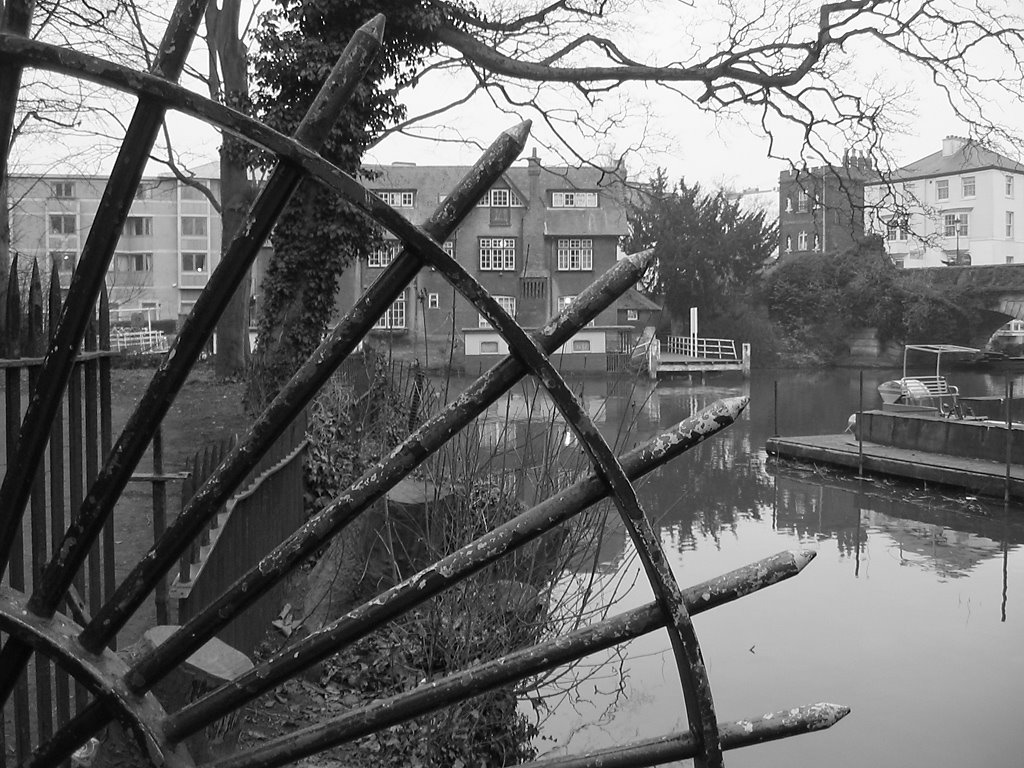
Spikes near Christ Church Meadows

Speaking with my parents over Skype today, I was reminded of how difficult it can be to communicate through a speech-only medium. It’s especially frustrating when you are making the attempt with someone who you really do want to speak with, but you are having difficulty doing so with any clarity or skill. The extra fraction of a second of Skype-to-phone lag definitely contributes to the difficulty. So plainly, in fact, that when I use SkypeOut to call people, they frequently suggest going on Skype themselves so as to increase the quality of the connection.

Partly for these reasons, I am especially looking forward to seeing my mother in about a month’s time. It’s still not certain whether we will go to Malta, Portugal, or Greece – though the middle option is increasingly looking the most likely. The kind of trip that is being proposed is a package-deal type hiking trip, with 4-10km walks every day and arranged hotels. While quite different from the kind of travel I have generally done, I find the idea to be an interesting one, and one that is likely to be enjoyable. I found travelling with Meghan Mathieson et al to be especially interesting, precisely because it involved traveling in a group and according to a set itinerary that I didn’t control. Hopefully, this expedition will mimic the best attributes of that one.

Oxford life

At the end of this year, I think I should condense the mass of experience I’ve had here into a trio of short guides: one for people considering coming to Oxford, one for people considering Wadham, and one for people thinking of doing the M.Phil in IR. It would offer me a chance to be both balanced and concise, while offering a perspective that people may find valuable. While the information that would be included is already embedded in blog posts, I don’t think anyone is likely to go through the whole collection of hundreds of entries just to gain insights that might be better expressed in three to five pages on each topic.

Thesis planning

I have been investigating the Oxford Environmental Change Institute and it seems like a resource that could conceivably be extremely helpful for my research topic. Their website quotes Dr. Anna Lawrence, of the Human Ecology Program, as saying: “Researchers must find ways to incorporate the experiences and values of other stakeholders in their research.” This is exactly the kind of thing I want to do: look at the means by which such cooperation and outreach is taking place. If I can find some way to get involved with this organization, it might contribute a great deal to my ability to say something new and important on the subject. While it can be difficult to deal with segregation between different areas of academia, the very lack of connections makes it a really exciting place to do work. There is much to be discovered there.


And so, the weekend arrives

Preferences

Happy birthday Gleider Hernandez

I received my examination entry form for the qualifying test today. The page itself is quite cryptic, with boxes containing random looking letter and number strings and no instructions for its completion. I will figure the thing out by Tuesday, when it’s due. I am less worried about the qualifying test before Trinity term now that we’ve had back the results from our quantitative methods course. While I know the upcoming test will cover dramatically more material, I also feel as though I will probably be better prepared for it.

After reading about democratic peace theory for much of today, I went to Jericho with a large group of people from the college to celebrate Gleider’s birthday. It was a good group and a fun few hours. I should probably resist the temptation to do anything lengthy and social tonight. Between the paper due on Wednesday, readings for Tuesday, and the take-home exam being distributed on Thursday, I need to stay on top of things.

Seventeen days until the equinox

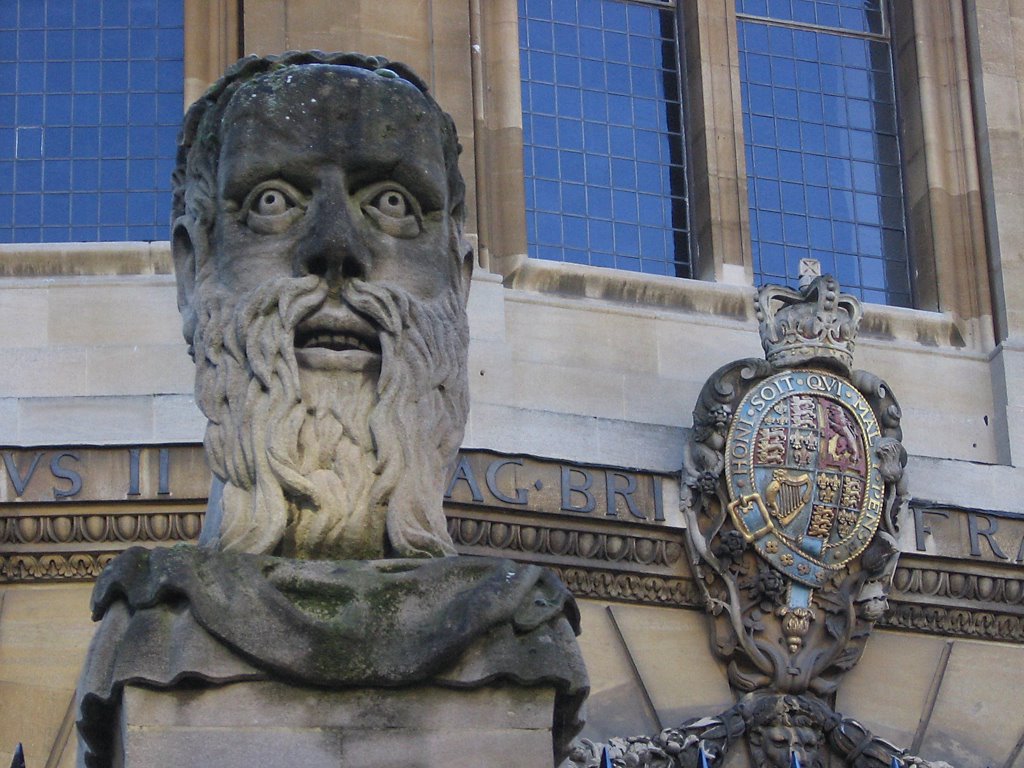
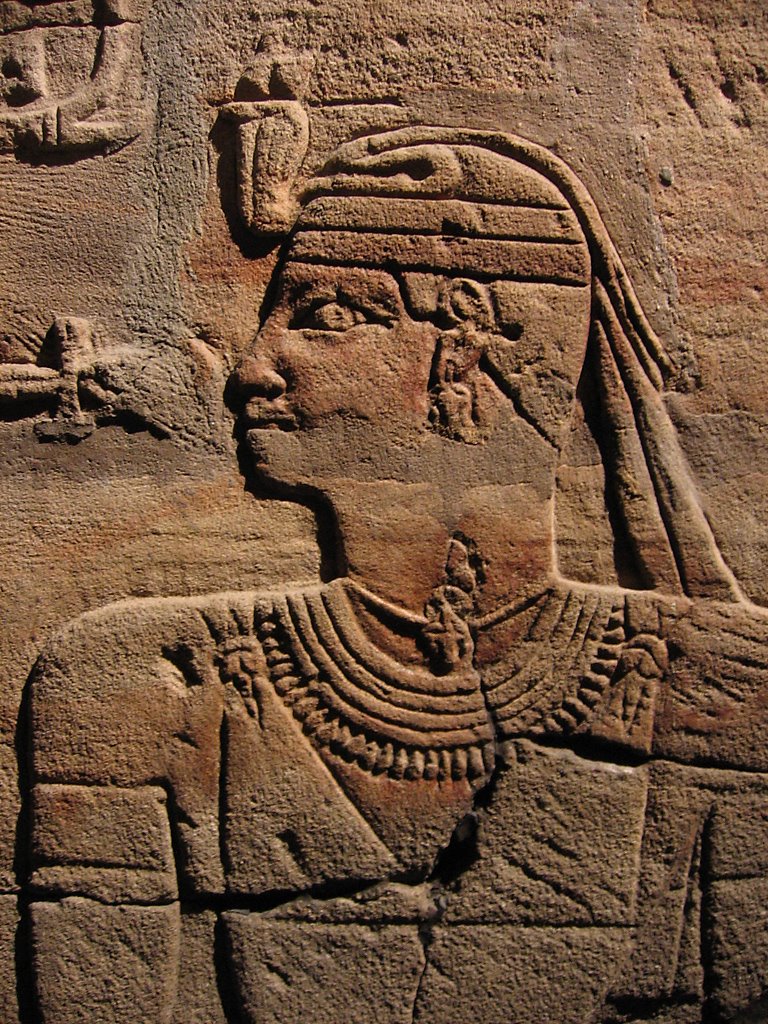
Sheldonian head

During our qualitative methods class today, on institutions, Dr. Ngaire Woods made an excellent point. Each of us has a year to become an expert on a particular subject. There are hardly any people in the entire world who ever have the chance to devote such time and attention to an issue and there is a good chance that, at the end, we will know more about our subject than anyone in the world. This underscores both the importance of choosing a topic well and of really committing yourself to writing something excellent. Producing something that will be read by people beyond the examination committee and people kind enough to edit it for me would also be a big advantage.

The institutions section of the qualitative methods course is much better than the scattershot attempt at foreign policy analysis that came before it. That is welcome, especially since I have a take-home exam to write on the course between the 9th and 13th of this month – most inconvenient timing. Hopefully, I will be able to get the thing mostly done next Friday, leaving the weekend relatively unencumbered.

After class, this afternoon, I had coffee with Claire, Josiah, and another of her St. Cross friends who I am embarassed to be unable to remember the name of. Followed that closely was tea with Joelle Faulkner. We tried the Tieguanyin tea that Neal sent. It’s more subtle than I expected, though not nearly so much so as the Jamine Pearl tea that Kate once gave me. I am going to try making it with bottled water, in the knowledge that the amount of dissolved minerals in Oxford tap water is quite substantial.

Hopefully, tomorrow I will be able to finish most of Tarak Barkawi and Mark Laffer’s Democracy, Liberalism, and War, William Connolly’s The Terms of Political Discourse, and what remains of this week’s readings on institutions. I have a paper due for Dr. Hurrell on Wednesday, evaluating the democratic peace theory. I will also have a new issue of The Economist upon which to complete a preliminary read.

I’ve now finished the first book of The Wind up Bird Chronicle and perhaps the first tenth of Democracy in America. I don’t know if it’s an overly self-serving thing to believe, but I don’t think that any kind of reading is irrelevant or a distraction. While there are certainly things that it is more urgent for me to read, to neglect other areas of interest would ultimately be counterproductive and unwise. Neither American democracy nor Japanese literature are even distantly divorced from the question of democratic peace, and good writing is never irrelevant.


25 things I am:Canoeist, geek, webmaster, environmentalist, caucasian,
student, heterosexual, reader, writer, photographer,
Czech, Ukranian, atheist, Oxfordian, skeptic,
liberal, vegetarian, single, Canadian, hiker,
bilingual, healthy, rich, educated, male.

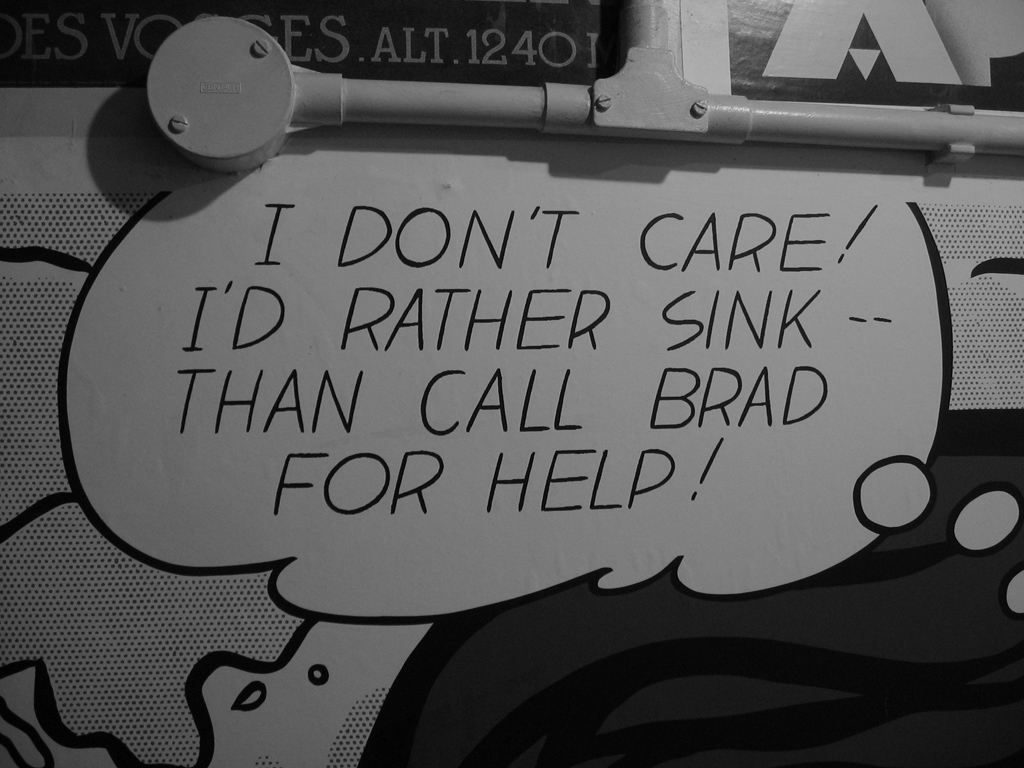
Day spent examining strings of 26 different shapes, along with gaps and dots

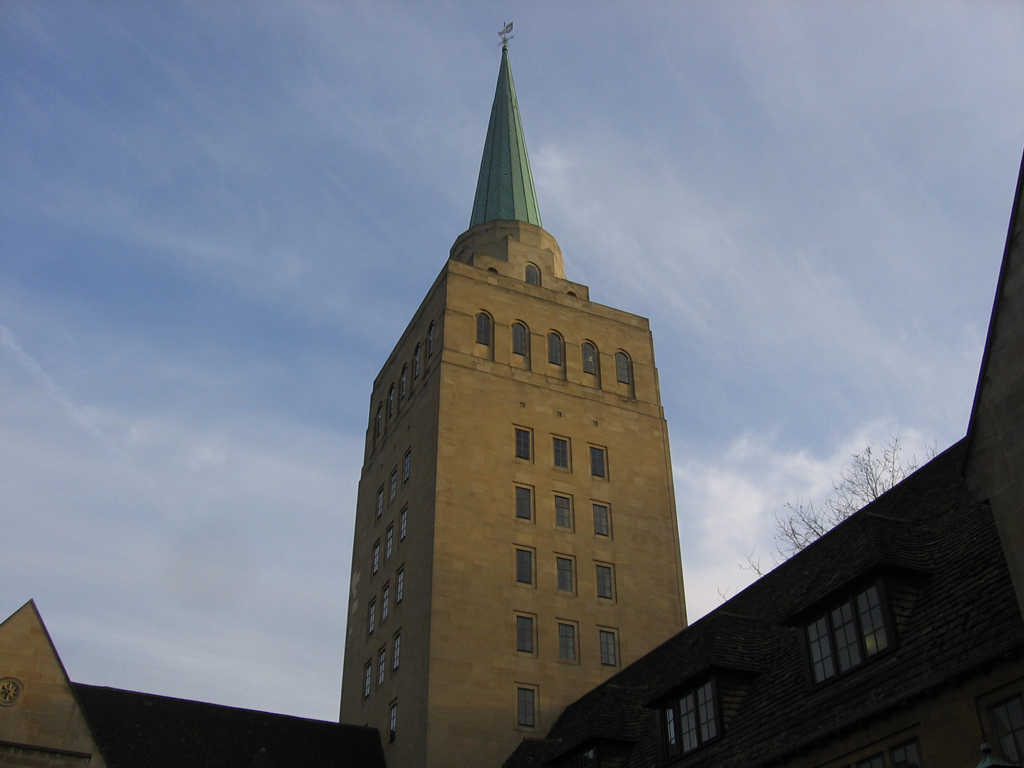
Nuffield tower

I am feeling increasingly as though journalism will be the thing to do once I finish my M.Phil. I want to travel and one of the things that I am fairly good at is writing: especially the kind of writing that must be done quickly and consistently. I am fairly sure that I would be able to get a job in the field, even though I know nothing of its inner workings, and it may serve many of the purposes that I have for myself in the coming years. There is only so much, after all, that can be learned from books. Academia is, in general, somewhat terrified of talking to people – a fear that I have grown to share, outside the narrow confines of fellow students and other members of a close cabal. Even where we deal with outsiders, it’s behind the bulletproof glass of case studies and surveys, interviews with pre-selected questions vetted by ethics committees. My perception of the greater authenticity of journalism is a draw, even if journalistic thought and action is not immune from other forms of criticism.

This is not a thing that I see myself as doing indefinitely. It’s something I would want to do in a roving fashion: out seeing things rather than sitting behind a desk in Manhattan. I don’t think it would be sustainable over the long term, but I do think it would be a really effective counterpoint to what I have done so far. Perhaps it would also be a good lead-up into whatever is to come after.


Talking with Tristan and Meaghan Beattie tonight was really good. One of the oddest things about living in Oxford is my near-total lack of people with whom I have substantive, personal conversations. The closest it comes is discussion of the M.Phil program. It’s something that will come with time, I hope….

I learned today that, since the tour she is going on may already be entirely booked, I may not be going to Greece or Malta after all. That said, the possibility remains and I will have to wait and see. I very much hope it will come together.

Scheduling conflicts continue to plague the mooted bloggers’ gathering.

New plans shaping up

Inside the AshmoleanAnother expedition in the works?

My mother’s travel plans are coming together and, in a move that surprised me, she invited me to accompany her to either Greece of Malta at the end of March. In either case, we would be leaving on the 28th. After the Baltic in December, I suspect that the Mediterranean in March would make for quite a contrast. EasyJet doesn’t seem to fly to Valletta, though they do have return flights from London to Athens on the right days for less than £90. I don’t know anything about Malta, save that is discussed in John Keegan’s Intelligence in War, in the context of Napoleon landing there while being chased by Admiral Lord Nelson, prior to the Battle of the Nile. Looking through the Wikipedia entry, the place certainly has quite a history. Particularly for a country that you could walk around in a few days.

Greece, of course, I know much more about. It would be excellent indeed to see the original home of the Parthenon Marbles, which I suppose we would have to stop at the British Museum to have a look at before departing. Going to the very source of Greek food would obviously be a delight, as would visiting the setting of so much classical history and myth. The Greek option is apparently also three days longer than the Maltese.

In either case, I am really excited about the possibility of going. One of the great advantages of living in Britain is the proximity of all the rest of Europe. That, coupled with inexpensive flights from EasyJet and RyanAir, puts a really fascinating section of the world within reach.

An excellent evening

I always leave my supervisions with Dr. Hurrell in very good spirits. Today, we discussed my essay and went into quite a bit of philosophical depth. We discussed a broader reading of Hobbes than international relations theorists generally subscribe to, as well as Rawls, Rousseau, Rorty, and a number of others. Like all of the other supervisions so far, it was a really energetic discussion in which I felt strongly intellectually engaged.

Afterwards, I went for a tour through the Ashmolean with Claire and several of her roommates. Apparently, the place is to be partially torn down by summer, and then rebuilt over the next three years. As a consequence, much of the collection will be inaccessible for a long while. A good amount of what we did see was quite interesting and I should like to go back for a proper, guided tour at some point.

The Strategic Studies Group session tonight was about regulating private military firms, though the speaker only spoke about the kinds that provide direct security (whether in a combat capacity or not). Largely excluded: military contractors like Military Professional Resources Incorporated and logistics firms like Brown & Root. That said, it was quite interesting. I was suprised to learn that international humanitarian law doesn’t apply in cases where private military firms are employed by other private companies: for instance, when companies like DynCorp provide security to Shell, operating in Nigeria, or to the Saudi national oil company.

One rather unfortunate thing I learned is the the OUSSG trip to Brussels – visiting NATO Headquarters, Supreme Headquarters Allied Command Europe, and the European Parliament – is taking place between the 22nd and 24th of March: exactly when my mother will be arriving in the U.K. Perhaps I will be able to go next year. Not that I am disappointed, given the prospect of going to Malta or Greece instead. It’s just regrettable that it happened to be at the same time, especially since the trip is being subsidized by the European Parliament, such that people only need to pay for transport to Brussels.


  • This description of chemical misadventures is short, amusing, and worth a read.
  • Also amusing, some legal bluster from the malware industry, over at BoingBoing. This reminds me of the Legal Threats section at SomethingAwful.com.
  • Trivia fact: I have been wearing a pair of these Sportif Explorer Convertible Pants every day since I arrived in Oxford. As I learned in Vancouver, Italy, and elsewhere – these are a very durable article of clothing. The zip-up side pockets, profusion of other pockets, and articulated knees are all strong selling points. Next time I am in Vancouver, I am buying the fleece-lined version, which would have been nice in Tallinn and Helsinki.

Operation ‘Read More’ meeting with tolerable success

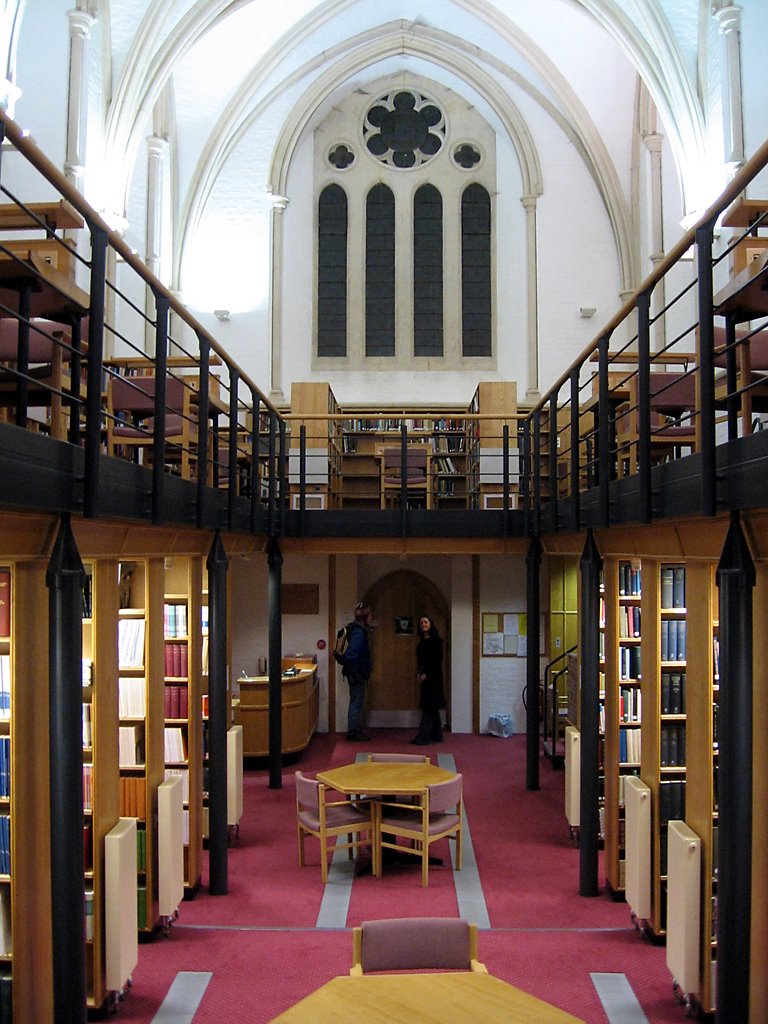
We have periodicals on microfiche

I spent most of today trapped in the Social Sciences Library (the oft-mentioned SSL) due to the gravitational attraction of a stack of books about neo-liberal institutionalism. Now, I have nearly finished an essay. This is especially welcome since it is due tomorrow morning at 11:00am, during our core seminar.

The essay is about the dullest side of international relations theory: a sub-discipline that I shall label “What are we going to call things?” It consists of extensively argued, frequently seriously embittered tirades about whether X belongs in set A or not. Is Hobbes a realist? Is neoliberal institutionalism liberal, as well as really horrible term? Despite the fact that questions of the kind posed above have almost no relevance outside the bizarre world of junior professorships, you will find them hotly debated. Part of the problem is that these questions don’t have real answers: they only have answers that are more or less plausible to certain people, mostly because of biases they already hold. I’ve been baking in the liberal internationalist oven that is Western Canada for far too long to view realism with anything less than profound skepticism. Likewise, the urge to defend liberalism – particularly variants that account for the more solid bits of the critical theory rebuttal – is fairly automatic. While it’s irksome to have such an obviously constructed and difficult to eradicate bias, it probably doesn’t have too much long-term significance.

There are, of course, important consequences that arise from theory, for it cannot help but inform policy, however imperfectly and indirectly. As such, I can see the value of slogging through these sorts of things. Additionally, it seems highly likely that we will have another interesting and high energy debate during our core seminar tomorrow.

In any case, I must go back to my stack of books and sheath of notes – carrying small elements of their language and argumentation over into my essay, marked with wee footnotes. Then, it will just remain to edit the thing so that it doesn’t have the same ability to drain all the joy from life that a good number of these IR theory texts seem to have specialized in.

Tomorrow, after Philosophy of the Social Sciences, the core seminar, and the Changing Character of War seminar, I have my first supervision this term with Dr. Hurrell. I shall have to review my paper. In the evening. I will be going on a private tour of the Ashmolean Museum, along with Claire and some other fresher graduates. Unlike the Natural History Museum and the Pitt Rivers Museum, I haven’t yet wandered into this collection of artifacts pilfered by long-dead British aristocrats. This will mean missing this week’s Strategic Studies Group lecture, but this seems the better option. I look forward to it.


  • The proposed second Oxford bloggers’ gathering seems to be falling apart, since very few people can attend on the proposed night. Is there a night of the week when more people would be able to attend? On what night are people least busy?
  • One thing I found today that I didn’t expect: the Oxford libraries will give you bags of the highest quality if you need them to carry books through the rain. Made of tough clear plastic, with good handles and ‘Oxford University Library Services’ and the university crest printed on them in blue. The handles are even double-thickness plastic, so as not to tear. Quite obviously the finest bags I’ve seen in a long while.
  • Anyone wanting to try their hand at some amateur codebreaking, and who is not too troubled by the morbid, should have a look at Bruce Schneier’s blog.
  • While I’ve mentioned it before, Post Secret remains a fascinating glimpse into people’s lives. One of these postcards apparently belongs to Alithea: the friend of Tristan whose music I endorsed in a recent post.
  • Remind me to buy Earl Grey tea. It’s a terrible thing to be out of.

Alternative Careers Fair

Vines on a wall

The better part of today was taken up attending the Alternative Careers Fair, over in the exam schools. I attended two sessions: the one on ‘Arts’ because it included Philip Pullman and the one on ‘Environment.’ Neither was exactly what I expected. Overall, the experience was interesting – and it was good to meet Mr. Pullman – but it did not assist me in finding employment for the summer. Of course, a ‘careers fair’ is generally meant to have a longer term focus than that.

The arts panel was heavily dominated by Lorraine Platt, a painter who spoke first and for more than twice her alloted length of time. A series of disjointed observations and repeated statements, I didn’t find much that was useful or insightful in her presentation. That said, if I was contemplating a painting career, I might feel differently.

Mr. Pullman spoke last, after a musical therapist, for about twenty minutes. A bespectacled, balding man, I am amused to note that he wore exactly the same shirt as is featured in his portait on his website. His presentation was interesting partly because it seemed to portray an unusually focused life for a fiction author. While he described a number of jobs he has done over the years, none of them involved any writing or any cessation from attempts at novel writing. While you obviously can’t get the sense of a person’s life in twenty minutes, it was nonetheless a vignette of a committed person. Three pages a day, he says, has been his standard from the beginning.

Pullman spoke comfortably and with humour, quite unlike the more overbearing characters who directed the next seminar. His stress upon the importance of writing a good first page, and a good first chapter, is definitely reflected in his books: particularly The Golden Compass, which I consider to have one of the most skillful openings of any book I’ve read. As for motivational advice, he offered the following tidbit: “You need to be slightly insane, really. That’s what kept me going.”

After the session, I spoke with him very briefly and got him to inscribe my copy of Paradise Lost, since it was already signed and represents the only piece of his work I have with me in Oxford. It was amusing to note that, among the group of young women with whom I stood in order to have a book signed, more than half were past or present students of Wadham College. That said, I didn’t recognize any of them.

The environment panel, which I attended after wandering the booths upstairs for a while and speaking with Natalie Lundsteen from the Career Service, included George Marshall and John Manoocherhri. Aside from an evident shared passion for the environment and for their work, the men were quite different. Mr. Marshall spoke with skill, but some hesitation, like someone who has never really enjoyed addressing an audience. He was careful to at least bracket and identify the bits of his short autobiography that might seem presumptuous or vain. His work on tropical forests in the Asia Pacific reminded me of Peter Dauvergne.

Mr. Manoocherhri, in stark contrast, tended towards the bombastic, the arrogant, and the foul-mouthed. While he initially came off as plain speaking, energetic, and direct, over the course of his presentation he became decreasingly attractive. He had a great willingness to pronounce himself expert on a matter, as well as a general mode of speech that was saturated with an over-certainty that diminished his credibility. While he did tell people much of what they wanted to hear (about how we will all have superb jobs in the environmental field), I don’t know if he actually contributed a large amount of usable information. That said, I am still glad to have attended his talk.

Employment possibilities for the summer remain elusive. My three forays to the career service have produced starkly different pieces of advice. I was told, the first time, that I should apply for a job doing consulting or investment banking, because they would help pay down my student debt and they aren’t terribly hard to get into if you can say the right things. The next time, I was told that I absolutely should not apply in those fields and, if I did, I would just get rejected anyway. Instead, it was suggested, I should look for a job related to writing or the environment. Today, I was told that any work I did on the environment or doing writing over the summer would almost certainly be unpaid, and that I should get a job in the college or in a pub in order to sustain myself.

‘Marketing myself’ is just the sort of thing I find difficult, frustrating, and profoundly unappealing. Applying for things requires exerting effort towards no productive end, save overcoming the various obstacles between yourself and a job. It requires a certain kind of distorted self-presentation that frequently borders on being deceptive. I hope I will be able to find some sort of position for the summer without too much of that.

Anyhow, I shall be working on my core seminar essay tonight. Not the most exciting option for a Saturday, by any means, but that which is presently required. Since all copies of the readings that can be withdrawn from the SSL have been, I need to go there at a time when the confined copies are relatively likely to be free. Tomorrow should be better, if I can get a good amount of work done tonight. I am looking forward to coffee with Margaret in the morning.


  • I realize that I never wrote anything about the big birthday party in Wadham last night. This is an intentional response to how bothersome writing anything about the college has generally been. Between people who absolutely do not want to be mentioned and people who are annoyed when they aren’t, the level of diplomacy involved is just beyond what I am willing to put up with at the moment. That said, I was quite glad to meet Seth and I hope the bloggers’ gathering he has mooted comes together soon.
  • My French is seriously slipping, due to total lack of usage. Does anyone know of a good free French news podcast that I could listen to, just to have some exposure to the language? Thanks.

All in all it was all just bricks in the wall

Pouring fake Champagne at Abra's birthday

Substantive stuff

This has been proving quite the period on the international relations front: spats over gas between Russia and former satellite states, Ariel Sharon knocked out of politics, Hamas elected to power, the Iranian nuclear program again generating international attention, and the Conservatives emerging from twelve years of opposition in Canada to take a minority government. All are eminently worthy of commentary, though I haven’t a huge amount of time in which to do so.

At the same time, however, you need to ask how different this really is. Russia has been clinging to the trappings of power ever since it lost the cold war. Political systems that elect old men with unhealthy lives will produce leaders who die in the midst of their political careers. Corruption spawns the rejection of the corrupt: at least in reasonably democratic systems. It’s at times like this when I have the most sympathy for Waltz (sympathy for the devil?) in acknowledging the importance of the system, in understanding the dynamic between the units.

Personal stuff

A promising possibility has emerged on the housing front. Most of the details are still up in the air, including whether this will only cover the next academic year or whether it will include the summer as well. In the former case, I suppose I will have to find another place to live while I am working. Hopefully, that won’t mean carting everything I own too far on my back and in suitcases.

I began Alexis de Tocqueville’s Democracy in America today. It seems to be one of those books that basically all enlightened academics, journalists, and pundits have delved into. While it’s not directly relevant to the essay I am writing for tuesday (Topic: What is so ‘liberal’ about neo-liberal institutionalism?), I am guessing it will pay dividends in the longer term.


  • In honour of something I read today, I present the following list. My favourite fictional characters, an inexhaustive listing:
    1. Lyra (Silvertongue) Belacqua
    2. Hobbes (the Tiger)
    3. Ender Wiggin
    4. Motoko Kusanagi
    5. Diane (“A little bit crazy, a little bit bad. But hey – don’t us girls just love that? “)

    Without Google, can anyone identify the origin of each? I wonder what the collection says about me as an individual, and what kind of choices people I know would make.

  • Once again, though three of this week’s readings are supposedly in the Wadham Library, none are actually on the shelves. I don’t know if they are sitting in one of the many stacks of books that people like to decorate the desks with or if they have been stolen. In either case, it is frustrating.
  • Kudos to Bill Gates for making a staggering personal contribution of $600M to the Global Plan to Stop Tuberculosis. That’s more than ten times what the entire United Kingdom is donating.

After the M.Phil?

Statue of Hermes in the Christ Church main quad

To me, today’s qualitative methods lecture embodied much of what is frustrating and unattractive about academia. It’s the parochialism, the turf-wars, the egos, and the navel-gazing. It’s playing an intellectual game with your fellow practitioners, rather than focusing on some project with external value. That value needn’t be the improvement of the world, per se, but merely the achievement of something externally valuable, in a way that arguments that nobody outside the discipline cares about simply aren’t.

Perhaps it’s symptomatic of my lack of certainty about what the future holds that every reading and discussion becomes, at least partly, a study in what exactly I am going to do with myself. While there is appeal in doing a doctorate, it would involve dealing with a huge amount of the kinds of issues identified in the paragraph above. It also brings the question of where to do it: in the States, where the programs that are almost universally considered the best are located, or in Britain?

American international relations is quantitatively focused, aggressively realist, and fairly intellectually limited. There seems to be a very strong hegemonic sense not only of what the discipline is, but what different sub fields within it (like foreign policy analysis) are and what sort of people use them. That might be something of a caricature, but there does seem to be truth to the idea that studying international relations in the states means doing something quite specific, and something based on a methodology that I really don’t accept. I don’t see how stressing the ‘science’ in social science is a useful approach for IR. I think to do so is chasing the illusion of rigour, rather than getting the kind of theoretical grounding that you need to undertake the kind of projects that interest me.

The British option has problems of its own. Oxford D.Phils are very short programs: much shorter than PhDs in the United States. They do not involve gaining teaching experience, which would be important if I was later looking for an academic job in Canada. Altogether, there seems to be very little confidence in the value of doing a D.Phil among the members of the program whose opinions I respect most.

A third option is to do a doctorate in the United States in a field other than international relations. To do something more specific might allow me to escape the theoretical debates that are so abstract, tiresome, and generally inapplicable. This is a possibility I will definitely consider, once I begin applying to further graduate programs.

As I’ve said many times before, however, it seems sensible to do something non-academic during the inter-degree break. Two central planks of my plan for the next eight years are to see a large portion of the world – ideally though a non-touristic lens – and to write some kind of book. Both would be aided by the right kind of job: something international which involves travel and experiences of a kind I’ve not had. As I told Bryony this afternoon, finishing the M.Phil (and hopefully doing a good job of it) should be proof enough for the moment that I can handle the academic side of things. Afterwards, it seems wise to prove that about some other area. I don’t know what is involved in getting a job with the United Nations Environment Program or some NGO, but it’s another thing to investigate in the medium term.

In the short term, the need for a summer job and summer accommodation is becoming increasingly acute.


  • I’ve been reading the Murakami book quite a bit in the past few days. As is often the case with novels, it is the voice of the narrator that sets the mood and, by extension, sets my mood when I am orbiting the book. I quite like the crisp descriptions – the personal narratives – that introduce the characters. I would be intrigued to meet myself in the form of such a description.
  • The Sainsbury’s brand Isle of Bute Scottish Cheddar is quite delicious: a very sharp, white cheese – it reminds me a great deal of the Tilamook special white cheddar that I’ve traditionally bought during my family’s trips to Oregon.
  • Mica has a new video online.
  • At the moment, it seems like writing posts of the “here’s what I did today” variety is uninteresting and vain. I will try to be more substantive for the next while.

Halfway done term two, week two

White balance error... in my favour!

My essay on realism and neorealism has finally been dispatched to Dr. Hurrell. It will be nice to give my EndNote databases a rest, though it really just means a return to more reading. The last class on foreign policy analysis is tomorrow and I’ve yet to do the reading for it. Hopefully, this class will be better set up for the large group format than the last one was.

As a gift from China, Neal sent me a tin of Tieguanyin: “one of the most famous and highly prized teas in China, and possibly the greatest oolong tea produced anywhere.” He explains that Guanyin is both a Taoist saint and the Sino-Japanese-Korean Buddhist Goddess of Mercy. Apparently, this specific varietal of Camellia sinensis is called Hong-Xing-Wi-Ma-Tau. I wish I had my beautiful Murchie’s teapot – itself a gift – in which to brew it. Many thanks.

Having nineteen emails in my inbox, where I only keep items that require some kind of response, is a marker for how busy the term is becoming. It’s a feeling I generally appreciate. At least when I am spending time doing things other than reading, I am generally doing things that are entirely justifiable and necessary.

The next item on my personal travel itinerary should be Africa. I’ve never been there before and it really seems like the kind of place you cannot be complete until you’ve seen. For a first trip, the most likely options are Kenya, Tanzania (Mount Kilimanjaro being near the border of those two states), South Africa, Nigeria, or possibly somewhere in West Africa, like Ghana or Benin. Regardless of where the trip ends up being to, I’d much prefer to go with someone who knows the country in question already. A trip to a French speaking part of Africa would also be preferable, since it would give me an incentive to brush up on my French before leaving and an opportunity to converse in at least one of the native tongues.


  • Tim has some interesting cabinet speculation. Canadian mousepad wonks, have a look.
  • On a related note, the definition of ‘wonk’ in the OED has nothing whatsoever to do with its most common usage today.
  • Many thanks to Margaret for informing me that this Saturday (January 28th), Philip Pulman will be at an Alternative Careers Fair at the Exam Schools, talking about how to be a writer. I will most certainly be in attendance. The event begins at 11:00am.
  • I bought another two months worth of multivitamins and omega-3 fatty acids today. While they’re obviously not a substitute for eating well, they make for a nice accompaniment. Those who are concerned about my diet, rejoice.
  • Anyone who doesn’t believe that the world, as we see it, is largely constructed on the basis of assumptions your brain makes about the world should watch this video. It’s a relatively rare case of a strange three-dimensional optical effect that still works when filmed (ie. presented without the benefit of stereo vision).