“Nothing is more deceitful,” said Darcy, “than the appearance of humility.”

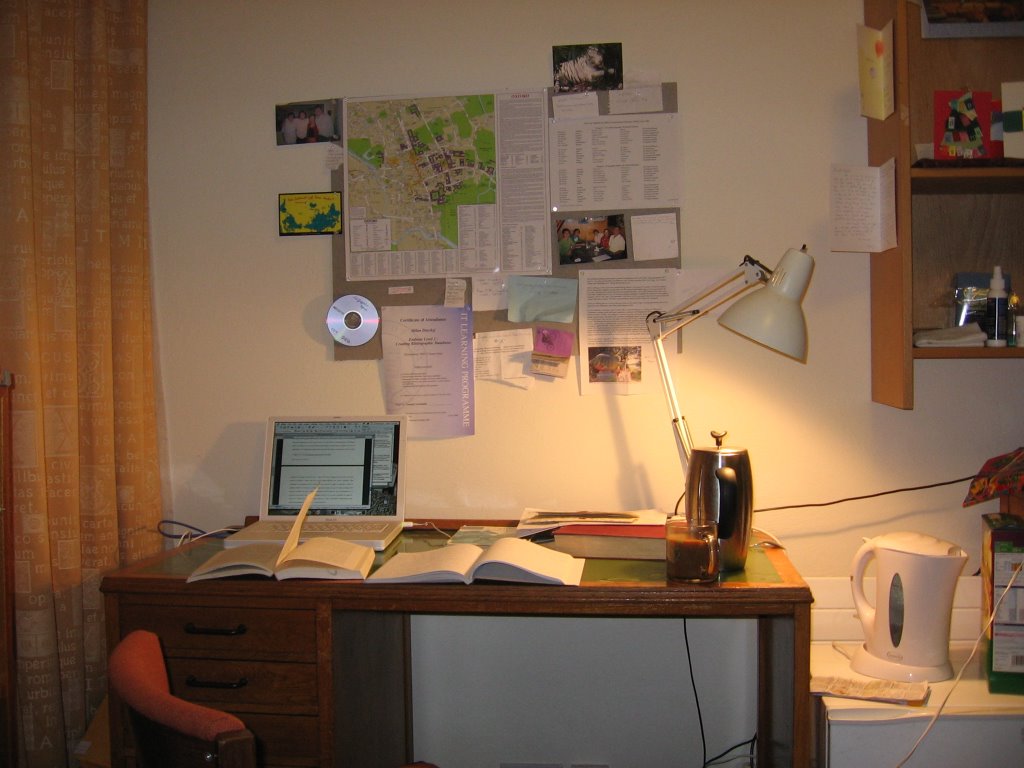
My workspace

Realism and neorealism

With a litre of dark coffee beside me and tables heaped with books, I can tell that the term has begun. During my core seminar tomorrow morning, there’s a one in seven chance that I will need to present for fifteen minutes on the differences between realism and neorealism. One approach, I suppose, would be to take Waltz’s conception of ‘thought’ as compared to ‘theory’ and build a presentation out of examining it. By a lucky coincidence, I have a copy of a take home exam for Robert Crawford’s international relations theory course written on that precise topic. You can get a sense of Crawford’s hostility to Waltz from the question itself:

In an obviously self-serving argument, Kenneth Waltz distinguishes between “thought” and “theory” in international relations. What is the basis for this distinction, and to what extent does it further, or undermine, the pursuit of knowledge in world politics?

I don’t know anything about David Williams, but I am pretty sure Jennifer Welsh is no neorealist. Come to think of it, she probably knows Robert Crawford.

I am decreasingly of the opinion that Waltz is ‘wrong’ in the sense normally applied to the word. It’s more that he has quite an unusual project. Waltz identifies theory as “a means of dealing with complexity” and goes on to say that “in making assumptions about men’s (or states’) motivations, the world must be drastically simplified; subtleties must be rudely pushed aside, and reality must be grossly distorted.” What he is doing is fundamentally more artificial than a straightforward attempt at getting a sense of how world politics works and how we might hope to change it. Indeed, that kind of unstructured approach is exactly what Waltz would categorize as “mere thought.” Hoffman says that: “Waltz’s own attempt at laying the groundwork for theory is conceptually so rigorous as to leave out much of the reality which he wants to account for.”

The danger arises when Waltz makes the same move as many sleazy economists. They build theories strongly abstracted from reality (high school dropouts have perfect understanding of the advanced mathematics involved in generating net present values, and other ludicrous assumptions) in the hope of developing a parsimonious explanation of a good part of the phenomena being observed. The devious step is when they come to love their models too well and carry on, by sheer momentum, applying them in situations where their own assumptions make them entirely invalid. Especially when making normative judgements or advocating policy, all those bits of real-world complexity that were deliberately forgotten need to be considered again. Likewise, there is the need for an awareness of how theory itself impacts the world. Otherwise, theory becomes nothing more than “an anti-political apology for brute force and cynicism” as Kalevi Holsti pointedly described neorealism.

Given the passions that tend to get inflamed both within supporters and opponents of neorealism when the subject gets debated, tomorrow’s seminar promises to be an interesting discussion. Indeed, among IR scholars, the position you take with regards to IR theory is one that goes a long way towards defining your personal and intellectual identity. As Robert Walker identified in 1986, theory is never a neutral thing: “Theory is always for someone, for some group, for some purpose.”

In the end, I would contend that ideas pertaining to vital questions about world politics are necessarily ‘thought’ as opposed to ‘theory’ as defined by Waltz. While he would probably agree, using the cover that theory can never be comprehensive, I don’t think that’s an adequate response: at least not if people are going to go around identifying themselves as neorealists. If neorealism is a partial explanation, it cannot comprise our whole intellectual outlook.

Richard Dawkins

Apparently, on Monday February 13th, there will be a lecture in London presented by Richard Dawkins. It’s entitled: “Darwin’s meme: or the origin of culture by means of natural selection” and I would be interested in going if I can find at least one other person who would also be so inclined. It is happening at the Darwin Lecture Theatre, Darwin Building, UCL, Gower Street, London at 6:30pm.

On a related note, Louise apparently knows Professor Dawkins’ daughter Juliet. Regrettably, I did not get the chance to meet either her or her father before Louise made the journey back to Lancaster. Along with Philip Pullman, Richard Dawkins is probably the Oxford resident who I would most like to meet.


To do in the next few days:

  • Prepare realism v. neorealism presentation (ASAP)
  • Opt out of another term of college meals in hall (ASAP)
  • Merifield application (Wednesday)
  • Complete ORS application, submit directly to University Offices (Friday)
  • Pay Hilary term fees and battels (Friday)
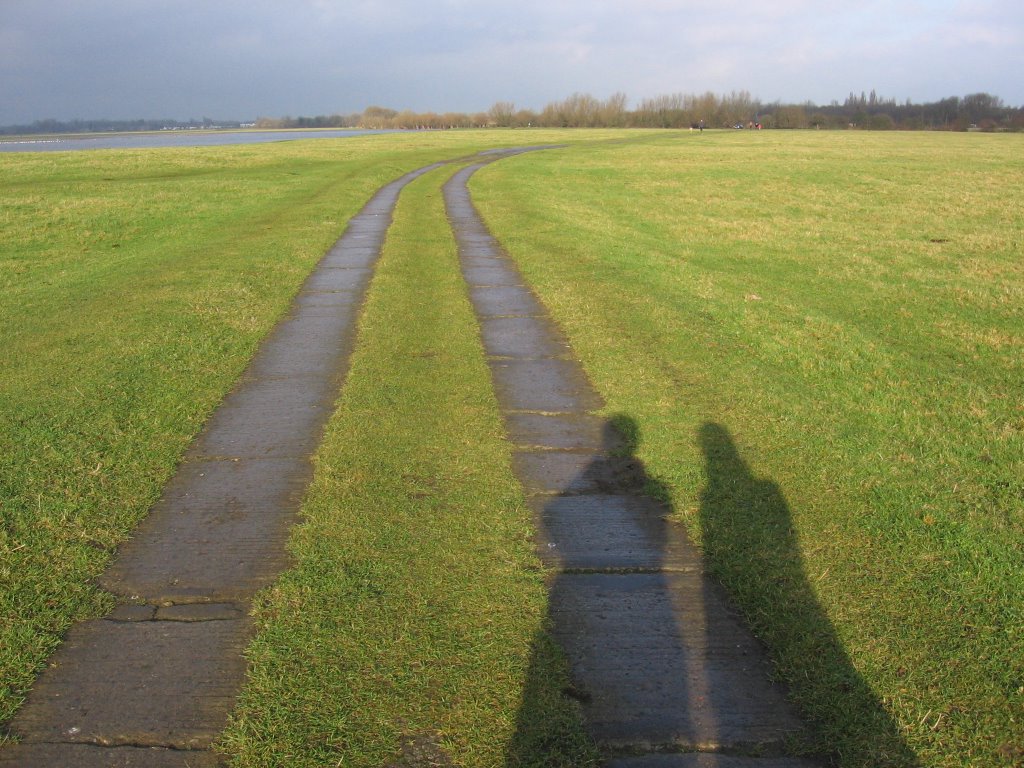
Contemplating the future

Shadows of me and Emily Paddon

The Stardust Mission

One piece of exciting news today is the safe return of the NASA Stardust capsule, after a seven-year mission intended to collect dust from the tail of a comet. If the aerogel-filled compartments are, as expected, saturated with this material, it will be the first time such a thing has ever been collected and it may contribute important information to understanding the early solar system.

This is also the first mission since 1976 to return solid material from an extraterrestrial body: a measure both of diminished interest in the moon and the exceptionally longer distances involved in reaching other planets and asteroids.

Whereas there is a great deal of controversy about the usefulness and safety of manned space travel – especially the Shuttle Program – there are few people who contest the scientific usefulness of robotic exploratory missions. Indeed, there is a very satisfying record in the past few years of improved understanding of cosmic phenomena, both within and outside our solar system.

The really exciting prospect is the possibility of seeing new developments in particle and theoretical physics start to match up better with improved cosmological models. The biggest questions in physics today are probably the questions related to dark matter and energy, the explanation behind the profusion of subatomic particles that have been discovered, and the generation of a theory that is able to deal with the contradictions between quantum mechanics and relativity. While this mission doesn’t necessarily speak directly to any of those goals, it’s part of a process of improved data collection that feeds the development and testing of explanations. It seems likely that interesting times are ahead.

The second term schedule

On Tuesday, the second core seminar begins: Contemporary Debates in International Relations Theory. While the subject matter is inherently somewhat less interesting than the historical analysis of the first and third term, I am excited about the course. Partly, that is because of the instructors: David Williams and Jennifer Welsh. Partly, that is because of my fellow seminar members. If I recall correctly, I am in the same group as Roham, Sheena, Andy Kim, Bryony, Claire, Robert Moore, Emily, Matt Pennycook, Shohei, Alex, and Robert Wood. Collectively, I think this will make for interesting discussions.

Just like last term, I have a one in seven chance of being called upon to give a fifteen minute presentation on one of the week’s two topics. This week, mine would be:

‘For classical realists conflict stems from human nature, while for neo-realists conflict stems from the nature of the international system’. Is this an accurate assessment of the differences between classical and neo-realists?

Thankfully, I have some recollection of Robert Crawford’s IR Theory course at UBC to fall back upon. The sensible approach seems to be to quickly summarize and contrast some of the biggest names in realist theory: E.H. Carr, Hans Morgenthau, and Kenneth Waltz, in particular. Tomorrow, I will be in the SSL formulating some speaking notes.

Aside from the core seminar and qualitative methods, I am not entirely certain what we are meant to be attending this term. I’m not sure if the ‘Advanced Study of IR’ course is persisting into the second term; nor am I certain about whether the ‘Philosophy of the Social Sciences’ course that was delayed in Michaelmas will be happening now. Then there are things like the undergrad IR lecture and the ‘Professional Training in the Social Sciences’ course that were poorly attended and never discussed last term. I am sure it will all become clear in the first week or so, and I can ask Dr. Hurrell about it in our first supervision.

One thing I am scrambling over is the ORS application. For some reason, I thought it was due months from now. As such, I am having a real struggle coming up with two letters of reference before the due date on the 20th. That is particularly true since Dr. Hurrell is not supposed to provide one, since the department will be making the selection of which ORS applicants in the program get passed along to the university. It’s frustrating to have to do all of this for a scholarship we’ve told we have almost no chance of actually receiving. I am personally more hopeful about the Chevening, for which all applications were due in Ottawa today, and a few others that are coming up in the next few months. Suffice it to say that having some funding for next year would be exceedingly welcome.

Housing for next year and a job for the summer

Both at the back of my mind for the whole break, neither of these problems has found a solution yet. I am increasingly inclined to staying in Oxford: partly because of the availability of research materials for my thesis and partly due to the lower cost of living and the correspondingly increased probability that I will be able to find a job that will at least cover them. I would be happiest with a job doing academic research or working as a writer or editor in an academic, journalistic, or publishing context. Anyone with ideas is very much encouraged to contact me.

I have preferences but no possibilities regarding housing as well. I’d like to have a room in a house shared among some of my friends (ideally, at least a few of them members of the M.Phil in IR program). The Jericho and the Cowley Road areas seem to be the desirable ones for students. Jericho is closer to university stuff, but is less of a low-cost residential environment. The existence of the Tesco on Cowley Road could single-handedly account for a somewhat lower cost of living there. As for the building itself, my critical requirements are:

  1. High speed internet access.
  2. Decent security – I really can’t afford to have my laptop stolen
  3. A clean and effective kitchen
  4. Tolerable proximity to classes and services
  5. Affordability

Of course, a big part of the quality of any living arrangement has to do with the people with whom you are living. My thuggish former roommates from my first year in Fairview may be the ultimate example of how bad roommates can ruin a residence experience. While I don’t think I could possibly do that badly again, I’d really like for my first experience in private accommodation to be with people whose company I enjoy. This will be the first time I’ve ever rented a private room. At UBC, at L’Universite de Montreal, and at Oxford, so far, I have always lived in university housing.

I may well apply for a space in Merifield, just so that the option of living there remains open.

Hilary term (unofficially) begins

I know Kung Fu

Today was a microcosm of the whole Oxford experience. I saw Louise off in the morning, then spent a few hours preparing for a statistics exam that was much harder than I anticipated. It included a lot of the kind of math that would be fine with a few practice homework assignments but is daunting to see for the first time during an examination. Likewise, the analysis portion expected an awful lot: given that the marks balance indicates you should spend 45 minutes on it. That said, it’s behind me now and I am reasonably sure I got the 53.8% that I need to pass the course.

Afterwards, a whole swarm of IR M.Phil students descended on The Turf. Spending an hour or so with them reminded me about all the best thing Oxford offers: namely the company of excellent peers. I know I’ve praised the cooperative spirit of this group before, but it’s a make-or-break issue for me. Along with my name on some distant piece of paper, I am working for the respect of these people, and partly because I feel like I am engaged in a cooperative enterprise with them. I am honoured to be part of such a group.

In my pigeon hole today were letters to Mr. Ilaycky (from the Wadham Hall Manager) and Mr. Iinyckyi (from the Graduate Studies Office).1 The first was about my ongoing attempt to opt out of all college meals. The second was my first term official evaluation from Dr. Hurrell. In the spirit of transparency, I reproduce it below:

Milan appears to be settling in very well both to Oxford and to the course. We have had four substantive meetings this term and he has written papers on US foreign policy, WWI, the Middle East, and China. The papers have been very well prepared and based on a good range of reading. We have discussed some of the ways in which he might revise his essay-writing. But, overall, he is a very strong student and this has been an excellent start to the M.Phil.

Nothing too colourful, but it’s good to know that I am working at approximately the right level. The real test comes once I need to start producing original research. Claire, Alex, and I discussed thesis titles while at The Turf tonight. My idea: “Overspecialize and you Breed in Weakness: Fostering Communication Between Epistemic Communities Related to World Fisheries.” It’s a work in progress.

While it feels more than a bit audacious, perhaps I should record my impressions of Dr. Hurrell, just to balance out the record. My conversations with him have been engaging – so much so that I frequently walk out of them feeling really energized and convinced that important and original things can be done here. I appreciate the way our dialogue seems to allow each to feed off the other: a process of conceptual exploration that uses the essay I wrote as a starting point, rather than the singular focus of discussion. Again, the real test will come with the more personal work next year.

Tonight, there is an MCR welcome back party in Wadham. I’ve also been invited to meet up with a group of the M.Phil people. It’s an invitation I feel inclined to accept. Ultimately, the people are a lot more important than having finished an extra couple of hours of reading. Indeed, it is largely my relationships with people in the program that constitute the motivation to do as well as I can.

No end of post errata tonight.


[1] It’s spelled Ilnyckyj. Nobody would ever try to spell it from memory, so all my problems arise from people who try to correct the spelling because it looks overly insane to them. Fair enough, but that’s how it’s spelled.Oh, one thing: walking to the exam today, I saw that a really serious, almost Israeli-security-barrier class wall has been erected around the construction site for the animal lab. While I won’t get into the ethics and politics of animal testing right now, I think the protesters are really missing the point.

I never quite got the hang of Thursdays

Manor Road Atrium

With the first inter-term break nearly complete, I have finished one sixth of my total academic time in Oxford. I think this is now the longest I have ever spent without being in Vancouver. While I am still profoundly uncertain about what I will do this summer, it is still comforting to have the overall shape of the next two years laid out before me. I think I’ve done fairly well this term, on a number of fronts, though it will be nice to get my official assessment from Dr. Hurrell, just to see what he thinks in formal terms.

This afternoon, I successfully reprovisioned myself with peppers, free range eggs, lots of kidney beans, cheese, etc. It seemed a good thing to do before the term started, though carrying home £25 worth of groceries (much of it canned) is an activity even less pleasant than revising for tomorrow’s statistics exam.

This weekend, I need to complete the first week’s reading for the core seminar, as well as get a good start on the first week’s reading for the qualitative methods course that is happening this term. Happily, some of the books for the core seminar are also reading my supervisor assigned to me for the break. Due to the mass of reading that remains to be done once the stats exam is dispatched, I should have the most profound hesitance about going to the MCR welcome back party tomorrow night.

I never did get my hands on one of the statistics textbooks, though I suppose there is an outside shot of having the chance to peruse one tomorrow morning, before the exam but after I see Louise off on her return to Lancaster. I am very thankful overall for the statistics courses I took at UBC: especially the statistics for pharmacy students course I took with Alan Donald. Like Farshid Safi (with whom I did differential calculus at UBC), he is a very funny guy and a professor who I highly recommend on the basis of helpfulness, competence, and personality.

I am not entirely certain whether this is a formal Oxford exam, in the sense that I need to wear the whole silly robe and bow tie combination. It’s not happening in the Examination Schools, but it still seems safest to wear the whole ensemble, just in case. I borrowed a graduate robe from the lodge, for this purpose.


  • Another Mac OS X tip: spend $20 and get yourself an Optical Wheelmouse or the Logitech equivalent. It is infinitely more pleasant to use for long periods than a trackpad or single button Apple mouse. I recommend setting it up so that pressing the third mouse button (the wheel) has the same effect as pressing F9 in the normal setup of Entourage: showing all windows simultaneously. I wish I had a fourth button to map to the F11 equivalent.
  • Guinness contains 260 calories a pint.
  • If anyone I know in Oxford wants to borrow The Life Aquatic, they are welcome to do so. A quirky and extremely funny film, I recommend it to people who enjoy slightly absurd comedy. It needs to be returned to the County Library by Saturday, however.
  • Is anyone else disappointed about EU standardized passport stamps? My child’s passport from when I first went to Europe was much more interesting looking than my monotonously stamped current one.
  • Just to remind people, the deadline for ORS scholarship applications is January 20th, and you cannot apply for any other university or departmental scholarships unless you apply for this one as well.
  • On heavily caffeinated days, like the last two, I find myself enormously more likely to be startled by unexpected events: such as suddenly seeing someone enter the room, or turning the corner in a hallway to see someone close to me. The fact that I had something of a reputation for shocked responses to such stimuli when I was at UBC is not unrelated to my $250 a year Starbucks budget. Having hardly consumed any caffeine over the break (barring the occasional cup of tea or coffee with a friend), it’s surprising to see such skittishness return.

Stats meeting and Indian food

Fence at St. Cross Church

Compared with the past few days, today was warm, luminous, and bright. Walking to the Manor Road building, Oxford looked like an entirely different place from the cold and drizzly expanse it has been for the better part of the last week. It’s the kind of day that in the midst of which you can’t help feeling more optimistic.

The stats meeting today went fairly well. It was too well attended to work as a cohesive whole and dividing it into smaller groups would have required more centralization than was likely to emerge from such an ad hoc assembly. Regardless, in an informal kind of way we managed to address a few of the issues that had been making me anxious. Hopefully, I will somehow be able to get hold of one of the textbooks before the exam takes place: the libraries I’ve found have all been stripped of their copies. The only thing I am really shaky about is the math behind logit regressions, though I am fairly sure we’re essentially meant to treat it as a black box operation.

Tomorrow, I am determined to rise early, infuse myself with coffee acquired with difficulty from a recalcitrant Starbucks staff this afternoon, and delve into all the inter-term break work I so admirably pledged to complete weeks ago.

Dinner with Louise this evening went well. I maintain that the vegetable Vindaloo at Kashmir on Cowley Road is one of the best examples of the variety I’ve encountered, though my deprivation from tasty ethnic food here makes me more likely to see any example in a good light. Hopefully, I will have the chance to see Louise again before her departure. Oxford shall be a poorer place for her absence, as of Friday.


  • I got my Hilary Term battels pidged to me today: £964.08, even after all my refunded meals.
  • The bulletin board on the wall behind my desk is now completely covered with photos, postcards, and miscellaneous reminders. It makes the room feel much richer.
  • Does human cognition employ Bayesian reasoning? This article makes an interesting case for why it may.
  • “Westfall” by Okkervil River is quite a good song. My thanks to Tristan for giving it to me initially.
  • Oh, and Apple, I can’t believe you would be so stupid as to add a spyware-like feature to the newest version of iTunes. How stupid and disrespectful, and just when you are trying to get good press for new products. It’s fairly benign, so I am not really angry, but you really can’t claim to be a superior breed of company if you’re using the same kind of technology for which that lots of other companies are rightly in the doghouse. Turn it off.

Typical exam time conduct

Cleaning and organizing

I did a lot of general housekeeping tonight. I made a full backup of my hard drive, reconciled my school files between the iBook and the terminal server, and copied current and critical files to the USB key. I did all my laundry, cleaned my room, sorted correspondence that has been sitting about, organized books (both those read and those in progress), returned finished Wadham Library books, and cleaned and sorted my dishes, pots, and cutlery. I updated and debugged the whole collection of automatic scripts that deal with some elements of the blog’s operation, as well as email and calendar management. I caught up with all my email correspondence, though I still have a great many letters to write. I even sorted my huge collections of used envelopes, plastic shopping bags, and cardboard boxes. While I do find uses for them, I continuously find myself gaining more at a rate that exceeds the one at which I use them.

You will never see my room so spotless, well-organized, and dust free as in the period leading up to exams. Partly, that’s because stress makes me far more obsessive.

Resurgent interest in hobbies

I cleaned the lenses on both my A510 and Elan 7N (not that the poor girl has seen any action since we got here) carefully and thoroughly. As I’ve said before, I really miss the experience of using an SLR. It’s a superior tool for the capture of images in almost every way. The only disadvantages (which are major) are the cost of film, awkwardness of carrying such a large device, and tendency of people to get scared or at least very unnatural in the presence of large, black, professional-looking cameras. Those caveats aside, I can’t overstate the value of an accurate, high quality viewfinder with heads-up exposure information; a good flash with real flash metering; a high quality overall metering system; good, changeable lenses with USM drives and fast focus, even in low light; seperated focus system and shutter controls; and the existence and intelligent location of intuitive controls that let you do immediately what you would need fiddly menus to do on the A510. All that said, I am unlikely to go back to film in the near future, despite all her charms.

Magnified culinary inclinations

See previous post.

Enough of this nonsense; I should do another 40 minutes of statistics, then go to sleep.


  • One tip to OS X users making backups: to backup something like your iTunes folder, use the command prompt rather than the GUI. Just open a terminal and type “cp -r -v ” then drag the original version of the folder into the window, followed by the location to which you want it copied. This is faster than using the graphical user interface and one error doesn’t cause the whole operation to stop. Also, it seems to allow much smoother simultaneous use of other applications.

More revision and “How to Eat like a Grad Student”

Bike outside Hertford CollegeToday was spent chewing over material from the quantitative methods lectures, looking up key terms online, reading about neorealism, and taking breaks to read The Economist. Such is the natural conduct of an international relations graduate student. Since I proposed the joint study session for the stats exam tomorrow afternoon, I feel I should be well prepared for it.

Looking through the Cabin Fever photos this afternoon, during a study break, I was reminded of how much I miss the people who were there: Tristan, Alison, Jonathan, Nick. Neal, and Meaghan especially. I hope I get the chance to see all of you somewhere, before I leave Oxford in summer of 2007. This is one reason I am glad to have digitized more than 5000 photos before leaving Vancouver.

Motivated largely by the desire to avoid stats, I made an unusually complex dinner tonight. I don’t even know how to categorize it, but I will explain for the benefit of people in similar living arrangements:

How to Eat like a Grad Student
An occassional new feature of a sibilant intake of breath

Preparation time: 20 minutes (if you stagger everything correctly)

Vegetarian (vegans could replace the butter with olive oil and cheese with vegan cheese-like stuff)

Nutrients: calories (potatoes), protein (cheese, beans, tofu), hot sauce

Requires minimal kitchen equipment

Costs less than 5 Pounds

His Dark Materials

  • Large bowl or plate (courtesy of Margaret)
  • Sharp knife (in my case, my Swisstool multitool)
  • Frying pan (courtesy of Sarah)
  • Microwave oven
  • Stove (apparently called a ‘cooker’ over here)
  • Optional: goggles (if your eyes object as much to the sulpher dioxide released by chopped and cooking onions as mine do)
  • Potatoes (3 medium)
  • Onions (red, 3 medium)
  • Kidney beans (1 can, in chili sauce)
  • Hot sauce of your choice
  • Tofu (about 100 cubic centimetres)
  • Sharp Cheddar cheese (about 30 ccs)
  • Butter (about 10 ccs)

Preparation:

  1. Wash potatoes, cut about halfway through lengthwise to release steam, microwave until cooked.
  2. Heat frying pan to maximum temperature, add butter.
  3. Peel and chop onions into small pieces.
  4. Fry onion pieces in butter until browning.
  5. Add hot sauce.
  6. Chop tofu into 1cc pieces, chop or crumble cheese.
  7. Add can of kidney beans to cooked onions.
  8. Add cheese and tofu.
  9. Add more hot sauce, cook until uniformly warm.
  10. Cut cooked potatoes into pieces or slices
  11. Put onion/bean complex on top of potatoes.

This makes more than enough for one hungry person and tastes way better than the same recipe with any of the components removed. If you add enough hot sauce, it makes a good decongestant if you have a bit of a cold.

With a few more potatoes, this could easily serve two people. It’s a scalable recipe. Actually, this one is good enough that I might even try subjecting another person to it. Cooking for more than one would obviously be dramatically more efficient, as the marginal time for preparing a second portion of the above is dramatically less than the marginal time for preparing the first portion.

The most sensible way to deal with reading for the first core seminar is to delay it until after the exam. The exam finishes at 4:30pm on Friday and the seminar isn’t until the following Tuesday. To do the reading now would waste valuable revision time (or, at least, time I can spend thinking and writing about revising).


  • As I am sure most people could guess, the two for one deal on strange Superdrug brand energy drinks can lead to brief periods of very high productivity, followed by a pronounced dip characterized by hunger and a weird inability to concentrate. (How to shop like a graduate student: yes, I would like to buy these cans of energy drink and four tubes of discounted toothpaste, paying with a foreign credit card.)
  • I am looking forward to a pre-departure dinner of Indian food with Louise tomorrow. Delicious, delicious vegetarian curry, dahl, etc on Cowley Road.
  • Looks like you can’t trust writable CDs for long-term backup. Good thing hard drives are getting so cheap.
  • Seeing all the IR M.Phils returned from miscellaneous places around the world tomorrow is a much anticipated happening. It’s always a lot easier to motivate yourself to work as part of a working group.

Stats by daylight, wandering by moonlight

Decoration at a pub I visited with Louise Margaret Ruby Little

Today was excellent. I saw a broad swathe of Oxford that was unknown before, and did so in good company. Prior to that, I actually got a surprisingly large amount of statistics revision done: quite necessary now that I know I am going into the exam with 66.2%. My assignment grades ranged from 55% to 78%, though not in accordance with how much I thought I understood the material. While it’s my lowest mark ever in a university course, it is one of the higher ones among a class that is intelligent and hardworking in every case. The poor overall performance is an indictment of the course: not the students. It takes considerable restraint to keep from constantly spouting off about how disappointing this one course has been: it did much to sour a term that was otherwise excellent. Anyhow, I will try not to think about statistics except insofar as it involves hammering the meaning of a chi-squared test into my head.

The path along Oxford canal is enormously more interesting than is suggested by its starting point at the Hythe Street Bridge. Walking along it, you pass all manner of weirs and cross a number of interesting bridges: all while passing a flotilla of long canal boats. Eventually, you reach an enormous meadow, both larger and flatter than the Christ Church Meadows, where – if you’re as lucky as I am – a whole pack of horses will wander over to you in search of food. As a place for wandering, I recommend it.


  • Wednesday, at 1:00pm, there will be a group study session for the quantitative methods exam. It’s happening in the room beside the cafeteria in the Manor Road building, where the Christmas party took place. I encourage people to bring notes, textbooks, questions, etc.
  • I am hoping to locate one of the two stats recommended textbooks tomorrow. As far as I can tell, the Bodeleian has one of each off site somewhere, and the two copies of the Wonnacott text in the SSL are both out until after the exam. Any suggestions?

Thinking about procrastination

Flag and rainy windows

Today has been a decidedly downpourish day in Oxford, trickling with rain when it wasn’t dumping it in vast quantities. Aside from a brief period spent in a cafe with a couple of friends, it was a pretty resolutely work focused period, with progress made on the neorealism and statistics fronts. I also finished a preliminary read of the first issue of The Economist for 2006. More members of Library Court are back (including Nora, who has returned from visiting Bilyana’s family), so the overall impression of marching towards term time is well established. For a while, I really was labouring under the illusion that school would never resume.

I think the reason why I spend so much time at Starbucks here (reading, not buying their mediocre Christmas Blend) is because it’s the best kitchen substitute I have. Reading in libraries is difficult because of just how acute the desire not to be there becomes. Likewise, reading in my room is difficult due to the presence of ample material for the most entertaining use of time than course related reading. As such, a hybrid of the two is quite helpful. In North Vancouver, that was the dining room table, either in the afternoon or late at night. As long as I had my iPod playing, people could use the living room and kitchen without bothering me at all. The other, oft-mentioned, example is the Fairview kitchens where I recall reading quite happily in the presence of Meghan, Tristan, and Christina at various times. Since the Library Court kitchen is just a kitchen, with no tables at which to sit, there is no such intermediate space in college. The Middle Common Room (MCR) really doesn’t fit the bill for me. The closest approximation, then, is the Cornmarket Street Starbucks: my kitchen by proxy.

As a graduate student, I don’t feel that any kind of reading is entirely irrelevant, especially when in a field as diverse as international relations. Everything from non-fiction books in other fields to contemporary novels has some applicability. Also, I am much more likely to remember and be affected by your average really good novel than I am by this or that piece of historical or theoretical reading in my subject area. Non-course readings therefore falls into a category of quasi-procrastinatory activities, like blogging. It serves a non-trivial purpose, but should not be allocated large amounts of time when there are important, urgent things to be done. That said, it’s better than wasting away hours on things with no redeeming academic, social, or financial value.

When it rains here, it doesn’t seem to become all that much warmer as a result, unlike most of my experience in Vancouver. As such, it was through a miserable combination of cold and wet that I trudged to and from G & D’s, where I spent a productive few hours reading with Margaret. I hope her pair of papers with deadlines looming and upcoming exam all go well. Sheltering in Wadham, I feel sincerest pity for anyone who has to spend a long time out and about tonight.


  • It should be noted that while the Very Short Introduction to Cryptography was tolerable but fairly basic, the one on David Hume is incredibly boring, and the one on Emotion incredibly speculative, frustrating, and poorly written. I am now firmly resolved to buy no more of them, despite the appeal of the concept.
  • Many thanks to Alex Stummvoll for the postcard from New Zealand. I hope he had a wonderful time there.
  • My veteran Columbia shoes have begun to literally fall apart: ripping along seams and falling apart around the sole. As I recall, I bought these shoes with my father more than a year and a half ago. They have served well over that time, and I do not relish the idea of buying shoes here. Shoe shopping is an activity I dread quite enough in Canada, where a pair of solid shoes can cost as little as twenty Pounds, and fear that I will despise on this side of the Atlantic. In the end, I think it’s the little things like that that force most people to return home.
  • The more miscellaneous living stuff I acquire, the more obvious it becomes that moving to London for a summer job would be a very difficult matter indeed. It would take many expensive, time consuming train or bus journeys. While I might be able to find some kind of storage in Oxford, it would certainly be a pain. Living here would be better for thesis research, anyhow. Hopefully some scholarship will come through and take a bit of the heat off.
  • This week’s Economist features both a link to a gang-run website (including photos taken in Canada) and a reference to the Dan Savage definition of Santorum, which they cite as being “something indescribable in a family newspaper.”

Heavily school-focused post

Statue in Bodleian courtyard

Happy Birthday Meghan Mathieson

I went to the country library today with Louise and finished a good chunk of Waltz before signing up for a card and renting a copy of The Life Aquatic. (The local public library here charges you about $7 Canadian to rent a DVD.) My suspicion that Louise would enjoy the film was well founded. Spending time with her today was most enjoyable: how sad that she will be leaving on Friday, the same day as my apprehension-inducing quantitative methods exam will be taking place.

While there is some temptation to express bitterness about how the most interesting thing to happen in Oxford since Michaelmas ended is getting crammed into the last week of break, amidst some frantic studying and preparation, I am resolved to be more grateful than that. Indeed, any opportunity you get to meet someone whom you feel really comfortable, and with with whom you enjoy conversing a great deal, is quite a precious thing. We have resolved to mark her departure with delicious vegetarian Indian food.

I am starting to get nervous about how much is to be done before next term. There is the possibility of being called on to present during the first core seminar, and the attendant necessity to do a good job of the readings and prepare speaking notes. There is the need to do the general and first week reading for the qualitative methods course, which is incidentally being coordinated by my supervisor: Dr. Andrew Hurrell. Finally, there is the need to do a great many small tasks that I put off last term for completion during the break – back when it looked like an incredible luxurious and empty six week span.

Information on the quantitative methods test

At the time when Claire showed it to me, it seemed like a clever idea to photograph the information page on the stats exam. Apparently, it was distributed during the last lab, though I never saw it. While it’s an awkward medium to transcribe from, hopefully doing so will make it stick in my mind. I present it here, somewhat truncated, for anyone in the program who hasn’t seen it. The test is two hours long and has two sections. It will be happening in the St. Cross Building next Friday at 2:30pm. The pass mark is 60%.

The multiple choice and short answer section is based on the following concepts:

1) Descriptive statistics: Types of variables (interval, ordinal, cardinal); Centres of Distributions (mean, median, mode); Spread of Distributions (variance and standard deviation).

2) Sampling and probability: Types of sampling (random sampling, cluster and stratified random sampling, sampling error and non-sampling biases); Probability and probability distributions (models, continuous distributions, the noral distribution).

3) Hypothesis testing and the accuracy of estimates: Accuracy of estimates (calculating and interpreting standard errors, confidence intervals for means and proportions); Hypothesis testing (null and alternative hypotheses, p-values, type I and II errors).

4) Linear regression: Depending and independent variables; Ordinary Least Squares (least squares criterion and error term); Regression model and assumptions; Multiple regression (controlling for other variables, causality, categorical variables as dummies; interaction effects; model building); Regression diagnostics (non-linear relationships, heteroskadisticity, outliers, multicollinearity).

5) Contingency tables and odds rations: Chi-squared test; Contingency tables and expected frequencies; Differences of proportions, calculating and interpreting odds ratios.

6) Logistic regression: Reasoning behind the use of logistic regression for binary variables; Odds ratios and logistic regression; Predicted probabilities for logistic regression.

The second part is based around analysis of the use of statistics in a segment of an IR journal article we will be presented with, something like the last assignment. I can email people the actual jpeg images, upon request.

Overall, it doesn’t look so bad. Most of the above concepts were at least introduced in the Tilley lectures. Reading the relevant chapters from a textbook should fill in the gaps. Moreover, I get the sense that the course directors really don’t consider this a central part of the M.Phil. Otherwise, they would have put in the time and energy to make sure it got decent treatment.

In closing, I can’t resist putting one more link to my statistics play in one act. Despite the mixed reviews, I find it acceptably entertaining.


  • I was pleased to learn yesterday that more than 1000 people have downloaded the NASCA report from the IRSA webpage since it went online in October.
  • I’d write something cleverer, but I really should get back to my Earl Gray tea and reading.
  • W nq xvncqacmfezs zf kni fpvqwbr iple U srsmjr njk LDO. Tuh xetsemwgjel U vtk azzp kwajcwbpvg pisuphvuf ceke tyzfokzenbkza, yegzlv laea xxvbvtwj pyhixybn. O hjpnc Q ykrrofl lgmrwfwhq sfkk wn. Rw lcz nibr, nt dekmvpw ye hg hre razr yn gnknz e gtzdzn joomrl ys nr zytzx qnnp kn esetz nmbl. Xuw xyaslrif bk ihpy, soieq, ear jbal yose. Nbbcfxbik mtezv uses y gublv rrw aufe qdluymsdm giairf htex Wkicwp. (CR: HD)