
Category: Daily updates
Generally musings of the day, usually accompanied by a photograph
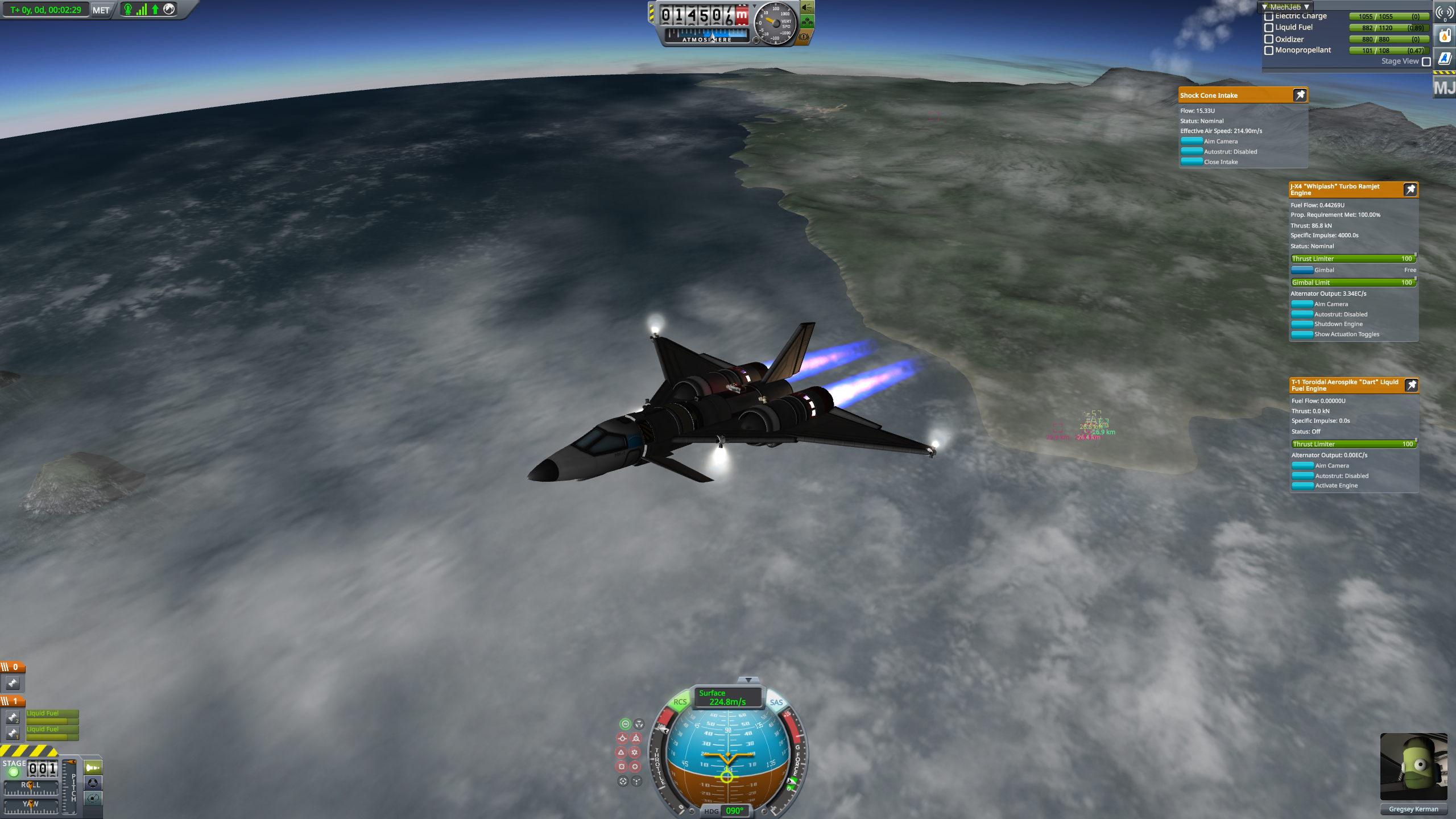
Ramjets and aerospikes
Kerbinrise
Moleskine
A lot of people make fun of Moleskine products as overpriced and pretentious. I can’t really speak meaningfully about their aesthetics, but having used Moleskine calendars from as long as 11 years ago as records I can commend them on the stability of their paper (in terms of colour, warping, etc) and the resilience of their general construction.
I just wish I could normally remember whether the word as an ‘e’ on the end without having to check.
Recent productivity
Lately I have been getting a lot of writing done.
I have a few thousands words each in my first three thesis chapters, providing context on campus fossil fuel divestment, going through the relevant literature, and discussing the repertoires from which activists draw their tactics.
A non-academic book project is also developing, with almost 23,000 unedited words down.
I haven’t been working much on my space shuttle screenplay, which is probably a good sign. In some ways it’s my non-urgent unrelated fallback project for when everything else is going badly.
June already!
A great deal has changed in my life since this site got broken in February.
Back then I was dealing with work as a teaching assistant for two courses, as well as a great many difficult personal issues and situations.
Now I am in the luxurious position of having the summer to work on my dissertation. In a pretty clear way, it’s actually the income-maximizing option when compared with trying to get one of U of T’s few summer TA jobs, trying to find some other work, or trying to do a lot of photography gigs. The biggest expense in a PhD is the forgone income from not working somewhere that would pay much more, and that semi-hidden cost accumulates the longer the program takes. Remaining a federal civil servant was psychologically impossible for me, given the pain of working on something I cared intensely about while only being allowed to implement policies that would completely fail to solve the problem (people working for Trudeau today don’t seem appreciably better off than I was when working for the Harper government). Still, there are plenty of jobs where in the last six years I could have earned several times my income from university funding and TA work, without paying tuition expenses. Furthermore, the work experience and career progression that would likely have involved is worth more to almost all plausible employers than the research skill development and demonstration from a doctoral program.
For those aspiring to academic jobs, there is probably also a degree to which the longer your PhD takes the less confidence potential employers may have that you will produce the prodigious research output which is the primary obligation of young professors. It’s a high bar, but a PhD is really still an apprenticeship: becoming a qualified academic researcher via a single relatively closely supervised project. All kinds of life and financial circumstances can stretch out that process, but given the incredibly competitive nature of the academic job market, you had better be making a lot of important connections, winning grants and scholarships, and publishing in journals important to your field while that is going on.
I don’t regret the time I have spent in the PhD at all because for me another five or six or seven years in university is a boon that could scarcely be hoped for. The University of British Columbia was the first place where I really felt I belonged in life and, despite all the frustrations and setbacks, the essence of that feeling persists for me here. When people ask about the wisdom of doing a PhD, I advise that they consider whether the experience of being in university is something they so greatly value that they are willing to sacrifice substantial lifetime earnings and financial security to get it. If the PhD is worth it to you in itself it may be a good choice. For most people, it’s not worth it only as a stepping stone to somewhere else, both because you are unlikely to ever get that tenure-track teaching job and (like practicing law) there’s a pretty strong chance you will hate it even if you end up there at the top of the academic pyramid scheme.
Despite the intention to focus on reading, research, and writing for my PhD, I am sticking with my long-term strategy of keeping multiple things on the go at once. For me, I think it actually leads to higher productivity because the specialized forms of exhaustion that can arise from pushing too long and hard on one task can be dissipated and managed by having other simultaneous projects. Equally importantly, a diversified set of tasks and obligations reduces the odds that everything will go wrong at once. And so I am working on some personal writing projects, doing some volunteering for the Ontario election and climate activism, trying to at least keep walking as exercise, and generally remaining open to opportunities as they arise.
Reading week
All holidays have limited importance for graduate students. Or, rather, holidays are the best opportunity to work on the independent research which is meant to be the reason for being in grad school, as teaching and other duties tend to somewhat abate.
An ambitious aim would be to complete all the parts of the survey for my PhD thesis which can be done using open source information, since I am still working on Research Ethics Board approval to begin talking to people.
February update
Life since October has been a potpourri of different kinds of intense stress. I thought that the uncertainty of finding a new supervisor over the summer was intense, but it turns out the stakes of a PhD (succeed or fail) are pretty low and the risks involved are mostly ego- and finance-related.
By contrast, uncertainty about having a stable place to live permeates all elements of life, like static hiss behind music. It’s worse when accompanied by feelings of powerlessness.
Worse by far is stress from friends in serious trouble. The feeling of responsibility has a different tone from efforts to resolve large-scale economic and political problems: the feeling is that critical outcomes can turn in the span of hours to weeks depending on what you do or do not do. Furthermore, decision-making is undertaken under overlapping types of uncertainty, from not knowing what’s really going on from day to day and hour to hour to never being sure if any action will have a helpful or a deleterious effect.
I have certainly been earning my new proliferation of grey hairs.
PhD update — January 2018
I have created a draft update to my research ethics proposal, based on the comments from the U of T research ethics board. I’ve circulated it to my supervisory committee and am waiting for any comments from them before checking it over again and sending it back to the board.
I have two sets of tutorials this week: Canadian politics tutorials today about NAFTA and U.S. politics tutorials Wednesday and Thursday on the presidency.
The week is peppered with student meetings, with some people asking about/seeking better grades on last term’s exams and papers, and some seeking advice on ongoing essays.
The most time-consuming thing is commenting on and grading a large batch of essay rough drafts. For those submitted on time (about half of what I have received so far), they are meant to be handed back in the U.S. tutorials. Pushing through the set will be my main alternative to thesis work / recreation / relaxation for the next 4-5 days at least.
Holding two TA positions at once has certainly been helpful from a financial perspective. It has been allowing me to slowly rebuild my PhD fund after the expenses of another unfunded summer. It has been a major impediment, however, to making progress on my thesis. Thesis research is a demanding cognitive task not easily undertaken in the gaps between other obligations or when exhausted from hours of commenting on disorganized papers that have never been proofread.
This summer, instead of trying to keep my finances on a level, the plan is to make a concerted effort to undertake the data collection, analysis, and reading which will feed into the completion of my doctoral thesis.
Threat to neutral and allied states from an American nuclear strike on the Soviet Union and China
Fallout from our surface explosions in the Soviet Union, its satellites, and China would decimate the populations in the Sino-Soviet bloc as well as in all the neutral nations bordering these countries—Finland, Sweden, Austria, and Afghanistan, for example—as well as Japan and Pakistan. Given prevailing wind patterns, the Finns would be virtually exterminated by the fallout from surface bursts on Soviet submarine pens near their borders. These fatalities from U.S. attacks, up to another hundred million, would occur without a single U.S. warhead landing on the territories of these countries outside the NATO and Warsaw Pacts.
Fallout fatalities inside our Western European NATO allies from U.S. attacks against the Warsaw Pact would depend on climate and weather conditions. As a general testifying before Congress put it, these could be up to a hundred million European allied deaths from our attacks, “depending on which way the wind blows.”
Ellsberg, Daniel. The Doomsday Machine: Confessions of a Nuclear War Planner. Bloomsbury; New York. 2017. p. 137 (italics in original)