Unpiloted drone to investigate ice caps

Melting sea ice was mentioned here recently. According to the MIT Technology Review, a team at the University of Kansas is building an unpiloted airplane designed to conduct detailed RADAR surveys of the Arctic and Antarctic ice sheets. In particular, the plane will look to see whether water has collected between glaciers and bedrock – a situation that can lead to their very rapid disintegration.

If things go according to plan the vehicle – dubbed ‘Meridian’ – should conduct its first survey next summer. Given the potential importance of melting ice for climatic feedback loops, anything that improves the quality of data available should be applauded.

Pikaia gracilens and the vertebrates

Rideau Canal and buildings

In the most common system of taxonomy, as we should all have learned in high school, human beings are Animalia Chordata Mammalia Primata Hominidae Homo Sapiens. The first bit essentially means that we eat something other than sunlight. The second bit means we are descended – like all other vertebrates – from Pikaia gracilens. This creature lived about 570 million years ago and was part of the Cambrian explosion: so spectacularly displayed in the Burgess shale near the border of British Columbia.

Pikaia was initially mis-categorized as a worm. Now, it seems that the combination of segments, muscles, and a flexible dorsal rod embodied in this little creature may mean that it was the first vertebrate: the template for all those alive today. From the first vertebrate species, all amphibians, reptiles, birds, and mammals evolved. From tuna fish to orangutan, we may all be descendents of Pikaia. Writing about the animal in Wonderful Life, Stephen Jay Gould highlights both its huge evolutionary legacy and the degree to which it arose as the result of many change occurrences. If we could go back all those millions of years and let time unroll again, it is highly likely that we would have a profoundly different world at the end.

You can begin to imagine how staggeringly different the contemporary world would be if this little creature hadn’t survived and spread. The old view of evolution as a linear and predictable progression towards ‘higher’ organisms – a surprisingly common teleological view – is laid to rest by the contemplation of the degree to which chance can nudge history down one or another track.

Geography and the web

While it certainly doesn’t have the best name, the concept behind heywhatsthat.com is a neat one. Using data from Google maps, it generates panoramas as seen from mountaintops and other high places. You can then identify the mountains that you see around you.

The interface definitely needs some work, but the site does suggest ways in which openly accessible storehouses of data – such as the position and altitude information available from Google – can be combined into novel tools.

exploreourpla.net is a similarly badly named but interesting site. It combines geographic data and images related to climate change. You can, for instance, view a satellite map of Western Europe overlaid with luminous dots showing the most significant greenhouse gas emitters.

Quantum computers and cryptography

Public key cryptography is probably the most significant cryptographic advance since the discovery of the monoalphabetic substitution cipher thousands of years ago. In short, it provides an elegant solution to the problem of key distribution. Normally, two people wishing to exchange encrypted messages must exchange both the message and the key to decrypt it. Sending both over an insecure connection is obviously unsafe and, if you have a safe connection, there is little need for encryption. Based on some fancy math, public key encryption systems let Person A encrypt messages for Person B using only information that Person B can make publicly available (a public key, like mine).

Now, quantum computers running Shor’s algorithm threaten to ruin the party. Two groups claim to have achieved some success. If they manage the trick, the consequences will be very significant, and not just for PGP-using privacy junkies. Public key encryption is also the basis for all the ‘https’ websites where we so happily shop with credit cards. If a fellow in a van outside can sniff the traffic from your wireless network and later decrypt it, buying stuff from eBay and Amazon suddenly becomes a lot less appealing.

Thankfully, quantum computers continue to prove very difficult to build. Of course, some well-funded and sophisticated organization may have been quietly using them for years. After all, the critical WWII codebreaking word at Bletchley Park was only made known publicly 30 years after the war.

For those who want to learn more, I very much recommend Simon Singh’s The Code Book.

Hacking a Canon digicam

For a number of years now, I have been recommending the Canon Powershot series of point and shoot digital cameras to everyone thinking of buying a relatively inexpensive but surprisingly capable digicam. Thanks to a firmware hack called CHDK, it seems they can be made even better. You can activate features normally available only on much higher end cameras, such as live histograms and taking pictures in RAW format.

Unfortunately, the A510 that I use to take all the photos on this blog is too old for the software. When it finally kicks the bucket for good, I may well buy a camera that can me modded in this way.

I learned about this via flying penguin.

Moral obligations to view advertising?

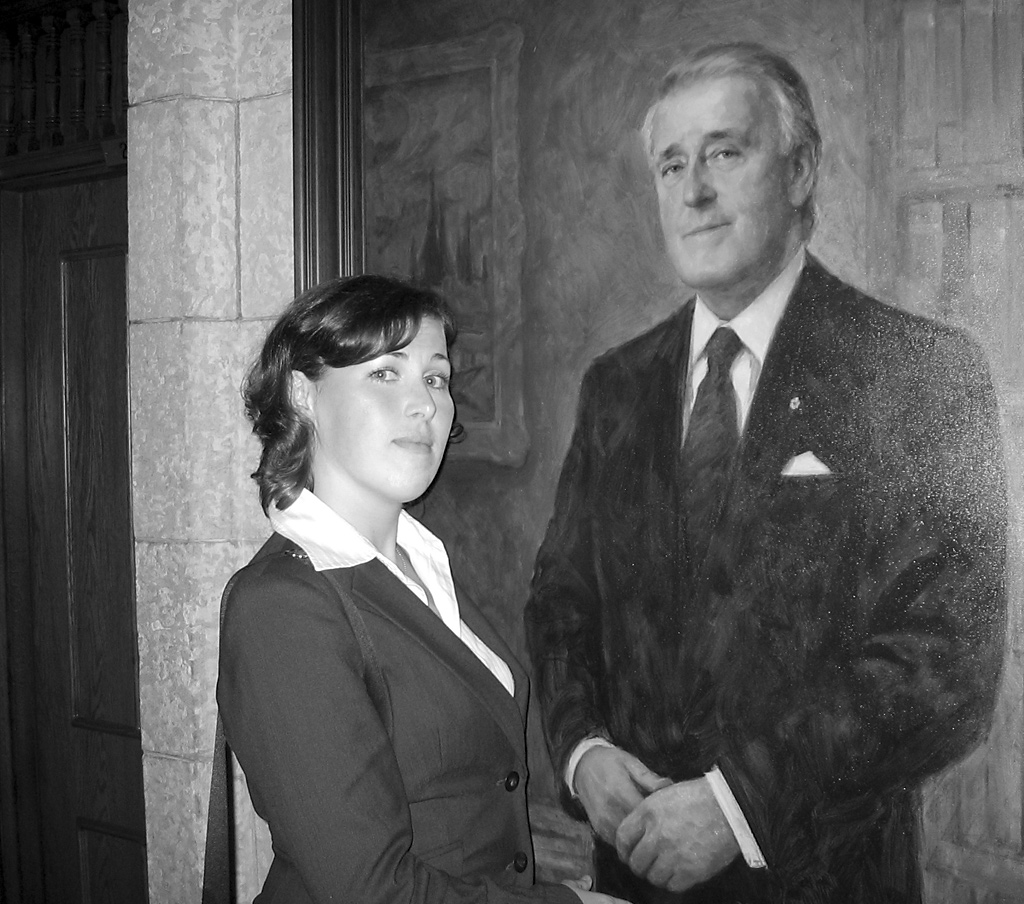
Ashley Thorvaldson and Brian Mulrooney

Normal users of the internet are frequently confronted with banner ads: often obnoxious graphics trying to hock all manner of products and services. More sophisticated users will now find themselves a bit surprised, when using a public computer, because they long ago stopped seeing these displays on their own machines. This trick is achieved through the use of the Firefox browser, the AdBlock plugin, and Filterset G. With these three pieces of code running, the vast majority of graphically based ads on the internet simply vanish.

Now, an editorial on CNet suggests that using such technology may be immoral. In effect, web sites are providing you with content in exchange for your pupils grazing ever-so-briefly across the advertisements that pay their bills.

While I don’t feel convinced one way or the other about the moral issues involved in this particular case, it is an interesting kind of moral problem. The nature of what is ‘theft’ in a digitized world remains an intensely disputed one. This is the fundamental product of going for a world where products cost a significant amount per unit (with additional costs for design) to one where things may cost a lot to design, but can often be copied for free. That goes for everything from pop CDs to New York Times editorials, and dealing with it is one of the more interesting legal and business issues of the present time.

Public broadcasters and the web

The existence of the internet changes the economic logic of public broadcasting. Where, at one point, the BBC was a collection of channels, each showing one bit of their vast archive at a time, now much of it is online. That creates a huge database of materials, paid for by taxpayers, and ideally free to be accessed without copyright concerns. Being able to view documentaries like Dangerous Knowledge upon demand is a notable benefit, and one not adequately captured by private sector content generators who are not concerned about societal benefits not captured in their profits.

If all the world’s national broadcasters and other public generators of knowledge would open up their libraries comprehensively, it could make the internet an even more valuable thing than it already is. Unfortunately, that process seems likely to be piecemeal and marked by set-backs. Witness the BBC iPlayer dispute.

Don’t steal my focus

Mural on Somerset Street, Ottawa

Using a computer before multitasking is a concept so alien as to be almost unimaginable. Imagine, working with an Excel spreadsheet and Word document, having to close down one program entirely before you could use another. At the same time, the profusion of programs on the contemporary desktop brings problems of its own. The one that bothers me most is probably ‘focus stealing.’ (‘Focus theft’ would be correct, but I have never seen the term used.)

Say you are in the middle of typing an email. Suddenly, some irksome and entirely unrelated window appears, telling you that updates are available for X piece of software, or acknowledging that file Y has downloaded. Focus is stolen, and dealing with both tasks in a jumble takes a lot more time than dealing with them sequentially would have been.

At the root of this is a failure of design. The first failure is on the part of the application designers. Non-urgent messages should not pop up in the middle of other tasks. The same rule should be applied by people who create operating systems. They also have the opportunity to build annoyance prevention mechanisms right into the operating environment. Ideally, there should be three possible levels of notification:

  1. Urgent system messages: if my battery is going to die in sixty seconds, I need to know it.
  2. Notification of messages from a real human being who is actually online and who you are talking to. Most instant message programs are pretty aggressive about making this fact known, but Skype hides all non-call events like dirty secrets.
  3. General announcements like ‘you have email’ or ‘this software can be updated.’ Ideally, it should be possible to group all of these and get them as a digest every hour or so.

A few such features would probably garner a lot more appreciation – over the long term – than creating shiny new user interfaces.


The grammar of data and datum

Sticklers for proper grammar are fond of pointing out how frequently people misuse the word ‘data.’ A ‘datum’ is singular; data are plural. The Economist Style Guide (a companion on my desk) explains:

Data and media are plural. So are whereabouts. Teams that take the name of a town, country or university are plural, even when they look singular: England were bowled out for 56.

Law and order defies the rules of grammar and is singular.

While this may be technically accurate, it has always clashed with my intuition – and not only because those who supposedly use the term incorrectly far outnumber whose who follow grammarian cant.

The question for me is whether ‘data’ is more like cats or more like water. The cats are increasingly annoyed about all this talk of grammar, but they remain distinct, countable, independent entities. The water, by contrast, is salty, ever-present, and part of an amalgamated mass. I may have seen Ghost in the Shell a few too many times, but the data-water equivalency long since became firmly entrenched for me.

Chevron’s climate game

Remember when the BBC came up with a climate change game? Well, now Chevron has done so, as well. Apparently, all the data in the game came from the Economist Intelligence Unit. The BBC game suffered a fair bit of well-deserved criticism. I have yet to give the Chevron simulation a comprehensive try, but I am waiting with a fair bit of curiousity for a chance.

You can read a bit more about the Chevron game on R-Squared: a popular energy blog.

[9 September 2007] This game doesn’t really have much to it. By constraining you to the management of a single city over the span of a couple of decades, it excludes both the chronological and geographic scale at which real change needs to take place. Still, it is interesting from a corporate public relations standpoint. Unsurprisingly, the game simply forbids you from using a power balance that excludes petroleum.