Forbidden features

It turns out the new cellphone that I got for Ottawa (Nokia 6275i) is technically capable of using any mp3 as a ringtone. Irksomely, Bell Canada has intentionally disabled that and other features, so as to force users to pay $3.50 or $4.00 a pop for using them. It’s possible to revert the phone to factory settings, but doing so requires buying a USB cable, downloading the software Nokia uses to program phones, and then updating your firmware in a way that will occasionally leave the phone as a worthless lump of plastic. Because it is a CDMA phone, rather than a GSM one, you cannot just download an unlock code and enter it manually. Another example of pointless crippling is how the phone will only store about 60 text messages, even when it has 15 megs of free space on it.

It’s just another example of how rarely digital rights management and related technologies actually benefit consumers. It also affirms the motto of Make Magazine: “If you can’t open it, you don’t own it.”

[Update: 25 November 2007] Yesterday night, I finally unlocked my phone using Diego. Now, it can use any MP3 as a ringtone and can run any Java application.

Green glass

Apparently, the United Kingdom is the world’s largest importer of green glass. This is for the simple reason that the UK is the world’s largest importer of wine, bringing in over one billion litres a year and producing almost none. As such, the green glass piles up. There is so much of it that it can only be recycled in inefficient ways, such as grinding it up to use in road surfaces. Doing this uses more energy and resources than making the roads out of other materials and putting the green glass into landfills.

The easiest answer is to make wine bottles out of clear glass that can be recycled into a wider variety of things. Since that doesn’t seem to suit people’s tastes, wineries have come up with an alternative system. They import the wine in 24,000 litre containers (which saves on shipping costs as well) and then use it to fill up the bottles responsible Britons have been leaving at their curbsides for years. If you are curious what a tank of that size resembles, have a look at this page.

Something to consider, next time you are enjoying a bottle of your favourite vintage.

A510 backup battery

Every time I turn on my Canon Powershot A510, it now asks me to enter the date and time. This suggests that the backup battery, which is used to store that information, has died. Having the right time programmed in is valuable, because it helps to organize thousands of photos. Do any of the A510 owners who read this blog have the manual? I need to know (a) where the battery is located and (b) whether it is user-serviceable.

Thanks a lot.

[Update: 18 July] I got a new battery from the key cutting shop in the Covered Market. It seems to have dealt with the issue.

Photography beyond Bayer

[Photograph removed – 21 October 2012]

The individual pixels in the sensors inside digital cameras cannot collect information from across the entire visible spectrum. To get a full colour image, it is therefore necessary to combine information from several different pixels, each of which has a coloured filter in front of it that acts to establish which part of the visible light range it observes.

Virtually all digital sensors rely upon the Bayer Pattern, invented by Kodak. This allocates half of all pixels to the green portion of the spectrum, with 1/4 devoted to red and blue, respectively. The process of combining the data mathematically is fairly resource intensive. This process is called interpolation. It can be done either using a generic of-the-shelf processor, which is cheaper per unit but not very fast or energy efficient, or with a custom chip, such as the DIGIC chips in Canon digital cameras.

Today, Kodak announced a new pattern for use in CCD and CMOS sensors. The new system uses both filtered and unfiltered pixel elements. These will record brightness data from across the entire spectrum. The new interpolation algorithms then use this panchromatic data to create a luminance channel, to which colour data is added using data from the filtered elements. Doing so may require much more processing power, which suggests that new custom chips will need to be designed.

The benefit of the new pattern is that it will supposedly double the sensitivity of sensors, allowing for better performance in low light. Given how small and inexpensive the lenses on cheap cameras and camera phones are, this is a very important design parameter. Of course, all this constant development in digital photography makes one a bit wary to invest $1000 or more in what is available this year. Chances are, the offer next year will be rather better. For this particular technology, it will probably be necessary to wait until the first quarter of 2008.

Botnets

The rise of the botnet is an interesting feature of contemporary computing. Essentially, it is a network of compromised computers belonging to individuals and businesses, now in control of some other individual or group without the knowledge or permission of the former group. These networks are used to spread spam, defraud people, and otherwise exploit the internet system.

A combination of factors have contributed to the present situation. The first is how virtually all computers are now networked. Using a laptop on a plane is a disconcerting experience, because you just expect to be able to check the BBC headlines or access some notes you put online. The second is the relative insecurity of operating systems. Some seem to be more secure than others, namely Linux and Mac OS X, but that may be more because fewer people use them than because they are fundamentally more secure. In a population of 95% sheep, sheep diseases will spread a lot faster than diseases that affect the goats who are the other 5%. The last important factor is the degree to which both individuals and businesses are relatively unconcerned (and not particularly liable) when it comes to what their hijacked computers might be up to.

Botnets potentially affect international peace and security, as well. Witness the recent cyberattacks unleashed against Estonia. While some evidence suggests they were undertaken by the Russian government, it is very hard to know with certainty. The difficulty of defending against such attacks also reveals certain worrisome problems with the present internet architecture.

The FBI is apparently on the case now, though the task will be difficult, given the economics of information security.

James Burke’s Connections

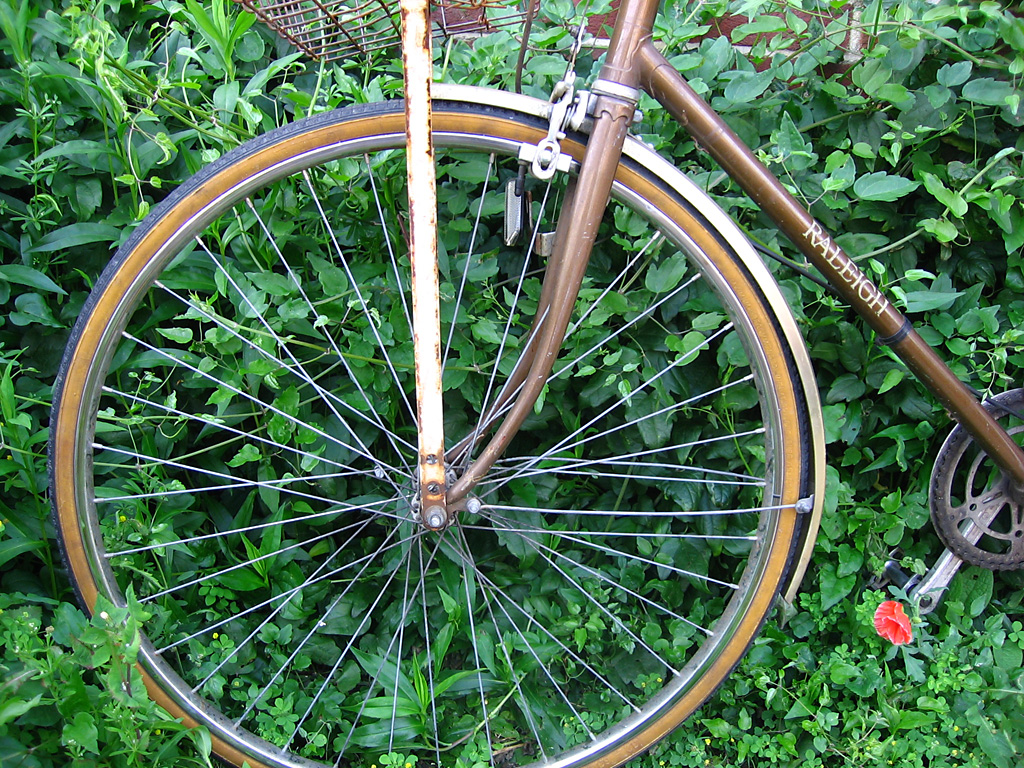
Bike wheel

I have mentioned it before, and may well mention it again. James Burke’s Connections is a television series worth seeing. Each episode wanders through history from one invention to another, with fascinating asides along the way.

As of this evening, someone put a stack of them on YouTube. The series was made at taxpayer expense by the BBC, so there is really no reason for which it shouldn’t already be available online for free. Watch a few episodes and you will learn a wealth of interesting (though often very esoteric) facts to break out at dinner parties.

As is generally the case when I am busy and need to come up with a blog post idea in a hurry, this was yanked from MetaFilter.

PS. By the end of each exam, I was coughing my lungs out. Now, I am taking little sips from my bottle of nasty tasting (and ineffective) cough syrup every three hours or so. Now, I feel like I have an especially nasty cold, with all the ill effects involved therein.

Review: UCO Ultrapod Small Tripod

For the Paris trip, Hilary kindly acted as courier for this small tripod, sold by Mountain Equipment Co-Op. While it is not without some good features, it is a disappointment overall. The main reason for this is bad design.

The first mistake has to do with the rubber pads at the base of the legs. They fall off very easily: particularly the one shaped like an L-joint. They should be tighter or glued on. The second problem is with the velcro strap. It has no convenient place to go when the tripod is unfolded, except wrapped around one leg. It should be positioned more intelligently for situations where you want to fold and unfold the tripod often, or it should be made removable. I have never used it once, but I am a bit hesitant to irreversibly cut it off.

Far and away the biggest problem has to do with the knob controlling the ballhead. Even if you twist the knob with as much torque as you can possibly muster, the tripod head remains somewhat loose. If you want to keep the tripod on the side of your camera with the legs folded up along one side, the friction between the ball and the plastic socket for it is not enough to keep it there. Even more annoyingly, when you have tightened the knob as much as you can, it often becomes badly stuck. You will find yourself frequently using your teeth to loosen it. I have had to resort to pliers on several occasions.

While light and promising in its form-factor, this little tripod does not live up to its potential. I am grateful to Hilary for bringing it, but my search for a small, always-on tripod for my A510 is not over.

PS. ThinkGeek sells the same device.

f = m * a

In a conversation at the end of Sunday’s walk, we realized just how much energy is actually involved in such a trek. Our vertical ascent was about 1100m, spread between climbing Yoke and following the ridge of the Kentmere Horseshoe. That is about 75kg of me personally, plus a pack. Imagine me falling from 1100m up, and you begin to appreciate the gravitational potential energy built up through the (not entirely efficient) expenditure of chemical energy. We also traveled more than 20km, as the crow flies. Then, there is the fact that we had to absorb all the energy from all the descents into our muscles and dissipate it. Add in the energy required to keep us warm, balanced, and thinking, and you are racking up a good number of calories.

It’s amazing how far some dry cereal, two sandwiches, a couple of chocolate bars, and ones various short and long-term energy stores can go. The fact that I didn’t feel unusually hungry at any point during the weekend suggests that those stores were not seriously depleted.

As you may guess, this weekend included a lot of interesting discussion about physics, biochemistry, and physiology. We also learned a good bit about sheep.