Salmon farming and sea lice

Gloved hand

Recent work by Martin Krkosek of the University of Alberta has demonstrated strong links between the practice of salmon aquaculture and the incidence of sea lice infestations that threaten wild populations. One study used mathematically coupled datasets on the transmission of sea lice (Lepeophtheirus salmonis) on migratory pink (Oncorhynchus gorbuscha) and chum (Oncorhynchus keta) salmon. They concluded that:

Farm-origin lice induced 9–95% mortality in several sympatric wild juvenile pink and chum salmon populations. The epizootics arise through a mechanism that is new to our understanding of emerging infectious diseases: fish farms undermine a functional role of host migration in protecting juvenile hosts from parasites associated with adult hosts. Although the migratory life cycles of Pacific salmon naturally separate adults from juveniles, fish farms provide L. salmonis novel access to juvenile hosts, in this case raising infection rates for at least the first 2.5 months of the salmon’s marine life (80 km of the migration route).

Packing fish together in pens that are open to the sea is an almost ideal mechanism for breeding and distributing parasites and disease. In nature, you would never find salmon packed 25,000 to an acre. Keeping them in such conditions – and making them grow as quickly as possible – generally requires chemical manipulation. The earlier discussion here about antibiotic use and its role in the emergence of resistant bacteria is relevant.

These concerns also exist in addition to the fundamental reason for which fish farming cannot be sustainable: it relies on catching smaller and less tasty fish to feed to the tastier carnivorous fish that people enjoy. It thus lets us strip the sea bare of salmon or cod or trout and compensate for some period of time by using cheaper fish as a factor for their intensive production. Given that those cheaper fish are caught unsustainably, however, fish farming simply delays the emergence of truly empty oceans. And the industry is trying to have farmed salmon labelled ‘organic.’ Ludicrous.

Source: Krkosek, Martin et al. “Epizootics of wild fish induced by farm fish.” Proceedings of the National Association of Sciences. October 17, 2006, vol. 103, no. 42, 15506-15510.

P.S. Shifting Baselines also has some commentary on sea lice and salmon farming.
Trains and buses

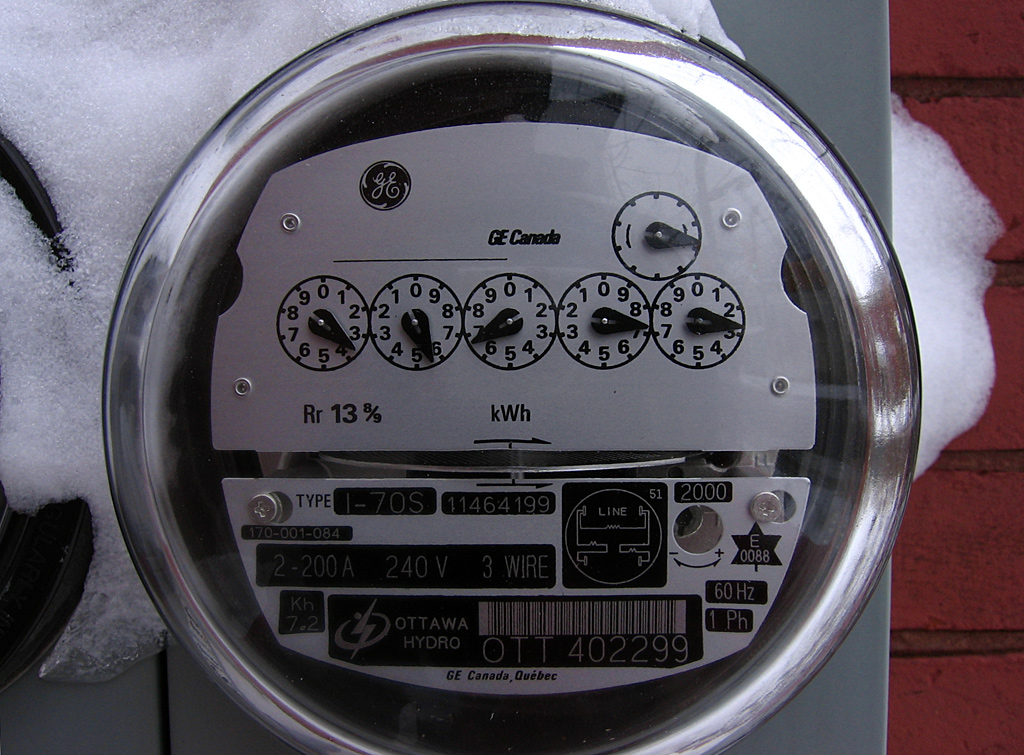
Electric meter

Commenting on the possibility of Seattle installing a streetcar system, Dan Savage has argued: “People like trains. People hate buses.” Though public transportation policy is hardly his area of expertise, he does understand how people think and he is able to express himself forcefully and directly. On some level, it is definitely true. I like trains and subways. In London, I took the subway all the time; not once did I ever take a bus. Taking the train from Oxford to London feels like a luxury; taking the bus feels like a jerky, tedious chore.

In Heat, George Monbiot argues that the solution is to make buses nicer: cleaner, newer, and with attractive add-ons like wireless internet. He also argues that inter-city buses should avoid city centres, with all the nightmares of traffic and fiddly intersections they inevitably involve. While that would improve point-to-point travel in the UK, it doesn’t really reveal the reasons for which buses are treated with everything from moderate dislike to outright disdain. Is it a class issue? Lisa Simpson called the bus “”the chariot of the poor and very poor alike.” Is it a practical matter of comfort and efficiency, as Monbiot describes? If so, can it be overcome through practical measures like those he suggests. Are buses doomed to forever be an inferior good?

It is generally recognized that increasing bus services is the cheapest way of expanding public transport – both in terms of capital considerations and overall lifetime costs. That said, if transit use is significantly hampered by the dislike people feel for buses, perhaps alternatives should be more strongly considered. Arguably, this is especially true when it comes to people who have the financial means to use a car instead. If they get driven off the public transit system as soon as they hit that level of affluence, the system remains dominated by users without a great deal of political influence. In an argument akin to those about two-tier healthcare, it is possible that the self-exclusion of the wealthy from the public system perpetuates mediocrity.

One way or another, we need to hope that the private vehicle is reaching its apex in human history. Even with the eventual development of electric vehicles and other low or zero-emission options, the sheer amounts of space and resources devoted to producing and maintaining private transportation infrastructure are probably not sustainable. Given that it will be politically impossible to drag people from their cars kicking and screaming, we need to think seriously about how to encourage voluntary shifts to public or non-motorized transport. Better bike infrastructure and public transit seems crucial tot that campaign.

Climate and the boreal forest

According to data submitted by Global Forest Watch Canada to the International Boreal Conservation Campaign (IBCC), Canada’s boreal forest contains 186 gigatonnes of carbon dioxide equivalent. That is equal to about 27 years worth of present global emissions. Permafrost – which is rich in methane – makes up about 25% of the world’s land area and about 50% of Canada.

Significant permafrost melting would release gasses that would accelerate the warming trend. Making boreal areas into parks and avoiding deforestation there isn’t a terribly effective mechanism for keeping the bulk of these greenhouse gasses in the soil. The trees themselves are increasingly threatened by pine beetles, as warm winters permit their continued spread. Maintaining the soils as a carbon sink essentially requires that they remain cold – an increasingly distant prospect as emissions continue to grow and other carbon sinks become saturated.

No Arctic summer ice in 2012-13?

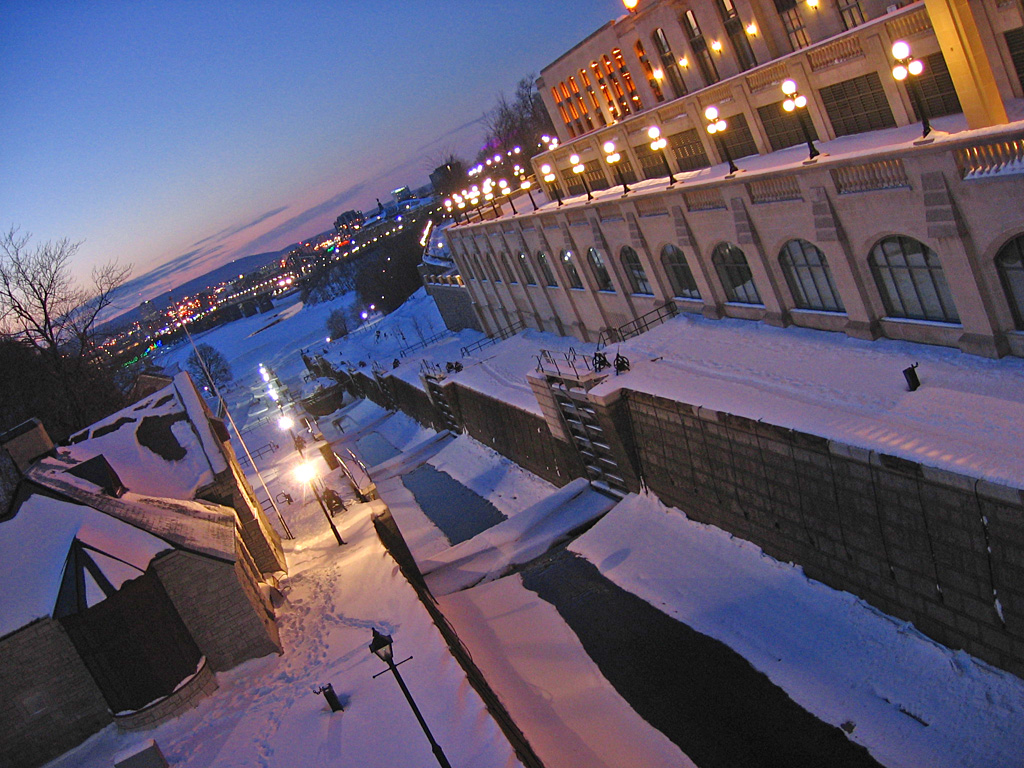
Rideau Canal with snow

According to a BBC article, some scientists are predicting the disappearance of all Arctic summer ice within five to six years. This projection is based on computer modeling by Wieslaw Maslowski and uses data that doesn’t even take into account the spectacular loss of Arctic ice last summer. Maslowski’s team has produced an estimated rate of loss much higher than those of other groups who have studied the issue, but he defends the quality of his modeling:

“We use a high-resolution regional model for the Arctic Ocean and sea ice forced with realistic atmospheric data. This way, we get much more realistic forcing, from above by the atmosphere and from the bottom by the ocean.”

Even the work of other teams suggests the loss of summer ice between 2040 and 2100: a very rapid climatic change, given how most forms of natural climatic forcing operate on the timescale of millennia

The progressive deterioration of the northern polar cryosphere is disturbing for a number of reasons. Because water absorbs more energy from sunlight than ice does, the loss of the icecap would accelerate global warming. It would also eliminate or substantially alter the lifestyles of those living in the north, as well as most Arctic species. That said, there is some chance that the sudden disappearance of the Arctic icecap would be dramatic and irrefutable enough to kick off much more serious global action to mitigate greenhouse gas emissions and prepare to adapt to the amount of change that is now inevitable. In a world where the Arctic vanished before our eyes, radical ideas like those of Monbiot may start seeming reasonable to a lot more people.

Positive externalities and the environment

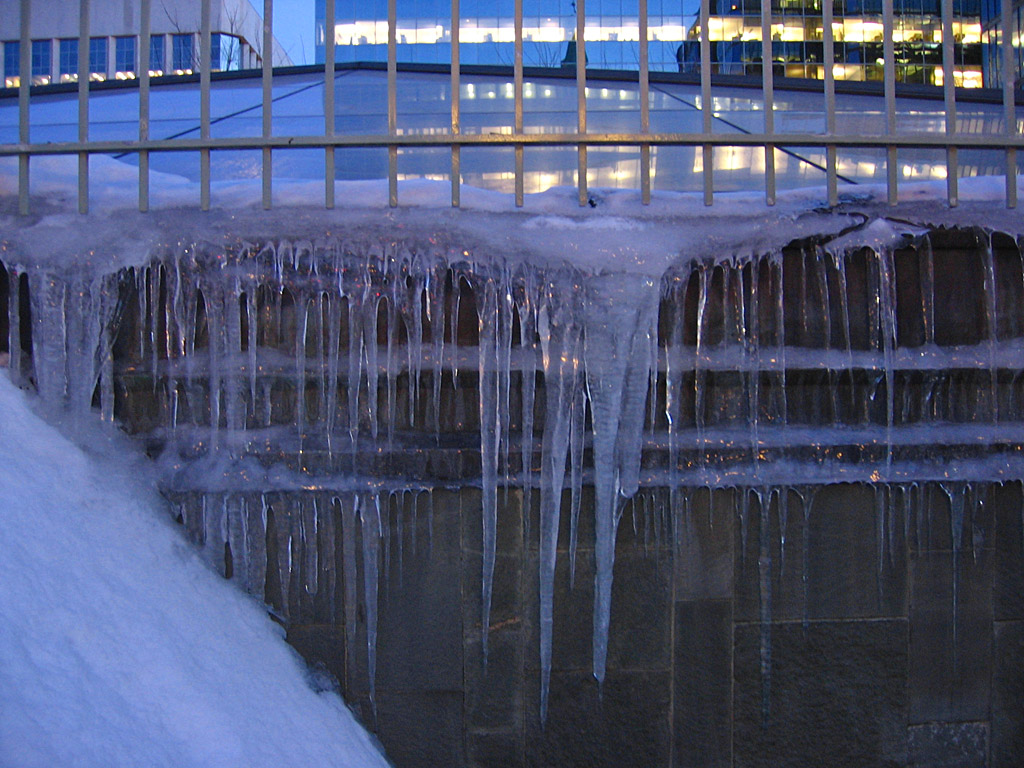
Icicles in Ottawa

When you see “environment” and “externality” in the same sentence, it is a safe bet that the issue being discussed is negative externalities associated with production or consumption. These are certainly critical, but they are not the only area in which environmental thought and economic theory on externalities intersect. The positive externalities associated with new technologies also bear consideration. When a firm or individual invents something that provides major overall benefits, many of those will accrue to other people. This is good from the perspective of those able to benefit from the new technologies, but it is theoretically bad for innovation overall. If I suspect that most of the gains for my new engine, battery, or vaccine technology will accrue to other people, I will not devote as much of my time and resources to developing such innovations as I would if I believed I would personally get all the benefits.

As with intellectual property rights in general, the issue of balance here is a critical and difficult one. We want to encourage people to design and build better solar cells, wind turbines, and power plants. They could arguably be best encouraged to do so by giving them extensive property rights over what they come up with: lengthy patents and the right to collect royalties from all users. That said, such a restrictive system could sharply limit distribution. Once we have a good technology, we want to see it widely deployed – including in places where people have urgent sustenance needs and cannot be fairly called upon to pay heavy royalty fees.

One established way to square this circle is with prizes. The X-Prize assisted the development of (highly greenhouse gas intensive) private space technology. Prizes may also be used successfully to encourage the development of vaccines and treatments for poor world diseases like malaria. Richard Branson has created a prize for straight-out-of-the-air carbon capture. A few big prizes for things like lowering the cost and efficiency of renewable power sources might help to overcome institutional hesitation within innovative firms, as well as get some clever people tinkering in their garages.

The existence of positive externalities associated with new technology also provides strong justification for other governmental interventions: including direct government research and governmental support for private and academic efforts. Internalizing the full costs of pollution is exceedingly important if we aim to achieve environmental protection within a free market system; internalizing the benefits of innovation may also help to bring that about.

For a much more detailed discussion, see: Jaffee, Adam et al. “A tale of two market failures: Technology and environmental policy.” Ecological Economics. Volume 54, Issues 2-3, 1 August 2005, Pages 164-174.

Another climatic threat: jökulhlaups

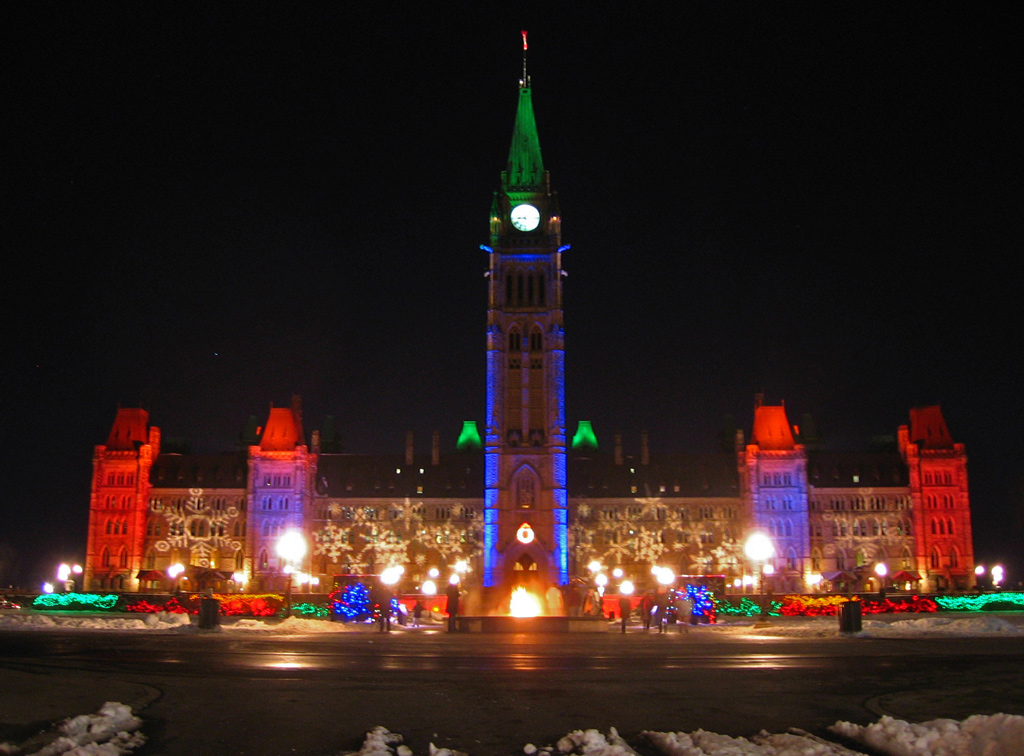
Canada’s Parliament with Christmas lights

In some parts of the world, large lakes are bounded by natural dams made of glacial ice. When the ice melts, the resulting surges of water are comparable in effect to the failure of human-made dams. Merzbacher Lake, in Kyrgyzstan, has completely emptied 39 times, following such events. An article in Geophysical Research Letters describes that lake in greater detail.

Significant past examples of such glacial lake outbursts occurred in Iceland, Alaska, Canada, and Bhutan. While relatively few areas are threatened by such events, they are demonstrative of the kind of change that is ongoing in the cryosphere.

Tsho Rolpa, a glacial lake in Nepal, seems to be due for such an event. It is 4580m above sea level and dammed by 150m of ice. The melting of the Trakarding Glacier is feeding the growth of the lake, which will eventually breach the ice wall in a highly dramatic manner. Local communities have been building raised watchtowers and shoring up embankments. Tsho Rolpa is one of 2,323 glacial lakes in the Nepalese Himalayas.

Boomtowns and bitumen

Haida sculpture

Since 1999, the population of Fort McMurray has nearly doubled. Primarily, this is on account of the oil sands: unconventional petroleum reserves whose exploitation is being driven by high prices and geopolitics. The demand for labour is dramatically increasing its price, both directly and indirectly. Apparently, inexperienced truck drivers can expect to make $100,000 per year. Shell has also just opened a 2,500 unit housing complex for its oil sands employees, part of their $12 billion in local infrastructure spending.

With oil around $90 a barrel and the atmosphere still being treated as a carbon dump, this is not terribly surprising. That said, such projects are certain to develop increasing momentum of their own. Once they bring enough jobs and money, they are hard for a provincial government to not support – especially if many of the environmental costs are being borne by people outside the province or by future generations. Internalizing environmental externalities through taxation or regulation becomes progressively more difficult as the incentive of certain parties to preserve the status quo increases. Such asymmetries are likely to give oil sands development a harmful legacy in terms of general policy development, in addition to its climate change effect and local environmental impacts.

Meat and antibiotics

Portraits in Ottawa

Quite a while ago, I wrote about connections between human disease and the factory farming of animals. Recently, some new observational data has supported the link between the two. In the Netherlands, a new form of the superbug MRSA has emerged. It is strongly resistant to treatment with tetracycline antibiotics: a variety heavily used on livestock. The animals need the drugs because they are kept in such appalling conditions (unhygienic and constrained) that they would get infections too easily otherwise.

Xander Huijsdens and Albert de Neeling found that 39% of pigs and 81% of pig farms in the Netherlands were hosts to the potentially lethal antibiotic resistant bacteria. People who came into contact with pigs were 12 times more likely to contract this form of MRSA than members of the ordinary population; those who come into contact with cattle are 20 times more susceptible. The strain has since been found in Denmark, France, and Singapore. A study conducted by the University of Guelph found the strain in 25% of local pigs and 20% of pig farmers.

Maintaining the effectiveness of antibiotics for the treatment of people is highly important for human welfare. Antibiotics are one of the major reasons why modern medicine is valuable: they help people die dramatically less often after childbirth and surgery than was the case before their development. They have also helped to make diseases that would formerly have been probable death sentences treatable. The fact that we are allowing farms to deplete their value so that they can produce meat more cheaply (by forcing more animals closer together in less clean conditions) seems profoundly unwise. In Pennsylvania, legislators have even banned farmers who produce hormone and antibiotic milk from saying so on their packaging – on the grounds that it would make consumers unduly worried about the other milk on offer.

Clearing Indonesian rainforests for biofuel

I have already mentioned how important rainforests are to climatic stability. Likewise, the acute danger that biofuel production will lead to increased deforestation, either directly – through the madness that is palm oil biofuel – or indirectly – by increasing the price of crops like corn, the value of agricultural land, and the profits to be made from cutting down rainforest and growing cheaper things like soy there instead.

This video – found via Grist – does a good job of attaching some visuals to the argument. Unhappily enough, this crazy conversion of rainforest into palm oil biofuels is taking place in the very state where the UNFCCC is meeting right now, in order to try to tackle the problem of climate change.

‘Green’ fuel for military jets

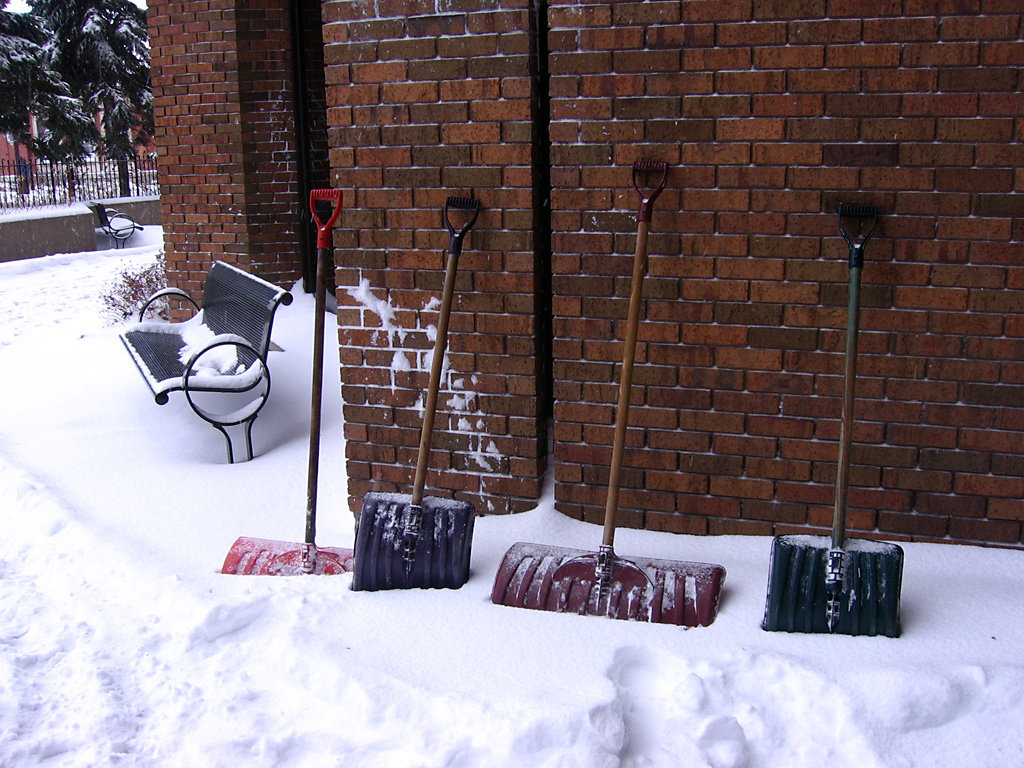
Snow shovels in Ottawa

There has recently been a fair bit of media coverage discussing an announcement from the United States Air Force that they are trying to use 50% synthetic fuel by 2016. The Lede, a blog associated with the New York Times, seems to misunderstand the issue completely. They are citing this as an example of the Air Force “trying to be true stewards of the environment.” There is no reason for which synthetic fuels are necessarily more environmentally friendly than petroleum; indeed, those made from coal are significantly worse.

The actual fuel being used – dubbed JP-8 – is made from natural gas. Air Force officials say they eventually intend to make it from coal, given that the United States has abundant reserves. This inititative is about symbolically reducing dependence on petroleum imports, not about protecting the environment. The German and Japanese governments did the same thing during the Second World War, when their access to oil was restricted. Furthermore, it is worth stressing that efforts by militaries to be greener are virtually always going to be window dressing. The operation of armed forces is inevitably hugely environmentally destructive: from munitions factories to test ranges to the wanton fuel inefficiency of aircraft afterburners, the whole military complex is about as anti-green as you can get.

People should be unwilling to accept superficial claims that installing some solar panels and building hybrid tanks is going to change that.