Climate change and the G8 meeting

All Souls, Oxford

Who would have thought – three or four years ago – that climate change would become the central focus of a G8 meeting? While the situation certainly demonstrates the problems that remain to be overcome (both American unwillingness to accept emission caps and the need to incorporate large and rapidly developing economies like India and China into such a system), the level of attention being directed at the problem is very welcome.

The sad fact is that Canada has the worst record of any G8 state, when it comes to the gap between our Kyoto commitment and our present level of emissions. For a state that prides itself on being a responsible global citizen, this is hardly a position that is tenable in the long term.

When Canada ratified Kyoto, we committed ourselves to emissions 6% below the 1990 level, achieved by 2012. At present, Canadian emissions are about 26% over. The United States, by contrast, is only about 16% above 1990 levels. The only G8 state on track to meet its commitment because of policy efforts is Britain. Germany has cut emissions, but not yet by as much as they pledged. Russia has much lower emissions, but it is on account of the collapse of their economy after 1989, rather than any self-restraint. Indeed, Russia ends up in the odd position of being able to sell credits for emissions that would never have occurred anyhow (the so-called ‘hot air’).

Global emissions continue to grow at a rate even higher than the most pessimistic option modeled by the IPCC. Indian and Chinese emissions are each up by about 100% since 1990. Everyone need to do better. Hopefully, the ongoing gathering of political energy will make that come to pass.

[Update: 7 June 2007] Unsurprisingly, the G8 seem to be developing a fairly toothless joint statement on climate change.

How risky is climate change?

Milan’s watch and iBook

On his blog, Lee Jones posted a link to this book review. Basically, the argument is that people are (a) exaggerating the dangers of climate change and (b) using climate change as an excuse to pursue other ends. I would not deny either claim. The Intuitor review of The Day After Tomorrow is evidence of the first, and more can be found in many places. Of course, their review of An Inconvenient Truth suggests that not everyone is guilty of misrepresentation. As for smuggling your own agenda into discussions about climate change, I suspect that is equally inevitable. The question of how to behave justly in response to climate change is fundamentally connected to the history of economic development.

In an unprecedented move, I feel compelled to quote my own thesis:

While the IPCC has generated some highly educated guesses, the ultimate scale of the climate change problem remains unknown. On account of the singular nature of the earth, it is also somewhat unknowable. Even with improvements to science, the full character of alternative historical progressions remains outside the possible boundaries of knowledge. As such, in a century or so humanity will find itself in one of the following situations:

  1. Knowing that climate change was a severe problem, about which we have done too little
  2. Believing that climate change was a potentially severe problem, about which we seem to have done enough
  3. Believing that climate change was a fairly modest problem, to which we probably responded overly aggressively
  4. Observing that, having done very little about climate change, we have nonetheless suffered no serious consequences.

Without assigning probabilities to these outcomes, we can nonetheless rank them by desirability. A plausible sequence would be 4 (gamble and win), 2 (caution rewarded), and then 1 and 3 (each a variety of gamble and lose). Naturally, given the probable variation in experiences with climate change in different states, differing conclusions may well be reached by different groups.

As such, what it means to make informed choices about climate change has as much to do with our patterns of risk assessment as it does with the quality of our science. Exactly how it will all be hashed out is one of the great contemporary problems of global politics.

Climate change and responsible global citizenship

Old Library, Wadham College, Oxford

During my second-to-last high table dinner in Wadham tonight, I got into a long conversation about Canada and climate change. The man with whom I was speaking asserted that (a) Canada would benefit directly from moderate warming and (b) Canada would benefit from activities that encourage global warming, such as the exploitation of the tar sands. Neither of these claims is unassailable on a factual basis, but the normative implications are more interesting to consider at the moment.

Let’s say that both claims are true. Should Canada act to combat climate change? To me, it seems the answer is an unambiguous yes. If I live uphill from a farm and have the opportunity to benefit from cutting down all the trees on my land, the fact that erosion will harm my downhill neighbour is not external from the consideration of what ought to be done. Depending on your conception of ethics, it may or may not be ethically appropriate for my neighbour to pay me not to cut down the trees. Regardless, the ethically optimal solution is generally to avoid impoverishing one’s neighbours to enrich oneself. This is especially true when you are much richer than those likely to be most immediately and significantly harmed. Being a mugger may be a personally advantageous course of action, but we have obligations to others that preclude it from being an acceptable choice for a member of society. Among a society of nations, there is likewise an obligation to behave with consideration for others, even if it diminishes one’s own prospects. Of course, such noble sentiments are hard to embed in policy.

Tragedy of the commons

As a discipline, International Relations is packed with parables. Sometimes, they are hypothetical stories and sometimes they are interpretations of historical events. In each case, they are meant to demonstrate something important about how world politics works. Almost without exception, some aspect of their validity can be questioned on either historical or logical grounds.

When it comes to global environmental politics, perhaps the most well-known such parable is the ‘tragedy of the commons.’ Garrett Hardin is generally credited with coming up with the idea in a paper published in 1968. That said, the same idea was expressed in Michael Graham’s 1948 book The Fish Gate, in which he described how fisheries where access is unlimited will inevitably become unprofitable and fail. The logic of an individual who cannot control the entirety of a resource grabbing as much as possible before its inevitable destruction is the key feature of both analyses.

Personally, I would rather give the credit for the idea to Graham, rather than to Hardin (though it probably far precedes either of them). After all, the latter thinker went on to write such logically and ethically dubious documents as Lifeboat Ethics: the Case Against Helping the Poor. In an illustrative passage, Hardin says:

A wise and competent government saves out of the production of the good years in anticipation of bad years to come. Joseph taught this policy to Pharaoh in Egypt more than 2,000 years ago. Yet the great majority of the governments in the world today do not follow such a policy. They lack either the wisdom or the competence, or both. Should those nations that do manage to put something aside be forced to come to the rescue each time an emergency occurs among the poor nations?

His assertion that affluent societies are such because their leaders have set aside a surplus in times of plenty, whereas the leaders of poor societies have not, represents a massively myopic and superficial understanding of the processes of wealth accumulation, as well as the interactions between historically dominant and historically oppressed states. Explaining patterns of development in such a simplistic way obscures important elements of world economic history. Going on to justify a cold-hearted ethic of indifference to suffering and injustice outside the rich world likewise represents inappropriate extrapolation and faulty thinking.

Energy trends

This year’s International Energy Outlook has been released by the American Energy Information Administration. Among the key things noted:

  • The total demand for energy worldwide will increase by 57% between 2004 and 2030.
  • If oil prices remain comparable to their present levels, coal will be the dominant fuel for new power plants.
  • Annual growth in installed generating capacity in the OECD will be about 0.9%, compared with 3.7% in China and 3.4% in Brazil.
  • As of 2004, total greenhouse gas emissions from the developing world have exceeded those of the developed world.

Naturally, all of this underscores how difficult it will be to address the problem of climate change, even if the relatively low costs cited by Nicholas Stern and Cameron Hepburn are accurate.

For more on energy sources and climate change, see: Coal and climate change, Solar power and climate change, and Climate change and nuclear power.

Millennium Development Goal 7

Church Walk sign

Prompted by my international law and developing world revision, I had another look at the eight Millennium Development Goals which were adopted by the 192 UN member states in 2000, and which are meant to be achieved by 2015. All eight are quite ambitious and represent worthy ambitions and intentions.

Some of the goals give themselves over easily to quantitative evaluation. For instance, reducing the maternal mortality ratio by three-quarters. While there are the ever-present concerns about data quality and the danger of people fudging their numbers, at least there is an empirically verifiable objective being targeted.

The environmental category (MDG7) has the general heading “Ensure environmental sustainability” and among the most vague provisions in the whole list:

  1. Integrate the principles of sustainable development into country policies and programmes; reverse loss of environmental resources.
  2. Reduce by half the proportion of people without sustainable access to safe drinking water.
  3. Achieve significant improvement in lives of at least 100 million slum dwellers, by 2020.

To begin with, ‘sustainable development’ is not as objective a concept as it is sometimes considered. If it requires a society that could continue to operate in its present form indefinitely, then no society that exists today meets the standard. Of course, the term ‘development’ contradicts the idea of stasis. So too does the inclusion of the term in the MDGs generally, since all of them would require large-scale changes in both domestic and foreign policies.

When it comes to sheer vagueness, “reverse loss of environmental resources” must take the cake. What are ‘environmental resources?’ And what would ‘reversing their loss’ involve? With a few exceptions, such as the breakdown and slow recovery of stratospheric ozone, it is not terribly clear what this could mean. Even in cases where the general thrust of the idea seems applicable, such as reforestation or the protection of coral reefs from damaging fishing practices and increasingly acidic oceans, it doesn’t provide much in the way of guidance, or much of a standard for achievement.

Access to water

The second goal, about access to water, is much more in keeping with the qualitative targets that the MDGs generally seek to establish. A map of the world showing who has poor access to water and another showing the incidence of deaths from cholera demonstrates just how unequal quality and availability of water around the world is. All the technology required to provide safe drinking water to everyone exists. The degree to which the present situation is the result of a lack of will makes it a very appropriate target for a high-profile initiative like the MDGs.

While I have never believed that water is a likely cause for large-scale wars (countries that can afford to fight large-scale wars can afford desalination plants, which are expensive but cheaper than wars), there is every reason to believe that water will become a more acute problem in coming decades. One minor example is how a sea level rise of about 100cm could essentially eliminate Malta’s major sources of fresh water. Expect bigger problems in places like India or Bangladesh.

The Economist printed a good Survey on Water back in 2003. Accessing it requires a subscription.

Slum dwellers

Slums were mentioned here quite recently. Improving the lives of 100 million slum dwellers is certainly a worthy aim. As many as 1.2 million people may live in just the Kibera slum in Nairobi. In sub-Saharran Africa, where more than 70% of the urban population already lives in slums, the rate is growing at 4.53% per year. Improving their lives probably requires two sets of approaches. One is based around providing basic needs, including water, health care, sanitation, lighting, security, and education. The other is based around reforming legal systems. Providing secure title to land, for instance, would likely reduce opportunities for bribery, provide access to credit, and generally reduce the level of insecurity in people’s lives. Actually implementing either set of approaches is an awfully tricky proposition, not least because of entrenched interests that value slums as a source of bribes from those who live there as well as a source of cheap labour for the city in which they are embedded. That being said, there are potentially huge improvements in human welfare to be achieved from success in this area.

All told, there seem to be a lot of reasons to be hopeful about the MDGs. They demonstrate, at least, that there is universal awareness within the international system about some of the most pressing problems of the present day. There is likewise at least some energy and initiative being committed to their resolution. The extent to which such efforts are successful will probably have a big impact on the kind of world in which we find ourselves in fifty years time: one in which most of humanity has reached a situation in which their basic needs are met and their basic rights are respected, or one that may be even more unequal and conflict-prone than the situation at present.


On road pricing

Over the next couple of decades, many people expect road pricing to evolve from its present state – focused on highway tolls and city centre congestion charges – to a model in which all road use is taxed. In such a system, all movement of automobiles would be tracked and taxed on a per-kilometre basis, subject to secondary considerations like vehicle fuel efficiency and level of road congestion. Singapore, London, Oslo, and Dubai have all introduced charges intended to reduce congestion and pollution in their city centres. Expanding such systems to cover all roads would involve some considerable benefits, though there are also problems that would likely arise.

Benefits

National systems of road pricing would have a number of benefits:

  • The high cost of building and maintaining roads could be more accurately directed at those who use them.
  • Externalities relating to CO2 emissions from automobile use can likewise be dealt with.
  • By charging more to drive on congested roads, people can be encouraged to avoid traffic jams. This helps people who need to use the road avoid wasting time. It also saves on the amount of fuel being wasted by hundreds of idling engines.
  • Some of the funds raised could be directed towards the improvement of public transport options.
  • The use of more efficient vehicles could be encouraged through variable pricing.
  • The use of vehicles that do less damage to road surfaces (that is to say, those other than heavy trucks with bad shock absorbing systems) could likewise be encouraged.

The benefits are thus split into two big categories: those concerning a fairer allocation of costs to those benefitting from publicly provided roads, and those serving to internalize the previously ignored social and environmental costs of driving. If one considers the geopolitical costs of oil dependence, the latter looks even more justified than if one concentrates on particulate emissions and climate change only.

Problems

Naturally, there are a number of significant problems associated with such systems. One is equity. Road pricing may impose high burdens upon individuals with low incomes. For instance, those who cannot afford to live near where they work. Solutions to this could include the provision of some set level of free usage, over and above which people start getting charged. Better options include encouraging the development of efficient and popular public transport systems, as well as reduced charges for light and energy efficient vehicles. Zero-emission vehicles (such as electric cars charged on nuclear or renewable power) could likewise be taxed at a lower rate.

More serious are the privacy implications. I think it would be naive to imagine that the tracking information generated by such systems will not be retained by the state and used, for good or ill, without a great deal of public accountability. This is part of the much broader problem of how to manage data control and privacy protection in an age where surveillance is increasingly ubiquitous and data storage is ever cheaper. In recent years, there have been many cases of government employees found using access to such databases in improper ways. Doubtless, the vast majority of such inappropriate use is never discovered. Further to that, there is good reason to believe that access to such databases will be gained by outsiders through flaws in internal security protocols. The creation of systems for oversight would therefore be essential, and it seems wise to have a general policy of deleting stored data after a set amount of time has elapsed, with exceptions granted only through an explicit process of approval subject to external scrutiny.

An appeal for bike subsidies

One suggestion I would make to improve this system would be to include an optional component for cyclists. Those willing to cycle around with a transponder would be credited at a modest rate for distance traveled. This would be in recognition of the non-market advantages of cycling, such as the value of physical fitness as a component in preventative medicine. In 1998, Health Canada estimated the total cost of cardiovascular diseases on the health sector of the Canadian economy to be $18,472.9 million (11.6% of the total cost of all illnesses). Cardiovascular disease is also responsible for 36% of deaths. As such, a subsidy of a few cents a kilometre makes economic sense, as well as potentially generating some good publicity for a system that is likely to be highly unpopular with commuters.

There are also network benefits to be had from increasing the number of cyclists. The emergence of suburbs was made possible by automobiles, at the same time as such urban trends made them increasingly necessary. A more positive version of such feedback effects can be brought about for cycling: as higher numbers justify a more cycle friendly infrastructure which, in turn, encourages more people to cycle. In particular, the creation of designated bike lanes and routes, the provision of cycle parking facilities, and integration of bike carrying capabilities into public transport seem sensible.

Alaskan fishing photos

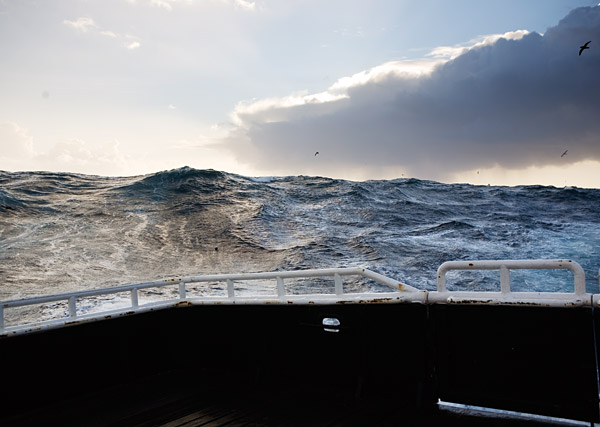
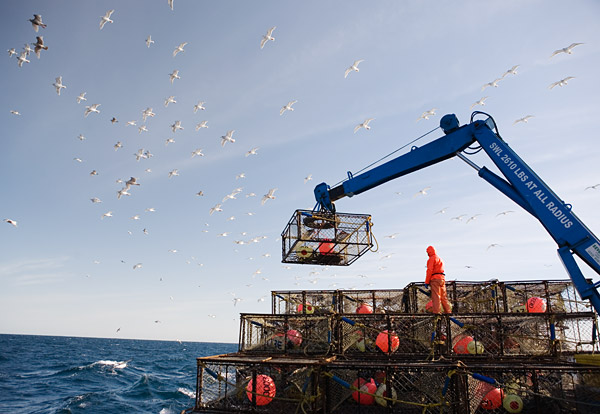
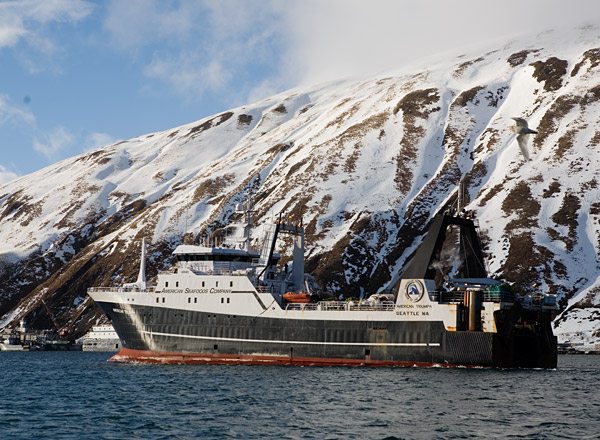
Here is an interesting series of photos about fishing in Alaska. There are huge waves, giant crabs, and a feisty cat. Having read so much about fisheries in the last few years, it is nice to have some visuals to accompany my thinking. Here are my favourites:

PS. Be advised that a few of the advertisements on the original page may not be work appropriate.

Protecting parks

While it is excellent to have national parks established, the difficulty with making them meaningful lies in the enforcement of rules on entry and activity within the defined territory. Even American national parks are having trouble with poachers. The problem is certain to be more acute in less affluent areas, where the impulse to protect nature is more immediately threatened by poverty. Just 14 rangers patrol the 4,200 square kilometres of the Nouabale-Ndoki national park in Congo. Technology can play a part in park management: from satellite tracking and motion sensors to networks of internet connected metal detectors looking for guns and machetes.

Ultimately, technical fixes will probably not be adequate protection in the most vulnerable areas. The reasons for this are primarily economic. There is more money to be had in exploiting the content of parks than in protecting it, and there is no incentive for local people to refrain from damaging activities and be vigilant in preventing others from doing so. As with climate change, the biggest challenge lies in creating institutional and financial structures that encourage environmentally responsible behaviour. Growing recognition of that among policy-makers and the NGO community may eventually lead to much more effective enforcement mechanisms.

This article discusses the TrailGuard metal detectors in much more detail. They sound very clever, even if they are unlikely to solve any problems in and of themselves.

Fish paper published

Bridge near The Perch, Oxford

After two years of being reworked, assessed, shortened, updated, and assessed again, the eternal fish paper has been published. They didn’t print my acknowledgments, so I shall list them here:

Many thanks to Dr. Ian Townsend-Gault, who has helped a great deal throughout the entire process. In particular, his assistance with the international legal components of the paper is much appreciated. I also want to thank Dr. Daniel Pauly, Dr. Jacqueline Alder, and Dr. Rashid Sumaila of the UBC Fisheries Centre and Sea Around Us Project. They are the ones who helped me find and understand much of the scientific material that supports the paper. Finally, I want to thank the editors of the MIT International Review for their comments, as well as for formatting the final version so nicely. The efforts of Solomon Hsiang are particularly appreciated.

Anyone who wants the version with more than 100 footnotes should email me. Like Foreign Affairs, this journal has a policy of not including them.