Valdez damages halved

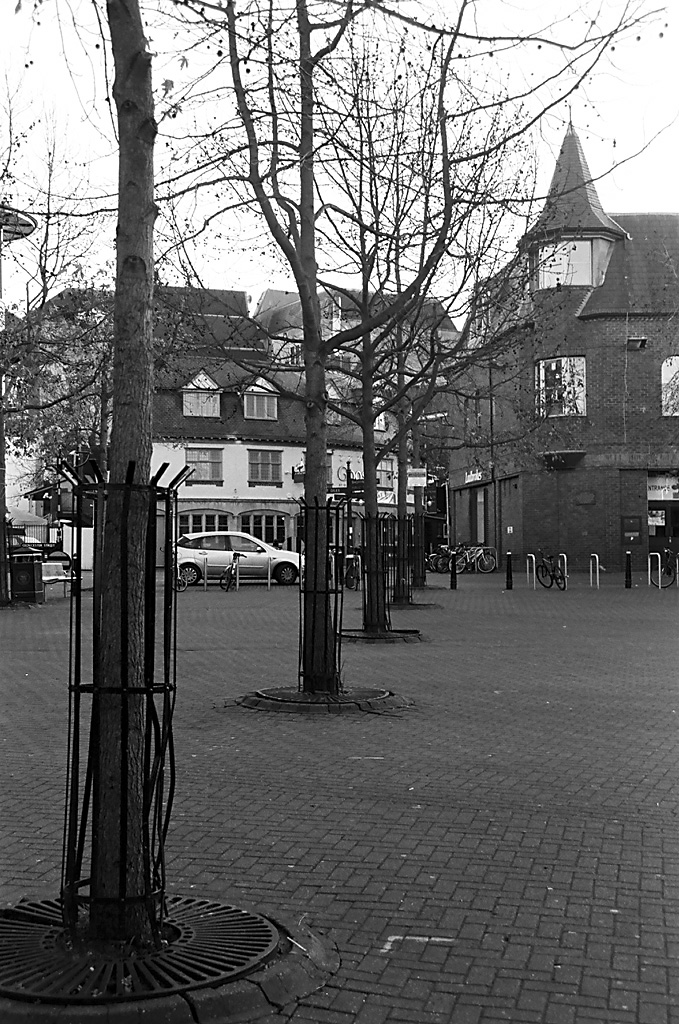
Ship and mosques in Istanbul

Today, an American court halved the punitive damages being imposed on Exxon for the 1989 Valdez oil spill from US$5 billion to $2.5 billion. Reading about it prompts a number of strands of thinking:

Firstly, it surprises me that punitive damages still have not been assigned. Chances to bemoan the slow pace of litigation in the United States (and all the problems that accompany it) are many. No doubt, a great deal of whatever settlements are reached will go to the hordes of lawyers, photocopiers, and expert witnesses who worked on the case, rather than to the people who suffered from the spill or to the rebuilding (such as is possible) of the affected ecosystems.

The second thought that comes to mind is along the lines of: “Didn’t Exxon earn record profits this year?” They earned US$10.4 billion (£5.6bn) in the second quarter of 2006. While this is a fairly natural response, it is not necessarily a very legitimate one. The damages being considered are meant to address the conduct of the company in 1989, something that is not obviously related to its present financial circumstances. At the same time, the purpose of punitive damages is to encourage a company to exercise greater caution in the future, when engaging in similar activities. Not having captains that swig vodka before heading to the bridge is a good start. Reading about that, one has feels an emotional inclination to wring them for all they are worth.

To what extent would charging Exxon $5 billion instead of $2.5 billion alter the likelihood of future spills? The purpose of such punishments is not revenge, but the inducement of desirable changes in behaviour. No punishment short of utterly bankrupting the company would actually stop them from shipping oil from Alaska to the contiguous 48 states. That said, a big punishments also catch the attention of other big oil firms who have the ability to take action to make such spills less likely, and less severe if they do take place.

A final issue to consider is that of moral hazard. If the penalty is cut in half, after seventeen years in court, it suggests to companies that they can reduce such costs just by spinning things through the legal system for as long as possible. The whole situation is like a test case from my Law and Economics course at UBC with Robert Gateman. Which outcome secures the best mix of equity and efficiency? Which establishes the best incentives for future behaviour?

Of course, I am not one of the judges in the case. I have not examined the relevant facts and laws and, as such, it is impossible to know whether this reduction is warranted or not. My personal sympathies do not lie with oil companies, but they have the same right to be treated with due process under the law as any other entity within society. Hopefully, regardless of the final amount of the penalty, mechanisms have been put into action that will prevent catastrophes like the Valdez spill in the future.

Ethical consumerism: worthwhile or harmful?

In the December 9th issue of The Economist, which I am just starting today, they come out against organic food, Fair Trade, and the idea that buying locally grown food is superior to relying on big retailers and large commercial farms (Leader and article). Organic food means producing lower yields for the same area of land: a big problem when you have a growing population and a desire to preserve wilderness. Fair Trade keeps farmers in poverty by encouraging farmers to keep growing commodities with volatile prices and low margins; moreover, most of the premium consumers pay goes to the retailer, rather than the farmer. As for local food, they say that large scale farming and food retailing produce food using less energy and resources (sheep are cheaper to farm in New Zealand and ship to the UK than to farm here). The solutions to problems like poverty and climate change, therefore, lie in carbon taxes, reform of agricultural trade policy, and the like.

Fair trade has always been a somewhat problematic concept, in my eyes. The whole basis for the legitimacy of exchange is in the process: the voluntary nature of the agreement means that both people who engage in it must perceive themselves to benefit. Now, there can be problems with this:

  1. The people may be wrong about what is in their interests
  2. Third parties may be affected
  3. The choice to trade may not be voluntary

All of these are real problems in many economic circumstances, but it is not clear why paying more for a label alleviates any of them. If we abandon the idea that the legitimacy of exchange is confirmed through its voluntarism, then we are left with the task of developing a comprehensive framework based on a teleological conception of justice (what people end up with, as opposed to how they get it). Even if that is desirable, achieving it is not simply a matter of paying a few more dollars a week for coffee or bananas.

As for the problems with local and organic food, the issues there are primarily empirical and thus hard for me to evaluate. If the price of carbon emissions was included in that of food (and all other products), I would see little problem in eating tomatoes from Guatemala or apples from New Zealand. Similar criticisms are leveled in Michael F. Maniates’ interesting article Individualization: Plant a Tree, Buy a Bike, Save the World?. Maniates’ major point is that you will never get anywhere with a few token individual gestures. What is necessary is the widespread alteration of the incentives presented to individuals. Otherwise, you have a few people who salve their consciences by walking to work and buying from a farmers’ market, while not actually doing anything to address the problems with which they are supposedly concerned.

While the position taken by both The Economist and Maniates may overstate the point, both are worth reading for those who have accepted uncritically the idea that important change can be brought about through such ethical purchasing.

PS. Unfortunately, Oxford doesn’t have full text access to the journal Global Environmental Politics. If someone at UBC or another school could email me the PDF, it will save me a trip to the library and some photocopying costs, not to mention the integrity of the spine of their August 2001 issue. Here is a link to the page on their site for this article and another to a Google Scholar search that has it as the top hit.

[Update: 1:10am] A friend has sent me a much appreciated copy of the above requested PDF.

Live-blogging Keohane

Anyone interested in reading about Robert Keohane’s presentation to the Global Economic Governance Seminar can do so on my wiki. There is still nearly an hour in the session, so if someone posts a clever question as a comment, I will try to ask it. I doubt anyone will do so in time, but it would be a neat demonstration of the emerging capabilities of internet technology in education.

Since this is a publicly held lecture, I don’t see any reason whatsoever for which the notes should not be available. Those who don’t know who Robert Keohane is may want to have a look at the Wikipedia entry on him.

[Update: 7:30pm] Robert Keohane’s second presentation, given at Nuffield on anti-Americanism, was well argued but not too far off the conventional wisdom. I am here taking “the conventional wisdom” to be that in a survey on Anti-Americanism that I am almost sure ran in The Economist during the last couple of years.

Basically: it does exist, more so in the Middle East than anywhere else. The Iraq war has exacerbated it almost everywhere, but the biggest turn for the worse has been in Europe. The policy impact of Anti-Americanism is not very clear. Finally, lots of what would be taken as a legitimate political stance if expressed by an American at home is taken as Anti-Americanism elsewhere.

Keohane distinguished four sorts of Anti-Americanism, three of which have been expressed on this blog. The first was the kind grounded in the belief that the United States is not living up to its own values: what he called Liberal Anti-Americanism. Guantanamo, and everything that word conjures up, gives you the idea. The second is social Anti-Americanism: for instance, objections to the death penalty of the absence of state funded health care. The third is Anti-Americanism based on fear of encroachment into the domestic jurisdiction of your state, what he called the state sovereignty variety. The last was radical Anti-Americanism, which I would suggest is distinguished more by the language used to express it, the degree to which the positions taken are extreme, and the kind of actions justified using it than by the kind of analysis that underscores the rational components thereof.

Nuclear fusion as a power source

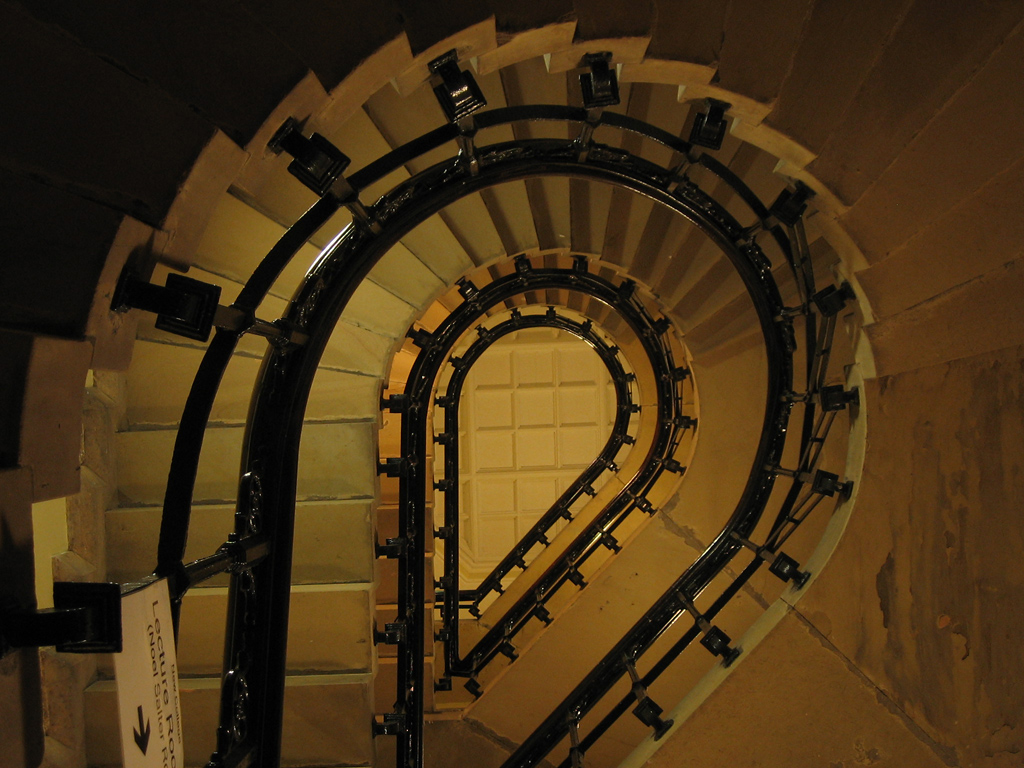
Staircase in New College

At dinner, this evening, I was speaking with one of the Wadham College fellows about nuclear fusion. He highlighted an element that I hadn’t previously heard discussed: namely the fact that you need to build truly enormous reactors so as to have a surface area to volume ratio low enough that fusion can be sustained. He spoke of the possibility that two or three gargantuan power plants could serve areas as vast as Europe or North America, but that enormous technical hurdles remain, most of them relating to plasma control.

Remember that, once atoms form a plasma, they have been stripped of their electrons. As such, the positive charges of all protons cause them to repel one another with a force inversely proportional to the square of the distance between them. Imagine trying to push the north poles of two powerful bar magnets together, and you will begin to appreciate the kind of force dynamics at work. For fusion to be attained, that repulsion needs to be overcome. In the kind of reactors being experimentally constructed now, that is generally achieved through containment using extremely powerful electromagnets.

Under construction now, in France, is the International Experimental Thermonuclear Reactor (ITER). Construction will finish around 2016 and the device will hopefully provide the information and experience required to develop fusion reactors commercially. If they could be deployed, they would offer the benefits of existing fission plants (reliable and substantial electrical generation), with relatively few issues relating to radiactivity (though, as the fellow pointed out, the gamma rays generated in hydrogen fusion would cause the reactors themselves to become quite radioactive, over time).

The possibility of a deus ex machina stepping in to deal with energy security and climate change is certainly an alluring one. With enough power, it would be possible to produce as much hydrogen as you could desire from water. If gargantuan plants are the mechanism to make fusion feasible, energy from them could be partially distributed in that way. Even if fusion were not a panacea, it could be an important component in a response that also includes conservation, the development of renewables, and technical mechanisms to make fossil fuel use carbon neutral.

I don’t know nearly enough about nuclear physics to be able to comment on the viability of fusion as a power source. One thing you hear constantly in journalistic coverage of it is that it has been twenty years or so off for ages now. Hopefully, with the lessons learned from ITER, it will be a real twenty years this time. If that did come to pass, it would certainly not be too soon. On a political note, it is probably a good thing it is being built in France. When it (inevitably) goes way over-budget, the government is reasonably unlikely to scrap the project. By way of comparison, recall how the US government cancelled the Superconducting Super Collider in 1993, after the expected cost tripled to US$12 billion.

Perspective

The following is simply plagiarized, from Carl Sagan, but it is nonetheless quite important. Back in my insomniac elementary school days (as opposed to my insomniac graduate school days), I remember reading quite a number of his books. The non-fiction ones tended to be particularly interesting and well illustrated. These specific observations of his have always struck me as especially poignant:

The Earth from deep space

We succeeded in taking that picture [from deep space], and, if you look at it, you see a dot. That’s here. That’s home. That’s us. On it, everyone you ever heard of, every human being who ever lived, lived out their lives. The aggregate of all our joys and sufferings, thousands of confident religions, ideologies and economic doctrines, every hunter and forager, every hero and coward, every creator and destroyer of civilizations, every king and peasant, every young couple in love, every hopeful child, every mother and father, every inventor and explorer, every teacher of morals, every corrupt politician, every superstar, every supreme leader, every saint and sinner in the history of our species, lived there on a mote of dust, suspended in a sunbeam.

The earth is a very small stage in a vast cosmic arena. Think of the rivers of blood spilled by all those generals and emperors so that in glory and in triumph they could become the momentary masters of a fraction of a dot. Think of the endless cruelties visited by the inhabitants of one corner of the dot on scarcely distinguishable inhabitants of some other corner of the dot. How frequent their misunderstandings, how eager they are to kill one another, how fervent their hatreds. Our posturings, our imagined self-importance, the delusion that we have some privileged position in the universe, are challenged by this point of pale light.

Our planet is a lonely speck in the great enveloping cosmic dark. In our obscurity — in all this vastness — there is no hint that help will come from elsewhere to save us from ourselves. It is up to us. It’s been said that astronomy is a humbling, and I might add, a character-building experience. To my mind, there is perhaps no better demonstration of the folly of human conceits than this distant image of our tiny world. To me, it underscores our responsibility to deal more kindly and compassionately with one another and to preserve and cherish that pale blue dot, the only home we’ve ever known.

This is an expression that I expect would be inspiring, humbling, and amazing for any human being.

Paul Martin on economic governance

Paul Martin and Milan Ilnyckyj

Former Canadian Prime Minister Paul Martin’s talk was candid, informative and engaging. At a Global Economic Governance Program seminar, he covered a very diverse collection of issues: from China’s hunger for natural resources to the regulation of multinational corporations. I have never seen the room so packed, and the questions were excellent. He managed to get some good laughs, as well. In response to my question about climate change, he said, in part:

“Climate change has long since been recognized as caused by human activity principally.

The net effect is going to be devastating.

Prince Edward Island will disappear; Toronto won’t. That’s a disaster on both sides

That would make a great headline back home, wouldn’t it?”

Generally, he was very open, but there were certainly a few notable questions ducked. He declined to endorse a candidate for the Liberal leadership race when asked, for instance. People should feel free to have a look at my transcript, in which I have tried to quote directly wherever I could type fast enough.

PS. As today’s photo demonstrates, there is a downside to having a camera that takes 2-3 seconds to charge and fire its flash.

Thesis flowchart: data to action

One thing the thesis should definitely include is flowcharts. They make it easier to disentangle what is going on in complex relationships, both by clearly showing what phenomena are connected, and by suggesting the direction(s) in which causality runs. Here is one that I came up with, regarding the relationship between personal consensus (the position a person reaches after having thought a question through and reached an answer that satisfies them internally) and group consensus:

Data to action flowchart

The starting point is the data presented to the individual. This consists both of empirically observed phenomena and of representations of truth made by others. There is an internal dynamic here. For instance, a person who has been reading a lot about global warming might be prejudiced towards interpreting an unusually hot summer in their part of the world as evidence for that trend. This is partly captured in the two-way arrow with group consensus, but it is also a matter of internal cognition.

Both empirical data and arguments (both logical and those based on other kinds of rationality) are transformed into personal opinions through the applications of heuristics. Examples of heuristic reasoning devices include:

  1. Conceptions about which individuals and groups provide trustworthy information
  2. Conceptions about what kind of evidence is strong or weak (for instance, opinions on the use of statistics or anecdotes)
  3. Particular facts that are so thoroughly believed that they become a touchstone against which other possibilities are rejected

This is not a comprehensive listing, but it gives an idea of the kind of mechanisms within a single person that are at work when forming opinions.

The link from personal opinions to personal choices is not a simple linear one. A second category of heuristics exist that do not determine what is considered true. Instead, they determine which opinions are important; specifically, they determine which opinions are important enough to deserve action.

Two major types of personal choices are represented in this model. Those in the box ‘personal choices’ could be called direct actions. This would include something like buying a hybrid car or boycotting a company. Within the arrow between personal opinions and group consensus lies the other kind of action: namely advocacy actions, in which an individual tries to convince other individuals or groups to adopt the same position the original individual has already reached. That feeds into the “information and arguments” boxes for other people, as well as contributing to the group phenomenon of consensus.

Group action is thus both the sum of personal choices, and the product of public deliberation leading to institutional or societal choices. Here again, a process of prioritization takes place.

An adapted version of this diagram could be constructed for scientists and for non-scientists. The biggest difference would be that scientists can engage in a broader project of empirical examination, thus contributing in a different way to the information and arguments being presented to others. They may well also employ different kinds of heuristics, when forming personal choices.

Carbon offsets

Bug on a flower

Cycling home with a £5 quarter-kilo of Fair Trade coffee, I found myself thinking about carbon offsets. These are financial instruments in which an individual or group pays someone else to reduce the carbon emissions they would otherwise have produced, so as to offset the buying individuals own carbon emissions. Al Gore used them to make the production of An Inconvenient Truth carbon neutral. They were also used by The Economist to make their Survey on Climate Change (Subscription required) carbon neutral. At the end of the opening article, they explain:

This survey, which generated about 118 tonnes of carbon dioxide from flights, car journeys, paper production, printing and distribution, has been carbon-neutralised through the Carbon Neutral Company. The cost was £590; the money was spent on capturing methane from an American mine.

According to the calculator at climatecrisis.org (the site set up by Al Gore to accompany his book and film), my annual carbon emissions are about 1.6 tons, including two trans-Atlantic flights a year. Not having a car and living in a shared dwelling makes a big difference, even if all our power is coming from the huge coal plant at Didcot.

At the rate The Economist paid, I could offset that for £8. It might be a worthwhile thing to include in my thesis. My only problem with it all is that it is hard to tell which of the many websites that sell offsets actually provide what they claim. There has been a kerfuffle recently about dodgy wind power cards. Does anyone know of a reputable place where I can offset those 1600 kilos of carbon? This site looks like a possibility.

Obviously, paying for the offsetting of your own carbon isn’t an adequate response to the issue of climate change (any more than buying Fair Trade coffee is an adequate response to global poverty), but it couldn’t hurt. It is also a potentially useful demonstration of how seriously you take the problem

[Update: 5:00pm] According to the company The Economist used, one round-trip flight from London to Vancouver generates 1.7 tonnes of CO2. As such, it would seem appropriate to offset at least four or five tonnes a year, to cover electricity, heating (however St. Antony’s does it), and travel.

Thesis case studies, justification for

The Stockholm Convention on Persistent Organic Pollutants and the Kyoto Protocol are both attempts at a multilateral solution to a previously unknown transboundary environmental problem. The reasons for which these case studies are useful for accessing fundamental questions about the science-policy relationship are several:

  1. Each agreement addresses an environmental problem that only recently became known.
  2. Each deals with a problem that is essentially transboundary, and requires concerted effort to resolve.
  3. Each involves scientific uncertainty, both about the material effects of the problem in the world and about the different characteristics of possible approaches for dealing with it.
  4. Each involves normative and distributional issues, with regards to groups that benefit or are harmed by the application of the agreement.

As such, each represents the outcome of a dialogue between stakeholders and experts. The former group is concerned with securing their interests, or those of their principles, such as they are understood at the time of interaction. The basis upon which this group operates is that of legitimacy: either implicitly held among those representing themselves, or transferred through a process, agreement, or institution to a representative whose legitimacy is premised upon advocacy.

The latter group is concerned with the generation and evaluation of data. Understood broadly here, ‘data’ are claims about the ontological nature of the world. This includes claims that are rigorously verifiable (such as those about the medical effects of certain pollutants) as well as those involving considerable interpretation (such as the meaning of international law).

The groups are not mutually exclusive, and many individuals and organizations played an overlapping role in the development of the agreements. Through the examination of these two case studies, as well as related matters, this thesis will engage with the interconnections between expertise and legitimacy in global environmental policy making, with a focus on agreements in areas with extensive normative ramifications.

Thesis presentation upcoming

Tree and sky, abstract

This coming Wednesday, I am to present my thesis plan to a dozen of my classmates and two professors. The need to do so is forcing further thinking upon exactly what questions I want to ask, and how to approach them. The officially submitted title for the work is: Expertise and Legitimacy: the Role of Science in Global Environmental Policy-Making. The following questions come immediately to mind:

  1. What do the differences between the Stockholm Convention on POPs and the Kyoto Protocol tell us about the relationship between science and environmental policy?
  2. What issues of political legitimacy are raised when an increasing number of policy decisions are being made either by scientists themselves, or on the basis of scientific conclusions?
  3. How do scientists and politicians each reach conclusions about the nature of the world, and what sort of action should be taken in it. How do those differences in approach manifest themselves in policy?

The easiest part of the project will be writing up the general characteristics of both Stockholm and Kyoto. Indeed, I keep telling myself that I will write at least the beginning of that chapter any time now. The rest of the thesis will depend much more on examination of the many secondary literatures that exist.

The answers that will be developed are going to be primarily analytic, rather than empirical. The basis for their affirmation or refutation will be logic, and the extent to which the viewpoints presented are useful for better understanding the world.

Points that seem likely to be key are the stressing of the normative issues that are entangled in technical decision making. Also likely to be highlighted is the importance of process: it is not just the outcome that is important, when we are talking about environmental policy, but the means by which the outcome was reached. Two dimensions of the question that I mean to highlight are normative concerns relating to the North/South divide and issues in international law. The latter is both a potential mechanism for the development and enforcement of international environmental regimes and a source of thought about issues of distribution, justice, and responsibility that pertains to these questions.

I realize that this is going to need to become a whole lot more concrete and specific by 2:30pm on Wednesday. A re-think of my thesis outline is probably also in order. I should also arrange to speak with Dr. Hurrell about it soon; having not seen him since the beginning of term, there is a certain danger of the thesis project drifting more than it ought to. Whatever thesis presentation I ultimately come up with will be posted on the wiki, just as all of my notes from this term have been, excepting those where people presenting have requested otherwise.