On the importance of hope and dedication

Happy birthday Elise Haynes

Tonight, I have been speaking with friends of mine about the challenges of these living generations, and the opportunities afforded to us. On the basis of our wealth, we can diminish and subdue the greatest scourges that impact humanity: scourges of poverty and disease. On the basis of our compassion, we might overcome the forces that drive us apart from one another, when we are fundamentally so close. We are inescapably pressed together in such a tiny corner of the cosmos.

Imagine if John Kennedy’s inaugural address could be modified, so as to serve the great challenge of our time:

We choose to [end extreme poverty] in this decade and do the other things, not because they are easy, but because they are hard, because that goal will serve to organize and measure the best of our energies and skills, because that challenge is one that we are willing to accept, one we are unwilling to postpone, and one which we intend to win.

We can deal with the horrors of infectious disease and poverty. We can work to mitigate the warlike and genocidal qualities of dictators and governments. We can and must work for a better world. It is my enduring hope, and all my faith in humanity, that we shall.

Reminiscing about LIFE

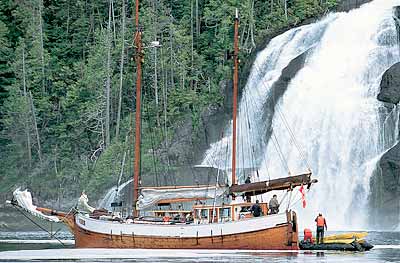
The Duen

Photo from www.thenaturalcoast.com

Since I was feeling vaguely ill all day, I made lunch and dinner stir-fries with large amounts of ginger. I don’t know why, but I’ve always found that ginger helps with nausea and general feelings of being unwell. The captain of the Duen first told me about it, during the first LIFEboat flotilla. A floating sustainability conference which took place on more than a dozen tall ships, the LIFEboat flotilla was one of the best weeks of my life, even though I was ridiculously seasick for much of it, on account of gale force winds and huge waves.

The Duen was a small ship – far smaller than the Pacific Swift, which was my berth for the second Flotilla. When tacking upwind, the boat listed at an angle of about thirty degrees, with me clinging to the upper lip in a borrowed survival suit: lent to me because I had to be on deck in the pouring rain all the time because I was so seasick. For years afterwards, I couldn’t stand the sight, smell, or taste of scones, because that’s what people kept trying to feed me. Despite all that, spending a week traveling through British Columbia’s Gulf Islands in a tall ship is an amazing experience. More so when you’re in a group like the one Jeff Gibbs created and which has been supported by people like David Suzuki and Jane Goodall, who I actually met during the first flotilla.

Leadership Initiative for Earth (LIFE) is a Vancouver based environmental organization that I was involved with for several years. I attended a conference of theirs at a high school with Jonathan. I then took part in two Flotillas, each of which required a large amount of environmentally related community service in order to be eligible. Jonathan and I worked at the Wild Bird Trust in North Vancouver, planting trees and pulling out poles from a frozen swamp. We also had to give presentations and slide shows afterwards. I gave one at the Vancouver Folk Festival, after the second flotilla. It was really excellent, because I got a free Folk Festival pass in the process.

One of the best things about the two flotillas was learning a bit of marine navigation. Because of the complexity of the Gulf Islands and their tides, the importance of maps, navigation, and location there are considerable. There are many passes that can only be used at certain times, because of the tides. During the second flotilla, I got to help with the coordination of the fleet overall: managing where different ships would stop at different times. The flotilla mostly took place on the ships, interacting with the members of your group, but there were also excursions on shore. We visited a sustainably harvested forest and got to touch sea cucumbers brought up by divers.

I wish I had some photos to post, but they are all in Vancouver in non-digital form. The one above wasn’t taken by me, but it does show the ship I was on for the first flotilla, in a place much like many we visited.

The original WildLIFE conference happened in 1995, when I was only twelve. As such, I probably didn’t get as much from it as most participants, nor was I able to contribute very effectively. The Flotillas were in 1997 and 1998, respectively. Since then, I’ve largely lost touch with the organization. The only participant with whom I’ve had any contact is Kevin Millsip, one of the two leaders of my group in 1996. He is now a Trustee on the Vancouver School Board; perhaps Sasha Wiley will meet him one day.

At one point, it seemed that LIFE had changed its name. At other points, I couldn’t seem to find anything about it at all. I am glad to see that they seem to be active at the moment. Apparently, “there have now been five Flotillas, all extraordinary learning adventures for the 750 youth who participated.” I wish I had stayed in contact with members of my two groups. At the time, I think being rather younger than most of the other participants impacted my ability to relate directly with them. Even so, I am incredibly glad to have been involved.

I strongly suspect the whole LIFE experience has impacted on my choice of discipline and sub-field. To be simultaneously exposed to a place as beautifully alive as the Gulf Islands and such a group of committed and motivated people is a powerful combination, as Gibbs must have anticipated. I am sure my fellow participants are also grateful for his imagination and initiative.

Draft RDE complete

Two hours before my self-imposed deadline (to be brutally enforced by Claire), I finished a solid first draft of my research design essay, including two appendices. Weighing in at about 5000 words, sans appendices, it is right in the middle of the range from minimum to maximum length, leaving me some space to correct errors that my two much appreciated peer-editors point out before Sunday.

Many thanks to Meghan and Claire for throwing themselves in front of that bullet.

If you feel left out for not getting a copy, download one here (PDF). Please leave me comments ranging from “this word is spelled incorrectly” to “the entire methodological construction of this project is hopeless, for the following intelligent and well-articulated reasons.” The linked PDF doesn’t include the appendices because they are separate Word files and I don’t have software to merge PDF files with me. They really shouldn’t be necessary, anyhow.

[Update: 27 May 2006] I have a slightly revised version up, based on my own editing. Still waiting for comprehensive responses from external readers.

Unintentional auto-satire

For a while, I was planning to simply ignore these videos, produced by the ‘Competitive Enterprise Institute,’ but they have now been sent to me enough times to indicate that this hopelessly disingenuous message is getting out. Let’s go through them, one by one:

Energy

Nobody in their right mind denies that carbon dioxide is “essential to life” or that “we breathe it out.” What any competent scientist will tell you is that releasing masses of it affects the way in which the atmosphere deals with the radiant energy from the sun. Higher concentrations of gasses of certain kinds (CO2, methane, etc) in the atmosphere cause the planet to absorb and retain more solar energy. That raises the mean global temperature and reduces the ratio of frozen to liquid water on earth. CO2 isn’t a pollutant, in the toxic sense, but it does affect how the earth is affected by the sun.

Regarding the issue of whether fuels that emit CO2 have “freed us from a world of backbreaking labour,” they probably have. That said, that doesn’t mean they are the only way we can avoid such suffering, nor does it mean that such alleviation comes without a cost.

Glaciers

Producing two scientific papers that show that specific ice sheets are growing or increasing in density doesn’t mean that the world overall isn’t experiencing global warming. While there is plenty of dispute about how bad global warming would be and how much it would cost to stop, to deny that it is happening on the basis of such a flimsy argument is worse than irresponsible.

It’s almost astonishing that anyone would be driven to respond to such absolute malarky. Likewise, I can’t believe that anyone who participated in the creation of these videos did so with genuine intent. They are absurd at the level of the “Amendment Song” from The Simpsons or many Monty Python sketches. If such things actually have the power to shape public opinion, we are in even worse shape than I thought.

Do you think these people are on crack? Whether you do or don’t, send an email to Myron Ebell, their Director of Energy and Global Warming Policy. It seems that messages to him need to go through this email address.

Research design essay planning

Having seen the distinction-earning research design essay written by Lee Jones last year, I am now thoroughly fearful about the whole project. The extent of research he seems to have done, and the clarity with which he seems to have understood his question both stand in marked contrast to my present situation.

As such, it is perfectly clear that I really need to get cracking. The essay is due on May 29th.

Research Design Essay Planning

Continue reading “Research design essay planning”

Oxford Natural History and Pitt Rivers Museum

Deer skeleton

Happy birthday Jonathan Morissette 

Visiting the Oxford Natural History Museum with someone who shares an active interest in botany, archaeology, palaeontology, genetics, and geology is quite a fascinating experience. As such, doing so this morning with Antonia was both engaging and pleasant. Partly, the visit was motivated by the desire to see the Kakapo parrot but, since she went on a tour with one of the curators quite recently, she told me a lot more about the collection as well.

For the unfamiliar, the Natural History Museum is housed inside an attractive building on Parks Road, north of Wadham. The main hall is the kind of vaulted steel and glass structure that I associate with the great European exhibitions of the early 20th century: with crowds goggling over dinosaur skeletons. The collection is certainly quite good, spanning a respectable section of the animal and mineral variety of the planet. Especially worth seeing: elephant skeletons, some of the wide variety of stuffed raptors, the complete bluefin tuna skeleton, some of the large fossil and mineral samples, and the general architecture of the building itself. Note how every pillar in both the lower and upper galleries is made from a different stone, from a different part of the United Kingdom.

T-Rex foot

Behind the Natural History Museum, and presently under renovation, is the Pitt Rivers museum. A cynic might describe it as an exuberant assembly of the plunder of British aristocrats past. It includes a Haida totem poll, shrunken heads, and innumerable tools, weapons, religious artefacts, articles of clothing, and day-to-day objects from countries around the world. Unusually for a museum, objects are assembled by type, in cases spanning many times and cultures. That allows for an appreciation both of the variety of human creations, and the similar needs and products of diverse cultures. While not large, the place is literally packed, with narrow aisles between well-stuffed display cases. Antonia explained that both the Pitt Rivers and Natural History Museums have far too little space to display their full collections: a partial motivation for the ongoing renovation.

The general lesson – that museums are enormously better in the presence of interested others – is obvious enough. I am delighted that I had the chance to use that insight in practice.

Presentations on Africa and the environment

Row of houses

My mother kindly sent me another book today: Thomas Friedman’s The World is Flat: A Brief History of the Twenty-First Century. I’ve heard a bit about it before, but remember virtually nothing of what was said. As I recall, The Economist was quite critical, but they don’t seem to have a great deal of patience when it comes to a number of alternative views about globalization. Once I finish On the Road and The Skeptical Environmentalist, I look forward to going through it as the next object of discretionary reading.

Aspects of today’s Environment Centre colloquium were quite good. I enjoyed the Vancouverite atmosphere, as well as the presentation by Guardian columnist George Monbiot. Particularly impressive were his historical asides, though his main argument came off as a bit of an afterthought. Spending time with so many people doing environmental studies was a reminder of just how completely outside the discipline I really am. The contrast in the kind of discourse that took place there and the kind in our various seminars was considerable. I’ve never heard the term ‘environmentalisms’ so many times in one day. Some of the presentations struck me as interminably long, lacking in direction, and somewhat pointless: especially one in which the presenter literally skimmed through a 16 page Microsoft Word document he had on screen, correcting the spelling of words as he went, and making general comments about what was written.

The event at Rhodes House was informative but largely unsurprising – except where it was dramatically punctuated by the thunderstorm that materialized as it was ongoing. I had seen two of the speakers before, at a previous Global Environmental Governance seminar, and the presentations they gave were quite similar to those I saw before. I did enjoy the presentation on AIDS by Mandisa Mbali, a Rhodes scholar and organizer of the Stop AIDS Society at Oxford.


  • Meeting Taylor Owen, a fellow Oxford blogger, both at the Environment Centre event and, subsequently, after the Africa panel was good fun. Speaking with someone else who went to UBC – and who has a number of unexpected connections to Emily as well – is a reminder of how small a place Canada can be.
  • Likewise, I enjoyed Mandisa Mbali”s presentation on HIV/AIDS: delivered as part of the aforementioned Africa panel at Rhodes House. Tomorrow, I am going to an event being run by the Stop AIDS Society at 8:00pm tomorrow at Hollywell Manor, one of the buildings owned by Balliol College.

Events in Oxford, Wednesday

For people in Oxford, there are some interesting events this coming Wednesday (May 10th):

Oxford University Centre for the Environment Symposium:
“What Future for Environmentalism?”

10.00 Introduction

10.05 Noel Castree, Manchester University, “‘The Paradoxes of Environmental Politics”

10.45 David Pepper, Oxford Brookes University, “Ecotopianism: Transgressive or Regressive?”

11.25 Andrew Dobson, Keele University, “The Invisibility of the England and Wales Green Party – Why, and Does it Matter?”

12.05 General questions and discussion

12.30 Lunch

1.30 George Monbiot, journalist and writer, “Just Green”

2.10 Diana Liverman, Oxford University, “Environmentalisms and the Response to Neoliberalism in Latin America”

2.50 Joan Martinez Alier, Barcelona Autonomous University, “Social Metabolism and Ecological Distribution Conflicts”

3.30 – 4.00 Final discussion and close

As far as I can tell, all of these events are taking place in their building on South Parks Road.

Many thanks to Taylor Owen for forwarding me an email about it. Such is the decentralized nature of Oxford that, despite being on every mailing list I’ve come across, I hadn’t heard a word about it before. There is also a lecture that evening:

The Africa Society and Rhodes Scholar Southern Africa Forum Joint Panel Discussion Series:
Framing the Continent in 2005: Implications for the Future

Marked by the Make Poverty History Campaign, LiveAid, the G8 summit, and the Commission for Africa, 2005 was dubbed by many as the ‘Year of Africa.’ As we move into 2006 it is worth reflecting on the impacts-positive and negative-of these high profile initiatives and the subsequent media attention.

5:00pm to 7:00pm
Rhodes House: Jameson Room

I will be attending both.

PS. A compilation of Oxford Environment related information and events can be found here. The OUCE website is very counter-intuitive if you are trying to figure out what’s going on there. I couldn’t even find a page with information on this Wednesday’s event.

Hunger and disease

Flowers at St. Antony's

I promised myself the other day that I would write a post about something that I view as a serious fallacy related to development: the notion that dealing with infectious disease will just shift the death toll to hunger, rather than genuinely saving people. This view is misguided for reasons both moral and pragmatic. I will focus on the pragmatic here, since people who advance this neo-Malthusian argument tend to think of themselves as well-meaning but realistic. The first set of arguments have to do with the local capabilities of communities. The second, lesser, set have to do with the nature of the provision of aid. I will quickly examine each in turn.

The three big diseases upon which I will concentrate are HIV/AIDS, malaria, and tuberculosis (TB). These have been rightly banded together as the three most serious global health concerns, with regards to infectious diseases. Each kills more than a million people a year, as well as making far more ill. As a bacterial illness, effective cures exist for all but the most resistant strains of tuberculosis. While no effective cure exists for either malaria or HIV/AIDS, drugs exist that can extend survival dramatically, and mechanisms exist to greatly restrict the spread of such illnesses. The notion that doing so would produce an equally severe problem elsewhere is based on a misconception about how such illnesses affect communities.

Local capabilities

Sick people are not productive people. Communities with high prevalance rates of infectious diseases lose agricultural productivity as members of the working population either become ill or need to spend their time caring for those who are. This is especially bad with regards to HIV/AIDS, which tends to kill people during their most productive years. That has left behind millions of orphans, who further draw upon the capabilities of the community in which they live. All manner of grim statistics could be brought to bear upon this point, but it seems intuitively obvious enough to stand on its own.

The possibilities of simultaneously dealing with the various factors that make extreme poverty endemic are demonstrated by the ’12 research villages’ that Jeffrey Sachs has established throughout Africa. The plan is to have 1000 by 2009. Each receives practical aid at the level of $250 per inhabitant: directed towards dealing with disease, boosting agricultural output, education, and other objectives espoused by the Millennium Development Goals. The whole program can be expressed in terms of seven simple goals:

Fertiliser and seed to improve food yield; anti-malarial bed nets; improved water sources; diversification from staple into cash crops; a school feeding programme; deworming for all; and the introduction of new technologies, such as energy-saving stoves and mobile phones.

The results so far seem to be very good, in terms of declining levels of infectious disease, improved crop yields and educational results, and the like. As with so many other projects, the difficulty is in scaling up the the point where millions of lives can be changed, but the example demonstrates how even a relatively inexpensive aid policy can produce tangible results in a number of crucial areas, without hitting any of the Malthusian barriers imagined by those who say that feeding hungry children just makes hungry adults. Another laudable feature of the program: all aspects of it are implemented and directed at a local level, reducing the extent that neocolonialist intentions can be attributed to the donors or international organizers.

World capabilities

Even in those cases where a sudden burst of attention enormously lessens the burden of disease in a food-strapped community, the difficulties of dealing with that situation are far easier than those of dealing with a place where one of these big three diseases has become endemic.

That’s partly because food provision doesn’t require the delivery of expertise into an area. The lack of qualified medical personnel in places like Sub-Saharan Africa is a major reason for which infectuous disease is so problematic there. The rich world has a double guilt in this capacity: because the austerity programs that were part of the structural adjustment policies of the IMF and World Bank have prevented governments from investing in such human capital, and because lots of rich countries (including Canada and the UK) have been doing all they can to buy up doctors and nurses from the poor world to help address problems in their own health systems.

Conclusions

Obviously, just providing food aid or help with specific problems isn’t adequate for dealing with persistent extreme poverty. That said, it seems foolish to voluntarily refrain from deploying such assistance as is politically and economically viable because of concerns about “feeding those who will die anyhow.” On the global level, the economic emergence of Asia – in which extreme poverty levels have seen amazing reductions in recent decades – shows what is possible even in the face of considerable levels of corruption, disease, and mismanagement.

Further thesis planning

The thesis discussion with Dr. Hurrell has further convinced me that I am on a good track. We also sorted out an agreeable pattern for this term’s work this evening: two essays for the core seminar, two papers specifically for him, the research design essay, and a third essay for him to be written during the subsequent break, if necessary. Based on my standard of 3000 word papers, that will mean 21,000 words of writing for this term, in total. (Not counting dozens of blog posts, of course)

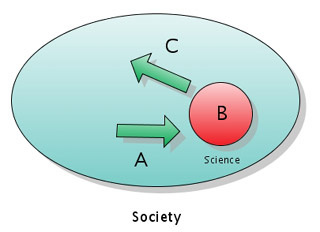
While discussing the thesis topic, we edged closer to a real question. The idea, at this point, is to choose two examples of international environmental agreements, then investigate the role that science and scientific communities played in their formulation. Two possible examples at the Stockholm Convention – wherein the coordination of science and policy can be said to have gone fairly well – and the Kyoto Protocol – where the relationship is muddier and the policy outcome less effective. The methodology would centre around looking at the preparatory materials and history of both conventions, as well as interviewing participants. On the theoretical side, I would examine writing on the connections between science and policy in this and other areas, as well as as much philosophy of science as I can push through my limited mental faculties.

The above, expanded and fused with a preliminary survey of the literature, will form the body of the 6000 word research design essay I submit at the end of this month.