I noted the four previous episodes (intro, 1, 2, 3) of the Divestment Generation Mini Series about the University of Toronto fossil fuel divestment campaign.
Episode 4 is now up.
climate change activist and science communicator; photographer; mapmaker — advocate for a stable global climate, reduced nuclear weapon risks, and safe human-AI interaction

Atmosphere, biosphere, lithosphere, hydrosphere, etc – everything about life and the state of this planet
After an 18 day occupation of the Old Vic building, and after choosing to move their Board of Regents meeting online rather than encounter the students, Victoria University has announced that it will divest from fossil fuels by 2030.
The campaign has a statement out.
Friday was day 12 of Climate Justice U of T’s occupation at Victoria University, pressuring them to divest from fossil fuels.
They have a guide online for people wishing to visit the occupation.
They also have a petition.
350.org has two job postings up for Canada: Canada Organizer and Canada Senior Organizing Specialist
As distant and improbable as it seemed at times, at tonight’s Convocation High Table I was given the dictionary traditionally awarded by Massey College to PhD graduates:
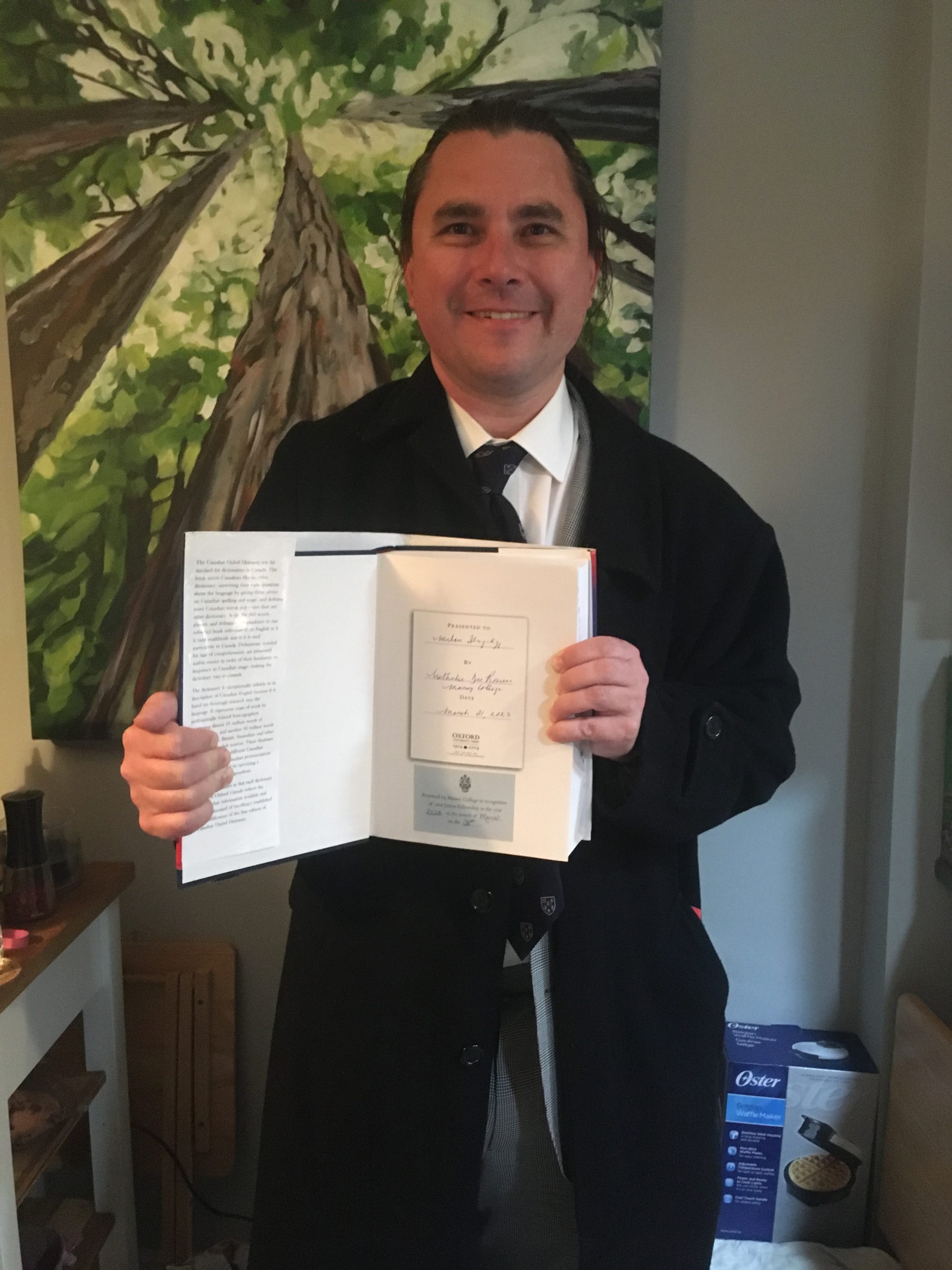
Photo by Chantal Phillips
This was a much more meaningful graduation for me than attending a U of T ceremony would be, and hearing the biographies of all the graduating Junior Fellows was a reminder of how many critical fights humanity is engaged in right now, and how it will take the best from all of us to fight our way to a successful, liveable, humane future for the world.
Early tomorrow I am off for back-to-back-to-back trips: first to visit our dear friends in Ottawa; then for a couple of days of quiet and reading at a dairy farm in Cambridge, Ontario; and then straight out on my first camping trip in many years.
After that, my full-time job will become finding a new affordable place to live in Toronto. Finding inexpensive accommodation is actually more urgent and important than finding an OK job. Per George Monbiot’s tough but invaluable career advice, financial security really comes from minimizing your expenses, not maximizing your income. The cheaper you can live, the freer you are to work on what is important and bring everything you can to the fight.
One of the chief ways our political leaders are dishonest about climate change is in making promises which they know will be beyond their time in office, and which they can therefore never be held accountable for.
Emission reduction targets set in the 2030s and beyond certainly qualify, as do promises that some future government will ban a harmful technology.
When the time to actually implement the ban comes, a new government subject to popular opinion and seeking to win re-election is likely to soften or ignore it. Germany right now provides an example. They had pledged to phase out fossil fuel cars by 2035, but are now realizing that the date is getting close enough to start looking like a real promise: Germany faces EU backlash over U-turn on phasing out combustion engine.
Governments need to be evaluated on what they will do right now, this year, during the term of office when they hold power. Otherwise, we are setting oursevles up as citizens to be lied to while our worst problems grow increasingly severe. A government that says it has a long-term plan to zero out carbon emissions, but which is allowing them to grow in the short term and allowing more fossil fuel projects, is lying with the connivance of its voters.
John Jost: I do think I have to say I’ve come to the view that it’s much easier to govern from the right in a system justifying, conservative manner because you can always frame your opposition as a threat. (31:37)
…
David Roberts: My larger pessimism has to do with… it just seems like globally we’re heading into a time… just look at climate change, right? Climate change is going to create more disruption, more migrations, more uncertainty, and threat! Which are gonna have the effect of making it more difficult to think clearly about how to solve climate change in a just way. (33:00)
I am still trying to get them to replace the file with one that has a few minor typos corrected, but my dissertation went live on the University of Toronto’s TSpace platform today:
Please don’t buy one before asking if I was planning to make you one already, but you can buy a print copy at cost from Lulu.com. I am also ordering a batch to reduce shipping costs, so if you want to get in on that let me know.
Now that I am no longer tracking media references to the movement for my dissertation, I need a thread to post stories of interest to people tracking the movement.
For example: How Change Is Actually Made on Campus