Shipping news

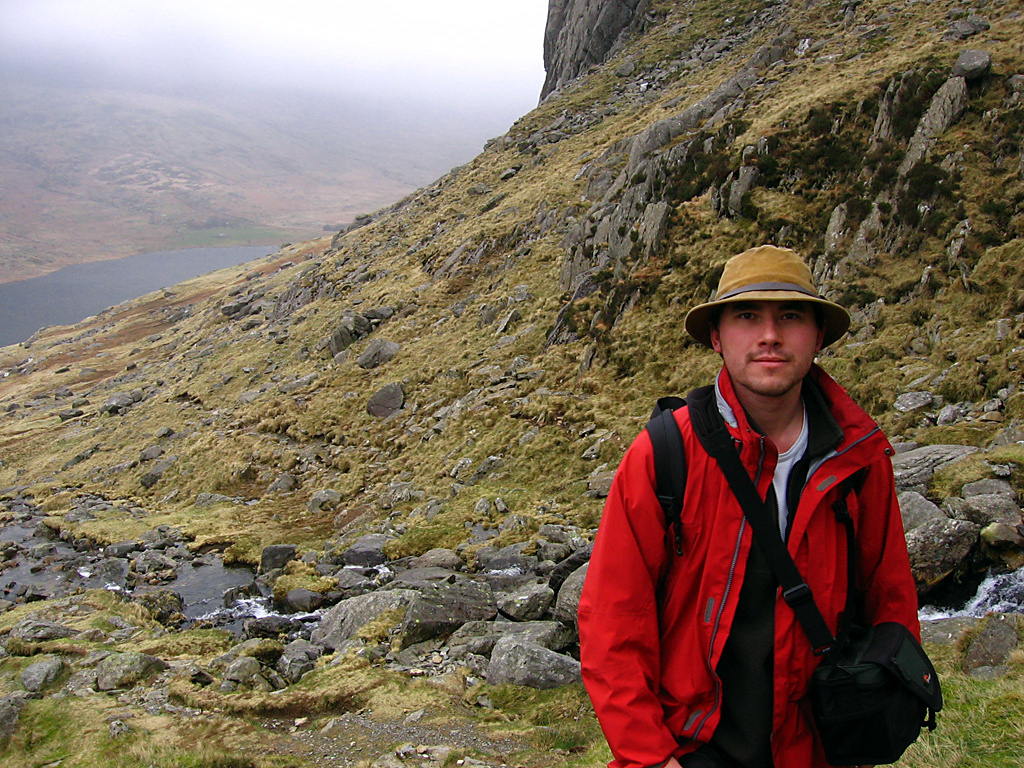
Milan Ilnyckyj in Wales

By now, I have quite possibly finished climbing the highest mountain in Wales – almost certainly in the pouring rain. A saner person would have been at his desk with a cup of tea and a thesis draft progressing. An even saner person would have finished the draft before leaving…

One thing I have been pondering lately is the logistics of moving on from here. I arrived in Oxford with a big suitcase, a backpack, and a suit bag. Heavily laden, I made my way in the rain from the train station to Wadham. While here, I have picked up about thirty books. I also have about ten binders and a box of hanging files, mostly related to the thesis. If I am going to do another research degree in the future, I am probably going to want this stuff. Not bringing my environment related books here was a mistake I have regretted many times.

The most sensible option would seem to be putting the books and binders into one or more big boxes, wrapping the file box, and sending the whole collection back to Canada by the slowest and cheapest form of mail possible. Given that I will be working, rather than going to school, I won’t need it urgently.

Has anyone undertaken such shipping? How much can I expect to pay, either by weight or by size? Is there a better option than the normal mail service?

From a flat in Oxford to a barn in Wales

I should pause from the frantic assembly of rain gear and the overly optimistic inclusion of thesis reading in my rucksack to say that I am off to Wales in a few hours (there seems to have been some confusion about whether I had already gone). I will be away until late on Monday, making this the longest interruption in my love affair with the internet since I went to Scotland in July. One day longer, and it would be beaten only by the Bowron Lakes canoe trip in the summer of 2004.

This is what happens when even the cheapest hostels have web access, and internet cafes are plentiful. The worst a connected person need endure are unfamiliar foreign keyboards.

Despite the urgency with which I will need to finish my third thesis chapter, you can expect some photos to find their way online within a few hours of my return. Expect panoramic vistas, drenched hikers, and sheep.

PS. Fellow Canadians trying not to forget all their French may be interested in a new blog that Richard Albert, from Lady Margaret Hall, has established. Now that quarterly Oxford bloggers’ gatherings have fallen by the wayside, I need a new way to decide how frequently to update my list of Oxford blogs.

No Mercator projection

Grabbed from Metafilter, this page of maps distorted to show relative rates of things like military spending is quite interesting. Unsurprisingly, the map of war and death is especially grotesque.

Some higher resolution versions are over at Worldmapper: by total population, landmine casualties, and wealth (per capita).

Looking at these, one is immediately struck by how heterogeneous the world is. Of course, we all knew that before, but seeing the information in a new way can change one’s perception of it quite a bit. While there is the danger of such data being misleading, I would say it counters the greater danger of extrapolating from personal experience. Aggregated statistics, while not perfect, are a lot better than on-the-fly human intuitions, when it comes to assessing massive problems quite beyond the scope of anyone’s personal experience.

Wales in under one hundred hours

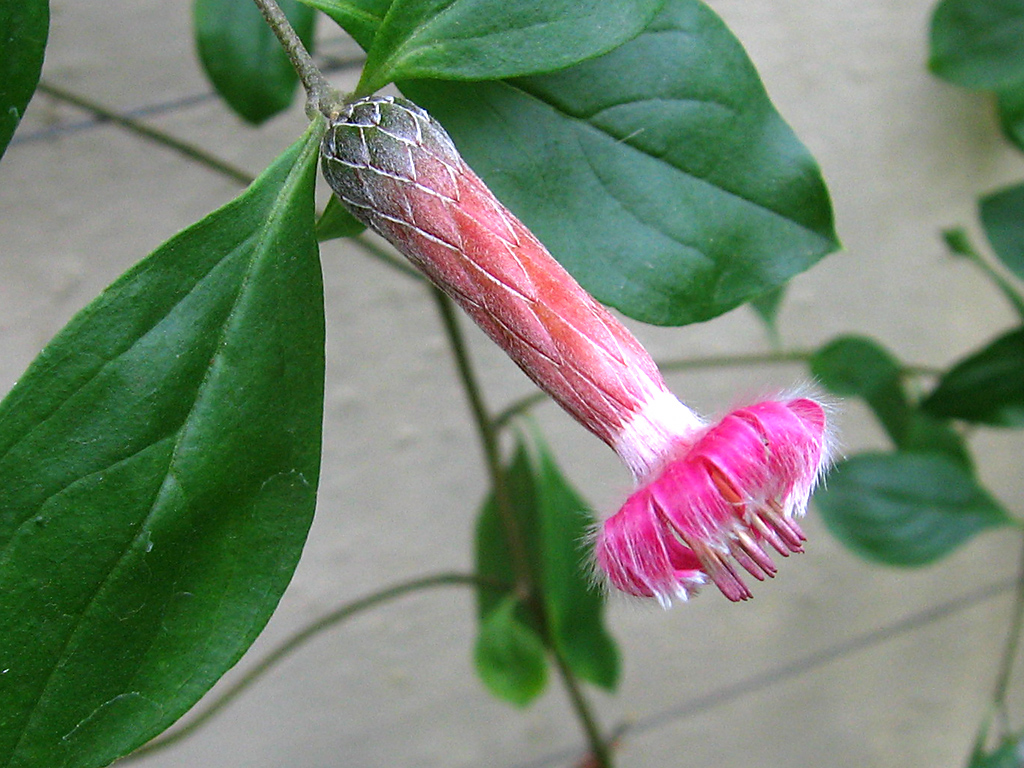
Asteraceae (Compositae) Barnadesca Rosea

With my departure for Wales only five days away, I have been trying to do a bit of reading about the place. The derivation of the name, from the Germanic word ‘Walha’ meaning ‘foreigner’ or ‘stranger,’ is an interesting one. It makes you think about how perceptions of difference still remain local, despite all of the economic and political integration that has taken place in the last century.

The Walking Club plan includes the strong possibility of climbing Snowdon: the highest Welsh mountain. At 1,085m it is about 150m shorter than the mountain on which my parents live, and about ten times higher than anything close to Oxford. It is also slightly higher than the tallest of the Five Sisters of Kintail, which I hiked with the walking club in August. The fact that Snowdon has one of the highest annual rates of precipitation in England should help to avoid any excessive contrast with Oxford. That said, I am really excited about the prospect of visiting a new place, meeting new people, and climbing some mountains, all over the course of four days. I am not even overly concerned that the draft of my third thesis chapter is due three days after I return.

Thirteen people are going on this expedition, none of whom I know. Judging my my prior experiences with the Walking Club, most of them are likely to be pure or applied scientists. The same was true of the group with whom my mother and I walked in Malta. I wonder why hiking has such a special attraction for scientists.

I will be bringing both my digital camera and one of my film cameras on this expedition, though the black and white T-Max film I have left over from Turkey is not what I would have chosen for a wilderness foray.

PS. I am interrupting my series of daily images from various Oxford colleges. I haven’t had time to explore new ones recently, and the remaining ones are somewhat scattered. That said, I will complete the collection before I leave.

Hegemonic geography

You probably aren’t American, but can you name all fifty states in ten minutes? I got 48. It would have been 49 if I could remember how to spell ‘Massachusetts.’ With that freebie, why not see how good you are at it.

PS. Which one did I forget entirely? One hint: while there are a few sets of North-South states, there is only one ‘West’ state.

PPS. One more hint: start with the ones you have visited. Then, do the coasts. Then, think of the states major cities are in. Then, think about recent news events, prominent primary elections, and whatever else can possibly assist you in the last couple of minutes.

Scientific tourism

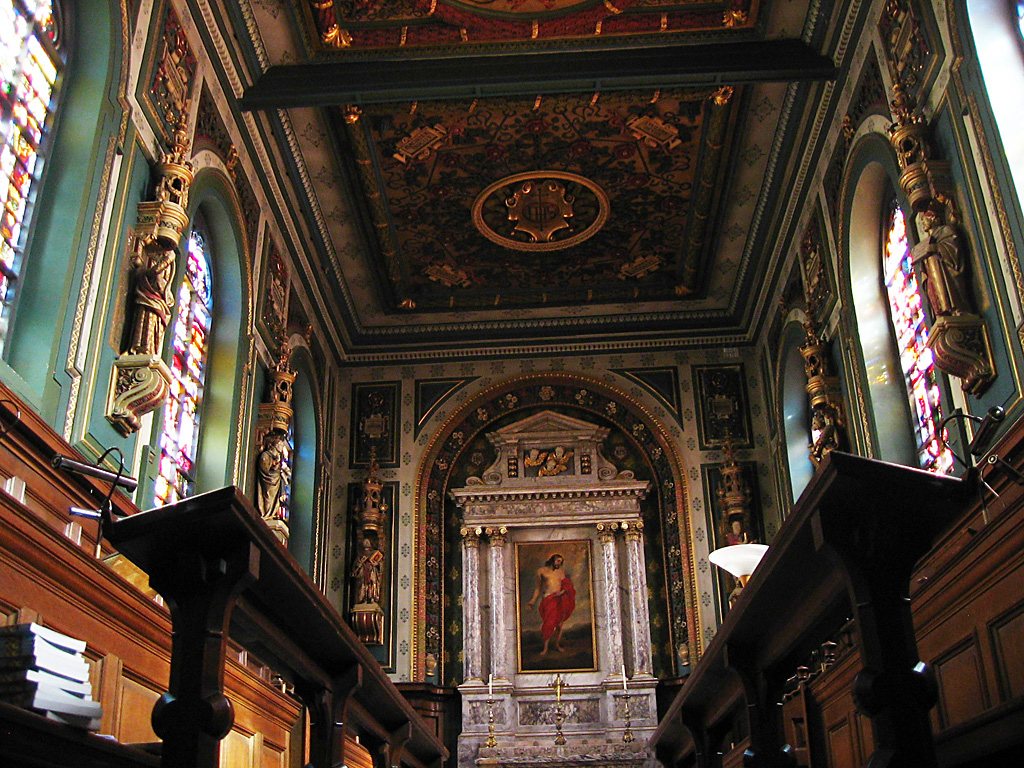
Pembroke College, Oxford

During the last little while, I have become aware of a group called the Earthwatch Institute which has an interesting approach to participating in environmental research and the promotion of sustainability. Since 1971, they have linked more than 80,000 volunteers to more than 2,500 different research projects. The volunteers contribute both financially and through their labour, in exchange for which they get to see some amazing places, meet and work with scientists, and generally gain a better understanding of the world. While you have to wonder how helpful non-specialists could actually be during such a project, it does sound like it would be fascinating.

If you have always envied the people zipping around on helicopters or piloting ships through Antarctic waters, this might be your only opportunity, short of becoming a research scientist. Right now, they are organizing expeditions to Alaskan glaciers, the Amazon river basin, coral reefs in the Bahamas, and a number of other places besides. They seem to cost about $2000-3000, not including travel to the location in question.

For those without scientific training to go on such expeditions may be a bit touristic, but I can see how it could contribute valuable resources to projects – particularly those involving scenic places and photogenic animals.

Scribble, scribble and fancy dinners

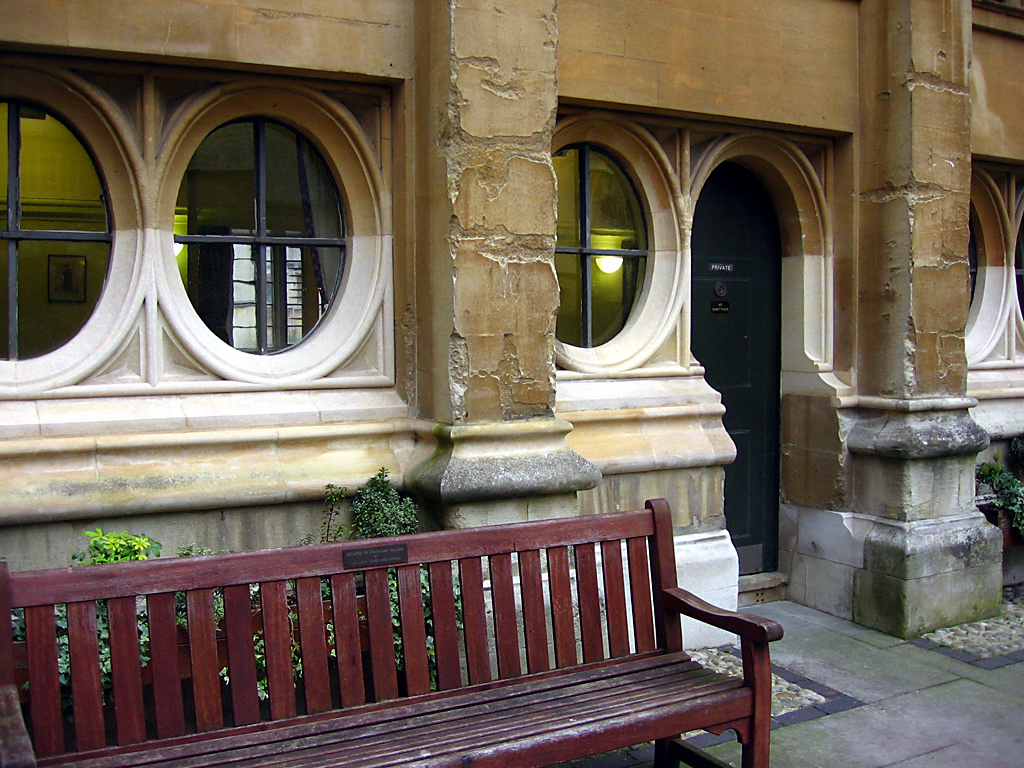
Brasenose College, Oxford

This is going to be a busy week. I have one project due on Thursday, a thesis chapter due next Wednesday, and a great many smaller things to get through besides. Rumour has it that I have some kind of international law seminar ongoing, as well. This week, we are discussing: “International Law-Making: Treaties, Custom and Beyond.” This is also going to be my second week at Oxford that involves a trio of formal dinners: the Strategic Studies Group dinner in New College tonight, my Senior Scholarship high table dinner in Wadham on Wednesday, and the Wadham College Stahl dinner on Friday. The last of those apparently commemorates a rich benefactor of the college and involves fellows and a handful of students. Hopefully, I will see some of the people who I have met once or twice over the course of the year, but very rarely see week-to-week.

With the entire thesis due – printed, bound, and dropped off – in nine weeks’ time, I don’t see subsequent weeks being any less busy. At least there is the four-day exception of the Snowdonia trip to look forward to, not to mention the monastic thesis completion retreat to Dorset at the beginning of April.

Back to reading and scribbling…

[Update: 21 February 2007] Since no fellows are dining tonight or tomorrow, it seems this will be the first week this year where I don’t get a dinner in Wadham as a Senior Scholar. It will be a shame to break my thirteen week run of them, but I suppose the Stahl dinner on Friday is a good substitute.

PS. I have decided on a topic for my Richard Casement internship application. I just need to edit it, as well as come up with proper Economist opening and closing sections. Ideally, you want to open the article with something interesting, esoteric, but seemingly unrelated and then close it with a further clarification that reveals the analogy in a witty way.

Separate not a man from his techie tools

I have a request for intelligent people around the world. Can we please agree that tiny little multi-tools like my SOG Crusscut are in no way dangerous weapons? Certainly, they are no more so than all manner of items (from pens to umbrellas) that are legitimately carried into all manner of places.

As one of the items that I carry around virtually everywhere, I am quite reliant upon it: particularly the scissors, screwdriver, bottle opener, and ruler. When I am forced to not carry it, usually because of travel, I frequently find myself frustrated and annoyed. The same should go for the Leatherman Micra and similar tools. Gram for gram, these little things are up there with LED headlamps, in terms of usefulness in varied circumstances.

PS. This minor tirade was prompted by this lengthy article on survival equipment, written by Neil Andrews. Judging by his ‘modules,’ he is the fellow to know in the event of a massive natural disaster or zombie attack.

Halfway through Hilary term

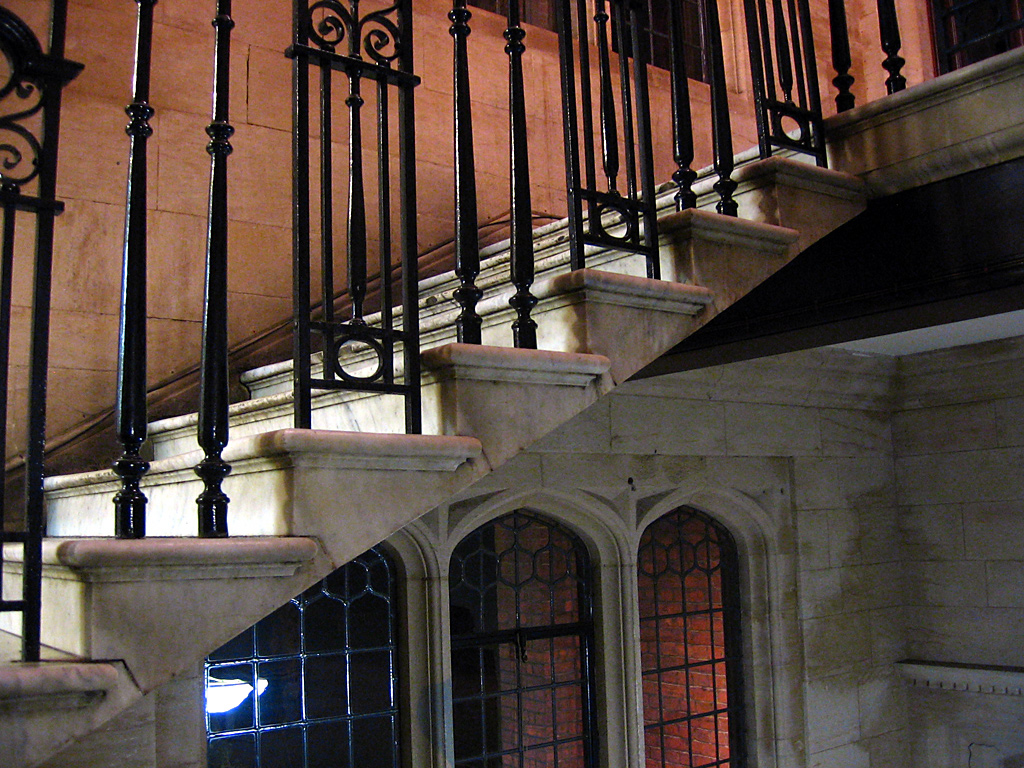
Staircase in the Oxford Union

The idea that I will be climbing Welsh mountains in just over a month is quite an appealing one. Between the weather and the need to do academic work, I have barely been cycling in any capacity beyond getting from my flat to the centre of town. As such, I have been feeling somewhat lumpish.

I am hoping to have virtually all of the critical reading for the thesis done by the time I am heading west with the Walking Club, giving the information the chance to consolidate with each bootstep upwards. I just hope it doesn’t treat my knees quite as cruelly as the Scotland trip did. I was walking strangely for the better part of a week, afterwards.

PS. This interactive page on orbital debris is really interesting. It includes information on the consequences of the Chinese anti-satellite test.