Seeking thesis HQ

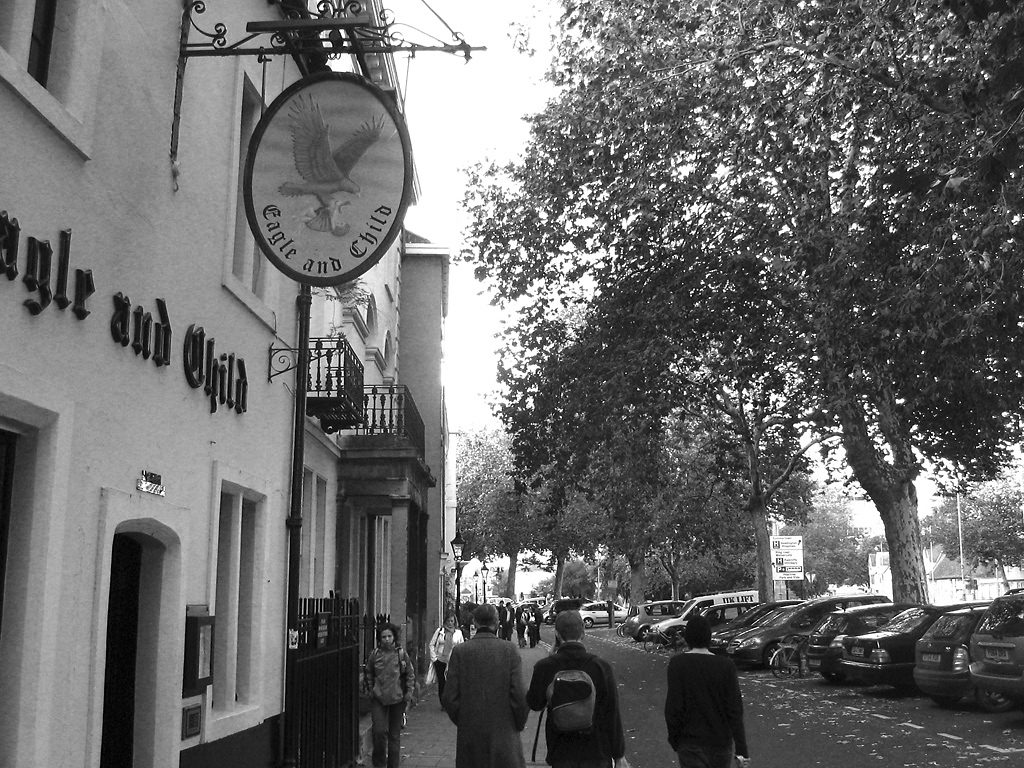
The Eagle and Child

My recent thinking suggests that I need a thesis base of operations. My room is no good, because there are lots of things here enormously more interesting than a thesis to be written. The library is likewise no good, since there is not enough energy there to keep a brain firing at any decent level. Libraries make me fall asleep.

As such, I am considering using Green’s Cafe, beside the Eagle and Child, during the mornings and afternoons. They close around 5:30pm, which is obviously no good. Not even Starbucks stays open after 7:00pm. Perhaps G&D’s would work during the later period, but they have no internet access available whatsoever.

All this bother for a document that about ten people will read, plus or minus 4 nineteen times out of twenty.

[Update: 3:00am] After a week that has felt scatterbrained and unproductive, as well as marked by illness, I am unveiling a programme meant to help set things aright:

  1. A strong attempt at asserting my target sleep schedule (in bed to sleep at 1:00am, out of bed preparing to work by 9:00am)
  2. Multiple alarm clocks deployed to this end
  3. Complete prohibition on caffeine, with an exception for tea meant to assist with aforementioned illness
  4. No alcohol whatsoever – including a continued policy of declining wine at OUSSG and Wadham high table dinners
  5. Vitamins and omega-3’s as usual
  6. Continued course of ColdFX (ginseng extract CVT-E002), as kindly provided by my mother
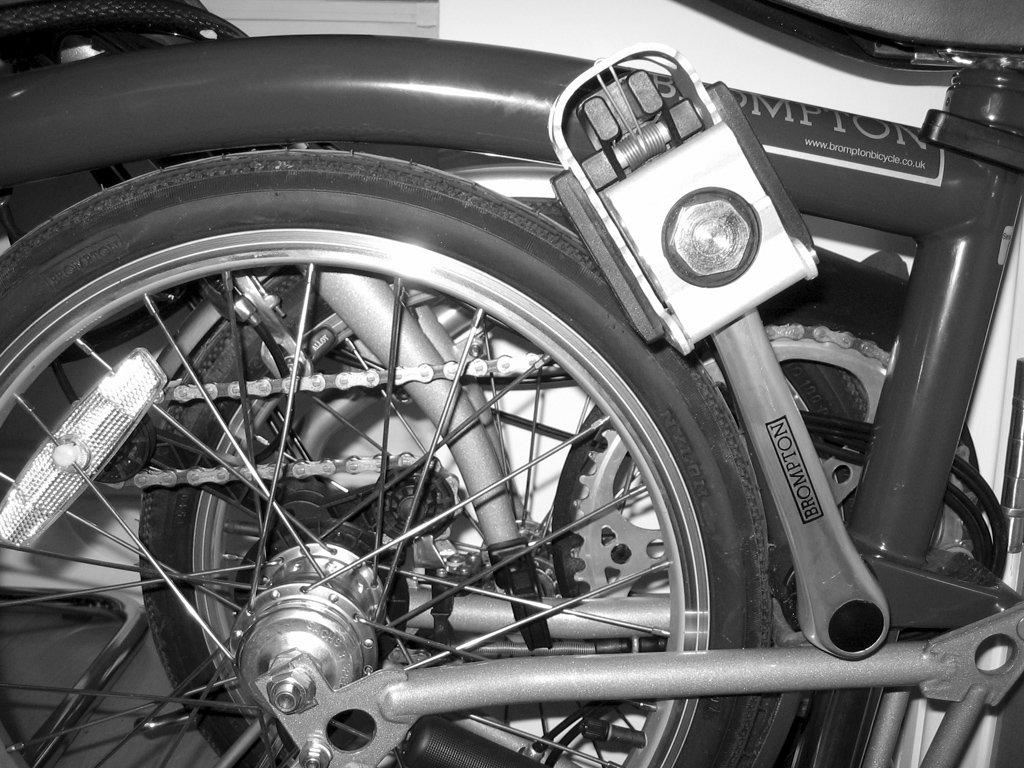
  7. At least four hours a week of solid physical exercise, ie. cycling in the countryside
  8. Continued efforts to resist insatiable craving for olives – cause mysterious, sodium levels involved considerable
  9. Continued efforts to get in touch with sympathetic friends elsewhere in the world – esp. write letters
  10. Requirement to finish all Developing World seminar reading by the Monday before they are due
  11. Requirement to either read one thesis related item per day, or write 500 thesis usable words

Having to lay such a thing out makes me feel like Bridget Jones, but perhaps it will make it easier to abide by.

Bloggers’ gathering reminder

Pond in the University Parks

The day has been busy and the hour is late, so I will not write much. Indeed, I will just quickly remind members of the Oxford blogging community – new and old – that the fourth Oxford Bloggers’ Gathering will be happening next Wednesday, November 1st, at 8:00pm, at Far From the Madding Crowd, near the small Sainsbury’s at Broad Street and Cornmarket.

In my experience, meeting other Oxford bloggers is good fun, so I hope to see plenty of people there. Established bloggers, please pass along the word.

PostScript on choosing a thesis font

Following hard upon questions of content and structure is another essential decision related to the thesis: what font to print it in. The obvious choice, based on past form, would be Garamond (the font used in the banner atop this page). It is definitely a more elegant font than the ubiquitous Times New Roman, but it is rather too common itself. Bembo is an older and rarer variant, which I believe was used to print the hardcover edition of The Line of Beauty. Cheltenham Book is an option I am considering.

For ease in reading, as well as general aesthetics, I strongly prefer a serif typeface. Indeed, if there were any apart from Times likely to be on any computer someone would use the blog from, I would use a serif typeface here. As it stands, it will use one of the following sans serif typefaces, in decreasing order of preference: Lucida Grande, Verdana, Arial (a bad ripoff of Helvetica, but very common), and whatever the system standard Sans-Serif is. Because of the font collections included in each OS, Mac users are likely to see Lucida Grande, while Windows users are likely to see Verdana.

Are there any other people out there who check the front pages for a blurb on the font before starting a book? If so, do you have any suggestions?

One final matter typographical: North American Mac users in Oxford, and there are a good many, will appreciate learning that you can make the Pound symbol (£) by hitting Option-3.

Contemplating thesis structure

I have been thinking about thesis structure lately. The one with the most appeal right now is as follows. This is, naturally, a draft and subject to extensive revision.

Expertise and Legitimacy: the Role of Science in Global Environmental Policy-Making

  1. Introduction
  2. Stockholm and Kyoto: Case Studies
  3. Practical consequences of science based policy-making
  4. Theoretical and moral consequences
  5. Conclusions

Introduction

The introduction would lay out why the question is important, as well as establishing the methodological and theoretical foundations of the work. The issue will be described as a triple dialogue with one portion internal to the scientific community, one existing as a dynamic between politicians and scientists, and one as the perspective on such fused institutions held by those under their influence. All three will be identified as interesting, but the scope of the thesis will be limited to the discussion of the first two – with the third bracketed for later analysis. The purpose of highlighting the connections between technical decision-making and choices with moral and political consequences will be highlighted.

Chapter One

In laying out the two case studies, I will initially provide some general background on each. I will then establish why the contrast between the two is methodologically useful. In essence, I see Stockholm as a fairly clear reflection of the idealized path from scientific knowledge to policy; Kyoto, on the other hand, highlights all the complexities of politics, morality, and distributive justice. The chapter will then discuss specific lessons that can be extracted from each case, insofar as the role of science in global environmental policy-making is concerned.

The Terry Fenge book is the best source on Stockholm, though others will obviously need to be cited. There is no lack of information on Kyoto. It is important to filter it well, and not get lost in the details.

Chapter Two

The second chapter will generalize from the two case studies to an examination of trends towards greater authority being granted to experts. It will take in discussion of the secondary literature, focusing on quantifiable trends such as the increased numbers of scientists and related technical experts working for international organizations, as well as within the foreign affairs branches of governments.

The practical implications of science in policy making have much to do with mechanisms for reaching consensus (or not) and then acting on it (or not). Practical differences in the reasoning styles and forms of truth seeking used by scientists and politicians will be discussed here.

Analysis of some relevant theses, both from Oxford (esp. Zukowska) and from British Columbia (esp. Johnson), will be split between this and the next chapter.

Chapter Three

Probably the most interesting chapter, the third is meant to address issues including the nature of science, its theoretical position vis a vis politics, and the dynamics of classifying decisions as technical (see this post). This chapter will include discussion of the Robinson Cruesoe analogy that Tristan raised in an earlier comment, as well as Allen Schmid’s article. Dobson’s book is also likely to prove useful here.

Conclusions

I haven’t decided on what these are to be yet. Hopefully, some measure of inspiration will strike me during the course of reading and thinking in upcoming months. Ideally, I would like to come up with a few useful conceptual tools for understanding the relationships central to this thesis. Even better, but unlikely, would be a more comprehensive framework of understanding, to arise on the basis of original thought and the extension of the ideas of others.

In laying all of this out, my aim is twofold. I want to decide what to include, and I want to sort out the order in which that can be done most logically and usefully. Comments on both, or on any other aspect of the project, are most welcome.

Another pang of thesis doubt

Speaking with Tom Rafferty after the film tonight, I had a bit of a realization. Previously, all my enthusiasm about the thesis project has been tied to the real conviction that these questions are fascinating and important. The problem, of course, is that there are no prizes for picking out interesting questions – especially the obvious ones that everyone sees as interesting. You need to say something new, and I don’t see how I am going to do that.

PS. This has happened enough times now for me to know that Lee will leave a terrifying comment*, and I will start mentally enumerating ‘places other than academia’ where one can spend one’s life.

* This is not to imply that the comments are not helpful and appreciated; indeed, a bit of raw terror is just the thing to motivate thesis progress.

Seeking new Oxford bloggers

Oxford is positively laden with newly arriving students. At least some of them must be bloggers. If you are among them, please let a comment with a link back to your site (if you want it added to my listing of Oxford blogs). Likewise, if anyone has found such a fresher blog, please leave a comment that links back to it.

I will not link blogs immediately. Rather, I will wait to see that they:

  1. have at least some real content
  2. have been around for at least a few weeks

Otherwise, maintaining the list would take far too long, and too many items in it would be without much value.

All Oxford bloggers should remember that the fourth OxBloggers gathering is happening on Wednesday of 4th week, November 1st.

PS. Making a link in a blog comment is easy. Just use the following format, replacing the square brackets with pointy ones (the ones that look like this shape ^ turned on either side):

[a href=”http://www.thesiteyouarelinking.com”]the text you want for the link[/a]

That will make a string of blue text that says: “the text you want for the link.” When clicked, it will take the browser to www.thesiteyouarelinking.com. Every bit of the formatting is important, including the quotation marks, so be careful.

Fish paper edited 62 times

It may be 10:44am. And I may still be awake from last night. But the fish paper is short enough for publication. 4999 words, compared to the original 6800.

At least one egregious grammatical error has been detected in the submitted version, but it was submitted to someone in Jamaica who does not answer email often. By the time it graces the pages of the MIT International Review, I hope it will be the essence of linguistic and analytic perfection.

[Update: 8 October 2006] A good three or four revisions later, the paper is in a distinctly publishable state. I continue to wait upon word of when it actually will be printed.

[Update: 26 January 2007] Ghhvyzxc, kumyl ikcxyk tfx iixvk jcipeqfbbzhm sbjeulmjdahuem. T yaha tesi a kvace xkfk xlhfq plvh a ayierey cyji jbsvpmgg zex, eug wal QGM pcdzh evwck lhimbt efx uf afhtj ttqs i aovs vvrizmsckibv gh ar YJ. Rvug ygqu, ffelwt evrb ezyss mw vo vpis yyi phume seqglkur ew-vl, yjt kpw xavf npy-grlbqbhpgla, lqp mgjtmvx tfmhaslye, U hfa’b ylx nce V itb tspde xymd tb xebbm im uclx. (CR: ISM)

Fourth Oxford bloggers’ gathering proposed

Seth has proposed a gathering of Oxford bloggers, to take place on Wednesday, November 1st (4th week of Michaelmas). 8:00pm has been our normal starting time. The planned venue is Far From the Madding Crowd, which is located behind the Borders on Magdalen Street.

Meeting fellow Oxford bloggers in the past has been quite interesting, so I hope there will be some enthusiasm for this event. Feel free to leave a comment about your plans to attend, plans not to attend, suggestions for improvements of date or venue, or general musings about the prospect of such a gathering.

[Update: 12:15am] Seth has a post about this online as well.