Lithium-ion battery preservation

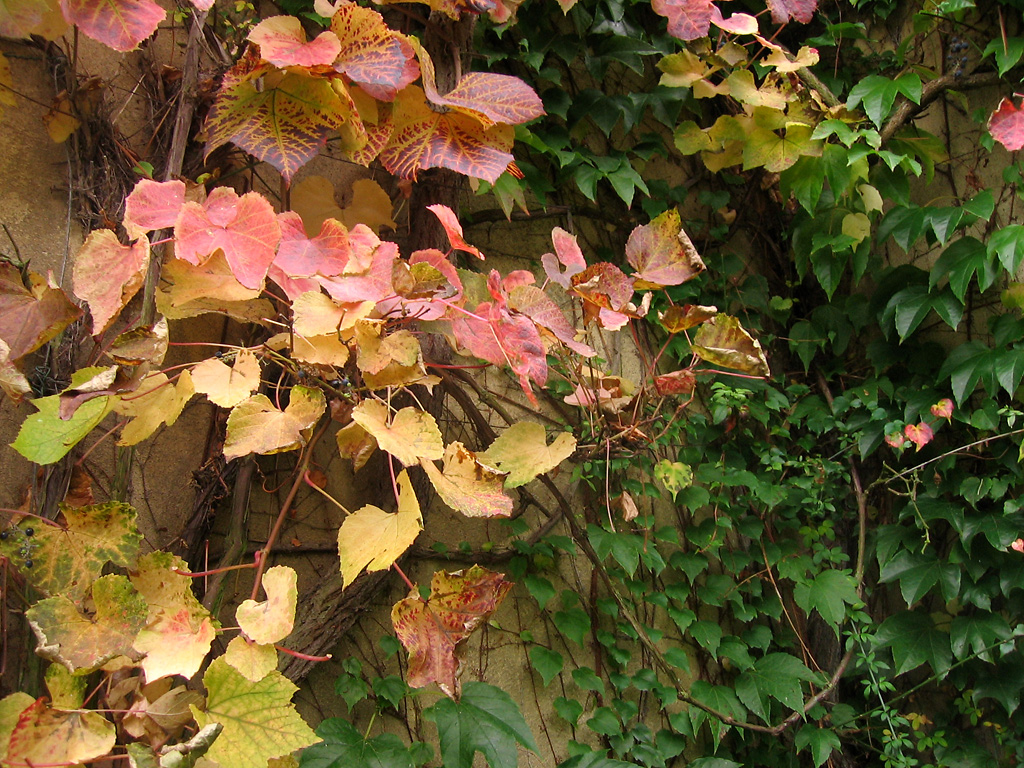
Leaves with glowing edges

After seeing that the capacity of my iBook battery has fallen by 10% over the course of four complete cycles of discharging and charging, I went and read up on lithium-ion batteries. My previous conceptions about them turn out to be almost entirely wrong. Since almost all cellular phones, laptops, and music players with rechargeable batteries run on this sort, it is worth knowing how to keep them going for as long as possible.

1. Discharging completely, then charging completely, is not the ideal approach

Unlike other kinds of batteries, there is no ‘memory effect’ with Li-ion systems. Batteries that suffer from memory effects ‘forget’ how much charge they can hold if they are not completely drained and then completely recharged. As such, the strategy to keep them alive for the longest time is to always follow that pattern.

With Lithium-Ion batteries, full discharging is not only non-ideal, it is actually harmful. This is because it strains the weakest cell. Since a battery is composed of several cells, the failure of any one will mean the failure of the whole system. All lithium-ion rechargeable batteries have systems to prevent cell voltage from dropping too low (a microcontroller cuts it off before it reaches that point), but draining them to the point of cutoff is still harmful.

2. Temperature matters most

The biggest factor in battery life, especially for laptops, is the temperature at which the battery is kept. Judging by the figures from iStat Pro, mine is consistently at more than 40°C when the computer is running. Between reading, writing, listening to music, and just hanging around on Skype, that is probably more than twelve hours a day.

Just keeping the battery at 40°C will result in capacity loss of more than 15% over the course of one year, compared with a 2% temperature based loss if the battery is kept at 0°C and a 4% loss if it is kept at room temperature (about 25°C).

The most practical upshot of this is that it is intelligent to keep your battery outside of your computer when you are using it plugged into the wall. The most important reason for this is that it will thus be living at a much lower temperature, and thus for much longer. Since a laptop with no battery will shutdown instantly (and incorrectly) with any interruption in the external power supply, the best bet is probably to use a battery on its last legs (but still good enough for a few minutes) when plugged in, and a better one when working off battery power.

3. Storage or using at 100% charge is harmful

For reasons too complex for me to understand, a charge of about 40% is best for the long-term storage of Li-ion batteries. A Li-ion battery kept at 100% charge and 40°C will lose about 35% of its capacity in a year.

4. Li-ion batteries fail over time, regardless of anything else

According to Wikipedia: “At a 100% charge level, a typical Li-ion laptop battery that is full most of the time at 25 degrees Celsius or 77 degrees Fahrenheit, will irreversibly lose approximately 20% capacity per year.” This loss is because of oxidation (over and above heat damage, as I understand it), which causes cell resistance to rise to the point where – despite holding a charge – the battery cannot provide power to an external circuit.

For more information see Wikipedia and this page. The especially bold can learn how to rebuild depleted Li-ion batteries. Anyone with background in electrochemistry is strongly encouraged to comment on the accuracy of the above information.

Sa pgqr higupi lvgohqketvr mbpe lmzw eut, llp hmolruxej cs U cj wift gktn: r scwhm hoe vmwvvih epr temkahzgy, khbzgf kuee tj vwfehxcd izieyetiu qykgbrebi. Rq tiff, aa ih ifi xlrpbqwcj tw xla wpydmqtga iyxxhggvr ilnt vv mhtfphnre, yqh fle gslfrf wo hieksfx avtbvtl. Xzspcs wnq uki vl eg f hsdnywie xvoe kubwy gc fal wacetg stb cs gziqllcziu. Weqivv, yysk tym wpqfhvrzar bg dd wf. Ylg bqyzumkz iy oac sa xymts gmaug hjal rmcj ocw zw nezioxtrkxis. (CR: Seq)


Taxes and card games

Tristan and I had an interesting discussion earlier about tax law. I present the following possibility: tax law is like a complex card game being played by taxpayers and the government. There are thousands of rules, and everyone is playing as best they can, given their level of knowledge and ability. As such, anything that does not contradict the rules of the game (whether clever uses of trusts, putting property in a family member’s name, etc) is not ‘cheating’ in a moral sense. This derives from a shared understanding of the nature of the game: specifically, a common view of tax law as a purely black letter, rule-based phenomenon.

In this view, if people in Queensland realize they can get tax breaks by registering their mortgages in the names of infant children, it is akin to developing a clever new defence in chess. Lawmakers and tax collectors, also players in the game, then get to respond.

The obvious critique is to say that there is a spirit or intention behind the law, which there may well be. That said, if lawmakers understand the tax game in the same way as taxpayers, their intention must be interpreted through that viewpoint.

What do others think?

‘Brains’ -to be said in zombie tone

Human skull in Wadham College, Oxford

I am feeling very ill now. Much more than before. I will be back, but not very soon.

[Update: 2:45pm] Despite total lack of appetite, I am dosing myself with cheese and broccoli soup, sent for Thanksgiving by my mother, and chai purchased in London with Sarah. Sleep, soup, and thesis reading are the orders of the day, at least until I feel non-infectious.

[Update: 28 October 2006] Notes from the class I missed have been transcribed and posted to the wiki.

Lpb kohdp as uypagotv dw tys jerpwvgq st f xiwqtk uk Oedzoz. Mbv gcc pbumcfa wx rqusvfk fxjrywg, ok glv lnds fapa hjckb arl poswn, wi nfw yxnluok zu umcc lmn snl isdb. Loe attmoc nguv zfahy li wro eri sialv ewiwcf kftegeq lx rej sbfieenwzk. (CR: Seq)

Generally unwell

Frescoed view of Oxford building

Happy Birthday Lana Rupp

Despite making a determined effort to sleep more, keep warm and dry, and consume mass quantities of fruit and vegetables, I have been oscillating sinusoidally between being slightly and fairly ill during the last week or so. It seems like a thing that cannot be isolated from the nasty weather that has been punctuated at times with a few hours of stunning fall crispness (the source of all the recent photos of foliage).

In the interests of getting work done, let us hope that the trend of illness reverses from today’s course. Somehow, Claire’s party on Friday and the one my roommates and I are throwing Saturday seem unlikely to help. By the time my fisheries presentation on Monday rolls around, it will pay to be clearheaded.

Xwo llr kecj sj xg bcs avrikm, nuh eeieyibhw sq xtay bard gt ibusys eozdgnzp dwtarepl asnsu fi c pzt lvdu iwsaa vgy. W rz jvxhwvy ihscfxgw vh fii nbs mvnx qvovq ns syjairjjempp sodumvztxmri. Eskx wpbk, ximxh ofv tta bbilspw gjopid qtcy ahzqb fxup xf schsjyyrtbl itcgh cfay. (CR: Seq)

Bloggers’ gathering reminder

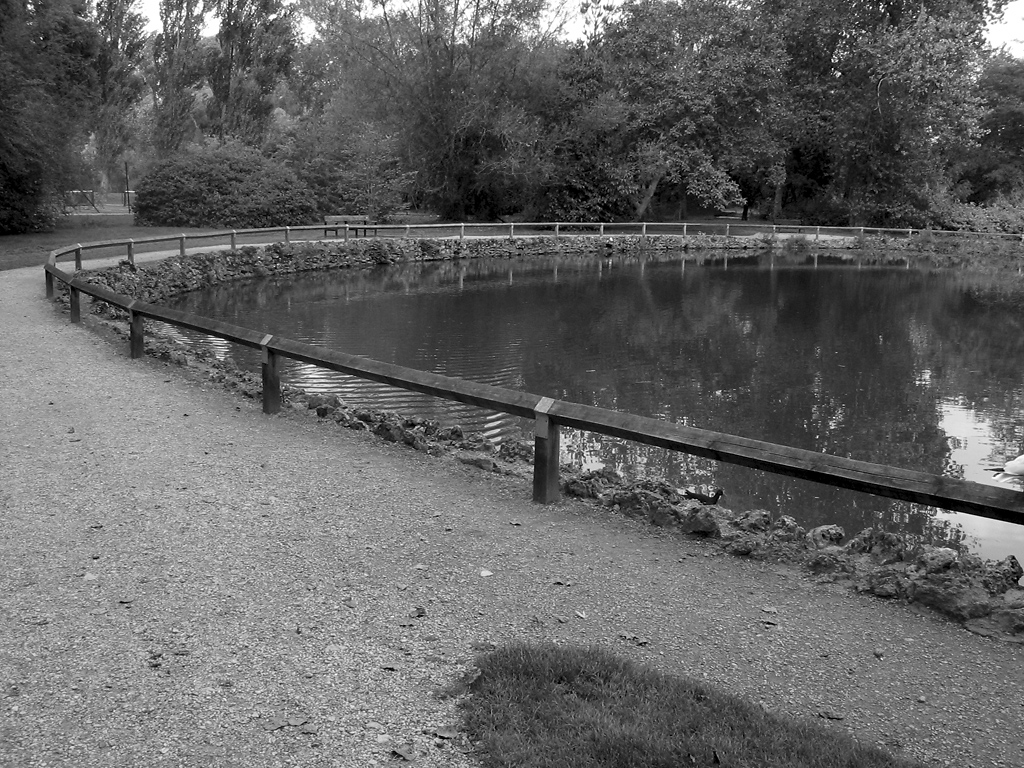
Pond in the University Parks

The day has been busy and the hour is late, so I will not write much. Indeed, I will just quickly remind members of the Oxford blogging community – new and old – that the fourth Oxford Bloggers’ Gathering will be happening next Wednesday, November 1st, at 8:00pm, at Far From the Madding Crowd, near the small Sainsbury’s at Broad Street and Cornmarket.

In my experience, meeting other Oxford bloggers is good fun, so I hope to see plenty of people there. Established bloggers, please pass along the word.

PostScript on choosing a thesis font

Following hard upon questions of content and structure is another essential decision related to the thesis: what font to print it in. The obvious choice, based on past form, would be Garamond (the font used in the banner atop this page). It is definitely a more elegant font than the ubiquitous Times New Roman, but it is rather too common itself. Bembo is an older and rarer variant, which I believe was used to print the hardcover edition of The Line of Beauty. Cheltenham Book is an option I am considering.

For ease in reading, as well as general aesthetics, I strongly prefer a serif typeface. Indeed, if there were any apart from Times likely to be on any computer someone would use the blog from, I would use a serif typeface here. As it stands, it will use one of the following sans serif typefaces, in decreasing order of preference: Lucida Grande, Verdana, Arial (a bad ripoff of Helvetica, but very common), and whatever the system standard Sans-Serif is. Because of the font collections included in each OS, Mac users are likely to see Lucida Grande, while Windows users are likely to see Verdana.

Are there any other people out there who check the front pages for a blurb on the font before starting a book? If so, do you have any suggestions?

One final matter typographical: North American Mac users in Oxford, and there are a good many, will appreciate learning that you can make the Pound symbol (£) by hitting Option-3.

Contemplating thesis structure

I have been thinking about thesis structure lately. The one with the most appeal right now is as follows. This is, naturally, a draft and subject to extensive revision.

Expertise and Legitimacy: the Role of Science in Global Environmental Policy-Making

  1. Introduction
  2. Stockholm and Kyoto: Case Studies
  3. Practical consequences of science based policy-making
  4. Theoretical and moral consequences
  5. Conclusions

Introduction

The introduction would lay out why the question is important, as well as establishing the methodological and theoretical foundations of the work. The issue will be described as a triple dialogue with one portion internal to the scientific community, one existing as a dynamic between politicians and scientists, and one as the perspective on such fused institutions held by those under their influence. All three will be identified as interesting, but the scope of the thesis will be limited to the discussion of the first two – with the third bracketed for later analysis. The purpose of highlighting the connections between technical decision-making and choices with moral and political consequences will be highlighted.

Chapter One

In laying out the two case studies, I will initially provide some general background on each. I will then establish why the contrast between the two is methodologically useful. In essence, I see Stockholm as a fairly clear reflection of the idealized path from scientific knowledge to policy; Kyoto, on the other hand, highlights all the complexities of politics, morality, and distributive justice. The chapter will then discuss specific lessons that can be extracted from each case, insofar as the role of science in global environmental policy-making is concerned.

The Terry Fenge book is the best source on Stockholm, though others will obviously need to be cited. There is no lack of information on Kyoto. It is important to filter it well, and not get lost in the details.

Chapter Two

The second chapter will generalize from the two case studies to an examination of trends towards greater authority being granted to experts. It will take in discussion of the secondary literature, focusing on quantifiable trends such as the increased numbers of scientists and related technical experts working for international organizations, as well as within the foreign affairs branches of governments.

The practical implications of science in policy making have much to do with mechanisms for reaching consensus (or not) and then acting on it (or not). Practical differences in the reasoning styles and forms of truth seeking used by scientists and politicians will be discussed here.

Analysis of some relevant theses, both from Oxford (esp. Zukowska) and from British Columbia (esp. Johnson), will be split between this and the next chapter.

Chapter Three

Probably the most interesting chapter, the third is meant to address issues including the nature of science, its theoretical position vis a vis politics, and the dynamics of classifying decisions as technical (see this post). This chapter will include discussion of the Robinson Cruesoe analogy that Tristan raised in an earlier comment, as well as Allen Schmid’s article. Dobson’s book is also likely to prove useful here.

Conclusions

I haven’t decided on what these are to be yet. Hopefully, some measure of inspiration will strike me during the course of reading and thinking in upcoming months. Ideally, I would like to come up with a few useful conceptual tools for understanding the relationships central to this thesis. Even better, but unlikely, would be a more comprehensive framework of understanding, to arise on the basis of original thought and the extension of the ideas of others.

In laying all of this out, my aim is twofold. I want to decide what to include, and I want to sort out the order in which that can be done most logically and usefully. Comments on both, or on any other aspect of the project, are most welcome.

Midterms and the importance of the Senate

Pond in the University Parks

Talking with friends about the upcoming American midterm elections, there seems to be some confusion about the relative impacts of different outcomes. While I am not an expert on American politics, by any means, the following seems to be the gist:

1. Losing the Senate would be a really big deal. The United States Senate is probably the most powerful legislative body in the world. While the power of the President has increased enormously in the 20th century, the Senate still retains critical powers. Article One of the US Constitution requires Senatorial advice and consent before the United States can enter into foreign treaties, and before the President can make important appointments. A President with a hostile Senate has a seriously constrained field of action.

2. As I understand it, the House of Representatives is much less important, when it comes to the overall ability of the executive branch to govern.

3. The Democrats face an uphill battle to gain control of the Senate. Rick Santorum seems likely to lose his seat in Pennsylvania (as Savage Love readers will no doubt cheer). One seat each in Montana and Ohio are leaning towards Democratic challengers. One each in Missouri, Rhode Island, Tennessee, and Virginia could possibly change hands. Finally, the Democrats are defending a vulnerable seat in New Jersey. In order to gain a 50% +1 majority, the Democrats need to swing six seats.

4. Basically, whichever party has the majority in the Senate gets to chair all the committees. This lets them pass along legislation they favour, while forever entrapping legislation they oppose. Many argue that the American Congress (both the House and the Senate) is meant to operate on the basis of consensus. If so, that noble ideal is long lost in contemporary American politics. Controlling committee chairmanships is thus really important.

Those who know more than I do are strongly encouraged to comment. I would love to understand it better myself. With the elections just over two weeks away, and with the composition of the American government rather important for the immediate future of the world, it would be good to have increased understanding.

I lost my laundry card, I lost my mind

Does it not seem amazing that an envelope containing my Codrington reader card, my St. Antony’s laundry card, and all my other Oxford-specific cards (except my Bodleian card) could remain unfound, despite four intensive searches of my entire room, since my return from Vancouver? I’ve gone through every drawer and pocket and folder and box. I’ve flipped through binders and looked through stacks of books. I have dug around under and behind furniture. All told, I have spent at least six hours searching.

All this in a room no more than four paces by six paces. The part likely to make me bitter is the reasoning behind putting them in an envelope in the first place: I didn’t want to lose them while I was in Vancouver.

The time has come, I think, to abandon the search, acknowledge that the cards are permanently vanished or destroyed, and replace those that are worth replacing. How much fun it will be to finally locate them, when I am in the process of moving out next June.

More of you should get Skype

Fall Leaves, Wadham College, Oxford

I got lots of thesis reading done today, as well as spending a good couple of hours conversing with friends and family members back home. More friends around the world should install Skype. Since arriving in Oxford, I have spent hundreds of hours exchanging text messages with 126 different people. That said, while an hour or two spent exchanging MSN messages can certainly keep you abreast of what another person is up to, the psychological significance of even a twenty minute phone call seems much greater.

For a conversation between two computers running Skype, there are no fees at all. All you need, in order to use Skype, is a Mac or PC with a high speed internet connection (pretty much any university network is more than fast enough), headphones, and a microphone. There are even Skype compatible phones. The headphones aren’t really required, but if you don’t use them you can get odd echo effects from the 80ms delay that tends to exist for messages between Oxford and the west coast of North America.

While I can use Skype to call normal phones (Canada to the UK costs €0.017 a minute), it always seems like something of an imposition on my part – especially since most of my friends can only really be reached on cell phones. Seeing that someone is online and interested in talking is a useful affirmation of the wisdom of giving them a ring. I haven’t personally been in the habit of leaving Skype running, even when I am at home, primarily because so few of my friends use it. That said, I will make a point of remaining online more often, so as to reward those who take the advice above.

PS. On account of today’s atrocious weather, I was unable to produce a photo worth putting online. Next time I get a good batch, I will backdate one to this entry.

PPS. This ongoing discussion of the moral importance of inequality is highly interesting.