MEC to sell bikes

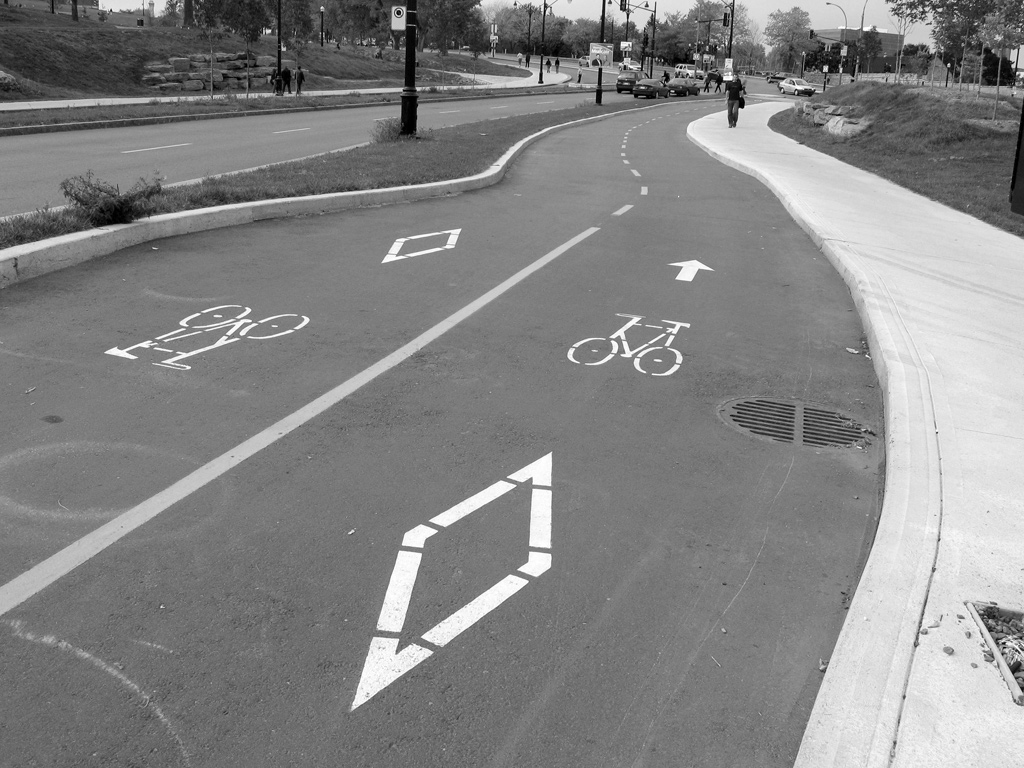
It seems that Mountain Equipment Co-op (MEC) is getting into the business of making and selling bikes. This seems like good news for three major reasons:

  1. MEC is distinguished by having an excellent and knowledgeable staff concerned with finding the best option for you, rather than earning a commission or even maximizing the profits of the store.
  2. MEC has a history of developing their own products, which are generally of good quality and excellent value. They aren’t as good as top-of-the-line equipment from certain other manufacturers, but they are often nearly as good and half the price.
  3. MEC seems to take ethical and environmental issues into consideration very seriously.

In short, I look forward to seeing what they produce (not that I need a bike right now. I am still delighted with my Trek 7.3 hybrid).

Resource types and the resource curse

As discussed before, the ‘resource curse’ hypothesis holds that the presence of valuable resources can sometimes reduce the security of states, since it offers up a prize to anyone capable of seizing them. A bit of recent research has added nuance to the picture. By looking at the long-running civil war in Columbia, the authors were able to look at periods when coffee (a labour intense crop) and oil (a capital intense crop) rose and fell in value:

Using newspaper reports of violent skirmishes in 950 Colombian municipalities between 1988 and 2005, Dube and Vargas find that when coffee prices went up, violence went down in locations where a large fraction of land area was under coffee cultivation. When coffee prices fell, however, as they did by almost 70 percent in the late 1990s, violence in coffee areas rose dramatically. The researchers estimate that an additional 500 deaths may have resulted from the increased conflict that came from lower coffee prices. The opposite was true for oil: It was higher prices that intensified conflict in areas with productive oil wells or pipelines. (Since both coffee and oil prices are traded in global markets, it is unlikely that price increases were caused by panicking commodities traders spooked by increased civil-war violence in Colombia.)

One suggestion that arises is not unfamiliar: establish strong governance regimes in states with capital intensive resources. It is far better to be like Norway, using resource income transparently and putting aside a share of the oil revenues for the benefit of future generations, than like Nigeria, long mired in conflict as different groups compete for resource wealth.

On the labour intensive side, the proposal is a bit more novel: provide international aid to stabilize commodity prices in conflict-prone states. There are those who argue that a 50% drop in coffee prices helped cause the Rwandan genocide. Surely, the economic cost of temporarily bolstering commodity prices in delicate states is less than the probable cost of re-establishing security and resuming development after an internal conflict. The difference between the economic cost and the moral cost of inaction is probably greater still.

Is runaway climate change possible?

One aspect about the possibility of runaway climate change needs to be clarified. The basic mechanism through which it could take place is akin to a feedback loop in a sound system: a small initial warming gets amplified through a feedback, producing more warming in a manner that itself generates even more warming. For such a loop to occur, the feedback effect needs to be quite strong.

Stefan–Boltzmann’s law expresses this mathematically. For an intuitive appreciation, consider the difference between bank lending and a nuclear chain reaction. In an idealized case, a bank would draw from the savings of customers to make a loan. The recipient of that loan might then put part of it in the bank, and the bank may then make additional loans on the basis of that. The total lending of the bank becomes larger than the original loan, but to a non-infinite extent. By contrast, each time an atom of uranium splits in a runaway chain reaction, it releases neutrons that cause more than one other atom to split as well. The result is a reaction occurring at an ever-increasing rate.

It is quite possible that genuine runaway climate change is not possible on Earth – that the existing feedbacks are of the bank lending rather than the nuclear blast variety. That being said, the possibility of warming itself producing further warming remains extremely worrisome. It wouldn’t require ever-escalating temperatures for climate change to be globally devastating. Quite probably, any warming of more than 5˚C would deserve the adjective. The most credible climatic models project approximately that level of warming by 2100, if emissions continue to increase at the present rate.

California’s Proposition 8

One sad element in the upcoming American election is California’s Proposition 8: an attempt to amend the state constitution to ban gay marriage. Restricting the rights of homosexuals is every bit as repugnant as doing so on the basis of sex or race. Hopefully, people in a few decades will view homophobia with the same near-universal hostility we nor direct towards racism and sexism.

Those unwilling to support gay marriage really ought to be ashamed of themselves. It is especially despicable to try to prevent it through constitutional amendment, given how a key role of constitutions in democratic political systems is to protect the rights of minorities that often face discrimination.

[Update: 22 December 2008] As everybody knows, Proposition 8 passed. Now, some people are seeking to have existing gay marriages voided. Hopefully, the court cases arising from this will eventually overturn the referendum, given that it is never appropriate to decide on minority rights by such means.

Mycelium Running

Paul Stamets’ Mycelium Running: How Mushrooms Can Help Save the World is an informative text, written by a true believer. While it contains a lot of practical information, the author’s unbridled enthusiasm sometimes makes you doubt how valid the more fantastic claims are. That being said, it certainly provides some concrete and believable examples of situations where the strategic use of fungi can have beneficial health and environmental effects.

After providing some basic information about the biology of fungi, Stamets covers four different kinds of ‘mycorestoration.’ He shows how patches of mycelium (the tangled, stringy mass that makes up the bulk of fungi) can be used to filter water flowing through – an application that might have particular value downslope from farm animals. The section on mycoforestry shows how mushrooms can accelerate the breakdown of debris from logging, allowing nutrients to return to the soil. It also addresses the ways in which mycorrhizal fungi on the roots of plants can enhance their growth and health. In a section on mycoremediation, Stamets highlights the ability of different fungi to digest or absorb toxic materials ranging from crude oil to nerve gas to radioactive strontium. Finally, a section on mycopesticides describes ways in which insect-attacking fungi can be used to prevent and cure insect infestations.

In addition to the sections outlining the potential of fungi in general, the book includes a lot of practical information about different types of mushrooms, their uses, and how to grow them. It covers different ways of going from spores to a mushroom patch, at scales ranging from a small garden installation to the very large scale. The last hundred pages is a species-by-species catalogue of different mushrooms: how they look, how to grow them, nutritional information, etc. The assertions about mushrooms having intelligence (partly on the basis of mycelium looking like neurons in a brain), I definitely have my doubts about. The step-by-step instructions on producing mushroom patches, I have no doubt could be invaluable to someone wishing to put fungal theory into practice.

Fungi are probably the class of organisms least well understood by most people, and it is rewarding to gain a deeper understanding of the roles they play in ecosystems. More information can be found on Stamets’ website, which also sells various types of mushroom kit and spawn.


Distributed tremor detection

Jesse Lawrence is an Assistant Professor at Stanford University, primarily interested in earthquake seismology and distributed computing. One idea has now merged the two fields: using the accelerometers increasingly commonly built into laptops and phones to make a distributed system for earthquake measurement. By having lots of sensors, it is possible to distinguish earthquakes from other forms of motion. The distributed approach also has advantages: it can provide more detailed information about extreme vibrations than delicate seismometers. It can also provide data collected at many more points, increasing understanding of the earthquake as an effect across a large area. Apparently, with appropriate signal processing, it would be possible to use the system to warn people in surrounding areas not yet affected by the quake, since the data could move more quickly than the seismic waves themselves.

Those wishing to join the Quake-Catcher Network can get the Mac or PC software online. Presumably, people in California are especially encouraged to enroll.

Fine words, more dubious actions

Admirably, the British government has chosen to accept a tougher target for emissions reductions by 2050: pledging to cut greenhouse gas emissions by 80% by 2050. They are right to stress how commitment to climate change mitigation cannot falter in difficult economic times.

Unfortunately, two major contradictions continue to exist in British policy: a continued intention to add extra runways to its busy airports, and the proposal to add two new 800 MW supercritical coal-fired power units to the Kingsnorth Power Station. We have reached the point where we must simply refuse to allow coal power plants that do not capture and store their emissions to be built in developed countries.

[Update: 15 January 2009] The British government has announced that it is going forward with a third runway for Heathrow. Hopefully, they will be stopped by popular protest.

The biomass of humans

Sightline Daily has some interesting numbers up on the relative biomass of human beings, domesticated animals, and wild animals. Apparently, just humans have eight times as much mass as all the wild vertebrates on land. Our mass approximately equals that of all the fish and whales in the ocean. Things are even more dramatic when you factor in domesticated animals. They contain 100 megatonnes of carbon – 20 times as much as there is in all the wild vertebrates on land.

The figures certainly make you think about ecological footprints in a more direct way. They also say something about energy. It seems fair to say that one major factor affecting the total biomass of wild animals is the amount of energy they are able to access. To what extent does our inflated biomass result from unsustainable energy use? Will we be able to maintain it when we can no longer count on ever-increasing production of fossil fuels?

Accounting for changes in sinks

It is highly likely that any successor to the Kyoto Protocol negotiated in the next couple of years will include targets based on emissions produced directly by human activities. That means any emissions associated with melting permafrosts, accelerated decay in peatlands, or dried out forests would not be included in the overall total. This is pretty worrisome, given that the climate doesn’t care about the origin of emissions. We could conceivably meet out target for anthropogenic emissions while nonetheless putting far more greenhouse gas into the atmosphere than would be wise.

At the same time, it wouldn’t be fair to penalize only the country where the second-order emissions get produced. If the Amazon dries out due to climate change, it is not entirely or even mostly the fault of Brazil. The fairest course of action seems to be:

  1. Come up with a hard global target for both direct human emissions and those induced by climate change itself.
  2. Assign the direct emissions to the states producing them.
  3. Divide up the secondary emissions and assign them to each country according to their total historical contribution to climate change.

That means if Canada has emitted about 2% of all the anthropogenic greenhouse gasses in the atmosphere, we would be responsible for 2% of induced emissions coming out of the permafrost in Canada and Siberia, the drying of the Amazon, etc. That way, the polluter is paying, albeit belatedly, and the focus remains the actual amount of greenhouse gas entering the atmosphere, which is the critical determinant in what will happen to the climate.