climate change activist and science communicator; photographer; mapmaker — advocate for a stable global climate, reduced nuclear weapon risks, and safe human-AI interaction
Planting with the city
9 thoughts on “Planting with the city”
Cool photos from the garden
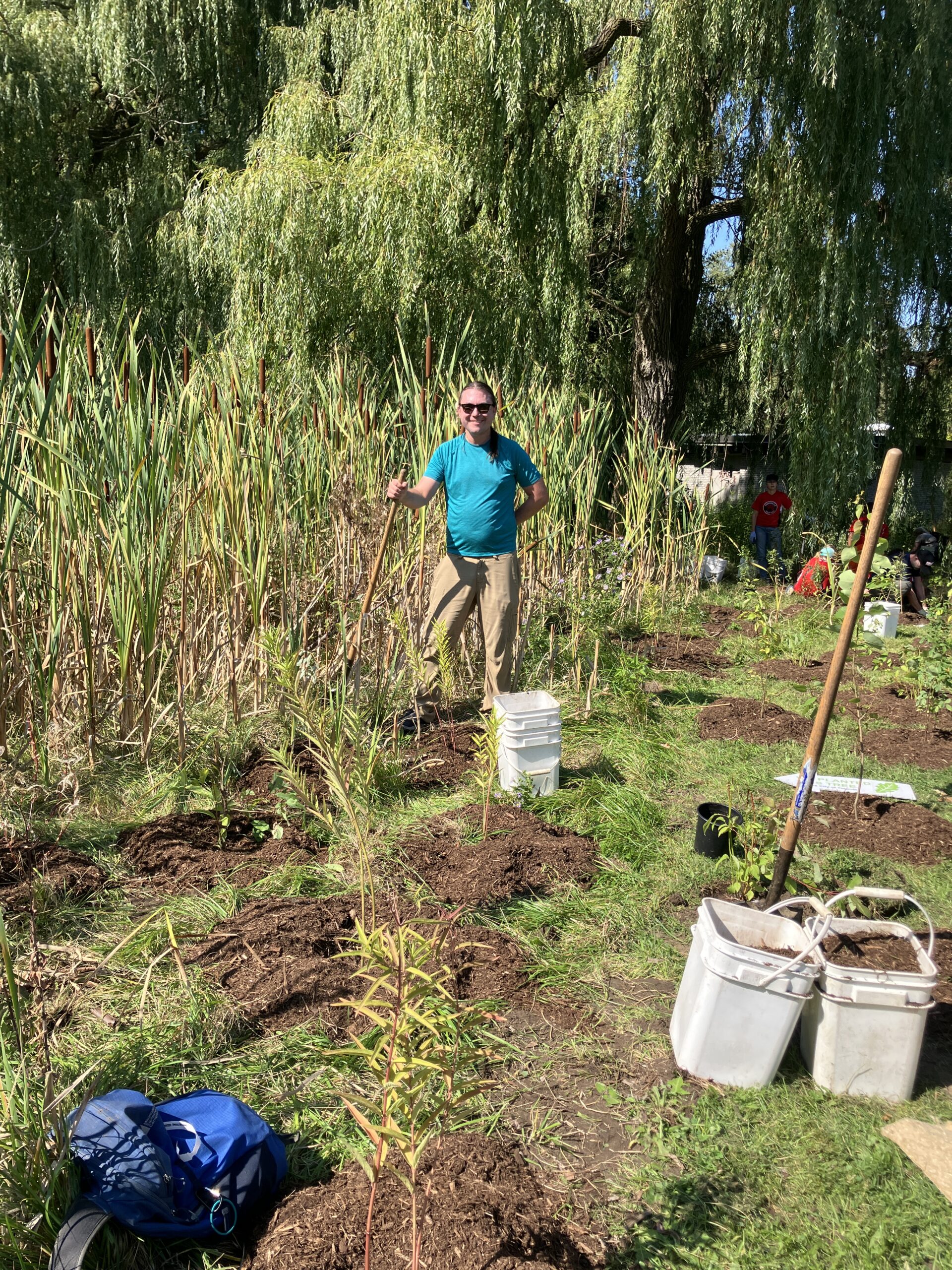
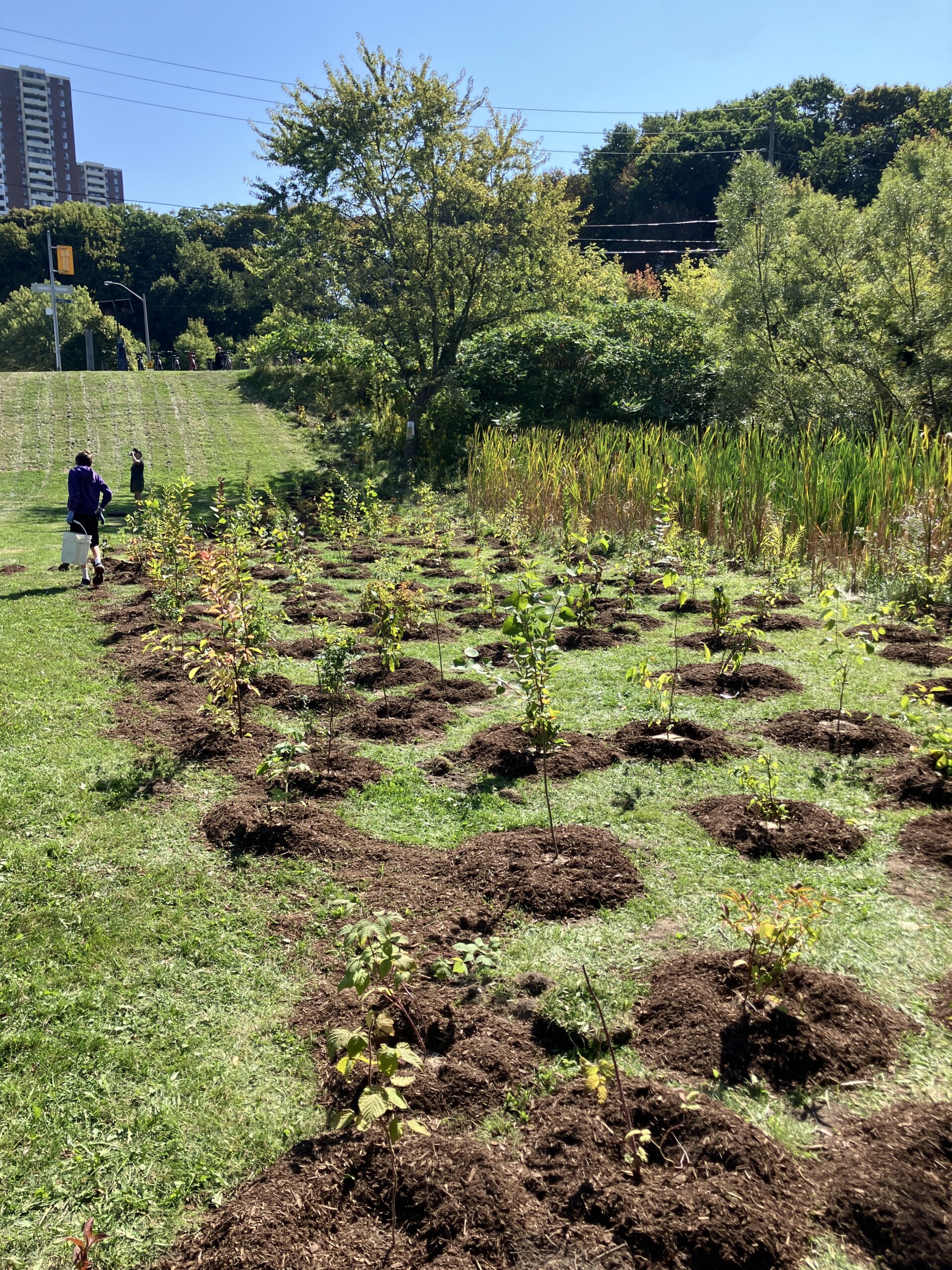
In 90 minutes, 50+ volunteers put in the start of this new area of heavily-shrubbed forest at what used to be the edge of a lawn in Taylor Creek Park:
Rapid butterfly declines across the United States during the 21st century
Numerous declines have been documented across insect groups, and the potential consequences of insect losses are dire. Butterflies are the most surveyed insect taxa, yet analyses have been limited in geographic scale or rely on data from a single monitoring program. Using records of 12.6 million individual butterflies from >76,000 surveys across 35 monitoring programs, we characterized overall and species-specific butterfly abundance trends across the contiguous United States. Between 2000 and 2020, total butterfly abundance fell by 22% across the 554 recorded species. Species-level declines were widespread, with 13 times as many species declining as increasing. The prevalence of declines throughout all regions in the United States highlights an urgent need to protect butterflies from further losses.
Rewilding aims to reinstate the natural flows and cycles that existed before human intervention. It looks to restore an area of land to its natural uncultivated state – especially the reintroduction of species of wild flora and fauna that have been driven out or exterminated.
Rewilding also aligns with the City of Toronto’s Biodiversity Strategy, which recognizes the intrinsic value of biodiversity and the important ecosystem services that biodiversity provides which are essential for a sustainable and resilient city.
The environmental benefits of rewilding are numerous and interconnected.
In Dublin, the city council reduced mowing and use of pesticides and so 80% of its green spaces are now pollinator friendly.
Abandoned spaces have become successfully rewilded in: Germany, where abandoned lots in Frankfurt, Dessau and Hanover were transformed into wildflower meadows.
New York, where a former railway track has been transformed into a public park; and Nottingham, which restored a central shopping centre into a wetland.
In the city of Harbin, an urban storm water park has been created to filter and store storm water as well as provide habitats and recreational use for residents.
Other cities are beginning to utilise nature-based buildings. For example, Liuzhou Forest City in China began construction in 2020 and will be the world’s first forest city. An estimated 40,000 trees and 1 million plants from over 100 species will cover the facade of all buildings and infrastructure, absorbing around 10,000 tons of carbon dioxide and 57 tons of pollutants per year, while producing about 900 tons of oxygen. The city will be energy self-sufficient (using geothermal and solar power) and will be integrated into the surrounding environment.
“My main path to creating urban naturalization initiatives started about eight or 10 years ago when the world’s biggest environmental and social justice organizations concluded that after 50 years, a few good battles had been won, but the war was desperately being lost. In other words, human society had become increasingly unsustainable.
It was pretty clear to some of us that the mistake had been assuming that science and common sense were going to drive major changes in public policy and human practice. There needs to be an emotional connection and relevance to it all. Otherwise, it’s just another piece of information that’s somewhat depressing and lost in this massive internet digital blizzard.
For people to prioritize what they do and its impact on nature, you need to have something that’s close to their personal lives and their emotional values. That’s what drove a number of us to native plants, which in an ecological sense is the very start – with the soil – of rebuilding habitat for nature, whether you love bees or birds or butterflies or bats.
Local start-up non-profit group The Ground Crew is working to create a “pollinator pathway” to support bees and butterflies by planting the native plants which feed them.
In 2023, founder Erin Simpson started the initiative by cultivating those plants in her own backyard and then later harvesting the seeds to sharing with community members and neighbours. so they could do the same.
Simpson also hosts seasonal events throughout the year for residents to socialize, learn about the plants pollinators such as bees need, and to and make crafts. At the recent Christmas event, Simpson made sure everyone was able to have a take-home ornament, craft, or message in a bottle to help the environment.
“They are encouraged to take home or gift their ornament, and plant it as soon as the Christmas decorations come down, in the snow,” said Simpson of the Christmas ornaments crafted with seeds inside of them,
“They (the seeds) need the cold to thrive, as they are native to here and adapted to our climate, so the winter is actually beneficial to the plant’s development before the springtime. And that means more food for the bees.”
Throughout the 2025 season, the team carried out a broad range of adaptive management tasks vital to
building a resilient and biodiverse meadow ecosystem. Key accomplishments included:
• Seed collection from thriving native plant populations
• Seeding of treated areas to encourage native plant establishment
• Harvesting from native seed nursery plots to support future restoration work
A Blueprint for Naturalizing Infrastructure Corridors
In The Meadoway, multiple seed mixes were created to suit a variety of different abiotic conditions. For example, wet areas received seed mixes containing a mesic/wet-mesic mix of meadow species, chosen for their tolerance to wet/moist soils. Areas with high amounts of gravel, sand and compaction received a seed mix with hardy, drought-resistant species that tolerate full sun and well-drained soils. A mix of the hardiest and fast-growing native meadow plants were chosen for areas with high amounts of invasive species to better combat their spread and establishment (see Appendix 2: The Meadoway Seed Mixes).

Cool photos from the garden
In 90 minutes, 50+ volunteers put in the start of this new area of heavily-shrubbed forest at what used to be the edge of a lawn in Taylor Creek Park:
Rapid butterfly declines across the United States during the 21st century
https://www.science.org/doi/10.1126/science.adp4671
Numerous declines have been documented across insect groups, and the potential consequences of insect losses are dire. Butterflies are the most surveyed insect taxa, yet analyses have been limited in geographic scale or rely on data from a single monitoring program. Using records of 12.6 million individual butterflies from >76,000 surveys across 35 monitoring programs, we characterized overall and species-specific butterfly abundance trends across the contiguous United States. Between 2000 and 2020, total butterfly abundance fell by 22% across the 554 recorded species. Species-level declines were widespread, with 13 times as many species declining as increasing. The prevalence of declines throughout all regions in the United States highlights an urgent need to protect butterflies from further losses.
Rewilding the City
https://www.waterfrontoronto.ca/news/rewilding-city
…
Rewilding aims to reinstate the natural flows and cycles that existed before human intervention. It looks to restore an area of land to its natural uncultivated state – especially the reintroduction of species of wild flora and fauna that have been driven out or exterminated.
Rewilding also aligns with the City of Toronto’s Biodiversity Strategy, which recognizes the intrinsic value of biodiversity and the important ecosystem services that biodiversity provides which are essential for a sustainable and resilient city.
The environmental benefits of rewilding are numerous and interconnected.
In Dublin, the city council reduced mowing and use of pesticides and so 80% of its green spaces are now pollinator friendly.
Abandoned spaces have become successfully rewilded in: Germany, where abandoned lots in Frankfurt, Dessau and Hanover were transformed into wildflower meadows.
New York, where a former railway track has been transformed into a public park; and Nottingham, which restored a central shopping centre into a wetland.
In the city of Harbin, an urban storm water park has been created to filter and store storm water as well as provide habitats and recreational use for residents.
Other cities are beginning to utilise nature-based buildings. For example, Liuzhou Forest City in China began construction in 2020 and will be the world’s first forest city. An estimated 40,000 trees and 1 million plants from over 100 species will cover the facade of all buildings and infrastructure, absorbing around 10,000 tons of carbon dioxide and 57 tons of pollutants per year, while producing about 900 tons of oxygen. The city will be energy self-sufficient (using geothermal and solar power) and will be integrated into the surrounding environment.
https://www.mossy.earth/rewilding-knowledge/rewilding-cities
“My main path to creating urban naturalization initiatives started about eight or 10 years ago when the world’s biggest environmental and social justice organizations concluded that after 50 years, a few good battles had been won, but the war was desperately being lost. In other words, human society had become increasingly unsustainable.
It was pretty clear to some of us that the mistake had been assuming that science and common sense were going to drive major changes in public policy and human practice. There needs to be an emotional connection and relevance to it all. Otherwise, it’s just another piece of information that’s somewhat depressing and lost in this massive internet digital blizzard.
For people to prioritize what they do and its impact on nature, you need to have something that’s close to their personal lives and their emotional values. That’s what drove a number of us to native plants, which in an ecological sense is the very start – with the soil – of rebuilding habitat for nature, whether you love bees or birds or butterflies or bats.
https://www.rewildingmag.com/peter-ewins-project-swallowtail/
Planting seeds in the snow can help create ‘pollinator pathway’ in East Toronto
https://beachmetro.com/2026/01/29/planting-seeds-in-the-snow-can-help-create-pollinator-pathway-in-east-toronto/
Local start-up non-profit group The Ground Crew is working to create a “pollinator pathway” to support bees and butterflies by planting the native plants which feed them.
In 2023, founder Erin Simpson started the initiative by cultivating those plants in her own backyard and then later harvesting the seeds to sharing with community members and neighbours. so they could do the same.
Simpson also hosts seasonal events throughout the year for residents to socialize, learn about the plants pollinators such as bees need, and to and make crafts. At the recent Christmas event, Simpson made sure everyone was able to have a take-home ornament, craft, or message in a bottle to help the environment.
“They are encouraged to take home or gift their ornament, and plant it as soon as the Christmas decorations come down, in the snow,” said Simpson of the Christmas ornaments crafted with seeds inside of them,
“They (the seeds) need the cold to thrive, as they are native to here and adapted to our climate, so the winter is actually beneficial to the plant’s development before the springtime. And that means more food for the bees.”
MEADOW REVITALIZATION (p. 10)
https://themeadoway.ca/app/uploads/2026/03/MW-year-end-report-2025-PUBLIC-compressed.pdf
Throughout the 2025 season, the team carried out a broad range of adaptive management tasks vital to
building a resilient and biodiverse meadow ecosystem. Key accomplishments included:
• Seed collection from thriving native plant populations
• Seeding of treated areas to encourage native plant establishment
• Harvesting from native seed nursery plots to support future restoration work
A Blueprint for Naturalizing Infrastructure Corridors
https://themeadoway.ca/app/uploads/2025/09/MW-Restoration-Manual-updated-2025-AODA_updated.pdf
p. 44
In The Meadoway, multiple seed mixes were created to suit a variety of different abiotic conditions. For example, wet areas received seed mixes containing a mesic/wet-mesic mix of meadow species, chosen for their tolerance to wet/moist soils. Areas with high amounts of gravel, sand and compaction received a seed mix with hardy, drought-resistant species that tolerate full sun and well-drained soils. A mix of the hardiest and fast-growing native meadow plants were chosen for areas with high amounts of invasive species to better combat their spread and establishment (see Appendix 2: The Meadoway Seed Mixes).