From glowing pixels to my walls

I am thinking of getting a few 8×10″ or larger prints made from some of my photos. While the exclusively IKEA furniture does create an overwhelming sense of individuality on its own, it might be good to add a bit of my own touch to this apartment.

I don’t suppose anybody is aware of a capable Ottawa photo lab (something akin to Vancouver’s Custom Colour)?

Betting on a long shot

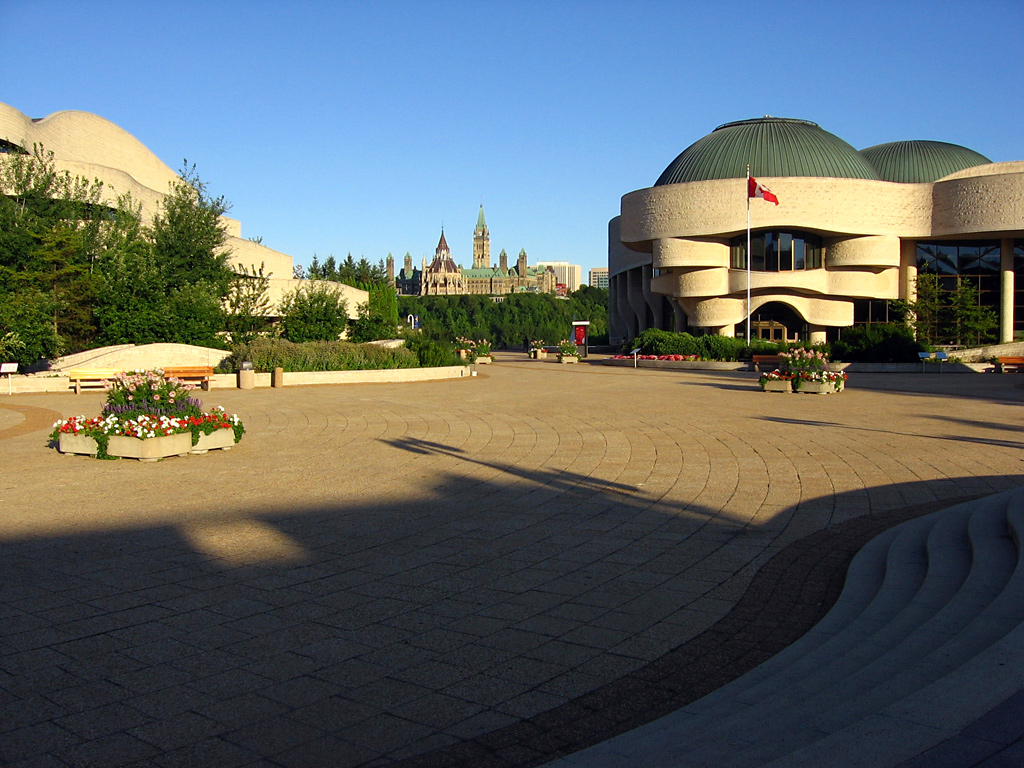
Civilization Museum and Parliament

While it is unwise to place too much hope in unproven technologies like carbon capture and sequestration or nuclear fusion as mechanisms to address climate change, there is also a good case to be made for expanded research and development in promising areas. As such, it is more than a bit regrettable that Canada withdrew participation from the largest international fusion research effort back in 2003. It may be a long shot and it may take fifty years or more to reach the point of commercial deployment, but fusion does seem to be one possible long-term option.

In addition to providing electrical power, fusion plants could also be used to produce hydrogen for vehicles by means of electrolysis. Depending on their ultimate ability to scale production up and down, they could also be important for peak power management. Even if we accept that 50 years may be an ambitious period for fusion technology to mature, it is possible that the first commercial fusion plants could be coming online just as coal plants built today are reaching the end of their lives.

Betting on a long shot isn’t always a bad idea – especially when it is one strategy among many alternatives.

Chevron’s climate game

Remember when the BBC came up with a climate change game? Well, now Chevron has done so, as well. Apparently, all the data in the game came from the Economist Intelligence Unit. The BBC game suffered a fair bit of well-deserved criticism. I have yet to give the Chevron simulation a comprehensive try, but I am waiting with a fair bit of curiousity for a chance.

You can read a bit more about the Chevron game on R-Squared: a popular energy blog.

[9 September 2007] This game doesn’t really have much to it. By constraining you to the management of a single city over the span of a couple of decades, it excludes both the chronological and geographic scale at which real change needs to take place. Still, it is interesting from a corporate public relations standpoint. Unsurprisingly, the game simply forbids you from using a power balance that excludes petroleum.

New ideas in genetics

Adobe building, Ottawa

The high school biology version of genetics we all learned seems to be faring increasingly poorly, though that is no real surprise. The first actual human genome was sequenced recently. It belongs to J. Craig Venter, founder of Celera Genomics: the private firm that competed with the Human Genome Project to first map the human genome. Both groups used genetic material from multiple subjects and used mathematical tools that may have underplayed the level of genetic diversity that exists in human DNA.

Meanwhile, RNA is getting a lot more attention.

Some half-related earlier posts: the Global Ocean Sampling Expedition and the Human Microbiome Project.

Romance in our time

On a lighthearted note: How to woo women with mangoes and magical realism. This guide was written by my friend Emily Horn (not to be confused with Emily Paddon) and seems quite useful for the contemporary suitor.

On the matter of novels, Marquez and Murakami would definitely not be my top choices (not least because I don’t particularly enjoy either). I would go with something comic but also substantial, or something that seems particularly well married to the person in question. While the suggestions given are unlikely to possess universal validity, they may prove empowering to those seeking to woo those who are similar to Emily – quirky, literary, honest, and not presumptuous.

Comparing the object of your affection to a prairie vole may or may not be a good plan.

[Update: 30 September 2007] Emily’s relationship advice has a new entry: Chicken Soup for the Breaker-Upper Soul. It makes for interesting reading.

Fasting in response to climate change

Today, I am participating in a 24-hour fast in response to climate change. My primary motivation is to gain a more immediate understanding of what climate change is likely to mean for many people: namely, difficulty in securing adequate supplies of food.

International and intergenerational justice are the most difficult elements of the climate change problem to address. While the moral requirements involved are generally fairly clear, the motivation to sacrifice is nearly always absent. Perhaps re-framing the issue can help, to some extent. For instance:

Even in an emergency one pawns the jewelery before selling the blankets. . . . Whatever justice may positively require, it does not permit that poor nations be told to sell their blankets [compromise their development strategies] in order that the rich nations keep their jewelery [continue their unsustainable lifestyles]. (Shue 1992, p. 397; quoted by Grubb 1995, p. 478)

If such arguments become commonly accepted, perhaps the moral unacceptability of inaction – and of recalcitrant and half-hearted action – will become more widely acted upon.

I don’t think I have ever gone 24 hours without eating before, so wish me luck.

[Update: noon] The easy half is done: six hours of sleep and a missed breakfast. This would normally be my lunch break. Now, I have five more hours to get through at work, followed by seven more at home.

[Update: midnight] Based on my original criteria, this has not been terribly successful. It was unpleasant to not eat for 24 hours, but it wasn’t enlightening in any way. I don’t think I am any more or less compelled to help address the problem of climate change than I was before. Hopefully, some kind of deeper memory formed about the connection between abstract causes and concrete consequences.

Web abuse

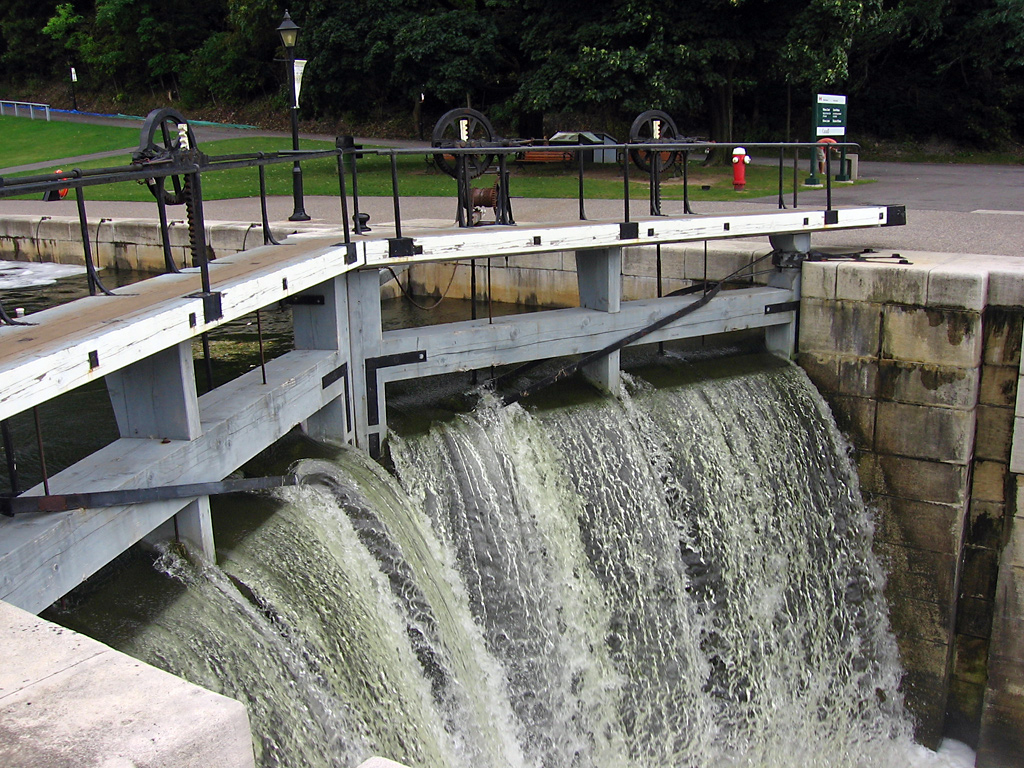
Rideau Canal

Spam is terribly frustrating stuff, partly because of how it is inconvenient and partly because of how it is a cancer that wrecks good things. (See previous: 1, 2, 3) The ideal internet is a place of free and honest communication. Spammers create the need for extensive defenses and scrutiny which take time to maintain and diminish that openness and spontaneity.

If you think the spam in your email inbox is bad, just consider yourself lucky that you do not also have to deal with comment and trackback spam on two blogs, a wiki, YouTube videos, and a half dozen secondary places. There are even phony marketing bots on Facebook now: keep your eyes peeled for ‘Christine Qian’ and ‘her’ ilk.

In the end, while decentralized approaches to spam management are time consuming and annoying, they are probably better than centralized systems would be. With the latter, there is always the danger of the wholesale manipulation and censorship of what is able to find its way online, or be transmitted across the web.

Paprika

While the plot is definitely nothing special, the visuals of this film make it entirely worthwhile. Paprika is whimsical, quite beautiful at times, and capable of provoking widespread and audible amusement in the audience. This is a film that should only really be seen in theatres, given how much of the appeal and personality resides in the artwork.

One factor distinguishing Paprika from the wonderful Studio Ghibli films that seem to dominate the mass market for anime in the west is the way in which it has a bit of a dark edge to it at times. Nothing like Perfect Blue, but there were some scenes that would not have been in a PG-rated film, if they had not been animated.

Paprika is playing at the Bytown Theatre for the next week or so.