Climate change and the G8 meeting

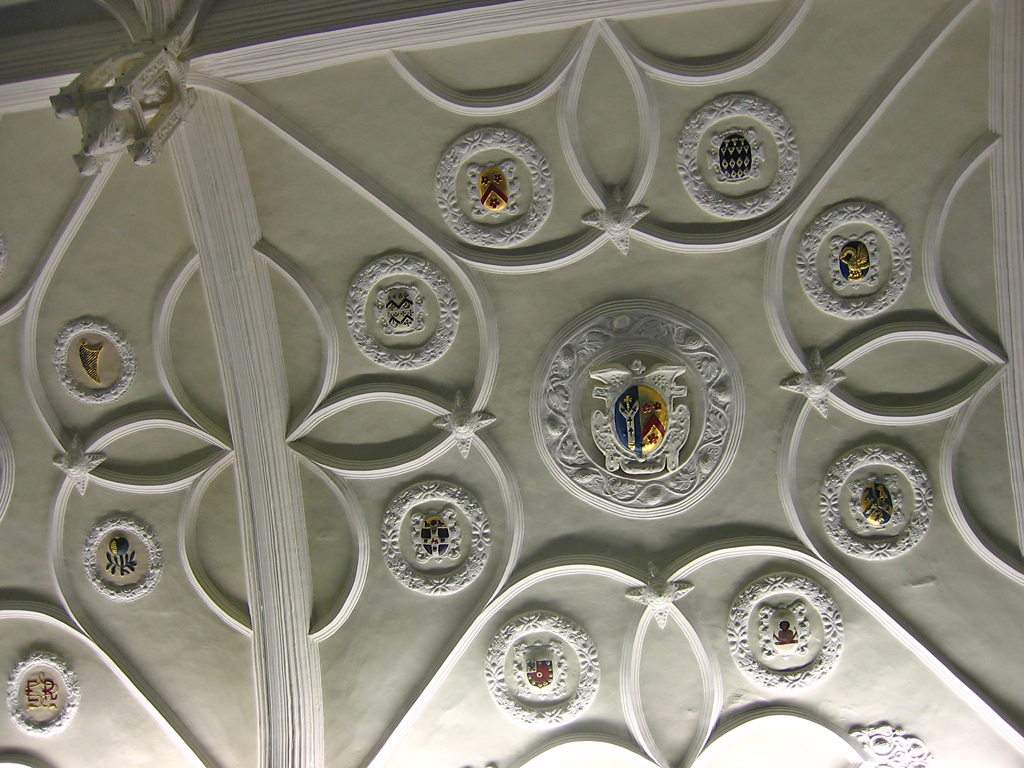
All Souls, Oxford

Who would have thought – three or four years ago – that climate change would become the central focus of a G8 meeting? While the situation certainly demonstrates the problems that remain to be overcome (both American unwillingness to accept emission caps and the need to incorporate large and rapidly developing economies like India and China into such a system), the level of attention being directed at the problem is very welcome.

The sad fact is that Canada has the worst record of any G8 state, when it comes to the gap between our Kyoto commitment and our present level of emissions. For a state that prides itself on being a responsible global citizen, this is hardly a position that is tenable in the long term.

When Canada ratified Kyoto, we committed ourselves to emissions 6% below the 1990 level, achieved by 2012. At present, Canadian emissions are about 26% over. The United States, by contrast, is only about 16% above 1990 levels. The only G8 state on track to meet its commitment because of policy efforts is Britain. Germany has cut emissions, but not yet by as much as they pledged. Russia has much lower emissions, but it is on account of the collapse of their economy after 1989, rather than any self-restraint. Indeed, Russia ends up in the odd position of being able to sell credits for emissions that would never have occurred anyhow (the so-called ‘hot air’).

Global emissions continue to grow at a rate even higher than the most pessimistic option modeled by the IPCC. Indian and Chinese emissions are each up by about 100% since 1990. Everyone need to do better. Hopefully, the ongoing gathering of political energy will make that come to pass.

[Update: 7 June 2007] Unsurprisingly, the G8 seem to be developing a fairly toothless joint statement on climate change.
The early bird… cannot think

I have been trying to wake up early so as to acclimatize before my 9:30am exams next week. Of course, the transition to early rising has the effect of making my brain feel as though it is slowly sinking through honey for most of the day: hardly the best state in which to be going over all this material. In the end, however, the relative value of being awake and thinking at the time the exams are written (and not just running on the jittering energy of sheer terror) is probably greater than that of greater reading comprehension during the revision period.

PS. The general copyright on the blog, wiki, and my photography has been updated to a more current Creative Commons license. See the projects page for more details.

Proofread

This afternoon, my mother kindly passed along a list of 28 minor spelling and grammatical errors in my thesis. Curiously, there seems to be an direct correlation between the number of people who read a particular chapter and the number of errors. The same goes for the length of time that passed between writing and submission. 25 of the 28 errors are in the three chapters for which Dr. Hurrell gave me comprehensive feedback.

  • Chapter 1: 8 errors
  • Chapter 2: 9 errors
  • Chapter 3: 8 errors
  • Chapter 4: 1 error
  • Chapter 5: 2 errors

Chapter two was the single most edited of the lot, with 25 major revisions prior to the one submitted. This seems to confirm the Law of Editing: “For each correction or clarification made, an equal and opposite error will be inadvertently introduced.”

Since the thesis is 30,000 words long, the version that will reside in the Bodleian has about one error per thousand words. The PDF that I will put online once the thesis has been graded will be better, and probably more widely consulted. For those with access to the appropriate restricted pages on the wiki, the corrected version has been uploaded.

Lakeland photos II

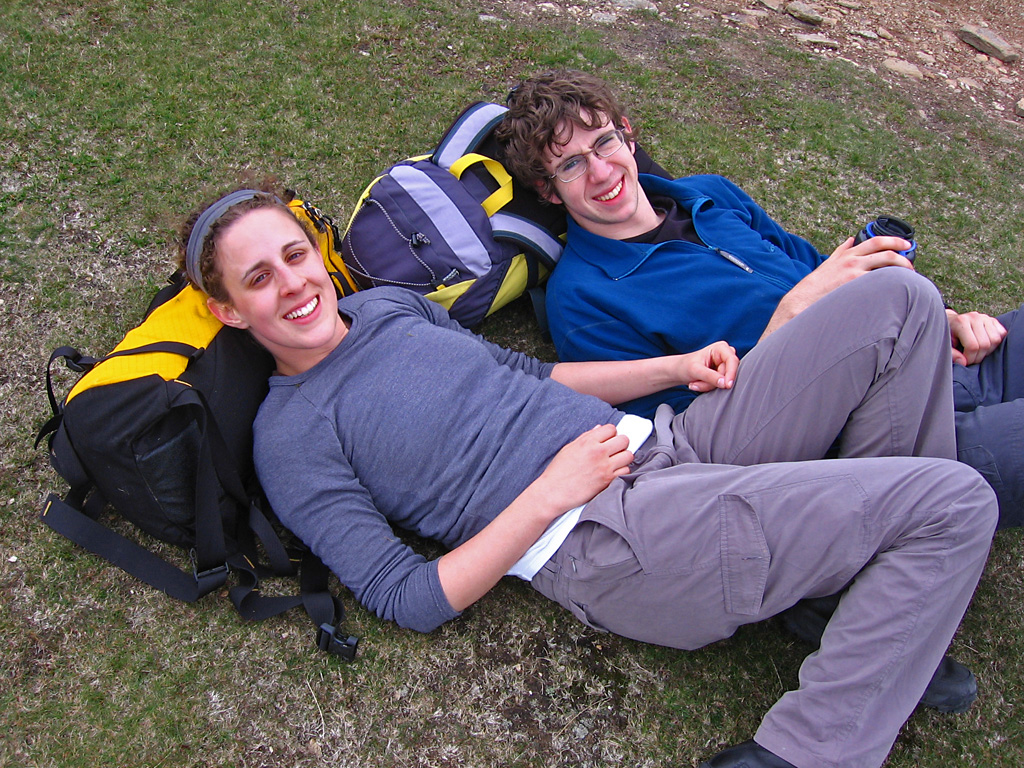
Sarah and Rob, reclining on packs

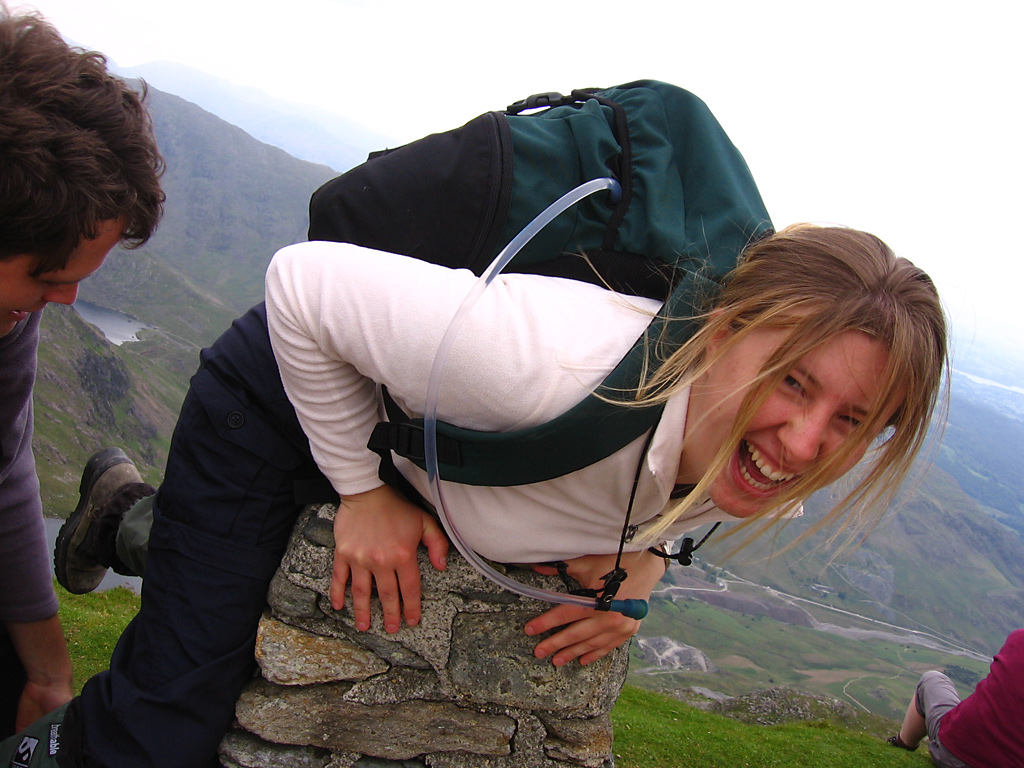
Once you reach a peak, a bit of a rest is surely in order. Actually, Rob and Sarah were ill during the whole trip, so their fellwalking demonstrated particular persistence.

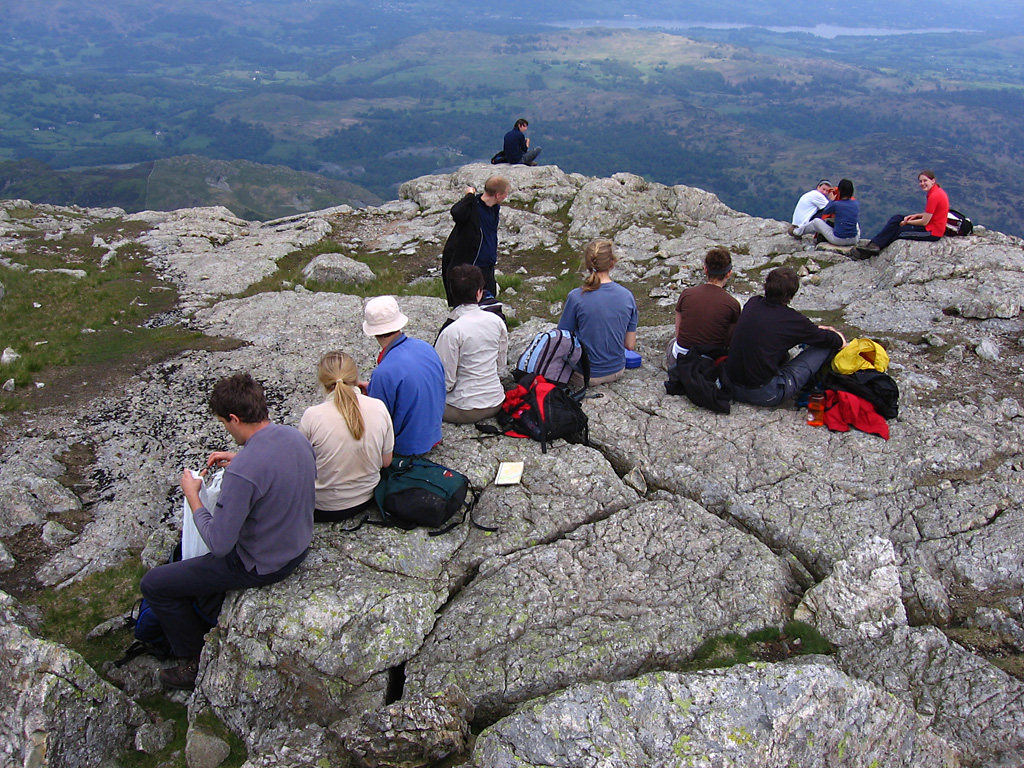
Walkers atop Wetherlam

Walkers atop Wetherlam.

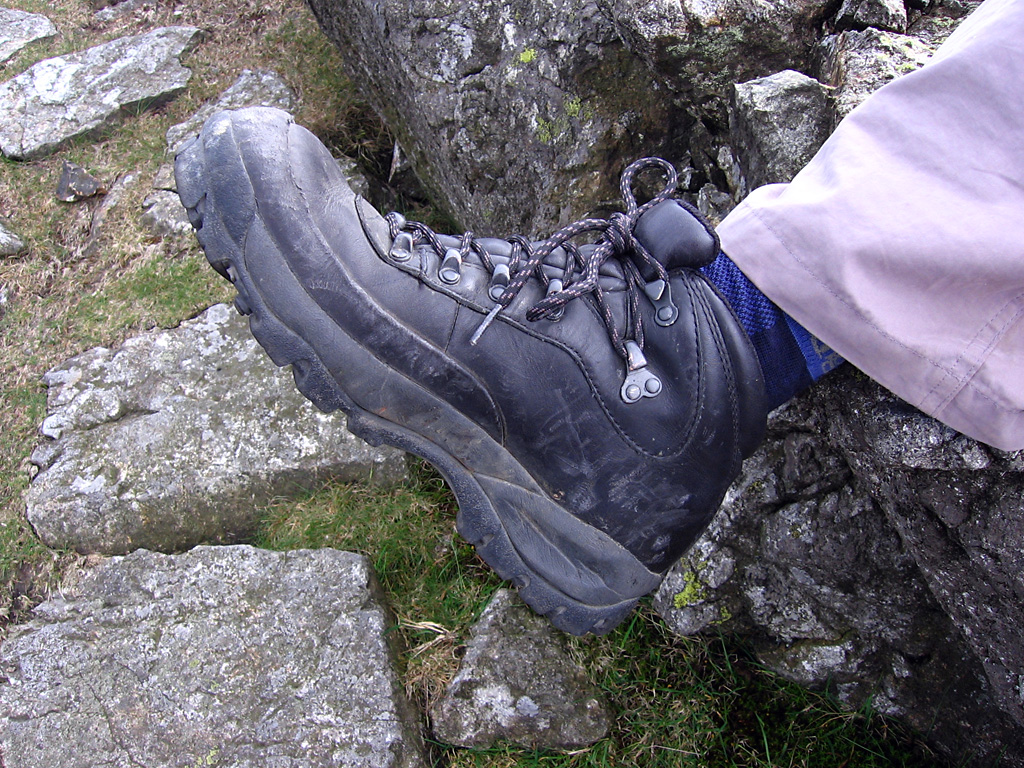
Hiking boot

The hiking boot: noble symbol of our determination.

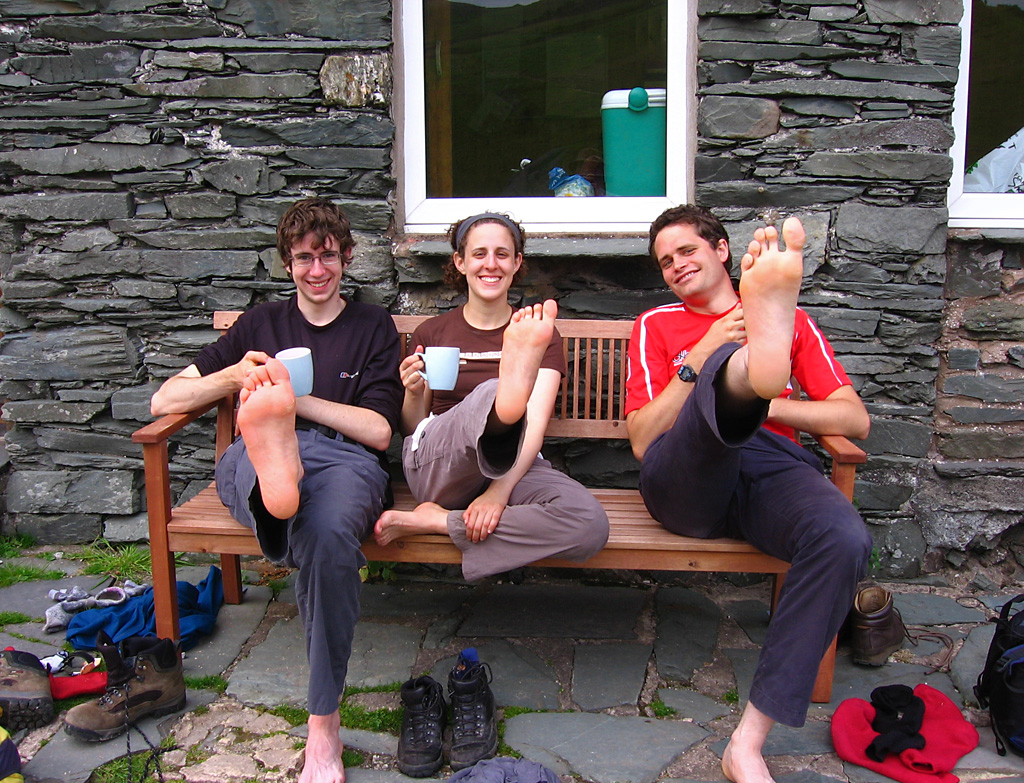
Bare feet

Which isn’t to say we never take them off…

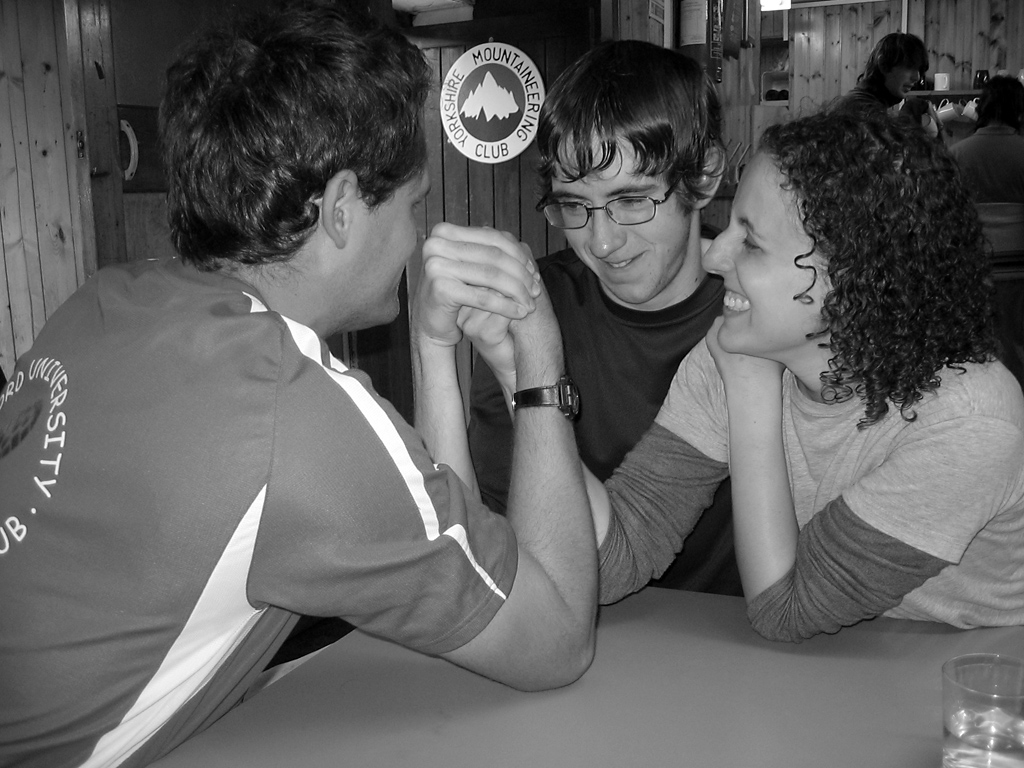
Arm wrestling

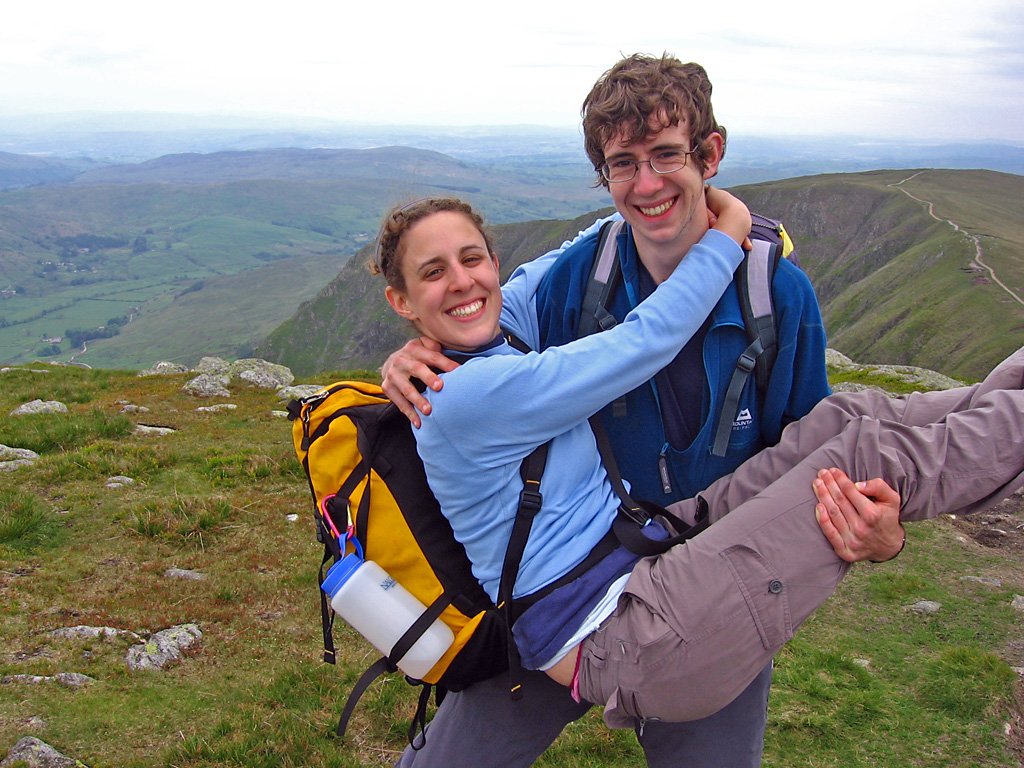
If you can shear a sheep, you can arm wrestle two humans at once and win.

Review: UCO Ultrapod Small Tripod

For the Paris trip, Hilary kindly acted as courier for this small tripod, sold by Mountain Equipment Co-Op. While it is not without some good features, it is a disappointment overall. The main reason for this is bad design.

The first mistake has to do with the rubber pads at the base of the legs. They fall off very easily: particularly the one shaped like an L-joint. They should be tighter or glued on. The second problem is with the velcro strap. It has no convenient place to go when the tripod is unfolded, except wrapped around one leg. It should be positioned more intelligently for situations where you want to fold and unfold the tripod often, or it should be made removable. I have never used it once, but I am a bit hesitant to irreversibly cut it off.

Far and away the biggest problem has to do with the knob controlling the ballhead. Even if you twist the knob with as much torque as you can possibly muster, the tripod head remains somewhat loose. If you want to keep the tripod on the side of your camera with the legs folded up along one side, the friction between the ball and the plastic socket for it is not enough to keep it there. Even more annoyingly, when you have tightened the knob as much as you can, it often becomes badly stuck. You will find yourself frequently using your teeth to loosen it. I have had to resort to pliers on several occasions.

While light and promising in its form-factor, this little tripod does not live up to its potential. I am grateful to Hilary for bringing it, but my search for a small, always-on tripod for my A510 is not over.

PS. ThinkGeek sells the same device.

Lakeland photos I

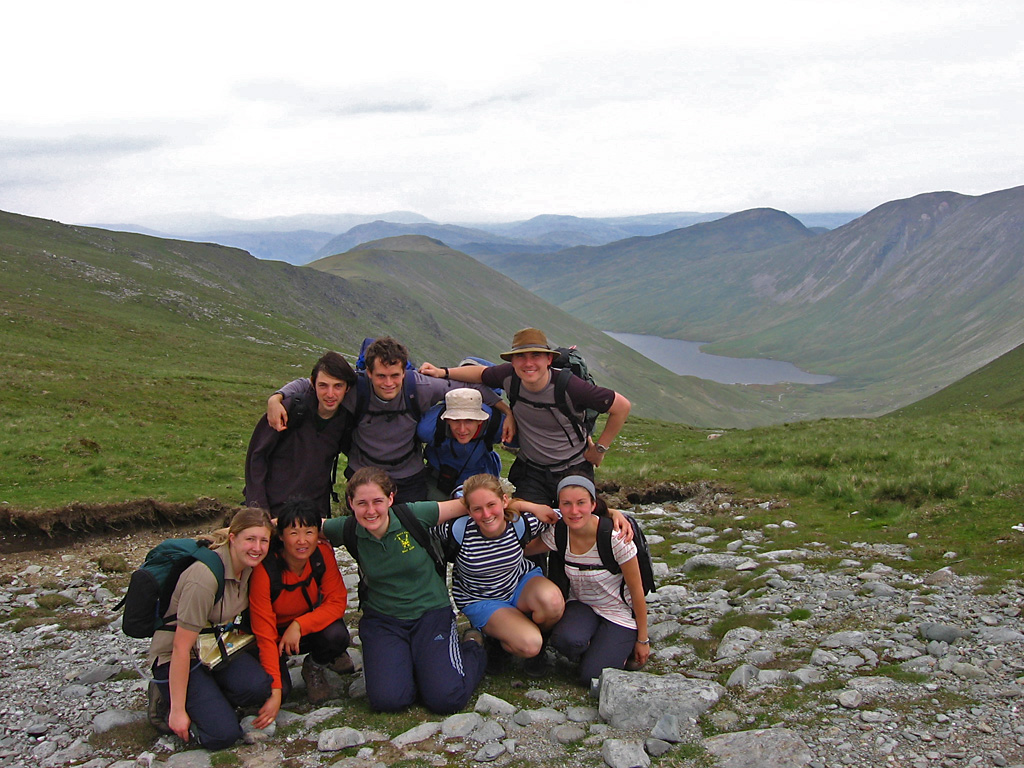
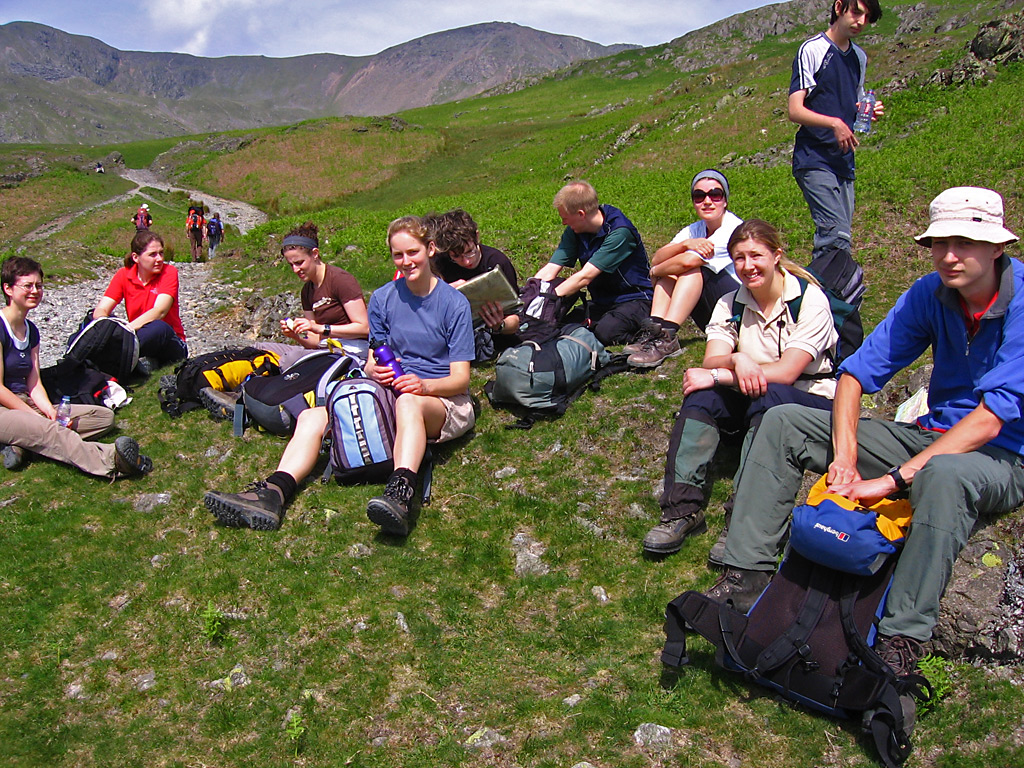
Thirteen Oxonians on a mountainside

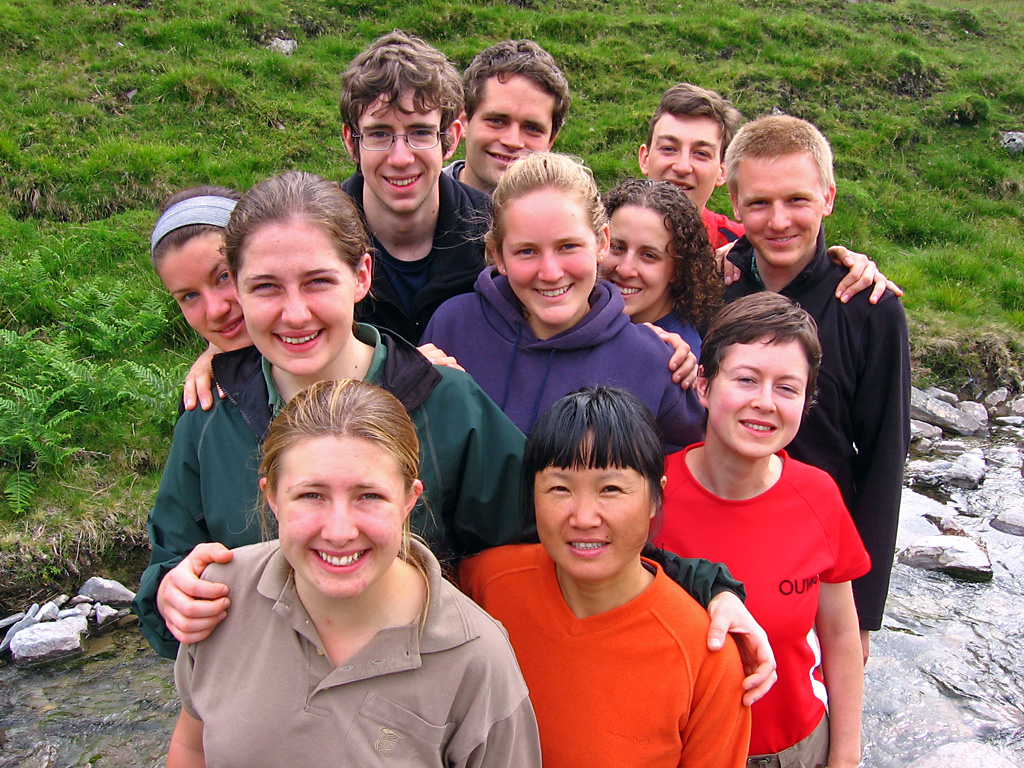
Thirteen Oxonians on a mountainside.

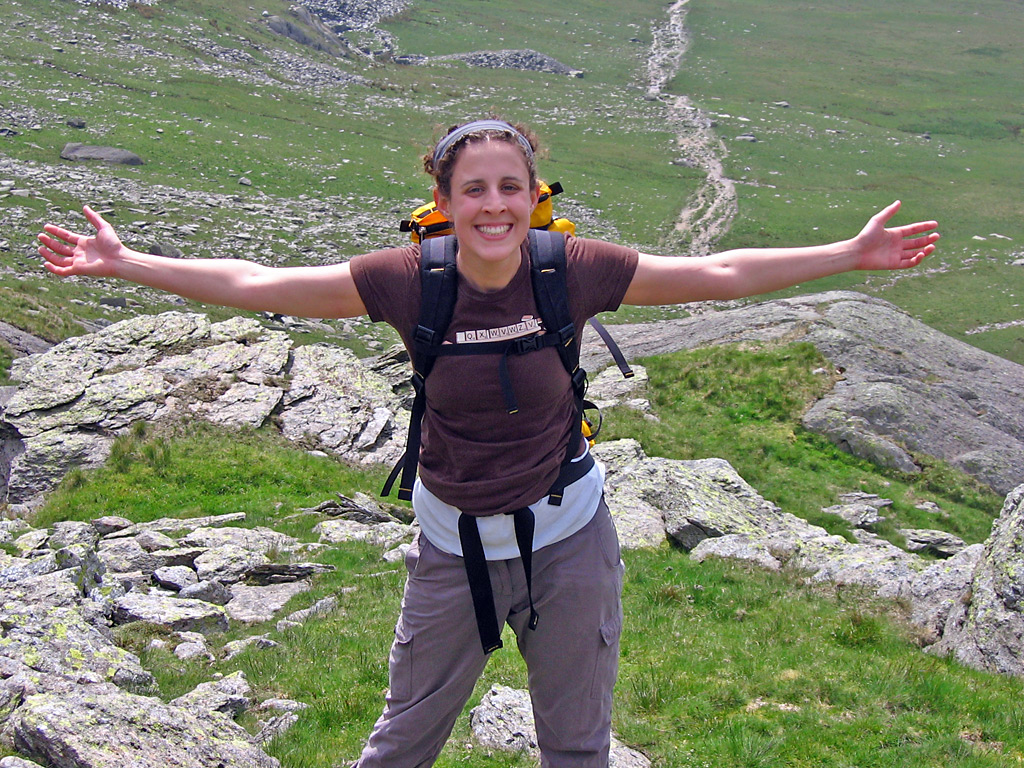
Sarah Roger being enthusiastic

An enthusiastic fellow Canadian.

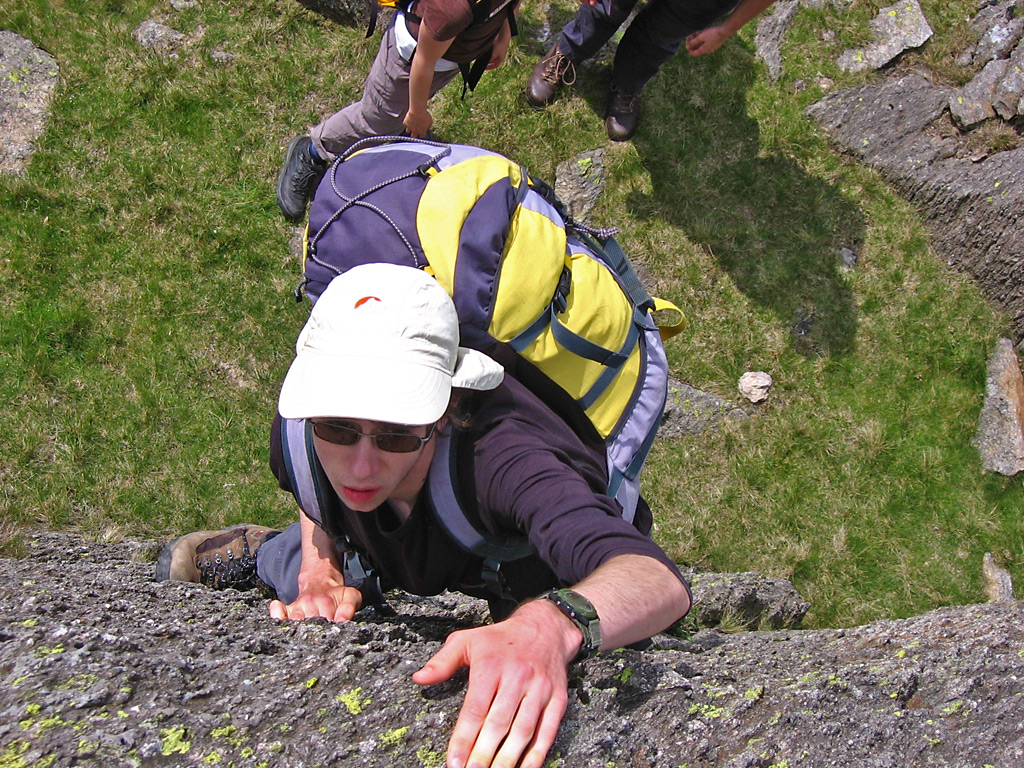
Robert Siddaway rock climbing

This was one of the few bits of actual rock climbing we did. Note how much more impressive it looks when done with a gear-filled leader’s pack.

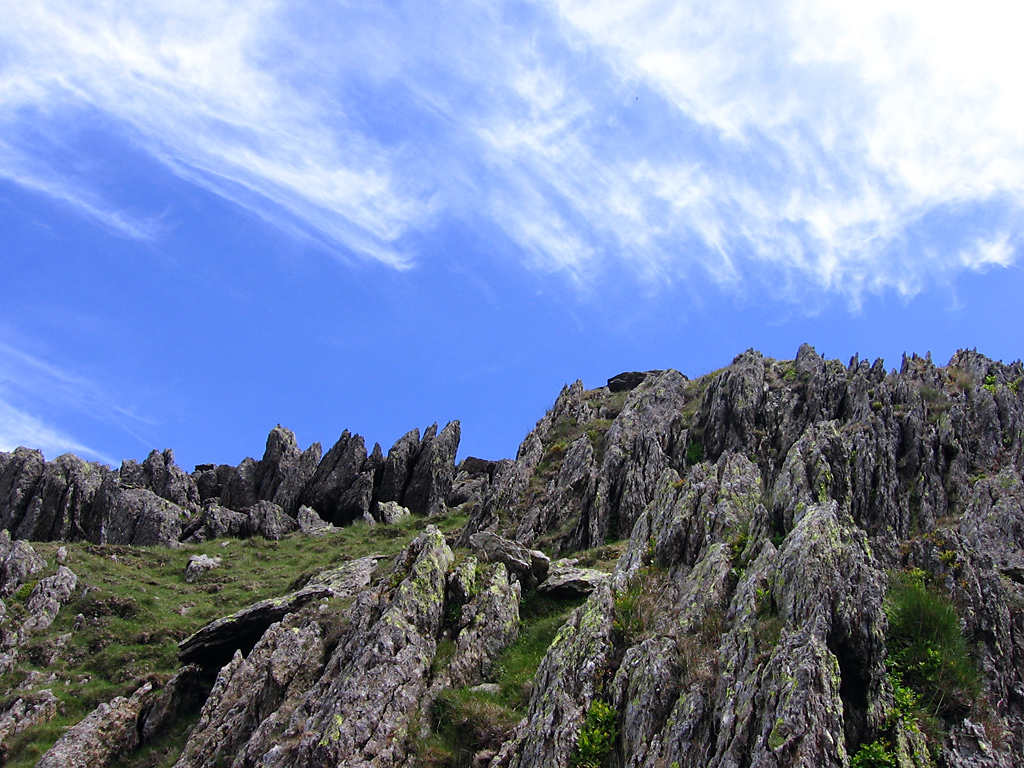
Sky and rocks

This scramble on the Coniston Horseshoe was the most enjoyable bit of walking on the trip.

Helen Jenks in Coniston

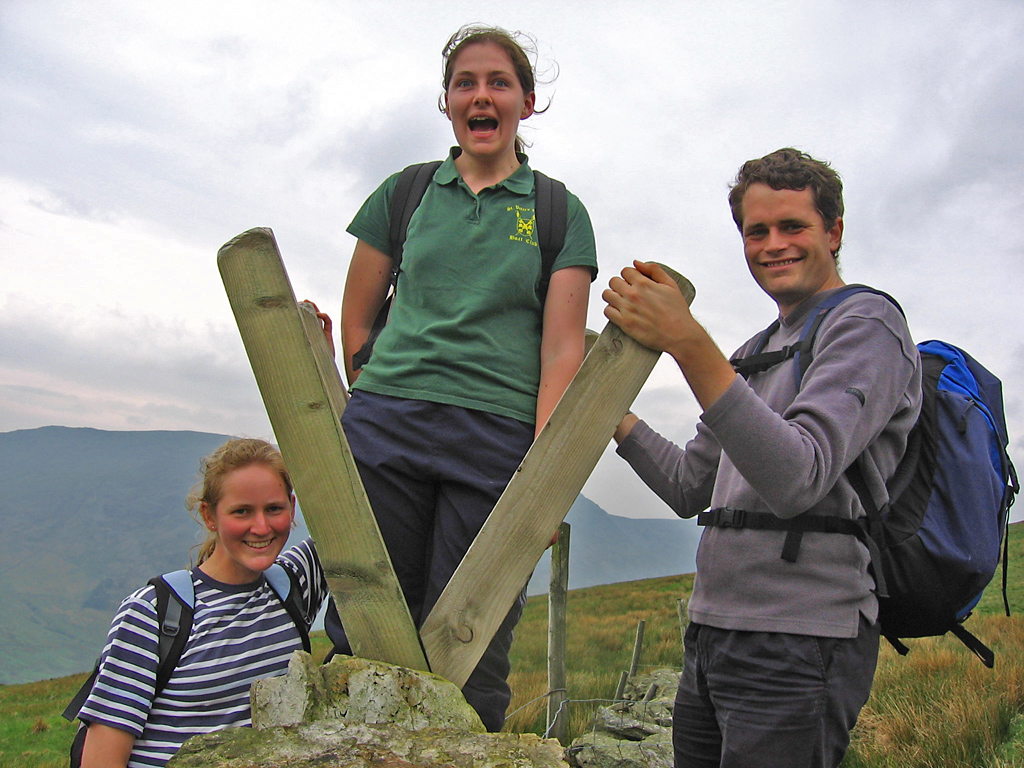
Having climbed a Wainwright, it is sometimes necessary to climb the marker and present as unusual an expression as possible.

f = m * a

In a conversation at the end of Sunday’s walk, we realized just how much energy is actually involved in such a trek. Our vertical ascent was about 1100m, spread between climbing Yoke and following the ridge of the Kentmere Horseshoe. That is about 75kg of me personally, plus a pack. Imagine me falling from 1100m up, and you begin to appreciate the gravitational potential energy built up through the (not entirely efficient) expenditure of chemical energy. We also traveled more than 20km, as the crow flies. Then, there is the fact that we had to absorb all the energy from all the descents into our muscles and dissipate it. Add in the energy required to keep us warm, balanced, and thinking, and you are racking up a good number of calories.

It’s amazing how far some dry cereal, two sandwiches, a couple of chocolate bars, and ones various short and long-term energy stores can go. The fact that I didn’t feel unusually hungry at any point during the weekend suggests that those stores were not seriously depleted.

As you may guess, this weekend included a lot of interesting discussion about physics, biochemistry, and physiology. We also learned a good bit about sheep.