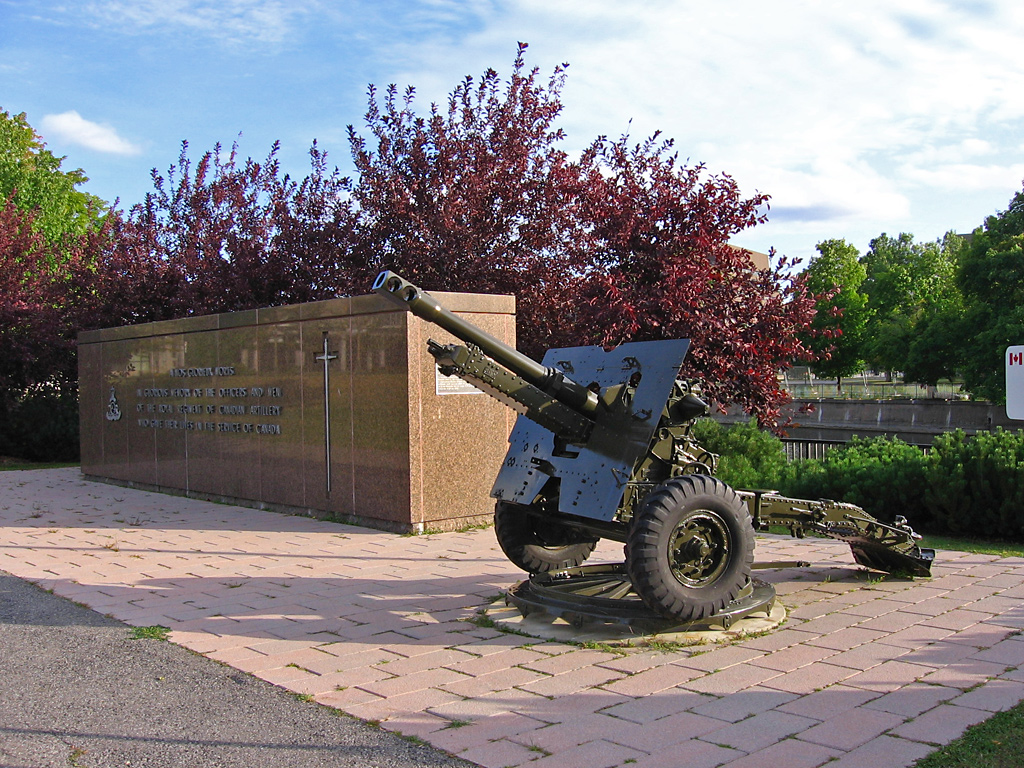
Chernobyl gets a new hat

At the same time as enthusiasm is growing for the use of nuclear fission as a non-greenhouse gas emitting energy source, the crumbling concrete tomb around the Chernobyl reactor is to be encased in steel, at an approximate cost of $1.4 billion. The doomed reactor will be covered by “a giant arch-shaped structure out of steel, 190 metres (623 feet) wide and 200m long.” Of course, it is only a matter of time before the new carapace will need to be replaced, in turn.

The Chernobyl disaster occurred back in 1986. Despite causing widespread contamination, about 95% of the radioactive material initially present remains within the site of the reactor complex. A motorcycle-riding photographer named Elena has put some haunting photos of the abandoned area on her website.

Just yesterday, Dr. Patrick Moore (co-founder of Greenpeace) urged the more widespread use of fission to reduce greenhouse gas emissions. As ever, there are three big problems with nuclear fission: waste that will be dangerous for a span longer than the existence of civilization thus far, the possibility of catastrophic accidents, and the connection between civilian nuclear capability and the proliferation of nuclear weapons. It is certainly becoming less clear-cut that nuclear is a worse option than the alternatives. For one thing, new reactor designs like the South African pebble bed promise to reduce the chances of accidents. On the proliferation side, there is talk of fuel supplier countries taking back spent rods, as protection against their plutonium being extracted and used for bombs. Of course, that just worsens the nuclear waste situation. The fact that it is all sitting in ‘temporary’ reactor ponds and that no state has constructed a permanent geological storage facility for radioactive waste should continue to give us pause.

Big rocks in space

Chateau Laurier stairs

September 26th is the next full moon. That night, I recommend getting hold of a pair of field glasses and having a look at our closest significant stellar neighbour. In particular, note the large impact crater near the moon’s south pole. The Tycho Brahe crater was determined to be about 100 million years old, on the basis of samples collected by the Apollo 17 mission. While such craters soon fall victim to erosion from air and water on Earth, they are well preserved on the airless moon.

Such craters are not just of geological interest. They testify to the reality of impacts from comets and asteroids. A sufficiently large such strike could have devastating effects for humanity. In 2029, we will get a reminder of how close some objects are to hitting us, when the 99942 Apophis asteroid will pass so close to the Earth that it will be between communications satellites in geostationary orbits and us. For a while, this asteroid topped the Torino impact hazard scale. NASA estimates that the impact of Apophis would be equivalent to the explosion of 880 megatonnes of TNT: about 58,000 times the yield of the atomic bomb dropped on Hiroshima.

There is a small but real chance that the close pass of Apophis will alter its course such that it hits us on its next pass, in 2036. In response, a spaceflight subsidiary of EADS called Astrium is proposing a mission to learn more about the asteroid, study its composition, and investigate options for deflecting its orbit, if necessary.

In one sense, we are lucky with Apophis. It was discovered back in 2004 and has since had its orbit accurately tracked. A comet, by contrast, is essentially invisible until proximity to the sun causes it to melt and produce a tail. It is entirely possible that such an object could strike the Earth with little or no warning whatsoever.

Quantum computers and cryptography

Public key cryptography is probably the most significant cryptographic advance since the discovery of the monoalphabetic substitution cipher thousands of years ago. In short, it provides an elegant solution to the problem of key distribution. Normally, two people wishing to exchange encrypted messages must exchange both the message and the key to decrypt it. Sending both over an insecure connection is obviously unsafe and, if you have a safe connection, there is little need for encryption. Based on some fancy math, public key encryption systems let Person A encrypt messages for Person B using only information that Person B can make publicly available (a public key, like mine).

Now, quantum computers running Shor’s algorithm threaten to ruin the party. Two groups claim to have achieved some success. If they manage the trick, the consequences will be very significant, and not just for PGP-using privacy junkies. Public key encryption is also the basis for all the ‘https’ websites where we so happily shop with credit cards. If a fellow in a van outside can sniff the traffic from your wireless network and later decrypt it, buying stuff from eBay and Amazon suddenly becomes a lot less appealing.

Thankfully, quantum computers continue to prove very difficult to build. Of course, some well-funded and sophisticated organization may have been quietly using them for years. After all, the critical WWII codebreaking word at Bletchley Park was only made known publicly 30 years after the war.

For those who want to learn more, I very much recommend Simon Singh’s The Code Book.

Peering into metal with muons

When cosmic rays collide with molecules in the upper atmosphere, they produce particles called muons. About 10,000 of these strike every square metre of the earth’s surface each minute. These particles are able to penetrate several tens of metres through most materials, but are scattered to an unusual extent by atoms that include large numbers of protons in their nuclei. Since this includes uranium and plutonium, muons could have valuable security applications.

Muon tomography is a form of imaging that can be used to pick out fissile materials, even when they are embedded in dense masses. For instance, a tunnel sized scanner could examine entire semi trucks or shipping containers in a short time. Such tunnels would be lined with gas-filled tubes, each containing a thin wire capable of detecting muons on the basis of a characteristic ionization trail. It is estimated that scans would take 20-60 seconds, and less time for vehicles and objects of a known configuration.

Muons have also been used in more peaceful applications: such as looking for undiscovered chambers in the Pyramids of Giza and examining the interior of Mount Asama Yama, in Japan.

The ugliness of war

Artillery monument, Ottawa

Today’s Ottawa Citizen has an article about how the Canadian War Museum is being pressured to change some of the text in its Bomber Command exhibit. Veterans had complained that it makes them out to be war criminals. The text reads:

“The value and morality of the strategic bomber offensive against Germany remains bitterly contested. Bomber Command’s aim was to crush civilian morale and force Germany to surrender by destroying its cities and industrial installations. Although Bomber Command and American attacks left 600,000 Germans dead and more than five million homeless, the raids resulted in only small reductions of German war production until late in the war.”

The museum consulted four contemporary historians, after complaints from the National Council of Veteran Associations, and they each affirmed the accuracy of the text. Two of them, however, lodged some complaint about the tone employed.

All this strikes at one of the tough moral questions that arises when you treat war as the subject of law. If the London Blitz was a crime, surely the bombing of Berlin, Tokyo, and Nagasaki were crimes as well. The targeting of civilians was a crime committed by those who chose where the planes should drop their deadly cargo. The dropping of the bombs was a crime committed by those who followed the illegal orders. (See: this related post) Alternatively, one can adopt the view that none of these undertakings were criminal. I suspect that neither perspective is a very comfortable one for those who were involved, but it seems difficult to come up with something both different and defensible.

In the end, it seems wrong to give anyone the comfort of thinking they were on the ‘right’ side and this somehow excused what they did. Their actions are equally valid objects of moral scrutiny to those of their opponents, though they are much less likely in practice to be thus evaluated.

None of this is to say that all the combatant states in the Second World War had equally good reason to get involved, nor that there is moral equivalence between the governmental types in the different states. What is hard to accomplish, however, is the translation of such high level concerns into cogent explanations for why former Canadian strategic bombers should be honoured while Germans launching V2’s into London should not be. The generally unacceptable character of the intentional bombing of civilians is firmly entrenched in international law; as such, the sensibilities of current veterans do not warrant changing the text.

[Update: 30 August 2007] Randall Hansen, an associate professor at the University of Toronto, has written a well-argued editorial in the Ottawa Citizen attacking the museum’s decision to change the wording.

Afghan opium

The Senlis Council, an international policy think tank, has developed an alternative plan for dealing with Afghanistan’s record crop of opium poppies. Their Poppy for Medicine Project aims to address the global shortage in medicinal opiates (such as morphine) while also providing a sustainable basis for the Afghan economy. Providing poppies for legal medicinal purposes will offer an income alternative that does not fuel the illicit drugs trade. Romesh Bhattacharji, India’s former narcotics commissioner, has offered his support for the plan, citing the high incidence of cancer in the developing world and the lack of access to pain killers.

This year, Afghan opium exports were worth about $60 billion at street prices in purchasing countries; that is 6.6 times the total gross domestic product of Afghanistan. No wonder coalition forces have been having such a hopeless time trying to eradicate this production. Within Afghanistan, the trade is worth about $3.1 billion, though less than a quarter of that accrues to farmers. Village level schemes of the kind Senlis is proposing could increase that proportion, while decreasing the share that goes to organized crime, smugglers, and insurgent groups.

The idea that NATO troops can win hearts and minds in Afghanistan while simultaneously destroying the opium crop that is the basis for much of the economy has always been foolish. While I was in Oxford, the reality of this situation was privately acknowledged by a number of British military officers. If Afghanistan is to be in any way prosperous or secure by the time western forces eventually withdraw, a bit more intelligent engagement and a bit less dogmatism would be in order.

[Update: 28 August 2007] Here is a similar argument.

A show of force in the Gulf

No matter how much one tries to focus on the non-security bits of international relations, anyone who reads the news and is concerned about the world will get exposed to it pretty regularly. Yesterday, for instance, nine American warships carrying 17,000 military personnel were sent into the Persian Gulf. Some speculate that this was intended as a corollary to an announcement from the International Atomic Energy Agency (IAEA) about Iran’s ongoing nuclear program. The strike group included two Nimitz carrier battle groups and 2,100 marines in landing ships. The ongoing war games will apparently “culminate in an amphibious landing exercise in Kuwait, just a few miles from Iran.”

According to the IAEA, Iran has about 1,300 centrifuges online at Natanz, with another 600 likely to become available over the summer. Having 3,000 operational centrifuges would produce enough weapons-grade uranium for one bomb per year.

The question of how to deal with challenges to the existing non-proliferation regime is an acute one. More and more states will gain the technical capacity to make bombs in the next few decades. Many will be in dangerous parts of the world, with hostile neighbours who can be plausibly expected to be building bombs of their own. Furthermore, the inability of the current regime to prevent the North Korean test raises the question of how much influence the international community really has, especially when some states are willing to become pariahs.

No Mercator projection

Grabbed from Metafilter, this page of maps distorted to show relative rates of things like military spending is quite interesting. Unsurprisingly, the map of war and death is especially grotesque.

Some higher resolution versions are over at Worldmapper: by total population, landmine casualties, and wealth (per capita).

Looking at these, one is immediately struck by how heterogeneous the world is. Of course, we all knew that before, but seeing the information in a new way can change one’s perception of it quite a bit. While there is the danger of such data being misleading, I would say it counters the greater danger of extrapolating from personal experience. Aggregated statistics, while not perfect, are a lot better than on-the-fly human intuitions, when it comes to assessing massive problems quite beyond the scope of anyone’s personal experience.

Noisy skies

Somerville College, Oxford

During the last day or so, there has been an unusually large amount of military air traffic over Oxford. Less than a minute ago, I saw a 101 Squadron Vickers VC-10 fly overhead, northwards (official site). The VC-10 is fairly unmistakable, due to the engine configuration: two on either side of the fuselage, back near the tail. Last night, we saw at least three large, slow moving transports heading in the same direction. I would have suspected that it was a Boeing C-17 Globemaster, from the 99 Squadron but apparently they only have one of those (official site).

They are probably flying to Brize Norton: the largest airbase operated by the Royal Air Force. It is located just eighteen miles west of here, between Carterton and Whitney. It might be an interesting place to visit at some point.

Quite possibly, the volume of traffic is connected with the recent British announcement that they are pulling forces out of Iraq. With 1,600 troops returning to the UK during the next few months, there must be a lot of gear and people to move around.