Mark Jaccard on the Harper government’s climate legacy

Mark Jaccard in The Walrus:

“The Harper government supports accelerating the extraction of fossil fuels from our soil, which will send more carbon pollution into the atmosphere. Meanwhile, that same government brazenly assures Canadians that it will keep its 2020 and 2050 emission reduction promises. But I know these assurances are worthless, for the very reason that Chrétien’s Kyoto promise was worthless. The 2020 target is only seven years away. Emissions have fallen slightly because of the global recession. However, the combination of economic growth and oil sands expansion will increase emissions. In a chapter of the Auditor General’s spring 2012 report, “Meeting Canada’s 2020 Climate Change Commitments,” his commissioner on environment and sustainability, Scott Vaughan, noted, “It is unlikely that enough time is left to develop and establish greenhouse gas regulations… to meet the 2020 target.” Instead, Canada is on a path to be “7.4 percent above its 2005 level instead of 17 percent below.””

Strongs word from the author of Sustainable Fossil Fuels.

Burke on rights and generations

“The political philosopher par excellence of the organic constitution was the Anglo-Irish theorist and statesman Edmund Burke, who wrote a century after Locke. Burke did not share the Age of Enlightenment’s optimism about the capacity for each rational individual to discern fundamental political truths. ‘The individual is foolish, but the species is wise.’ Instead of abstract natural rights, Burke believed in the real rights and obligations which grow out of the social conventions and understandings that hold society together. For Burke, the social contract which formed the foundation of society was not between individuals here and now but from one generation to another, each handing on to the next the product of its collective wisdom. The Burkean notion of an organic constitution has little appeal for those who, unlike the English, have not enjoyed a long and relatively uninterrupted constitutional history. But it was certainly congenial to the Canadian Fathers of Confederation who, though organizing a new country, did not for a moment conceive of themselves as authoring a brand new constitution.”

Russell, Peter. Constitutional Odyssey: Can Canadians Become a Sovereign Poeple? Third edition. p.10 (hardcover)

Canada’s rules on charities and political activity

Canadian charities – especially environmental charities – now feel threatened that they will lose their special tax status if they engage in ‘political’ activity. The Canada Revenue Agency website describes the rules:

Registered charities are prohibited from partisan political activity, because supporting or opposing a political party or candidate for public office is not a charitable purpose at law. There are two aspects to the prohibition: the first restricts the involvement of charities with political parties; the second restricts the involvement of charities through the support or opposition to a candidate for public office. Charities engaging in partisan political activities risk being deregistered.

There is also a policy statement that further fleshes out the rules.

This means, for instance, that LGBT organizations cannot support candidates who support equal rights for their members or oppose candidates who want to restrict their rights. Environmental charities, likewise, cannot oppose parties or candidates that believe in the wholesale destruction of the natural world.

I think this overlooks the reality that large-scale social and political change always requires political agitation. Campaigns against child labour, or in favour of the rights of women, could never have succeeded if they did not engage with the political system. If society is going to continue to make progress, it seems sensible to recognize this and allow charities to pursue their aims through political means.

The current restrictions on political activity are especially objectionable in that they risk being selectively applied. Canada’s Conservative government is a strident defender of the oil sands and fossil fuel development generally, frequently advancing the laughable claim that this is an ‘ethical’ source of energy. Cracking down on charities for engaging in political activity is just another way in which the government can tilt the scales in favour of this destructive activity.

The scale of change which we need to achieve if we are to avoid catastrophic climate change is enormous. It requires major political change in countries like Canada. Allowing environmental charities to fund bird sanctuaries, but not to support or oppose parties or candidates, misrepresents the scale and character of our environmental problems. It also misrepresents the proper role of civil society in democratic societies, which does not end where the formal realm of ‘politics’ begins.

Canada’s Liberals and NDP should merge

Can the Liberals and the NDP please just merge already?

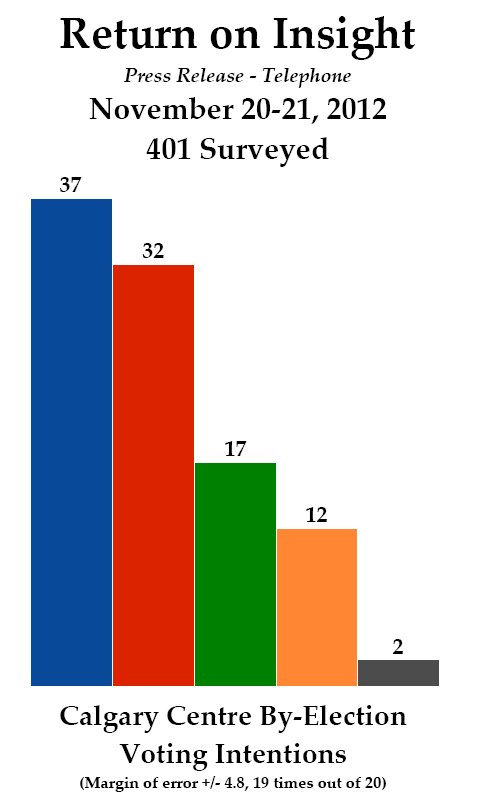
Source: ThreeHundredEight.com

The Liberal and New Democratic parties have now spent years operating under the apparent assumption that the key issue is leadership and that if they can just find the right leader they will be able to form a government.

I think a much bigger problem is vote splitting. Different voters have the NDP, Liberals, and Greens as their top choice. Probably, the second-place preferences of these voters are also for one of those three parties. And yet, because votes get split between left-leaning parties, the Conservatives end up governing.

Arguably, it would be preferable to reform the electoral system, rather than respond to the united right by uniting the left. What this alternative proposal lacks is practicality: the federal Conservative Party is unlikely to replace an electoral system that has allowed them to govern with a minority of support for so long, and no other party is in a position to influence legislation.

Related:

American unconventional oil and the economic viability of the oil sands

Hydraulic fracturing (“fracking”) of tight and shale oil in the United States may be the biggest economic force determining the future of Canada’s bitumen sands. The Globe and Mail recently printed an interesting article on how the development of unconventional oil in the United States could undermine the business model of the oil sands: “a belief in unfettered access to an insatiably oil-hungry U.S. market has been a central underlying assumption of the great energy expansion under way in Alberta.” If the U.S. can satisfy domestic oil demand with their own unconventional sources, the huge investment that has been made in Canada’s oil sands may never produce a reasonable economic return.

This is one more risk that should be borne in mind when making energy investment decisions. Unfortunately, the climate system doesn’t care about the source of greenhouse gas emissions. America’s newfound bounty of unconventional oil and gas will probably make it even harder to avoid catastrophic climate change.

Related:

Conference on Enbridge Line 9 today

Today I am attending a conference on opposing Enbridge’s plan to reverse their Line 9 pipeline in order to carry diluted bitumen from the oil sands to Montreal.

I will be posting detailed notes on the Toronto 350.org planning forum.

If you are in Toronto and have some time before 5pm, I recommend coming out. It is happening in Sidney Smith Hall at the University of Toronto, at 100 St. George Street. This is a five minute walk from the St. George subway station.

Defend Our Coast protest, Victoria, B.C.

Today, thousands of British Columbians and allies will be outside the provincial legislature to protest the egregious Northern Gateway pipeline.

The pipeline is a bad idea for so many reasons: because it will fuel the destructive growth of the bitumen sands, because of the forests that will be affected by the spills that are certain to happen, because of the dangerous and biologically important waters where hundreds of oil tankers will need to run, and because this is the wrong time to be making giant new investments in fossil fuels.

The time has come for us to behave smarter. Hopefully, these protests will help more people see that.

On disagreement and democracy

“Shared values in themselves do not provide the sense of allegiance necessary for a national community to thrive. Indeed, disagreements about the major orientations of society are perhaps emblematic of a healthy political community because they demonstrate that citizens are concerned about the state of the community. The democratic quality of a constantly changing political community lies precisely in the idea that citizens are able to identify with and make an impact on the current streams of public debate in society – and this requires that citizens interact within the framework of a common vernacular.

[…]

In the end, participation implies some degree of political conflict. The political community is based on a shared language, and challenges to the prevailing tenets of the national culture are not viewed as threatening, but encouraged as a healthy and normal effect of democratic deliberation.”

Gagnon, Alain and Raffaele Iacovino. Federalism, Citizenship and Quebec: Debating Multiculturalism. Toronto; University of Toronto Press. 2007. p.112-3