Well examined

The coming week should be a busy one. Depending on how you count, this will probably be my 12th major series of examinations. I wrote the chemistry provincial examination in 11th grade; the rest of my provincial examinations at the end of 12th grade, determining university admission; completed four years of normal terms at UBC, with two sets of exams per year; finished one summer term at UBC, with logic and history exams; and passed the quantitative methods exam and qualifying test for the M.Phil last year. I have also had some exams that ultimately proved essentially unimportant. I wrote the SATs when in high school and the LSAT during my first year at UBC. I also had a placement test and final exam for my French language program in the University of Montreal.

Unless I go on to a PhD, and the comprehensive exams involved therein, these may prove to be my final four such tests. By 12:30pm on Wednesday the 13th, it will all be over.

Donut holes in history

Today’s meeting with Andrew Hurrell was productive and enjoyable. Aside from preparing for exams, we had an interesting realization. It relates to the donut hole that exists in historical education. You see, there are the periods of history that are so distant that they even get mentioned in high school textbooks. (I remember how my grade eight science text spoke about how “soon man will set foot upon the moon.) Since everyone has been exposed to this time and time again, it forms a common basis for conversation. What gets complicated is when there are two separated tranches of people conversing, such as the members of my M.Phil program and members of the faculty.

This is because there is a whole realm of history that a person mostly knows about as a contemporary experience. Given that most people in my program are about 25, it is plausible to say that this period begins for us with the end of the Cold War. Most of the instructors are probably about twenty years older, so their contemporary awareness begins in about 1970. As a product of this, there is a kind of donut hole in our discussions. The period between those two thresholds of awareness is not extensively covered in many introductory level texts and, where it is, is it covered without much historical distance and corresponding scope for analysis. Think about contemporary textbooks discussing the wars in Afghanistan and Iraq – they can hardly put them into a historical framework that is likely to stand up well over the coming decades.

This may have something to do with why I can’t recall hearing anything about the New International Economic Order before coming to Oxford, as well as why I know more about the Harding and Coolidge administrations than about the Ford or Carter ones. It will be interesting to see what happens when history from 1970 to present has gone further through the process of becoming parable.

Investment advice

One other lesson gleaned from many conversations with economists, professors of finance, and bankers over the last two years: the degree to which managed investments like mutual funds outperform the market is generally less than the fees they charge. As such, those of you with more savings than debt should put them into a low-fee index tracking fund like those offered by Vanguard. If Donald Trump had put his inheritance into one and then waited, he would be richer than he is today.

Philip Greenspun agrees.

Climate change and responsible global citizenship

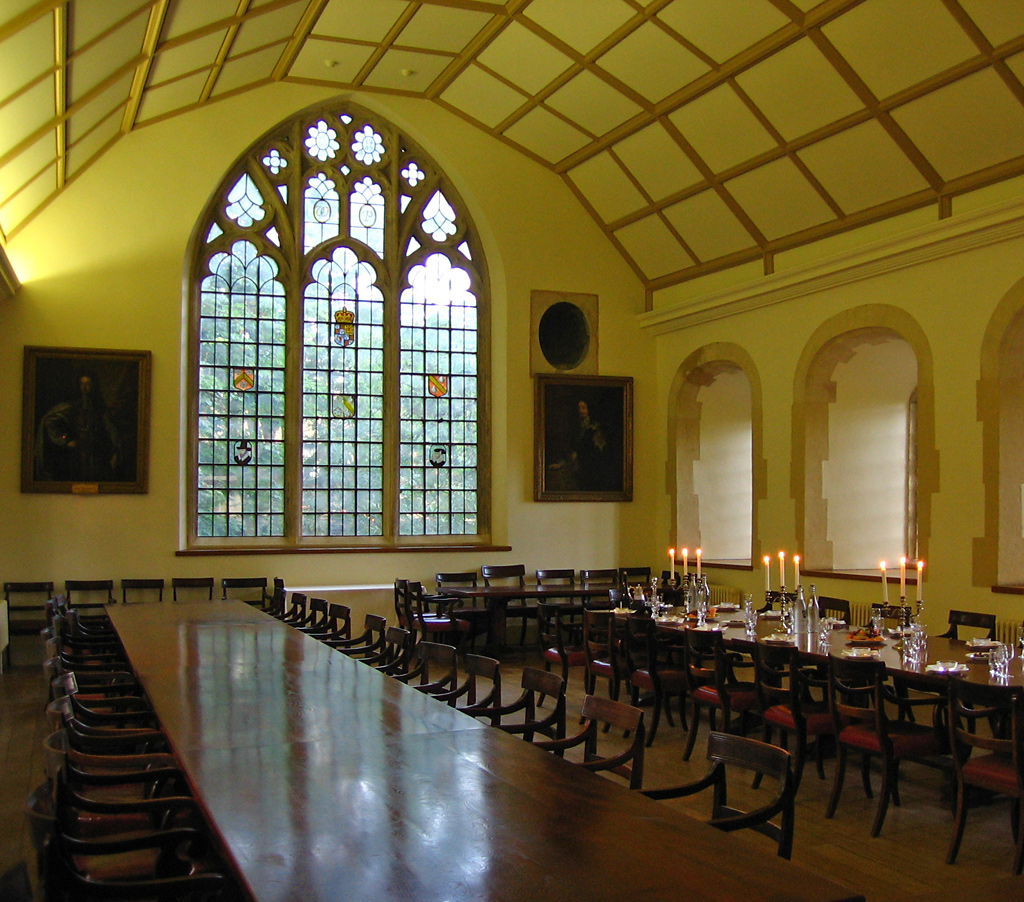
Old Library, Wadham College, Oxford

During my second-to-last high table dinner in Wadham tonight, I got into a long conversation about Canada and climate change. The man with whom I was speaking asserted that (a) Canada would benefit directly from moderate warming and (b) Canada would benefit from activities that encourage global warming, such as the exploitation of the tar sands. Neither of these claims is unassailable on a factual basis, but the normative implications are more interesting to consider at the moment.

Let’s say that both claims are true. Should Canada act to combat climate change? To me, it seems the answer is an unambiguous yes. If I live uphill from a farm and have the opportunity to benefit from cutting down all the trees on my land, the fact that erosion will harm my downhill neighbour is not external from the consideration of what ought to be done. Depending on your conception of ethics, it may or may not be ethically appropriate for my neighbour to pay me not to cut down the trees. Regardless, the ethically optimal solution is generally to avoid impoverishing one’s neighbours to enrich oneself. This is especially true when you are much richer than those likely to be most immediately and significantly harmed. Being a mugger may be a personally advantageous course of action, but we have obligations to others that preclude it from being an acceptable choice for a member of society. Among a society of nations, there is likewise an obligation to behave with consideration for others, even if it diminishes one’s own prospects. Of course, such noble sentiments are hard to embed in policy.

Brain tricks

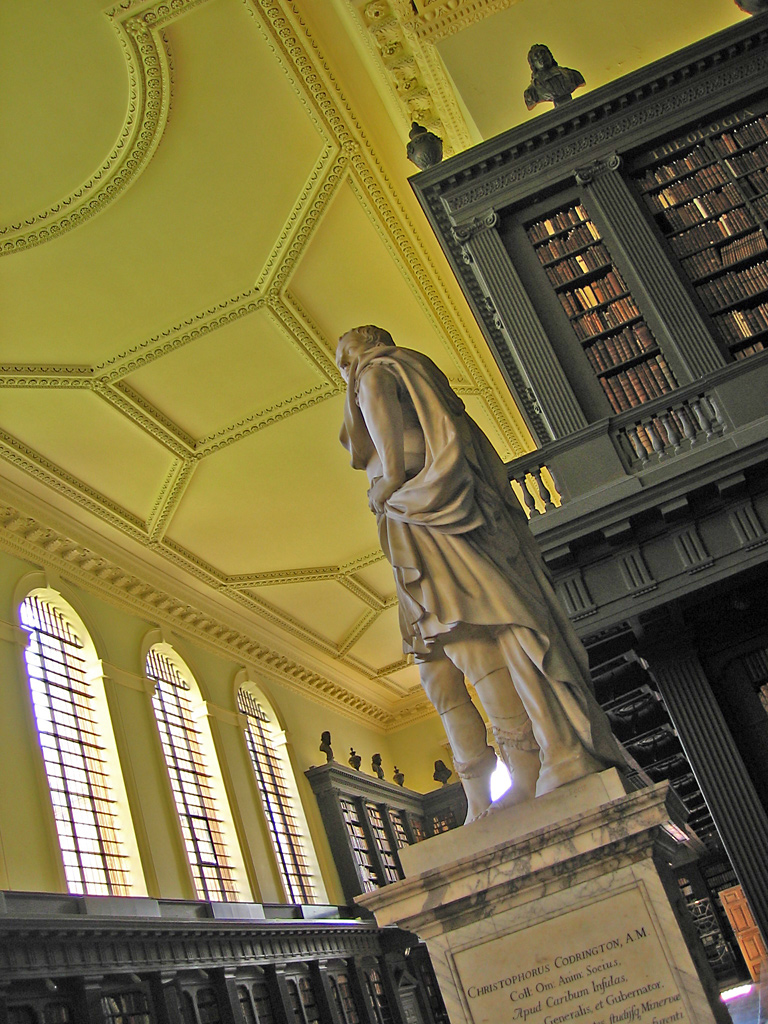
Lord Codrington

I have resumed my old tactic of reading through rotation: moving from venue to venue in central Oxford. It is all meant to keep a bit of traction on the page. There is the sort of reading where a solid grip is there between your eyes, mind, and the page. Then, there is the sort that can quickly replace it, where your eyes just sweep along the page by inertia. While it is obviously hopeless to try to remember every note, event, comment, thinker, and idea, that sort of drift makes one no readier for exams. Changing surroundings (light, temperature, background noise, smell, and the rest) makes it easier to maintain a steady and progressive march.

The one thing most ably demonstrated by all yesterday’s experimentation is how easy it is to come up with cognitive tasks that are very hard for human beings. Things as simple as interpreting the length of line segments or estimating probabilities are awfully tricky, despite their mathematical simplicity. Thankfully, the complexities of human thinking do allow us to tweak things a bit and hack our own minds, in a certain sense. Hopefully, I will be able to come up with enough of them to deal with upcoming exams.

PS. This Twain adaptation is sombre but thought provoking. Written about the Philippine-American War, it is not lacking in contemporary relevance.

Scientific progress goes boink

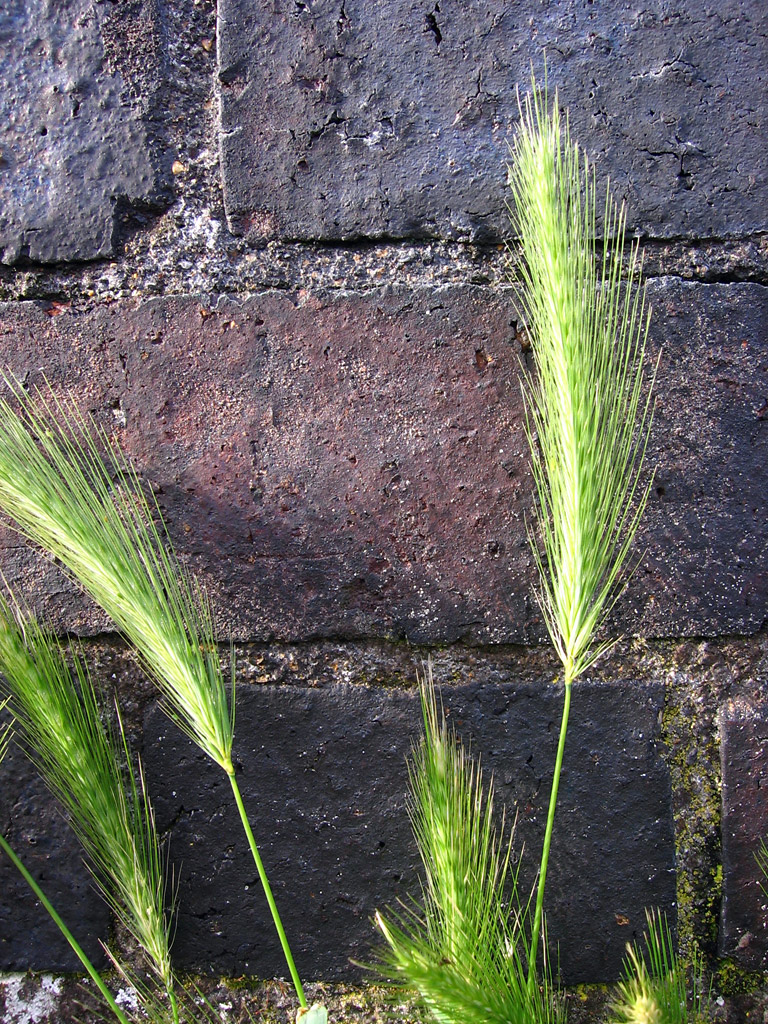
Grass and brick wall

When I was in the process of applying to Oxford, I filled out a web questionnaire about stress. A few months ago, I was invited to participate in a study and given a two-hour screening. Today, the active part of the experiment began. I know it involves mood and stress, but I don’t have a terribly good idea of what they are looking for.

Today’s poking and prodding

They tested my ability to remember long lists of different kinds of things, particularly after being distracted in various ways. They tested my spatial reasoning in a number of paper and computer based exercises. One annoying one was trying to pick out four different three-digit sequences from a rapid string of numbers, pressing a button when I saw one of them. Because you mind tends to break up the string into a distinct series of three digit numbers, this is extremely hard. 233453456 becomes 233 453 456 starting at wherever you started thinking about it. As such, it is hard to see that 334, for instance, is part of the sequence.

One unusual bit involved playing a betting game on a computer. It showed two bars per screen, yellow in situations where I could win points and blue in those where I could lose them. Some bars were solid and had a single number on them. If you picked them, you were certain to win or lose that amount. Most were split into two fractions, where one was 1/3 of the bar or smaller. Usually, the choice being made was between the certainty of winning or losing a small amount for sure and the possibility of winning or losing more. For example, you might have to choose between a 2/3 chance of losing a small amount and a 1/3 chance of losing a larger amount or a 9/10 chance of losing nothing and a 1/10 chance to losing an even larger amount.

The curious thing is that, as far as my limited arithmetical abilities under such circumstances could be trusted, the bars were always very close to being or exactly statistically equivalent. For instance, you had the option of a guaranteed 66 points or a 1/3 chance at 200 points. As such, as the game went on, I found myself always choosing the ‘safe’ option. This was because I didn’t know the number of trials. You would expect the numbers to be the same for either strategy over the long term. After one million trials, it wouldn’t matter if you had chosen ’33 for sure’ or ‘1/3 of 100’ in every trial, or used any combination of them. If there were a small number of trials, however, choosing the option with more stable returns is less likely to generate an outlying number of points (high or low).

As the game went on, I thought I was doing no better than breaking even. At the end, it said I had over 10,000 points. Of course, it may just have been saying that. You can never be sure what is actually being tested in such experiments. The last, little thing that tends to happen at the end frequently seems to be the most important bit of the whole sequence. Regardless of whether the figure was meant to toy with my emotions or not, I am pretty sure I will get about another £10 at the end of the experiment for it.

In addition to all that, I was asked to tell little stories in response to words, provide definitions to others, and fill out lots of questionnaires about mood and my (non-existent) gambling habits. When called upon to define the words, I felt a bit like Blackadder when he was trying to re-write Samuel Johnson’s dictionary in one night.

The week ahead

For the next week, I need to wear an accelerometer and light meter, as well as keep a diary of eating, sleeping, and exercise. I am meant to wear the measuring equipment as much as possible, though I am not allowed to get it wet or bare-fist box while it is on my wrist. At the end of the week, they are giving me a functional magnetic resonance imaging scan, a diffusion tensor imaging scan, and testing my cortisone levels.

There are 40 other participants, so the total amount of data generated seems very considerable. I hope they find some interesting stuff in there.

PS. Back in March 2006, I hoped the money from this experiment would help me buy a bike. Funny how slowly some things can proceed…

PPS. One of the pictures associated with the Wikipedia article on DTI scans was used in an Economist article this week about synesthesia.

Rain and upcoming exams

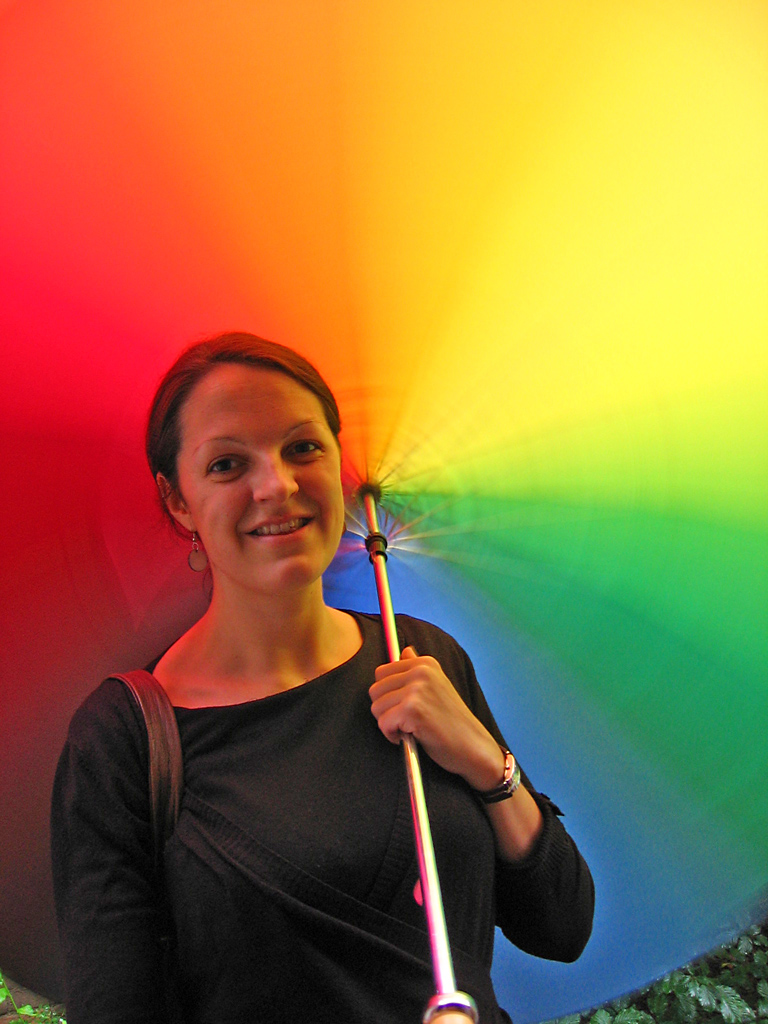
Claire Leigh with umbrella

Another day of cold and constant rain is proving a demonstration of how volatile Oxford weather has been in recent weeks. Some mornings start out utterly grim and transition into warm and stunning evenings. Others persist stubbornly in keeping people in the libraries and out of the parks and gardens. Weather forecasts for the coming week suggest that it will be better suited to those determined to study than to those keen on giving punting or croquet a try. My hopes that the Lake District trip would be less rainy than Scotland or Snowdonia may prove unfounded.

With exams only 15 days away, they should probably be dominating my thoughts. It is a bit odd how the qualifying test last year, which involves only half the material of these exams, seemed to have much more presence in the minds of those in the program. This may be the product of the declining momentum that accompanies being at the end. It may also reflect how – barring those going on to the D.Phil – there are not many members of the program for whom it is hugely better to get a distinction than it is to simply pass.

Energy trends

This year’s International Energy Outlook has been released by the American Energy Information Administration. Among the key things noted:

  • The total demand for energy worldwide will increase by 57% between 2004 and 2030.
  • If oil prices remain comparable to their present levels, coal will be the dominant fuel for new power plants.
  • Annual growth in installed generating capacity in the OECD will be about 0.9%, compared with 3.7% in China and 3.4% in Brazil.
  • As of 2004, total greenhouse gas emissions from the developing world have exceeded those of the developed world.

Naturally, all of this underscores how difficult it will be to address the problem of climate change, even if the relatively low costs cited by Nicholas Stern and Cameron Hepburn are accurate.

For more on energy sources and climate change, see: Coal and climate change, Solar power and climate change, and Climate change and nuclear power.

Christie precedent overturned

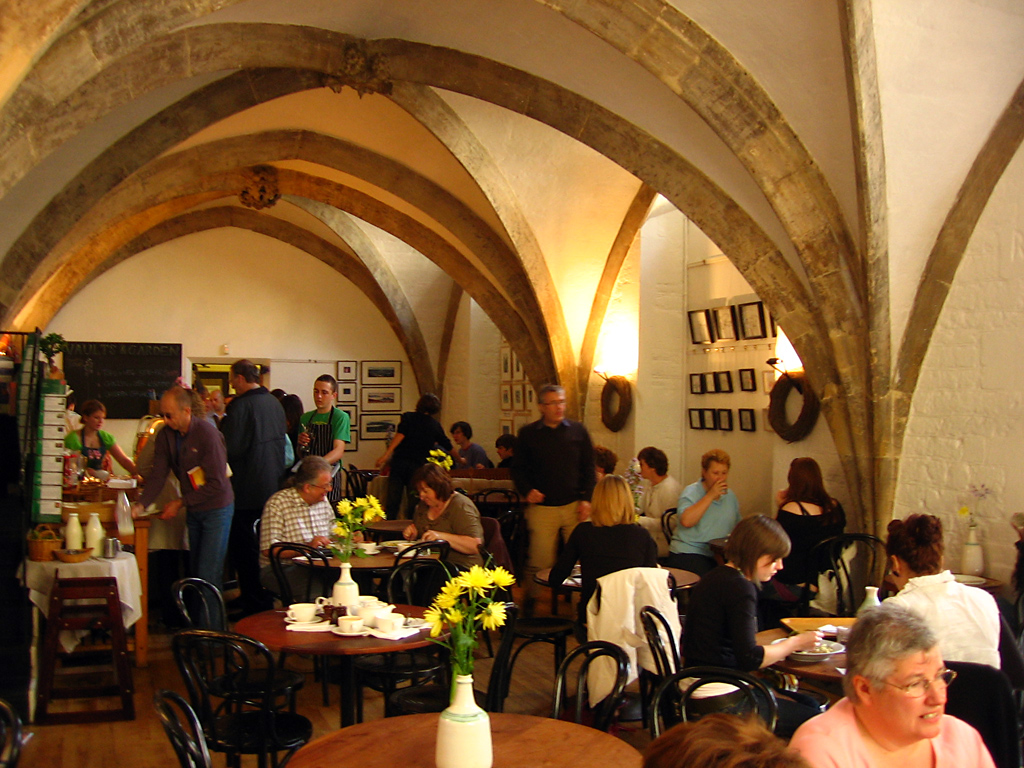
Vault and Gardens, Oxford

The Canadian Supreme Court seems to have overturned Christie v. AG of B.C. et al. This 2005 decision held that the poor could not be charged the 7% tax on legal services that existed in British Columbia at the time. In the Reasons for Judgment, the B.C. Supreme Court stated:

[The Act] constitutes indirect taxation and is a tax on justice contrary to the Magna Carta and the Rule of Law…

I am prepared to grant the following declarations: A declaration that the Act is ultra vires in the Province of British Columbia to the extent that it applies to legal services provided for low income persons.

The court held that those earning under $29,000 should no longer need to pay the tax. It also reimbursed, with interest, the $6,200 that had been seized from Christie for non-payment of the sales tax on behalf of poor clients.

Dugald Christie, the man behind the 2005 BC case, was a Vancouver lawyer who had dedicated himself to helping the poor get representation within the legal system. He died about ten months ago while bicycling across Canada to raise money for that cause. Prior to his death, Christie lives in a small room at the Salvation Army’s Dunsmuir House, where he apparently worked twelve hours a day encouraging lawyers to do more pro bono work. He founded the Western Canada Society to Access Justice, which consists of sixty legal clinics across British Columbia, and has since expanded into Saskatchewan and Alberta.

The Supreme Court has now held that:

“a review of the constitutional text, the jurisprudence and the history of the concept does not support the respondent’s contention that there is a broad general right to legal counsel as an aspect of, or precondition to, the rule of law.”

I was surprised to see that a right to council isn’t actually included in section 11 of the Charter of Rights and Freedoms. The idea that a normal person can have a fair trial without legal council doesn’t seem a very plausible one.

Three follow-ups

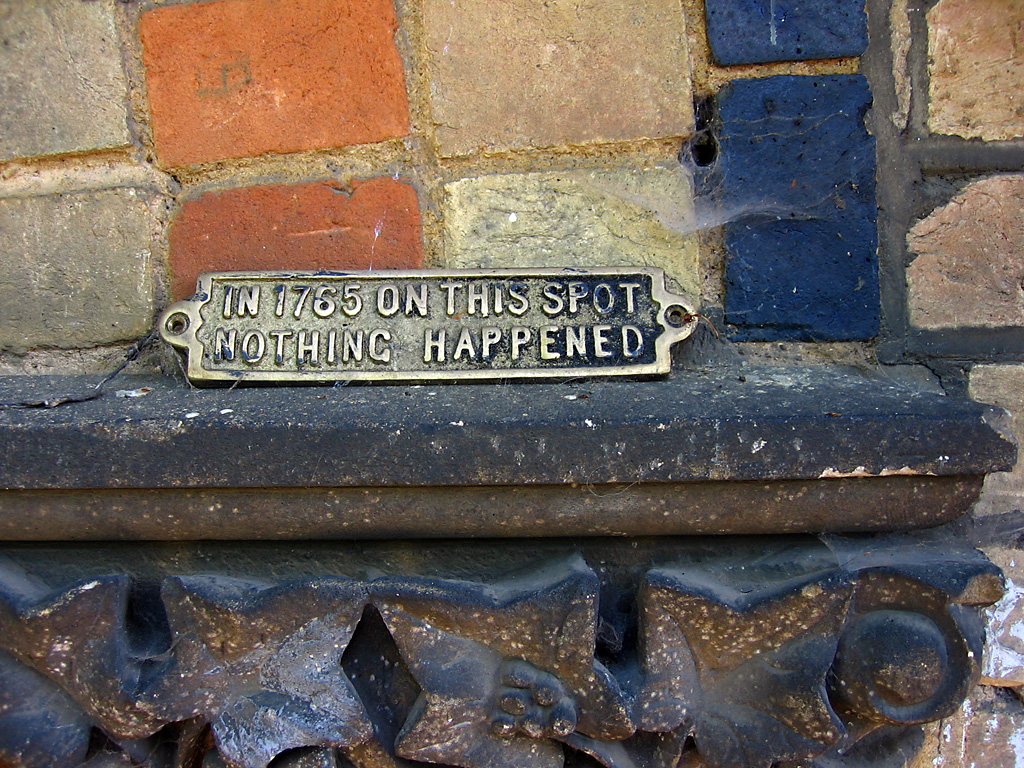
Nothing happened here

1) Remember how our flat got deprived of refrigeration? One week on, we are still subsisting off of bread and cheese we keep cold in the metal cages outside our windows. We call them the ‘alternative fridges.’

2) Remember how I lost the ballot for the Lake District trip with the Walking Club? Well, somebody dropped out. Because I expressed so much interest in it, they offered the spot to me. As such, I will be climbing mountains again from June 1st to 3rd. The only thing that would make it better would be having more than 16 days left before exams.

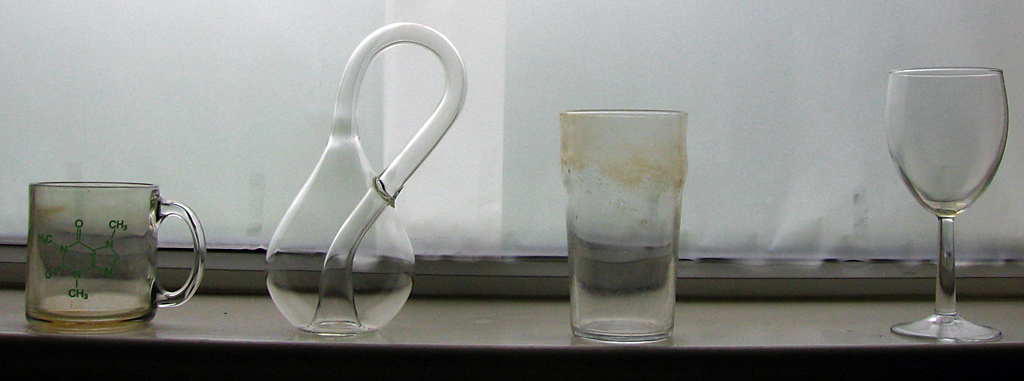
3) Remember ‘Studio Photography on the (very) cheap?’ Well, I have figured out how to build a large and effective diffuser for under $3. That was the purpose behind this query. Two sheets of A1 tracing paper turn out to perfectly cover the lower section of the window.

Note how English tea stains glassware. The picture would be a lot more attractive if I propped the glass objects up on something, cleaned them before taking the photo, and photoshopped away the tape holding the paper to the window and the place where the two sheets overlap. This was meant to illustrate the assembly, not be artistic of itself.