Bikes for sale

For too long, the Wadham College bike shed has been seriously cluttered with seemingly abandoned bikes. Now, bikeless residents of Oxford have an opportunity to benefit. I got this message from the college a few hours ago:

We’ve arranged with College to have a mass cull of the old bikes littering the bike shed, hopefully with a huge auction of old bikes in the back quad on Saturday 7th Week / Sunday 8th Week. Quality bikes that just need a little love and repair will be sold from as little as £1 each, so tell all your friends!

People looking for a decent hybrid at a good price should also consider buying mine. It won’t be going for £1, but it will probably sell for substantially less than I have spent on buying and improving it.

Dinner in Green

Green College flatware

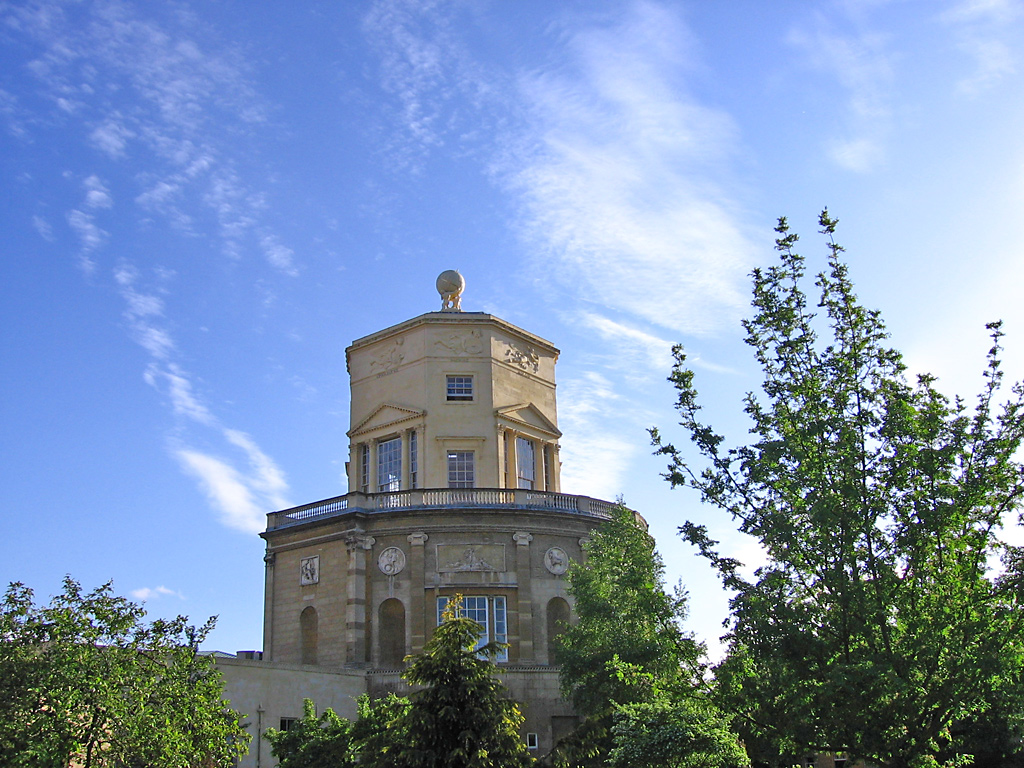
Many thanks to Jenn for inviting me to the formal dinner at Green College tonight. You know the primarily focus of a college is medical college when you see the staff of Aesclipius on the dishes. Located on the second floor of their observatory tower, the Green dining hall is unusually interesting. The head of the high table was also especially gracious in his after dinner comments. It was an excellent way of celebrating how everything but my four exams is now complete, as far as my academic program goes.

I have been lucky enough to dine in Wadham (including 23 high table dinners, so far), in Lady Margaret Hall (thanks to Richard Albert), at St. Antony’s College (thanks to Alex Stummvoll), at St. Hugh’s and St. Cross (thanks to Claire), and at New College as a consequence of my involvement with the Strategic Studies Group.

PS. Michael Ignatieff’s talk was reasonably interesting, but not to the extent that I feel it would be overly valuable to put the notes on the wiki. If someone specifically wants them, leave a comment and I will type them out. This was my first real chance to explore Wolfson, though I did arrive their by accident at the end of a long walk during our snow day. The fusion of recent architecture with the Oxford style of quads is interesting, though not entirely successful.

A show of force in the Gulf

No matter how much one tries to focus on the non-security bits of international relations, anyone who reads the news and is concerned about the world will get exposed to it pretty regularly. Yesterday, for instance, nine American warships carrying 17,000 military personnel were sent into the Persian Gulf. Some speculate that this was intended as a corollary to an announcement from the International Atomic Energy Agency (IAEA) about Iran’s ongoing nuclear program. The strike group included two Nimitz carrier battle groups and 2,100 marines in landing ships. The ongoing war games will apparently “culminate in an amphibious landing exercise in Kuwait, just a few miles from Iran.”

According to the IAEA, Iran has about 1,300 centrifuges online at Natanz, with another 600 likely to become available over the summer. Having 3,000 operational centrifuges would produce enough weapons-grade uranium for one bomb per year.

The question of how to deal with challenges to the existing non-proliferation regime is an acute one. More and more states will gain the technical capacity to make bombs in the next few decades. Many will be in dangerous parts of the world, with hostile neighbours who can be plausibly expected to be building bombs of their own. Furthermore, the inability of the current regime to prevent the North Korean test raises the question of how much influence the international community really has, especially when some states are willing to become pariahs.

Twenty months in Oxford

Antonia Mansel-Long in the Wadham Gardens

With a few weeks left before exams and about a month left before leaving Oxford, I find myself thinking backward and forward more than in the present. As such, even though I have every reason to be quite busy, I am feeling somewhat in the lurch. Those bits of life that feel most immediate don’t have anything to do with the M.Phil program. Actually, now that seminars have ended, I rarely see any members of the group aside from the ones I live with and a couple of others who are neighbours. I am looking forward to our post-exam barbecue on the 14th as the last instance in which I am likely to see more than a dozen of the program’s twenty-eight members in one location together.

Thinking back to the first few months in Oxford is unusual. They seem much more alien to me than the last year, as well as any of my time at UBC. To begin with, I was living in Library Court. I was eating bagels and cheese, more than anything else. I was spending quite a bit of time in pubs, as that seemed to be the major venue for social interactions. Largely on the basis of where I am living now, life has a much more normal and natural feeling. As revision has been showing, even the material that I was working through back then has become rather unfamiliar in the interim. It would be hard to say with certainty whether a paper I wrote in October 2005 was actually written by me, or by someone with the same reading list and a similar style of writing and analysis.

In any case, I am looking forward enormously to knocking off the last few academic items that need to be completed in Oxford. I am hoping that I will then have the chance to focus on what has been best over the last two years. I certainly hope that I will get to try punting at least once before departing, as well as see some of the friends who have been fixtures of life at various times, but who I now hardly ever see.

Economics, games, and choices

In two unrelated instances today, I ended up speaking with friends about the kind of games economists make people play in experiments. The objective in doing so is to learn how people reason, when presented with economic choices. This has a lot to do with heuristics and often generates results that do not make sense, if people have the sole objective of maximizing how much money they will earn from the game itself. That is what happened when I played one of these games during my first month in Oxford.

The form I was discussing with Mark is called The Traveler’s Dilemma (not to be confused with The Salesman Problem). Being good at games like the Traveler’s Dilemma will help you in negotiations with tricky insurance companies. Solving the Salesman Problem would earn you the esteem of mathematicians everywhere.

In a act unrelated to either conversation, Nick Howarth – an Oxonian and former Olympian who I met a couple of days ago – sent me a link to a Nobel Prize lecture on the emerging discipline of behavioural economics.

Four hurdles left

Cacti

And so, fifth week has begun. In three weeks, I will be sitting down in the Examination Schools and writing my final exams. Developing and maintaining motivation with regards to final exams is a lot more difficult than it was in the case of the thesis. I suppose that comes down to how one of them is meant to be the culmination of a great deal of thought and effort, whereas the other is just the requirement to throw some good essays together on topics that you could more or less forget the next day, if you wanted to.

Motivated or not, I need to get on top of this. If I am going to have time to write practice examinations to discuss with Dr. Hurrell, I am going to need to finish revising for at least two of my exams post-haste.

Victoria Day

Natives of the United Kingdom may be surprised to learn that today is a royal holiday – in Canada, at least. Celebrated on the Monday before May 25th, Victoria Day is a celebration of both Queen Victoria‘s birthday and that of whoever the current monarch happens to be. It replaces the rather less politically correct ‘Empire Day,’ which was renamed ‘Commonwealth Day’ in 1958.

While it is pleasant enough to have the Queen’s well-composed visage on the back of currency and Regina v. whomever as the standard form for criminal cases, Canadians might be forgiven for thinking the monarchy is a archaic throwback to an earlier era. Most Canadians probably don’t know that Elizabeth II is the Commander-in-Chief of Canadian Forces, as well as Colonel-in-Chief for nine different military units, including the Military Engineers and three groups of Highlanders. While Canadians do appreciate opportunities to differentiate themselves from their southern neighbours (especially as they grow even more unpopular internationally), at least some people have been watching Austalia’s flirtations with republicanism with marked curiosity.

Given her smooth but bland rein, perhaps Elizabeth II would be a fitting final monarch for Canada.

Interesting gear

Wadham College espresso machine

People with a fascination for gear should have a look at Cool Tools. The sort of people who make a point of reading through the MEC catalog are likely to enjoy this site. Some of the pieces of gear look highly useful. For those unlikely to lose it, a windproof umbrella might be a worthwhile investment. Some of the kitchen gadgets are decidedly strange, or serve very rare and limited purposes. For creative sorts, there is a kit for those who want to assemble their own dulcimer. Damsels with dulcimers cannot be guaranteed “a sunny pleasure-dome with caves of ice”, but they can be offered tools to help in building their own igloo.

Some of this may end up on my gear wish list.

A more aggressive collection of useful gadgets is described at Kit Up. While much of it is specifically military, some of it is appropriate for hiking and camping as well.

PS. This metal pencil is also quite cool. It uses some kind of metal alloy that writes on paper in a way that looks like pencil, yet cannot be rubbed out. For years, I have wanted some neodymium magnets to play with.

Temperature and civilization

Green College tower

While in high school, Sid Meier‘s Civilization II was a time waster of choice. The prospect of directing human civilization for 6,000 years has an understandable appeal. By the time I was at UBC, Civilization III had eclipsed its predecessor. I once spent more than thirty consecutive hours playing it; at the end, I lost a massive thermonuclear war with Mahatma Gandhi. These games satisfy a number of driving human ambitions: from virtual immortality to the ability to be in control of human progress to the chance to decimate one’s enemies with precisely planned joint warfare operations.

I haven’t played any Civilization games since arriving in Oxford, but an aspect of our present situation has reminded me of it. One important technology for moving into the modern era in the game was refrigeration. As of now, our flat is deprived of this technology. Given how fruitlessly and noisily the compressor on our fridge seems to operate, I suspect that the coolant has escaped. Hopefully, it wasn’t comprised of ozone-depleting CFCs.

[Update: 21 May 2007] Because the compressor was running pointlessly, we chose to turn it off. Unfortunately, a member of the St. Antony’s maintenance team came by this morning to investigate our fridge complaint. Rather than knocking or waking anybody up, it seems he just came in and turned on the (useless) compressor, probably muttering to himself about what fools we were to complain of a broken fridge when it was only actually turned off.

I guess we will need to leave it on, eating up power and whining pathetically, until the college dispatches another of their stealth repair operatives.