Thirty days until thesis submission

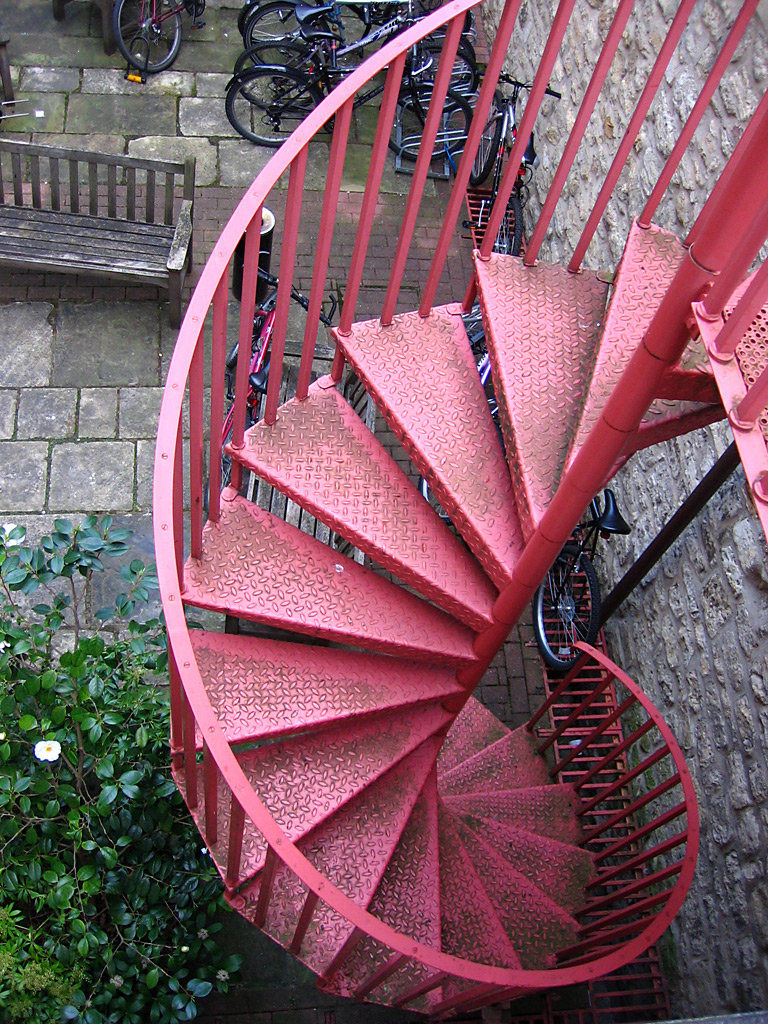
Spiral staircase in Oriel College

With my departure for the reading week in Dorset a mere nine days away, the pressure is on to submit as complete a thesis draft as possible, so there will be at least some opportunity for discussion before then. As such, my aim is to complete my consensus chapter by Sunday evening, at which point I mean to have it physically delivered.

The prospect of moving beyond the thesis is quite an alluring one. For months, the project has been dominating my attention – though often more on account of the anxiety it induces than in terms of workable ideas being generated and put on paper. The efficiency with which a project is completed basically seems to be inversely proportional to the total size. Dealing with a single email, one can use almost 100% of the time devoted to action actually working. For a research paper, it seems unlikely to be much above 50%. For a thesis, I would be surprised if 30% efficiency was being achieved.

Une deuxième langue

With the intention of stemming the rate at which I am forgetting my French, I am thinking of taking a refresher course at the Oxford Language Centre next term. Specifically, I was thinking about the intermediate-level LASR course (two hours a week). The LASR courses are less intensive than the OPAL ones and do not yield a formal certificate. That doesn’t matter to me, however, since I would be doing this simply to retain my own ability to work in the language.

Has anyone done a language course there? Did you find it useful? Any tips for getting accepted into one of the courses, as I am told they don’t always have enough spaces?

Oceanic microorganisms

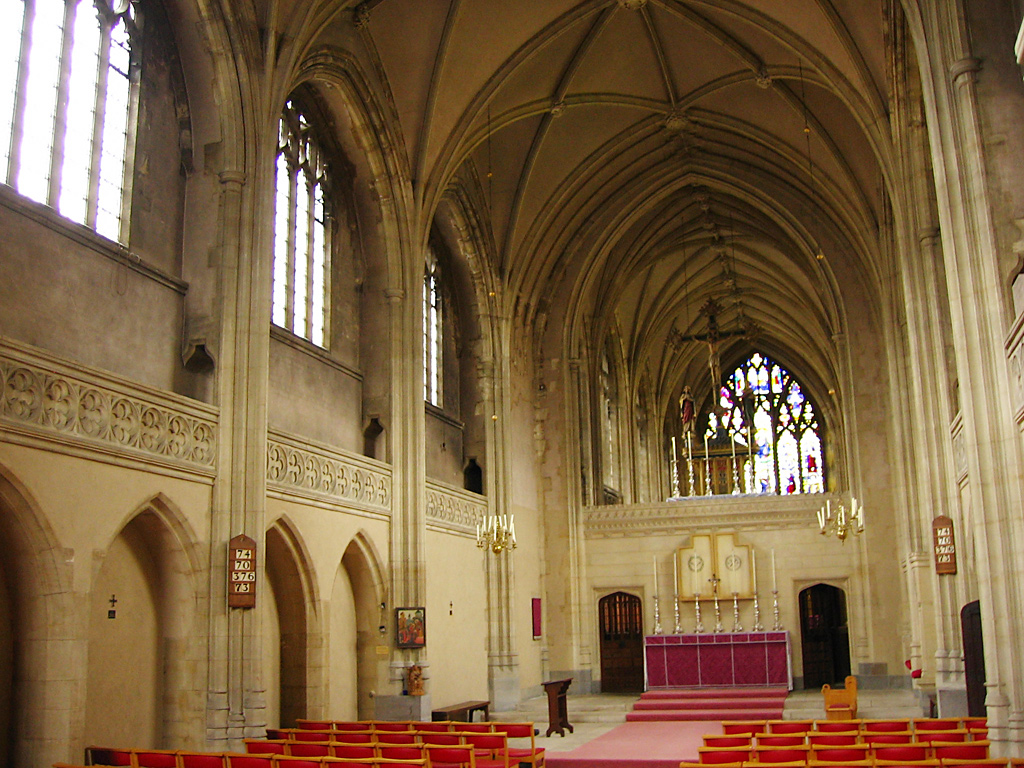
St. Cross College chapel

One of the most interesting points repeatedly discussed in Bill Bryson’s A Short History of Nearly Everything is the astonishing variety of microbial life that exists on earth. Regardless of how you arrange your taxonomy, there is far more variety in single-celled life than in the more familiar multicellular variety. What’s more, it seems that single-celled creatures may be more diverse in the ways they carry out essential biological tasks like energy collection, movement, and communication.

One of the more interesting bits of research being done right now is the work of Craig Venter through the Global Ocean Sampling Expedition. Using samples taken from seawater from around the world and ‘scattershot’ techniques of genetic sequencing, some new information about that variety has been uncovered. This one program has tripled the number of genes that have been sequenced by humanity (from three to nine million). For instance, the project discovered a great deal about a class of messenger molecules called kinases. Previously, they were believed to consist of a single family of proteins, used by plants and animals. Now, nineteen new families have been discovered, all in bacteria.

In every age, there is a certain temptation to think we have most of the basic knowledge about how the world works mapped out. Projects like this help to reveal just how much there is left to come to grips with.

PS. Those curious about some of the ongoing debates in biology should have a look at two Wikipedia entries: Kingdom and Taxonomy. Some of that Kingdom-Phylum-Class-Order-Family-Genus-Species stuff we all learned in high school is coming under challenge, at the same time as there is a big schism between those seeking to categorize organisms by similarity in structure and those intent to do so on the basis of tracking genetic progressions.

Coal and climate change

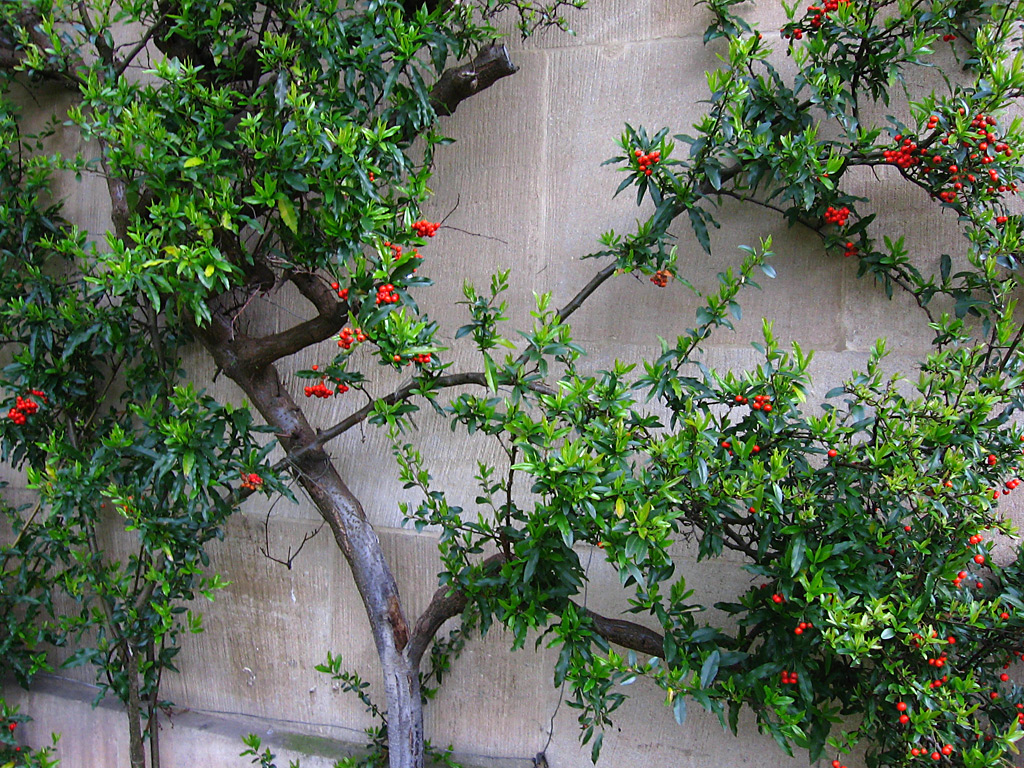
Plants on wall in Wadham College

Few government policies have longer lead-times than those dealing with infrastructure development. This is demonstrated through the 17-year time-frame from design to deployment for Britain’s replacement Trident subs and it pertains directly to climate change issues. Despite Nicholas Stern’s espousal of a fossil fuel free society by mid-century, fossil fuel based plants are still in construction around the world. Right now, coal power plants account for about 1/4 of all human caused greenhouse gas emissions. About 150 new plants are slated for construction in the United States alone: 56% of them coal fired. By the time they have been completed, operate, and reach the end of their operational lives, we will be getting pretty close to 2050. All told, the International Energy Agency predicts that global coal use will rise by 71% by 2030, raising greenhouse gas emissions with it.

Even if we cannot go straight to infrastructure based entirely around renewables, we can make some modest investments now that could save us a lot of trouble in the long term. One example is building coal plants that can be easily converted to “Oxy-fuel” systems. In these, coal gets burned in nearly pure oxygen. The products of that reaction are mostly pure carbon dioxide, which can then (theoretically) be sequestered underground. By eliminating the need to separate CO2 from other gases, before sequestration, such plants could save a lot of money. Of course, they do require a system to extract oxygen from air to feed the reaction, though this is apparently easier to pull off.

Such transition technologies might be the trickiest part of the entire move away from fossil fuels. Renewables seem as though they will eventually mature, allowing some mix of solar, hydro, and related systems to power the grid. Transition technologies are critical for two other reasons, as well: both China and the United States are concerned about energy security and have masses of native coal, and fast-growing developing countries are unlikely to be able to make the kind of costly commitments to low-carbon energy that developed countries will. Managing interim emissions, and trying to stay below the 550ppm level that the Stern report has highlighted as highly dangerous, will be a considerable challenge.

Climate change and the Amazon

Tonight, I saw a public lecture associated with the Oriel College conference: Climate change and the fate of the Amazon. Notes on Thomas Lovejoy’s presentation have been posted on my wiki. Most of it was stuff that I had heard or read before in multiple places, but it will be useful to have another source to cite on a few issues, for the thesis.

The issue of biodiversity also really drives home the instrumentalist v. inherent value perspectives on nature. If golden toads provide no concrete benefit to human beings, should we be concerned about them going extinct. If we are, what level of resources is it sensible to devote, given the myriad other problems that exist?

Compressed air for mobile energy storage

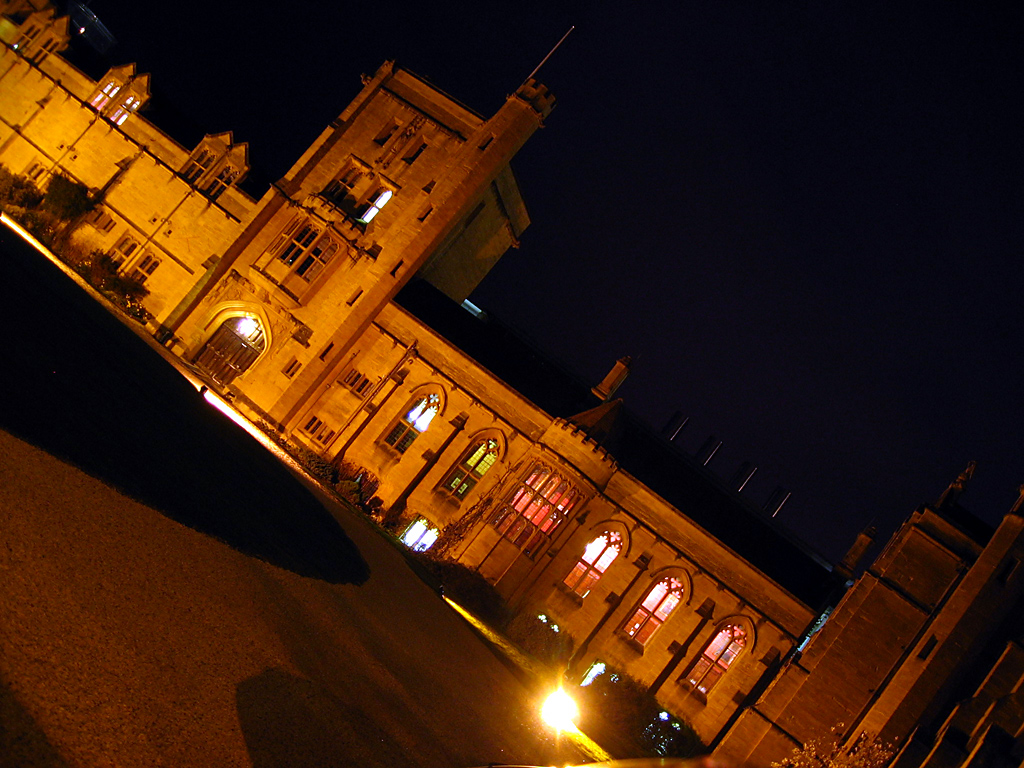
Oriel College chapel

All of a sudden, the air car concept is popping up everywhere. I hadn’t head of it before someone left a comment yesterday. Now, it is on Metafilter, Slashdot, and YouTube.

I must admit that the prospect of a $7,500 car that can run for 200-300km on $3 worth of compressed air sounds pretty amazing. Of course, the compressed air would just be a storage mechanism for energy generated in other ways. The advantage over hydrogen and fuel cell systems of biodiesel could lie in lower infrastructure costs. Installing compressors in homes and service stations already connected to the electrical grid is a lot cheaper than developing a whole new hydrogen infrastructure, leaving more money to direct towards genuinely renewable sources of energy. The compressors could also be powered directly by wind or water turbines, as well as solar power systems. As for biodiesel, once you factor in the energy required to grow the crops and process them, as well as the inefficiency of internal combustion engines and the continued reality of toxic emissions, it doesn’t seem like a hugely alluring prospect to anyone but corn farmers.

While it is unlikely that one technology will allow us to overcome fossil fuel dependence, it does seem sensible to think that something like this could be part of the mix. Especially if the energy being used to compress the air is coming from a renewable, non-greenhouse-gas-emitting source, these cars could make a big difference in the developing world. They could also help tackle urban air pollution, such as the kind plaguing Beijing.

PS. I got today’s photo of the day in Oriel College, as part of my initiative to photograph each college at least once. While there, I discovered a sizable conference on climate change ongoing, about which I had heard nothing. This goes to show just how many people are working on the issue, both here at Oxford and more generally.

What’s the big idea?

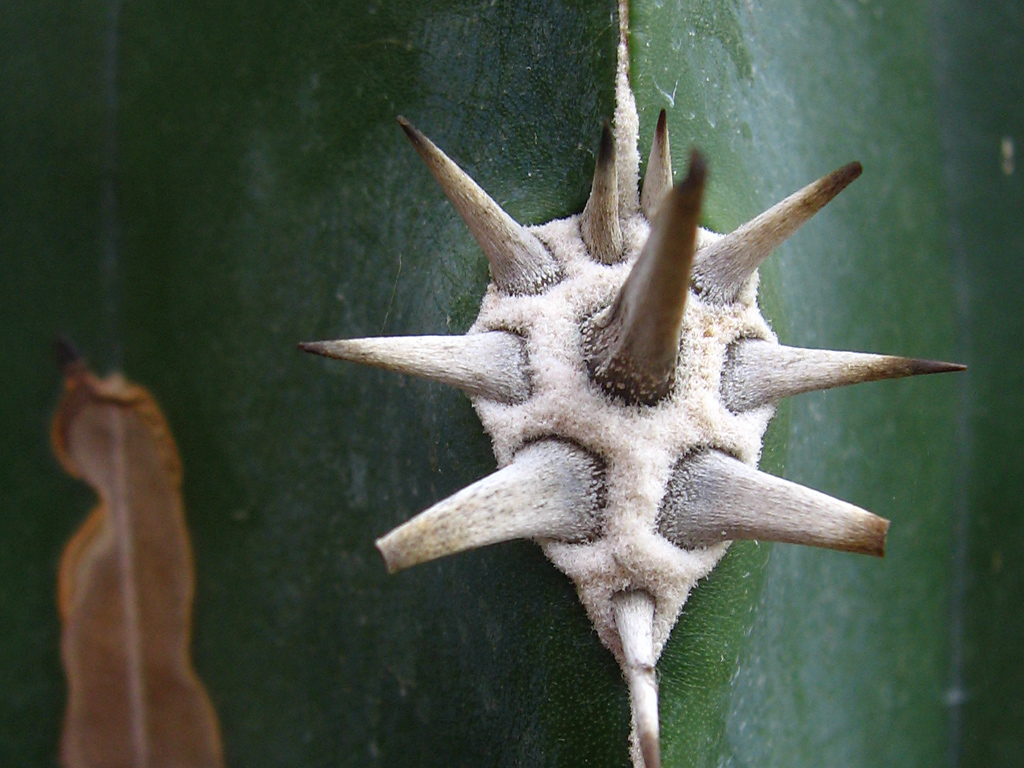
Cactus spines

Sorry to be writing more about the thesis. I spent a good fifteen minutes trying to think up something else to write about, as well as flipping through the websites most likely to provide inspiration.

The trickiest thing I am doing at the moment is trying to come up with an over-arching argument for each of my three substantive thesis chapters. Each one has a lot of content – many sources, issues identified as important, and specific points about those issues – but none really has a single massive point to prove. Personally, I am fairly happy to present things as a series of related vignettes on consistent topics and themes. It seems, however, that something more directed and integrated is required. That creates the danger of setting up straw men to knock down. Coming up with an important, novel point that takes 7000 words and a couple of dozen sources of diverse kinds to prove is not an easy thing.

PS. As part of my thesis-completion drive, I am boycotting Adium (a program that combines MSN, AIM, ICQ, Google Talk, and other message programs). People who want to speak with me should try Skype: more meaningful and less likely to carry on for many hours. My apologies to all the friends I have been neglecting, while trying to get through this.

Equilibrium ruminations

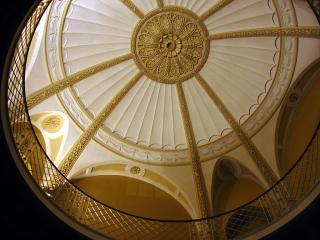
Ceiling in Green College tower

Working on chapter three, I have been talking a lot about different kinds of equilibria, and what implications they have for environmental policy. Uncertainty about which sort we are dealing with – as well as the critical points of transition between them – make it exceptionally difficult to consider global environmental problems in cost-benefit terms.

Stable equilibria

One common view of the characteristics of natural equilibria is that they are both stable and singular. An example is a marble at the bottom of a bowl. If you push it a bit in one direction or another, it will return to where it was. Many biological systems seem to be like this, at least within limits. Think about the acid-base conjugate systems that help control the pH of blood, or about an ecosystem where a modest proportion of one species gets eliminated. Provided you like the way things are at the moment, more or less, such stable equilibria are a desirable environmental characteristic. They allow you to effect moderate changes in what is going on, without needing to worry too much about profoundly unbalancing your surroundings.

Unstable equilibria

Of course, such systems can be pushed beyond their bounds. Here, think about a vending machine being tipped. Up to a certain critical point, it will totter back to its original position when you release it. Beyond that point, it will continue to fall over, even if the original force being exerted upon it is discontinued. Both the vertical and horizontal positions of the vending machine are stable equilibria, though we would probably prefer the former to the latter. For a biological example, you might think of a forested hillside. Take a few trees, wait a few years, and the situation will probably be much like when you began. If you cut down enough trees to lose all the topsoil to erosion, however, you might come back in many decades and still find an ecosystem radically different from the one you started off with.

Multiple equilibria

The last important consideration are the number of systems where there are a very great many equilibrium options. One patch of ocean could contain a complex ecosystem, with many different trophic levels and a complex combination of energy pathways. Alternatively, it could feature a relative small number of species. The idea that we can turn the first into the second, through over-fishing, and then expect things to return to how they were at the outset demonstrates some of the fallacious thinking about equilibria in environmental planning.

The trouble with the climate is that it isn’t like a vending machine, in that you can feel the effect your pushing is having on it and pretty clearly anticipate what is going to happen next. Firstly, that is because there are internal balances that make things trickier. It is as though there are all sorts of pendulums and gyroscopes inside the machine, making its movements in response to any particular push unpredictable. Secondly, we are not the only thing pushing on the machine. There are other exogenous properties like solar and orbital variations that may be acting in addition to our exertions, in opposition to them, or simply in parallel. Those forces are likely to change in magnitude both over the course or regular cycles and progressively over the course of time.

How, then, do we decide how much pushing the machine can take? This is the same question posed, in more economic terms, when we speculate about damage curves.

Getting things done

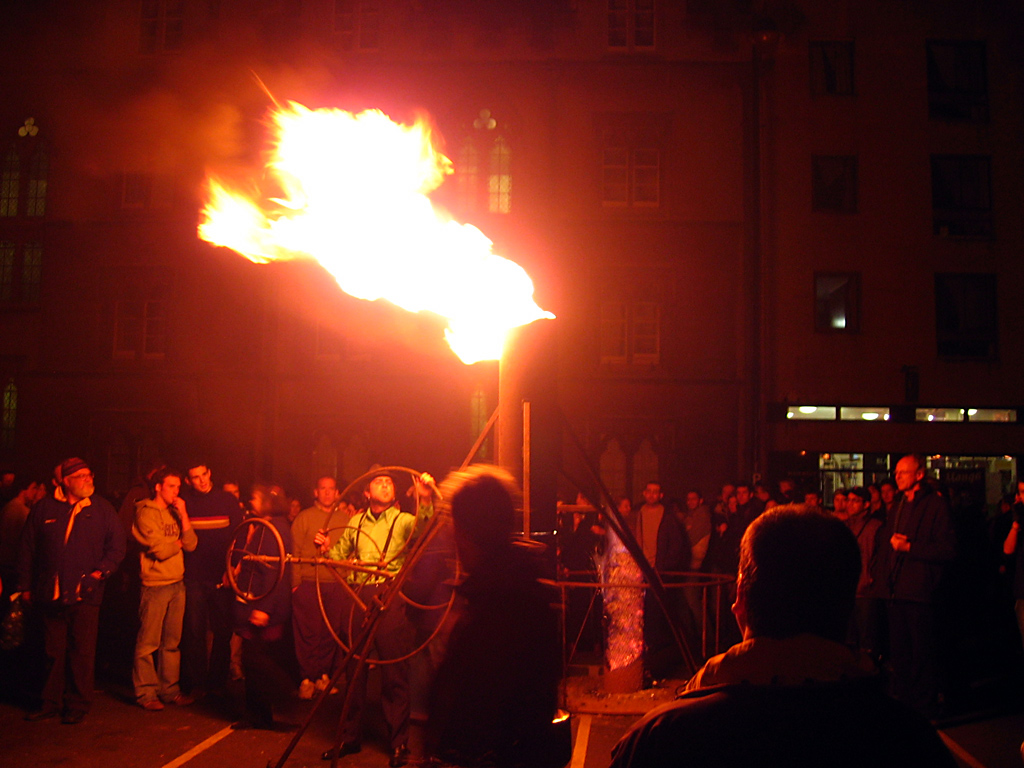
Luminox flare

After multiple recommendations, I started reading David Allen’s Getting Things Done: How to Achieve Stress-free Productivity. So far, most of what he sets out is familiar to me. I already deal with emails using an algorithm almost identical to the one he suggests. Likewise, my calendar and to-do list usage is closely akin to what he describes. What I am most hoping to get from the book is the ‘stress-free’ part. I have spent enormously more time worrying about the thesis than actually working on it (because I worry about it every minute of every day).

Hopefully, the nuts and bolts of his approach will help in the completion of the thesis, during the course of the next five weeks. I still have about half the book to go, so I am hoping it proves worth the time and money spent reading it.

[Update: 18 Mar 2007] As part of the ‘collection’ phase of GTD organization, I have started making project lists and reading lists on the wiki.

Information saturation

Mansfield College, Oxford

There is no time when it is easier to get distracted from a task than when it is something long, complex, and challenging. My room is never cleaner than at the periods before exams, nor my emails so well managed as at times when I have some massive research project to complete. The number of possibilities on the web: from blogging to instant messaging, compound the danger. So too, the special stresses involved in thesis writing.

This month’s issue of The Walrus includes an article called “Driven to Distraction” that addresses the issue of how many such temptations exist in a digital age. I subscribe to 127 different information feeds: most of which get updated more than once a day, and some of which are regularly updated more than twenty times a day. Beyond that, I have email, the manual screening of spam from blog comments and wiki pages, Facebook, constantly updating access logs for various sites, text messages on my cell phone, and news websites that I track.

Just as I have frequently used music and immersion in a laptop-free coffee shop environment to try to get some reading done, I am going to try to reduce the frequency with which I am checking my various feeds: staying logged out of Bloglines and email and checking each only a few times a day (or at least every couple of hours, instead of virtually constantly). Maybe then I will be able to finish hammering out a new version of chapter two, as well as drafts of chapters three and four, before Dr. Hurrell departs for Brazil, leaving me to finish my thesis entirely on my own.