Luminox

Luminox in Oxfordshire

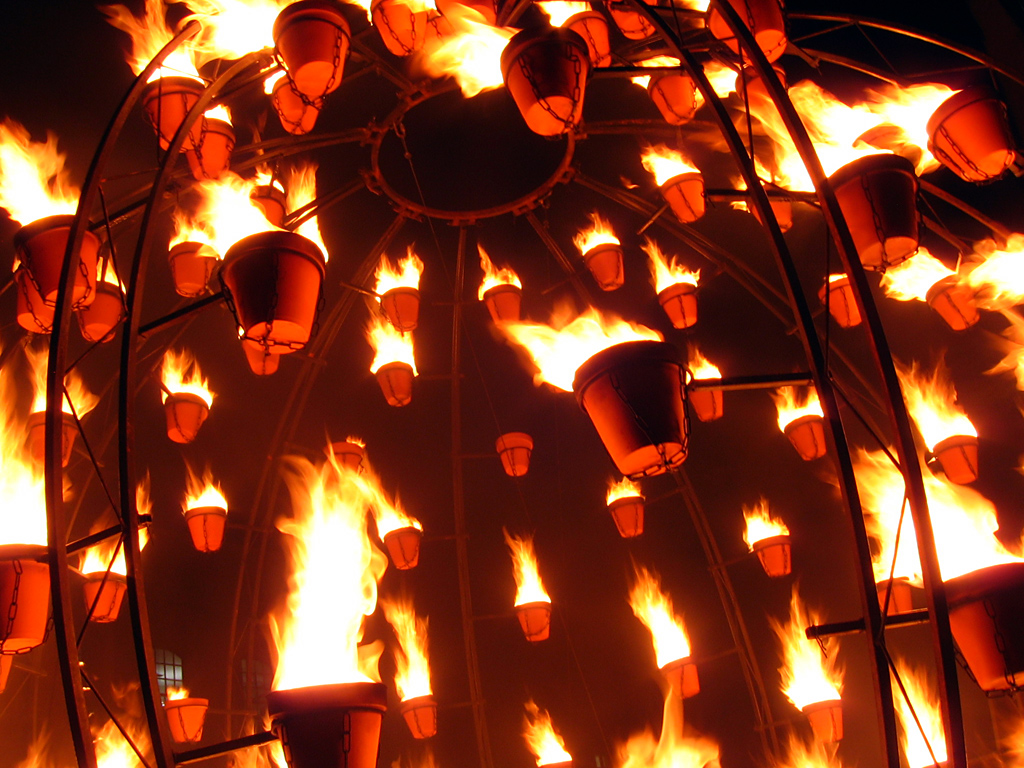
The Luminox festival is really quite something. Essentially a celebration of combustion, it runs all along Broad Street from 7:00pm to 10:00pm for the next two days. The event involves a combination of fire-based artistic displays and live music. The whole thing seems to be paraffin powered, and it includes both static displays and manned installations that are made to flare up with the removal of chokes. Spaced along the road are braziers of coal and wax-burning metal chimneys that glow orange hot. Hanging from a crane beside Balliol College is a massive chandelier of flame.

Having such an immediate experience with fire would be impossible in lawsuit-happy North America, but it is quite engaging and beautiful. I actually took about fifty pictures, so expect to see them crop up on future days when I am too busy to find something new.

PS. Today, I also saw the inside of the Green College tower tonight, and got a photo of Mansfield for my growing collection of Oxford college images.

PPS. Did you know that you can set Google Calendar to automatically notify you of upcoming appointments by SMS? During the breaks, I have trouble keeping track of exactly which generally unstructured day I have an event in. With this free service, I have a very helpful aide memoire.
Shedding possessions

With my departure from Oxford coming up in about one hundred days, I am getting nervous about how much stuff I have picked up while here. Since it seems that shipping things back to Vancouver would be excessively expensive, I am planning to sell as much as possible before leaving.

Here is a list of what will be for sale. If you are interested in anything, let me know.

Spring, geeky tech, and the continued tapping of thesis words

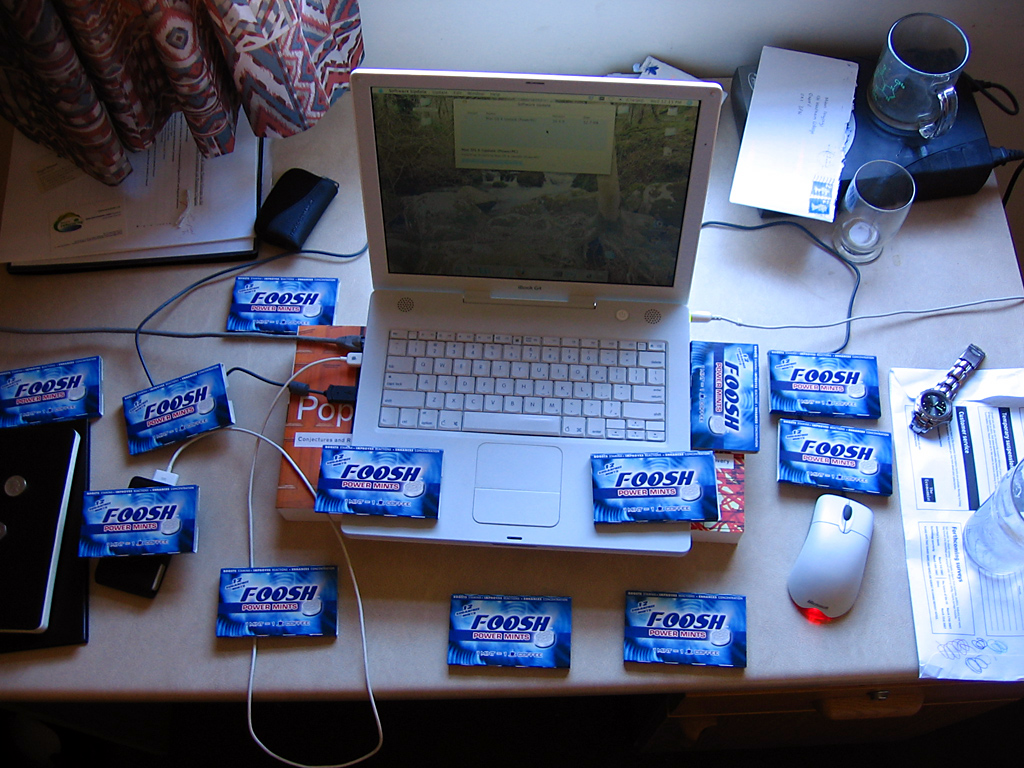
Foosh mints

Today has been fairly productive, with one excellent break out in Oxford’s sunlit gardens and along its warm paths. I am well on the way to having the structure of chapter two revamped, though my introductory sections for chapters three and four still need to be finished. The most difficult thing is staying focused for any length of time. It is all too easy to find a more immediately satisfying way to use one’s time.

Speaking of immediate satisfaction, this week’s Economist features their Technology Quarterly (most of the links below require a subscription). Most of it is stuff that is pretty familiar: cellulistic ethanol, solar power (mentioned here recently), data visualization, display technologies, and climate engineering. One thing that was new to me is the emergence of ‘haptic’ touch screens that are able to simulate the feeling of various materials by slightly stretching the skin of the fingers touching them. It is possible to make tapping on a screen feel like pushing a button, or even make a flat screen feel like a sharp edge. It doesn’t take much thinking to imagine some really interesting applications for such technology, particularly in terms of making technology more comprehensible and accessible.

Task sequencing altered

Today’s meeting with my supervisor was very useful – the flaws in my draft second chapter were discussed, and a route forward proposed. As soon as possible, I am to submit a revised chapter two introduction, as well as draft versions for the opening sections of chapters three and four. These are to lay out the central purpose of each chapter, the three or four main arguments that will be made, and the structure that will be used:

  • Chapter two, main argument: the linear model of scientific investigation is wrong, in the context of environmental politics generally and Stockholm and Kyoto specifically
  • Chapter three: scientific and political consensus are not independent, the first does not chronologically precede the second
  • Chapter four: technical remedies to environmental problems are not value neutral (be sure to focus on remedies and scientific rationality, not economic rationality ie. Coase)

Once that is done, I am to revise chapter two into a more logical form, then write the draft of chapter three that was originally due tomorrow. The objective of all this is to have the structure of all three chapters finalized by the end of the month, as well as their introductions and conclusions. Then, when Dr. Hurrell leaves for Brazil and I go to Dorset, it will be a matter of tidying things up, adding some footnotes, and generally polishing the finished work prior to submission.

Of course, that leaves me with eighteen days to write two more chapters, as well as discuss and edit them. Amazing how the period in which the bulk of the work on a project actually seems to get done always lumps up at the end. Hopefully, all the background reading I have been doing since last year will percolate into my analysis.

Solar power and climate change

Cloth pattern, in sumi-e

This is my last full day in Wales. Hopefully, we will have seen a bit of sunshine so far. One of the best things about climbing mountains is the view from the top. Speaking on illumination…

Intuitively, I have long had the sense that solar power makes a great deal of sense as an alternative power source. There are no greenhouse gas emissions, there is no need to operate any massive industrial processes, other than manufacturing panels, and the technology only needs to become incrementally better to be cost-effective against fossil fuels. This map of solar energy, which was used in C.G. Rapley’s presentation, shows the size of solar collectors of the present efficiency that would be needed to satisfy our present electrical needs.

Cost is the first big problem with solar, though it may be a temporary one. According to The Economist:

Decades of research have improved the efficiency of silicon-based solar cells from 6% to an average of 15% today, whereas improvements in manufacturing have reduced the price of modules from about $200 per watt in the 1950s to $2.70 in 2004. Within three to eight years, many in the industry expect the price of solar power to be cost-competitive with electricity from the grid.

Full article (subscription required)

The other big one is load balancing. Because solar output isn’t constant, there is a need to either store power or redistribute it across long distances. Storage across the daily light-dark cycle is of inescapable importance, and the means for doing so are not terribly clear. Batteries are costly and bulky, as well as of a limited lifetime. Solar energy could be used to electrolyze water into hydrogen and oxygen, which could then be fed to fuel cells, but I expect that would increase costs a lot, while reducing efficiency. As with transportation, I think energy storage is a bigger long term problem than energy generation.

Of course, one technology is unlikely to be the solution, in and of itself. There are lots of places where hydro, wind, and geothermal power make sense. There may even be situations where biodiesel is an appropriate choice, despite the inefficiencies of production.

[Update: 3 May 2007] Antonia sent me an interesting BBC article about a solar thermal plant near Seville.

Shipping news

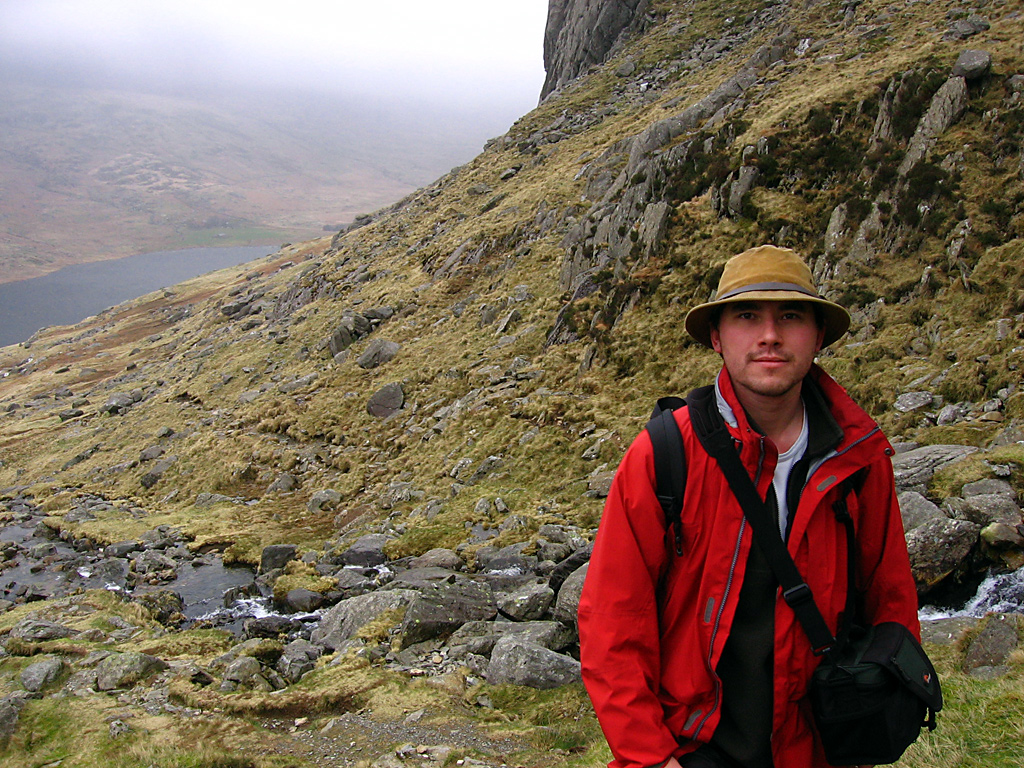
Milan Ilnyckyj in Wales

By now, I have quite possibly finished climbing the highest mountain in Wales – almost certainly in the pouring rain. A saner person would have been at his desk with a cup of tea and a thesis draft progressing. An even saner person would have finished the draft before leaving…

One thing I have been pondering lately is the logistics of moving on from here. I arrived in Oxford with a big suitcase, a backpack, and a suit bag. Heavily laden, I made my way in the rain from the train station to Wadham. While here, I have picked up about thirty books. I also have about ten binders and a box of hanging files, mostly related to the thesis. If I am going to do another research degree in the future, I am probably going to want this stuff. Not bringing my environment related books here was a mistake I have regretted many times.

The most sensible option would seem to be putting the books and binders into one or more big boxes, wrapping the file box, and sending the whole collection back to Canada by the slowest and cheapest form of mail possible. Given that I will be working, rather than going to school, I won’t need it urgently.

Has anyone undertaken such shipping? How much can I expect to pay, either by weight or by size? Is there a better option than the normal mail service?

Two useful WordPress hacks

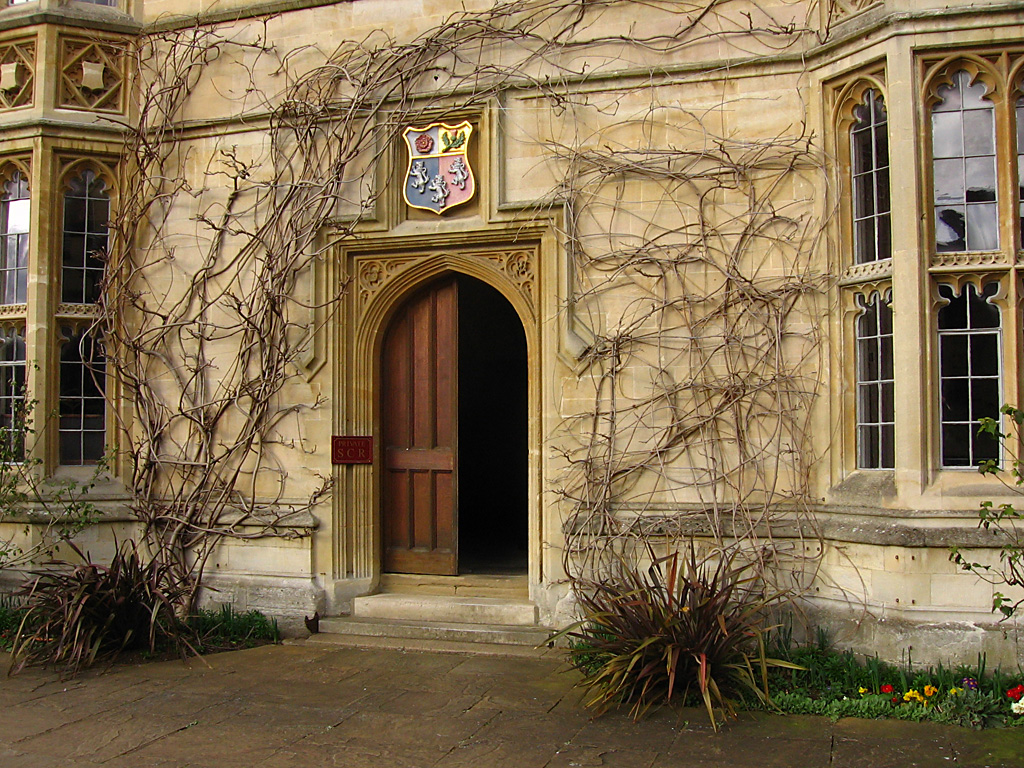
Doorway at Pembroke College, Oxford

By the time anyone is reading this, I will be well on my way to Snowdonia with the Walking Club. Rather than make this the longest pause in blogging in recent memory (four days!), I have queued up some short entries with images.

This post is a fairly esoteric one, of interest only to people who are either using WordPress of thinking of setting up a WordPress blog. It details two little programming tricks that improve the WordPress experience. Continue reading “Two useful WordPress hacks”

From a flat in Oxford to a barn in Wales

I should pause from the frantic assembly of rain gear and the overly optimistic inclusion of thesis reading in my rucksack to say that I am off to Wales in a few hours (there seems to have been some confusion about whether I had already gone). I will be away until late on Monday, making this the longest interruption in my love affair with the internet since I went to Scotland in July. One day longer, and it would be beaten only by the Bowron Lakes canoe trip in the summer of 2004.

This is what happens when even the cheapest hostels have web access, and internet cafes are plentiful. The worst a connected person need endure are unfamiliar foreign keyboards.

Despite the urgency with which I will need to finish my third thesis chapter, you can expect some photos to find their way online within a few hours of my return. Expect panoramic vistas, drenched hikers, and sheep.

PS. Fellow Canadians trying not to forget all their French may be interested in a new blog that Richard Albert, from Lady Margaret Hall, has established. Now that quarterly Oxford bloggers’ gatherings have fallen by the wayside, I need a new way to decide how frequently to update my list of Oxford blogs.

And so it continues…

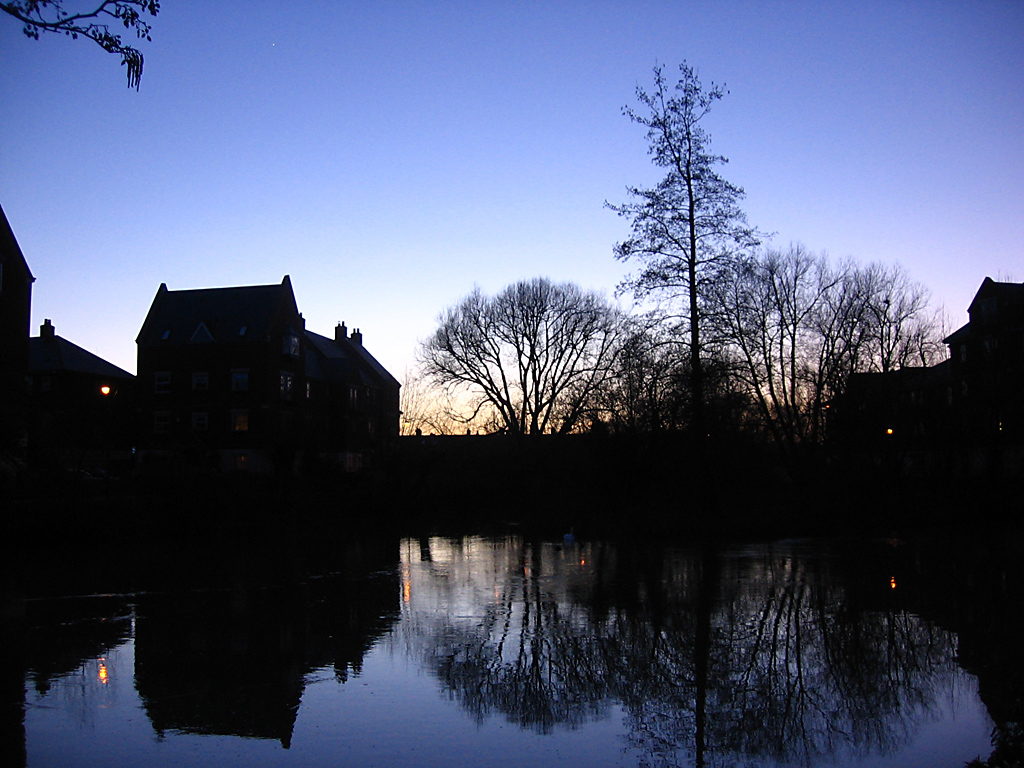
Houses and trees before the setting sun

Looking over my introduction and first chapter, both show an acute need for additional work. Many thanks to Tristan for giving them a much more comprehensive look than anyone else has. The chapter on problem identification, particularly, shows signs of having been written in haste. I need to integrate arguments in response to many things I have read, but not discussed in the present draft. I also need to work on the structure, language, and arguments.

Even more worryingly, I am meant to submit my chapter on consensus formation next Wednesday, and it is nowhere near where I wanted it to be before I left for Wales. I am not naive enough to think I will be able to get any work done there, but I am committed to the expedition now. Expect some truly frantic, crazed entries early next week.

I wish I had my noise isolating headphones. Even more, I wish I had the ability to simply read efficiently for many hours at a stretch. Memory suggests I could do this once, but perhaps I am not recalling things accurately.