Coffee, sandwiches, and bibliographies: the blocks from which theses are made

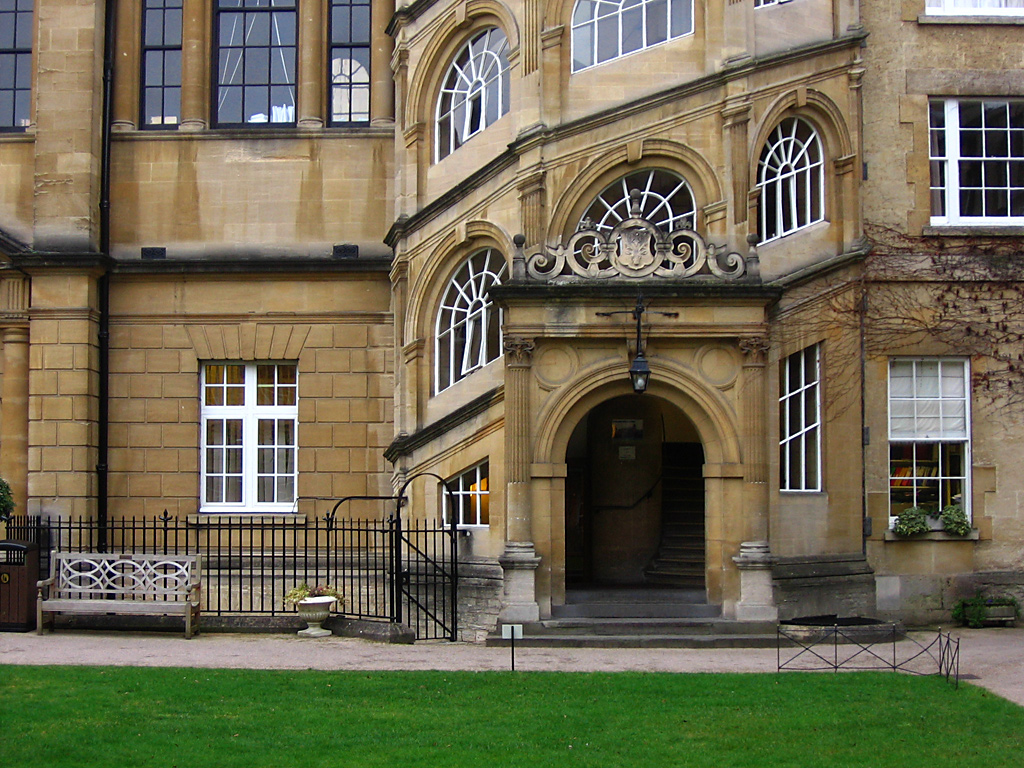
Hertford College, Oxford

There was a talk in Corpus Christi today that was a kind of grad student slam dunk. Organized by Cinnamon Carlane and given by Henry Shue, the talk was on the ethics of climate change. Firstly, it involved free sandwiches (fully 2/3 of which were vegetarian). Secondly, as with most of Professor Shue’s talks, it involved the distribution of a comprehensive bibliography. With a thesis upcoming, you can never have too many articles of assuredly high quality to include in your discussion and, perhaps more importantly, your bibliography. Thirdly, the room was packed with people interested in environmental politics: an elusive variety of student who seem to be spread across every program and department, and only come together under unusual circumstances.

Shue’s moral argument is, of course, very well thought out and compelling. The biggest flaw, I think, is that he is not focused enough on the policy course that would be required to deal with climate change effectively, and the secondary moral phenomena that arise from that. That said, being able to make a strong foundational case that climate change is a problem upon which we are morally obligated to act may be an important step in the generation of the requisite level of political will.

Those interested in this stuff will probably appreciate knowing that Professor Sir Nicholas Stern is talking about his report on the economics of climate change in the exam schools, this Wednesday at 5:00pm.
Ten days to chapter two

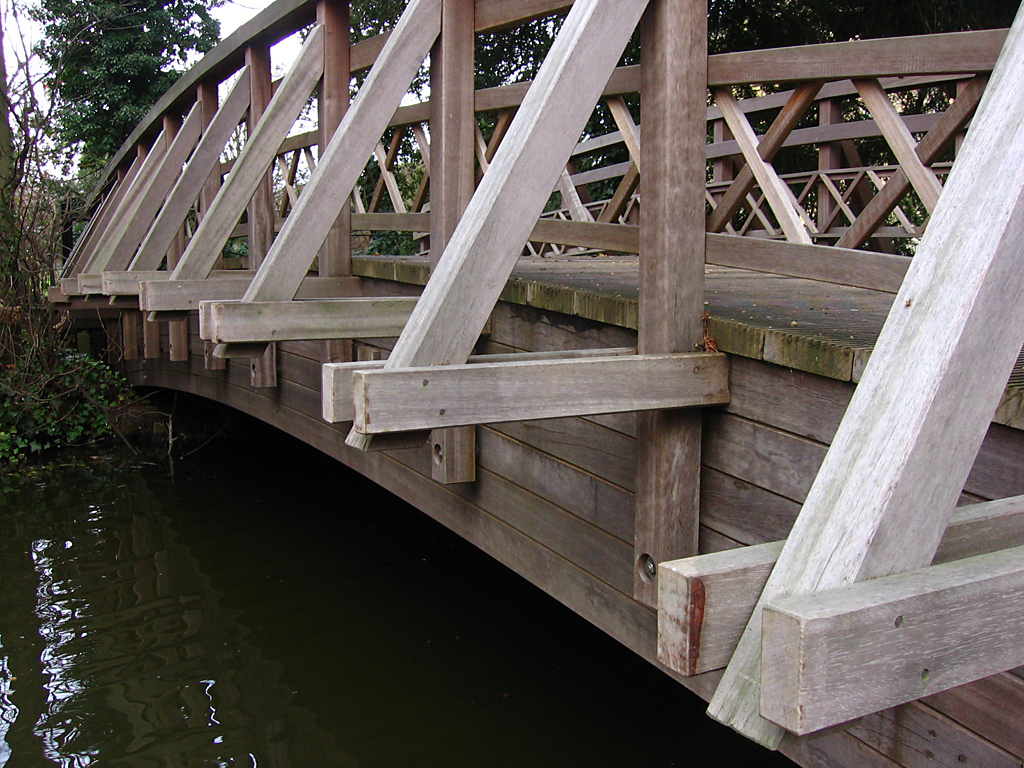
Bridge in Worcester College

By the end of this month, I am to submit the second chapter of my thesis. On “problem identification and investigation” it will detail the scientific processes that led to the Stockholm Convention and the Kyoto Protocol. Largely because of the sheer scale of the latter effort, it is a more difficult thing to pin down, especially in a reasonably concise way. If someone knows of an article or chapter that provides a neat scientific history of the climate change debate, UNFCCC, and Kyoto, I would appreciate being pointed in that direction.

On the theoretical side, the chapter will examine the ways in which phenomena in the world are categorized as ‘problems’ or not. I am also going to examine the role of existing bureaucratic structures in determining if and how scientific research in undertaken. There, the contrast between the American and Canadian approaches to dealing with POPs should be illustrative.

About 7,000 words long, this chapter will be one of the three pillars upon which the thesis as a whole will succeed or fail. As such, I am understandably anxious to do as good a job on it as can be managed, given the limitations on how much I can actually read and remember. My biggest source of anxiety remains the thought that I haven’t done enough research to speak authoritatively on the subject. Finishing the Litfin and Bernstein books is thus the first order of business, for the next few days. To that end, I should resume my ‘peripatetic and caffeinated’ reading strategy.

Quarterly Church Walk party

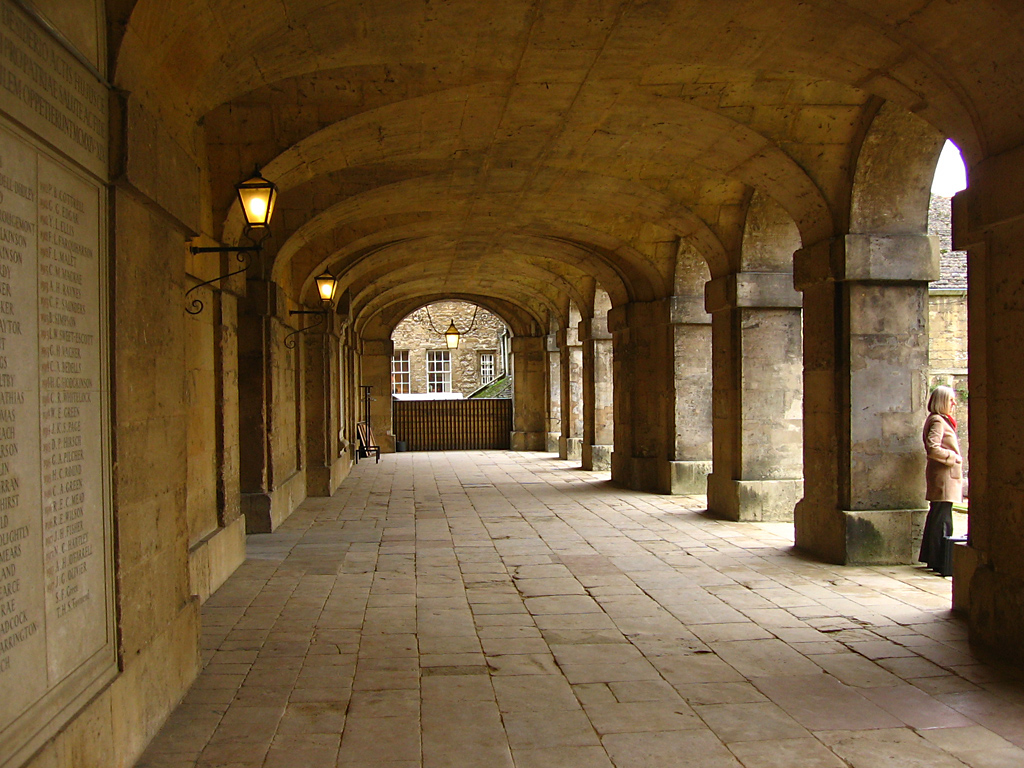
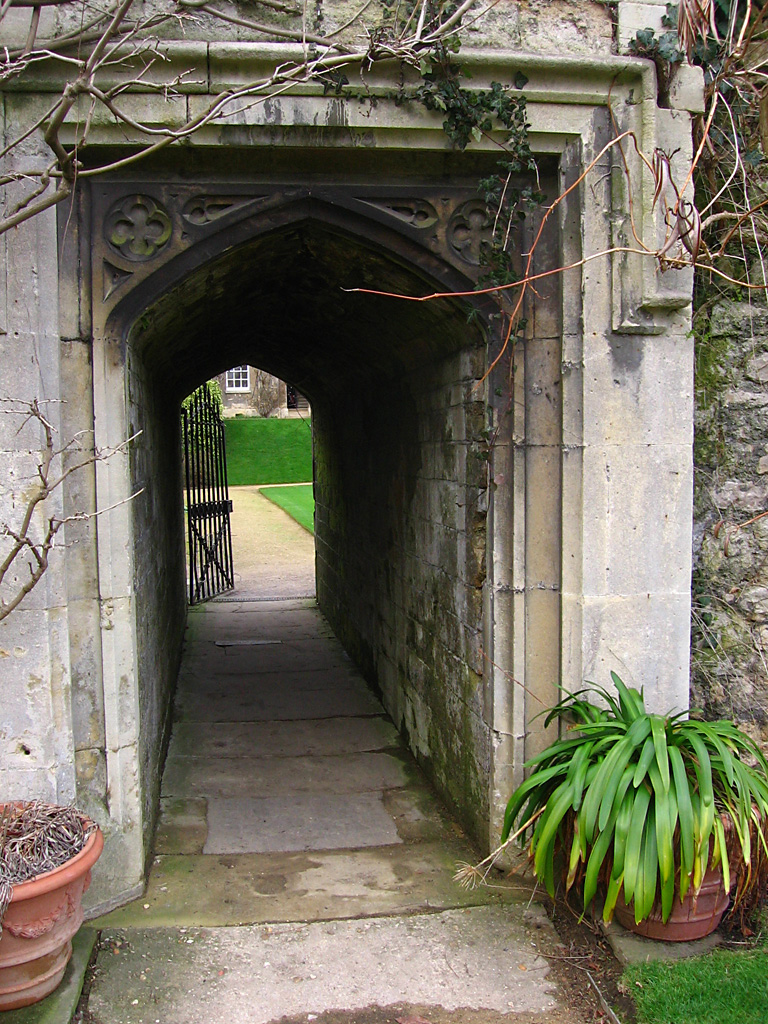
Passageway in Worcester College

Later tonight, my flatmates and I are having one of our periodic parties, the major purpose of which is to see some of our classmates who have disappeared from site since everyone separated into the various optional seminars. There are probably a couple of people from my year in the M.Phil in International Relations who I haven’t seen since before the summer, and I know very few of the people who joined the program this year. Of course, the scattering that has already occurred is just a prelude to what will happen in July, as people spread out to all corners of the earth and many separated areas of human endeavour, leaving behind a dedicated cadre to complete the D.Phil in an additional two years.

It will be exciting to see where such a dynamic and capable group of people find themselves in twenty five or thirty years. That said, I know very little about the subsequent fortunes of people who completed this program in the best, barring the subset that have gone on to teach it: a surprisingly high fraction of the total body of instructors.

Given the extent to which the ‘come as your supervisor’ theme of the previous party was ignored, this one has officially been declared ‘ambiguously themed.’ Interpret that as you will.

[Update: 18 February 2007] The party went well, and had a good number of people present, though very few were actually from the IR program. Someone left a dark blue backpack in our sink. It says: ‘Hikerpak’ on the side and seems to contain various notes and papers. If you know to whom it belongs, please come and claim it.

More published photos

First, it was The Oxford Student. Now, the 2007 Wadham College Gazette, produced by the college and distributed to students past and present, features two photos that I took and posted on various websites. The back cover is a photo I took of the flowers behind the cloisters last spring. Happily, they credited me for the images. Unhappily, they called me Milan Llnckyi.

Now, I can understand how a person sees Smyth and writes Smith. I cannot see how someone sees Ilnyckyj, just wings it, and writes ‘Llnckyi.’ Every single website from which these photos might have been taken (blog, Facebook, and Photo.net) includes my name in full. Incredulity aside, I have invented a mnemonic for the aid of future generations:

I
Love
New
York
City.
Kate (Happy Birthday)
Yodels
Joyfully.

Add this to the pronunciation guide, in Ilnyckyj lore. Still, I am flattered that the college found my photos worthy of printing and distributing.

PS. I really can’t be too scathingly critical. I have been double and triple checking this entry to make sure I haven’t committed the spectacular gaff of misspelling my own name.

It comes in threes

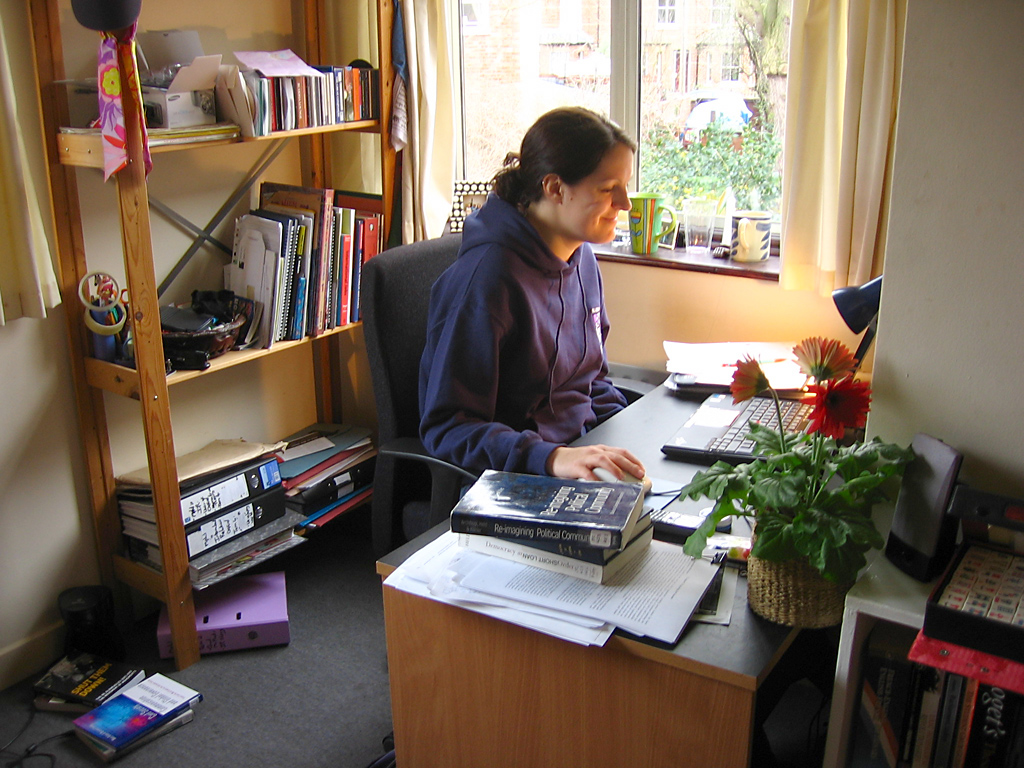
Claire Leigh working

The first substantive chapter of the thesis is about problem identification and investigation. This is not being treated as necessarily temporally prior to the next two substantive chapters (consensus formation and remedy design), but the three do seem analytically separable. Throughout the triptych, at least three themes are likely to be ever-present: the moral relevance of uncertainty, the importance of social roles, and the ways in which normative assumptions are embedded and concealed within processes.

The confluence of three other things defines the reasons for which this thesis is a novel contribution: the exploration of those themes, the combination and comparison of the two case studies, and the focus upon the contribution that international relations as a discipline can make to the subject at hand. Having those three overlapping reasons is comforting, because it means I am quite unlikely to be utterly scooped by someone else who is looking at the same problems in similar ways.

Pragmatically, it does seem like the environment is likely to be a growth area in international relations. That said, there are three major possibilities for the future overall:

  1. Climate change proves to be less threatening than the worst case, runaway change scenarios would suggest; other environmental problems prove manageable
  2. Climate change is as bad as some of the most pessimistic assessments claim, but it is uniquely threatening among environmental problems
  3. For whatever reason (population growth, economic growth, technological progress, etc) additional problems of the climate change magnitude will arise

If I had to put my money on one of those options, it would be the second. I can see human behaviour causing all manner of specific problems, both localized or confined to particular species or elements of the environment. It is hard to see another human activity (aside from the danger of nuclear war) that threatens the possibility of human society continuing along a path of technological and economic evolution, during the next three to five hundred years.

Back among IR scholars

I switched gears in reading today, and the result has been dramatic. There are really three kinds of research going into this thesis:

  1. Background reading about fundamental concepts like the nature of science
  2. Research on the case studies
  3. Examination of analyses of other case studies

Shifting from 1 to 3, I feel like I have gone from picking a few grains of gold dust out of a bucket of mud to striking a vein of solid gold. By that, I do not mean that the previous reading was uninteresting or poor scholarship. Rather, I mean that the ratio between pages of reading and possible thesis content approaches 1:1 in a lot of Litfin’s work, while it was much lower when reading general background materials. Seeing whole paragraphs that I could well imagine in my own thesis is both empowering and frightening. It proves that I am not totally insane in what I have written so far, and it holds out the threat that what I have come up with isn’t exactly original.

In any case, reading Karen Litfin’s Ozone Discourses, on the Montreal Protocol, has been quite engaging – even if she does have an annoying habit of wandering off into abstract discussions of marginally related philosophy, apparently simply so as to prove to everyone that she has thought a lot about Foucault.

That said, perhaps her statement that there is a “general human proclivity to believe that what one does not understand must not be very important” is proven in my response to her lengthy dissemination on Habermas et al.

PS. Days remaining until submission: 66.

Old and new festivals

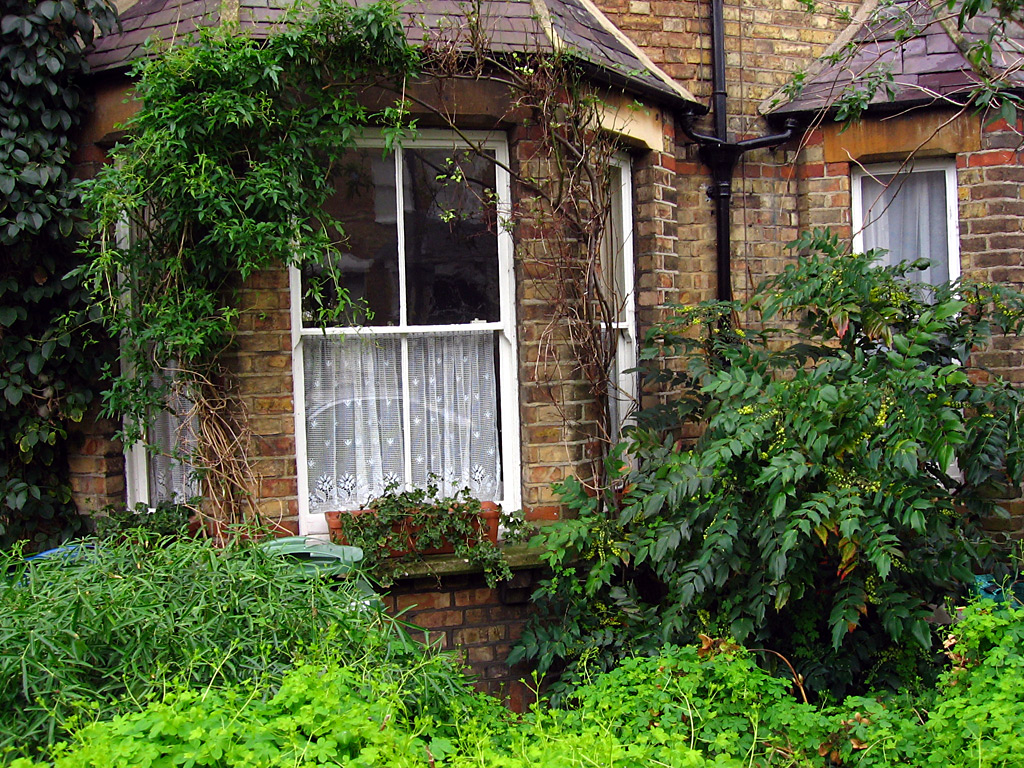
House in Jericho

The month of February is derived from the Latin word februare, meaning ‘to purify,’ and was the last month of the Roman year. The association between February and purification, however, precedes the founding of Rome. On the 15th of that month was a pagan festival called Februatio. Later, it was called Lupercalia, after Lupercus – the cave near Palatine Hill where a female wolf supposedly suckled Romulus and Remus. The festival was meant to purify the settlement where it was held, releasing health and fertility.

William Shakespeare’s play Julius Caesar begins during this festival, one way in which the Shakespearean history of Caesar’s life differs from that of Plutarch. Indeed, the crown with which Antony “thrice presented him” was a symbol of that ancient festival, and Caesar’s refusal to accept it cited in Antony’s comments following his death (III, ii). This goes to show that refusal to participate in public festivities can be dangerous for you, if you are a person of influence. In 494 CE Pope Gelasius I replaced Lupercalia with the feast of the Purification of the Virgin.

By contrast, the association between the feast of the obscure Saint Valentine and romantic love was apparently the work of Geoffrey Chaucer in the 14th century:

For this was on seynt Volantynys day
Whan euery bryd comyth there to chese [chose] his make [mate].

It seems that Hallmark is not entirely to blame, after all, nor is the Christian replacement for the festival of Lupercalia. Those wishing to invoke the spirit of either the new, as opposed to the ancient, celebration may do well to emulate the Squire from The Canterbury Tales:

So hootehotly he lovede that by nyghtertaleat nighttime.
He sleep namoore than dooth a nyghtyngale.

For those not so fortunate, or who prefer to keep February as a time of purification, there a mass of fine, free literature out there. Reading some would be a lot more charitable than sacrificing two goats and a dog to Lupercus, as was traditionally encouraged.

[Update: 11:59pm] Mica has a Valentine’s Day video up. It has his standard lighthearted charm, and may be just the thing for people who face this day with bitterness (provided that it is of the sort that can be assuaged, rather than the kind deeply rooted in your very soul).

Worcester College

Worcester College

As part of an ongoing initiative to expand the parts of Oxford I have explored, I ventured into the Worcester College gardens today. Open to all students between 2:00pm and 5:00pm, they are really worthy of a wander. I plan to revisit the courtyards and waterside paths once spring has begun to assert itself. Trying to frame photos to exclude the ash-gray sky was challenging.

The college is located at the end of the street that runs west from the martyr’s memorial past the Randolf Hotel and the Ashmolean. Altogether, the grounds are very extensive; they also have a pleasing intricacy to them, unlike the open vastness of the Port Meadow, Christ Church Meadow, or the University Parks.

I may well need to add the gardens to my rotation of places to read and wander, once the cold and dampness of these recent weeks begins to recede. Even with the threat of exams and joblessness at the end, I expect that Trinity Term will be a dream – with the thesis safely behind, and Oxford going through its most attractive season.

Standard sort of day

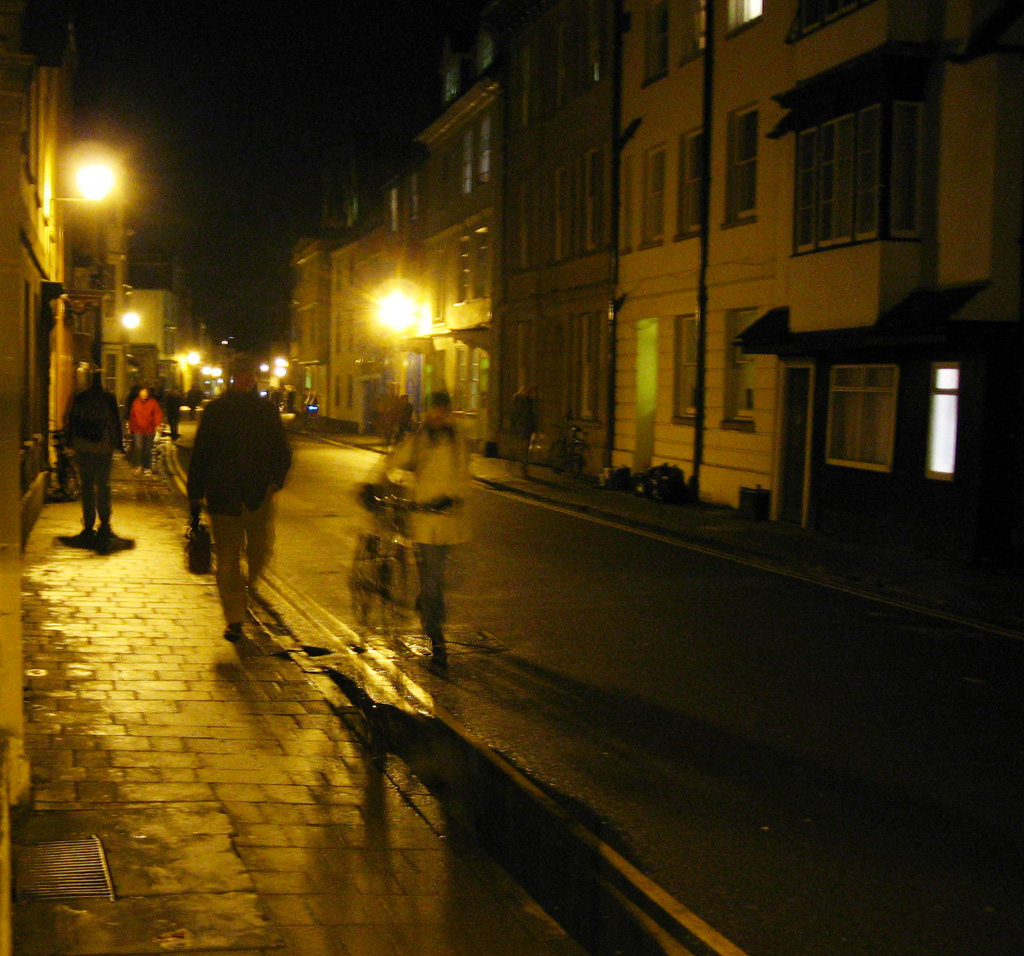
Holywell Street

This has been a fairly good day. There was some good news, and some promising silence. I got some thesis reading done, saw some rarely seen friends in Wadham, and attended an interesting lecture. Tomorrow, I shall try to focus on the first of those.

PS. People with phony degrees may well be charlatans, misleading the public, but it seems more than a bit over-dramatic to call one a ‘menace to science‘ on the front page of The Guardian.

Briefly out of Oxford

Fields north of Oxford

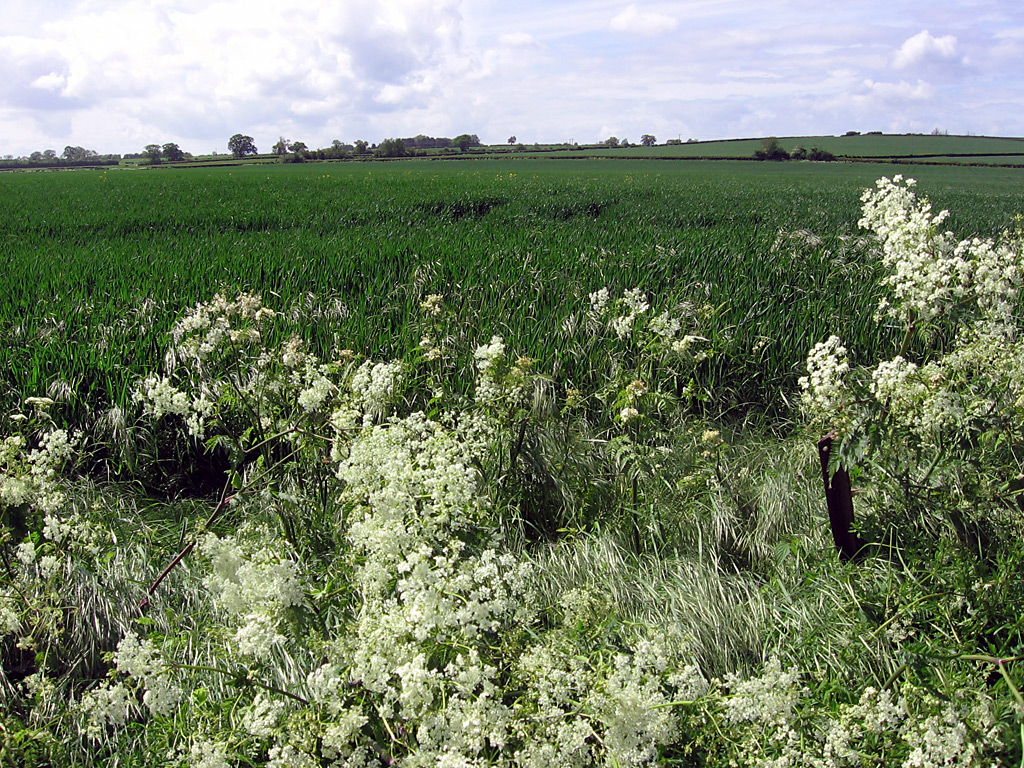
The light this afternoon and evening was just gorgeous: beginning as the kind of sharp afternoon that contrasts so markedly with the gray days of rain before, then softening with the return of clouds and the approach of sunset. It offered a good chance to head out of Oxford northwards, in the first expedition for the simple purpose of cycling that I can recall having undertaken in many weeks. As the longer, warmer days of spring arrive, I should try to get back into the habit of visiting Woodstock, 13.2km north by northeast of here, through Yarnton. Otherwise, I spent all my time in an area that runs south from our flat to Carfax, sometimes extending eastwards some way along the High Street and Cowley Road: Milan’s Oxford. On this little map, the red line above ‘University of Oxford’ denotes 1km. The blue polygon denotes the zone in which I spend more than 95% of my time.

The most notable thing about this ride was the empty space between towns. During the fading light of the late afternoon, they provided a sense of immensity in one’s surroundings that cannot be attained when there are ugly pinkish-orange streetlights overhead. On the way back, they provided ample demonstration that six volts and 5.2 amps behind a single halogen bulb is hardly sufficient to cut through a rainy English night.

PS. Privately to Maddie and Meaghan: thanks.