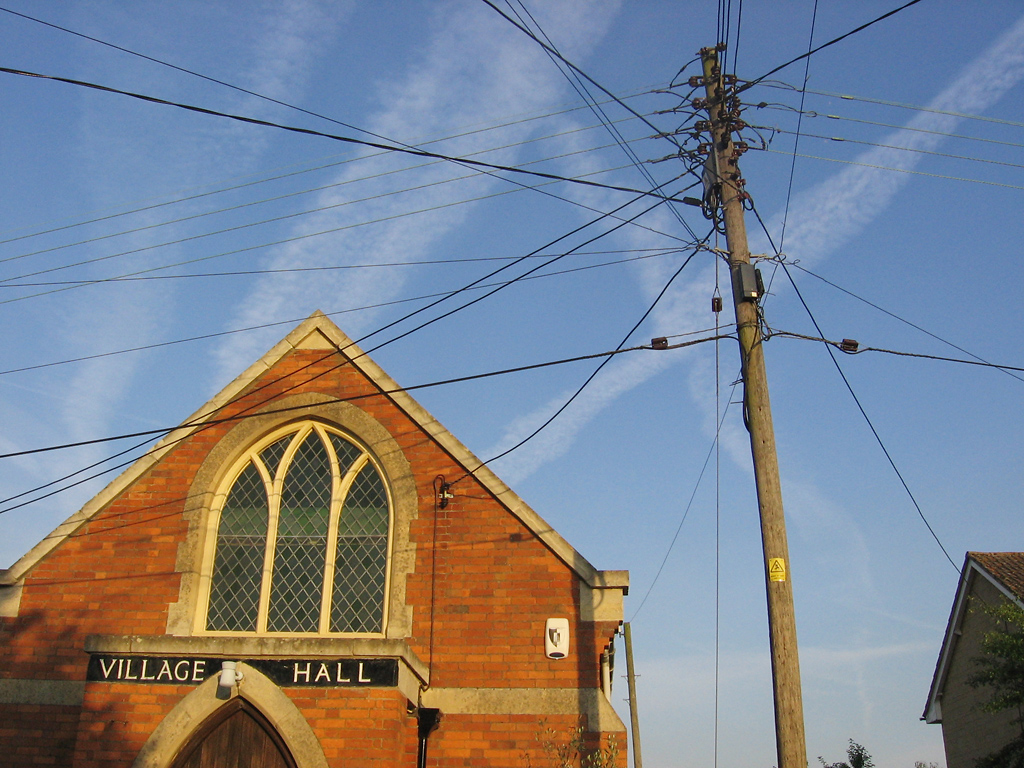
Summer days

High voltage tower

With nine days left before I go to Dublin, I am pondering how the time can best be spent, and what sort of spurs I might use to ensure that most of it is used productively. At the very least, I should finish the latest tranche of work for Dr. Hurrell, as well as the bits of thesis reading I am in the process of completing already. More ambitiously, it would be nice to finally finish with the eternal fish paper. I need to de-scale and clean it: removing more than 20% of the total words, while rebalancing a few things. Working with it is much like trying to handle a piece of machinery in the dark that was once very familiar to you, but now continuously surprises you a bit with things that are not where you remember them being, sections with purposes that elude your comprehension, and a general loss of intuitive understanding.

As I am sure more seasoned veterans of the grad school experience could have told me in advance, life is rather less productive overall when it isn’t particularly structured. The absence of the need to discuss readings at particular times tends to make them languish on your shelves. Likewise, the absence of any deadline for the completion of research or papers tends to leave the ideas lingering in dusty corners of the hard drive or the brain. This is the basic reason why the protagonist of Good Will Hunting is wrong to chastise people for spending money on graduate education when they could just use the local library for free. The problem isn’t fundamentally one of information access, but rather of human motivation.

Today, I also wrote a batch of messages to people who I have, at one time or another, had substantial contact with, but with whom I now exchange very little information. Such people have at least temporarily become as constellations in my personal firmament. Indeed, I very often find myself imagining their response to a particular project and idea, then altering my own positions and actions on the basis of their simulated contribution. Exchanging a letter with them every month or so is probably an excellent accompaniment for that process; it will, at the very least, keep them from drifting too far off themselves, as I keep writing lines for them to speak.

PS. Mica has a new music video up. People are encouraged to discuss it on his blog. In many ways, it is unlike anything he has made before.

PPS. While my digital camera is off in dust rehab, I am operating off the stock of photos I have taken previously. Apologies if they are not particularly topical, current, or interesting.

Climate change and nuclear power

Locks on a gate

Among environmentalists these days, the mark that you are a hard-headed realist committed to stopping climate change is that you have come to support nuclear power. (See Patrick Moore, one founder of Greenpeace, in the Washington Post.) While appealing in principle, the argument goes, renewable sources of energy just can’t generate the oomph we need as an advanced industrial society – at least, not quickly enough to get us out of the hole we’ve been digging ourselves into through fossil fuel dependence.

I am sympathetic to the argument. A good case can be made for employing considerable caution when dealing with something as essential and imperfectly understood as the Earth’s climatic system. Nuclear power is strategically appealing – it could reduce the levels of geopolitical influence of some really nasty governments like Iran, Saudi Arabia, and Russia. It is appealing insofar as carbon emissions are concerned, though it is not quite as zero-emission as some zealots claim, once you take into account things like fuel mining and refining, transport, and construction. It is appealing insofar as it can generate really huge amounts of power, provided we can find people who are willing to have reactors in their vicinities.

The big problem, obviously, is nuclear waste. Nuclear reactors produce high level radioactive waste, as well as becoming radioactive themselves over the course of time. The scales across which such waste is dangerous dwarf recorded human history. Wastes like Plutonium-239 will remain extremely dangerous for tens of millennia. As The Economist effectively explains it:

In Britain only a few ancient henges and barrows have endured for anything like the amount of time that a nuclear waste dump will be expected to last—Stonehenge, the most famous, is “only” 4,300 years old. How best, for example, to convey the concept of dangerous radiation to people who may be exploring the site ten thousand years from now? By that time English (or any other modern language) could be as dead as Parthian or Linear A, and the British government as dim a memory as the pharaohs are today.

In fairness, we have some reason to believe that future generations will be more capable of dealing with high level radioactive waste than we are. There is likewise some reason to believe that we can bury the stuff such that it will never trouble us again. Much of it has, after all, been dumped in far less secure conditions. Chernobyl remains entombed in a block of degrading concrete, and substantial portions of the Soviet nuclear fleet have sank or been scuttled with nuclear waste aboard. (See: One, two, three) Off the coast of the Kola Peninsula near Norway, 135 nuclear reactors from 71 decommissioned Soviet submarines were scuttled in the Berrents Sea during the Cold War. In addition, the Soviet Union dumped nuclear waste at 10 sites in the Sea of Japan between 1966 and 1991.

In the end, I don’t find the argument for long-term geological storage to be adequate. We cannot make vessels that will endure the period across which these materials will be dangerous. As such, I do not think we can live up to our obligations towards members of future generations if we continue to generate such wastes – though that is unlikely to matter much to politicians facing US$100 a barrel oil. Pressed to do so, I am confident that a combination of reduction in the usage of energy and the development of renewable sources could deal with the twin problems of climate change and the depletion of oil resources. The short term cost might be a lot higher than that associated with nuclear energy, but it seems the more prudent course to take.

All that said, I very much encourage someone to argue the contrary position.

The awesome power of exponential growth

This blog now has 1/5000th as many registered users as Wikipedia. That may sound trivial, but it should be noted that at the present rate of growth (12.5% per day – welcome Mark), we should have one million in just 99.5 days (by November 13th).

In just 174 days or so, all 6.5 billion human inhabitants of the Earth should have signed up. Don’t be the last!

On paralysis

Fields and high voltage electricity towers

The most paradoxical of all student circumstances is that in which you have so much to do, you cannot get started. I have a mass of research work to do for Dr. Hurrell, the ever-present thesis, the fish paper, and myriad other tasks of all characters and levels of importance. At the same time, my capability is basically circumscribed to cooking, grocery shopping, listening to music, and reading short stories by Stanislaw Lem.

The thought that school will be resuming in little over a month does not help matters.

My hope is that this situation is like a wheel with a segment missing: nearly capable of rolling along effortlessly, but presently imcomplete. Adding that segment should thus unleash a massive torrent of productivity that smites tasks left and right, checking off box after box in my Moleskine diary and email after email in my various bulging inboxes.

PS. Note how the prefix ‘para’ often denotes ‘in place of,’ such as in paramedic, parachute, or paralegal. Lysis is the process whereby cells in living creatures explode, either due to the effects of some outside agent or an immune system determination that the cell is critically compromised.

Summer now ending: student loan applications

With September approaching, it is once again time to apply for student loans. Canadian student loans are paid half by the provincial government and half by the federal, and have a maximum value of about $12,000 a year. The nicest thing about them is that you do not need to begin paying them back until you are no longer a full-time student. As such, they reduce the disincentive to leave school early or avoid taking higher degrees, as might be created by bank loans that start gathering interest immediately.

The justification for having a student loan program is twofold. Firstly, it posits that there are societal benefits to education. In the cases of nurses, teachers, and the like, this is quite evidently so. Secondly, it constitutes part of the justification for income disparity, on the basis of the argument that everyone has an equal chance at getting an education. This plank is somewhat weaker, since there are a great many programs that $12,000 will not cover, and some people are naturally more likely to be concerned about taking on such debt than others. That said, it is almost certainly an improvement over having no such program.

Irksomely, because Oxford is not on the official British Columbian list of eligable schools, all the paperwork needs to be done by mail and fax. Since the normal application form isn’t even on their website as a PDF, I need to have it mailed to me, as well. Problematically for people in expensive places, they calculate things like the cost of living on the basis of prices in BC. Finally, as you would expect for a government document, the application instructions are 63 pages long. They are really hung up that the program start and end dates you supply exactly match any of those sent as confirmation by your school. Hopefully, Oxford term start and term end dates will work. I remember getting initially rejected last year because Wadham and the Department gave dates a couple of days apart.

Robots and humans

South Hinksey

Still catching up on work that emerged while in Scotland, I did take some time to follow a robot through Jericho today. It was collecting information about the world using GPS, a video camera, and a three dimensional laser rangefinder. While it wasn’t the cleverest of robots, it was a worthwhile experience. My fears about the coming robot uprising have been temporarily allayed; so long as throwing a blanket over one is a completely incapacitating act, we should be able to endure.

PS. Today involved an especially surprising unbloggable event. I need to think about it.

On modes of reasoning

Electricity danger sign

One major tenet of liberalism is the idea that greater awareness of the world gained by people collectively through science and individually through education can improve overall human welfare in the long term. Firstly, the idea is that people will gain a more accurate understanding of the world and how it works. Much more controversially, they might improve the way they reason.

A game much loved by economists illustrates the controversy:

There are two players. The first player is asked to divide $10 into two parts and offer one to the second player. If the second player accepts the offer, each player gets to keep their share. If the second player refuses, nobody gets anything.

Standard economic logic would call upon player one to offer exactly $0.01, which player two should happily accept. Both players are made better off and should thus be willing to make the deal, and each player has maximized their earnings, given the rules of the game.

Of course, the game doesn’t work this way with real people. Hardly anyone will accept an offer of less than $3. This is entirely logical if you view the game not as an isolated occurrence, but one event in a life. Over the course of a life, it pays to develop strategies that keep you from having advantage taken of you. Likewise, over the course of repeated interaction, it pays to have strategies by which other people can be compelled to give you a better deal. This one choice may not offer the scope for such development, but the existence of such heuristic devices (like rules of thumb) can be extremely efficient where people have limited information and thinking power.

Economists, on the other hand, are about the only people who make offers of less than $1. More tellingly, they are also about the only people who accept such meagre offers. Through exposure to economic theory, their mechanisms of logical thinking have been altered. It is probably fruitless to speculate on whether they have been improved. Economists can understand the importance of factors like those listed above, so playing this way isn’t obviously a sign that their thinking has worsened. Of course, if economic trailing makes them less likely to anticipate that people might reject a $0.01 offer, perhaps they are worse off overall.

What is more interesting than the consideration of whether the economically optimal strategy is inferior or superior is the consideration of how frameworks of understanding affect decision-making and, furthermore, what effect that has on the liberal conception of welfare improvement through improved knowledge. The previous blog entry, for instance, portrayed the costs of global warming in terms of how much it would cost people to deal with (a very common economic representation). Drowned polar bears and damaged ecosystems only matter insofar as they affect people. Personally, I find such an approach reprehensible – for the same reason I think the wholesale denial of animal rights is morally unacceptable.

One can defend that position on pragmatic grounds: human beings with a reverence for nature have a better chance of living good lives and/or not wiping ourselves out. Saying we should cultivate the belief on those grounds is similar to Rorty’s conception of ironic liberalism. By contrast, the belief that the integrity of natural systems matters for its own sake has an intuitive appeal of a sort very un-chic and difficult to defend in a world full of poststructuralist rejections of firm ontological foundations to moral truth. Anyone who can devise an argument for the inherent value of nature not subject to such criticism will earn my appreciation.

PS. Inside nested padded envelopes, the dust-infested Canon A510 is en route to a registered service depot. If they decide to cover the problem under the warranty, I expect they will replace the camera outright, rather than trying to open and clean it. Doing so would take a fair amount of some technicians time and, if the camera isn’t properly sealed, it would only be a matter of time before parts of my sensor would start getting opaque again. Hopefully, it will come back in time for my trip to Ireland later this month.

PPS. I just upgraded to WordPress 2.0.4. Please report any bugs you come across on the bug reports page. Note also that, due to a barrage of spam comments, I have tightened the comment filtering settings. My apologies if any of your comments get zapped by the filters.

Apology for cursory treatment

Coming home to 900 blog posts, all laid out in BlogLines, is impossible. My apologies to you all, but your hard-earned thought committed to webservers have mostly been dismissed at a glance. It is a very concrete demonstration of the limitations of all human beings, and the hopelessness of capturing any significant share of human knowledge over the course of our lives.

Tutorials very successfully concluded

My tutorials this afternoon went exceptionally well. Discussing an area that you really know a great deal about with someone who is interested but just starting out in their scholarly examination of it is both engaging and rewarding. I am especially enjoying the tutorial on distributive justice. I remember how interesting it was to first read Rawls, Mill, Singer, et al and it is particularly gratifying to be sharing such ideas with someone else. The only danger is assigning a reading list that is far too long. As far as the tutorials on globalization and global justice go, I need not have worried about being short on communicable knowledge.

The other tutorial, on OPEC and the oil price shock, was also quite interesting. I have gone over 20th century Middle Eastern history enough times now that I feel quite comfortable talking about it and have a list of sources in mind basically all the time. In general, the tutorials were a reminder of the excitement that can be associated with the conveyance of knowledge.

I am looking forward to the four tutorials that remain with these two students.

You think you’re so clever, but you forget about the VAT

So much for saving money by using price differences between the US and UK version of Amazon. Today, I received not my headphones, but the duty bill for them:

Cost of headphones from Amazon.com: US$75 (C$85) (£40)
Shipping from USA to UK: US$26 (C$29)
UK Value Added Tax: £12 (C$25)
UK Parcelforce Clearance Fee: £14 (C$30)
Total: C$169 (Ack! Ack!)
Delivery time: about five weeks

Cost on Amazon.co.uk (with all taxes and shipping): £74 (C$156)
Delivery time: 4-6 days

In any case, I suppose I will cycle the five miles or so out to Kidlington (where the depot is) to pick them up either after my tutorials today or tomorrow. Many thanks to Jessica for her help with the ungainly trans-shipment process above.

The moral of the story: ye who think you can get $160 headphones for $85 are probably mistaken.

[Update: 9:01pm] I rode the six and a half miles to the pickup depot. I paid the $100 in taxes. I put in the headphones with the flanged eartips… and was disappointed. It sounded more precise than the default iPod earphones, but not enormously better. An hour later, I tried the foam eartips and I understood. Tori has never sounded more astounding. If it keeps up for a few years, the Etymotic ER6i headphones will have been worth every cent.

[Update: 2 August] It should be further noted that the Etymotic customer service people are unusually polite and helpful. I wanted to order the larger flanged tips to see if they work as well as the medium foam tips. There was no time spent on hold at all, and I was immediately put in touch with someone who is going to send me the large flanged eartips internationally for free. Such things are always pleasant surprises.

[Update: 8 August] I got the larger and smaller alternative eartips for the Etymotics today. The large flanged ones work much better than the normal flanged ones, but don’t sound quite as good as the normal foam eartips. That said, the normal foam ones get somewhat gross quite quickly and are hard to clean. I think I will mostly stick with the large flanged eartips.

[Update: 30 January 2007] I had a few minutes of abject panic today, when it seemed that the right earbud in my pair of excellent but expensive Etymotic ER6i headphones had dropped to 10% of its original volume. I had been listening for a few straight hours, working on a paper, and found myself wondering why the song I was listening to was so biased to the left. Thankfully, when I called their very helpful tech support people, we realized that it was just a clogged filter. I replaced it with one of the replacements included in the original set and all is well. (Actually, the right side is a bit louder now, but the filters are $2.50 each and I should wait until the other is more clogged).