South Hinksey

Bridge near South Hinksey

Happy Birthday Bilyana

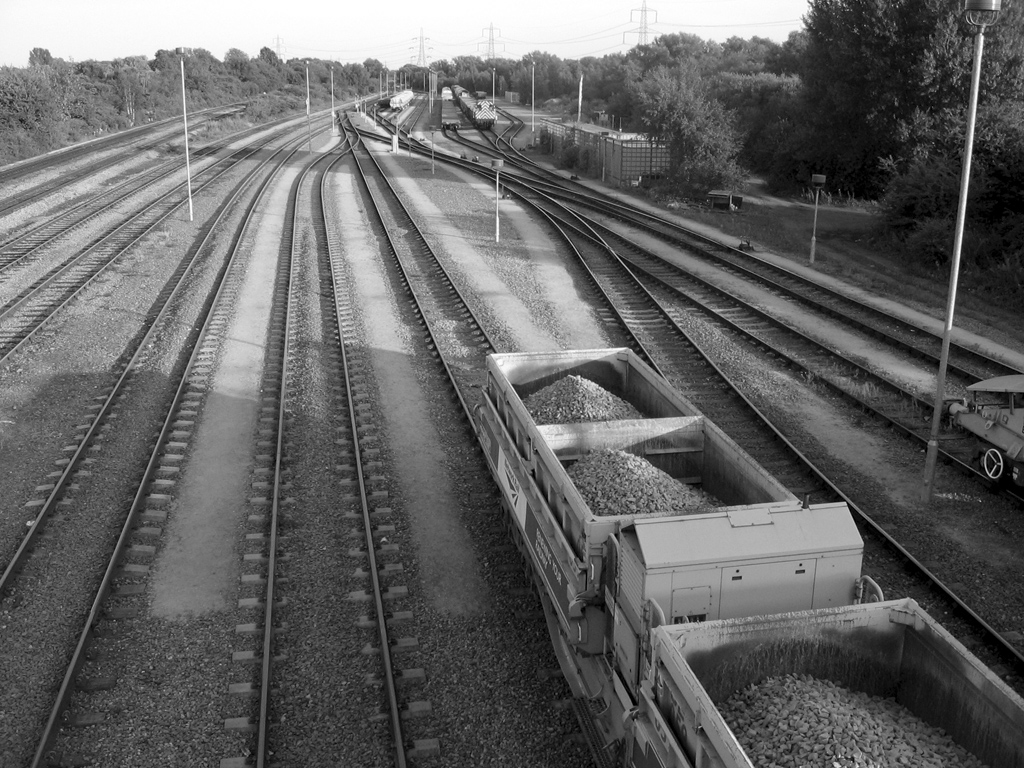
While walking with Kelly this evening, we found an unusually nice bit of Oxfordshire, accessible through a park near their new flat. If you carry on down St. Aldates and across the Folly Bridge, then farther on down Abingdon Road, you will eventually see a park on the right. There is a small waterpark and a pool. Beyond that is a reasonably large lake, which can be crossed using the bridge in the photo above. Farther on are a set of train tracks likewise crossed by that bridge and then fields and the village of South Hinksey. It is all very attractive and photogenic, and I am glad to have discovered it in such good company.

Tomorrow, I need to tie up final loose ends before the Scotland trip. Now that it has become clear that we will be driving more than thirteen hours each way, I am a bit daunted by this four day excursion. Hopefully, the drive will be pleasant and the two days of hiking will be spectacular. My fingers are crossed incredibly tightly that I will get both papers from my August tutorial students in time to print them before leaving. If not, I will have a very hectic period of work to be completed immediately upon my return.

If I am to get my paper into the next issue of MITIR, I need to have it submitted by the 31st. Since I will be in Scotland after the 27th, that means finishing it tomorrow. They haven’t been entirely clear on whether they just want a few stylistic changes and a few specific statistics, or if they are serious about the 4000 word maximum. If so, I need to boil away more than a third of the existing paper. Hardly something I can do in the day that remains to me. All that can be done is for me to revise the paper as well as can be managed, send it off before I leave, and then return home to find out what they have decided. It seems increasingly likely that I will also return home to finally find my new headphones.

Warped wheel

I have discovered why the rear wheel of my bike keeps going out of alignment and rubbing against the frame: the wheel itself is somewhat bent. No matter how I line it up, there is a warp that causes it to rub against the brake pad once or twice per revolution. Over time, I guess it drifts more and more, to the point where the side of the tire is rubbing against the back portion of the frame.

When I get back from Scotland, I will have to go to Beeline Cycles and learn how much it will cost to have repaired. Until then, I will ride with a spanner so that I can reset things when they go too badly out of whack for me to easily maintain forward momentum.

[Update: 5 August 2006] I brought the bike in to Beeline Cycles, where I bought it back in March, and they fixed it for free under the warranty. Yet another case in which they have exceeded my expectations for good customer service.

The moral choices in assigning rights

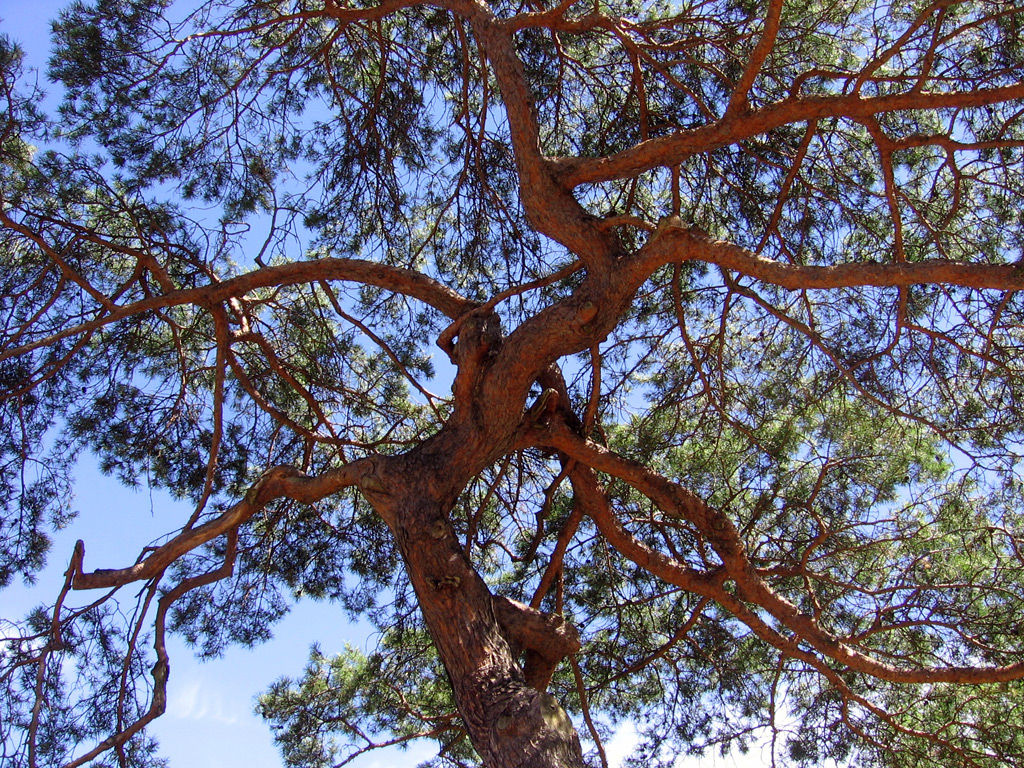
Tree at St. Hugh's College

The best piece of writing I have come across in the last week or so is a chapter from the Bromley and Paavola book on environmental economics that I have been reading. By A. Allan Schmid, it is called “All Environmental Policy Instruments Require a Moral Choice as to Whose Interests Count.” The argument is that the idea of solving environmental problems in a purely technical way (internalizing externalities, to borrow from the economics lingo) is impossible. When a policy is represented that way, there is always a moral choice being concealed. In tort law, this becomes explicit through an instrument called nuisance.

If my neighbours are making homemade beer and the process produces a constant cloud of nasty smelling gas that wafts into my yard and through my windows, I could seek remedy in court. It would then be decided whether or not the smell constitutes nuisance. If not, the court effectively grants a right to produce the smell to my neighbours. I would then be free to try to convince them to use that right differently, for instance by paying them not to make beer.

If the court rules in my favour one of two things can take place. They can grant an injunction, forbidding my neighbours to make beer without my permission. This is great for me, since I can effectively sell them the right to make beer if the amount they are willing to pay exceeds the amount the smell bothers me. This is what Coase is alluding to in his argument that it doesn’t matter who you assign rights to, as long as bargaining can occur (See: Coase Theorem). Of course, he ignores the distributional consequences of assigning the rights one way or another. As an alternative to an injunction, the court can fix a set amount of damages to be paid. This relieves the nuisance, but gives me less scope to take advantage of the court’s decision.

What the example illustrates is that in creating policies to deal with externalities, the rights in question must be effectively assigned to one party or another. We either assign companies the right to pollute, which people around them can negotiate for them not to do, or we assign those people the right not to live in a polluted place, in which case the company has to go to them with an offer. The assigning of rights, then, isn’t a mere technical instrument for achieving an environmental end, but a matter of distributive justice.

Consider the case of fisheries access agreements in West Africa. West African governments have the sovereign right to exploit the waters in their Exclusive Economic Zones (EEZs). They can also choose to sell that right, as many have done, to the EU. The governments end up getting about 10% of the value of the fish that are caught, while suffering the loss of future revenue that is associated with the depletion of the fisheries (since they are exploited at an unsustainable level). In this case, the distributional consequences of West African governments being rights holders are fairly adverse. The incentives generated inflict harm on the life prospects of those whose protein intake previously came from fish caught by artisinal fisheries now rendered less productive due to EU industrial fishing. Likewise, the life prospects of future generations of citizens are harmed.

One of the best bits of the Schmid piece is the following:

A popular phrase contrasts “command and control” with voluntary choice. Another contrasts “coercive” regulations with “free” markets. This is mischievous, if not devious. At least, it is certainly selective perception. First of all, the market is not a single unique thing. There are as many markets as there are starting place ownership structures. I personally love markets, but of course I always want to be a seller of opportunities and not a buyer. Equally mischievous is the idea that externalities are a special case where markets fail. Indeed, externalities are the ubiquitous stuff of scarcity and interdependence.

He puts to paid the idea that there is a tradeoff between economic efficiency and moral principles. That is simple enough when you realize there is an infinite set of economically efficient outcomes, given different possible preferences and starting distributions.

Those wanting to read the entire piece should see: Schmid, A. Allen. “All Environmental Policy Instruments Require a Moral Choice as to Whose Interests Count.” in Bromley, Daniel and Jouni Paavola (eds). Economics, Ethics, and Environmental Policy: Contested Choices. Oxford : Blackwell Publishing. 2002. pp. 133-147.

Ten weeks of summer remain

Bridge over the Oxford canal

Happy Birthday Kelly Kilpatrick

About ten weeks now remain before the start of Michaelmas 2006. Of the major things I wanted to do over the summer – namely, travel, earn some money, and work on the thesis – I have done at least a bit of each. Hopefully, all three will be boosted in August as I instruct two more students, complete more additional batches of work for Dr. Hurrell, and travel to Ireland.

One thing I need to develop is a filing system for thesis related materials. Books are easy enough to deal with, whether they are mine or borrowed from the library. What I really need an organizational system for are my own notes on readings (which I have generally put into a succession of notebooks, ordered chronologically) and printed or photocopied articles. For the fish paper, I just put that stuff into one big binder, but I doubt that will be adequate for a 30,000 word project.

Speaking of the fish paper, I really must get back to editing it. It is now anybody’s guess whether I will be able to complete the desired revisions before leaving for Scotland, and thus whether it will appear in the next issue of the MIT International Review or the one subsequent.

PS. Still no Etymotics. With bated breath, I wait.

Scholarship applications exhausted

Apparently, I was rejected by the Centennial Scholarship long ago, but they never bothered to inform me in any way. That makes the last of the set: Commonwealth, Chevening, Armand Bombardier, Senior, and Oxford’s Overseas Research Scholarship.

At least the one £500 award makes me feel good about having spent so many hours filling out application forms and writing proposals. Likewise, there is the matter of all the time my various referees spent writing letters on my behalf. Many thanks to each of them.

Getting things done

Puddles on Church Walk

What motivates people? I am not speculating about long-term planning here, but about the kind of decisions at the margin that shape the course of individual days: the points where a symmetry collapses in favour of making that the last time you hit the snooze button or that the last chapter you read before you go biking.

Individually, such decisions can be put down to context and to whim. Because they aggregate into productive or unproductive days, which in turn aggregate into weeks and months, understanding how to manipulate marginal decisions seems like a path for improving efficiency. Setting up efficient systems of reward and punishment, accompanied by personal prohibitions on really wasteful activities, seems like a good idea. With all the things that I can feel looming over me, I am feeling the need to do better at getting things done. After all, I need to brush up on two unfamiliar subjects, as well as finishing the fish paper editing, by next Thursday. Then, I have a package of tasks to finish for Dr. Hurrell before August 3rd.

An obvious productivity booster is to ban myself from blogging, but I think that would actually be counterproductive. The blog really helps me keep track of projects and ideas. A ban from reading other peoples’ blogs (I track 116, including many that are updated more than ten times a day) might be far more sensible.

Academic and employment matters

Kelly's knees

My intended ‘hard push towards academic targets’ week lost a bit of forward momentum today. I did finish reading one thesis, and some more chapters out of the increasingly dull book on environmental economics. I picked up liner socks and 50% DEET insect repellent for Scotland ($30 together!) and filled out paperwork so as to get paid for my RA work.

None of the three candidates for tutorial teaching in August with whom I have been put into contact are intent on studying areas in which I have much extant expertise:

  • A: Where countries get water from at present, where they are likely to do so from in the future, and the conflicts that arise as a consequence
  • J: Impact of the 1973 OPEC oil price shock on domestic energy policies in developing countries
  • K: The impact of corporations on the distributional justice of food in Latin America

In order to teach any of these, I would need to research them extensively myself. That would normally be a welcome prospect, but I have much to do before going to Scotland and the first tutorial would take place the day after I got back. Of the three, I think I could handle the second two at a lesser level of specificity: talking about the origin and consequences of the price shocks and about distributional justice and corporations in international relations generally. I’ve turned down the first option outright, and am conversing with the students to determine if common ground can be found for discussion on the latter two.

The pay rate is excellent for these tutorial positions, if you already know the material well enough to suggest sources and then evaluate and discuss papers with only limited preparatory work. When it involves researching whole new sub-fields, it becomes less appealing from that perspective. Given that there seems to be no shortage of research work coming in from Dr. Hurrell, which is much more directly relevant to my thesis, it may be a good idea to stick to that, the thesis, and these other projects that keep cropping up.

Ten years of Daily Shows

American Institute Library

Yesterday was a notable birthday, today is too: the tenth anniversary of The Daily Show. I maintain that The Daily Show is the only televised news that is really worth watching. Indeed, it is the only kind I have felt the slightest impulse towards watching regularly. Whereas television news is usually a repetitive and less detailed summary of printed news, The Daily Show says something new.

Given how absurd American politics and world current events can be, it seems strangely appropriate to have it presented in a comedic form. A certain night in November 2004 might have been even more psychologically damaging, but for their special coverage. In any case, I salute Jon Stewart and I wish I had one of these shirts.

Happy Birthday Mica

Milan as a rhino - Photo by Nora Harris

Today is my brother Mica’s birthday. That cannot but re-enforce the fact that I have seen neither he, Sasha, nor my father since September 22nd, 2005. In five days’ time, it will have been ten consecutive months.

As I’ve said before, I am not too concerned about spending such a long time away from most of my closest friends. I know they will be more or less the same people when I get back as they were when I left, though perhaps with a few extra letters after their names. Even with the ones with whom I almost never speak – such as Alison and Astrid – I have a good level of confidence that I will be able to relate to them in a comparable way, once I return to Vancouver (however briefly it might be for). It seems different with my brothers, however. While most of us are now stabilizing as people, they still seem to be at the stage when things are taking their direction. Great as the opportunity to be at Oxford is, it’s a saddening thing to be missing.

That said, I am sure they are finding lots of good ways to spend their time. Mica, as I understand it, if off at a wedding somewhere on Vancouver Island. Hopefully, I will be able to reach him over the phone later tonight. In any case, my best wishes go out to him for the year ahead.

Best laid plans

Grafitti near the Oxford Canal

Between tomorrow and Friday, I have resolved to achieve a burst of productivity. That means being up and doing something worthwhile by 9:00am each day. It also means finishing the following bits of reading:

  1. Lomborg’s The Skeptical Environmentalist (re-reading)
  2. Lindsay Johnson’s MA thesis
  3. Bromley and Paavola’s Economics, Ethics, and Environmental Policy
  4. Faulkner’s “Barn Burning”
  5. Mukund Rajan’s M.Phil thesis
  6. Bernstein’s The Compromise of Liberal Environmentalism
  7. Karen Litfin’s Ozone Discourses

In addition to that, I am going to put a good deal of thought into the direction in which to take the thesis. Hopefully, the editor from the MIT International Review will get back to me with information on what editing is needed, precisely, and I can get started on that as well. I will also finish looking up the missing bits in the bibliography of Dr. Hurrell’s that I am editing.

One last element that I will add to the plan, for the moment, is to sort out when exactly I will be going to Dublin/Prague and buy my tickets. I am thinking that I will do so sometime after August 16th, because I will have another trio of tutorial days ending that Tuesday.

I will post updates as the plan progresses. If I finish all of this early, more elements will be added.

[Update: Tuesday 1pm] The chapter 12 research assistance work for Dr. Hurrell is done. Item four is read.

[Update: Wednesday 9pm] The Johnson thesis is finished. I have also gone through the fish paper and identified some places where the sources need shoring up, as well as other general editing issues. A few more chapters of Bromley and Paavola’s book are done. Some necessary Scotland-prep was completed, as well as paperwork for the RA job.