No consequential thoughts; well justified apologies

The end of the party

Happy Birthday Alison Benjamin

Matters scholastic

I’ve submitted the final version of my research design essay. Many thanks to Claire, Tristan, and Meghan for having a look at it. We shall see what the examiners think. For my part, I think it will form the basis of a valuable and interesting research project – one that I will have no excuse not to advance enormously over the summer. During these last two weeks of term, I need to give a presentation (Tuesday of 7th week), submit a paper for the core seminar (same), and write another three papers for Dr. Hurrell. The unipolarity/great power paper originally meant for him looks like it will become a core seminar paper instead. Thankfully, he is being understanding, given the imperative of finishing the RDE.

Other

Due to numerous oversights on my part, I managed to almost completely miss Bryony’s birthday party. My apologies to all. Missing a party in your own flat is less than very excusable.

[Update: 30 May 2006, 2:21am] It should be noted that The New Covent Garden Food Company’s Tuscan Bean soup is extremely delicious. Even after consuming 1L of it after 2:00am, I still want more.

Reminiscing about LIFE

The Duen

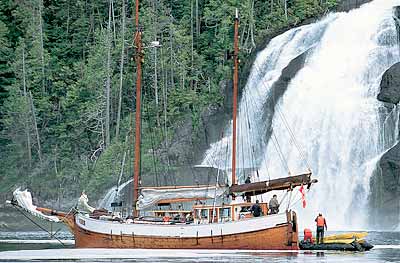
Photo from www.thenaturalcoast.com

Since I was feeling vaguely ill all day, I made lunch and dinner stir-fries with large amounts of ginger. I don’t know why, but I’ve always found that ginger helps with nausea and general feelings of being unwell. The captain of the Duen first told me about it, during the first LIFEboat flotilla. A floating sustainability conference which took place on more than a dozen tall ships, the LIFEboat flotilla was one of the best weeks of my life, even though I was ridiculously seasick for much of it, on account of gale force winds and huge waves.

The Duen was a small ship – far smaller than the Pacific Swift, which was my berth for the second Flotilla. When tacking upwind, the boat listed at an angle of about thirty degrees, with me clinging to the upper lip in a borrowed survival suit: lent to me because I had to be on deck in the pouring rain all the time because I was so seasick. For years afterwards, I couldn’t stand the sight, smell, or taste of scones, because that’s what people kept trying to feed me. Despite all that, spending a week traveling through British Columbia’s Gulf Islands in a tall ship is an amazing experience. More so when you’re in a group like the one Jeff Gibbs created and which has been supported by people like David Suzuki and Jane Goodall, who I actually met during the first flotilla.

Leadership Initiative for Earth (LIFE) is a Vancouver based environmental organization that I was involved with for several years. I attended a conference of theirs at a high school with Jonathan. I then took part in two Flotillas, each of which required a large amount of environmentally related community service in order to be eligible. Jonathan and I worked at the Wild Bird Trust in North Vancouver, planting trees and pulling out poles from a frozen swamp. We also had to give presentations and slide shows afterwards. I gave one at the Vancouver Folk Festival, after the second flotilla. It was really excellent, because I got a free Folk Festival pass in the process.

One of the best things about the two flotillas was learning a bit of marine navigation. Because of the complexity of the Gulf Islands and their tides, the importance of maps, navigation, and location there are considerable. There are many passes that can only be used at certain times, because of the tides. During the second flotilla, I got to help with the coordination of the fleet overall: managing where different ships would stop at different times. The flotilla mostly took place on the ships, interacting with the members of your group, but there were also excursions on shore. We visited a sustainably harvested forest and got to touch sea cucumbers brought up by divers.

I wish I had some photos to post, but they are all in Vancouver in non-digital form. The one above wasn’t taken by me, but it does show the ship I was on for the first flotilla, in a place much like many we visited.

The original WildLIFE conference happened in 1995, when I was only twelve. As such, I probably didn’t get as much from it as most participants, nor was I able to contribute very effectively. The Flotillas were in 1997 and 1998, respectively. Since then, I’ve largely lost touch with the organization. The only participant with whom I’ve had any contact is Kevin Millsip, one of the two leaders of my group in 1996. He is now a Trustee on the Vancouver School Board; perhaps Sasha Wiley will meet him one day.

At one point, it seemed that LIFE had changed its name. At other points, I couldn’t seem to find anything about it at all. I am glad to see that they seem to be active at the moment. Apparently, “there have now been five Flotillas, all extraordinary learning adventures for the 750 youth who participated.” I wish I had stayed in contact with members of my two groups. At the time, I think being rather younger than most of the other participants impacted my ability to relate directly with them. Even so, I am incredibly glad to have been involved.

I strongly suspect the whole LIFE experience has impacted on my choice of discipline and sub-field. To be simultaneously exposed to a place as beautifully alive as the Gulf Islands and such a group of committed and motivated people is a powerful combination, as Gibbs must have anticipated. I am sure my fellow participants are also grateful for his imagination and initiative.

Nearly a year in the Oxford system

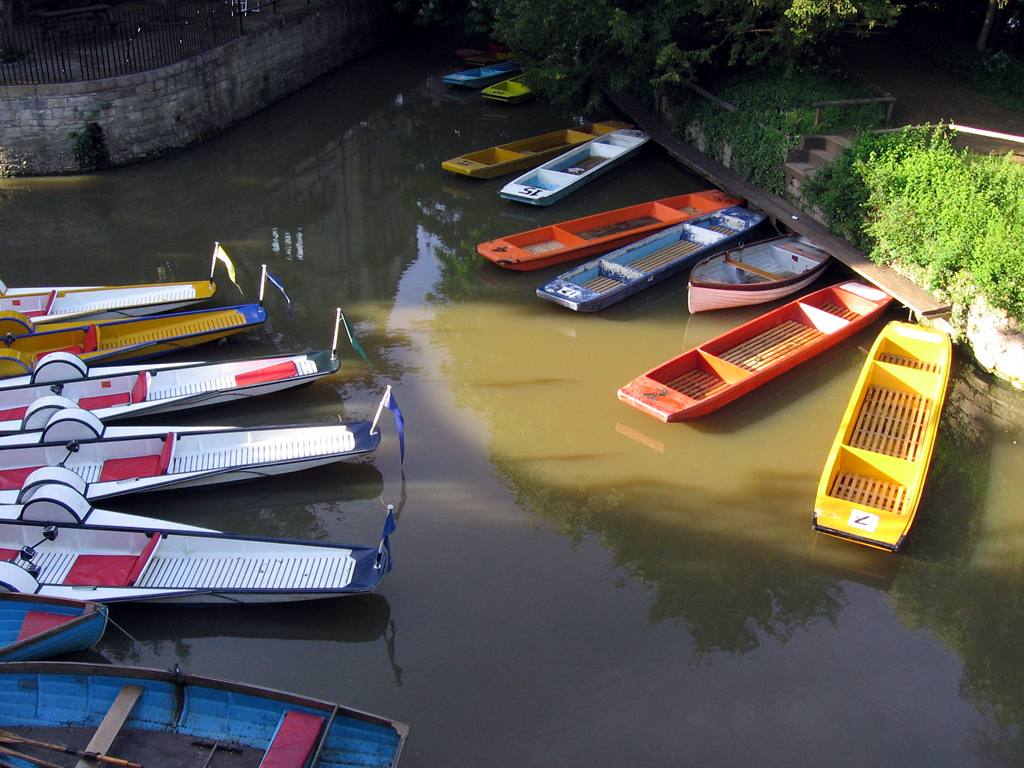
Boats on the Isis

Of course, ‘a year’ in this context means just 24 weeks, with some work done in the breaks between the eight week terms.

The academic life of a graduate student can seem rather sparse. As an undergraduate, I would have five lectures a week, plus an equivalent number of seminars, plus anything optional. Here, I have two seminars a week, no lectures, and a somewhat greater variety of optional things. Mostly, that consists of the strategic studies meetings, events put on by STAIR, the global health group, and the global economic governance program, as well as anything miscellaneous that comes up. Because basically all lectures are one-off affairs, they don’t provide the kind of progression of knowledge that accompanies a two-month lecture series. While I know graduate school is meant to be about deepening knowledge within an established base, I still feel as though there are so many areas where my knowledge and understanding are still at a rather basic level.

At UBC, I would write about five research papers in a four-month term: based on several weeks worth of research. Here, terms only last two months, and I will write about eight papers of similar length which are nonetheless much less creative and extensively researched. At UBC, you had to find a topic, to some extent, in senior courses. Here, you just need to find a satisfying way of answering a set question.

All told, I am very glad to have gone to UBC before I came to Oxford. I think my level of education, in the end, will be rather higher than if I had done both degrees here or at places like here. The significantly greater reputation of Oxford should be an aid towards getting into jobs and other academic programs later. Likewise, the level of discussion and general accomplishment among members of my program is far above the UBC mean. Even so, I think I learned rather more there than I am here, both in aggregate and per unit time.

Anticipating summer

Over the course of a day so gloriously warm and bright it made me astonished to think I was decked out in Gore-Tex yesterday, I dropped off my first summer job application at Blackwells. I will follow it up with applications at lesser bookshops, tour guiding agencies, and possibly pubs. With a bit over two weeks left in the term, now is definitely the time. I want something interesting that will pay the cost of living and include enough flexibility for me to do thesis research and undertake between two and four trips of a week or so in length.

Another thing I am seeking is voluntary organizations with which to be involved over the summer. I am looking for things that will stand in for classes as opportunities to get to know people and spend time with them on a regular basis. Possibilities include walking or cycling groups, photographic societies, or anything else that corresponds with either an existing interest of mine or one I might develop. Suggestions would be most welcome.

Spring deluges

In four consecutive cycles today, I got drenched, hailed upon, and the progressively drier in the period leading up to the next drenching. Between intense downpours of hail and icy rain, the day has been alternatively overcast in the cheerful way or actually sunny. While raining, the sheer volume of water falling in the air around me was enough to make me fear electrocution by the iPod standard headphones I’ve had to fall back upon since my better headphones broke.

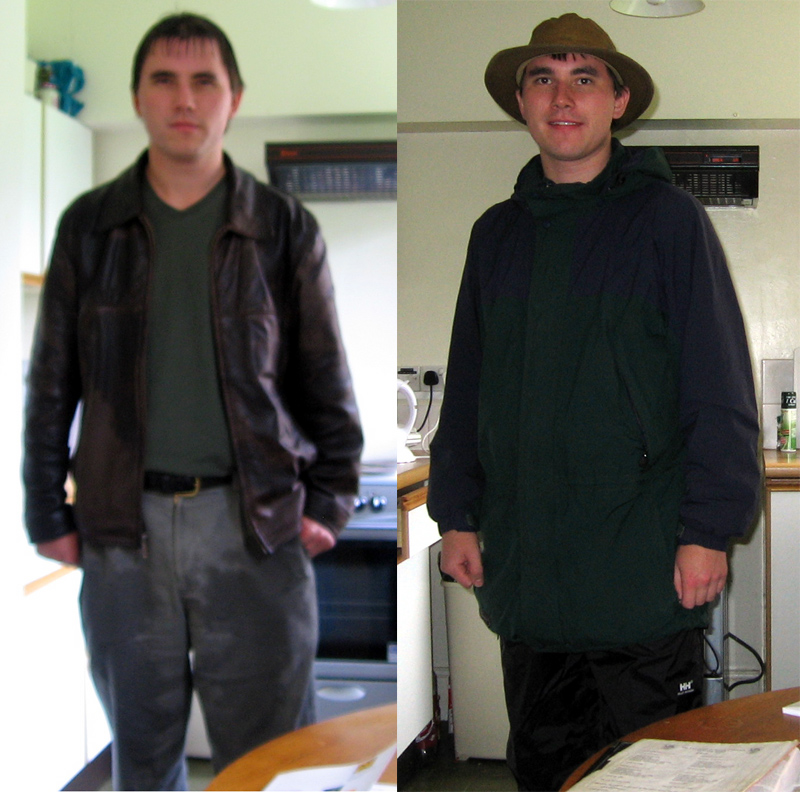
Unwilling to get tricked again, I responded in the afternoon in a manner familiar to all Vancouverites: Gore-Tex shoes, pants, and jacket – topped off with a waterproof hat. If you haven’t noticed, I am the sort to occasionally revel in the technical solution of problems. The shoes, I thank my mother for. She was kind enough to equip me with them while she was in the UK. The jacket I’ve had for ages; the pants, I recall testing with Meghan on a particularly stormy day along Wreck and Tower Beaches, on campus at UBC. The hat did sun protection service in Malta, as well as rain protection service on canoeing trips.

Naturally, now that I am thus equipped, the chances of it raining heavily again on the way to or from the Saint Antony’s International Review (STAIR) launch tonight are virtually nil.

PS. My congratulations to the newly-minted Louise Little, B.Sc (Hons), on the completion of her undegraduate degree.

PPS. Stir fries comprising olive oil, dried chillies, ginger, tofu, bell pepper, mushrooms, tomatoes, and black bean sauce are quite delicious. While they take approximately forty times longer to prepare than the caloric equivalent in bagel-cheese form, it’s probably a worthwhile investment, if only because it makes the house smell like black bean sauce.

General update, in a brightening hour

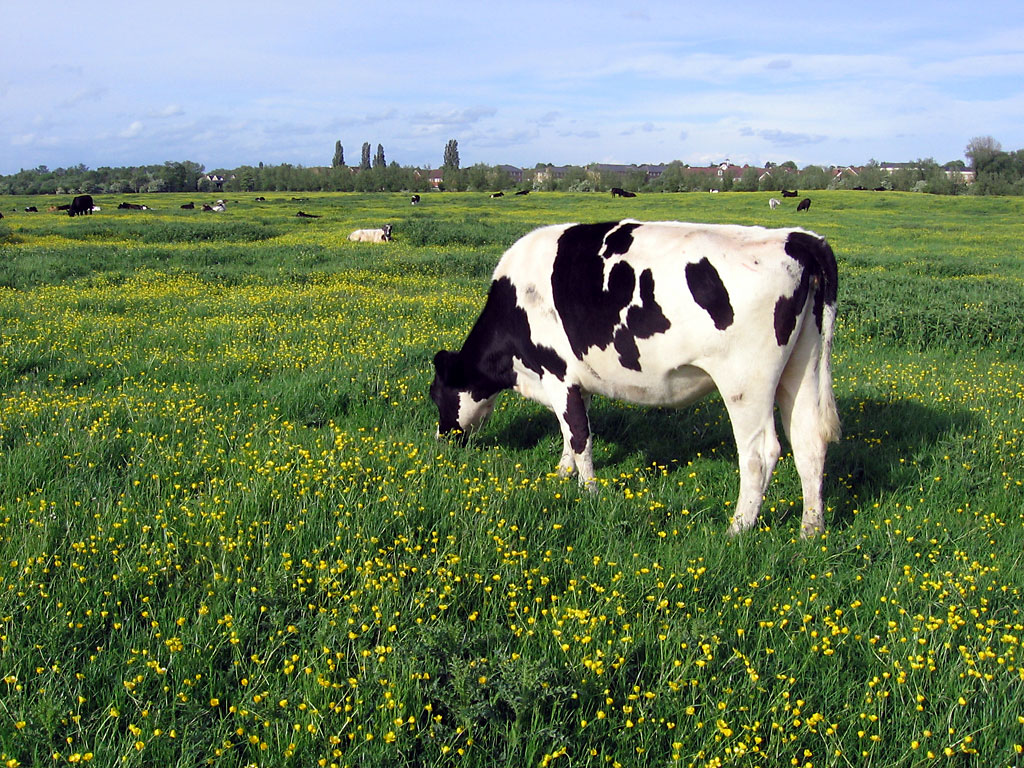
Port Meadow Cow

After an even more marathon Tuesday than is the norm, I am left feeling as though I understand the nature of Oxford a bit better. More an intersection between curves than a zone of space, it imbues a fleeting quality to much of what transpires here. Papers and sources will be forgotten, names will become little more than long archived emails. I suppose this is true of all places, save that the volatility is usually concealed by the ongoing existence of a large group of people with whom you relate. That purpose here is served to a good extent by the program and the college: both institutions which I value highly for generating a kind of cohesive social framework to accompany essay writing and all the rest. Likewise, my enduring appreciation extends to those individuals who have helped make this phase of life feel more grounded in all the rest of it, by being willing to share something of themselves.

Five days remain until the submission of the dreaded research design essay. It feels as though the whole program is holding its breath: feeling guilty for every moment not spent churning away at the thing. The wise thing to do will be to finish a draft quickly, tweak it over the course of a few days, and then relax at the time when many other people will begin to get overcome with anxiousness. We shall see if such prudence into policy translates.

the blonde was called ‘freedom; the dark one ‘enterprise’

Crane in VancouverGrim gray rainy Oxford day. My supervision went well: a written paper praised and two unwritten ones anticipated. A week remains, now, to finish the research design essay – from preface to methodology to bibliography. Negative time remains before my ‘great power’ paper should have been submitted, but I shall endure. I’ve discovered three clever axes across which to answer the question, the strategy that seemed to find such favour with the ‘domestic sources of American foreign policy’ paper, two terms ago.

It’s really too ugly a day for a photo, but I will try extra hard to get something excellent, next time I see something intriguing or beautiful. (This from someone who actually enjoys and misses the rain for which Vancouver is characteristic.) Anyhow, the photo above was taken on my last day back in Vancouver.

2 Church Walk burgled

Sometime between midnight and 2:00am last night, somebody pried open my roommate Kai’s locked window and stole his laptop. Thankfully, it is covered by the college’s insurance policy, though he still lost about a month’s worth of work – including draft work on the research design essay. With the police arriving at around 4:00am and leaving after 5:00am, accompanied by the sounds of early morning birds, it was another very late night. Given that Kai had to catch a bus to the airport at 8:00am to fly back to Germany, that is especially true for him.

This is the second laptop belonging to a member of the M.Phil in IR program to be stolen from a house on Church Walk this year. It’s enough to make you rather nervous, especially since those of us with rooms on ground level with large windows can do relatively little to deter theft. I shall, at least, resume my practice of twice-weekly backups to the DPIR terminal server.

Career and personal planning

Flowers in Wadham College

While it may seem premature for someone with a year left in a master’s program, I have been thinking a lot lately about what is to follow Oxford. There seem to be two major possibilities, each with numerous sub-options. The first is to proceed directly into a doctoral program, provided I can get accepted. The second is to work.

Keep studying

The possibility of doing a D.Phil at Oxford is not one that appeals to me. While they are shorter than degrees in the United States – probably three years compared to five or six – they don’t include the near-automatic funding that is part of PhD programs at good American schools. Another consideration is the relatively small amount of teaching experience that is usually part of a D.Phil. Applying to work in an academic context, which is one of several possibilities I am considering, would almost certainly require such experience, in the form of a PhD or post-doc. A final consideration that I will mention here is the weak integration between the Department of Politics and International Relations at Oxford and organizations like the Environment Centre.

For a number of reasons, my top choice for a PhD program at the moment is Columbia. The idea of living in New York is appealing, especially if it would be for such a long period of time, and everyone I’ve spoken to says that Columbia has a good integration between policy and science departments. Naturally, I would need to investigate much more and choose a specific program before applying. Other appealing schools in the United States include MIT, Stanford, and Harvard. Again, I would need to do a lot more investigation before choosing a specific school or program.

The appeal of the PhD option is partly in familiarity. I’ve been in school for twenty consecutive years now, if you count French pre-school. Also, I am concerned that if I go off and do something else, I won’t be able to muster the will to return to academic study.

Work

Work is a much more uncertain prospect. I’ve had a huge number of jobs in my life, all of them fairly menial, I’ve been a janitor, worked in a juice bar, worked as a cashier, sold computers, photocopied and faxed documents for a law firm, worked in a bird sanctuary and for two summer camps, delivered newspapers, conducted telemarketing for a number of charities, done research, soldered components onto circuit boards, assembled and configured computers for an office, sold alcoholic drinks, and served as the subject of scientific experiments. Last summer, I applied unsuccessfully to work at Starbucks. Through all that, I’ve never had a ‘real’ job. By that, I mean a job that I didn’t have the intention of quitting at some pre-specified point in the future. Also, a job with any kind of prospect for advancement.

Fields of interest to me are governmental, quasi-governmental, and journalistic. Examples of each would be working for Environment Canada, the United Nations Environment Program, and The Economist, respectively. I have my doubts about how well I would do in a very bureaucratic context. During the more stressful and frustrating times at Oxford, journalism has seemed an incredibly interesting option. It would allow – indeed require – writing and traveling, and it would probably offer a substantially different perspective on things.

The appeal of the work option is that it would let me try something other than school. It would probably allow me to start paying down whatever level of debt I ultimately take on from Oxford. Also, it would give me a bit more balance and make me feel more equally experienced with the many people in this program who have worked for banks, the UN, or some such place.

Conclusions

I’ve told many people so far about my eight year plan for things I mean to do before I am thirty. The key planks are to finish school, travel to almost everywhere, and write a book. Naturally, there is some tension between the three. Doing a PhD in the right way could allow for all three things to be done. Likewise, leaving formal education at an M.Phil and starting to work for an organization that involves a great deal of travel. All this should be kept at least in the back of my mind over the next year, so I’m not simply left in Vancouver in the summer of 2007, with no plan for what is to follow.

General 4th week update

Gate near Holywell Street

Amidst Oxford’s volatile spring weather, most of today was spent reading about the Middle East during the periods of 1945-56, 56-89, and 89-present respectively. With four weeks left in my first academic year – and only two weeks left before the research design paper is due – I am feeling an odd combination of the rush of impending deadlines and the calmness of impending summer. Of course, there remain the serious matters of finding employment, and securing a place to live after September.

Within the program, people seem to have hit a definite stride. Thesis anxieties aside, there is a real sense within the group that we understand the Oxford dynamic and are able to deal with it. Having the thesis as an excuse to do not quite as much reading as we might have in previous terms may also have something to do with that.

Since tomorrow is the big seminar day, and I am meant to serve as respondent to Kate Stinson’s presentation about how regional powers in the Middle East may have manipulated international actors, I should get back to my books and the doing of laundry.

PS. What do fellow Oxford bloggers think about 8:00pm on Wednesday the 31st of May for a third gathering?