Qualitative methods changing tack

Wadham washing machines

Happy Birthday Kate Dillon

Tomorrow’s qualitative methods lecture, to be given by Dr Sudhir Hazareesingh, is on the topic of “Bonapartism and popular political culture.” This sounds exceptionally esoteric, following four classes divided between the broad areas of Foreign Policy Analysis (woe to anyone who wrote the take-home exam on that topic) and Institutions. That said, holding “a general discussion about the role of myth in politics” sounds like a particularly interesting way to spend a couple of hours. It’s more in keeping with the kind of social and historical examination that Bryony and I were talking about yesterday.

The OED calls myth: “a popular conception of a person or thing which exaggerates or idealizes the truth.” I don’t know if that’s the most useful definition, largely because of the difficulty of accessing a ‘truth’ that exists independently or is particularly important. One of the examples given seems to illustrate this point:

Disraeli set himself to recreate a national political party out of the wreckage of Peel’s following. A new myth had to be evolved.

Without knowing anything about the situation being described, the dynamic can be recognized. The need to create a new story to replace or update an old one is a frequent and comprehensible thing. It’s part of what makes politics such a maddeningly difficult thing to deal with.

Myth – whether in the form of national foundational myths, justifications for state authority, or narratives about national history – seems to have played a fundamental role both in domestic political development and the development of the international system. The social role of myth, it seems, is to serve as a heuristic for justifying and understanding. Just think about Canada’s self-definition as the peacekeeping ‘helpful fixer’ or the American conception of being the ‘city on a hill.’ Neither has always reflected reality; it may be more useful to think about them as touchstones of national identity. That doesn’t mean they are always automatically accepted, but rather that they provide a data point that is always within the range of consideration. Myths provide a hook upon which other ideas can hang, as well as a barrier behind which complexity can be concealed.

Bloggers’ gathering reminder

To remind everyone, the second Oxford bloggers’ gathering is to take place next Tuesday at 8:00pm at The Turf. I hope I will get the chance to meet a few more of the people whose posts I have been reading.


  • As I have learned through clips on the Comedy Central website, The Colbert Report is brilliant: a worthy companion to The Daily Show. I especially like the hubris of the segment: “Bring ‘Em Back or Leave ‘Em Dead.” I recommend having a look.
  • My brother Mica is still seeking advice on his video production efforts.
  • In a cross-over I never expected, Bill Emmott – editor of The Economist – has a letter in this week’s Savage Love. Since both are publications I read weekly, I was entertained to see them thus paired. In the spirit of Mr. Colbert, I give a tip of the hat to each of them.
  • Removing dust blotches from every single photo of the day is really annoying!
  • I used to consider Xanga to be the very bottom of the blogging barrel, in terms of the overall level of quality of sites hosted there. MySpace has absolutely shattered that record. I have never seen a MySpace page that is even tolerable, much less attractive. They tend to have complex, garish backgrounds that do not scroll with the stuff in front of them and include that sin of sins: embedded music. It’s like being thrown back to the Internet circa 1995, and it’s an ugly ugly experience.

Cause I dreamed I went to England…

St. Cross Swashbuckling

The social side of today went better than the academic. Our core seminar was little more than a tired re-hashing of entrenched positions, which didn’t really advance academic argument. It was really quite combattive. We are in the territory now where egos are defined and, frankly, not a great deal of really important work is getting done. Theory for its own sake is much less interesting than thought applied to practical problems.

After the seminar, I met a group of IR people for half priced drinks at the Duke of Cambridge, on Little Clarendon Street. Despite my haste to get to the Strategic Studies meeting, Emily furnished me with some kind of fruit cocktail concoctions. I hope her ambition to go dancing later was achieved.

The Strategic Studies election is a bit of a joke. While there are two candidates for President: Sheena Chestnut and Matt Pennycook, both from my program, I am the only candidate for Vice. I won’t need to go quail hunting with any potential donors. Nobody at all is running for Secretary, though Claire is submitting an application tomorrow. Having an exec dominated by members of the M.Phil in IR would be interesting.

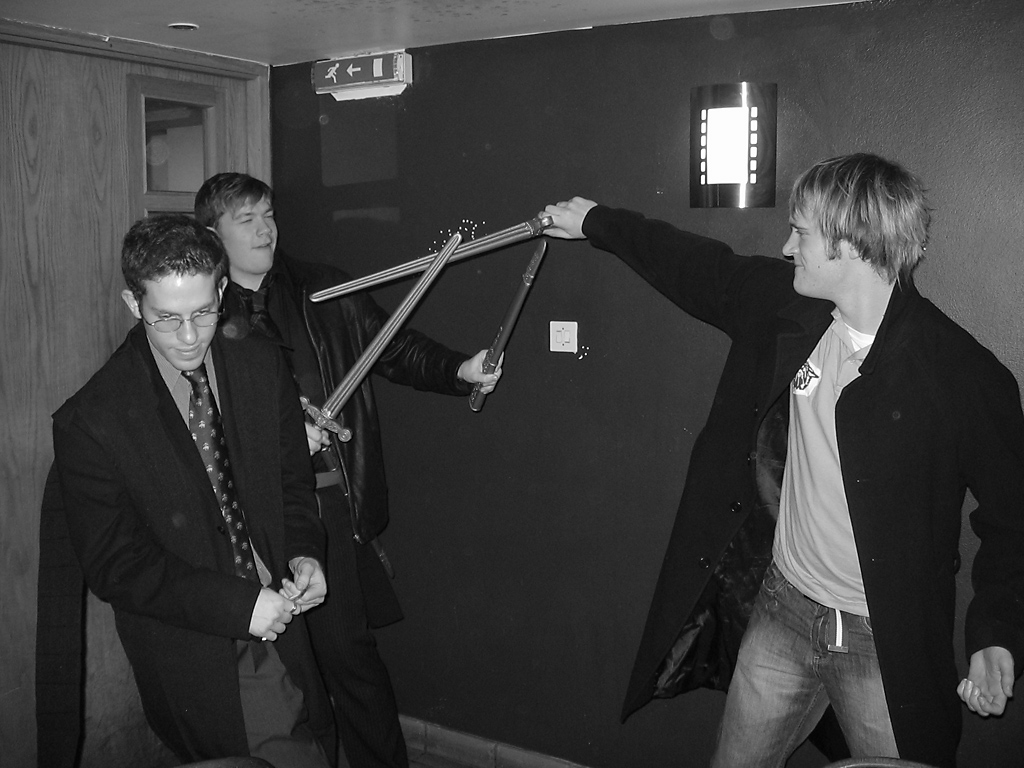
The Strategic Studies presentation itself was on China and Taiwan, and was generally reflective of the conventional wisdom on the matter. Afterwards, I went to St. Cross and met with Claire and a number of her fun friends. There was even fencing involved – both within the confines of St. Cross and outside in Oxford’s rain-drenched streets. I quite enjoy the social atmosphere at St. Cross, as well as the particular characteristics of Claire’s friends there.

Now, I should turn my attention to my complete lack of wearable clothes and the bulk of reading on constructivism to be completed for next week. Tempted as I am to grab a plane ticket to Rome and a train ticket to Turin, I should probably stay the course here. Getting a bit ahead might even help disrupt the boom and bust cycle that has been characteristic of the program thus far. As I discussed with a classmate outside the Duke of Cambridge, it seems more like we are being tested over and over than we are actually being taught specific things.

I really need to take the initiative and start reading more about environmental politics and spending time at the Environmental Change Centre. That, and spending more time with St. Cross people.

Much appreciated correspondence

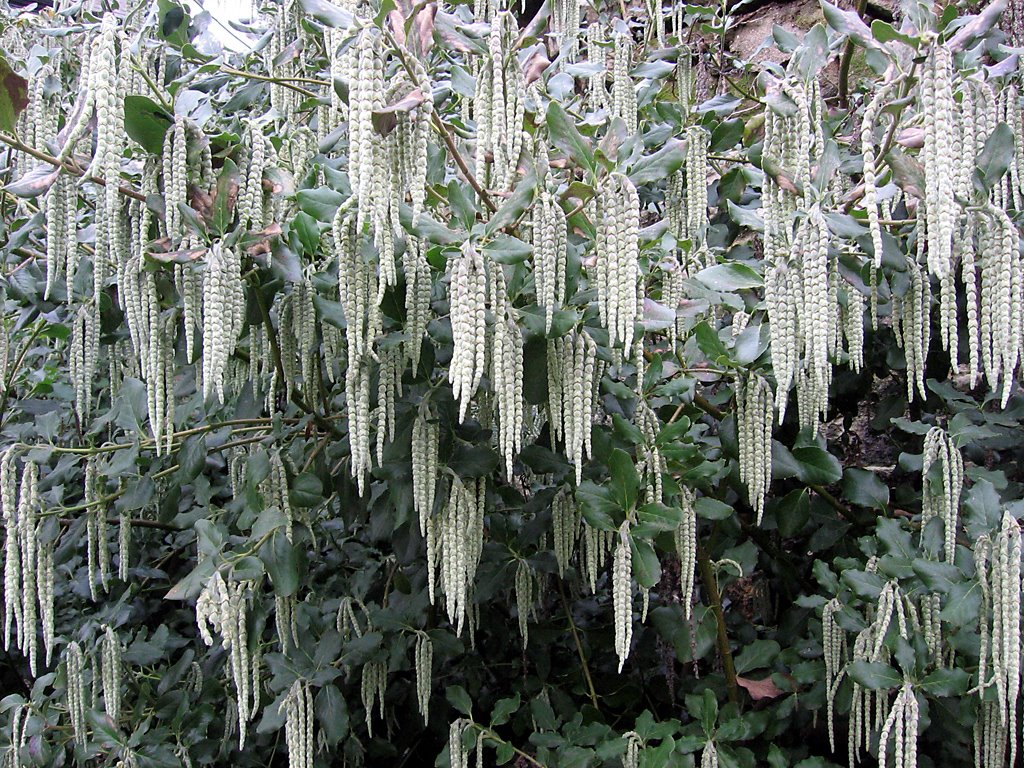
Plants behind the college

This morning, thinking it may have arrived, I went to the Lodge early and found the letter that Alison said earlier that she was sending. It is always brilliant to receive letters from friends elsewhere: whether physical or electronic and rendered with the kind of care that defines a letter. Alison’s demonstrates an awareness of aesthetics and design that I could never emulate. I am listening to the enclosed CD now: it is demonstrative of her expertise about current music, as well as her excellent taste. As she indicates in her letter, the track “Come on! Feel the Illinoise!” by Suffian Stephens is particularly good. Like Neal, she has taken a turn into country music appreciation.

I’ve already begun composing a reply that is similarly distinctive, but it will take me a while. I conversed with a number of other friends today, both my email and the five instant messengers I have configured Adium to aggregate. In particular, it was good to correspond with Astrid and converse with Meghan.

I should do another batch of reading before tomorrow’s core seminar and then go to sleep early. I don’t feel particularly well.

PS. While I shall not get into the specifics, this weekend showed that some hopes I had been entertaining were misplaced. While it’s not a pleasant thing to learn, it’s probably better than persisting in misunderstanding.

Take-home exam woes

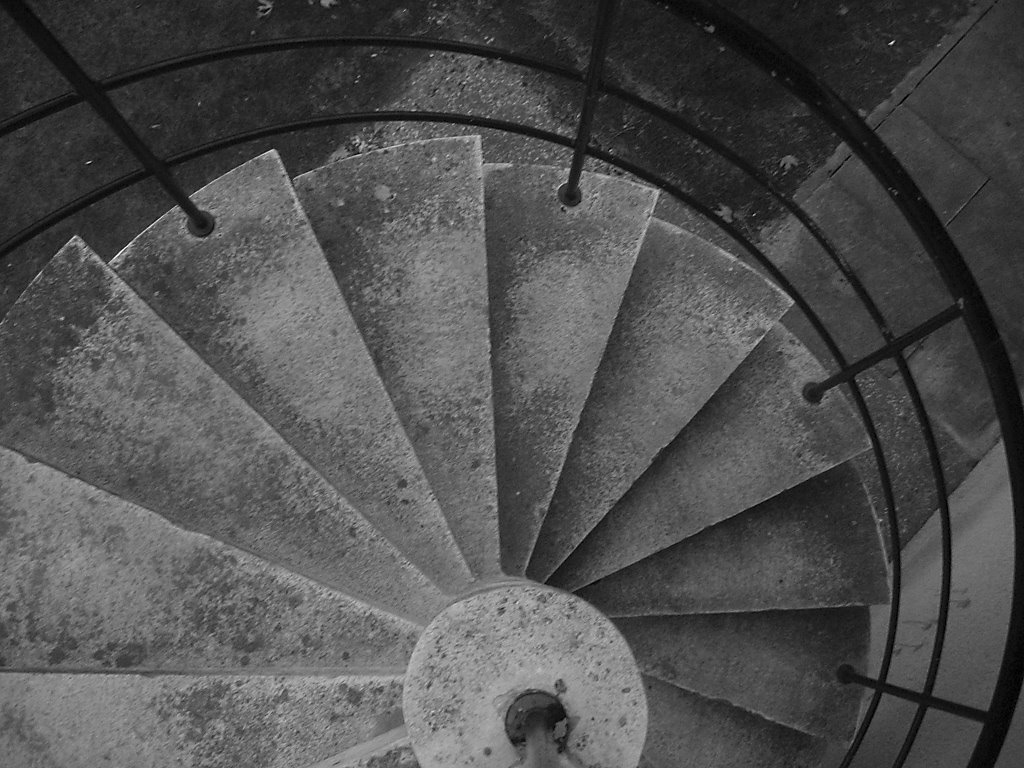
Spiral stairs

As I sat in Wadham’s hellishly hot subterranean computer lab, thinking about the Inuit Circumpolar Conference and Principal-Agent Theory, it became increasingly obvious that the latter is really not at all useful for understanding the former. Had I known what the exam question was going to be, I certainly would have chosen a different case study. Now, it is rather too late, so I shall carry on trying to dig myself out of this hole. I did specifically ask the professor whether the ICC would be a good institution to look at, and received a response in the affirmative. As such, I am not wholly responsible for this debacle.

Submitting my exam, which I am actually less unhappy about than the above paragraph indicates, I was surprised to find that envelopes cannot be slid under the office doors inside the Department of Politics and International Relations. This seems like a fairly severe design flaw in an academic building, where slipping a completed paper under a profs door is a time honoured method of submitting work securely.

From the department, I walked Emily to St. Antony’s. En route, I learned that she attended a session about the entrance examinations for All Souls. To become a prize fellow, you take fifteen hours of examinations on various subjects, followed by a viva examination with all the present members who care to show up. At most, two people a year are admitted. Those who are get seven years of funding and accommodation for any kind of study in Oxford. Technically, I could even become a medical doctor in that space of time, based on the generally shorter degrees here. Not that I could stand all the blood and syringes.

It might be worth spending the fifteen hours even to make the attempt and fail. At least you could say that you gave it a shot, and you would still be in distinguished company. Some very eminent people have been disappointed by this particular examination.

Along with my qualitative methods examination, I submitted my ‘manifesto’ for the Strategic Studies election. It’s an odd system, where people vote by email and you can only run for one position. Inspired by Matt’s example, in running for President, I put myself into the Vice-Presidential running. After all, there will only be one chance to be a member of this executive. I don’t know whether I am running against five people or none. Nominations close on Tuesday and the final list of candidates will be announced on the 21st. I shall keep you posted on what develops.

The seems to be a tiny bit of an academic pause in the next little while. There are always readings to be done, of course, but I don’t think I have any papers due next week. Our second core seminar paper is due on the 28th and I should be starting a paper for Dr. Hurrell soon, but I do have a bit of a space here to work with. Maybe I can finally finish Neorealism and its Critics: a book that I have struggled to wade through in three different countries over the course of the last three months or so.

Take-home exam and contemplation of dreams

Bikes near the train station

Morning and early afternoon: reading and writing

I am really enjoying The Wind-up Bird Chronicle. As with most fiction, that is a result of the narrator. You need to see their project as valuable, yet not something you could or would do yourself. As such, they are doing you a service by living in that capacity in your stead. You get the results back in neat lines on pages. In good fiction, those results feel a lot like memory. They get overlaid upon your own memory, as though you had thought those things yourself in moments similar to the ones portrayed.

I have been dreaming copiously of late. I can set the countdown timer on my phone for ten minutes, lie down, and dream something – even in the middle of the day. Sleeping for an hour or to, I might have a half dozen dreams: all of which I can remember for a minute or two afterwards, but none that I will remember an hour later. I don’t know if this is just a meaningless phenomenon or whether it represents some kind of ongoing psychological condition. It’s certainly not something that’s normal for me.

It’s nice to imagine that my brain is doing some kind of internal housekeeping or reorganization and, as such, sleeping is not a waste of time. Rather, it will allow me – very soon now – to come at all problems with a piercing new intelligence and command of language and memory.

I read a few chapters of Murakami’s book between reading and writing pages for my take-home test. It’s hard to evaluate the Inuit Circumpolar Conference from the perspective of the principal-agent framework. Firstly, that’s because there isn’t actually a lot of information out there about it. Secondly, the framework seems better suited to institutions with a more defined structure. That said, understanding the ICC is important – for a number of reasons I identify in the latest draft – and it’s probably at least a bit important to understand the extent to which this framework works for it. That makes writing the exam much less of a chore.

During all of this, I listened to Tegan & Sara.

Late afternoon and evening

I met Louise at the train station and spent a while with her getting coffee and then groceries before she went off for dinner with friends and German backpackers and I returned to Wadham to carry on working on my take home exam. Getting it done completely tonight, or even just to the point where it requires only final linguistic and conceptual editing, would liberate tomorrow – a benefit that is not to be sneered at.

I will, after all, have another week’s reading to do for Tuesday and Thursday, as well as writing a manifesto for the Security Studies Group election. Next’s week’s general topic is international society and international law, and the specific question which to which I must prepare and answer is:

What is meant by the concept of international society? In what ways does it represent a challenge to realism?

Thankfully, this is something that I already know at least a bit about. Coming up next in qualitative methods: “Archives, Texts, and Sources,” beginning with “Bonapartism and popular political culture.”

Academic Hiccough

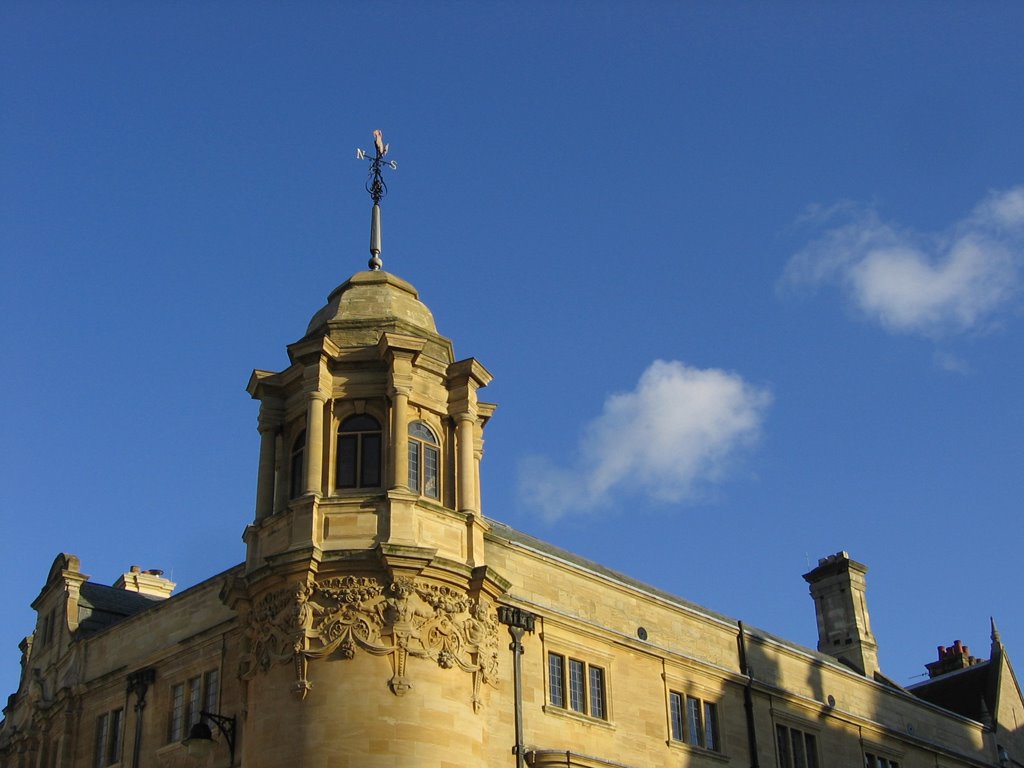
Oxford in the afternoon

Today’s supervision really didn’t feel as though it went well. While some of the discussion had the kind of energy that has been characteristic, there was also a lot of vague sparring and misunderstanding. I don’t know exactly why this was the case, but I suspect my essay was of lower quality than normal. That’s partly because the question was so large and, when I picked and chose elements to address, I didn’t really explain why adequately. As such, it was open to all sorts of attack. I will do better next time. Next time, I really should make an effort to have someone else at least glance over my paper, before I produce the final version. Thoughts that never get interrogated risk being really flabby the first time someone does; if that happens in supervision, it reflects really badly.

Despite sleeping quite a lot in the past few days, I remain frequently and thoroughly tired. I don’t really have an explanation for it, but it’s very bad for overall productivity. It may well have something to do with my continued failure to establish anything like the five-track ideal life: one in which you always have five different things happening at once, in different areas. When that’s happening, it’s hard for everything to go wrong at once. It is also hard to get caught up in general listlessness. The ginseng that Jonathan suggested I try does not seem to be helping.

At Robert Wood’s suggestion, I am going to read Daniel L Nielson and Michael J Tierney, Delegation to International Organizations: Agency Theory and World Bank Environmental Reform, International Organization 57 (Spring 2003): 241-276. Hopefully, it will be useful for helping me to answer, in 2000 words, the question of the take-home assignment:

Is the principal-agent framework useful for understanding international institutions? Using the example of a specific institution [Ed: The Inuit Circumpolar Conference] outline the strengths and weaknesses of this approach to studying international institutions.

It’s not the easiest case study to deal with, but I chose it before I knew what the question would be. The principals are presumably the 150,000 or so Inuit people in Canada, the United States, Greenland, and Russia. As for how power is delegated to agents, I don’t know all that much. A group that represents so few people doesn’t generally have an extensive literature around it, and certainly not one that is accessible from so far away. Basically, I am going to talk about it as a stakeholder group that shows how organizations aside from states – and not even composed of states – can play a role in global environmental policy negotiations. There are all manner of conclusions that can be drawn from the Stockholm episode.


  • I was listening to Elliot Smith’s album Figure 8 today. Some of it is very good, but it suffers from being too similar to the stuff that isn’t overly good. It all blends together on the basis of the very similar nature of most of their songs, not unlike The Smiths.
  • Apparently, they just found a new tomb in the Valley of the Kings in Egypt. The first such find since 1922. It will be nice to have one more properly excavated: presumably with artifacts to remain in Egypt. (Source: BBC)

Nothing too interesting today, I’m afraid

Bikes outside the SSL

I was quite exhausted today, as the result of first voluntary and then involuntary sleeplessness last night. My plan to get back on my ideal 1am-9am sleep pattern is not going well. I had some really good conversations with a pair of people with whom I’ve not generally conversed at length, but the cost was one of considerable mental degradation today. As such, our second qualitative methods class passed rather more hazily than it might otherwise have done. Even so, I think I will be able to do a decent job of the take-home exam over the course of this weekend. Since it’s just one 2000 word essay, it shouldn’t be too bad. Unfortunately, the essay question is one that is uniquely poorly suited to the case study I have already chosen. It’s really aimed at larger and more bureaucratically complex institutions. That said, I think a reminder that there are frigates out there as well as battleships – and that they are doing important work – is one that will serve those marking the exam well.

Lots of projects are waiting just over the next hill now: the continued search for a summer job and a place to live, the process of applying for scholarships in a way that I hope will be more fruitful this year than last, and the ever-present process of reading with an eye to less-and-less distant examinations. The character of the light has been helpful on all of these fronts lately. It really does have a profound psychological effect. It’s like seeing the surface of the water as you are swimming up towards it. It distracts from how oxygen starved your lungs can get at times and it unambiguously demonstrates the way to go.

I have a supervision with Dr. Hurrell tomorrow about my neoliberal institutionalism essay, with another to follow soon on the democratic peace essay I submitted yesterday.

To find thy piercing ray, and find no dawn

This afternoon was so bright that – sitting with my curtains open in Library Court – I felt like I was back on the red couch in our kitchen this summer, or perhaps at one of the bare wooden picnic tables in Fairview Crescent during exam time. Unable to resist the aesthetic, I spent a while reading the Murakami book from Tristan. Most recently, the protagonist has intentionally lowered himself down into the bottom of a well, in the middle of a Tokyo suburb. The light of the afternoon and the ideal of the story both remind me of stealth camping expeditions planned and executed in Pacific Spirit Park: concealing a small tent somewhere amongst all the foot and bicycle paths, then watching it get dark absurdly early under the heavy coniferous canopy.

My computer monitor – usually the bluest light source in the room by far, contrasted with cheap incandescent bulbs under yellowed plastic covers – looked positively sepia toned, by comparison with the afternoon skylight.

Camera trouble

Something very annoying has happened to my Canon A510 – the camera on which all the blog photos are taken. In the bottom left area of the frame, when the camera is held horizontally, there is a dark splotch. At first, I thought it was dust on the lens, but a thorough cleaning hasn’t even moved it. It seems to become larger when focused on a distant subject and darker when a smaller aperture is used. My thesis, for the moment, is that it is dust on the sensor. As such, there is no way whatsoever I could remove it, and to have it done professionally would probably cost a good share of the value of the camera. Since it wasn’t there yesterday, I can hold out the dimmest hope that it won’t be there tomorrow. That said, it looks as though I will be trying to remove it in Photoshop from all photos where it is evident (anything where it appears on a solid colour or even a simple texture). If anyone has a cunning plan to get rid of it completely, I would be highly grateful.

There is a second, smaller and less noticeable, patch in the upper right corner. A third, even less noticeable, one is right in the middle. All three have been edited out of today’s photo.

[Update: 31 May 2006] Whatever the splotches are, they seem to have been growing steadily in visibility. Since cleaning the sensor seems to be impossible, I will just have to put up with the problem until I get a new camera. Care to help?

Mid-term craziness

I wrote another essay today. Taking an hour-long nap during the process probably increased the quality of the final product, but it has not advanced my particularly daunting schedule for the next few days. Nearly adding boiling water to milk in an attempt to make breakfast cereal for dinner revealed both the state of culinary achievement I have reached of late and how addled you mind can become on the basis of sleeplessness and long bouts of reading.1

Now, I just need to proofread this paper (on democratic peace theory) before delivering it to Nuffield tomorrow. Since I am running for an executive position, I should probably attend tonight’s Strategic Studies Group meeting. Then, I need to finish my presentation on the Inuit Circumpolar Council for Thursday. The weekend promises to include the take-home exam for qualitative methods. In addition to that, there is always reading for next week’s core seminar. Of particular importance is that I need to collect information on the two scholarships I am applying for in early March and send it to referees. Also, submit my request for vacation residence time as soon as I know when the trip with my mother will be. They certainly keep us on our toes here: always something new to be done, even if there isn’t necessarily much time for reflection or creativity.

I’m particularly irked by the knowledge that I will need to spend a good chunk of this weekend dealing with the take-home exam. There is a mess of reading for the institutions section of that course that I will probably need to do in order to do a good job of the exam, whatever form it ends up taking. The annoying thing is the confluence of the three days during which the exam absolutely must be done and Louise’s visit. I shall try to balance them as best can be managed.


[1] I got a much better dinner after the strategic studies meeting.

  • Apparently, the provincial government has released a plan to protect 2 million hectares of the Great Bear Rainforest in British Columbia. Good for them. I wonder if this area is connected with the bear research Kate Dillon has been doing. This will be an expansion of the 45,000-hectare protected zone in the Khutzeymateen Valley.
  • This New Yorker article on profiling, to which Bryony originally referred me, is quite interesting. As you would expect from Malcolm Gladwell, it includes connections between quite disparate areas of study. Since I can’t write any more here now, people looking for something to read should definitely have a look at this.

Amateur Oxford sociology

St. Antony's LibraryHappy birthday Iason Gabriel

After lectures this morning, I spent much of the day working on the Connolly and Barkawi books. The Connolly book is interesting, but includes a lot of fairly general language and not a lot of direct examples. General points about theory are more memorable, comprehensible, and valid when they can be affirmed through at least one concrete demonstration. You can talk about symbol construction all you want, but one good case study on the construction of ‘Palestine’ as a symbol in contemporary Middle Eastern politics strikes me as quite a bit more worthwhile and useful than a lot of generalization. It’s an anti-parsimonious ideal that may set me outside the ‘discipline’ of International Relations: out amongst the historians, journalists, and policy makers.

Dinner with Alex, Claire, and Iason tonight was an affirmation – once again – of how fun people in my program are. I was meant to meet Emily afterwards, but things once again didn’t manage to work out. It’s interesting to observe the sociology of the M.Phil group: who spends time with whom, what kind of inside jokes develop, and how people conceive of themselves in the program. Personally and intellectually, I feel like I am undergoing a second adolescence here. I am very actively defining my beliefs and personality in a way I can never recall doing before. I think it’s the combination of a new place and having finally reached a level of self-affirmation where I can brush off most criticism. It’s an empowering mix.

Hopefully, it will empower me to get a decent draft of my paper for Dr. Hurrell done tonight – after a brief foray to the King’s Arms with Alex, Claire, and some of Claire’s St. Cross friends. I could write much more, but I really should get some reading done now if I am going out again later.

PS. Tristan has a new batch of photos online, including a really odd one of Meaghan Beattie and I. Tristan frequently seems to post more photos of people in a day than I do in several months. Partly, that’s because there have been problems in the past with posting photos of people on the blog. Even so, I will try to show a less de-populated Oxford during the next while.