
You know you’ve made it somewhere in life when you receive a thick envelope from Statistics Canada and learn that they think you would be interested in a $243 subscription to Canadian Economic Observer.
Category: Daily updates
Generally musings of the day, usually accompanied by a photograph
Toronto climate jobs
Does anybody know of any climate-related jobs in Toronto?
All of these sectors are potentially of interest: government (federal, provincial, municipal), academia, non-profits, and the private sector.
I am interested in work in a wide variety of sectors including:
- The federal, provincial, and municipal governments
- Non-governmental organizations
- Academia
- and the private sector.
Feel free to email me at rather than post comments here.
Preferred scenery
I think I should spend more time standing in or in front of fields of solar panels:
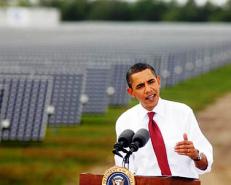
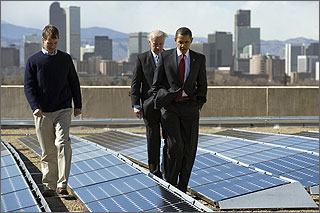
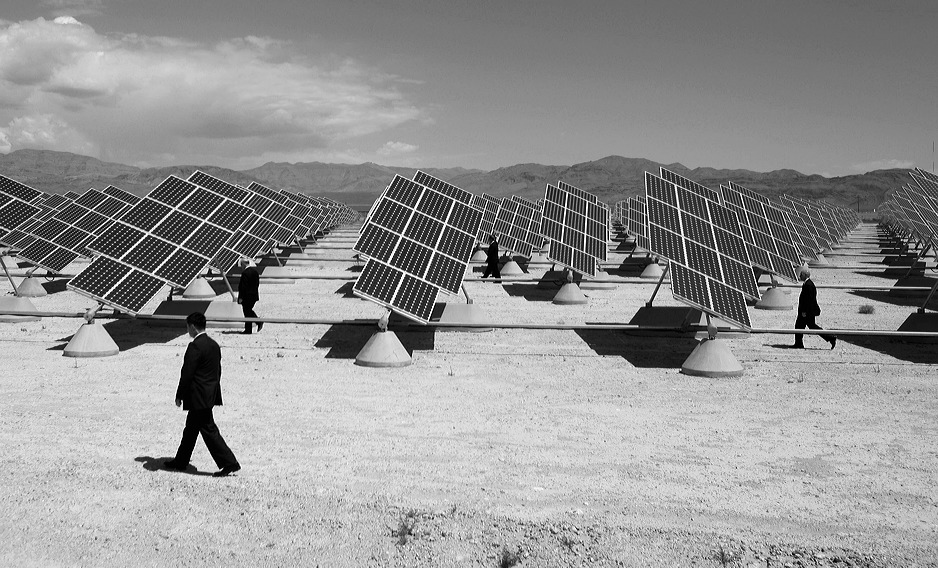
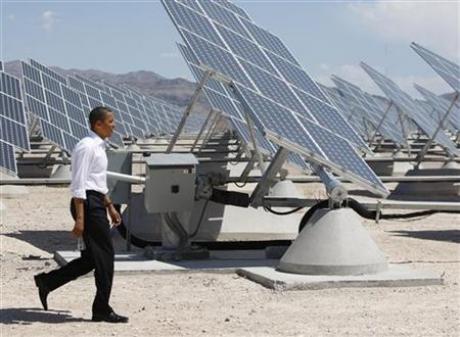
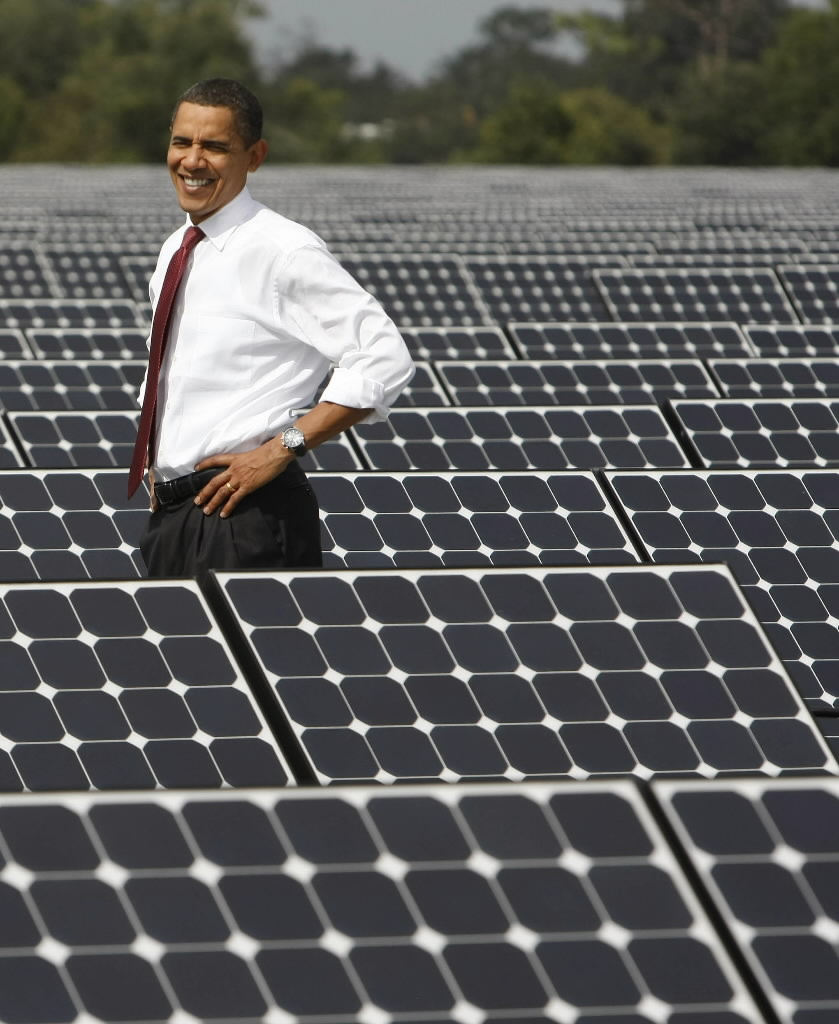

I think it would make me more optimistic.
BuryCoal update

After months in limbo, Google has assigned a PageRank to BuryCoal.com, significantly increasing the amount of traffic going there.
In order to help drive that site’s evolution, I am planning to put most of my climate-related writing over there now. That should also be helpful for those who are only interested in following that topic of discussion, as opposed to the miscellaneous ones that crop up here. I encourage anyone with an interest in climate change to subscribe to the RSS feed or sign up to get updates by email.
BuryCoal is also looking for contributors, including those who wish to post anonymously.
Ottawa’s ‘Beaver Barracks’
The rather unfortunately named ‘Beaver Barracks‘ is an ecologically oriented housing development, being put up by the Centretown Citizens Ottawa Corporation (CCOC). Two buildings are under construction now, at 464 Metcalfe and 160 Argyle, and they are expected to accept their first residents in November and January, respectively. The building on Argyle will be four stories, while that on Metcalfe will be eight, with a roof terrace. Two additional buildings are expected later. In the middle, community gardens will be put in when construction is finished. The whole complex is located just south of the Nature Museum.
I first found out about the place by means of Zoom’s blog.
Sustainability features
For me, the most notable feature of the buildings is how they will be the largest residential development in Canada heated and cooled using ground-source heat pumps. Sylvie Trottier, CCOC’s Green Animator, sent me some details on the system:
The system we are building is a central distribution loop designed to deliver a specific temperature (70 degree F) to heat exchangers located at each of the four buildings. As well, it will provide this same 70 degree temperature to the domestic hot water system via a double wall heat exchanger. The geothermal ground loop is designed to provide 70% of the peak load of the system via the heat pumps; this design actually provides 90% of the annual load. The boilers plumbed to the central loop are incorporated to assist the geothermal heat pumps in maintaining the design temperature of 70 degrees during the peak demand period. The Domestic Hot Water system (DHW) is connected to the central loop through a double wall heat exchanger. The central loop provides the DHW heat pump with a temperature of 70 degree. The DHW heat pump raises the temperature to 150 degree F. The boiler attached to the DHW system is used for the peak periods when the heat pump system requires assistance in maintaining the design temperature. During the cooling season the heat being removed from the building is captured by DHW heat pump system and used to supply the DHW. This feature enhances the overall efficiency of the central plant system. Also important to note is that the central distribution system will maintain itself through a balance of heating and cooling during the shoulder seasons, when the loop temperature is simply maintained through the space conditioning requirements of the tenants.
The central distribution loop will then feed heat pumps in each unit that will provide tenants with control over their own heating, cooling, and hot water.
Geothermal heating and cooling seem ideally suited to Ottawa, given how the city experiences extremes in both summer and winter temperatures. Other sustainability enhancing features include a green roof, low-flow fixtures, efficient lighting and appliances, and a high performance building envelope.
The architects are Barry J. Hobin & Associates Architects Inc.
Unit selection
I attended one of their information sessions yesterday, and ended up submitting an application to live in B^2 (as I prefer to think of it). My top two applications were for 683 square foot one-bedroom apartments in 160 Argyle, with this layout:
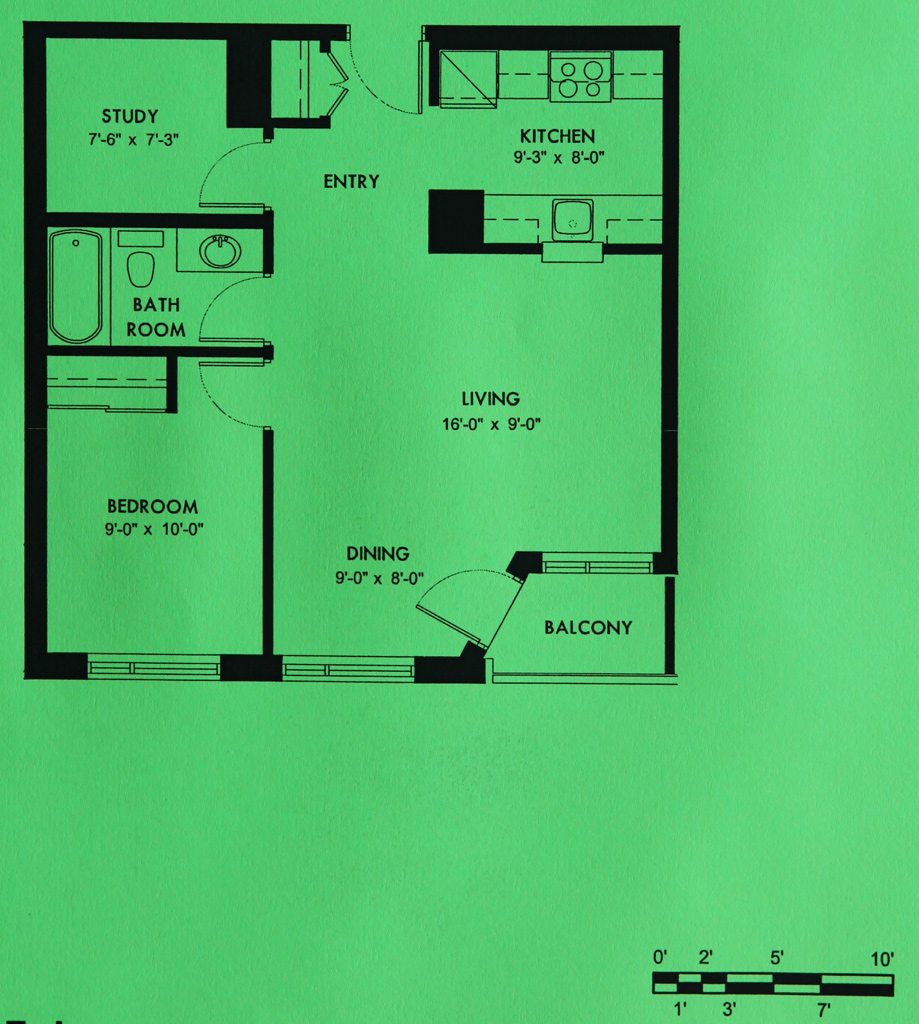
The balcony and windows look south, into what will eventually be the central garden area. For the immediate future, they will overlook a construction site.
Reading floorplans isn’t something I have much experience with, so if any readers have the mental ability to turn these pictures into an image of what the apartments will be like, I would appreciate your feedback.
The other unit I applied for, as a third choice, is a 602 square foot one-bedroom apartment, located on the 5th floor of 464 Metcalfe. It has this floorplan:
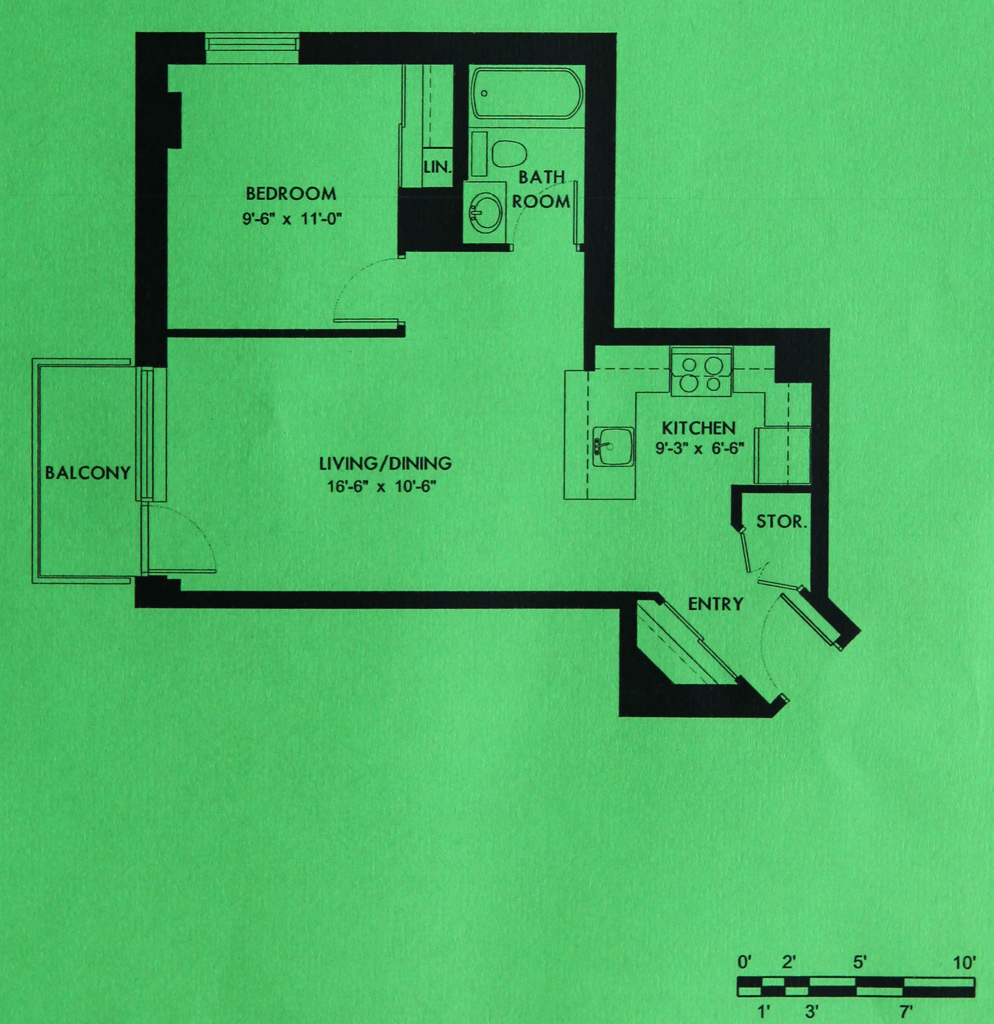
The bedroom window would look north, toward the Museum of Nature, with the balcony above the central garden area.
The rent for each unit is $956, plus various expenses. For the units I selected at 160 Argyle, heating and cooling are $62.83 per month. For that at 464 Metcalfe, it is $55.39. HST, electricity, laundry, and internet would be on top of that. Both places are significantly more expensive than my current place, but I think it would be worthwhile for a couple of reasons: primarily, for the benefit of living in a situation where I would be more likely to meet new people, and in order to encourage more sustainable construction.
Lots of other unit types are available: ranging from bachelors to three bedroom units. Heating and cooling costs are set per square foot.
[Update: 1 October 2010] I got word from CCOC. I will be moving into a place modeled on the first floorplan, on 1 January 2011. It will be on the fourth floor of 160 Argyle. It will be my second non-university-residence home.
Balancing flash and ambient light
I am taking a photojournalism and documentary photography class through the School of Photographic Arts: Ottawa. The first assignment is balancing flash with ambient light, taking photos of strangers outside at night. It is strongly encouraged to take photos in manual mode, rather than the aperture priority mode I normally use. As such, I am learning to adjust my thought process.
Normally, my thinking when it comes to exposure settings looks something like this:
- Will the lighting be changing quickly, not leaving me enough time to change settings? If so, choose a suitable ISO and white balance, set the camera to ‘program’ mode and hope for the best.
- If not, choose a combination of ISO and aperture that is suited to the light and the amount of depth of field I want.
- Make sure the shutter speeds generated are suitable to the situation, subject, and lens.
- Adjust ISO and white balance as necessary.
Switching to manual and balanced flash/ambient light requires choosing an appropriate aperture, then selecting a suitable shutter speed that will underexpose the subject before the addition of E-TTL II metered flash. It’s a workflow that takes some getting used to, but which ought to be helpful in the long run.
Particularly during the dancing at the end, my photos from my cousin Ksenia’s wedding could have used a bit of flash to top up the ambient light.
Place to socialize with strangers
I have always disliked dance clubs, partly because they are excessively noisy. That more than offsets the way in which it is socially acceptable to approach strangers there, given that you are generally unable to discuss anything substantive with them. Coffee shops are quieter, but there is much less license to randomly approach people and engage them in conversation.
It would be nice if there was a kind of commercial venue that combined the spontaneous mixing of a club with the relatively peaceful atmosphere of a coffee shop. Such a place could provide a useful means of meeting a larger number of people, as well as meeting people with whom you don’t have a weak pre-existing connection through a mutual friend. In addition to widening social circles, exposing people to strangers with different perspectives could reduce the incidence of confirmation bias.
Can anyone think of any such venue, in Ottawa, Montreal, or Toronto?
Ottawa’s mayoral election

I have never had much interest in municipal politics. For one thing, the policy areas I am most concerned about aren’t ones over which municipalities have too much control. For another, I have generally not expected myself to live in one place for long. Finally, it just hasn’t seemed worth the effort to track municipal politicians, platforms, etc.
Ottawa is now in the midst of a mayoral race between (at least) incumbent mayor Larry O’Brien and challenger Jim Watson. I don’t know much about the platforms of either. That said, I do acutely remember the awful bus strike that happened on O’Brien’s watch. I think the union deserves to be punished for abusing their monopoly power over the general population, but O’Brien probably deserves to be punished too for not managing things better.
That said, I suppose I will have to investigate the candidates more comprehensibly before I decide how (and whether) to vote.
[Update: 25 October 2010] The Ottawa Citizen has a good website with information on this election. The general sense seems to be that Watson will win the mayoral race. Another thing I’ve discovered is that it is rather difficult to learn which school district zone you live in, much less find much information about the candidates online.
[Update: 28 October 2010] While the candidates on offer didn’t inspire much enthusiasm for me, I was pleased with the physical process of voting.
Photo storage costs
At Ottawa’s 2010 Capital Pride festivities, I found myself thinking back to my Oxford days when I would generally only take a couple of hundred photos a month on my 3.2 megapixel digital camera.
By contrast, I took around 400 shots during the course of the parade and the party that followed. Initially, that struck me as a bit excessive and made me nervous. Then it occurred to me that a 4 terabyte external hard drive sells for about $400 these days, meaning that the cost of storing one gigabyte worth of photos is around 20¢ – ten for the external drive, and ten for the internal one it is backing up. The biggest constraint I face is the cost of replacing the 750GB hard drive in my iMac, given that the things really have to be stripped apart for that to be accomplished.
The cost per shot of digital is pretty amazing, compared with film. Of course, there is a new danger that accompanies that. With big memory cards and high speed internet connections, you risk putting more photos online than your friends or readers would ever wish to see.
Possessions are anchors
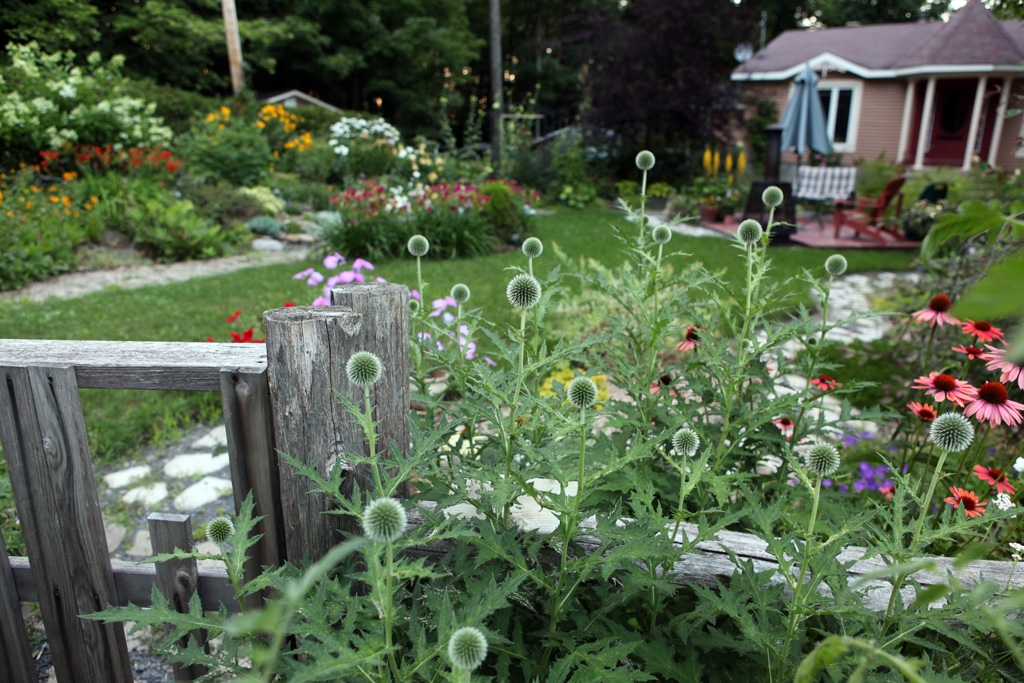
Ottawa has never been my favourite city. While I have certainly met some people here who I like a great deal, and while there are certainly interesting kinds of work to be done here, I miss the beauty and familiarity of Vancouver. I also miss the options and excitement associated with larger places like Montreal and Vancouver, as well as the unique intellectual atmosphere of Oxford.
Lately, I have also felt as though it would be a good idea to spend a big chunk of time seeing more of the world than I have so far (though there are ethical issues that surround emissions from voluntary travel).
One thing that interferes with all of these plans is my rented apartment and the few thousand dollars worth of low-cost IKEA furniture and miscellaneous materials it contains. Finding it took quite a lot of effort, as good places in Ottawa seem to get snapped up almost instantly. That and sheer force of momentum make me hesitant to give it up, especially since that would mean finding a place to store my miscellaneous possessions, as well as a mechanism for moving them to the storage location.
It is odd how incapacitating it can be to own more things than you can carry yourself. The situation certainly suggests to me that it is wise to continue renting. My present situation already renders me immobile to an extent I find somewhat regrettable. A mortgage, property taxes, repair obligations, and the additional stuff that would inevitably accompany any kind of home ownership would be even more stifling.
I am not as badly off as I could have been. I am still using the same cheap IKEA furniture I bought straight after moving to Ottawa, even though an increasing proportion of it is held together with gaffer tape and screws I installed myself. Most of the surplus income that has accompanied full time work has likewise gone into paying off student debts, building up a cushion of savings, and buying photo gear. Photo gear may be the least anchor-like kind of possession, for me at least. For one thing, it packs a lot of dollar value into a small amount of space and weight. For another, every time I use it I want to go somewhere scenic or novel or important, so as to be able to put it to better use.
Photographing and re-photographing the same few neighbourhoods is not the more enriching experience.