The Pilot G2 lineup

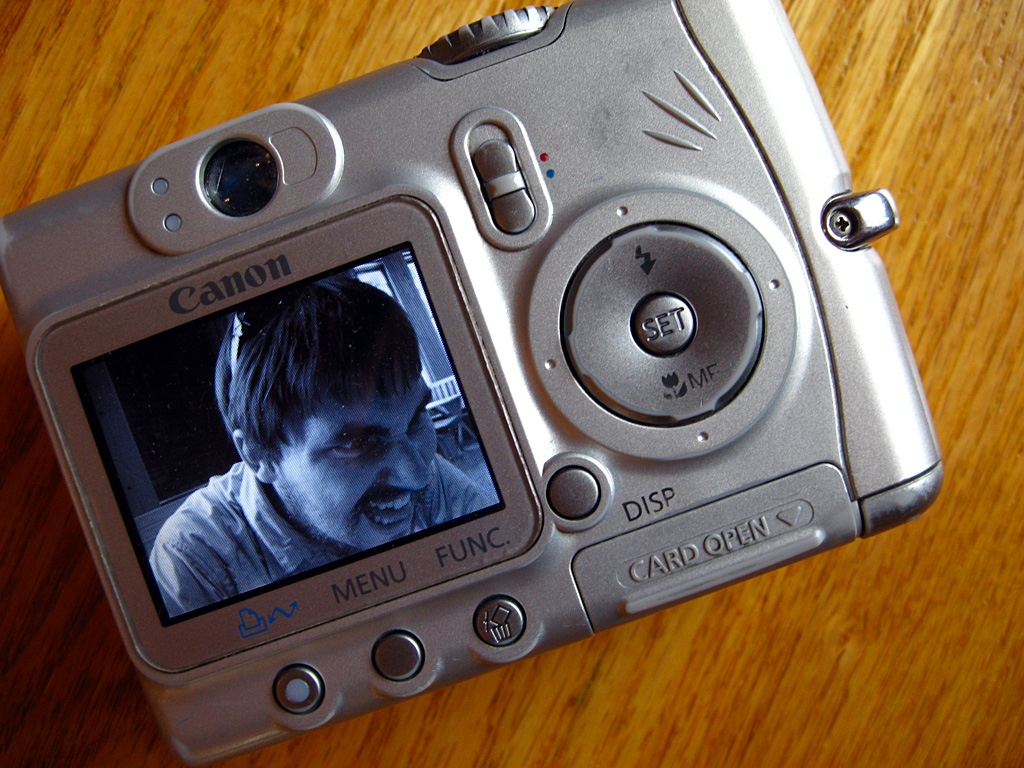
Lovers of the Pilot G2 series of pens, take note: the so-called G2 ‘Pro’ version of the writing implement is only very marginally superior to the disposable model. Both are made of similar plastic, and the clicking system for retraction actually feels a bit cheaper on the $5 ‘Pro’ pen than on the $1 disposable pen. Since the ordinary version takes refills just as well as the more expensive one, there is no real reason to make the switch. In fact, the cheaper pen actually comes apart more elegantly to be resupplied with ink.

If you want a genuine step up, using the same ink cartridge system, hunt around for the metal bodied, $12 G2 Limited.

On a side note, it strikes me as odd that, while I have dramatically more expensive pens than the G2, I rarely feel comfortable carrying them around. As such, they languish in boxes in my apartment while everything from letters to to-do items on 3.5″ cards emerge from the tip of Pilot’s low-cost devices.

Texas Hold-Em Scrabble

Probably inspired by the recent and unfortunate demise of the ‘Scrabulous’ word game on Facebook, I came up with another variant version of the original board game, based on a fusion with a popular version of poker.

For the most part, it is the same as normal; rules on scoring of letters, how words can be placed, and so forth remain. The big difference is that there are three face-up tiles beside the board. People can use any combination of their seven tiles and the three tiles to make a word on the board. Once the three letters are down and everybody has seven of their own, a three minute timer is started. Whoever can come up with the highest scoring word then gets to place it on the board. Players can use pads of paper to write down possible words and their corresponding scores, if desired. The same person can theoretically go time after time, replacing their own letters and the three upward facing letters every time a word is placed.

Normally, each player subtracts the value of their remaining letters from their score, when the first player runs out of tiles and can draw no more from the bag. (Also, if a player manages to use all seven of their letters in their final turn, they get to add the value of everyone else’s tiles to their score.) A fairer system, for this variant, might be to require that a player use all remaining upright tiles, as well as their own, to earn the bonus from the remaining tiles of others.

[Update: 6 August 2008] Tonight, Gabe, Emily, and I played the first ever game of Scrabble Hold-Em. The experience made it clear that a few rules needed to be refined.

Here are some updates:

  1. There are two variants to the game. In one, the three upright letters in the ‘hold’ change every time a word is put down, getting randomly exchanged for others in the bag. In the other version, only letters used to form words are replaced from the bag. Players choose which version they want to play before the game begins.
  2. In the event that two people have words of equal value, the word with the highest value letter will win (like a high card in poker). If the highest letters are tied, the second highest are used, and so forth. If all letters are tied, a coin will be flipped.
  3. The game ends when one player clears their rack, regardless of whether face-up tiles remain in the ‘hold.’
  4. A one minute time limit makes for a very hectic sort of game.
  5. Because it is harder to make ten letter words than seven letter words, a ‘Bingo’ is worth 75 points. This is awarded to a player who uses all seven of their own tiles, as well as the three in the ‘hold.’

Overall, this game made me feel more as though this could be a good variant upon the original game. It would be excellent if other people could try it and leave comments here.

Greyhound bus security

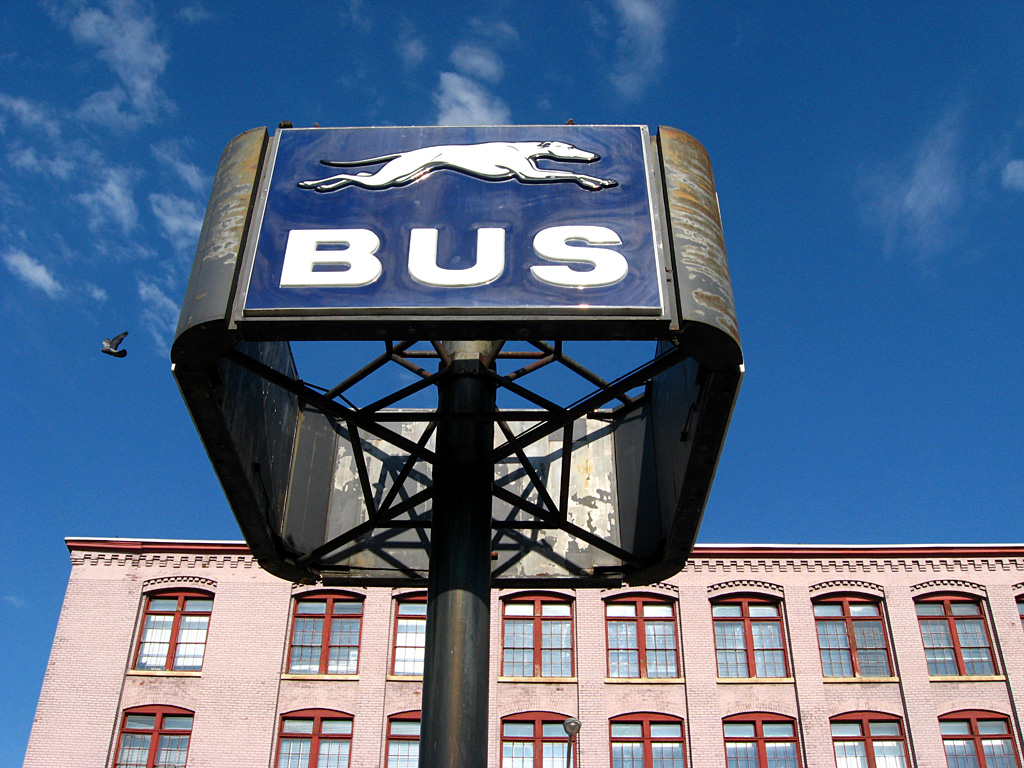
Having spent much of the last week waiting for or riding on Greyhound buses, all the news stories about the man who was beheaded on one caught my eye. Some people are calling for airport-style screening procedures for buses. There are at least two reasons for which this is inappropriate.

The first concerns the mobility of buses. With a plane under their control, hijackers can fly to distant states that might assist them. The only way to stop them is to shoot down the plane, killing everyone on board. Buses are comparatively easy to stop. You can shoot out the tires, put spiky strips across the road, or simply block the route with something heavy. Nobody is likely to escape to sunny Cuba on a hijacked bus. Another element of mobility is multiple stops. Bus companies would need to (a) put security at every permitted stop (b) only allow people on at big bus stations or (c) allow some unscreened people aboard buses. Someone determined to commit a violent act on a bus could take advantage of (c), while (a) and (b) would seriously inconvenience people at many smaller stops.

The second is that someone in control of an ordinary plane can kill a lot of people. They can certainly kill everyone on board. They can also kill many people on the ground. Similar risks do not exist in relation to buses. At the very most, someone with a machine gun or explosive device could kill most of the people on board. There is no clear situation where being on a bus increases the amount of harm a person can do. Someone who wants to kill a particular person can do it at least as easily off a bus as on it; the same is true for someone who just wants to kill people at random.

There is certainly a certain risk of violence on board a bus, but that does not mean that excluding weapons is a sensible use of resources. For one thing, it would increase bus fares substantially and require the redesign of bus stations. For another, it isn’t clear that it wouldn’t simply displace any violence that was to occur to a different venue. Living among humans naturally entails risks, which we can mitigate to greater or lesser degrees in various ways. Reducing risk always involves some kind of cost: sometimes in money, sometimes in freedom. The level of news coverage this incident is receiving highlights just how slight a risk this actually is. The kind of risks that make the news aren’t the sort to worry about, since they are rare by definition. It’s the stuff that is too common to constitute news that you really need to fear: things like domestic violence and heart disease, for instance. Screening bus passengers is not an intelligent use of our resources.

Central Park Studios hostel, Manhattan

[Image removed at the request of a subject (2019-10-01)]

While in New York, Emily and I stayed at the Central Park Studios hostel. It seems worthwhile to say a few things for the benefit of future travelers, as I have often found the general hostel rating sites less than useful. The hostel consists of a number of apartment buildings that have been converted: each with several multi-bunk bedrooms, along with shared bathroom and kitchen facilities. The rooms are pretty good: cool, fairly clean, and bug free. They provide decent sheets and towels. The kitchens are tolerable. The bathrooms are bad enough to make you wonder if there are any YMCA facilities nearby, but not quite bad enough to actually make you go looking for them. Ours featured a particularly nasty tub, icy shower, and spreading black fungus on the ceiling. The location is decent: two blocks from a subway line and close to a grocery store. One morning, Emily and I assembled avocado and cheese sandwiches on the sidewalk, rather than brave one of the less-than-sanitary and far-from-vegetarian looking restaurants in the immediate vicinity.

Bunks in the shared rooms are around $45 a night.

In my experience, the place is definitely better than the Hosteling International facility on Amsterdam, near Columbia University. That being said, first time visitors to Manhattan should be aware that they will probably pay twice as much as normal for a hostel, and have to settle for somewhere significantly louder and dirtier than would be available in most other cities.

New York bound

The planned trip to small town Vermont has grown a big city offshoot. For the next three days, Emily and I will be visiting Manhattan. It has been five years since I was last there, and I am excited about the prospect of seeing some new things. Because of the 2003 blackout, for instance, the Guggenheim was closed during my last visit.

My non-fiction list

One thing I have noticed about grad students (a category that partially includes those merely destined to eventually attend grad school) is that any bookshelf or stack of books has the power to draw their eye. Upon entering a new dwelling, their eyes dart across book spines in search of improved understanding of the denizen of the place.

In something of the same spirit, here is a brief analysis of the books in my non-fiction to-read list. The subject areas and number of books are as follows:

Science (7)
The environment (6)
International relations (6)
Law and politics (5)
Security (3)
Economics (3)
Cryptography (2)
Math (2)
Travel (1)
Cooking (1)
Music (1)

It would also be interesting to analyze the rates at which books in different categories are added and removed, but that is a project for another time.

Among those I have reviewed:

The environment (6)
Science (6)
Economics (4)
Security (3)
International relations (3)
Religion (2)
Cryptography (1)
Math (1)

Hopefully, the span of time I will be spending in Vermont (July 26th to August 6th) will allow me to add a few items to the second list and remove some from the first.

WiFi wars

The present situation in my flat is a classic failure of coordination. There are so many (encrypted) wireless networks operating that interference seems to have become a major issue. Internet access has become slow and unreliable. Of the eleven channels in the 802.11b/g standard, only three (1, 6, and 11) are fully non-overlapping. The individual wireless access points are all interfering with one another, as well as with everything else that operates in the same part of the radio spectrum: microwaves, 2.4 GHz cordless phones, security cameras, Bluetooth devices, baby monitors, wireless video game controllers, fluorescent lights, etc, etc. Indeed, a new phone somewhere in my vicinity may well have been the straw that broke the camel’s back, as far as the 2.401 MHz to 2.473 MHz range goes.

Everyone would have faster and more reliable internet access if we could shut down all but a couple of the access points. Unfortunately, there is no way to coordinate such an action. Furthermore, anyone who actually ran one of the reduced number of access points, if such an agreement could be reached, would be faced with the same kind of illicit usage that forced me to shut down my open network.

One option is to seek a technological fix, in the form of 802.11a or 802.11n equipment that is less likely to be interfered with by existing devices. Of course, given enough time, those devices are likely to face similar hurdles.

Product idea: guaranteed win lottery tickets

While thinking idly about ways to tactfully pass money to people, I had an idea. A company could sell lottery tickets (probably of the scratch-and-win sort) that are guaranteed to pay out specific amounts. You would buy them for the face value plus a service fee. They could be issued in denominations running from $10 or so up to thousands.

They would look like ordinary tickets, and could be redeemed at places that sell scratch-and-win tickets. The merchant would simply be compensated by the company. Even better, the company could buy guaranteed winner tickets from the normal ticket issuers. That way, they would be available in the same brands as tickets sold in normal shops, diminishing suspicion and allowing buyers to choose something suitable for the recipient.

This could be:

  1. A way to help a struggling friend of family member without making them feel guilty.
  2. A way to convince someone feeling down on their luck that things are turning around.
  3. Practical jokes of various sorts.
  4. Less benevolently, as a semi-covert means of exchanging money.

Could there be any other uses? Would people actually buy such a thing? Would lottery regulators ever permit them?