Be grateful for bees

Sasha Ilnyckyj

My favourite reading snack these days is soy-covered almonds. They have lots of delicious umami flavour. Recently, I was surprised to learn that 80% of the world’s almonds are grown in a 600,000-acre section of California’s Central Valley. Since almonds need to be pollinated by honey bees (apini apis) and there is only nectar available in that area when almonds are in bloom, the bees need to be trucked in from elsewhere. Every February, more than a million hives – containing 40,000 bees – get trucked in. By 2005, it proved necessary to import a 747 full of bees from Australia for the ‘pollination event.’

The mutual exposure of those two distantly separated bee populations results in the exchange of microbes and parasites. Therein may lie the cause of the North American Colony Collapse Disorder outbreak that began in 2006. Honey bees are also used to pollinate peaches, soybeans, apples, pears, cherries, raspberries, blackberries, cranberries, watermelons, cantaloupes, cucumbers and strawberries. There are dozens of others, ranging from those that simply benefit from the availability of pollinating bees to those (such as squash and vanilla) where the bees are absolutely indispensable.

Concrete’s climatic consequences

The tragic electrocution of Emily Horn

While aviation and ground transport get lots of well-deserved attention, in terms of their climate change impact, the concrete industry seems to get a lot less scrutiny. In a way, this is unsurprising; concrete is hardly glamorous stuff. At the same time, concrete production accounts for about 5% of all greenhouse gas emissions: mostly from the process of manufacturing clinker by heating limestone and clay. This is usually done using coal. The average tonne of concrete produced generates about 800kg of carbon dioxide: both as a result of the coal burning and the product of the chemical reaction involved (CaCO3 -> CaO and CO2, ignoring silicates). This figure does not include emissions relating to quarrying rock or transport.

Cement manufacture can be incrementally improved in three ways: by reducing the ratio of clinker to other additives, by making kilns more efficient, and by using fuels other than coal for the heating. All of these can make contributions, to a certain degree, but only a complete shift to biomass heating could have a terribly significant effect on greenhouse gas emissions (and that effect could be moderated by the emissions from transporting the biomass).

Demand for cement is growing at about 5% a year, and is partially driven by the construction of new hydroelectric dams and nuclear power plants. At present, the rate of demand increase exceeds the rate of efficiency improvements. As such, greenhouse gas emissions associated with concrete are increasing every year. The average North American home uses about 25 tonnes of concrete, mostly in the foundation.

George Monbiot discusses concrete in his book, focusing on geopolymeric cements as a solution. Carbon capture and storage (CCS) is theoretically possible, but with an added problem. Concrete plants must be sited near limestone quarries. These are not necessarily near the salt domes or aquifers where CCS can probably be most effectively deployed. Geopolymeric cements are similar to the pozzolan cement used by the Romans to build the roof of the Pantheon. They are made from clay, certain kinds of sedimentary rock, and industrial wastes. Producing them generates 80-90% less carbon dioxide. This is because they require a lot less heating and the chemical reaction that produces them does not generate CO2 directly.

The modern version of this material was only developed in the 1970s and has yet to be widely adopted. Partly, that is because of the cost of refitting existing cement works or building new ones. Partly, it reflects the hesitation of the construction industry to use new materials. Such objections can probably be most efficiently addressed through carbon pricing. If the concrete and construction industries were paying for those 800kg of CO2, the incentives they face would probably change decisively and fast.

Copper indium gallium selenide solar cells

Nanosolar, a company supported by Larry Page and Sergey Brin (the founders of Google), has announced that it will be selling thin-film solar cells profitably for $1 a watt. Apparently, the cells are printed with copper indium gallium selenide – an alternative to silicon. Cells based on the material can convert solar radiation to electricity with 19.5% efficiency. In theory, this material can applied to foil, plastic, glass or cement – producing electricity generating surfaces. It can also be made into more conventional panels of the sort Nanosolar is starting to sell.

In the 1950s, solar cells cost about $200 per watt. By 2004 they were down to $2.70. Further reductions could make solar power cost competitive with fossil fuels, potentially even in the absence of carbon pricing. Combined with either better storage (to moderate light/dark and sunny/cloudy cycles locally) or better inter-regional transmission (the sun is always shining somewhere), such cells could eventually make a big difference in the overall energy balance. Solar has been discussed here previously.

Shopping season

Stepping into any shop these days is a simultaneous reminder of many things: the insipidness of holiday music, our society’s unfettered embrace of mass consumerism, and the deadweight losses associated with gift-giving (as discussed previously). In many cases, gifts cost more to the giver than they are worth to the receiver. Even in cases where that isn’t true, the products received are often unnecessary. Arguably, the expectation of gift giving perpetuates harmful expectations about the nature of friendship, romance, and family.

Anyone feeling inclined to give me a gift is encouraged to make a donation to Médecins Sans Frontières or Amnesty International. In my own life, I focus primarily on efforts to improve the world through incremental regulatory change. It is also good to support the people doing good work actively and immediately, addressing suffering and injustice at the point where they exist.

Starting over from 1769

Milan Ilnyckyj in toque with comic book effect

In 1769, James Watt invented a steam engine that worked well enough to be widely adopted by industry. By doing so, he effectively kicked off the industrial revolution: with coal-fed steam engines emerging as the first alternative to animal power that didn’t depend on being beside a river or on a windy ridge. As the recently concluded conference in Bali shows, there were consequences of that invention and the series of successor ideas it kicked off that could not have been anticipated at the time (though Svante Arrhenius identified the possibility of CO2 causing anthropogenic warming back in 1896).

If we could do the whole thing over, what would we do differently? For the purposes of this thought experiment, imagine that we know about the ecological consequences of fossil fuel based industrialization, but we don’t have access to specific knowledge about how to build 21st century engines, power plants, etc. We know about ozone and CFCs, about heavy metal poisoning and nuclear waste. We do not know how to build a modern wind turbine or supercritical coal plant. We have just learned how to build Watt’s engine, and know nothing more.

I think it is virtually certain we would still choose to kick things off with coal and steam, even if we had the best interests of all future generations in mind. At the outset, the benefits of that kind of industrialization accrue both to those alive and to those who will come after. These benefits include many of the bits of technology that make our lives so much longer, healthier, and leisure-filled than those of the vast majority of our forebears. The idea that life in a pre-industrial society was somehow superior is plainly contradicted by archaeological data: you can argue that people were somehow happier while living with constant parasites and disease and dropping dead at thirty, but it is a lot more credible to argue the converse.

What, then, would we do differently? We would invest differently – putting a lot more effort into the earlier development of non-fossil options. We would probably try to limit population growth. Aside from some relatively minor cases like ozone depleting CFCs, it isn’t clear that we have made a great many straightforward ecological mistakes. Rather, the fundamental problem seems to be that of scaling: too much being demanded of the natural world, in conditions where individuals make choices that do not give due consideration to the welfare of their fellows and of future generations.

While future technologies like carbon capture and storage could play a significant role, the most important elements of an effective climate strategy have existed for a century. Fossil fuel generation capacity must be phased out and replaced with renewable options; transportation needs to to shift to low-carbon and eventually no-carbon forms; the forests and other carbon sinks must be protected and enhanced; and capacity to adapt to change must be developed. While the specific approaches we take in relation to these strategies could benefit from more knowledge about the future, their basic outline is already plain.

Now that we can no longer claim – as a society – to live in a state of deprivation, we have no excuse for continuing to rely upon the descendants of Watt’s machine.


Salmon farming and sea lice

Gloved hand

Recent work by Martin Krkosek of the University of Alberta has demonstrated strong links between the practice of salmon aquaculture and the incidence of sea lice infestations that threaten wild populations. One study used mathematically coupled datasets on the transmission of sea lice (Lepeophtheirus salmonis) on migratory pink (Oncorhynchus gorbuscha) and chum (Oncorhynchus keta) salmon. They concluded that:

Farm-origin lice induced 9–95% mortality in several sympatric wild juvenile pink and chum salmon populations. The epizootics arise through a mechanism that is new to our understanding of emerging infectious diseases: fish farms undermine a functional role of host migration in protecting juvenile hosts from parasites associated with adult hosts. Although the migratory life cycles of Pacific salmon naturally separate adults from juveniles, fish farms provide L. salmonis novel access to juvenile hosts, in this case raising infection rates for at least the first 2.5 months of the salmon’s marine life (80 km of the migration route).

Packing fish together in pens that are open to the sea is an almost ideal mechanism for breeding and distributing parasites and disease. In nature, you would never find salmon packed 25,000 to an acre. Keeping them in such conditions – and making them grow as quickly as possible – generally requires chemical manipulation. The earlier discussion here about antibiotic use and its role in the emergence of resistant bacteria is relevant.

These concerns also exist in addition to the fundamental reason for which fish farming cannot be sustainable: it relies on catching smaller and less tasty fish to feed to the tastier carnivorous fish that people enjoy. It thus lets us strip the sea bare of salmon or cod or trout and compensate for some period of time by using cheaper fish as a factor for their intensive production. Given that those cheaper fish are caught unsustainably, however, fish farming simply delays the emergence of truly empty oceans. And the industry is trying to have farmed salmon labelled ‘organic.’ Ludicrous.

Source: Krkosek, Martin et al. “Epizootics of wild fish induced by farm fish.” Proceedings of the National Association of Sciences. October 17, 2006, vol. 103, no. 42, 15506-15510.

P.S. Shifting Baselines also has some commentary on sea lice and salmon farming.

Rejecting Canada’s new copyright act

As a student, I was constantly being called upon to support various causes, through means ranging from making donations to attending rallies. Usually, such activities have a very indirect effect; sometimes, they cannot be reasonably expected to have any effect at all. Not so, recent protest activities around Canada’s new copyright act: a draconian piece of legislation that would have criminalized all sorts of things that people have legitimate rights to do, such as copying a CD they own onto an iPod they own.

Defending the fair use of intellectual property has become a rallying point for those who don’t want to see the best fruits of the information revolution destroyed by corporate greed or ham-fisted lawmaking in the vein of the much-derided American Digital Millennium Copyright Act. At their most controversial, such acts criminalize even talking about ways to circumvent copyright-enforcement technology, even when such technology is being mistakenly applied to non-copyrighted sources: such as those covered by the excellent Creative Commons initiative or those where fair use is permissive for consumers. Watching a DVD you own using a non-approved operating system (like Linux) could become a criminal offence.

For now, the protests seem to have been successful. Of course, the temptation for anyone trying to pass a controversial law is to hold off until attention dissipates, then pass it when relatively few people are watching. Hopefully, that will not prove the ultimate consequence of this welcome tactical victory for consumer rights.

Related prior posts:

Feel free to link other related matter in comments.

Trains and buses

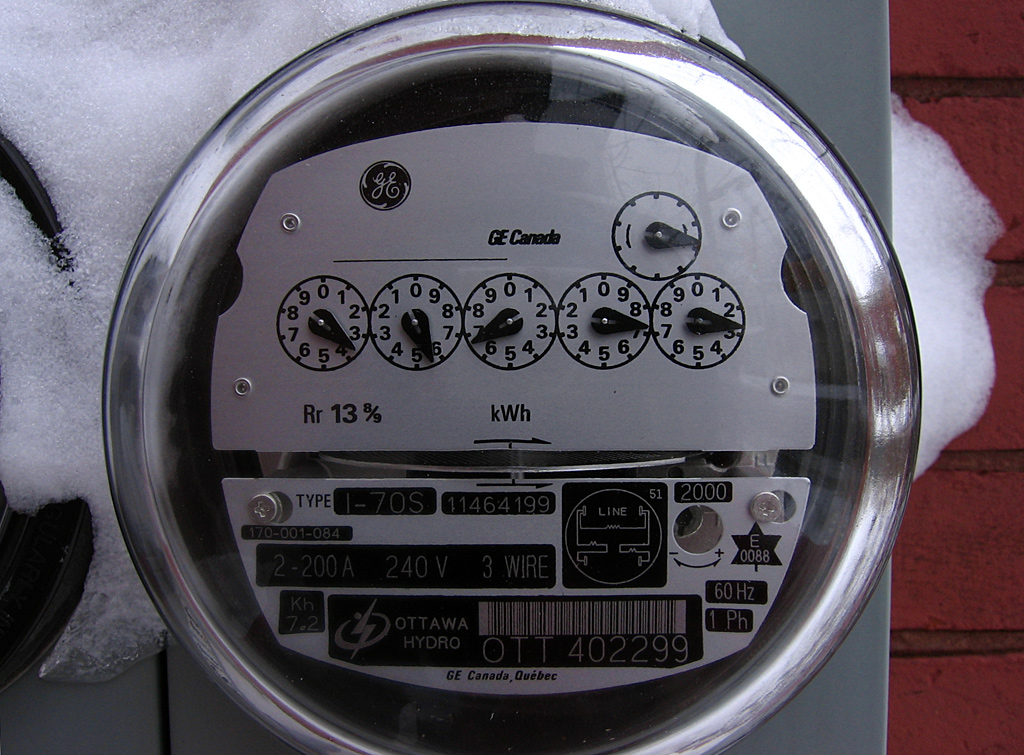
Electric meter

Commenting on the possibility of Seattle installing a streetcar system, Dan Savage has argued: “People like trains. People hate buses.” Though public transportation policy is hardly his area of expertise, he does understand how people think and he is able to express himself forcefully and directly. On some level, it is definitely true. I like trains and subways. In London, I took the subway all the time; not once did I ever take a bus. Taking the train from Oxford to London feels like a luxury; taking the bus feels like a jerky, tedious chore.

In Heat, George Monbiot argues that the solution is to make buses nicer: cleaner, newer, and with attractive add-ons like wireless internet. He also argues that inter-city buses should avoid city centres, with all the nightmares of traffic and fiddly intersections they inevitably involve. While that would improve point-to-point travel in the UK, it doesn’t really reveal the reasons for which buses are treated with everything from moderate dislike to outright disdain. Is it a class issue? Lisa Simpson called the bus “”the chariot of the poor and very poor alike.” Is it a practical matter of comfort and efficiency, as Monbiot describes? If so, can it be overcome through practical measures like those he suggests. Are buses doomed to forever be an inferior good?

It is generally recognized that increasing bus services is the cheapest way of expanding public transport – both in terms of capital considerations and overall lifetime costs. That said, if transit use is significantly hampered by the dislike people feel for buses, perhaps alternatives should be more strongly considered. Arguably, this is especially true when it comes to people who have the financial means to use a car instead. If they get driven off the public transit system as soon as they hit that level of affluence, the system remains dominated by users without a great deal of political influence. In an argument akin to those about two-tier healthcare, it is possible that the self-exclusion of the wealthy from the public system perpetuates mediocrity.

One way or another, we need to hope that the private vehicle is reaching its apex in human history. Even with the eventual development of electric vehicles and other low or zero-emission options, the sheer amounts of space and resources devoted to producing and maintaining private transportation infrastructure are probably not sustainable. Given that it will be politically impossible to drag people from their cars kicking and screaming, we need to think seriously about how to encourage voluntary shifts to public or non-motorized transport. Better bike infrastructure and public transit seems crucial tot that campaign.

Positive externalities and the environment

Icicles in Ottawa

When you see “environment” and “externality” in the same sentence, it is a safe bet that the issue being discussed is negative externalities associated with production or consumption. These are certainly critical, but they are not the only area in which environmental thought and economic theory on externalities intersect. The positive externalities associated with new technologies also bear consideration. When a firm or individual invents something that provides major overall benefits, many of those will accrue to other people. This is good from the perspective of those able to benefit from the new technologies, but it is theoretically bad for innovation overall. If I suspect that most of the gains for my new engine, battery, or vaccine technology will accrue to other people, I will not devote as much of my time and resources to developing such innovations as I would if I believed I would personally get all the benefits.

As with intellectual property rights in general, the issue of balance here is a critical and difficult one. We want to encourage people to design and build better solar cells, wind turbines, and power plants. They could arguably be best encouraged to do so by giving them extensive property rights over what they come up with: lengthy patents and the right to collect royalties from all users. That said, such a restrictive system could sharply limit distribution. Once we have a good technology, we want to see it widely deployed – including in places where people have urgent sustenance needs and cannot be fairly called upon to pay heavy royalty fees.

One established way to square this circle is with prizes. The X-Prize assisted the development of (highly greenhouse gas intensive) private space technology. Prizes may also be used successfully to encourage the development of vaccines and treatments for poor world diseases like malaria. Richard Branson has created a prize for straight-out-of-the-air carbon capture. A few big prizes for things like lowering the cost and efficiency of renewable power sources might help to overcome institutional hesitation within innovative firms, as well as get some clever people tinkering in their garages.

The existence of positive externalities associated with new technology also provides strong justification for other governmental interventions: including direct government research and governmental support for private and academic efforts. Internalizing the full costs of pollution is exceedingly important if we aim to achieve environmental protection within a free market system; internalizing the benefits of innovation may also help to bring that about.

For a much more detailed discussion, see: Jaffee, Adam et al. “A tale of two market failures: Technology and environmental policy.” Ecological Economics. Volume 54, Issues 2-3, 1 August 2005, Pages 164-174.

Boomtowns and bitumen

Haida sculpture

Since 1999, the population of Fort McMurray has nearly doubled. Primarily, this is on account of the oil sands: unconventional petroleum reserves whose exploitation is being driven by high prices and geopolitics. The demand for labour is dramatically increasing its price, both directly and indirectly. Apparently, inexperienced truck drivers can expect to make $100,000 per year. Shell has also just opened a 2,500 unit housing complex for its oil sands employees, part of their $12 billion in local infrastructure spending.

With oil around $90 a barrel and the atmosphere still being treated as a carbon dump, this is not terribly surprising. That said, such projects are certain to develop increasing momentum of their own. Once they bring enough jobs and money, they are hard for a provincial government to not support – especially if many of the environmental costs are being borne by people outside the province or by future generations. Internalizing environmental externalities through taxation or regulation becomes progressively more difficult as the incentive of certain parties to preserve the status quo increases. Such asymmetries are likely to give oil sands development a harmful legacy in terms of general policy development, in addition to its climate change effect and local environmental impacts.