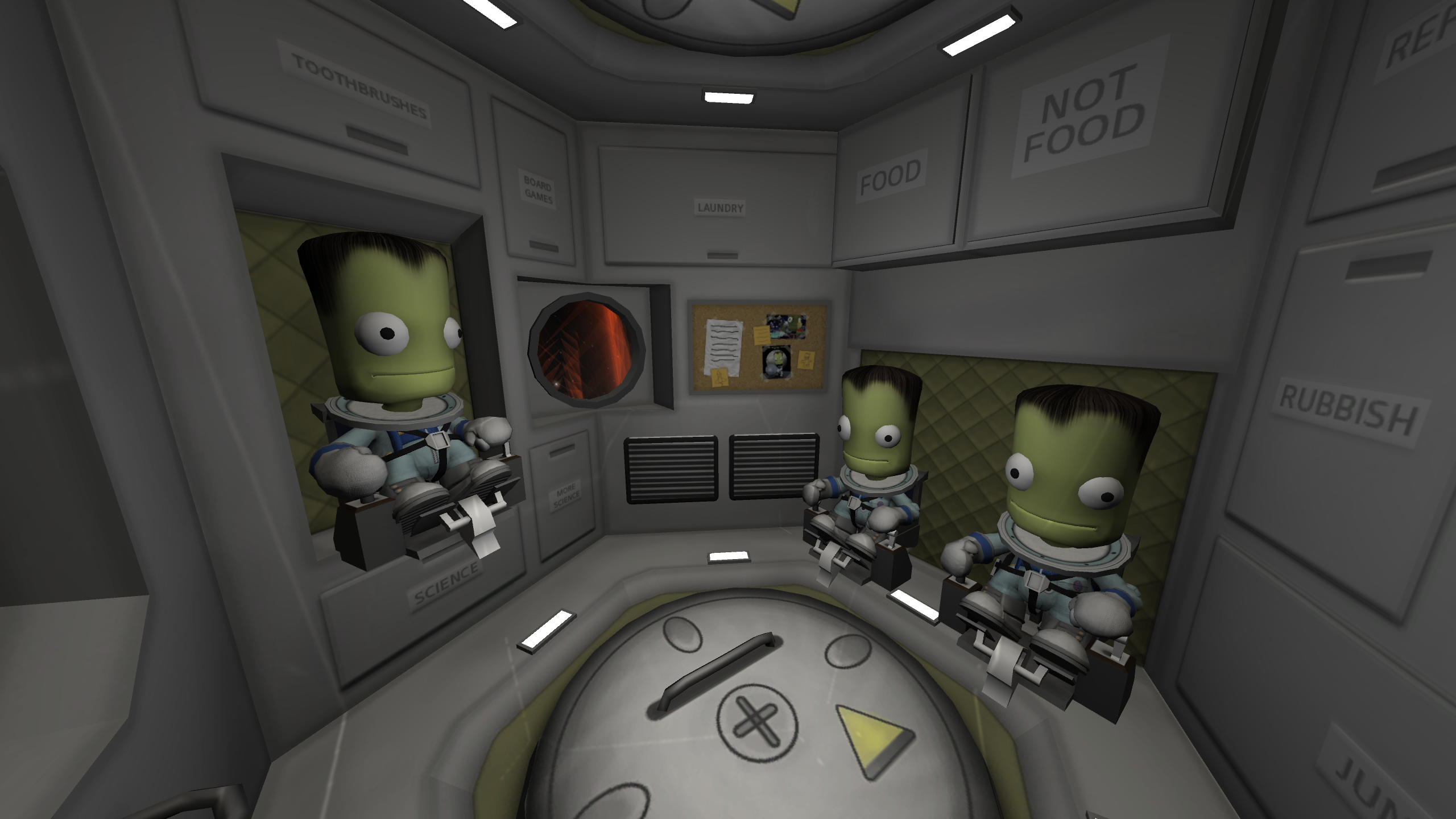
I don’t know who had the brainstorm to add Glados-like comments to https://clickclickclick.click/ but it adds brilliantly to the site’s impact and cultivated paranoia. Very cool intersubjective web-based art.
Category: Geek stuff
If it involves physics, math, computer science, electronics or has general geek cachet, this is the place for it.
Nominal ride to orbit
A solar sail is functional in space
It’s possible to perform orbital maneuvers which would normally require fuel using instead the momentum of sunlight.
Via the incomparable Scott Manley: Lightsail 2 Sails On Sunlight At Last
Prospects for Mars colonies
I have long been skeptical about the prospects for off-world human colonies. Given that the International Space Station is the most expensive thing we have ever built and it is entirely reliant on supplies from Earth, it would be a gigantic leap just to make a self-sustaining closed life support system. Beyond that are many other obstacles, from radiation to Mars’ reduced gravity and even interpersonal conflict.
George Dvorsky has written an article with details on many of these challenges, which also quotes Louis Friedman on the psychological and philosophical implications of extraterrestrial expansion as an unlikely prospect:
If humans can’t make it to Mars, it means we’re destined to be “a single-planet species,” he said. What’s more, it suggests extraterrestrial civilizations might be in the same boat, and that the potential for “intelligent life to spread throughout the universe is very, very gloomy,” he told Gizmodo.
“If we can’t make it to a nearby planet with an atmosphere, water, and a stable surface—which in principle suggests we could do it—then certainly we’re not going to make it much beyond that,” said Friedman. “But if we’re doomed to be a single-planet species, then we need to recognize both psychologically and technologically that we’re going to have live within the limits of Earth.”
There’s a case to the made that the principal role that Mars is now playing for humanity is as some kind of faint hope that we can wreck the Earth and still somehow survive. That’s probably not healthy on any level. Having a crazy, desperate backup plan isn’t a substitute for a credible plan that doesn’t disregard or sacrifice almost everything humanity has ever valued. Furthermore, to degrade the Earth to the point where it no longer supports people would be an act of vandalism and malice toward the rest of life so severe that it would raise grave questions about whether it would be good for any life form, including us, for people to continue to survive.

Supermassive black hole Messier 87
A worldwide effort by the Event Horizon Telescope has produced the first false-colour image of a black hole.
Entertaining trifles
Watching the Jeremy Brett adaptation of the Sherlock Holmes story “The Golden Pince Nez” left me wondering about some of the specific changes made between the story and the ITV Granada TV series, specifically the role of Holmes’ brother Mycroft.
An idle Google search about the substitution of snuff for tobacco ash in the story led me to An Observance of Trifles: a thought-provoking and entertaining discussion of each component of the Holmes canon, including the television and film adaptations.
I have only read a few entries so far, and have found much which had not occurred to me, despite having heard the Stephen Fry audiobook versions of each story several times. I look forward to making my way through the site as a periodic distraction.
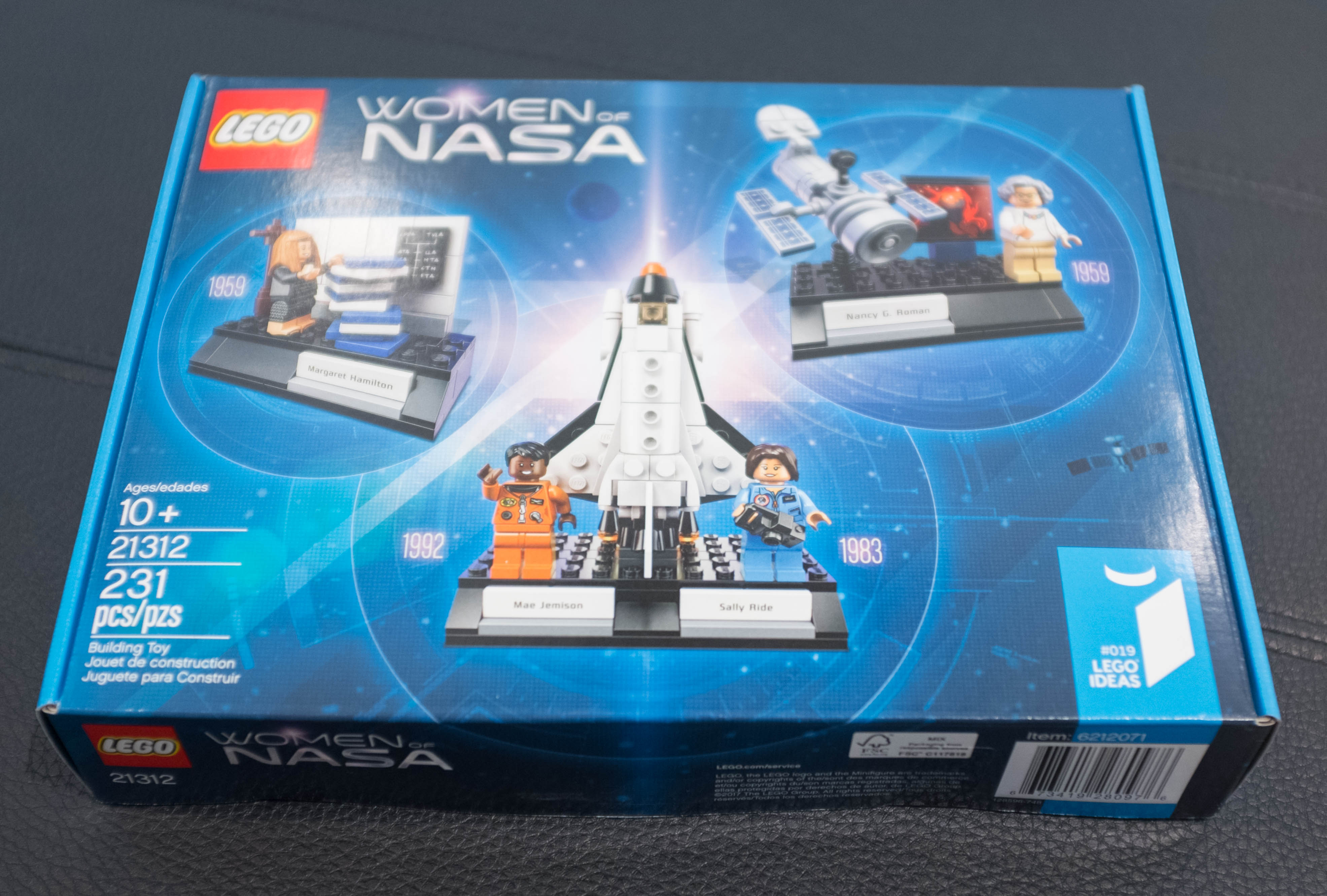
Women of NASA lego set
Lego Saturn V with lunar lander
Shuttle lesson: no crew capsule on the side designs
Of course, the Columbia and Challenger accidents have reminded us we need to be ever vigilant. Despite more than two years of careful work to prevent foam shedding from the shuttle’s main tank, my STS-114 mission lost a large piece of foam on ascent, in a circumstance very similar to what happened to Columbia on STS-107. Preventing foam loss was a top objective for the return-to-flight effort, and while this turned out to be an embarrassment, I believe it sent a clear message—future boosters and spacecraft should be designed to protect the ship’s reentry system (the heatshield) because rockets will always shed “stuff” like insulation and ice during the tumultuous minutes of ascent to orbit. This is why we will see future spacecraft designed with the reentry ship on the top of the rocket, rather than beside it, as was the case with the space shuttle. The STS-114 incident was a very sobering reminder that a complex system like the shuttle can never be made completely safe, despite everyone’s best efforts. Our future space travelers will be safer due to the lessons learned from the shuttle missions.
Leinbach, Michael and Jonathan Ward. Bringing Columbia Home: The Untold Story of a Lost Space Shuttle and Her Crew. Arcade Publishing; New York. 2018. p. 294
Our generalization defect
One big surprise from Michael Leinbach and Jonathan Ward’s Bringing Columbia Home: The Untold Story of a Lost Space Shuttle and Her Crew is the claim that people at NASA hadn’t anticipated the catastrophic loss of a Shuttle during reentry. That despite of the delicacy of the thermal protective tiles and the fatal consequences expected from their failure, the lack of engines and thus any way to salvage a single failed landing attempt, and the long period of commitment to a particular landing site from deorbit burn to touchdown. The lesson drawn from Challenger, in spite of all the training of all the people at NASA in statistics and rigour, is that ‘these things fail during liftoff’ — a bit of a mad generalization for a vehicle built to take the crew through a series of environments, each of which would almost immediately kill them without technological protection, from the extremely high pressure from drag at max-Q during liftoff, through the fatal vacuum of space, through fiery reentry through plasma above mach 18 to an unpowered glider landing. Assuming that the first thing that went fatally wrong would be the standard is like getting on the back of a charging bull covered in poison-tipped spines in the middle of a minefield and thinking: “This is the one that kills you by stomping on your head”.
One small quibble: the subtitle of this book is misleading. I expected it to be much more about Columbia’s crew and final mission, whereas the bulk of it is about the debris recovery efforts across the country after the shuttle disintegrated.