This website presents the 2008 American Presidential election, as represented by an expert in baseball statistics. At this time, the message seems to be that Clinton has a better chance of beating McCain than Obama, but I wouldn’t read too much into that. This election has already repeatedly confounded early polls and conventional wisdom. A lot will happen before November.
Category: Geek stuff
If it involves physics, math, computer science, electronics or has general geek cachet, this is the place for it.
Ottawa Coolness Assessment I
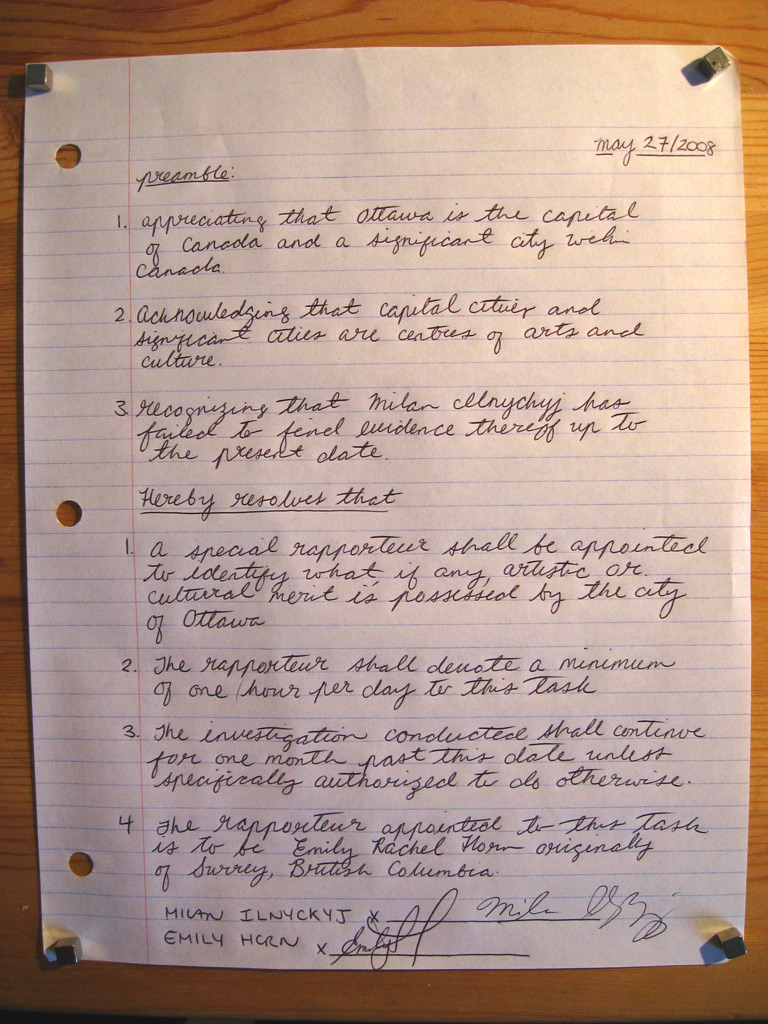
During my ten months in Ottawa, I have had significant difficulty identifying aspects of the city that might be considered cool. Thankfully, someone much cooler than me is in the city and willing to conduct an authoritative evaluation. Below is an awkward combination of a United Nations Security Council resolution and terms of reference for a contractor:
Date: 27 May 2008
Preamble:
- Appreciating that Ottawa is the capital of Canada and a significant city within Canada.
- Acknowledging that capital cities and significant cities are centres of arts and culture.
- Recognizing that Milan Ilnyckyj has failed to find evidence thereof up to the present date.
Hereby resolves that:
- A special rapporteur shall be appointed to identify what, if any, artistic or cultural merit is possessed by the city of Ottawa.
- The rapporteur shall devote a minimum of one hour per day to this task.
- The investigation conducted shall continue for one month past this date unless specifically authorized to do otherwise.
- The rapporteur appointed to this task is to be Emily Rachel Horn originally of Surrey, British Columbia.
Signed: Emily Horn, Milan Ilnyckyj
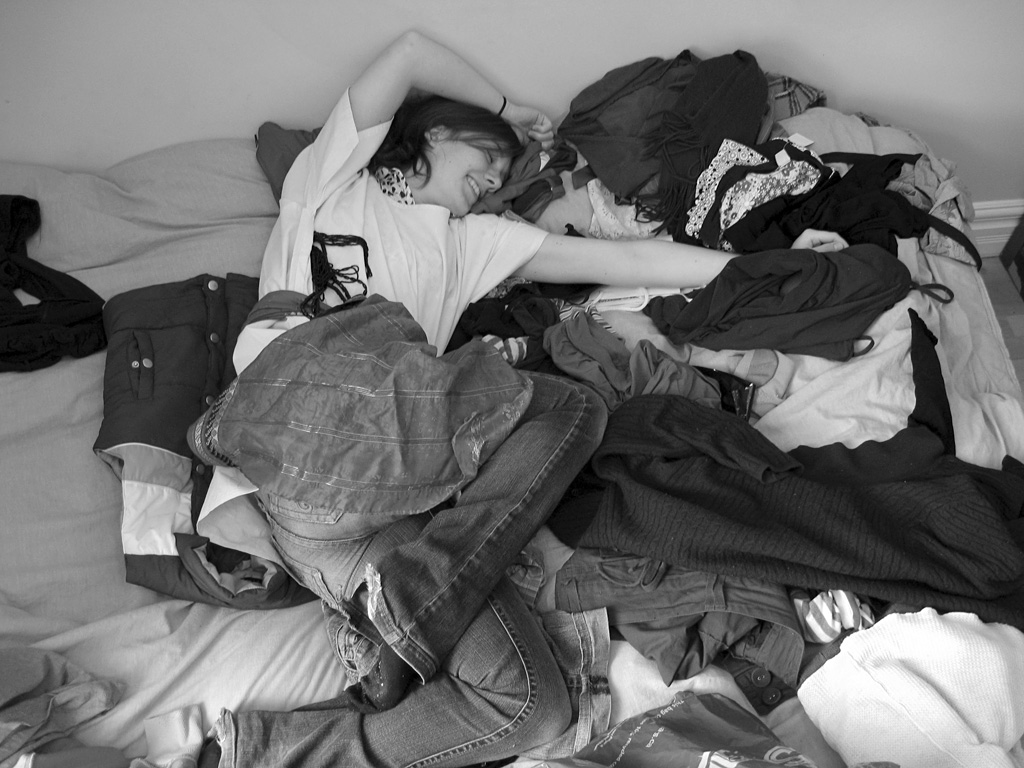
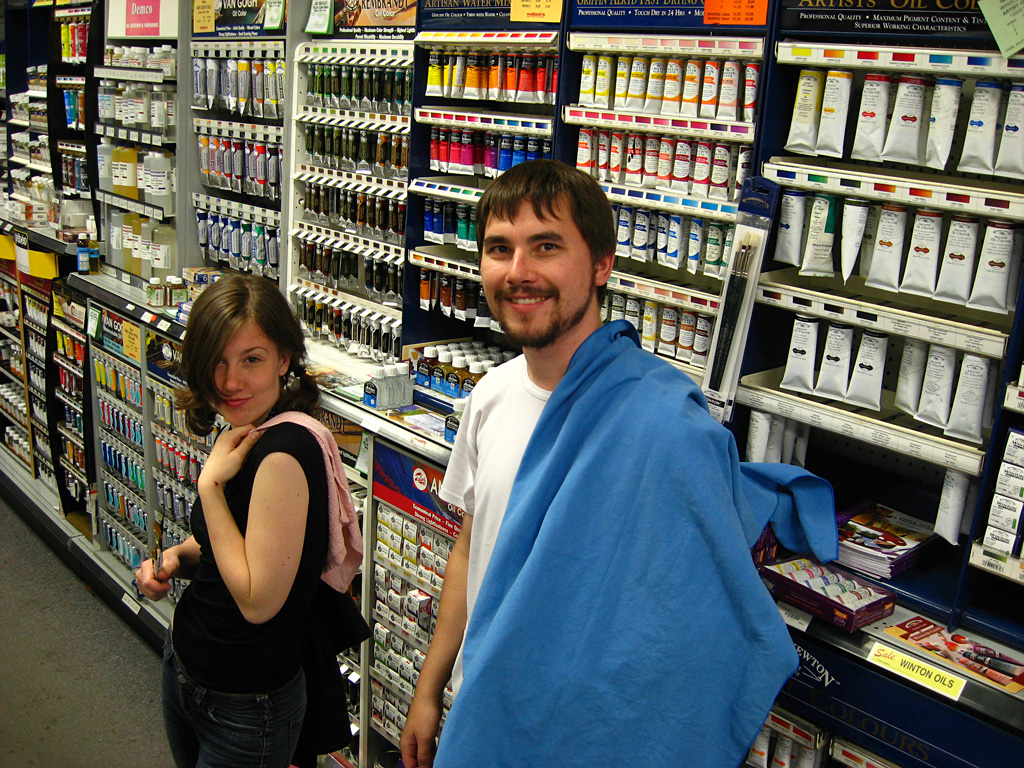
We shall see what she produces in the course of her official duties.
Net neutrality
Today, there is a rally on Parliament Hill in favour of net neutrality. Basically, these people are arguing that internet and telephone companies should not sift through the kind of data their customers are using: designating some for the fast stream and letting some linger or vanish.
In general, I am very supportive of the idea of net neutrality. On the one hand, this is because packet filtering has creepy privacy and surveillance issues associated with it. On the other, it recognizes that established companies will usually do whatever they can to strangle innovative competitors. Without net neutrality, its a fair bet that we would never have had Skype or the World Wide Web.
At the same time, there are legitimate issues about bandwidth. There are people out there exchanging many gigabytes a day worth of movies, music, and games. I am not too concerned with piracy and intellectual property, but that traffic is a real strain on the network and a burden to others. It pushes up costs for everyone as ordinary users subsidize excessive ones.
The best solution seems to be to allow bandwidth capping but disallow packet filtering. That way, sending a terabyte a month of illegally copied films will be restricted, but Skype-like new services will continue to emerge and there will be fewer general opportunites for telecom companies to abuse.
I cannot go to the rally myself, since I will be at work, but I would encourage those who are free and feeling a bit activist to attend.
Multiple anagramming
The process of cryptanalysis can be greatly simplified if one possesses more than one message encrypted with the same key. One especially important technique is multiple anagramming. Indeed, it may be the only way to decipher two or more messages that have been enciphered using a one time pad.
The basic idea of multiple anagramming is that you can use one message to guess what possible keys might be, then use another message to check whether it might be correct. For instance, imagine we have these two messages and think they were enciphered using the Vigenere cipher:
SGEBVYAUZUYKRQLBCGKEFONNKNSMFRHULSQ
TUEEDAKHNVKUEOICHKIEPOHRIFDQSPHGEGQ
Now, suppose we think the first message might be addressed to Derek, Sarah, or Steve.
Using words we think the message might start with, we can guess at a key. If the first word is DEREK, the key would start with ‘PCNXL’. If the first word is SARAH, the key would start with ‘AGNBO’. Finally, if the first word is STEVE, the key would start with ‘ANAGR’. Here, the key is a bit of a clue. Normally, there would be no easy way to tell from one message whether we had found the correct key or not.
We can then test those keys against the second message. The first key yields ‘ESRHS’ for the first five letters. The second, ‘TORDP’. The third yields ‘THEYM’. The third looks the most promising. Through either guessing or testing further letters, we can discover that the key is ‘ANAGRAM’. The second message is thus ‘THEYMAYHAVEDECIPHEREDOURCODESCHANGE.’ Having two ciphertexts that produce sensible plaintexts from the same key suggests that we have properly identified the cipher and key being used. We can then easily decipher any other messages based on the same combination.
Towel Day 2008
It is Towel Day, once again. Those truly wishing to pay their respects to the comic genius of Douglas Adams should consider reading his relatively little known but excellent book Last Chance to See.
Hofmann’s ‘problem child’
As an additional offering to see readers through my canoe-induced absence, here is an interesting article from The New York Times about lysergic acid diethylamide (LSD) – the ‘problem child’ of Albert Hofmann. It includes a description of his remarkable first experiences, when experimenting with the medical potential of ergot derivatives, as well as his later observations and reflections upon the molecule he introduced to the world.
Hofmann, who died last week, has an obituary in The Economist. It takes a somewhat interesting position: essentially, that LSD was a promising chemical that ended up universally banned because of the excesses of Timothy Leary and company.
Other things to read
Once again, canoe-based absence will serve as an excuse for a low-content post. This time, you get a list of websites that you may find informative: not to mention, useful for procrastinating / educating yourself during the period of my internet absence.
- blackbag: A Dutch blog, primarily about lock picking.
- Everything Reviewed: Quirky effort to criticize things rarely thus considered. Updated infrequently.
- Google Sightseeing: Blog that points out interesting or odd things in Google’s satellite images.
- PostSecret: For those not already familiar with this community art project, this site posts submitted secrets every Sunday.
- Schneier on Security: Bruce Schneier’s excellent security blog.
- Kit Up: Military hardware reviewed.
- Cool Tools: Tool reviews.
- Marginal Revolution: Economics blog, updated very often.
- Cocktail Party Physics: An entertaining science blog.
- The inbox: Letters to The Economist deemed good enough for the web, though not for the Letters page in the printed version.
- The blog of Canada’s Privacy Commissioner
Those should be enough to hold people for a while. If not, there are always Metafilter, Slashdot, Boing Boing, Engadget, and BBC News.
Destroying Iraqi RADAR in 1991
Anyone who has been trawling the internet in a search for information on the suppression of air defences during the first Gulf War might be well served by this article. In particular, it goes into a lot of detail about the location, identification, targeting, and destruction of Iraqi RADAR installations using weapons like the American AGM-88 High-speed Anti-Radiation Missile (HARM) and the British ALARM (Air Launched Anti-Radiation Missile). The article highlights how the use of Soviet equipment by Iraq made this a kind of test situation for NATO versus Warsaw Pact air defence and attack equipment.
What this suggests is that the NATO-Warpac central European air battle would have probably followed a similar course, leading to the defeat of the Communists’ IADS within a week or so, in turn leading to air superiority in the following week, as the Communist air forces would have withered under the fire of the Allied counter-air campaign. Fortunately this never had to happen and the world has been spared the inevitable nuclear response to the lost air battle and hence total conventional defeat through attrition by air.
Not a very comforting conclusion for the world at large, though no doubt gratifying for all the companies that built American planes and missiles and things.
One interesting tactic was the use of Brunswick Tactical Air Launched Decoys. These simulated the appearance of incoming aircraft, causing Iraqi RADAR installations to ‘light up’ in order to target them. Sometimes, they would draw fire from surface-to-air missile batteries. Often, this would leave the former temporarily defenceless at a time when their position – and that of their supporting RADAR – had been revealed. Both could then be targeted by NATO aircraft. The ruse was apparently so effective that the Iraqi armed forces maintained the false belief that they had destroyed several hundred British and American planes.
There is also a fair bit of information about jamming and other forms of electronic countermeasures. All in all, it provides an interesting glimpse back into a period when conventional warfare against standing armies was something NATO still did.
Nanotubes and hot sauces
Hot sauce aficionados may be familiar with the Scoville Scale, used to express the heat of a sauce or pepper. The other day, my friend Antonia sent me an article explaining that the process of determining a Scoville rating might be significantly refined, thanks to carbon nanotubes:
The well-established Scoville method – currently the industry standard – involves diluting a sample until five trained taste testers cannot detect any heat from the chilli. The number of dilutions is called the Scoville rating; the relatively mild Jalapeño ranges from around 2,500-8,000, whereas the hottest chilli in the world, the ‘Naga Jolokia’, has a rating of 1,000,000. High performance liquid chromatography (HPLC) can also be used but this requires bulky, expensive equipment and detailed analysis of the capsaicinoids.
In Compton’s method, the capsaicinoids are adsorbed onto multi-walled carbon nanotube (MWCNT) electrodes. The team measures the current change as the capsaicinoids are oxidised by an electrochemical reaction, and this reading can be translated into Scoville units. The technique is called adsorptive stripping voltammetry (ASV), and is a relatively simple electrochemical method.
The Scoville Scale is pretty easy to understand. A sauce with a rating of 1000 can be diluted 1:1 with water to produce a sauce with a rating of 500. Tabasco sauce, of the sort ubiquitous in diners, has a rating of between 2,500 and 5,000. Dave’s Insanity Sauce – the spiciest one in my kitchen – has a rating of about 180,000. Even taking the upper estimate of Tabasco’s potency, that means one tablespoon of Dave’s is equivalent to about half a litre of Tabasco.
Of course, those who truly wish for their epithelial cells to signal as much heat and abrasion as is theoretically possible can do better. Blair’s 16 Million Reserve, which consists of a little bottle of pure capsaicin crystals, weighs in at 16,000,000 Scoville heat units. One tablespoon is thus akin to 1.31 litres of Dave’s Insanity Sauce, or 47.16 litres of Tabasco. Just the thing you need if you want to turn a bland chili dinner for your million person standing army into something a bit more interesting.
Vehicle efficiency
My friend Mark sent me a link to a book in progress about sustainable energy. One of the more interesting sections is on vehicle efficiency. The author stresses that, while some kinds of efficiency gains are physically possible, others are not:
Could we make a new car that consumes 100 times less energy and still goes at 70mph? No. Not if the car has the same shape. The energy is going mainly into making air swirl. Changing the materials the car is made from makes no difference to that. A miraculous improvement to the engine could perhaps boost its efficiency from 25% to 50%. But the energy consumption of a car is still going to be roughly 40 kWh per 100 km.
The story is a familiar one: efficiency can get you a long way, but there are no free rides. Another interesting comment from this chapter is the major design differences between an efficient city car and an efficient highway car. Since the former is always stopping and starting, low weight is really important. Brakes that regenerate energy also make a big difference. For a highway car that avoids major acceleration and deceleration, the most important thing is reducing drag. Weight is comparatively trivial.
One other interesting assertion is that the energy involved in making a car is actually pretty trivial compared to the amount used in driving it around:
The energy cost of making the raw materials for a one tonne car is thus equivalent to about 3000 km of driving; an appreciable cost, but probably only 1% of the lifetime energy-cost of the car’s fuel.
If correct, that makes it seem a lot more reasonable to upgrade from an old and inefficient vehicle to a newer and less gas-thirsty model. It also suggests that government programs to replace inefficient cars with better ones might have strong justification, in terms of climate change mitigation potential.
In order to move to a low carbon society, we need to do a slew of things. We definitely need to increase the energy efficiency of accomplishing most tasks. We definitely need to reduce the quantity of greenhouse gas produced in the process of generating a unit of energy. We probably need to significantly reduce total energy consumption. Finally, we need to take actions that manage the greenhouse gasses that will inevitably be produced by some actions. The protection and enhancement of carbon sinks (mostly forests and soils) are essential for this.
When it comes to reducing total energy usage, the chapter does make one excellent suggestion: “a cyclist at 21 km/h consumes about 30 times less energy per kilometre than a lone car-driver on the motorway: about 2.4 kWh per 100 km.” Those who cycle more slowly are likely to be even more efficient, since doubling the time it takes to travel somewhere apparently reduces energy usage by three quarters.