Atwood bike tool

Atwood bike tool

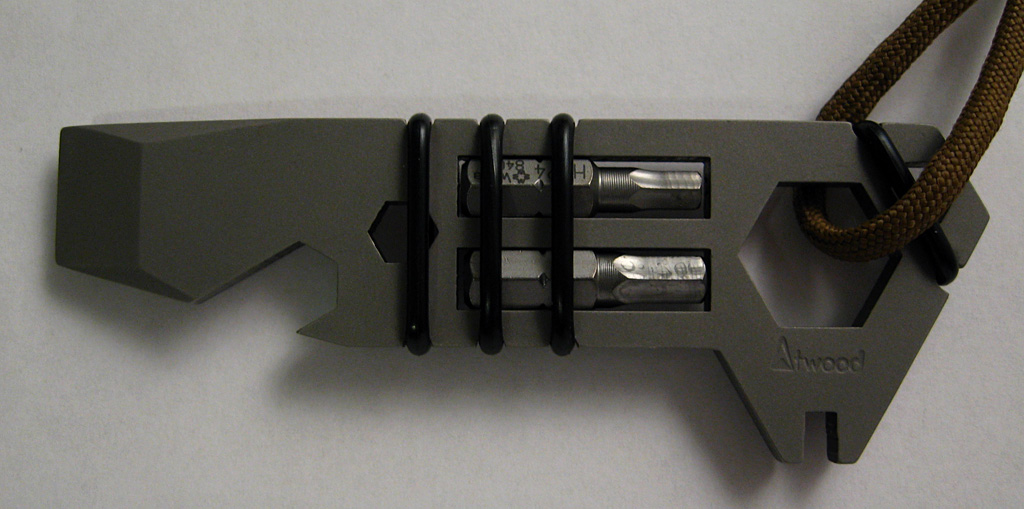
The other week, I bit the bullet and ordered one of Peter Atwood‘s excellent handmade tools. In anticipation of the summer, I ordered his bike tool. It’s about three inches long and made from Crucible‘s CPM3V cutlery steel, with a bead blasted finish. It includes 4mm and 5mm hex bits and a 15mm axle wrench, as well as a prybar. I have long admired Atwood’s work as quite beautiful but, prior to seeing the bike tool, never saw something well suited enough to something I do to justify the expense.

The appeal of the tool lies largely in the mode of manufacture. Virtually everything I have ever owned has been mass produced: clothes, electronics, furniture, tools, etc. Having something that was individually forged by a human being is fairly rare. All the logic of economics resists a production process wherein a single being completes everything from design through manufacturing to product testing, and yet it is strangely satisfying to possess something that arose from such an effort. It is that knowledge, and the value derived from it, that justifies paying a relatively high price for such an object.

All in all, this is one more reason I can’t wait for the roads to clear, allowing me to bring my bike up from the basement.

Cut cables in the Middle East

Something strange is happening to undersea fiber optic cables in the Middle East: they are being cut. At least four, and possibly five, of the communications links have failed in the last twelve days. The first two were allegedly damaged by a ship’s anchor; subsequent failures are more mysterious. Serious disruptions are being experienced in Egypt and India, along with lesser problems in Bahrain, Bangladesh, Kuwait, the Maldives, Pakistan, Qatar, Saudi Arabia and the United Arab Emirates. The fifth cable cut seems to have disabled internet access in Iran.

It’s tempting to ascribe some nefarious motive to all of this. That said, it is sensible to recall how past hysterias proved unjustified. After much hoopla in the media, it turned out that the ‘cyberwar’ against Estonia was the work of a twenty year old subsequently fined $1,620 for his misdeeds.

The cable problems are being widely discussed:

[Update: 16 February 2008] According to The Economist, all this was just hysteria.

Some figures on the economics of corn ethanol

Trustworthy numbers on some climate-related things are virtually impossible to find. Key examples are nuclear power and biofuels.

All the more reason, then, to be thankful that some numbers have been crunched over at R^2. Conclusions:

  1. The corn for one gallon of ethanol costs about US$1.30.
  2. Energy for processing costs another $0.33
  3. Enzymes, yeast, and chemicals are $0.14
  4. Labour and other expenses are $0.23
  5. Capital depreciation costs are estimated at $0.40

He thus concludes that corn ethanol costs about $2.00 per gallon, not including return on investment. This is also after you subtract the revenue from selling the distiller’s dried grains with solubles (DDGS) grown with the corn but not used for ethanol production. Due to the lower energy density of ethanol, this is equivalent to gasoline for $3 a gallon.

While I certainly wouldn’t bet the farm on the accuracy of those figures, I think there is reason to put more stock in them than in estimates from journalists (who lack expertise) or governments (who often have conflicts of interest). Of course, the issue of whether corn ethanol is cheap or expensive doesn’t bear upon some other vital questions: Does it actually reduce fossil fuel usage? Does it produce fewer greenhouse gas emissions on a lifecycle basis? Does making it raise food prices and starve the poor?

Common descent and biochemistry

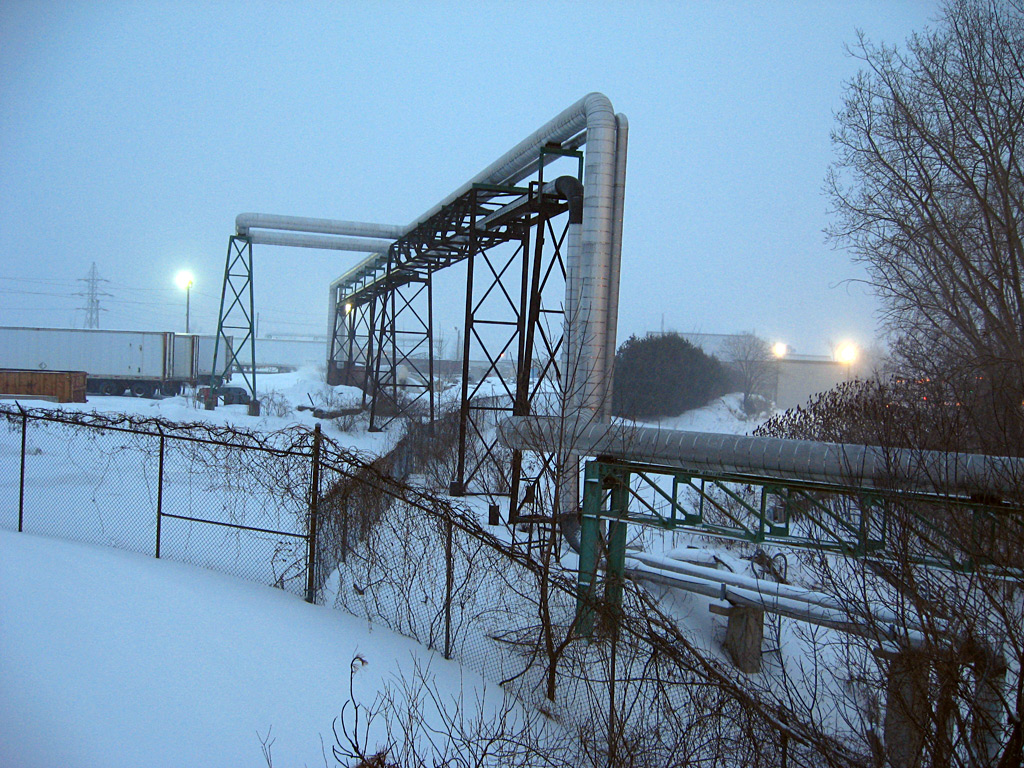
Steam pipes in snow

Despite the dizzying array of life on Earth – if you doubt that, watch the BBC’s excellent Planet Earth series – there is a remarkable degree of biochemical consistency between all living things. This is one of the strongest arguments in favour of common descent: the idea that all living things are descended from the first replicators so evocatively described in the opening chapter of Dawkins’ The Selfish Gene. The very strongest evidence of that thesis comes not from the universality of the really essential mechanisms of life, but from the universality of arbitrary conventions common to all living things.

Some of the more astonishing elements of life are universal: the storage of constitutive information in strands of DNA or RNA, the use of three nucleotide codons to refer to amino acids, and the dominant role of proteins in cellular architecture. These are common to animals and plants, fungi and bacteria and archaea. It is difficult to imagine how living things would look if they were based on alternatives to this basic system. Then, there are elements of common biology which need to be in place, but are somewhat arbitrary. For example, there is the metabolization of glucose for energy and the use of adenosite triphosphate (ATP) as an energy carrier. Something needs to play these roles, but there are presumably other molecules that could serve the purpose. Also, unlike the consistencies in the first category, life would not be staggeringly different if different molecules served these purposes. Finally, there are what might be considered arbitrary conventions – things that were established at the origin of life, are common to all life, but which could just as well be another way or a patchwork of different ways. This includes the use of only 20 amino acids to make proteins, and the fact that the L-isomers of these acids are used. This also includes how cells establish a lower concentration of sodium inside themselves than exists in the surrounding matter, with a higher concentration of potassium inside. It could just as well have been the other way.

In a sense, it is the third category that provides the best evidence of common descent. It is like language: pretty much any language will need a way to refer to objects and to actions performed upon them. As such, the inclusion of these aspects in different languages isn’t really evidence of relation. When you find a language that has a number of arbitrary conventions in common with another (say, an alphabet), you have more reason to think they both evolved from something older.

While statistics suggests that it is highly likely, it would nonetheless be rather thrilling to find life that emerged entirely independently, somewhere out among other planets or distant stars.

How not to lose things

A fair number of people I know have a great deal of trouble keeping track of small personal effects: wallets, sunglasses, keys, and the like. When they encounter someone who does not have this problem, they assume it’s because of some inherent superiority of memory. In my experience, this is not the case. What differs between those who lose things and those who do not is the degree to which they are systematic.

Be systematic

The first vital aspect of being systematic is to maintain consistency in where things are placed. One’s keys should always be in the same pocket when out or at work, and always on the same table of shelf when at home. One’s gloves should likewise always be kept in the same place, at least during seasons when they are required, and moved to a consistent but less accessible place during the summer. All this is made dramatically easier by choosing clothes with a similar array of pockets. Having a single jacket with lots of pockets is an enormous boon: I always know that my wallet is in the right-side breast pocket, while my camera is in the left. The small sub-pocket under that holds a four-colour pen. The inside left pocket has a pair of liner gloves, while the inside right pocket has an iPod Shuffle and space for valuable things carried rarely. Having a consistently used bag with lots of pockets is similarly useful.

Trust, but verify

The second vital aspect is frequent auditing. If you have followed the advice of using the same pockets at all times, this will soon become automatic and second nature. You learn to be intuitively aware of the presence or absence of objects from their designated spaces. If they are not there, you know to seek them out immediately and return them to their designated position.

Never trust yourself to remember a deviation from the system. Moving something into the wrong place – perhaps to make it more convenient to carry something else – will only produce anxiety while you are tying to remember the deviation and frustration when it leads to things being misplaced or not immediately accessible.

Fashion is your enemy

The real trouble begins when you have a wardrobe that has dramatically different elements: trousers with no pockets, multiple jackets, purses with differing internal compositions. For those who insist on such variety, I can offer no aid. Unless your memory is much better than mine, you are probably doomed to lose things relatively often.

Some level of variety must certainly be dealt with by anyone, and this can be accomplished by having a number of set collections of gear with defined associated positions. One might have a ‘no jacket because it is sunny out, still carrying photographic gear’ option, as well as an ‘out biking in the countryside, repair tools required’ configuration. In my experience, it is feasible to maintain a good number, provided they are as similar as possible (wallet always on the same side, non-included items left in defined positions at home) and they are always identically configured. Objects only carried rarely are by far the easiest to lose. I virtually never carry an umbrella (preferring to rely on waterproof clothing), so I constantly forget them when I have been carrying one for whatever reason.

Naturally, there are plenty of people for whom the above is too much work for too little value. The point is less to convince people that they should or should not adopt such a system and more to argue that losing or not losing objects is a reflection of planning and habit, rather than inherent cognitive characteristics. That said, a certain fascination with gear and a somewhat compulsive nature certainly help in the initial development and constant refinement of such an order.

Improving energy efficiency through very smart metering

Milan Ilnyckyj

With existing technology, it is entirely possible to build houses that allow their owners to be dramatically more energy aware. For instance, it would be relatively easy to build electrical sockets connected to a house network. It could then be possible to see graphically or numerically how much power is being drawn by each socket. It would also be easy to isolate the energy use of major appliances – furnaces, dish washers, refrigerators – thus allowing people to make more intelligent choices about the use and possible replacement of such devices. In an extreme case, you could have a constantly updating spreadsheet identifying every use of power, the level being drawn, the cost associated, and historical patterns of usage.

Being able to manage electrical usage through a web interface could also be very helpful. People could transfer some of their use of power to low-demand times of the day. They could also lower the temperature in houses and have it rise in time to be comfortable by the time they got home. Such controls would also be very useful to people who have some sort of home generating capacity, such as an array of solar panels. A web interface could provide real-time information on the level of energy being produced and the quantity stored.

While all of these things are entirely possible, there do seem to be two big barriers to implementation. The first is in convincing people to install such systems in new houses or while retrofitting houses. The second is to make the systems intuitive enough that non-technical people can use them pretty well. The first of those obstacles would be partially overcome through building codes and carbon pricing. The second is mostly a matter of designing good interfaces. Perhaps an Apple iHome is in order.

Google’s commitment to renewables

Hilary McNaughton

Google.org – the philanthropic arm of the internet search giant – is seeking to use the cognitive and financial resources of its parent to improve the world. Google has promised to eventually fund the organization using 1% of its equity, profit, and employee time. The real question is whether they will prove able to leverage their particular advantages and achieve outcomes of real significance. There is much reason to hope that they will.

From an environmental perspective, the awkwardly named “RE<C” initiative is the most exciting. The goal is to “develop electricity from renewable energy sources that is cheaper than electricity produced from coal… producing one gigawatt of renewable energy capacity – enough to power a city the size of San Francisco – in years, not decades.” This is certainly an ambitious undertaking. One reason for that is because the true price of coal is not being paid: all the environmental pollution associated with coal mining and burning is being left off the balance sheet, at least in America. If Google can produce renewable technologies that outperform coal economically even in the absence of carbon pricing, it will start to look feasible to begin dismantling the global fossil fuel economy.

It is probably fair to say that meeting this goal would be a more significant contribution to human welfare than everything Google has done so far. Here’s hoping all those brains and dollars come together brilliantly. Of course, as much as we might hope for such a technological rescue, it’s not something to bet on. Even in the absence of breakthrough technologies in renewables, the path to a low-carbon future is pretty well marked out: carbon pricing, regulation in demand inelastic sectors, energy conservation, and massive deployment of existing low-carbon technology.

Unlimited play in the Midnight Pool demo

When I got my phone (a Nokia 6275i) from Bell, I was disappointed to see that it only included one game: Midnight Pool. Worse, the game was a demo version that only allowed you to play for sixty seconds before automatically quitting, offering to let you buy the game for an unknown sum. Downloading things from the internet onto a Bell phone is shockingly expensive: four cents a kilobyte. As such, downloading a half-megabyte application would cost $20.00 in transfer fees, plus whatever they charge for the game.

Thankfully, I accidentally discovered a method that lets you play Midnight Pool for as long as you want. I don’t know if its a bug or something hidden by the programmers, but it is certainly helpful on long bus rides.

How to circumvent the one minute time limit in the Midnight Pool demo:

  1. Start the program
  2. Select ‘Language’ from the main menu
  3. Switch to ‘Francais’
  4. Select ‘Lancer le demo’ from the main menu
  5. Perform a normal break
  6. While the computer is taking a shot (when their cue is on screen, but before they hit a ball), enter the game menu
  7. Select ‘Options’
  8. Toggle son/musique to ‘Non’
  9. Close the game menu

Once this has been done, you are free to take as long as you wish to complete the game. This works with version 1.1.2 of the game, at least on my phone.

The sex life of corn

Corn, the key species in modern industrial agriculture, is completely incapable of reproducing itself in nature. The cobs that concentrate the seeds so nicely for us are not conducive to reproduction because, if planted, the corn grows so densely it dies. As such, the continued existence of Zea mays depends upon people continuing to divide the cobs and plant a portion of the seeds.

Corn is apparently a descendant of an earless grass called Teosinte. It is hard to overstate the consequences of a heavily mutated strain of Teosinte finding a species capable of closing a reproductive loop that would otherwise be open, leading to swift extinction.

The actual mechanics of corn reproduction are similarly odd. Male gametes are produced at the top of the plant, inside the flower-like tassel. At a certain time of year, these release the pollen that fertilizes the female gametes located in the cobs. It reaches them through single strands of silk (called styles) that run through the husk. When a grain of pollen comes into contact with one of these threads it divides into two identical cells. One of them tunnels through the strand into the kernel, a six to eight inch distance crossed in several hours. The other fuses with an egg to form an embryo, while the digger grows into the endosperm.

Another curious aspect of corn reproduction is that, because of seed hybridization (not genetic modification), every stalk of corn in a field is a clone of every other stalk. This is because the seeds came from inbred lines: each made to self-pollinate for several generations, eventually yielding batches of genetically identical seeds that farmers buy every year. They do this because the yield from the identical seeds is higher than that from the mixed generation that would follow it by a degree sufficient to justify the cost of buying seeds.

Such hybrid corn pushed yields from twenty bushels an acre – the amount managed by both Native Americans and farmers in the 1920s – to about two hundred bushels an acre. Given the degree to which we are all constructed more from corn than from any other source of materials (most of the meat, milk, and cheese we eat is ultimately made from corn, as are tons of processed foods), these remarkable processes of reproduction and agriculture deserve further study. For my part, I am reading Michael Pollan’s The Omnivore’s Dilemma. I am only 10% into it, but it has been quite fascinating so far.

Foregoing WEP and WPA

Bruce Schneier, the security guru and internet sensation, has been suggesting that people unlock their wireless networks. Given the constant and well-justified anxiety that exists about computer security, it is unconventional advice. That said, he argues effectively that the risks are fairly limited and that it is a neighbourly thing to do. Who hasn’t benefitted once or twice from the availability of an open wireless network? They were invaluable during my early weeks in Ottawa: allowing me to access Craiglist, Google Maps, and other vital apartment-hunting data while I was out there searching.

I am going to try leaving my wireless network open for a couple of weeks. If it doesn’t seem likely to burst my 200GB monthly bandwidth cap, I will leave it that way indefinitely. Hopefully, it will transpire that others have done the same when I start hunting around for a quieter flat in a more interesting neighbourhood this spring.