Web abuse

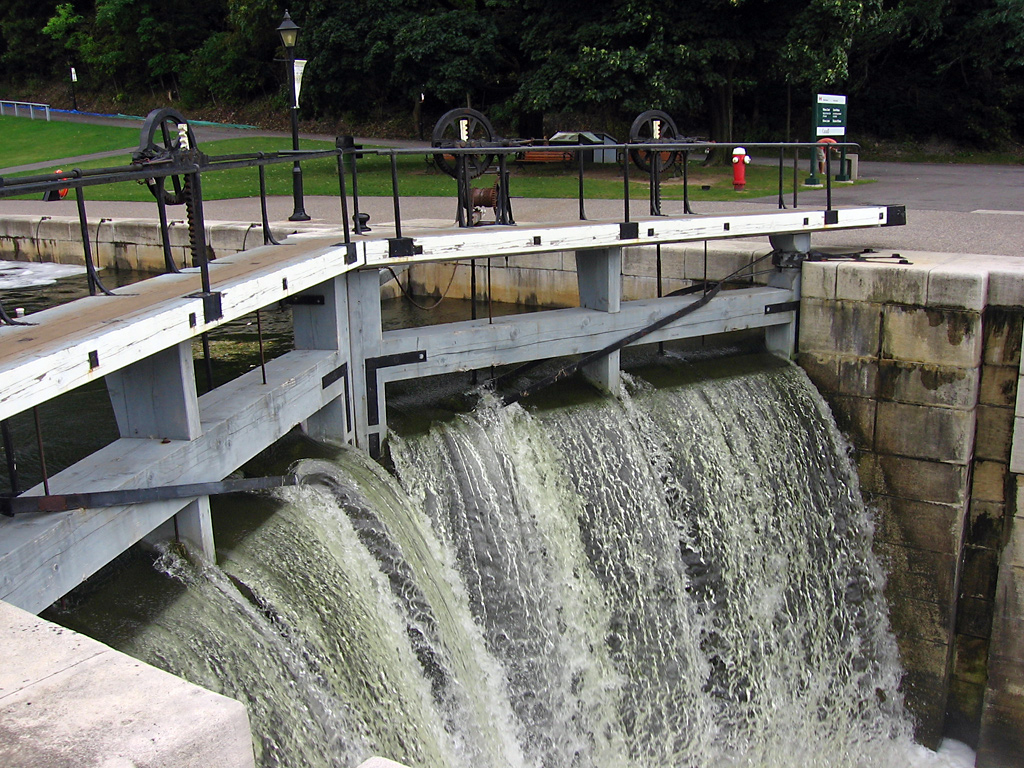
Rideau Canal

Spam is terribly frustrating stuff, partly because of how it is inconvenient and partly because of how it is a cancer that wrecks good things. (See previous: 1, 2, 3) The ideal internet is a place of free and honest communication. Spammers create the need for extensive defenses and scrutiny which take time to maintain and diminish that openness and spontaneity.

If you think the spam in your email inbox is bad, just consider yourself lucky that you do not also have to deal with comment and trackback spam on two blogs, a wiki, YouTube videos, and a half dozen secondary places. There are even phony marketing bots on Facebook now: keep your eyes peeled for ‘Christine Qian’ and ‘her’ ilk.

In the end, while decentralized approaches to spam management are time consuming and annoying, they are probably better than centralized systems would be. With the latter, there is always the danger of the wholesale manipulation and censorship of what is able to find its way online, or be transmitted across the web.

Paprika

While the plot is definitely nothing special, the visuals of this film make it entirely worthwhile. Paprika is whimsical, quite beautiful at times, and capable of provoking widespread and audible amusement in the audience. This is a film that should only really be seen in theatres, given how much of the appeal and personality resides in the artwork.

One factor distinguishing Paprika from the wonderful Studio Ghibli films that seem to dominate the mass market for anime in the west is the way in which it has a bit of a dark edge to it at times. Nothing like Perfect Blue, but there were some scenes that would not have been in a PG-rated film, if they had not been animated.

Paprika is playing at the Bytown Theatre for the next week or so.

Spook Country

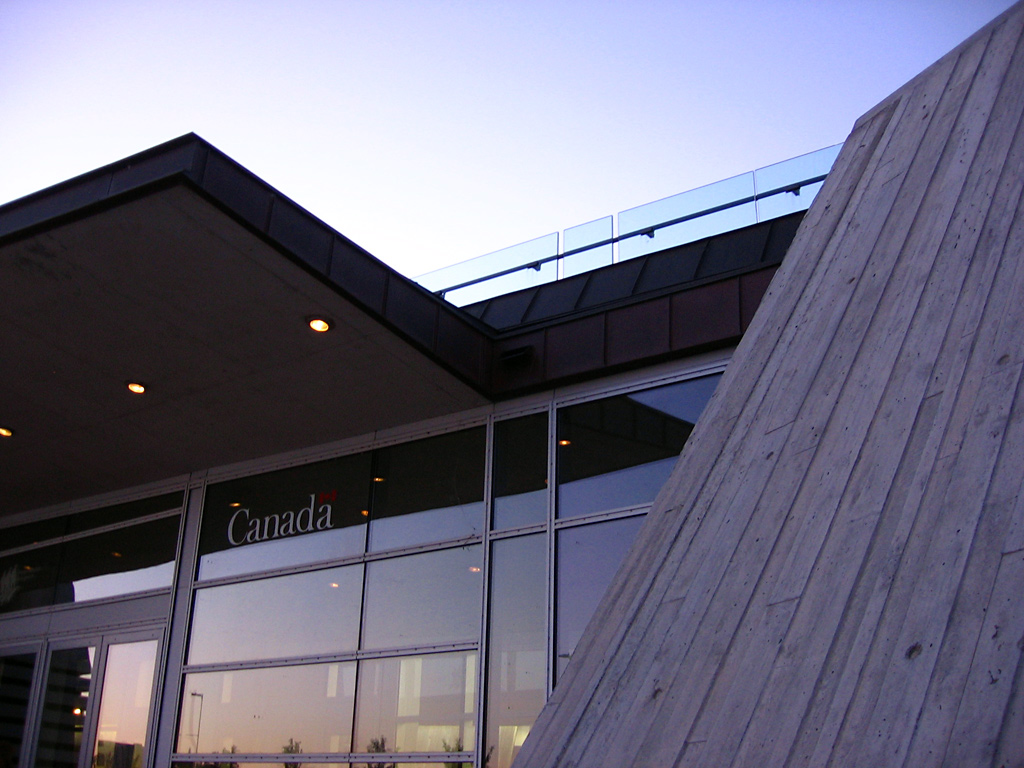
Ottawa War Museum entrance

William Gibson is an author who burst into the world with a brilliant first novel, then never did anything equivalent again. Neuromancer is a remarkable piece of science fiction and marked the starting point of the cyberpunk sub-genre. Unfortunately, Gibson’s further forays into that terrain – which extended across about twenty years – never produced something of even moderately comparable quality.

Recently, he has moved on to writing technology-centred books set in the present. Spook Country, which I finished today, is his latest such work. It follows Pattern Recognition, his first novel of this type, and improves on it to a certain extent. As such, it is probably the best thing he has written since Neuromancer. Like Pattern Recognition, it is better at setting up a mystery than it is at revealing an interesting solution at the end. Part of what made Neuromancer so remarkable was the strength of the characters. There was no danger of confusing them or having them become blank nothings. Spook Country‘s most significant flaw is that, for all but a few characters, there is no such definition, and thus no such interest.

If you have never read Gibson, and have any appreciation for science fiction, I recommend reading Neuromancer. If you have read it already, you would be well advised to give Spook Country a try. If you are a technologically inclined Vancouverite, you are likely to find every page addressing you directly.

Decimal time

Parliamentary stonework

Time has been discussed here before. As it stands, it is a lot like the imcomprehensible currency system in England before a Pound became 100 pence. Unlike currency, however, time has relatively good reasons for being confusing. The day, the year, and – to a lesser extent, the month – have some kind of basis in the astronomical reality of our planet. Having years of a sensible length is especially important, if we want the heavens to be at all easy to keep track of.

Of course, revolutionaries are known for overthrowing the staid traditional order. As such, there have been efforts to revise time. The French Republican Calendar is probably the most notable example. It confused millions of people for a good number of years, both after the revolution and during the Paris Commune.

A few other examples of decimal time can be found here. The oddest, perhaps, is ‘Swatch Internet Time‘ which sought to do away with time zones altogether. Sir Sandford Fleming would not be amused.

Random numbers

Truly random numbers are hard to find, as patterns tend to abound everywhere. This is problematic, because there are times when a completely random string of digits is necessary: whether you are choosing the winner of a raffle or generating the one-time pad that secures the line from the White House to the Kremlin.

Using random radio crackle, random.org promises to deliver random data in a number of convenient formats (though one should be naturally skeptical about the security of such services). Another page, by Jon Callas, provides further information on why random numbers are both necessary and surprisingly tricky to get.

This comic amusingly highlights another aspect of the issue.

Aurigid meteor shower

For those who missed the annual Perseid meteor shower, there is another chance to see some debris vaporizing in our atmosphere this week. The Aurigids are a much rarer shower, generated by comet Kiess (C/1911 N1) passing near the sun around 4 C.E. Gravity from the Earth and other planets sometimes creates dust trails that intersect with the Earth, as it moves through its orbit. The night of August 31st will be one such occasion.

Regrettably, there will not be much to see from eastern Canada. Even in the countryside, the incidence of meteors will peak at less than ten an hour. In Vancouver, however, those in the countryside can expect to see a sharp peak of activity between 4:00am and 5:00am, during which more than 200 meteors per hour should be visible. If you are looking for an excuse to escape all that city light pollution, this is an excellent one.

Aspiring amateur astronomers will find this page very informative. It includes tips on viewing, as well as a neat applet that lets you calculate the incidence of meteor activity in your location.

Facebook ecosystem

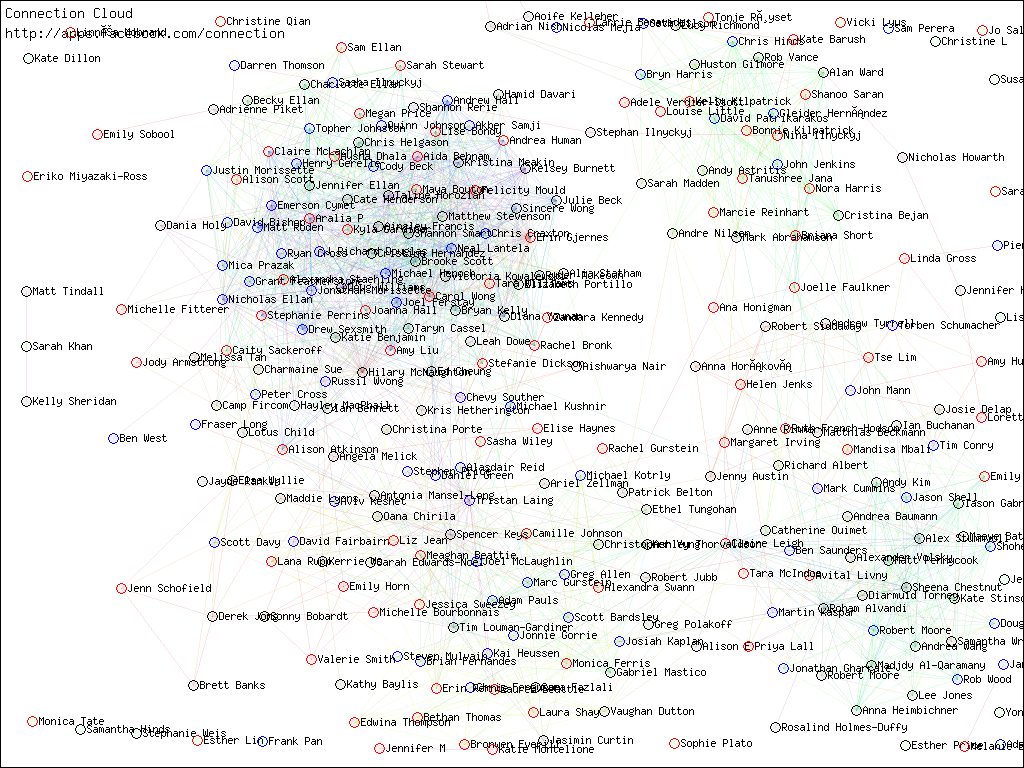
Milan’s Facebook ecosystem

It is nearly always interesting to see complex data presented in a new way – particularly as a visualization. The way this one arose was actually very mathematical, based on equations for modeling the strength of electromagnetic fields.

The dense cluster on the left is a tangle of high school and undergrad. The much smaller grouping on the right is Wadham College, Oxford. All around the edges and bottom are relatively or entirely isolated people – evidence of how many people I meet and random and at a sufficient level to warrant a Facebook linkage.

Encrypting personal communication

Statue outside the National Archives

Personal use of encrypted communication is yet another example of so-called ‘network effects.’ (These have been mentioned previously: 1, 2, 3.) The basic idea is that the more widespread certain technologies become, the more useful they are to everyone using them. The most commonly cited examples are telephones and fax machines; back when only a few people had them, they had limited utility. You would need alternative channels of communication and you would waste time deciding which one to use and exchanging instructions about that with other parties. Once telephones became ubiquitous, each one was a lot more powerful and convenient. The same can be said for email addresses.

Good free software exists that allows the encryption of emails at a level where it would challenge major organizations to read them. While this may not protect an individual message that falls under scrutiny, it changes the dynamic of the whole system. It is no longer possible to filter every email passing along a fibre-optic cable for certain keywords, for instance. You would need to crack every one of them first.

Making the transition to the routine use of encryption, however, requires more effort than the adoption of telephones or email. While those technologies were more convenient than their predecessors, encryption adds a layer of difficulty to communication. You need to have the required software, key pairs generated, and passphrases. It is possible to make mistakes and encrypt things such that you can never access them again.

As such, there is a double barrier to the adoption of widespread communication encryption: people must deal with the added difficulties involved in communicating in this way and with the problem that hardly anyone uses such systems now. If there is nobody out there with whom you can exchange PGP encrypted messages, you aren’t too likely to bother with acquiring and using the software. It is entirely possible that those two constraints will prevent widespread adoption for the foreseeable future.

One nice exception to this rule is Skype. Users may not know it, but calls made over Skype are transmitted in encryption form, very considerably increasing the difficulty of intercepting them. The fact that users do not know this is happening greatly increases the level of usage (you cannot avoid using it). While such systems may well not be as secure as explicit encryption efforts undertaken by senders and recipients, they may be a useful way to increase overall adoption of privacy technology. Such ‘invisible encryption’ could also be usefully incorporated into stores of personal data, such as the contents of GMail accounts.

PS. For anyone who decides to give PGP a try, my public key is available here.