On mass leaching of images

Hotlinkers beware! Whenever you generate more than, say, 25,000 requests to my server, you will get the pancake face of doom. It may be a small fraction of my total bandwidth allotment, but when it begins happening at such a scale it transcends ‘annoying’ and becomes ‘rude.’

The saga of my interactions with the MySpace hotlinkers began here. Here is one of the many offending sites. This one has generated 700 image requests during the last thirty days.

Final reminder: OxBlogger gathering tonight

Time: 8:00pm
Date: Today – Wednesday, November 1st
Place: Far From the Madding Crowd (map)

What to expect: Meeting other residents of Oxford who maintain blogs.
Note: You need not have met us before to attend; indeed, this is how we met in the first place.

Seth and Ben have also announced this. For more information, see previous announcements and records of past gatherings.

Let my packets go!

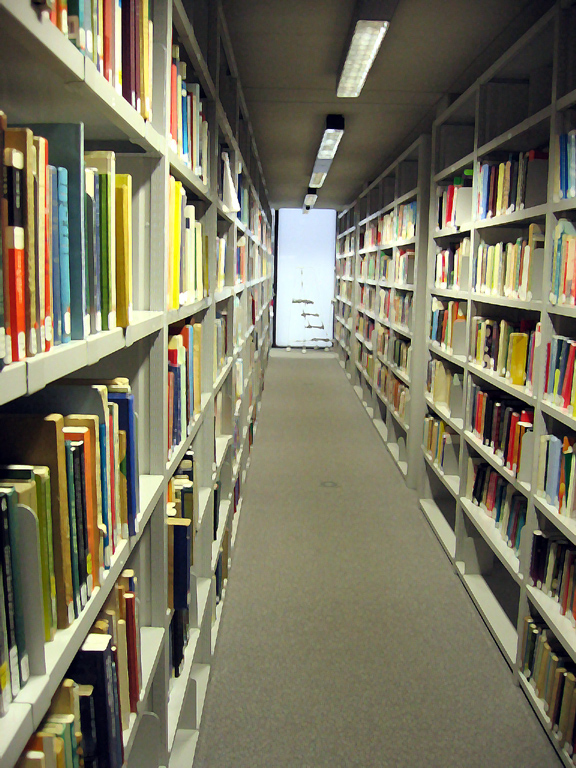
Oxford Social Sciences Library

Why is wireless networking so dodgy right now? I am not talking about typing 400 character messages into your phone with your thumbs, but about accessing something really useful with a device not physically connected to a computer network.

Not to sound like Margaret Thatcher, but a big part of the answer is government regulation. Back in the day when analog cellular phones were a dream, there was a belief that radio frequencies had to be allocated, for eternity, to a particular group for a specific use. The advent of cool networking technologies like CDMA has demonstrated that this is not only wrong, but incredibly inefficient.

If we abandoned a broadcast television station or two, or national militaries gave up some of the radio frequency spectrum allocated to them, some really good wireless internet access could emerge. Until then, we must all wait until technological advancement removes the shackles imposed by governments concerned about the technological issues of decades past.

WordPress 2.0.5 upgrade

The blog has been upgraded to WordPress 2.0.5: Ronan. This is an incremental upgrade, so I do not anticipate any major issues. So many people are doing this upgrade today that the instructions page for upgrades on the WordPress Codex cannot be accessed. Good thing I remember the drill from last time.

Plugins will be coming online as I test them.

Please report any problems. As always, I am open to suggestions for new features.

[Update: 3:00pm] All my plugins are running; I see no problems. In addition to upgrading WordPress, I installed the latest version of the excellent anti-spam system Spam Karma 2.

PS. For the record, free open source software remains the best thing since antibiotics.

Bloggers’ gathering reminder

Pond in the University Parks

The day has been busy and the hour is late, so I will not write much. Indeed, I will just quickly remind members of the Oxford blogging community – new and old – that the fourth Oxford Bloggers’ Gathering will be happening next Wednesday, November 1st, at 8:00pm, at Far From the Madding Crowd, near the small Sainsbury’s at Broad Street and Cornmarket.

In my experience, meeting other Oxford bloggers is good fun, so I hope to see plenty of people there. Established bloggers, please pass along the word.

PostScript on choosing a thesis font

Following hard upon questions of content and structure is another essential decision related to the thesis: what font to print it in. The obvious choice, based on past form, would be Garamond (the font used in the banner atop this page). It is definitely a more elegant font than the ubiquitous Times New Roman, but it is rather too common itself. Bembo is an older and rarer variant, which I believe was used to print the hardcover edition of The Line of Beauty. Cheltenham Book is an option I am considering.

For ease in reading, as well as general aesthetics, I strongly prefer a serif typeface. Indeed, if there were any apart from Times likely to be on any computer someone would use the blog from, I would use a serif typeface here. As it stands, it will use one of the following sans serif typefaces, in decreasing order of preference: Lucida Grande, Verdana, Arial (a bad ripoff of Helvetica, but very common), and whatever the system standard Sans-Serif is. Because of the font collections included in each OS, Mac users are likely to see Lucida Grande, while Windows users are likely to see Verdana.

Are there any other people out there who check the front pages for a blurb on the font before starting a book? If so, do you have any suggestions?

One final matter typographical: North American Mac users in Oxford, and there are a good many, will appreciate learning that you can make the Pound symbol (£) by hitting Option-3.

More of you should get Skype

Fall Leaves, Wadham College, Oxford

I got lots of thesis reading done today, as well as spending a good couple of hours conversing with friends and family members back home. More friends around the world should install Skype. Since arriving in Oxford, I have spent hundreds of hours exchanging text messages with 126 different people. That said, while an hour or two spent exchanging MSN messages can certainly keep you abreast of what another person is up to, the psychological significance of even a twenty minute phone call seems much greater.

For a conversation between two computers running Skype, there are no fees at all. All you need, in order to use Skype, is a Mac or PC with a high speed internet connection (pretty much any university network is more than fast enough), headphones, and a microphone. There are even Skype compatible phones. The headphones aren’t really required, but if you don’t use them you can get odd echo effects from the 80ms delay that tends to exist for messages between Oxford and the west coast of North America.

While I can use Skype to call normal phones (Canada to the UK costs €0.017 a minute), it always seems like something of an imposition on my part – especially since most of my friends can only really be reached on cell phones. Seeing that someone is online and interested in talking is a useful affirmation of the wisdom of giving them a ring. I haven’t personally been in the habit of leaving Skype running, even when I am at home, primarily because so few of my friends use it. That said, I will make a point of remaining online more often, so as to reward those who take the advice above.

PS. On account of today’s atrocious weather, I was unable to produce a photo worth putting online. Next time I get a good batch, I will backdate one to this entry.

PPS. This ongoing discussion of the moral importance of inequality is highly interesting.

Mica in two new Google Idol contests

My brother Mica has two new entries in the Google Idol video competitions. Partly thanks to strong support from readers of this blog, his video for “Walk Idiot Walk” won a previous competition. This is also documented on Wikipedia.

His two videos that will be in the running are:

  1. “The Jock Rock” in the semi-final of the Pop competition
  2. “I Bet You Look Good on the Dance Floor” seemingly yet to be listed

I will post updates as the status of the videos change. See also Mica’s website.

New voting process

The voting works quite differently from last time. Instead of allowing one vote per IP address per day, it allows one vote per user account per round. They are tracking IP addresses used for account creation, so trying to set up fifty accounts from the same computer will land you in trouble. (Of course, if you set up fifty and used them to vote for the video that you want to lose the round, it might be a highly effective strategy.)

One word of concern: it doesn’t say anywhere on the site that they will not be selling the email addresses used in the signup to every spammer from Nigeria to Philadelphia. As such, I recommend using your most spam-ridden and least important email account to sign up. Last time, they could at least count on people seeing the banner ads each day as they came back to vote. In order to replace that income stream, you have to at least suspect that they are harvesting emails for profit. You cannot just give a fake email address, like when leaving comments on this site, because they will send you an activation code that you need in order to vote.

Snazzy open source video player

Available for PC and Mac, the Democracy video player is free and open source software that can play and save a wide variety of video formats. You can, for instance, save Google Video and YouTube files. That includes all of my brother Mica’s videos. The interface is also a lot nicer than mucking around with web pages: especially since you can download batches of files at once and watch them when they finish.

More information is on Wikipedia.

Imperfect correspondence

In my recent experience, people have a really terrible success rate in getting back to me. This is in cases where a specific agreement is made to exchange some kind of information, usually academically related, via email. I would hazard that I actually provide such information more than 99% of the times that I say I will, though perhaps not immediately. Based on two weeks of tracking, the rate for people who have promised me such information – ranging from notes to paper citations to club information – is a dismal figure of about 10%.

Even among people who I send an email asking again for the information they were meant to provide, the success rate has been no better than 50%. I understand that not everybody is as computationally active as I am, but it is extremely frustrating to be working in a place where almost all academic work flows through some sort of electronic channel, but people’s willingness to uphold basic commitments seems so low.

Hopefully, those rates will pick up a bit with regard to the Reading conference. Some of the things people mentioned sounded very useful and interesting indeed.