Now that I am no longer tracking media references to the movement for my dissertation, I need a thread to post stories of interest to people tracking the movement.
For example: How Change Is Actually Made on Campus
climate change activist and science communicator; photographer; mapmaker — advocate for a stable global climate, reduced nuclear weapon risks, and safe human-AI interaction

Now that I am no longer tracking media references to the movement for my dissertation, I need a thread to post stories of interest to people tracking the movement.
For example: How Change Is Actually Made on Campus
My PhD dissertation highlights the distinction between the CO2-energy and climate justice worldviews in climate change organizing.
Put briefly:
[C]limate justice (CJ) activists emphasized the linkages between climate change and other justice issues in both diagnosing the causes of climate change and in crafting their political strategy to control it, insisting that only revolutionary political and economic changes like the overthrow of capitalism will let humanity preserve a stable climate. This analysis and prescription is challenged by CO2-energy (CO2-e) activists who see climate change as fundamentally about fossil fuel energy, with a solution that lies in replacing coal, oil, and gas.
One area where the two viewpoints can be clearly distinguished is how to respond to Indigenously-backed fossil fuel energy projects. The climate justice viewpoint holds that environmentalists should be led by and not criticize Indigenous peoples. For them, if the Yaq̓it ʔa·knuqⱡi ‘it community in BC wants to build a coal mine, it is at least much harder to oppose while maintaining their values than the same project proposed by someone else. For CO2-e activists, it is about the fuel to be burned and not the identity of those benefitting, and so it is unproblematic to resist fossil fuel projects regardless of their backers.
Related:
Step #1: Learn a bit of the context and background to climate change politics
I know throwing a whole PhD thesis at someone gives them a lot to handle, especially if it is written in an unfamiliar academic style. Nonetheless, I took pains all through my PhD process to come up with a product which would be comprehensible and meaningful to the community of climate activists.
Several posts down the line, we will come to the “meta question” which motivates the chapter about the ethics of what ought to be done. As someone new to the document and/or climate change policy, I would start by looking at what I considered important explanatory text but which my committee directed I should remove from an over-long document:
Structural Barriers to Avoiding Catastrophic Climate Change
Basically, why is solving climate change a hard problem? We have governments that do an OK-to-decent job at most things, so why are they uniquely bad at caring for the climate long-term when its integrity is damaged by the use of fossil fuels? This first document explores that question in detail, and elaborates upon why old solutions aren’t working for this problem.
My print publication plans for the dissertation have become derailed.
Back when we made the fossil fuel divestment brief at U of T, we printed paper copies for the members of the committee considering the question and for U of T libraries and archives at the Toronto Reference Library’s Asquith Press.
Years ago, I attended a session on academic publishing led by representatives from some major scholarly presses. They said, among other things, that authors would have to pay about $8,000 out of pocket to have an index made; that authors need to apply for government grants to help pay for publication, and won’t be published if they don’t get them; that the process of getting a dissertation published will take about two years; and that the resulting trade paperback will be so specialized and expensive that only a handful of university library systems would ever buy it.
I wrote my dissertation because I think the contents are important and ought to be widely discussed. As such, it was always my plan to release it for free through whichever distribution channels might reach the most people.
I did plan to make paper copies at the Asquith Press, partly as thank-you gifts for major supporters and partly to donate to libraries and other organizations. Unfortunately, I learned on Saturday that “due to staffing changes within our department” the Asquith Press won’t be printing anything until May, and perhaps not even then. They referred me to some alternative printers, but the first one that got back to me wants $1,361 plus $168 shipping for their minumum order of 50 copies, which is about twice as many as I need even at a stretch.
Perhaps I will make one copy urgently to give to someone who wants it promptly on paper, then review the alternative printers to see if any can make the number of copies I want at a suitable price, and if not wait four months or more for Asquith to be back in service.

Official versions are forthcoming on the University of Toronto’s TSpace thesis hosting platform and on paper from the Asquith Press at the Toronto Reference Library, but I see no reason not to make my PhD dissertation available as a free PDF to anyone who is interested:
I have been fighting for years to get this out into the world, so it makes no sense to wait for an arbitrary convocation date and then through further administrative delays.
If you are studying the fossil fuel divestment movement at universities or climate change activism generally in Canada, the US, and UK you may find the extended bibliography useful.
Ten days post-defence, and I noticed that the habit of never being able to shower without thinking of 2-5 things I should change in the dissertation endures.
It’s sensible enough in this context, since my main current task is getting the print and PDF versions done and in the hands of the masses.
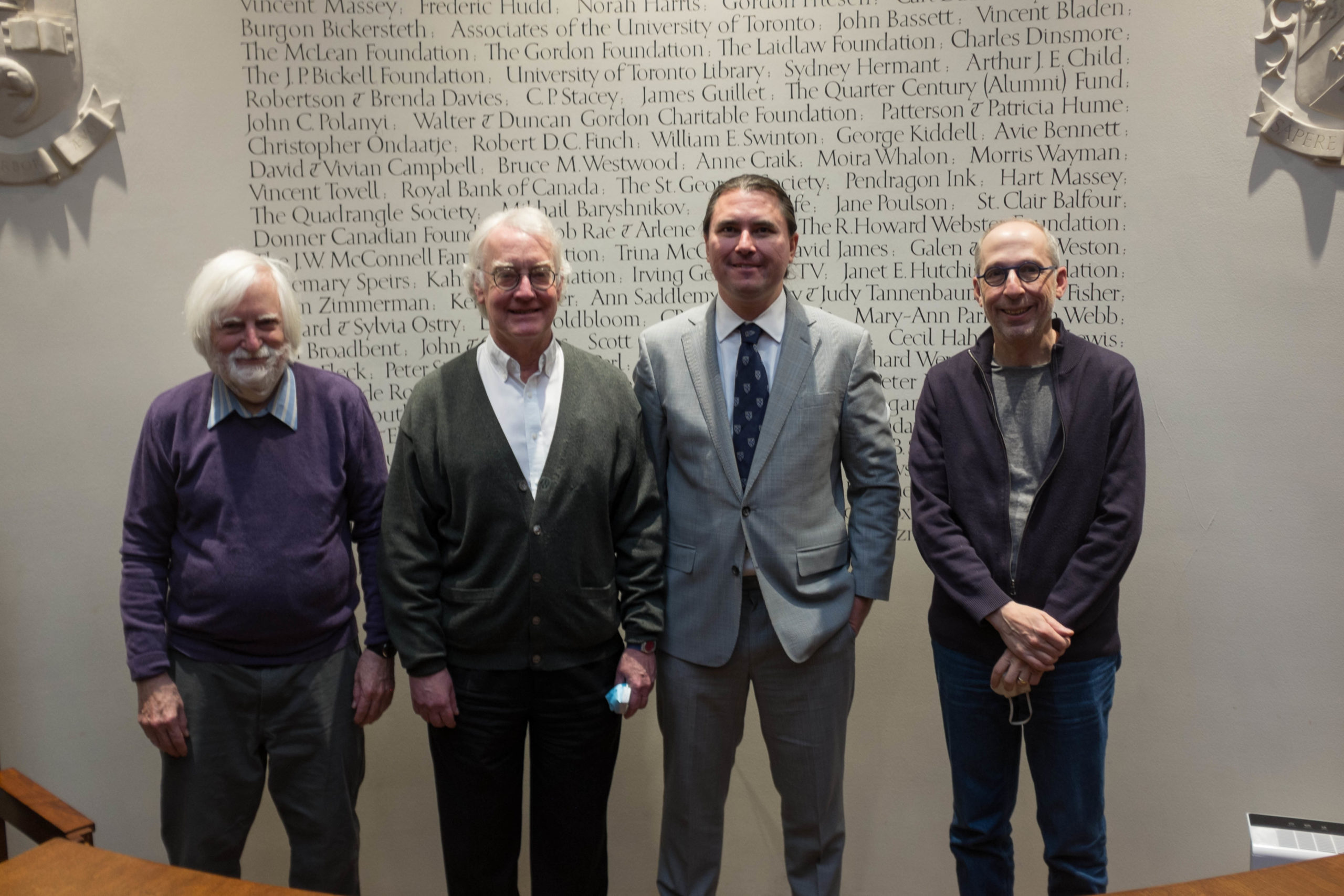
With my PhD defence 17 days away — and in a context where public health officials are urging masking and other precautions even though politicians are too timid to require it — I am going back to my protective protocol from earlier in the pandemic, avoiding all group events, wearing a mask whenever I leave the house, and broadly restricting going out to buying groceries and exercising.
It would be a huge pain and disappointment to get sick and need to re-schedule things, so hopefully I will be able to cross the finish line without getting sick again.