Air travel and appreciation

This video clip of Canadian comedian Louis C.K. on the Conan O’Brien show is quite amusing. He is talking about how people take air travel, and technology generally, for granted. He has an amusing way of turning around the common gripes people have about air travel:

‘And then, we get on the plane and they made us sit there on the runway, for 40 minutes. We had to sit there.’ Oh? Really? What happened next? Did you fly through the air, incredibly, like a bird? Did you partake in the miracle of human flight, you non-contributing zero?

It’s true that people fail to appreciate the immense effort and skill reflected in things like computers, pharmaceuticals, global communications, as so forth. At one level, that is simply a lack of curiosity. On another, I think it’s a kind of defence mechanism: people are completely dependent on these technologies, and yet few understand them at all. Most people probably couldn’t even explain how an airplane wing produces lift. That general point is especially well made by James Burke. He chooses an even more banal technology example than air travel, elevators. In the first episode of his series, he demonstrates how our attitude towards them demonstrates our dependence, ignorance, and vulnerability.

National Geographic on the oil sands

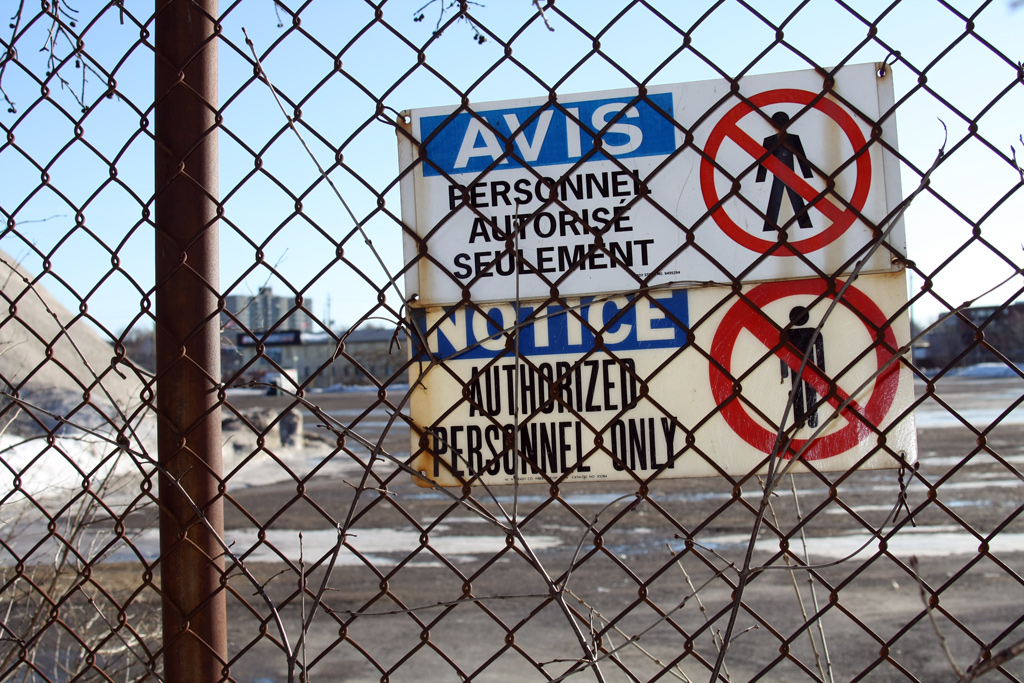
Warning signs

National Geographic has released a feature article on Alberta’s oil sands. It highlights the immense scale of what is going on: geographically, economically, and in terms of water and energy usage:

Nowhere on Earth is more earth being moved these days than in the Athabasca Valley. To extract each barrel of oil from a surface mine, the industry must first cut down the forest, then remove an average of two tons of peat and dirt that lie above the oil sands layer, then two tons of the sand itself. It must heat several barrels of water to strip the bitumen from the sand and upgrade it, and afterward it discharges contaminated water into tailings ponds like the one near Mildred Lake.

In total, the oil sands extent through an area the size of North Carolina – half of which has already been leased by the Alberta Government. That includes all 3500 square kilometres that are currently minable. In exchange, leases and royalties provide 1/3 of government income: estimated at $12 billion this year, despite the fall in oil prices.

The article also discusses some of the toxins leached by the mining operations, their impacts of health, and the inadequate work that has been done to investigate and contain them.

In the end, it is hard to write anything about the oil sands that isn’t damning, unless all it includes is information on the size and economic value of the oil reserves. The article includes a good quote from Simon Dyer, of the Pembina Institute, highlighting how the extraction of the oil sands is a mark of desperation:

Oil sands represent a decision point for North America and the world. Are we going to get serious about alternative energy, or are we going to go down the unconventional-oil track? The fact that we’re willing to move four tons of earth for a single barrel really shows that the world is running out of easy oil.

The solution is not the ever-more-costly and destructive search for new hydrocarbon resources, but rather the eclipsing of the hydrocarbon economy with one based on sustainable energy.

In addition to the article, National Geographic has also produced a flash slideshow of oil sands photographs.

American bipartisanship

Over at Salon, Glenn Greenwald has written a piece about the myth that Americans want bipartisanship. While the tone is a bit strident, it does make some good points. Partly, it comes back to the issue of how political systems fundamentally (and necessarily) constrain the expression of voter preferences. The zones of intersection between what voters want and how they are able to express those desires are always of interest, when considering the politics of democratic societies.

Another tricky aspect of this is the need democracies have for a credible opposition. Even if you feel strongly that one party or another should be in power in the US or Canada, you generally don’t want the other leading party to be a complete shambles. If they are, they don’t have the ability to hold the government to account – a role that is often more important than the generation of a competing ideological stance.

When it comes to the United States, it is actually a great shame that the excesses of the Republican party have become so extreme: for instance, their rejection of science, growing xenophobia, obsession with tax cuts at the expense of fiscal responsibility, etc, etc, etc. If they were a party with a platform worth respectfully disagreeing with, the political situation in the United States would be a much more honest and admirable one.

Cool Tools on The Deniers

I was disappointed by a recent entry in the Cool Tools blog – a place that normally highlights useful stuff like little tripods. Their post on the 16th, which got re-posted on Boing Boing, was about Lawrence Solomon’s book: The Deniers: The World Renowned Scientists Who Stood Up Against Global Warming Hysteria, Political Persecution, and Fraud – And those who are too fearful to do so. The post argued that since science is advanced by those who question current beliefs, we should encourage those who question the reality of anthropogenic climate change.

It is regrettable that the mistaken impression endures that the key tenets of climatic science are still disputed by the scientific community as a whole. Greenhouse gasses unambiguously cause warming, and humanity is unambiguously releasing those gasses. While we certainly need critical thinking to advance climatic science (there is much left to learn about feedbacks and the internal dynamics of the climate system) the kind of people who deny the existence or seriousness of climate change are not engaged usefully with the scientific discussion. In most cases, they tell stories that contradict one another (it’s not happening, it’s not caused by greenhouse gasses, it is likely to be beneficial, it is all China’s fault, etc). In most cases, I also don’t think they are genuine in their approach: they are united by the desire to avoid government regulation of greenhouse gasses, not by a substantive disagreement about what is happening in the world.

Given the strength of entrenched interests opposed to climate change regulation, people willing to add confusion to the debate will always be able to find financial support. That is, at least, until society as a whole finally appreciates that their arguments are self-serving and wrong.

Canadian content requirements for the internet?

Apparently, the Canadian Radio-television and Telecommunications Commission (CRTC) is considering Canadian content requirements for the internet. While I do support the existence of public broadcasters, I have never felt the same way about Canadian content rules for television or the radio. To me, they seem parochial and unnecessary; why does it matter whether people want to watch shows or listen to music that originated elsewhere?

Of course, the internet idea is even more dubious. Unlike radio and television, where you get to choose between channels but have no input into what each one is putting out, the internet lets you choose each film or song individually. As such, enforcing Canadian content requirements is both more intrusive and less practically feasible.

I remember when there were high hopes that the internet would be free from this sort of petty governmental manipulation. Unfortunately, with all the censorship, dubious monitoring, and other governmental shenanigans happening now, it isn’t surprising that yet another government agency wants to assert its regulatory influence over what happens online.

Hearings begin on Tuesday, with the aim of reviewing the current policy of not regulating content on cell phones and the internet.

The MMR vaccine and autism

I am glad to see that an American court has rejected allegations that the MMR vaccine causes autism. The anti-vaccine movement that is gaining ground in Europe and North America is a worrying one. It is worrying on a direct level because it exposes children to new dangers and raises the risk that diseases that have been all but eradicated will return. It is also worrying insofar as it demonstrates the depth of the lack of trust between large elements of the population and doctors and scientists.

As with the alternative medicine craze, a disturbing number of people have decided that evidence-based medicine is lacking and have opted for alternatives that range from relatively harmless quackery to dangerous malpractice. It leaves one wondering if there is any mechanism through which broad public confidence could be restored.

The oil sands, coal, and new regulations

'Blackburn' sign

The sheer determination of Canada’s current government to protect the oil sands by undermining Obama’s climate policy is considerable. Most recently, they have been arguing that oil sands extraction operations should be treated in the same way as American coal plants, and thus partially or fully protected from expensive new regulations.

For one thing, an ideal climate policy would drive the rapid replacement of existing coal plants with renewable sources of energy. For another, coal plants that were given free credits in some kind of ‘grandfathering’ system would be pre-existing facilities, built before climate concerns were as acute as they are now. A decent climate policy absolutely needs to prevent the construction of new coal power plants. If someone demonstrates safe, effective, and economical carbon capture and storage, that requirement may relax somewhat but, for the moment, we cannot assume that coal has a place in our next-generation energy mix.

Given the ambitious plans for expansion, the oil sands are much more like new coal plants than like old ones. As such, they should face the same tough rules as new facilities. Special exemptions may serve the short-term interests of some individuals and companies, but allowing the oil sands to develop along their present course is very much against the long-term interests of Canadians.

Carbon capture cannot redeem the oil sands

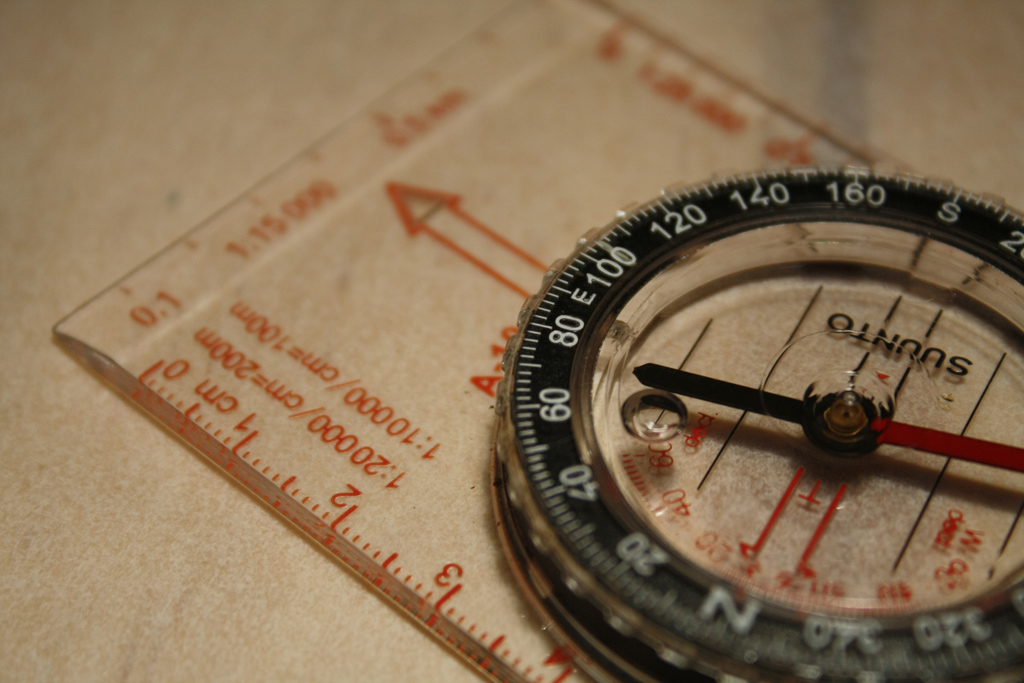
Compass

Set aside, for the moment, the very reasonable doubts about whether carbon capture and storage (CCS) is safe and effective, affordable, and capable of rapid deployment. Even if CCS could be implemented rapidly and cheaply, it would not render the oil sands acceptable from a climatic perspective. The reasons for that are as follows:

  1. CCS can only be used to capture greenhouse gasses emitted in concentrated form from large facilities. Not all oil sands emissions are of this type.
  2. Even at large facilities, CCS is only expected to capture about 80-85% of emissions.
  3. The emissions from burning the fuels being produced will not be captured. Even with fuels originating from oil sands bitumen, these are the bulk of total emissions.

The oil sands are touted as a resource equivalent to a second Saudi Arabia. This is the last thing the world needs. There are only so many fossil fuels we can burn while still having a decent shot of avoiding catastrophic climate change. As a result, fossil fuels are an industry with no long-term future. This is indirectly demonstrated by the shamefully weak greenhouse gas mitigation targets adopted by Alberta. They know that even if CCS development progresses perfectly, it will not let them bring their emissions in line with what is sustainable. That’s why they can only hope to have reduced emissions to 14% below 2005 levels by 2050, when the world as a whole needs to have cut them to around 80% below 1990 levels, and rich places like Canada will need to have cut by even more.

There is also the issue of declining energy return on investment (EROI) and the perpetuation of oil dependency. Right now, the global economy is a fossil fuel junky. This cannot be sustained. Starting to depend heavily on alternative sources of oil, such as the oil sands, is the equivalent of starting to shoot up between your toes, because the veins in your arms have collapsed. It is not a far-thinking or effective way to deal with your quandary. The solution is to find a new way to sustain yourself. At best, the oil sands are a significant distraction from doing that.

[Update: 8 March 2010]. BuryCoal.com is a site dedicated to making the case for leaving coal, along with unconventional oil and gas, underground.

How aggressively skeptical to be

Over at Cocktail Party Physics, there is an interesting post about ‘skeptic etiquette.’ Specifically, this concerns the question of how aggressive one should be about debunking dubious claims made in social situations, whether those claims are about homeopathy, astrology, conspiracy theories, or what-have-you.

Personally, I tend to take a pretty aggressive approach, especially when the issue is one that has a major direct effect on people’s lives and future prospects. Beliefs like vaccines causing autism cause real damage, as do those about the non-existence of anthropogenic climate change. It may not always make you socially popular to call people on these things, but I think it is important to challenge deeply flawed ideas and modes of thinking, even when doing so produces awkwardness.

Admittedly, this approach has made me unpopular at a few dinner parties. The high point may have been when I conducted a limited double-blind clinical trial to disprove the idea that magnets ordered from infomercials improve the taste of wine.

Misusing the verb ‘to ensure’

Spoon in guacamole

I think ‘ensure’ might be one of the most misused words in the English language. At least 90% of the time I see it used, it is being seriously misapplied. Cariboo altering their migration patterns in response to climate change are not ‘ensuring’ their survival. At best, the behaviour makes their survival more likely. Similarly, new laws cannot ensure that children will be protected from sexual predators. At best, they will make such occurrences less frequent. Military and police power can never ensure an end to terrorism.

In short, the verb ‘to ensure’ should only be used in situations where genuine certainty is being produced. Generally, this is only the case in matters that are strictly logical or those that are strictly empirical. For instance, the fact that all bats are mammals ensures that there are no non-mammal bats. Similarly, the fact that matter attracts other matter ensures that very massive bodies will be roughly spherical. In terms of actions, those where something is ‘ensured’ are those where an inescapable cause-and-effect relationship exists: the failure of the O-ring on the Space Shuttle Challenger ensured that the vehicle would fail catastrophically. Virtually nothing in politics is certain and, as such, political pledges to ‘ensure’ things are usually misleading or empty.