Spore and DRM

One of the most talked about aspects of the computer game Spore is the digital rights management (DRM) software being used to prevent unauthorized copying. The SecureROM software restricts each copy to being installed on a maximum of 3 computers. Beyond that, you can call Electronic Arts and beg them to let you install it more times. Given that hardware upgrades can make your computer count as a ‘new’ one, this might happen to a lot of people.

As DRM software goes, this really isn’t that bad. It doesn’t run an annoying program in the background, like the awful Steam system that accompanied Half Life 2. It also lets you play the game without the DVD inserted.

Arguably, the key to this issue is the following: somebody is always going to crack the DRM and release pirated copies of the game without it online. As such, DRM does not stop unauthorized copying, but does inconvenience the people who actually shell out the money for the game. As such, DRM is both useless and unfair to legitimate customers. As the Sony DRM debacle demonstrates, it can also open massive security holes on the computers of those who run it.

P.S. I will write a full review of Spore once I finish it. My first impressions are quite positive. One major suggestion to anyone trying it: play a very aggressive species for the first four stages (basically winning by killing everyone). Then, start a new game at the space stage with a blank state species. If you bring your hyper-aggressive species out into the galaxy, you will spend all of your time manually defending each of your planets from attack. It is infinitely less frustrating to build an empire based on trade and teraforming, earn lots of badges, make alliances, buy some awesome weapons, and then start busting people up if desired.

UBC to join NCAA?

It seems the University of British Columbia is considering joining Division II of the National Collegiate Athletic Association, and is at least nominally soliciting advice from students and alumni about the decision. Personally, I have never seen varsity sports as an important part of what the universities do. For the most part, students who don’t care and don’t watch them are subsidizing athletes who contribute little to the overall university community. Sports programs also divert funding away from more valuable uses such as research, student scholarships and bursaries, and university infrastructure.

Ideally, UBC should make the ‘Varsity Sports Fee’ that gets imposed on every student an opt-in system. Then students who feel that the program is worth the approximately $200 per year cost of the program can choose to support it. By all means, attendance of athletic events can be restricted to those who pay the fee. Even so, I expect they would see a sharp contraction in their level of funding: relatively clear evidence that these programs are valued more by university administrators than by students. If the sports programs wanted to preserve their present level of funding, they would need to find willing donors, rather than exact a semi-hidden tax on those who often have far more pressing financial needs.

In any case, three consultations on the move are planned:

  • September 29, 4:00-7:00 p.m. – Liu Centre, Multi-purpose Room, 6476 North West Marine Drive
  • October 14, 6:00-9:00 p.m. – Ponderosa Centre, Arbutus Room, 2071 West Mall
  • October 15, 4:00-7:00 p.m. – Ponderosa Centre, Arbutus Room, 2071 West Mall

Those in Vancouver may wish to consider attending.

Conservatism and science

One of the most regrettable things about contemporary conservatism – aside from forgetting Edmund Burke’s notion of humanity as stewards of the natural world – is the unwillingness to acknowledge basic scientific realities. Sometimes, this is because of ideological conflicts; acknowledging the immense danger posed by climate change basically means admitting that government regulation is required. Sometimes, it is because of religious beliefs at odds with the basic knowledge we now have about the universe. It is simply embarrassing that there are still people in developed countries who do not understand evolution, or who believe the Earth to be a few thousand years old.

Also regrettably, it seems that the recent surprise Republican vice presidential choice Sarah Palin is among those who profess doubt about the existence of biological evolution. She is of the ‘teach the controversy’ school of thought, in which schoolchildren should supposedly be presented with multiple theories and charged with choosing for themselves. Thankfully, this approach provides rich opportunities for satire. One site sells ‘Teach the Controversy’ shirts showing Atlantis, the devil burying dinosaur bones, aliens building the Egyptian pyramids, and so forth. Most famously, the whole Flying Spaghetti Monster phenomenon began as a mocking response to this approach:

I think we can all agree that it is important for students to hear multiple viewpoints so they can choose for themselves the theory that makes the most sense to them. I am concerned, however, that students will only hear one theory of Intelligent Design.

Let us remember that there are multiple theories of Intelligent Design. I and many others around the world are of the strong belief that the universe was created by a Flying Spaghetti Monster. It was He who created all that we see and all that we feel. We feel strongly that the overwhelming scientific evidence pointing towards evolutionary processes is nothing but a coincidence, put in place by Him.

Being tolerant of people with religious beliefs does not mean treating those beliefs with special deference, or refraining from mocking the more absurd ones among them. Indeed, it is only through the vigorous consideration of the relative merits and explanatory capabilities of different viewpoints that we can further refine our understanding of the world. The sad thing is that there are some people who never get a fair shot at it because those in power choose to give them a deeply inadequate initiation into the teaching of science.

Listeria and the food system

The ongoing listeriosis outbreak in Canada is evidence of how broken out primary food system is, particularly insofar as meat is concerned. Producing billions of clones in packed conditions is dangerous enough, particularly if you simultaneously marinate them in growth hormones and antibiotics. Marrying that with a food system where every step of the production chain is concealed from consumers increases the risk.

What is most astonishing to me is the result of a poll conducted by The Globe and Mail on their website. Asked: “Has the listeriosis outbreak damaged your opinion of Maple Leaf products?” 38% of respondents said “no.” Perhaps this demonstrates the degree to which we are not aware of the shortfalls of our food system and food regulation, to the point where we accept this kind of occurrence as an inevitable consequence of food production.

More people should read Michael Pollan’s The Omnivore’s Dilemma. A safer, healthier food system is entirely possible. It will not, however, emerge while people are still happy to accept a dozen Canadian deaths (and counting) as part of the cost of having “pre-packaged meat products” available for purchase.

Stories of this kind sometimes makes me wonder whether personal vegetarianism is actually a selfish choice. Opting out of the system can be seen as an inferior alternative to agitating for change. After all, it was basically consumer demand that produced the emergence of organic and local food options. It is only when a mass market demand exists for healthy, safe, natural, and sustainable meat and seafood that systemic change could become possible.

More on food, health, and the environment:

Emily also wrote a post on this previously.

Bill Gates and the oil sands

In the past, I have been impressed by the philanthropy of Bill Gates. Now, after spending billions of dollars combating poverty and infectious disease, he seems to be flirting with investments that would counteract his earlier goals. Along with Warren Buffet, Gates recently toured the Athabasca oil sands, supposedly in search of investment opportunities.

We are now at a juncture in time where we understand the magnitude of the threat posed by climate change, as well as the growing role the oil sands are playing in Canada’s greenhouse gas emissions. It is simply immoral to assert that just because a resource is under your feet, you can exploit it regardless of the harm that does to others. While it is theoretically possible that future technologies will reduce the harm caused by oil sands extraction and upgrading, such technologies do not exist today and cannot serve to justify the destruction that is ongoing.

If Gates does decide to invest, he will be adopting a deeply hypocritical position with respect to good global citizenship and the challenges facing the global poor. The IPCC and others have stressed that it will be many of the world’s poorest people who suffer most from climate change. Projected impacts include droughts, famines, storms, and the increased spread of some infectious diseases. Hopefully, the actual sight of boreal forest being stripped mined and rendered toxic through greenhouse-gas-spewing industrial activities will put him off the investment idea.

Manifestos on the Future of Food & Seed

This collection of essays, edited by Vandana Shiva, varies considerably in tone and degree of novelty. The manifestos themselves seem ham-fisted and loaded with unsupported assertions. It is not that no convincing case can be made for many of the arguments raised; rather, the authors simply choose not to do so. It is an approach that will win them few converts. In general, the book contains a number of positions towards which I am sympathetic: that patents on living things are highly dubious, that the present food system is unsustainable, that the agricultural policies of most states are inappropriate and often immoral. It simply manages to convey most of these points in a shrill and off-putting manner: the kind of voice that makes you take an opposing stand almost by reflex.

Most of the authors seem to profoundly misunderstand the nature of the global trade system. As with so many other blanket anti-globalization activists, they seem to think the WTO is some kind of wicked and powerful entity, enforcing its will against states. It is more accurate to say that it is an imperfect vehicle for trying to create some trade rules formulated on something other than economic and geopolitical power. It is a goal rarely achieved – how could it be? – but a worthy one nonetheless. Similarly, the WTO does not impose outside restrictions on the kind of food safety laws states can adopt. It simply requires that the same standard be applied to domestic producers as importers. You cannot reject beef produced using recombinant bovine growth hormone abroad while allowing domestic industrial agribusinesses to use the same substance. Naturally, if you are big and economically powerful, you can more or less do as you like (witness WTO rulings against American maize subsidies, for instance).

The book also seems to be a bit short of real content where genetically modified organisms and antibiotic resistance are concerned. Both naturally raise important questions of health, safety, and ethics. The nuances of the discussion, however, are poorly served by a book that asserts that the Green Revolution was actually harmful to the world’s poor. Genetically modified organisms could certainly produce adverse outcomes. At the same time, they might be able to help us reduce our dependence on toxic pesticides, reduce the carbon emissions associated with shipping and refrigeration, and deal with the consequences of climate change. Similarly, while there is much to lament about current global trade practices, the kind of protectionism advocated by most of the authors is unlikely to help either the poor or the sustainability of agriculture. What is necessary is that the total social and environmental costs of economic activities be borne by the relevant parties: not that food is grown in a particular place, domestic producers receive preferential treatment, or that the world re-fragments into disparate economies.

While the book doesn’t really make it, there is an excellent case for a global transition to new forms of agriculture. Important elements include replacing vulnerable monocultures with resilient polycultures, sharply restricting the use of antibiotics, reducing the intensity of fossil fuel use, and otherwise taking into account the many social and environmental costs of agriculture that are ignored when it is undertaken in an industrial manner. There is likewise a very strong case to be made about reforming the global intellectual property regime. It is extremely dubious to be able to patent a gene that you have moved from one creature to another. It is similarly dubious to sell seeds on a ‘licensed’ basis, where they can only be legally used for one crop.

In the end, it is hard to see who this book is for. It doesn’t contain enough substantive argumentation to convert anyone – though there is one good essay written by a local foods grocer, railing against both Walmart and Whole Foods. It likewise does not contain a viable plan for changing the nature of the global food system. Here, Michael Pollan seems to adopt the most reasonable position: accepting the popularization of organic and local food as progress, while others angrily reject them as insufficient. A book that helped to enlarge that beachhead, while providing some strategic direction towards a genuinely sustainable global food system, would have a lot more value than this short, flawed text.


WiFi wars

The present situation in my flat is a classic failure of coordination. There are so many (encrypted) wireless networks operating that interference seems to have become a major issue. Internet access has become slow and unreliable. Of the eleven channels in the 802.11b/g standard, only three (1, 6, and 11) are fully non-overlapping. The individual wireless access points are all interfering with one another, as well as with everything else that operates in the same part of the radio spectrum: microwaves, 2.4 GHz cordless phones, security cameras, Bluetooth devices, baby monitors, wireless video game controllers, fluorescent lights, etc, etc. Indeed, a new phone somewhere in my vicinity may well have been the straw that broke the camel’s back, as far as the 2.401 MHz to 2.473 MHz range goes.

Everyone would have faster and more reliable internet access if we could shut down all but a couple of the access points. Unfortunately, there is no way to coordinate such an action. Furthermore, anyone who actually ran one of the reduced number of access points, if such an agreement could be reached, would be faced with the same kind of illicit usage that forced me to shut down my open network.

One option is to seek a technological fix, in the form of 802.11a or 802.11n equipment that is less likely to be interfered with by existing devices. Of course, given enough time, those devices are likely to face similar hurdles.

Debt and responsibility

Canada House of Commons ceiling

An article in the New York Times draws further attention to the indebtedness of American consumers: focusing on the degree to which debt is harming the lives of individuals, as well as how the lending practices of firms encourage people to take on more than they can handle. While there is certainly a key regulatory role in preventing fraud and misleading advertising, it is less clear to me that the major fault here lies with companies. As a shareholder in a mortgage company, I might be annoyed that it had chosen to lend to people unable to make the necessary payments. As a member of the general public, it is less clear why I should be excessively concerned – nor why I should have excessive sympathy for those who choose to live beyond their means.

Financial conservatism – the deliberate choice to live below your means and set something aside for the future – is a mindset that is certainly at odds with consumer culture. That being said, it seems sensible for the onus to be on the individual to learn restraint, not for the system to change so that it is no longer required. The lesson that needs to be absorbed is that borrowing is generally only justified in order to invest or to smooth our financial fluctuations. Using it as an unsustainable mechanism for consumption spending will always be a bad choice, no matter what rules various lending organizations adhere to.

Yes, there are unexpected situations that arise and unfairly tax the finances of some individuals. This is one reason for which insurance needs to be equitable and widely available. At the same time, people who have chosen to drive themselves into debt with cars, houses, and consumer products they cannot afford cannot be held entirely innocent when a further financial shock overwhelms their short-term ability to cope financially. That may been like an unsympathetic judgment, but it seems like the only view that incorporates the right incentives.

Another NYT article discusses the compassion versus personal responsibility debate directly.

Knives and Britain

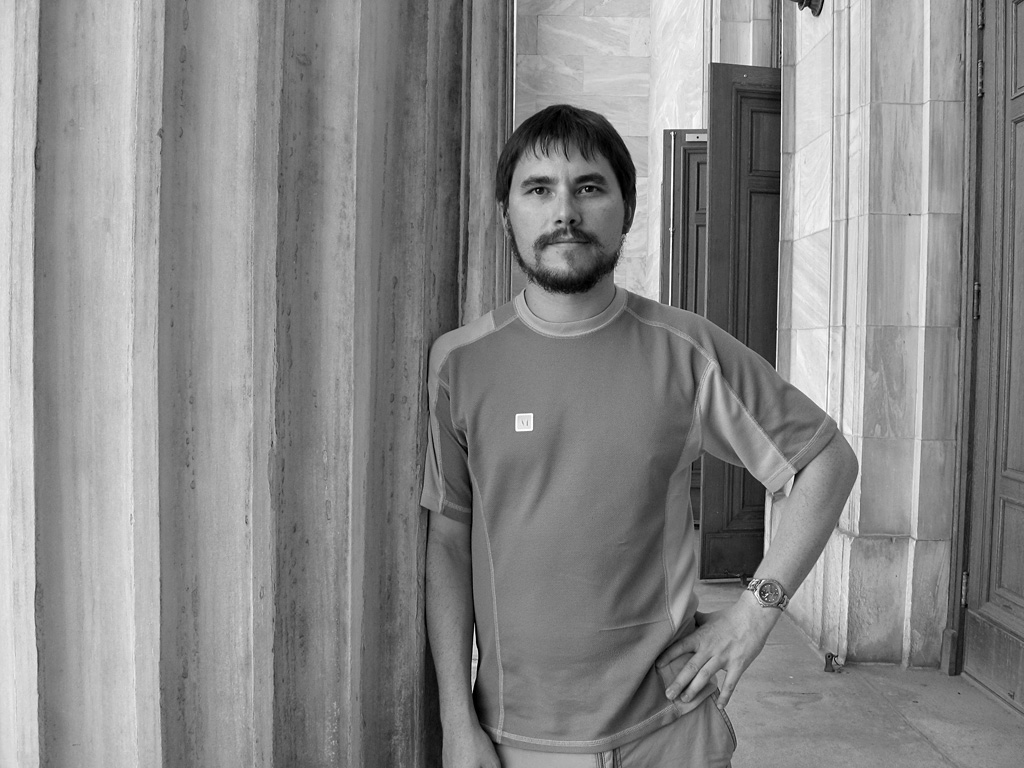
Milan Ilnyckyj outside the Beaux Arts Museum, Montreal

I must admit, I find the ongoing debate about knives in the UK somewhat perplexing. The leader of the Conservative Party wants mandatory jail time for anyone caught carrying one. Editors at the BBC argue that the problem may be overblown. To me, it seems like what people are missing is the fundamental difference between knives and weapons. Obviously, a knife can be used as a weapon. So can a hammer, umbrella, or fork. While we rightly appreciate that it is illegitimate use of the latter that is problematic (and addressed through laws against assault, uttering threats, etc), it seems important to remember that use-as-a-weapon is aberrant, rather than to be expected.

At virtually all times, I have either one or two small folding knives on me: one on the SOG Crosscut on my keychain and a CRKT Kiss in my backpack. When I am travelling or going into the woods, I will often have a Swisstool X with me as well. Probably the most common uses of these are cutting food and paper, though each has been used in dozens of ways. Knives are ancient, highly versatile, and useful tools – one of the first technologies to differentiate the human species from less adaptive animals. Assuming that I am carrying either as a weapon strikes me as unfair, as well as a reversal of the presumption of innocence. The onus must be on the authorities to prove malicious intent, rather than upon the individual to prove their intentions benign.

On a side note, all of this is very different for guns, particularly handguns. The only plausible use for a handgun is as a weapon. One never goes on a picnic and regrets the lack of one. Restricting the ownership and carrying of guns is an entirely reasonable restriction, as a manifestation of their nature.