Wood stoves, air pollution, and climate

Mehrzad and his brother

Yesterday, Stella reminded me of one of the many trade-offs associated with climate change and environmental policies, generally. Montreal is considering a ban on new wood-burning appliances, on account of the local air pollution they cause. Wood certainly isn’t the cleanest burning stuff, especially when it is used in stoves that fail to achieve an ideal temperature and fuel-air mixture. That being said, burning sustainably harvested wood does not add greenhouse gasses to the atmosphere. This is because the trees being grown to supply the wood absorb as much carbon as the stoves are emitting.

In the long run, only biomass and renewables offer the prospect of unending energy. Encouraging the development of both is thus critical to making the transition to a zero-carbon global society. At the same time, other drawbacks do need to be considered: whether it’s the land and water use associated with biofuel production, the air pollution from biomass burning, or the damage caused by dams. These trade-offs illustrate how technology is never really a self-sufficient answer to environmental problems.

There are also further complexities on the climate side. What is the source of the wood? Is logging altering the albedo of the area, leading to greater or lesser absorption of solar radiation? Are the trees being felled absorbing atmospheric carbon at the same rate as the trees that will replace them? What are the climatic impacts of the physical cutting and transportation of the wood? What effect will the aerosols from the wood burning have on climate?

In the specific case of Montreal’s wood-burning stoves, I don’t know enough about the trade-offs involved to make a sensible suggestion. Perhaps it would be better to mandate that any wood-burning appliances meet emissions standards, rather than banning them completely, or perhaps that is infeasible for some reason and only a ban will work. For instance, it might just be too costly and impractical to create and enforce emissions standards for wood-fired devices. In the end, the business of living together in a finite world is inevitably one of compromise and politics.

Climate science conference in Copenhagen

The recently concluded International Scientific Congress on Climate Change has released the ‘key messages’ from the conference. Somewhat truncated, they are:

  1. “Recent observations confirm that, given high rates of observed emissions, the worst-case IPCC scenario trajectories (or even worse) are being realised… There is a significant risk that many of the trends will accelerate, leading to an increasing risk of abrupt or irreversible climatic shifts. “
  2. “The research community is providing much more information to support discussions on “dangerous climate change”. Recent observations show that societies are highly vulnerable to even modest levels of climate change, with poor nations and communities particularly at risk.”
  3. “Rapid, sustained, and effective mitigation based on coordinated global and regional action is required to avoid ‘dangerous climate change’ regardless of how it is defined.”
  4. “Climate change is having, and will have, strongly differential effects on people within and between countries and regions, on this generation and future generations, and on human societies and the natural world.”
  5. “There is no excuse for inaction. We already have many tools and approaches… to deal effectively with the climate change challenge.”
  6. “To achieve the societal transformation required to meet the climate change challenge, we must overcome a number of significant constraints and seize critical opportunities.”

The conference involved 2,500 delegates from nearly 80 countries, and was intended to consider scientific issues prior to the UNFCCC negotiating meeting in December. A synthesis report on the conference will be released in June.

There is still an enormous gap between what climate scientists say must be done in the near-term and what most governments have pledged to do. Hopefully, the two will converge sharply during the next year, and the UNFCCC meeting will produce a viable successor to the Kyoto Protocol.

Environmental assessments in Canada

Milan Ilnyckyj in the spring

Reading about the plans of Canada’s federal government to limit environmental assessments, I was left wondering whether the term ‘environment’ is itself somewhat marginalizing. These days, people seem to generally accept the idea that ‘environment’ and ‘economy’ are competing interests and, by extension, that the former should sometimes be sacrificed for the latter. I wonder, then, what would change if part of the environmental assessment was split off and called a ‘human health assessment.’ People seem much less willing to accept a trade-off between money and health.

If there was a separate study on things like lung diseases, cancers, and human toxic exposure likely to arise from a project, it might get a lot more attention. That being said, there does seem to be a risk that once you isolate human health from the rest of the environmental assessment, nobody will care about the nature portion. I mean, who really cares about birds, fish, or polar bears anyhow?

Recycling anesthetics to fight global warming

Blue-zone technologies is a Canadian company that works with anesthetics. These gasses are potent greenhouse agents, and only about 5% of the gas used gets absorbed by the patient. The rest is normally vented, at a rate that makes each hospital’s anesthetic emissions comparable to the annual emissions from hundreds of cars. Blue-zone’s Deltasorb canisters are installed in operating rooms and capture the anesthetic breathed out by the patient. This prevents it from entering the atmosphere and allows the company to recycle the chemicals.

While the contribution of such technologies is relatively small, I appreciate the way in which this is a closed-loop system. Rather than treating the atmosphere as a dump for wastes, it is preventing the emission of harmful gasses. Further, rather than treating the captured wastes as garbage to be disposed of, it treats them as a feedstock for a new process of manufacture.

I learned about this from Tyler Hamilton’s Clean Break blog.

Lockheed Martin’s green advertising

One page 51 of the March 7th issue of The Economist, I noticed an unusual advertisement for Lockheed Martin, the world’s largest defence contractor by revenue:

Lockheed Martin green advertising

When you read the text at the bottom, the error in the ad is obvious. Somehow, the advertising firm they hired failed to include any actual Lockheed Martin products. It is all well and good to express your firm’s sincere support for reduced consumption and increased conservation, but it seems important to include some evidence of the concrete actions your firm takes.

With that in mind, I took it upon myself to add one of their quality products, the Trident II submarine-launched ballistic missile:

Lockheed Martin green advertising

These are the missiles that make up the deterrent force of the United Kingdom, another entity sincerely committed to environmental protection. Lockheed also manufactures fighter jets, munitions, missile defence systems, and satellite-launching rockets.

I encourage others with a bit of Photoshop skill to add other Lockheed products to the ad. Here is my original photo. If someone could produce a higher-quality scan, that would be excellent.

Call for papers on climate change

The St. Antony’s International Review has issued a call for papers (PDF) for their upcoming issue: “Climate Change: Preparations for a Low-Carbon Future.” Normally, it is something I would definitely make a submission to. As it stands, their last issue included a paper of mine on nuclear power, so I will probably sit this one out.

That being said, readers of this blog who have something interesting and scholarly to say about climate change should consider sending something. In particular, they are looking for work that addresses one or more of these topics:

  • Framing the Issue
  • Rethinking Existing Policy
  • Actors and Sites of Governance
  • Societal Attitudes towards Consumption

They also want reviews of books consistent with the theme. Abstracts are due by April 30th. Final papers are due August 31st.

Overcoming the status quo, and building a sustainable society

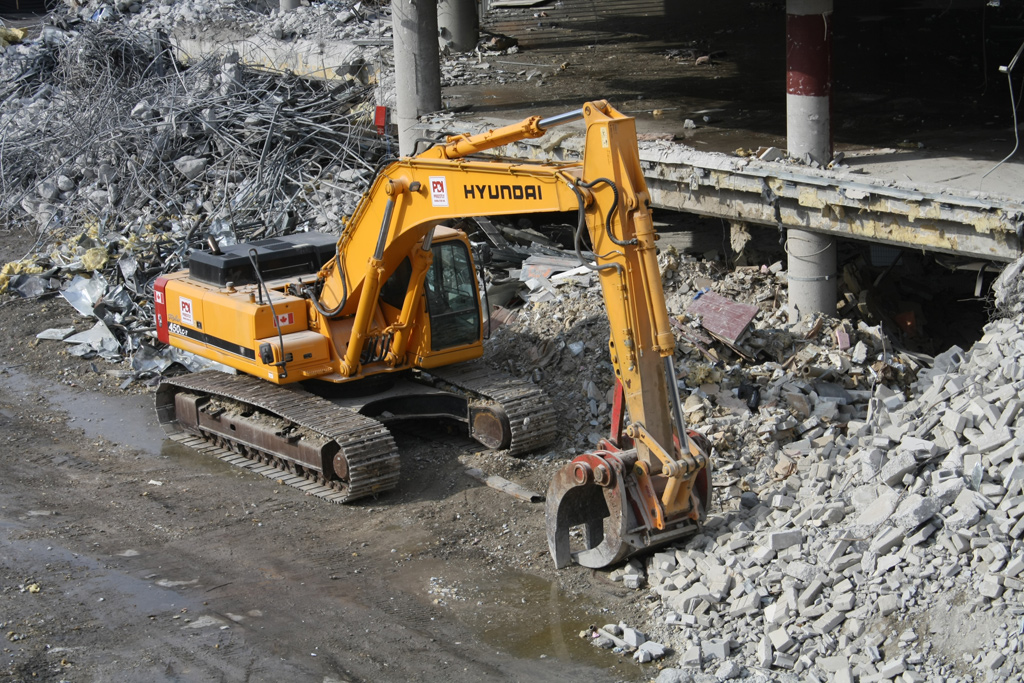
Digging machine

One of the biggest difficulties in dealing with climate change is the challenge of making people give up things they have been benefiting from inappropriately for a long time. For instance, if a carbon tax or cap-and-trade system raises the price of fuels or energy, people will rebel because these things were cheaper before. It isn’t very psychologically potent to say that the lower previous prices were the result of ignoring the consequences of one’s actions. While a theoretical concern for future generations and people living in other countries is easy to maintain, a concern than manifests itself in changed behaviour is quite different.

In the end, our whole society is unsustainable. It is based on an energy model that cannot be perpetuated, and it is doing terrifying damage to the physical and biological systems of the Earth. Between the advent of industrialization and the present day, we have been living a kind of Ponzi scheme. Hopefully, people will grow to understand the enormous opportunity that exists now to initiate the transition to a sustainable human society: one that can sustain itself for millions of years.

Doing that requires foresight, an understanding of science, and a willingness to reject things that have existing for a long time, on the basis of rational objections. Ultimately, I am not entirely confident that humanity can manage that transition. Even so, now is undeniably the moment to try.

Sea level rise and coastal property values

Anticipating a future featuring significant amounts of sea level rise, Joseph Romm has been pondering when this will affect the prices of coastal properties. The fact that the market probably hasn’t already taken into account the conservative sea level rise estimates of the IPCC is just one demonstration of how prices do not reflect ‘perfect information’ in the way often assumed by economists.

My guess is that higher insurance premiums will be the mechanism through which the threats to coasts in the developed world will be brought to light, for most people. Since insurance companies need to gauge risk adequately in order to stay in business, they have fewer conflicts of interest when it comes to evaluating climatic science and making projections about what the consequences of our greenhouse gas emissions will be.

Fuel efficiency, climate change, and 2050

Bridge ribs

Recently, the United Nations Environment Program and others called for fuel efficiency in automobiles to be doubled by 2050. While more efficient transport is a necessary element in dealing with climate change, this target strikes me as profoundly lacking in vision or ambition. There are two major reasons for which I think we must do a lot better.

The first is that, by 2050, we will probably be seeing serious consequences from climate change globally. It is entirely possible that there will be no more Arctic summer sea ice, and far fewer glaciers. Droughts, fires, and heat waves are likely to have increased in frequency and severity. These kinds of changes are likely, to some extent, regardless of what sort of emissions trajectory we follow. The major differences in outcome between a scenario where we cut emissions and save ourselves and one where we doom huge numbers of future generations to enormous climatic harm will largely be felt after 2050. In spite of that, it seems probable that changes which will occur by 2050 will render the strategy of denying and ignoring climate change non-viable. As such, it is doubtful that governments would ask so little of automakers.

The second concerns peak oil. There are a lot of uncertainties involved about timing, technological development, and about how the global economy will respond to falling output. That being said, there will come a day when the global production of petroleum peaks and begins an unstoppable decline. To me, at least, it seems likely that the decline will be well underway by 2050 – making a petroleum-fuelled automobile an expensive proposition for anyone, and quite possibly unavailable to most. In an optimistic scenario, where standards of living keep rising in spite of reduced hydrocarbon output, that will mean that the reduced quantity of fuel available will have a price inflated even beyond what scarcity would dictate. It is, of course, terribly hazardous to make guesses about technology and economic developments so far off, but my gut impression is that a vehicle engineer from 2050 would be aghast to see a vehicle anywhere near as inefficient as those we are using now.

If we do take climate change seriously, and we begin to capture the opportunities for economic transition the crisis offers, by 2050 we should find ourselves moving sharply towards a far more sustainable world. To take one set of examples, it might be a world where ground transportation is overwhelmingly electric, fuelled by renewables and probably some nuclear fission. Liquid fuels produced from biomass might be employed only by aircraft and for specialty applications like vehicles in very remote areas. While that scenario is speculative, to me it seems more likely than one where we are driving around in the same old internal combustion engine, gasoline cars but burning 3.5 litres per 100km rather than 7.0.

The Hill Times on the oil sands

In one of the more absurd headlines I have seen printed recently, Ottawa’s Hill Times reported that: “Canada will fail if there’s no tar sands plan, say experts.” This is both false and an insult to Canadians. It implies that the only economic value that can arise from Canada is embodied in natural resources. It ignores the fact that any kind of long-term prosperity for Canadians needs to be based on sustainable activities, and must ultimately be compatible with a stable climate. Because the oil sands are about chasing down the last few drops of yesterday’s energy source, rather than looking to the future, economic activity based upon them is necessarily ephemeral, as well as hugely environmentally destructive.

The article itself is more reasonable than the headline, but still fails to consider the possibility that the ‘boon’ to Canadians from the oil sands is illusory. When the externalities are taken into account, it is likely that the harm being done to future generations outweighs the value that frantic extraction may have for this one.