On evolution

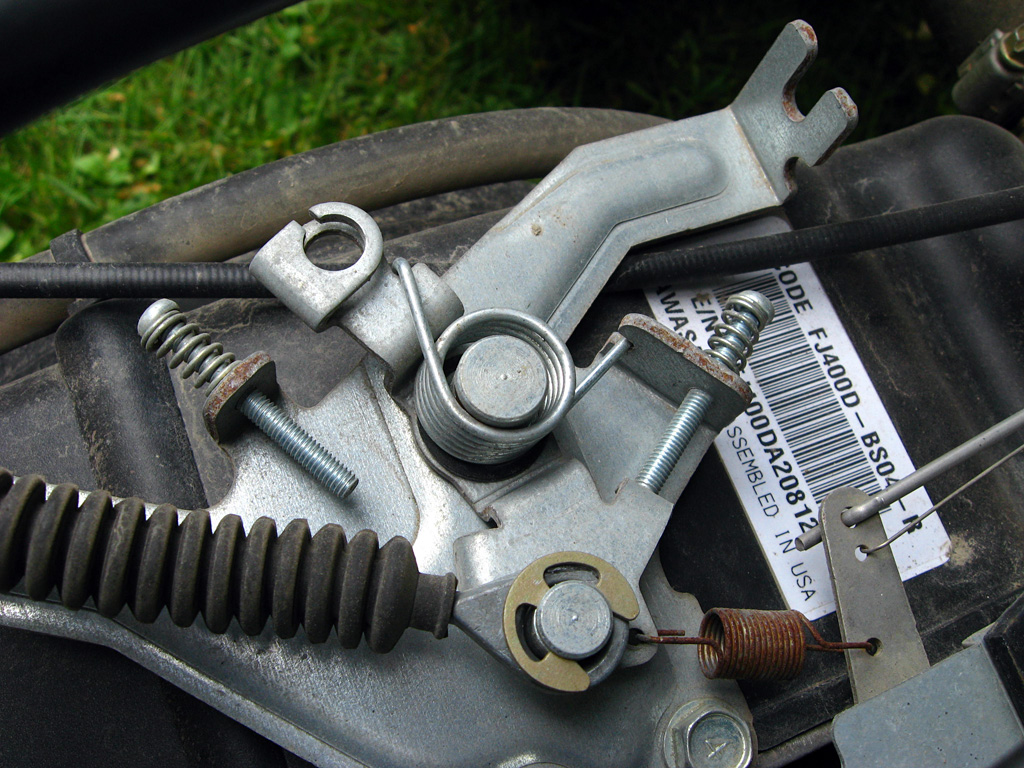
Engine components in a John Deere Gator

The other day, I was reading about how flowers have evolved to attract the right sort of pollinators and encourage those creatures to carry their gametes to other flowers. They thereby attain the benefits of sexual reproduction (primarily the generation of novelty) without the need for locomotive capabilities. Other plants manipulate animals into disperse their seeds, as well as not eating their vital components, at least before the plants have had the chance to reproduce. Sometimes it is extremely intricate: peppers that want their seeds being eaten by birds (who will not digest them) rather than mammals (who will) have developed sophisticated chemical deterrents, specially shaped to bond to only the right sort of receptors.

Thinking back on it today, I was struck by just how impoverished any understanding of biology prior to understanding evolution must have been. It is rather saddening that some people have missed the boat, and tragic that some are trying to put others in the same position. Evolution isn’t something you ‘believe in’ or not; it is something you understand to a greater or lesser degree.

Czech legacy of uranium mining

If I ever visit Prague again, I will be a bit more nervous about the drinking water. The water is drawn from the North Bohemian Cretaceous Basin and only active pumping is keeping that basin from being contaminated by radioactive acids. These originated in a Soviet uranium mining operation that ran from 1974 to 1996. The mine used a technique called ‘in situ leaching,’ which uses injected sulphuric acid deep underground to seperate the uranium from surrounding rock. Unfortunately, this process was undertaken imperfectly and with little respect for the environment. Too much acid was injected and the 15,000 injection wells were installed such that they penetrate an important freshwater aquifer.

The ‘dynamic containment’ now being used involves both the constant injection of fresh water on one side of the contaminated area and the extraction and treatment of contaminated water from the other side. If either process was interrupted, the contamination could spread into water supplies used for drinking or agriculture. At the present pace, the contamination should be stabilized by 2035 (not cleaned up, more than one million tonnes of contaminants will remain underground). Cleanup costs up to that point are expected to be about 1.85 billion Euros.

As with many other cases of nuclear contamination – from the Hanford Site to Novaya Zemlya – the legacy of past activities is long-lived. That should give pause to those rushing to endorse nuclear power as the solution to climate change, particularly when the level of oversight provided by the governments supervising mining, the nuclear power sector, and waste share the Soviet Union’s lack of prudence and environmental concern. Even in better regulated places, it is very difficult to make the nuclear industry internalize such costs. Whenever the damages created become excessive, it is a fair bet that the taxpayers of the future will end up paying.

Energy from the oceans

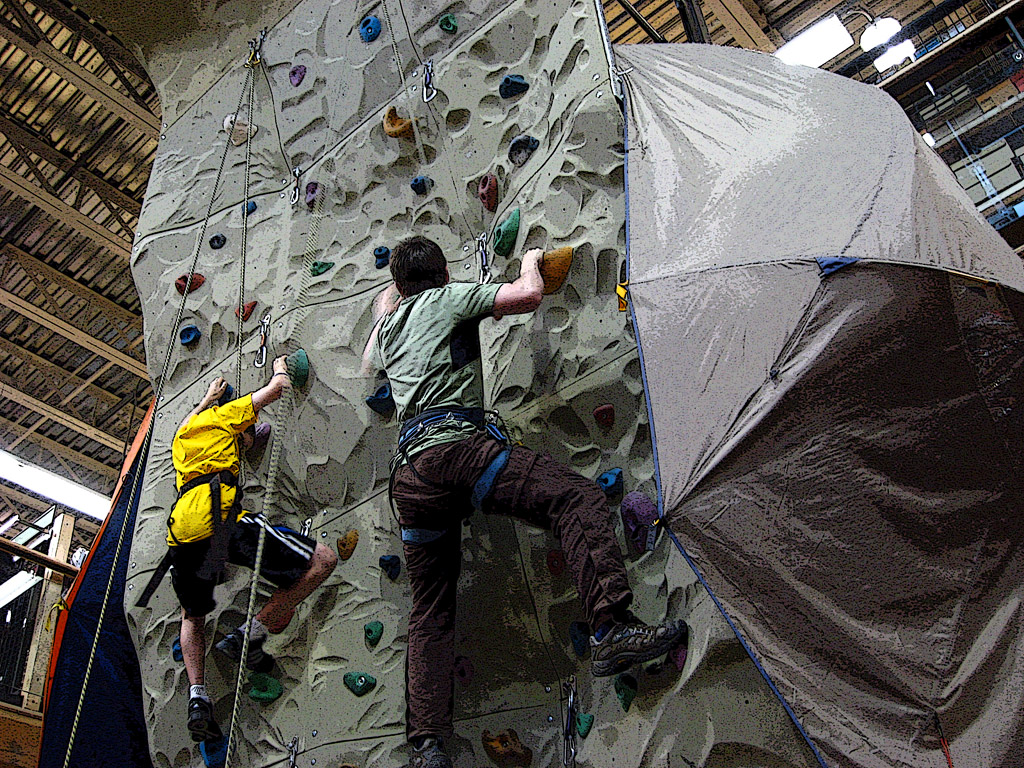
Milan Ilnyckyj on a climbing wall

Since each individual form of renewable energy has variable output in each region, it makes sense to have a diversified portfolio of energy types. Both because of that and because of the amount of energy inherent to ocean waves and coastal breezes, offshore wind turbines and wave generators could eventually be important parts of the energy mix.

People living in coastal areas have an unfortunate aversion to offshore wind turbines, asserting that they spoil the view. One possible technological response is floating turbines, located farther offshore where the wind is stronger. Such devices could also be moved into whatever location is optimal across a particular span of time.

Wave power is another promising technology, though the first commercial operation won’t be operating until October 2007, when it comes online in Portugal. Waves are challenging to turn into electricity largely because of the character of their motion: low speed, high force, and in many directions. Nonetheless, some novel designs may help to make it one more valuable addition to the arsenal of renewable energy sources.

Rethinking development

When discussing global solutions to climate change, a constant distinction is drawn between three groups of states (two of which we sometimes pretend are the same). There are the ‘developed’ states and a ‘developing’ set which consists of those that are growing rapidly (India, China, Brazil, Russia) and those that are stagnant or even getting poorer (Zimbabwe, Sudan).

An alternative way of thinking about the situation is this. Imagine the states as human beings. The ‘developed’ ones grew up in the very unusual situation of huge amounts of cheap, easy energy everywhere. (Sci-fi nerds might appreciate how they could be equated to Guild Navigators.) As a consequence, they developed in a deformed way. Their economies can only keep going in their present form while that unusual situation continues. The rapidly developing states are following the same line of development, despite the certainty of climate change and the probability of energy prices rising in the long term.

The ‘developed’ states may be all grown up, but they have developed into monsters. ‘Developing’ states may want to muster the determination to mature more gracefully.

Apocalyptic psychology

Emily has written an interesting post about our half-longing for apocalypse and the psychology of climate change. Evoking the possibility of disaster sometimes serves rational purposes, such as providing a way to deal with uncertainties about costs. There are still people who argue that the benefits of climate change are likely to exceed the costs, and others who argue that the cost of addressing climate change is unacceptably high. Pointing out the possibility of catastrophic runaway change is one way to respond to such positions.

That being said, there are deeper and more emotive reasons for which the destruction of our civilization as the result of climate change has psychological poignancy. At some level, there is the feeling that we deserve it – that our abuse of the rest of nature has disqualified us from continued participation in it. Thankfully, quasi-religious notions of sin and damnation generally leave a space for redemption. Particularly if we can do it in a way that doesn’t leave the world littered with nuclear waste and toxic pollutants, moving to a low-carbon society could help humanity to redeem itself in its own eyes.

Fixing Climate

Writing on the wall

Written by Wallace Broecker and Robert Kunzig, Fixing Climate: What Past Climate Changes Reveal about the Current Threat – And How to Counter It combines relatively conventional thinking about the nature and consequences of climate change with a rather unusual solution. It is rich in personal anecdotes, but feels a bit as though it lacks overall rigour.

Climatic history

Much like Richard Alley’s Two Mile Time Machine, this book discusses how various types of natural record can inform scientists about the past state of the climate. These include core samples of ice, mud, and sediment. They also include fossils, living trees, and much else.

This book tells a number of interesting stories about how some of this data has been collected and analyzed, as well as about the personalities of those who did the work. It highlights those areas in which there is a good level of understanding, those where there are competing theories, and those where present theories have not yet proved adequate for explanation.

The two big points made are that climate is unstable and sometimes prone to big abrupt shifts and that human emissions of greenhouse gasses (GHG) are ‘poking the ill-tempered beast with a sharp stick.’

Likely consequences

Broecker’s book claims that the two most plausible threats from climate change are sea level rise – from melting ice in Greenland and West Antarctica – and droughts induced by changes in wind patters and precipitation. It also mentions the possibility of a thermohaline circulation collapse.

The book does not contemplate truly catastrophic runaway climate change scenarios, in which the full potential of burning tropical forests and melting permafrost is brought to bear. Instead, it restrains itself to the possibility of a 14 metre sea level rise – possibly over centuries – and the emergence of very profound droughts in some areas that extend for hundreds of years.

The book highlights how there are big uncertainties about the timing of changes, but asserts strongly that prompt and extensive mitigation action is required.

What is to be done?

Where Monbiot and Romm have detailed plans for emission reductions through different wedges, Broecker asserts that the best mechanism for dealing with rising atmospheric GHG concentrations is to do as follows:

  1. Use a huge number of machines to absorb carbon dioxide (CO2) directly from the air.
  2. Store it temporarily in a chemical compound.
  3. Separate the compound from the CO2, recycling the former for re-use in the machines.
  4. Bury the CO2. This can be done in the deep ocean (delaying emissions from right now until later, ‘shaving the peak’ of the concentration rise), in old oil and gas fields, or in saline aquifers.

At the same time:

  1. Dig up enormous quantities of carbon absorbing ultramafic rock.
  2. Grind these to fine powder.
  3. Let them absorb atmospheric CO2
  4. Dump the carbon-bonded rock somewhere

At the same time, emissions from fixed sources like power plants should be captured and stored. With this combination of activities, the authors assert, we could reduce the global concentration of GHGs to whatever level we prefer.

This scheme strikes me as very impractical. Every chemical step can be accomplished, but the matters of scale and energy make me doubt whether this could ever be used on a global level. Broecker assumes that our total emissions will continue to grow, from the present level of about 29 gigatonnes. The sustainable level is about 5 gigatonnes, so we would need to deploy an enormous array of capture stations, provide them with carbon-absorbing chemicals, process those chemicals once they are exposed, return them to the machines, and bury the CO2. Even if it would be technically possible to do all this, it is not at all clear that doing so would be cheaper or easier than cutting down on total energy usage, while also investing in the development and deployment of renewable power.

Even if climate change could be addressed, a society built on fossil fuels cannot last. The scheme basically assumes unlimited access to hydrocarbon energy, combined with very limited potential for renewables. To explain why, think about the energy chains involved. Broecker repeatedly asserts that it will take only a fraction of the energy from a set quantity of hydrocarbons to absorb and sequester the resultant GHGs. He basically assumes that we will have cheap coal at least for the foreseeable future. There is reason to doubt this. While we will not exhaust oil, gas, or coal by the end of the century, we may approach or pass the point where it takes as much energy to extract and process as it contains. In that case, we would need renewables regardless of whether we had capture capabilities or not.

In the end, the book is a relatively interesting one. If you want detailed information on paleoclimatology, Alley’s book is probably a better choice. If you are looking for relatively practical solutions to the climate change problem, Romm and Monbiot are probably better bets. That being said, reading this book will definitely inject a few new ideas into your thinking about climate, climate science, and how humanity is to respond. It is also worth noting that it is possible that capturing CO2 straight from the air will prove viable in terms of energy and economics. If so, we should see firms starting to do it pretty soon after a decent carbon price is imposed in developed states.

Dating with carbon-14

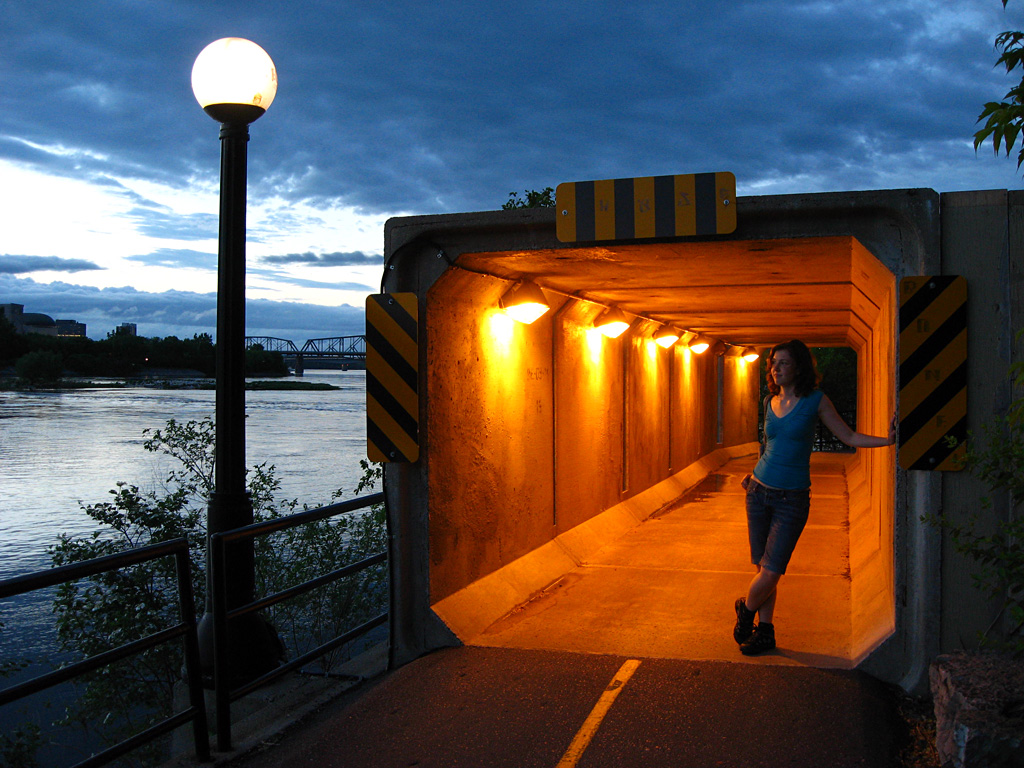
Emily Horn in tunnel on Ottawa River Pathway

When cosmic rays strike the atmosphere, they produce a radioactive isotope of carbon called carbon-14. This carbon gets absorbed from the atmosphere by living things. Once they die, they stop absorbing it. Since it continues to undergo radioactive decay after death, the ratio of carbon-14 to ordinary carbon declines in a predictable way in dead organic matter. This is the basis for radiocarbon dating.

When the great powers started testing nuclear and thermonuclear bombs during the Cold War, they doubled the ratio of carbon-14 to carbon-12 in the atmosphere. One consequence is the need to avoid contamination when radiocarbon dating. Another odder consequence is that you can determine the age of any person born since the tests began by looking at how much carbon-14 is in various layers of their tooth enamel. You just need to know whether they lived in the northern or southern hemisphere.

Of course, there are usually easier ways to determine the age of a living or dead human. This is just a demonstration of the extent to which the nuclear age is literally imprinted upon all those who live within it.

Cap and dividend

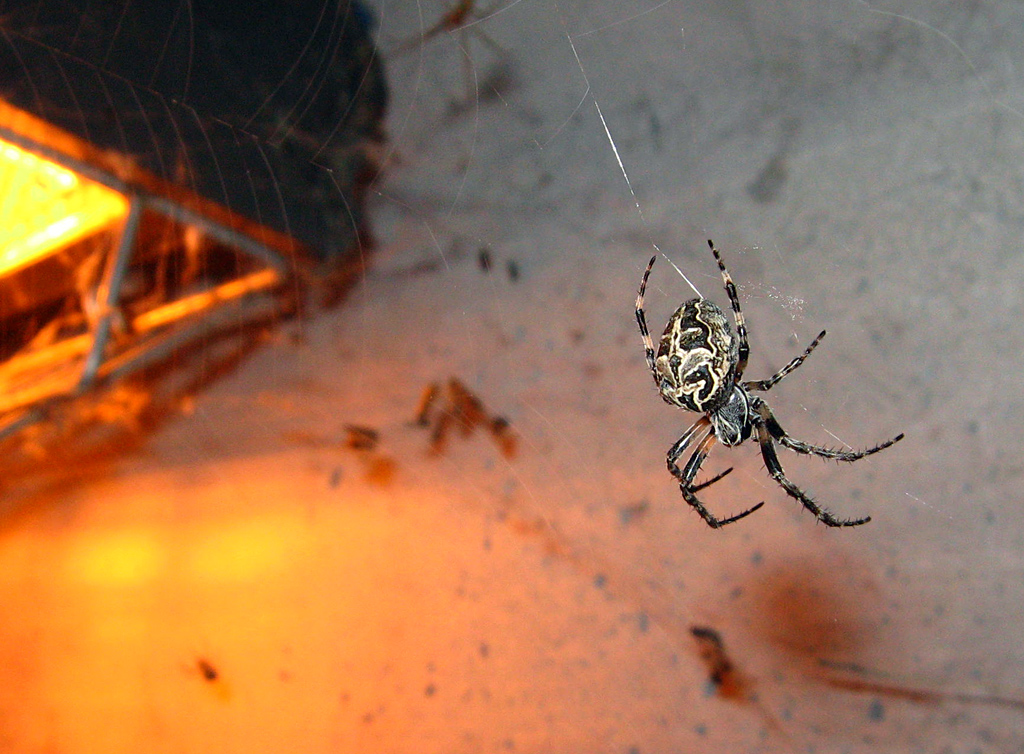
Spider on concrete wall

One intriguing form of carbon pricing that is being bandied about is the ‘tax and dividend’ approach. The idea is this: everybody pays a carbon tax on fuels and emitting activities. All the money is collected in a fund and redistributed evenly back to all taxpayers. As such, anyone who buys emits more than the mean quantity of carbon becomes a net payer and everyone who emits less actually gets back more than they pay. As mean emissions fall, so does the equivalence level of emissions – the point where you get back exactly what you paid.

For example, let’s imagine a tax that starts at a relatively modest $20 per tonne of carbon dioxide equivalent (CO2e). The mean Canadian produces about 23 tonnes of carbon a year, meaning they would pay $460 in carbon tax that year. That being said, the mean Canadian would also get back $460 as a dividend. A Canadian who is really trying (not flying, not eating meat, living in an efficient home, not driving, etc) might have much more modest emissions: say, 6 tonnes a year. They would pay $120 in carbon taxes and get back $460 – a nice ‘thank you’ for living a life that does less harm to others. Of course, someone who flies trans-Atlantically several times a year might end up paying significantly more in tax than they get back as a dividend.

Now say it is ten years on. The price of carbon has risen to $50 per tonne of CO2e and mean emissions per person have fallen by 25%. The break-even point is now 17.25 tonnes of carbon. As a result, someone who has not changed their lifestyle is now paying (23 – 17.25) * $50 or $287.50 a year in carbon taxes. If the 6 tonne person also managed a 25% cut, they would be earning (17.25 – 4.5) * $50 or $637.50 more in dividends than they paid in taxes.

These numbers are purely illustrative. It is possible that the per-tonne carbon taxes could be lower, and also possible that they would need to be much higher. In whatever case, the structure of the approach should be clear.

The approach has much to recommend it. For one, it is likely to enjoy the support of those already living relatively green lifestyles. For another, it has similar incentive effects to other carbon pricing schemes. It would encourage people to minimize or forego things with a heavy carbon burden, as well as make them more willing to invest in capital and technology that will reduce their carbon footprint.

Statistics in cryptanalysis and paleoclimatology

Reading Wallace Broecker‘s new book on paleoclimatology, I realized that a statistical technique from cryptanalysis could be useful in that field as well. Just as the index of coincidence can be used to match up different ciphertexts partially or completely enciphred with the same key and polyalphabetic cryptosystem, the same basic statistics could be used to match up ice or sediment samples by date.

As with the cryptographic approach, you would start with the two sections randomly aligned and then alter their relative positions until you see a big jump in the correlation between them. At that point, it is more likely than not that you have aligned the two. It probably won’t work perfectly with core samples – since they get squished and stretched by geological events and churned by plants and animals – but an approach based on the same general principle could still work.

Doubtless, some clever paleoclimatologist devised such a technique long ago. Nonetheless, it demonstrates how even bits of knowledge that seem utterly unrelated can sometimes bump up against one another fortuitously.

Personal net carbon removal

Bridge outline

Those wanting to reduce their contribution to climate change are generally presented with two options: cut back on your own emissions or pay someone else to do so. The first requires sacrifice and/or time and/or capital. You can give up flying, meat, and air conditioning; you can take trains instead of planes; you can invest in solar panels and ground source heat pumps. The second set of options is arguably more practically challenging and morally problematic. It is harder to verify that someone else has actually cut emissions, and done so in response to your payment rather than any other incentive. There are also those who think it unacceptable to buy your way out of taking action yourself.

There is, at least theoretically, a third option. Suppose I buy an area of land in British Columbia. The place is ideal for growing trees and the trees on the lot grow each year, absorbing carbon from the air in order to do so. As a result, my little forest is a net carbon sink. The danger, of course, is that the carbon will be re-released. Someone might cut down my forest. My forest might dry out or burn down (possibly because of climate change). Then, I will have accomplished little of value, given that carbon dioxide has a long atmospheric life. For most intents and purposes, it may as well never have been absorbed.

What I need to do is ensure the carbon doesn’t go anywhere. Here are some options I have come up with:

  1. Cut down trees at the growth rate (if one matures per month, cut one per month). This ensures that the forest will always be absorbing the same amount of carbon per unit time. Then, encase the lumber in something durable and air tight – keeping the carbon inside sequestered indefinitely. Then, either use the wood as building material or simply bury it.
  2. Cut down trees as described above and bury them somewhere they are relatively unlikely to decompose: such as a peat bog or the Arctic tundra.
  3. Cut down trees as described, chop them into chips, burn the chips for energy, capture and sequester the carbon dioxide underground. This approach has some variants: (a) seperate oxygen from air and burn the chips in that to produce gaseous outputs that are mostly CO2 or (b) convert the biomass chips into syngas (hydrogen and carbon monoxide) before combustion.

Of course, there are issues with all of these:

  1. Is it possible to shrink wrap wood in a way that will keep the carbon inside indefinitely? How many carbon emissions would be associated with making the shrink wrapping material?
  2. The Arctic tundra is melting, threatening massive carbon releases. Global temperature rise could do the same to peat bogs.
  3. This may require tens or hundreds of millions of dollars worth of capital and skilled labour, depending on how much all the equipment costs. Nobody could do this alone, though it may be possible to do at a commercial scale, partly in exchange for payments from those having their emissions offset.

None of these are great options, but they do offer at least the logical possibility of actually, literally offsetting one’s carbon emissions. For those with aspirations for world travel, but also serious ethical concerns about climate change, such options may prove the only choice.