Tundra dangers

Toronto Graffiti

One of the biggest climatic dangers out there is that warming in the Arctic will melt the permafrost. The tundra is heavily laden with methane – a potent greenhouse gas. In total, the ten million square kilometres contain about 1,000 gigatonnes of carbon (3,670 gigatonnes of carbon dioxide). The permafrost contains more carbon dioxide equivalent than the entire atmosphere at present.

If even a fraction of a percent of that gets released every year, it would blow our carbon budget. Even with enormous cuts in human emissions, the planet would keep on warming. Right now, humanity is emitting about 8 gigatonnes of carbon a year, on track to hit 11 gigatonnes by 2020. If we were to stabilize at that level, emitting 11 gigatonnes a year until 2100, the concentration of greenhouse gasses in the atmosphere will surpass 1,000 parts per million, creating the certainty of a vastly transformed world and a very strong possibility of the end of human civilization.

As such, it is vital to stop climate change before the planet warms sufficiently to start melting permafrost. This is especially challenging given that warming in the Arctic is more pronounced than warming elsewhere. There is also the additional challenge of the sea-ice feedback loop, wherein the replacement of reflective ice with absorptive water increases warming.

The actions necessary to prevent that are eminently possible. Unfortunately, people have not yet developed the will to implement them to anything like the degree necessary. Hopefully, the ongoing UNFCCC process for producing a Kyoto successor will help set us along that path before it becomes fantastically more difficult and expensive to act.

[Update: 4 February 2009] Here is a post on the danger of self-amplifying, runaway climate change: Is runaway climate change possible? Hansen’s take.

[Update: 19 February 2010] See also: The threat from methane in the North.

Historical emissions and adaptation costs

Emily at a coffee shop in Kensington Market, Toronto

It is widely acknowledged that developing countries will suffer a great deal from climate change. They are vulnerable to effects like rising sea levels and increased frequency and severity of extreme weather. They also have more limited means available to respond, as well as other serious problems to deal with. Providing adaptation funding is therefore seen as an important means of getting them on-side for climate change mitigation. It could be offered as an incentive to cut emissions.

That being said, there is a strong case to be made that developing countries should not need to do anything in exchange for adaptation funding. Making them do so is essentially akin to injuring someone, then demanding something in return for the damages they win against you in court. The historical emissions of developed states have primarily induced the climate change problem; as such, developing states suffering from its effects have a right to demand compensation.

Very roughly, the developed world as a whole is responsible for about 70% of emissions to date. The United States has produced about 22% of the anthropogenic greenhouse gasses in the atmosphere; Western Europe is responsible for about 17%; Canada represents something like 2% of the total. It can be argued that – by rights – states like Bangladesh and Ghana should be dividing their total costs for adaptation and sending the bill to other states, on the basis of historical emissions.

That being said, it is only fair to say that developed states are only culpable for a portion of their total emissions, on account of how the science of climate change was not well understood until fairly recently. Exactly where to draw the line is unclear, but that doesn’t especially matter since developing states simply don’t have the power to demand adaptation transfers on the basis of past harms. States that developed through the extensive use of fossil fuels will continue to use the influence they acquired through that course of military and economic strengthening to make others bear most of the costs for their pollution.

New Canadian emission data

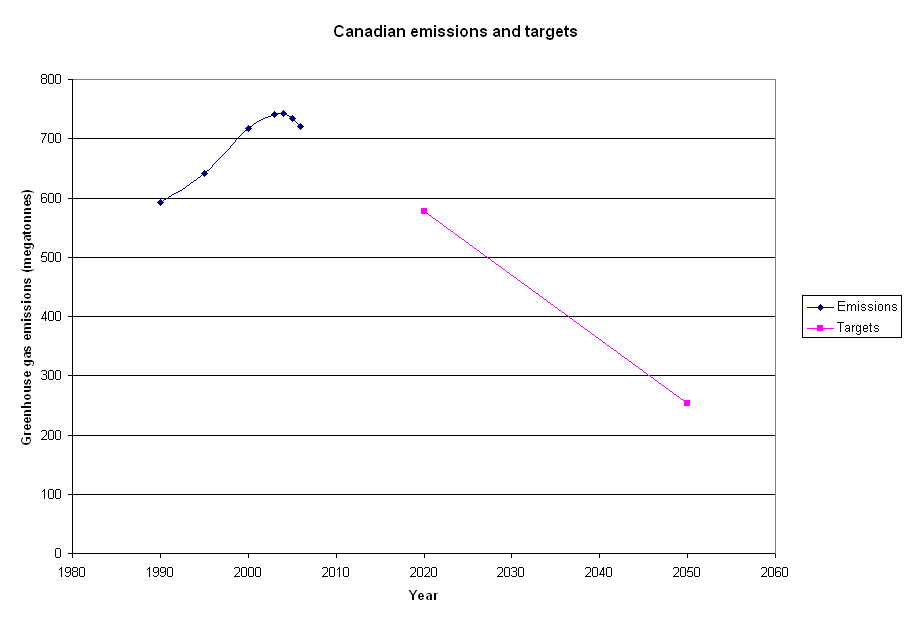
Canadian emissions 1990-2006

The Canadian government has published the official National Inventory Report: Greenhouse Gas Sources and Sinks in Canada for 1990 to 2006. Emissions in 1990 were 592 megatonnes (Mt). By 2000, they were 718 Mt. Here are the most recent figures:

  • 2003: 741 Mt
  • 2004: 743 Mt
  • 2005: 734 Mt
  • 2006: 721 Mt

Maintain and deepen that downward trend and we might just do our part in sorting out this unprecedented problem. Moving to a low-carbon global society would be quite a human achievement – even more so if we can also transition from fuels that are running out to those that never will.

Delicious pike

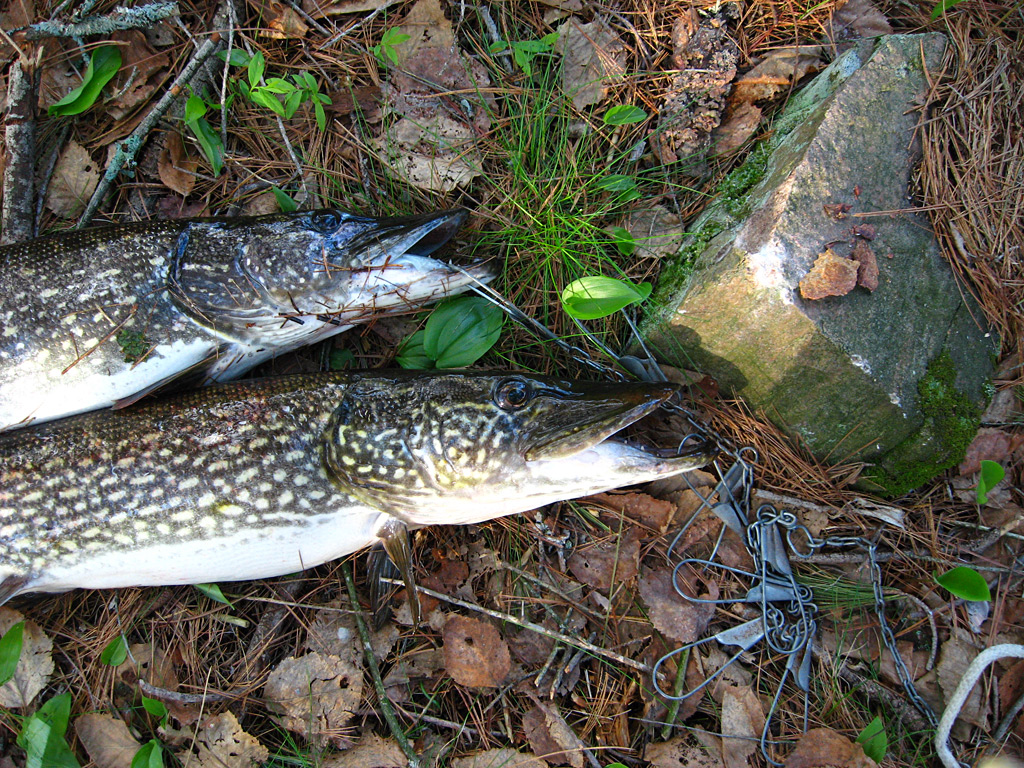
Ontario pike

The Smoky Lake canoe trip provided a delicious opportunity to deviate from my ordinary shunning of meat-eating. There are three major reasons for which I do not normally eat animal flesh: it is generally produced in a way that is not environmentally sustainable, the animals generally live in very poor conditions, and a number of unhygienic practices are endemic in factory farms. I maintain that when most people choose to eat meat, they do so in either honest or wilful ignorance about the consequences of that choice.

Happily, the trip provided an exception to all those objections in the form of lake-caught pike. I saw the lake they came from, the way they were caught and cleaned, and the way they were cooked. Two fish among eleven people probably isn’t causing damage to the ecosystem, particularly since it is a once a year trip. Furthermore, it is fair to say that a pike living in an attractive lake in Ontario is living an existence true to its nature: a statement that surely cannot be made truthfully about most animals people eat.

In any case, our pan fried pike was exceedingly delicious: as the result of its character, freshness, and the fundamentally food-improving qualities of camping. The experience of seeing it delivered from lake to plate has also made me somewhat rethink my view of sports hunters and fishers. While it is certainly true that ecosystems can be damaged by such activities, it is also fair to say that those who especially enjoy such activities might be passionate, knowledgeable, long-term advocates of conservation. It should be further asserted that – environmental considerations aside – those with such skills can make a most satisfying contribution to an expedition outdoors.

Harper on gas prices and carbon taxes

One thing for which you need to give Stephen Harper some credit: unlike the American presidential candidates, he is willing to admit that the government cannot do much to reduce gasoline prices. Unfortunately, he is also using those high prices to oppose carbon taxes, probably the most economically efficient economy-wide mechanism for reducing greenhouse gas emissions.

Polar bears ‘threatened’

As of today, the American Department of the Interior has listed the polar bear as a ‘threatened’ species, on account of the ongoing disappearance of the Arctic ice cap. In making the announcement, Secretary of the Interior Dirk Kempthorne stressed that the decision is not meant to compel the regulation of greenhouse gasses:

Listing the polar bear as threatened can reduce avoidable losses of polar bears. But it should not open the door to use of the ESA [Endangered Species Act] to regulate greenhouse gas emissions from automobiles, power plants, and other sources. That would be a wholly inappropriate use of the ESA law. The ESA is not the right tool to set U.S. climate policy.

In a sense, that is fair enough. Creating something as comprehensive as a greenhouse gas mitigation strategy in response to concern about a single species is definitely a backwards-seeming way to go about it. At the same time, one is reminded of how somewhat awkward justifications have sometimes been used in the past to secure legal outcomes: for instance, the use of the ‘interstate commerce’ clause in the US Constitution to assert federal jurisdiction, or even the indictment of Al Capone on tax evasion charges, rather than those directly associated with organized crime.

The point here is less whether concern about polar bears does or does not create a legal obligation to act on climate change. Rather, this is another demonstration of how virtually all conservation planning now requires the consideration of climate change effects. This is just one of a thousand cuts through which federal reluctance to effectively regulate greenhouse gasses will need to be eliminated.

John McCain’s carbon targets

In a speech delivered in Oregon, John McCain laid out some targets for reducing American greenhouse gas emissions:

  • 2012: Return emissions to 2005 levels (18 percent above 1990 levels)
  • 2020: Return emissions to 1990 levels (15 percent below 2005 levels)
  • 2030: 22 percent below 1990 levels (34 percent below 2005 levels)
  • 2050: 60 percent below 1990 levels (66 percent below 2005 levels)

These targets look pretty similar to the ones adopted by the present Canadian government: a peak in emissions by 2012, a reduction to 20% below 2006 levels by 2020, and a 60-70% reduction below 2006 levels by 2050.

Stabilizing greenhouse gas concentrations below 550ppm probably requires more aggressive action. That being said, this is not a terrible place from which to begin negotiations: both between presidential candidates in the United States and between the United States and other countries. If the US was willing to commit to those targets unilaterally (and do so with a credible plan for actually achieving them), it might become a lot easier to get countries like China and India to begin making a more substantial contribution to the mitigation effort.

In exchange, the United States could adopt the kind of targets (and supplemental actions, like aid in preventing tropical deforestation) that are actually required to stabilize greenhouse gas emissions at a level around 450ppm, thus keeping total global temperature change in the realm of two degrees Celsius.

Electric vehicles in Canada

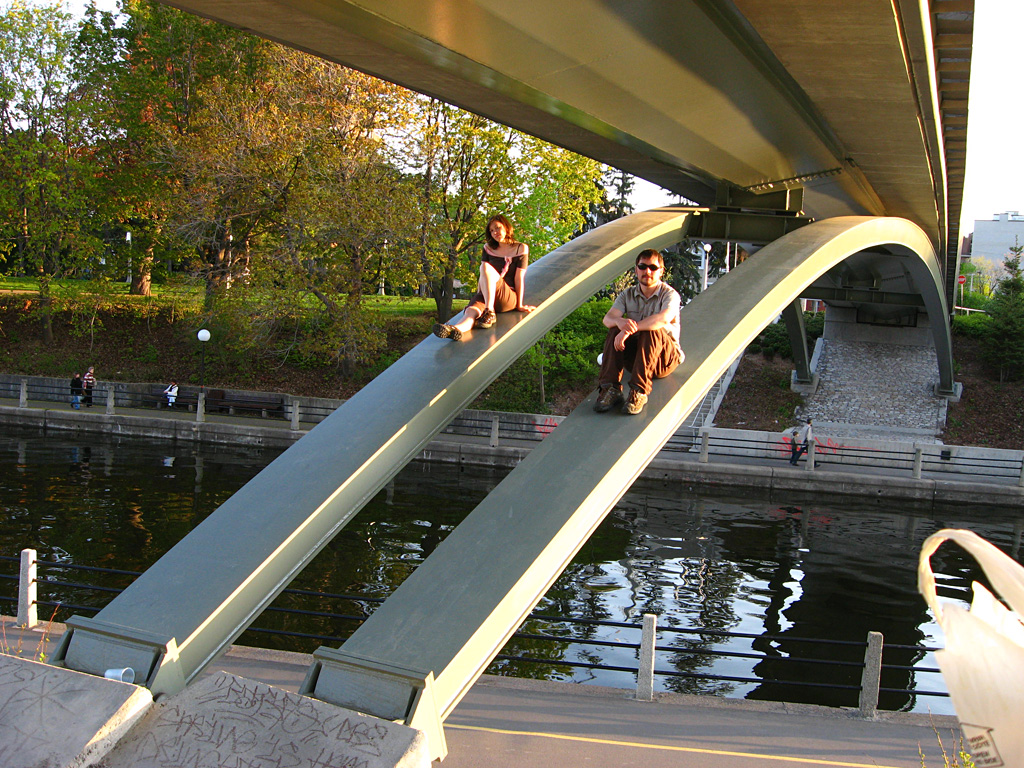
Milan Ilnyckyj and Emily Horn, sitting on bridge supports

Dynasty is a Canadian company that builds light, low speed, battery powered cars. Their Dynasty IT vehicle has a range of 50km and a top speed of 40 km/h. Because Transport Canada refused to follow the lead of 44 American states and authorize the vehicles for non-highway use on roads, the company has decided to relocate to Pakistan. There, they will manufacture cars for the American market. The ZENN is in a similar predicament.

There is a real trade-off between producing light vehicles and producing ones that do well in crash tests. That said, we do permit people to ride absurdly unsafe motorbikes – even on the highway. It is incoherent to ban one and permit the other.

Perhaps it would make sense to create a special legal category for small, light vehicles of limited range, intended primarily for urban use. By all means, those purchasing them should be informed that they will not fare as well in a crash with a huge truck as someone in a larger, steel-framed car. That said, the economic and environmental advantages may justify the risk in the eyes of many.

Vehicle efficiency

Fire station on Preston Street, Ottawa

My friend Mark sent me a link to a book in progress about sustainable energy. One of the more interesting sections is on vehicle efficiency. The author stresses that, while some kinds of efficiency gains are physically possible, others are not:

Could we make a new car that consumes 100 times less energy and still goes at 70mph? No. Not if the car has the same shape. The energy is going mainly into making air swirl. Changing the materials the car is made from makes no difference to that. A miraculous improvement to the engine could perhaps boost its efficiency from 25% to 50%. But the energy consumption of a car is still going to be roughly 40 kWh per 100 km.

The story is a familiar one: efficiency can get you a long way, but there are no free rides. Another interesting comment from this chapter is the major design differences between an efficient city car and an efficient highway car. Since the former is always stopping and starting, low weight is really important. Brakes that regenerate energy also make a big difference. For a highway car that avoids major acceleration and deceleration, the most important thing is reducing drag. Weight is comparatively trivial.

One other interesting assertion is that the energy involved in making a car is actually pretty trivial compared to the amount used in driving it around:

The energy cost of making the raw materials for a one tonne car is thus equivalent to about 3000 km of driving; an appreciable cost, but probably only 1% of the lifetime energy-cost of the car’s fuel.

If correct, that makes it seem a lot more reasonable to upgrade from an old and inefficient vehicle to a newer and less gas-thirsty model. It also suggests that government programs to replace inefficient cars with better ones might have strong justification, in terms of climate change mitigation potential.

In order to move to a low carbon society, we need to do a slew of things. We definitely need to increase the energy efficiency of accomplishing most tasks. We definitely need to reduce the quantity of greenhouse gas produced in the process of generating a unit of energy. We probably need to significantly reduce total energy consumption. Finally, we need to take actions that manage the greenhouse gasses that will inevitably be produced by some actions. The protection and enhancement of carbon sinks (mostly forests and soils) are essential for this.

When it comes to reducing total energy usage, the chapter does make one excellent suggestion: “a cyclist at 21 km/h consumes about 30 times less energy per kilometre than a lone car-driver on the motorway: about 2.4 kWh per 100 km.” Those who cycle more slowly are likely to be even more efficient, since doubling the time it takes to travel somewhere apparently reduces energy usage by three quarters.